Physicists at the University of Oxford have engineered a new class of ‘cat states’ -- quantum superpositions constructed not from ordinary wave packets, but from deeply exotic, nonclassical components -- opening unexpected paths toward more resilient quantum computers.
The team behind the novel propulsion technology said that electrospray thrusters could allow mission planners to design smaller, more nimble satellites and spacecraft capable of performing faster, more powerful maneuvers or slower, more precise adjustments, depending on mission requirements.
Electrospray Combines the Best of Chemical and Electric Propulsion
Launching rockets into space still requires chemical thrusters, but once spacecraft and satellites reach orbit, engineers continue to develop novel propulsion methods that are more efficient than chemical propulsion technologies. Given the strict weight requirements of spacecraft launches, finding alternatives to chemical propellants has opened up a wider range of mission profiles.
Among the most common alternatives to chemical thrusters are designs that combine electrical energy with small amounts of propellant to produce small but sustainable thrust. Although electric thruster designs require less fuel, saving significantly on launch weight, they also lack both the power and the rapid, quick burst performance of chemical thrusters.
According to study author Amelia Bruno, a former postdoc in MIT’s Department of Aeronautics and Astronautics (AeroAstro), combining chemical and electrical propulsion into a single system is “the best of both worlds.”
“This opens the door for small satellites to do even more science, more observations, and more interesting missions, all on a smaller and cheaper platform,” Bruno explained to MIT News.
Study co-author Paulo Lozano, the Miguel Alemán Velasco Professor of Aeronautics and Astronautics at MIT, agreed, noting that combining both technologies could enable a CubeSat mission to Mars “where they could make the journey slowly, using electrospray thrusters.”
“You could then use your chemical thrusters to quickly move to look at interesting features,” the professor added. “You could have a lot more flexibility to do a lot more things.”
ASCENT Rocket Fuel as the Thruster’s Ionic Liquid Propellant Enables Hybrid Design
According to a statement detailing the new electrospray thruster’s design, the ones developed by the MIT team are about the size of a thumbnail. Each thruster is also placed directly above a small fuel reservoir. For the MT electrospray thrusters, the fuel is an ionic liquid propellant, a liquid composed of salts that remain dissolved in a solution.
These four flight-unit electrospray thrusters were delivered by the MIT Space Propulsion Laboratory to NASA for the upcoming Green Propulsion Dual Mode (GPDM) mission. Image Credit: Amelia Bruno
“Ionic liquids are very stable and can even remain a liquid in space, which not a lot of materials can do,” Bruno explained. “And it’s basically a sea of ions, which is why we base our technology around it, so we can pull those ions out into an electrospray.”
When a spacecraft’s battery delivers an electric charge to the fuel reservoir, the ions within the fuel also become charged. The thruster’s design channels the charged particles from the reservoir and through the thruster tips, expelling them into space.
Although the team has tested several types of ionic propellant in its electrospray propulsion thrusters, Bruno and Lozano have collaborated with the U.S. Air Force to synthesize an all-new ionic liquid propellant, which they are calling the Advanced SpaceCraft Energetic Non-Toxic propellant, or ASCENT.
Originally designed as a “green” alternative to extremely hazardous hydrazine rocket fuel that has been the staple in the rocket industry for decades, Bruno notes that ASCENT “happens to be an ionic liquid mixture.”
“And we said, hey, that’s the stuff we typically use,” the researcher added. “Theoretically, this should work. Let’s go figure out how.”
Tests: Chemical Propellant Equally Efficient as Conventional Ionic Liquids
To test their electrospray design, each tested thruster was attached to a small reservoir about the size of a single Lego brick, and then the reservoir was filled with ASCENT. Next, electrospray thrusters were mounted on opposite sides of a traditional CubeSat.
To simulate the microgravity environment of Near-Earth Orbit, the team placed the thruster-equipped CubeSat on a MagLev stand. The team noted that the MagLev in Lozano’s lab is installed inside a large vacuum chamber. This design allows the researchers to fine-tune the environment to best mimic the conditions in space.
During a series of tests, the team applied varying voltage levels to the electrospray thrusters. As expected, the reaction produced a spray from the thruster nozzles, which spun the CubeSat around on the MagLev stand like a freely spinning top.
During each thruster firing, the team measured the amount of thrust produced. This data, combined with the voltage and fuel data, allowed the team to calculate ASCENT’s fuel efficiency during continuous operation. Some tests lasted up to 100 hours.
When the MIT group evaluated the results, they first determined that the choice of ASCENT was correct, as it successfully fueled each electrospray thruster. Even more significantly, the tests revealed that the readily available chemical propellant was equally efficient as conventional ionic liquids.
“Compared to our normal electrospray propellants, ASCENT can provide similar performance in terms of thrust,” Bruno explained. “Now that we know our thrusters work with ASCENT, we can start thinking of all the ways we can make them even better.”
Testing Electrospray Thrusters on NASA’s Green Propulsion Dual Mode Mission
When discussing the benefits of their successful electrospray thruster tests, Lozano noted that a spacecraft with electric and chemical thrusters can share a single fuel tank. Due to its compact design, this hybrid electrospray thruster could be mounted on a small satellite.
Fortunately, the team won’t have to wait long to see their thruster in action. According to the research team, whose work was partially supported by NASA, their design will be incorporated into NASA’s upcoming Green Propulsion Dual Mode mission scheduled to launch in November. The Green Propulsion Dual-Mode mission will carry a briefcase-sized CubeSat with a primary chemical thruster and specially designed electrospray thrusters, making it the first attempt to combine electrical and chemical propulsion in a small spacecraft.
“This will be the first time that a satellite will have a shared propellant tank,” Lozano explained.
Although a large portion of proposed electric propulsion missions that might employ the new electrospray thruster are designed to explore deeper into the Solar System and beyond, Lozano also highlighted the technology’s possible applications closer to home. For example, satellites equipped with both technologies could rapidly respond to environmental or climate changes in real time with a speed and efficiency unavailable with current propulsion options.
“Say there’s a storm coming, and you’d want to deploy your constellation of small satellites to observe over one location,” the researcher explained. “You could choose to send them quickly or slowly, depending on the nature of the observation.”
“And the only way to do that is if you have two propulsion systems, which is now possible,” he added.
Although the mission will not launch before November, Bruno noted that a successful test could allow engineers to consider missions they never thought possible.
“Now that we know our thrusters work with ASCENT, we can start thinking of all the ways we can make them even better,” the researcher explained.
Christopher Plain is a Science Fiction and Fantasy novelist and Head Science Writer at The Debrief. Follow and connect with him on X, learn about his books at plainfiction.com, or email him directly at christopher@thedebrief.org.
Microsoft on Tuesday released fixes for two high-severity zero-days that were disclosed by a researcher who has been locked in a testy beef with the software giant.
Nightmare Eclipse, the pseudonym the researcher goes by, released a handful of high-severity vulnerabilities in recent months, making them zero-days that had the potential to be exploited in the wild. The researcher has said the disclosures, which included proof-of-concept code, came after Microsoft reneged on an arrangement the two made regarding vulnerabilities they had discussed.
Disclosure drama
“But someone violated our agreement and left me homeless with nothing,” Nightmare Eclipse wrote in March. “They knew this will happen and they still stabbed me in the back anyways, this is their decision not mine.”
Researchers have analyzed a high-severity vulnerability in Linux that’s able to escalate untrusted users to root by exploiting a bug you don't often see: a single errant character inside the kernel.
The vulnerability, tracked as CVE-2026-23111, is located in nf_tables, a subsystem of the Linux kernel that provides packet filtering capabilities. It’s used to manage firewall rules and replaces older subsystems such as iptables, ip6tables, arptables, and ebtables.
!!!WTF!!!
The presence of a single mis-issued exclamation point in code implementing nf_tables introduced a use-after-free, a class of vulnerability that corrupts memory by placing malicious code at memory addresses that haven’t been properly freed of their previous contents. CVE-2026-23111 can be exploited by an unprivileged user or process to elevate system rights to root.
Years ago, right-wingers coined the phrase “Trump Derangement Syndrome” (TDS) to describe people who hate US President Donald J. Trump. (I think it better describes the president’s outlandish, truth-challenged statements and the followers who think he can do no wrong.) What’s really deranged is his recent AI executive order.
Then, a little thing called Anthropic Mythos came along — and scared the pants off even AI’s biggest fans. Seemingly in response, someone in the federal government decided that letting AI companies do whatever they want might not be the brightest policy.
Or, did they?
True, the new order creates a process under which AI companies can give US government access to “covered frontier models” for up to 30 days before public release so experts can probe for vulnerabilities and test how the systems could be abused. It also directs agencies to set evaluation standards, establish an “AI cybersecurity clearinghouse,” and harden federal networks against rapidly advancing AI‑enabled attacks.
Some people, like Graham Brookie, vice president for technology programs and strategy at the Atlantic Council, think the order is great. “The administration’s executive order on Advanced AI Innovation and Security is a serious policy with support from necessary stakeholders across party lines and industry to ensure the government is evaluating the cybersecurity risks posed by frontier AI models. It’s a policy that can be built on.”
Really? I’m not sure Brookie read the same document I did — if, indeed, he read it at all.
I quote:
“Nothing in this section shall be construed to authorize the creation of a mandatory governmental licensing, preclearance, or permitting requirement for the development, publication, release, or distribution of new AI models, including frontier models.
“In addition, ‘This order is not intended to, and does not, create any right or benefit, substantive or procedural, enforceable at law or in equity by any party against the United States, its departments, agencies, or entities, its officers, employees, or agents, or any other person.’”
In other words, AI companies won’t be required to do much of anything. And if they do submit a project for review, get the government’s blessing for it, and something goes badly wrong, it’s not the government’s fault.
So, exactly why would AI companies even mess with this performative AI security theater?
Beyond those concerns, who exactly will be judging AI projects in 30 days? In theory, it would be a cybersecurity clearinghouse made up of people from the National Security Agency, the US Treasury Department, and the Cybersecurity and Infrastructure Security Agency (CISA). Most likely, CISA would do the bulk of the heavy-lifting — it’s their job, after all. But there’s this wee problem; Trump’s so-called Department of Government Efficiency (DOGE) last year gutted CISA. There’s virtually no one left to do the work, and certainly not in 30 days.
There’s also the question of funding for the new initiative. According to the order, “The Director of OMB, in coordination with the National Cyber Director and the Director of CISA, shall determine whether any Federal grant programs have available and relevant funding that can be directed toward applicants developing advanced AI vulnerability detection.”
Spoiler: There’s no money set aside for this purpose.
Leaving aside whether the Executive Order has any teeth at all — the Brennan Center for Justice argued that under the Constitution, it doesn’t; the closer you look at the document, the less substance you’ll find.
Besides, in an industry where success is all about releasing the latest Large Language Model (LLM) as fast as possible to garner attention and investor dollars, who exactly would want to put their AI models on ice for even 30 days? (Short answer: No one.) These companies are always going to be focused first on getting the word out about their latest model as fast as humanly — Uh, AI-ly — possible.
Still, some people seem to think this executive order really will make a difference. For example, Paul Benda, the American Bankers Association executive vice president for risk, fraud, and cybersecurity, sees it “as a constructive step toward strengthening the nation’s approach to managing the cybersecurity risks and opportunities associated with advanced artificial intelligence [because it ] can help better protect critical infrastructure, including the financial sector.”
Oh, please. I’m so tired of people who skim the titles of Trump’s executive orders and then assume there’s anything real about them.
This AI order is meaningless garbage, and anyone telling you otherwise is either lying or wants to be on the Trump regime’s good (?) side. Or, both — it could always be both.
Dozens of cryptographically verified open source packages from Microsoft were compromised late last week to add advanced credential-stealing code that was triggered when developers opened them in AI coding agents.
In all, multiple researchers said, 73 packages were flagged as malicious when automated systems on GitHub blocked them on the platform. Rather than noting they are malicious—and that developers who used AI agents to work with them should assume their systems are compromised—the Microsoft-owned GitHub said it disabled the packages “due to a violation of GitHub's terms of service.” The text went on to encourage the package owner to contact GitHub.
Devs: Assume compromise and proceed accordingly
It wasn’t until Monday that Microsoft even raised the possibility the packages were infected. In an email, the company stated: “We have temporarily removed some repositories as we investigate potential malicious content.”
L'été approche et les repas en plein air reviennent sur le devant de la scène. Si vous envisagez d'investir dans un barbecue à charbon, Cdiscount met actuellement en avant le Weber Compact Kettle à prix réduit. Avec sa cuve en acier émaillé et son format adapté aux repas conviviaux, ce modèle...
Selecionadas pela Startup Portugal e pela Unicorn Factory Lisboa, as 27 empresas vêm de sectores como IA, Machine Learning ou Tecnologia da Saúde, empregando mais de 200 pessoas e com investimentos captados superiores a 20 milhões de euros.
Une découverte surprenante relie les difficultés auditives en milieu bruyant à un risque accru de démence. Cette étude britannique, menée sur plus de 80 000 adultes, ouvre de nouvelles perspectives dans la prévention de cette maladie neurodégénérative. Quelles sont les implications de ces...
Criado em 2022 como Non Fungible Conference, numa altura em que os NFTs estavam no auge da popularidade, o NFC Summit tem vindo a evoluir e, este ano, a arte digital, a IA e a cultura contemporânea estão no centro da programação, numa edição que, pela primeira vez, teve como palco a Unicorn Factory Lisboa.
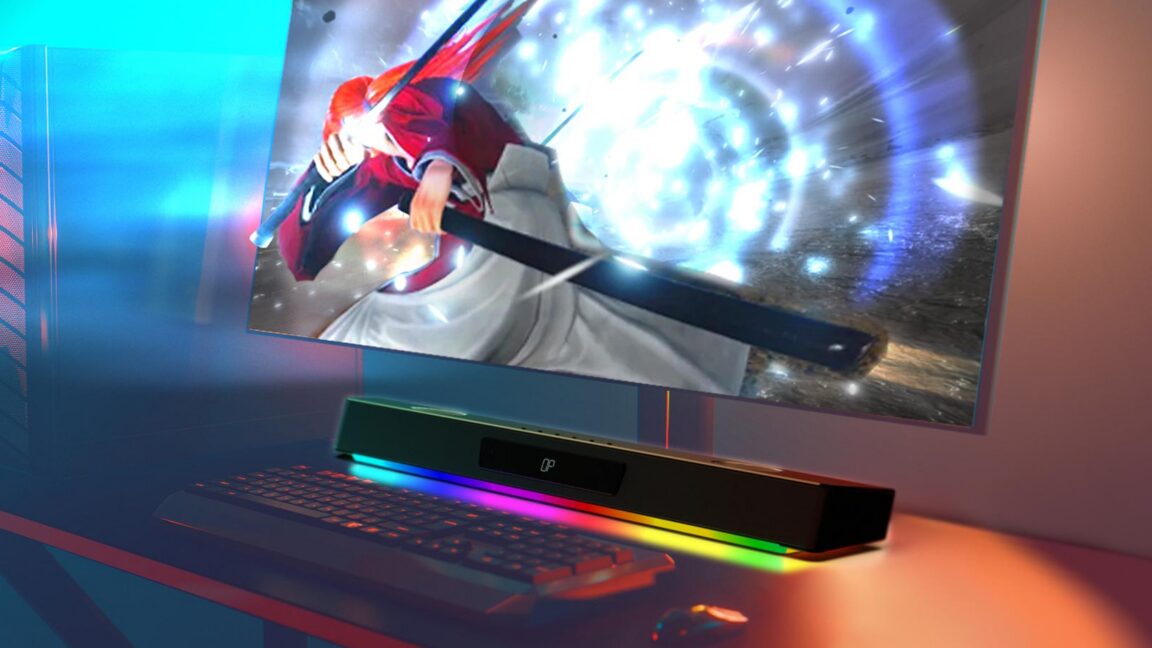
Operating system makers take many steps to prevent their wares from accepting commands from remote devices. The safeguards, designed to thwart malicious attacks, typically require hackers to jump through all kinds of hoops to bypass the measures. But what if remote code execution were as simple as being within Bluetooth range of a speaker connected to the targeted device?
It turns out it can, at least when the speaker is a Sound Blaster Katana V2X sold by Singapore-based Creative Technologies. The speaker, which sells for $283, is widely acclaimed with numerous reviews showering praise on the sound and performance of it and its predecessor, the Sound Blaster V2.
A PC-pwning proxy
Researcher Rasmus Moorats stumbled on the hack by accident, after he purchased a Katana V2X, a soundbar that connects to PCs, Macs, and Linux devices over USB or Bluetooth. Moorats was curious if he could create a Linux tool that communicated with his speaker. He discovered he could do so through CTP, a proprietary mechanism he guesses is short for Creative Transport Protocol.
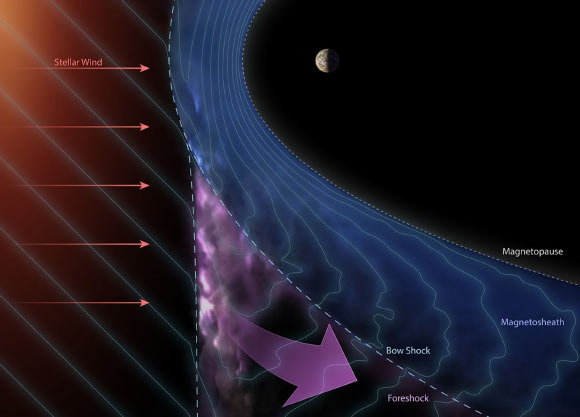
The giant planet’s bow shock isn’t just deflecting the solar wind, it’s acting as a powerful particle accelerator, firing electrons to relativistic energies of at least 1 MeV, according to a new analysis of data from NASA’s Juno spacecraft.
MILAN – Italian ground segment operator Leaf Space unveiled a new space connectivity service May 27. The technology, named TreeNet, aims to make space communications more seamless by treating individual […]
Days after successfully flying its Quarterhorse unmanned aircraft at supersonic speeds, an industry-first defense aviation company, Hermeus, has received the largest-ever contract awarded by the Defense Innovation Unit (DIU) to demonstrate high-Mach flight combined with high-Mach payload release.
The new $ 159 million award, which increases the original contract to a total of $219 million, will allow Hermeus’ engineers to expand on previous high-Mach test flight milestones in direct partnership with the U.S. Air Force and the U.S. Navy, with the goal of providing the American warfighter with the most advanced arsenal capable of delivering munitions and payloads around the world at record-setting speeds.
“By delivering flight-ready aircraft and demonstrating payload release at speed, we will prove this technology can create a decisive military advantage on a timeline that matters,” explained Hermeus CEO and co-founder, AJ Piplica. “Our focus is on providing the Air Force and Navy with the validated data they need to transition these platforms into the future force.”
High Mach Payload Release: “A Game Changing Warfighting Capability”
When announcing the new DIU award, Hermeus executives noted that the program will include a series of “intensive flight tests.” The first is expected later this year, while the final flights are expected sometime in 2027.
Although few specifics were provided, the company said the flights will “prove the aircraft can maintain high speeds and expand its performance limits” while also demonstrating the successful carry and release of payloads at high velocity. The company also noted that all flight data gathered during the development and testing phases “will directly inform service experimentation and future acquisition decisions.”
In May, Hermeus’ Quarterhorse Mk 2.1 unmanned aircraft successfully completed its first supersonic flight, reaching a top speed of Mach 1.21. Image Credit: Hermeus.
Although the U.S. Military has several aircraft capable of exceeding the speed of sound, and several more hypersonic (exceeding five times the speed of sound) aircraft and missile prototypes, delivering payloads from high-Mach aircraft has remained a challenge. However, some military experts argue that the U.S. would benefit greatly from the capability.
When discussing the need for high-speed payload release, DIU Military Deputy Major General Joe “Solo” Kunkel said that the largest problems the military is facing in the future are “generally around time and distance,” and the associated challenges with getting to distant locations “in a timeframe that matters.”
“I care about the warfighting capability, providing advantage to our partners and us in the fight, and making sure that we can walk into every fight with swagger,” General Kunkel said, adding that mass producing the technology developed by Hermeus could move it from a test platform to a “game-changing warfighting capability.”
“I think we found a significant number of use cases where it can be used as a weapon,” the General added.
Moving High-Mach Capability Out of the Lab
When discussing the company’s approach that convinced the DIU to offer its largest award in the organization’s history, including what they describe as “reclaiming the lost art of rapid iterative prototyping to build the fastest aircraft in the world today,” Hermeus noted that directly partnering with the USAF and USN allows their engineers to align tests with future mission needs and shorten the path from testing to deployment.
“By prioritizing relentless hardware iteration, we deliver high-speed systems at the pace of the modern battlefield,” the company’s statement explained. “We work with the Department of War to provide the high-speed capabilities our nation and its allies need to maintain a durable, asymmetric advantage.”
Image Credit: Hermeus.
When discussing the significance of the upcoming tests and the overall need for high-Mach flight payload deployment, including the benefit of the performance data, the company CEO heralded the DIU’s award, noting that the financing will help them move their successful demonstrations into real-world high-Mach platforms.
“This program is about moving high-Mach capability out of the lab and into an operationally relevant environment,” Piplica said.
Christopher Plain is a Science Fiction and Fantasy novelist and Head Science Writer at The Debrief. Follow and connect with him on X, learn about his books at plainfiction.com, or email him directly at christopher@thedebrief.org.
Une équipe de chercheurs américains présente une nouvelle approche du pacemaker sans intervention invasive. Leur technologie, encore expérimentale, pourrait ouvrir la voie à une nouvelle génération de dispositifs médicaux portables.
Et si la géographie du Seigneur des anneaux était un miroir nous renvoyant l'image de nos défis environnementaux contemporains ? L'univers de Tolkien, de la Comté au mont Destin, résonne avec les tensions écologiques actuelles et offre une réflexion sur nos façons d'habiter ou de transformer le...
Dashlane said that attackers mounted a coordinated hacking campaign against a large base of its users in an attempt to recover as many encrypted password vaults as possible. The password manager provider said fewer than 20 personal user vaults were downloaded before it shut down the operation.
In a campaign that started Sunday, the unknown threat actor abused the mechanism that allows Dashlane users to add new devices, such as computers or phones, to their accounts. By abusing Dashlane's programming interfaces for device enrollment, the attackers sent requests to large numbers of existing users’ registered email addresses. In an update published Thursday, Dashlane wrote:
The threat actor targeted the API endpoints for device registration and used a brute force attack to send a large volume of automated requests to those endpoints.
In response, Dashlane’s automated security systems operated as intended, triggering an automatic lockout of the targeted accounts to protect those users. Before the attack was fully mitigated, the threat actor was able to brute force and generate valid tokens for fewer than 20 personal plan customers, allowing them to register a new device on those accounts and download copies of users’ encrypted vaults.
The flow and strategy of the attack
When a user installs the Dashlane app on a new device and attempts to enroll it in their existing account, Dashlane first verifies the account holder's identity. This verification is completed by sending a one-time six-digit token to the user’s registered email address (or, for users who have enabled two-factor authentication, by validating a six-digit code generated by their authentication app).

 Login