❌

Reading view

Quels sont les meilleurs aspirateurs pour nettoyer des sols durs ?

Miettes, poussières, traces de pas... les sols durs n'accordent aucun répit. Aspirateurs balais ou laveurs, nous avons sélectionné les modèles les plus convaincants pour retrouver un intérieur propre sans transformer chaque séance de ménage en épreuve de fond.

  •  

Google Pixel 9 Pro XL : ce smartphone premium perd 33 % de son prix chez Rakuten

Certains smartphones vieillissent mal. D'autres voient simplement leur prix fondre avec le temps. C'est justement le cas du Google Pixel 9 Pro XL qui profite aujourd'hui d'une belle cure d'amaigrissement sur Rakuten.

  •  

Working Against the Clock: A Bizarre Human Behavioral Tendency Has Emerged in New Research


An unexpected human behavioral tendency to prefer turning counterclockwise rather than clockwise has been uncovered by a team of researchers in Spain and Japan, and its cause remains unknown.

In a recent paper published in Nature Communications, the team sought to identify patterns in individual human behavior among large crowds and determine which factors influence them. Surprisingly, the team found that counterclockwise turning is the overwhelmingly common behavioral preference, regardless of gender or culture, with only age making a slight difference.

An Unexpected Behavior

The team’s work could have ramifications not only for psychology but also for architecture, engineering, and design, enabling more intuitive layouts. Work on the project began at Spain’s University of Navarra, before experiments continued at the University of Tokyo in Japan.

The University of Navarra team discovered the phenomenon entirely by accident while researching social distancing during the COVID-19 pandemic. Initially, their interest was in monitoring how effectively the recommended six-foot spacing could be maintained in public spaces. They observed how humans moved through spaces, such as museums, without a set route. While closely monitoring crowd video, they were surprised to witness the counterclockwise trend emerge.

“When analyzing the experiments, my colleagues realized by chance that in 32 out of 33 experimental trials, as people moved and turned, they noticeably preferred to turn counterclockwise,” said co-author Professor Claudio Feliciani from the University of Tokyo’s Department of Aeronautics and Astronautics.

“This was completely unexpected as, at least instinctively, when people walk around randomly, you imagine people turn as their needs suit them with little sign of an overall preference,” Feliciani added. “But there was a definite, measurable tendency for people to turn counterclockwise over clockwise, all things being equal.”

Exploring Internationally

With their curiosity piqued, the University of Navarro team sought to test their findings against further observations to determine which factors might be influencing the behavior. They decided to seek international follow-up observations. This brought them into contact with Claudio Feliciani, whose presence in Tokyo would allow the project to test how the trend played out across cultures, and among other factors. 

For the second stage of the project, Feliciani and his team developed a series of experiments targeting age, handedness, gender, group size, and cultural influence. They observed pedestrian test subjects in both constrained and open environments.

“Of all these things, the only thing that stood out was that kids tend to have a stronger bias for the counterclockwise direction, so probably age plays a role in making the effect weaker or stronger,” said Feliciani. “Our results may appear as a minor, insignificant discovery, but in nature, most phenomena related to locomotion show that animals mostly walk without directional preference.”

“The strong bias found in people hints to some asymmetry at the biomechanical level,” Feliciani added.

Unknown Behavioral Causes

With the international project having confirmed the counterclockwise trend, the researchers are now moving on to more granular exploration of the phenomenon at the individual level. They hope that this more individualized research will yield some information on what biomechanical factors may be driving the behavior.

“It likely does not come from the eyes, because we tried to patch people’s left or the right eyes and the bias was still there,” Feliciani said. “And some people asked us if it might be large-scale phenomena like the Coriolis force or Earth’s magnetic field, but this seems unlikely given what we have managed to point to so far. “

Both lead investigator Iñaki Echeverría Huarte and Feliciani say that the Coriolis effect has become something of a joke among the team, and that they are invariably asked about it when presenting their findings.

“As a curious aside, a friend and collaborator in Argentina was intrigued enough to run some similar experiments when he heard about this,” Huarte told The Debrief of the team’s research in an email. “He tells me that, with no proper scientific confirmation yet, the counterclockwise rotation still seems to be there in the southern hemisphere too.

“There are some interesting parallels to certain sports,” Feliciani concluded. “Some running and driving competitions are always, but inexplicably, taken on courses that run counterclockwise. But that’s an investigation for another time.”

The paper, “Individual Locomotor Bias Drives Counterclockwise Motion in Pedestrian Crowds,” appeared in Nature Communications on June 10, 2026.

Ryan Whalen covers science and technology for The Debrief. He holds an MA in History and a Master of Library and Information Science with a certificate in Data Science. He can be contacted at ryan@thedebrief.org, and follow him on Twitter @mdntwvlf.

  •  

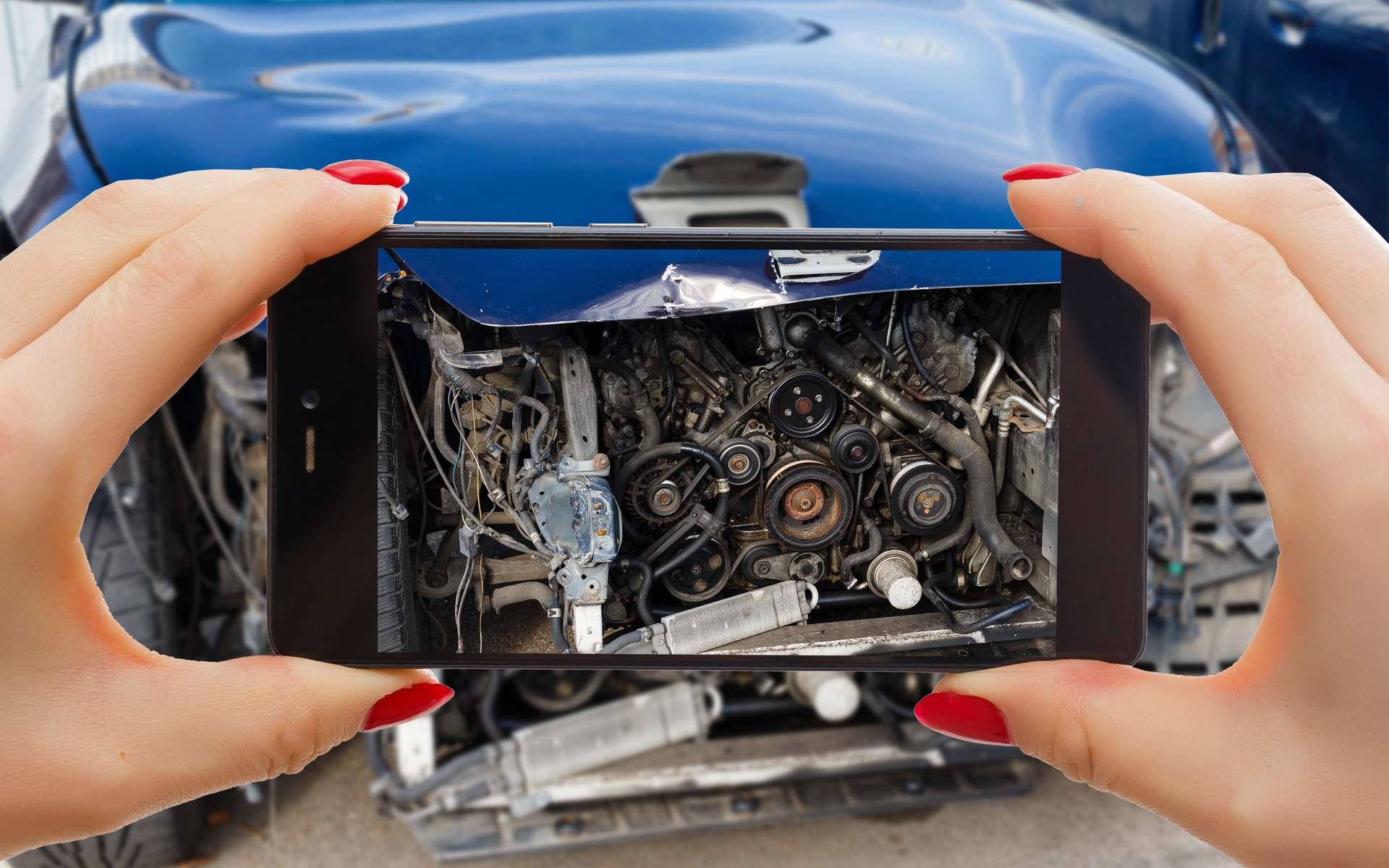
Comment l'industrie automobile transforme ses déchets en ressources stratégiques pour la transition écologique

L’image de carcasses de voitures empilées à perte de vue dans des casses à ciel ouvert est en train de changer, grâce une filière en pleine mutation qui permettra à terme de fabriquer les véhicules selon un modèle circulaire.

  •  

Le robot tondeuse Dreame A1 Pro perd 1 000 euros d'un coup : difficile de trouver mieux à ce prix

Le gazon continue de pousser, mais le prix du Dreame A1 Pro, lui, s'effondre. Cdiscount affiche actuellement ce robot tondeuse premium à un tarif particulièrement agressif, avec une réduction qui mérite clairement le détour.

  •  

Scientists Create “Intelligent” Bandage That Targets Harmful Bacteria

Female Doctor Bandaging HandResearchers have created a smart wound dressing that can sense when harmful bacteria are present and respond by releasing antibiotics only when needed. Biomedical engineers at Brown University have created a wound dressing that releases antibiotics only when harmful bacteria are detected. In a new study, the team found that the material may quickly eliminate [...]
  •  

Little Red Dots | Primordial Black Holes or Big Bang Failures?

Recent findings from the James Webb Space Telescope (JWST) indicate that Little Red Dots (LRD) could be primordial black holes, challenging the big bang theory. The data suggests these objects formed too soon for typical galaxy evolution, raising questions about cosmological interpretations and the nature of observational evidence.

  •  

Le PC portable ACEMAGIC 16 fait une entrée remarquée dans la cour des milieu de gamme, et pour un très bon prix

ACEMAGIC n'est pas encore un nom familier dans les rayons informatique, mais ce constructeur chinois a visiblement compris ce que les acheteurs exigeants veulent à moins de 600 €. La fiche technique est la suivante :  un processeur AMD Ryzen 9 6900HX à 8 cœurs et 16 threads, 16 Go de RAM LPDDR5,...

  •  

L'Honor Magic8 Lite à moins de 205 € : voilà un smartphone qui redéfinit le rapport qualité-prix

L'Honor Magic8 Lite débarque avec une fiche technique qui fait mal à bien des smartphones vendus 150 € plus cher : écran AMOLED de 6,79 pouces à 120 Hz, capteur principal de 108 mégapixels, batterie de 7500 mAh avec charge rapide, triple certification de résistance (IP, chutes, températures...

  •  

Apple casse le prix de l’iPhone 17 Pro : voici l’une des meilleures offres du moment

L’iPhone 17 Pro vous fait de l’œil ? Rakuten propose actuellement une offre permettant de réduire son prix et de le rendre plus abordable. Une opportunité intéressante pour découvrir ce smartphone haut de gamme d’Apple, doté d’un écran OLED 120 Hz, d’un triple capteur photo de 48 MP et de...

  •  

Cette télévision QLED 40 pouces à moins de 185 € embarque Google TV, HDR 10, Dolby Audio et Bluetooth 5.1

La Coocaa n'est pas une marque qui fait la une des magazines spécialisés, mais ce fabricant chinois présent en Europe depuis plusieurs années propose ici une offre difficile à ignorer. Avec sa dalle QLED Full HD de 40 pouces, Google TV avec accès natif aux grandes plateformes, le HDR 10, l'audio...

  •  

La tablette Honor Pad X9a est à moins de 140 € et propose un écran 2,5K 120 Hz avec une Snapdragon 685

La Honor Pad X9a prouve qu'il n'est plus nécessaire de dépenser 200 € pour accéder à un écran 2,5K à 120 Hz sur tablette Dalle LCD de 11,5 pouces en résolution 2,5K, processeur Qualcomm Snapdragon 685, 8300 mAh de batterie, version mondiale avec services Google et un châssis métal sobre :...

  •  

Photo Leica, écran 144 Hz : ce smartphone Xiaomi voit son prix dégringoler

Les smartphones haut de gamme ne sont plus réservés aux budgets XXL. Avec le Xiaomi 14T Pro, Xiaomi frappe fort en réunissant puissance, photo Leica et charge 120 W dans un appareil proposé à un tarif bien plus accessible grâce à cette offre Rakuten.

  •  

MWC Shanghai 2026 : Holafly met l’eSIM au cœur d’un voyage connecté sans retirer sa carte SIM

Le MWC Shanghai 2026 met une nouvelle fois en lumière les évolutions de la connectivité mobile à l’international. L’eSIM s’impose progressivement comme une solution pratique face aux cartes SIM traditionnelles. Les voyageurs y voient un intérêt immédiat : se connecter dès l’atterrissage, sans...

  •  
❌