Login

US: John Hopkins APL team models quantum noise to build fault-tolerant computers
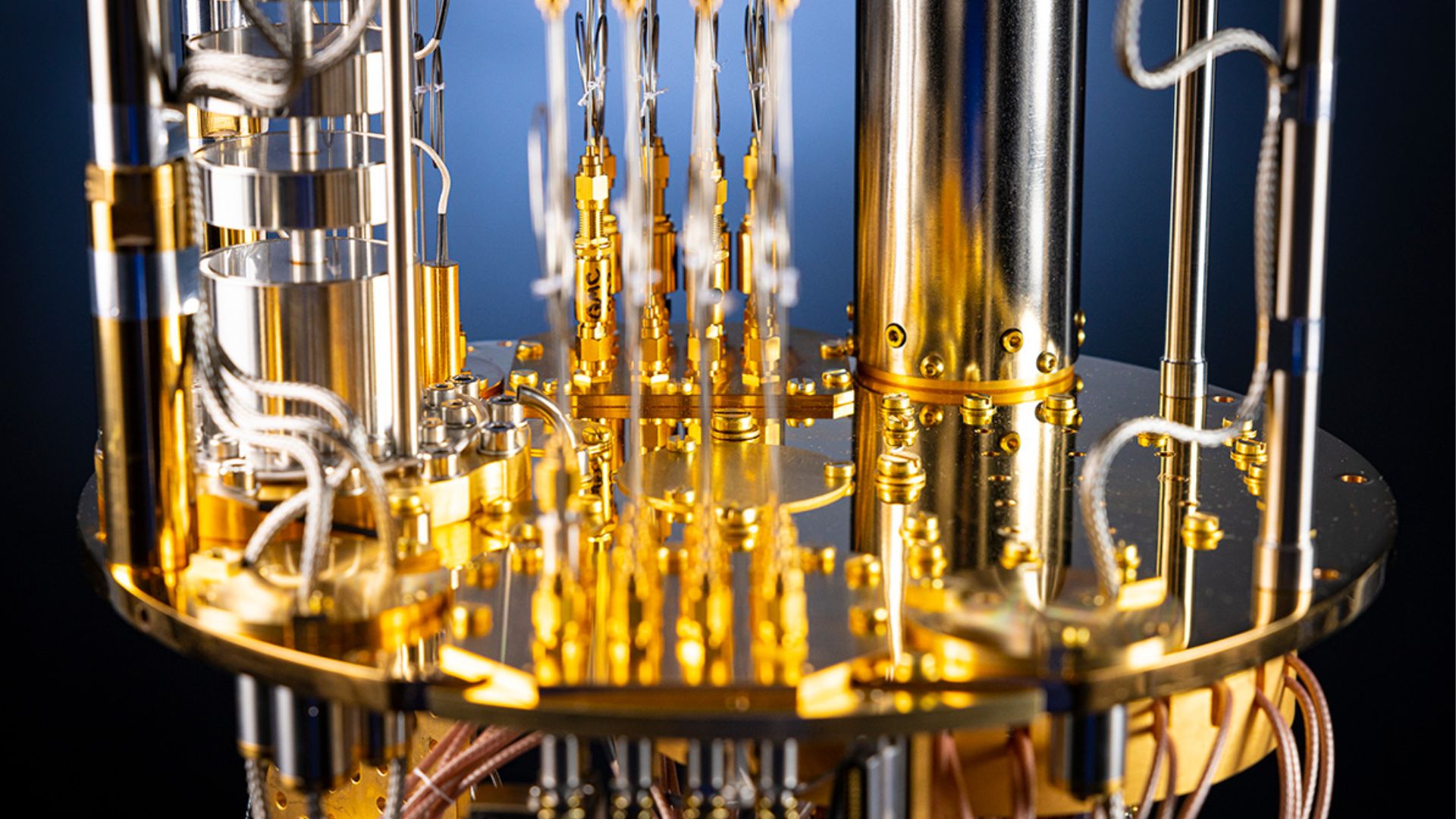
Researchers at the John Hopkins Applied Physics Laboratory (APL) teamed up with their counterparts at John Hopkins University to develop a comprehensive framework to model quantum noise for superconducting quantum processors. This is expected to help develop better error correction strategies leading to fault tolerant quantum computers in the future.
Quantum computing is the next big leap in computing that researchers are keen to develop thanks to its exponentially fast computational speeds. Even the world’s fastest supercomputers fall exceedingly short when compared to a quantum computer with just a few hundred qubits.
Yet, quantum computers aren’t being deployed to solve real-world problems. The reason is the error accumulation in quantum computation. Quantum bits or qubits are naturally prone to noise, where a change in temperature, electric or magnetic field can lead to the accumulation of errors, prompting the need to build robust error correction mechanisms.
Modeling noise in quantum computers
A research team led by Gregory Quiroz, a physicist at APL decided to study quantum noise in real operating environments for multi-qubit quantum computers. So, they accessed a quantum cloud consisting of 39 qubits across seven superconducting devices.
The researchers were keen to study transmons, a specific type of superconducting qubit which is known for its reduced sensitivity to noise from electric fields. Working with a cloud-based system also presented another challenge since the researchers did not have low-level access to the hardware.
However Quiroz noted that the challenge was much like a real world simulation, where users do not have low-level access to hardware in proprietary systems either. Instead of attempting to study noise effects on a single operation in detail, the researchers ran repeated computations on the quantum cloud to accumulate errors.
By looking into how errors accumulated and how deviant the answers were from those expected, the researchers were able to get valuable insights into how the physical system was working.
Building a comprehensive model
Attempts at studying errors in quantum computation have traditionally worked with only one type of error, either coherent or incoherent. The latter are errors where information stored on qubits is lost and not much can be done about them.
However, the coherent ones are caused by flaws in the hardware and are therefore fixable. Interestingly, APL’s approach of working with a quantum cloud allowed them to study both incoherent and coherent errors in the same framework.
We were able to put a wide variety of errors together into one model, which is simple in terms of parameters but also comprehensive in the types of phenomena it can describe — even predicting the performance of small quantum algorithms,” added Yasuo Oda, postdoctoral researcher, who worked with Quiroz on the model. “That’s our biggest contribution.”
“Now that we have this low-weight noise model, we have the opportunity to apply it across all levels of the quantum computing stack, from hardware design to algorithm design to error correction,” said Quiroz in a press release. “The information we can get from the model can inform every level of the quantum computing stack.”
The research findings were published in the journal PRX Quantum.