Login

China’s 82-foot electromagnetic sensor could hunt nuclear submarines underwater
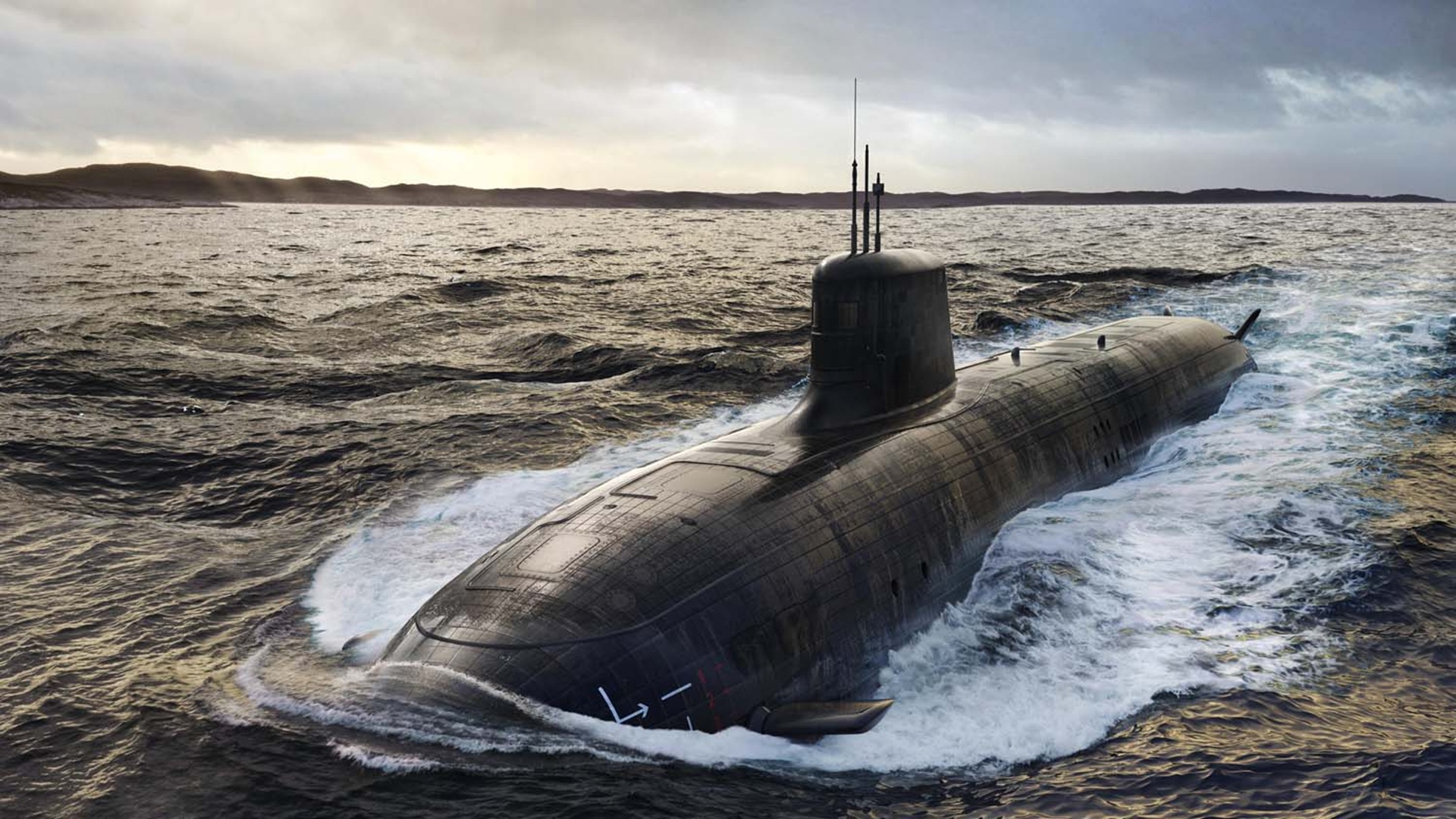
China has successfully tested a huge airborne electromagnetic detection system that could locate hidden nuclear submarines operating deep beneath the ocean surface.
The technology, called Airborne Transient Electromagnetic (Atem) detection, is reportedly made up of a helicopter towing a giant array of coils. The coils emit strong electromagnetic signals into the ground or water.
It is mainly intended to map underground and underwater structures for civilian applications, such as mineral exploration, groundwater mapping, and geological surveys. Previous studies, however, suggest the same approach could have great military potential.
Led by Fu Jingcheng, PhD, an associate professor at Beihang University and the Chinese Academy of Sciences’ Institute of Geology and Geophysics, the research team carried out a seven-minute helicopter test. During the trial, onboard sensors confirmed that the coil array could maintain the near-level stability required for precision detection.
A new detection tool
The South China Morning Post (SCMP) pointed out that the detection system is a towering structure that consists of three giant dodecagonal (12-sided) coils. Each of them measures roughly 82 feet (25 meters) across. These coils serve as the transmitter, compensation unit, and receiver.
They are suspended under a helicopter using a network of cables. The technology sends a powerful pulse of electricity through the transmitter coil. This generates a brief electromagnetic field.
Once the pulse ends, conductive materials below the surface produce secondary electromagnetic signals that are captured by the receiver coil. By analyzing how these signals decay, scientists can identify buried or submerged objects and also estimate their depth and composition.
However, maintaining stability during flight is one of the greatest limitations of airborne electromagnetic systems. Large suspended coil arrays can tilt and swing due to wind, helicopter rotor wash, and aircraft maneuvers. These movements can affect the accuracy of the collected data. Even moderate helicopter acceleration caused the massive structure to pitch by more than 20 degrees.
Overcoming the challenges
To overcome these issues, Jingcheng and his team developed a computer model that calculated the ideal cable lengths and tensions throughout the system. They then identified a flight configuration that kept the coils level during surveys.
What’s more, the researchers also attached a flexible aerodynamic film to the rear portion of the main transmitter coil. This film works as a passive stabilizer. It can suppress violent oscillations by exerting a restoring force.
A seven-minute flight confirmed the design’s ability to maintain the near-level orientation required for precision measurements. The trial also showed that rapid acceleration and sharp turns can cause the suspended load to swing violently, placing heavy strain on the cable.
The researchers noted that the detection system performs best when flown slowly and smoothly. Pilots should reduce speed before a turn, make the turn gradually, and only speed up afterward.
A 2012 study by researchers from Chang’an University and Shandong University proposed combining Atem systems with synthetic aperture imaging techniques to detect submerged submarines. Simulation experiments reportedly succeeded in identifying a scaled submarine model submerged in salt water.
The study has been published in the journal Acta Aeronautica et Astronautica Sinica on April 25.