10 June 2026 12:00pm – 1:00pm ET 9:00am – 10:00am PT
Community
Cosmic Origins
Type
Seminar
The ASTRA Initiative
Speaker
Jessica Gaskin
The ASTRA initiative will promote new strategic mission concepts for astrophysics, see here. We would like to encourage you to think about new strategic mission concepts for the coming decades of astrophysics.
As part of ASTRA, the Community Science (Ad ASTRA) Workshop will take place 1-3 September 2026 in Pasadena. New concept ideas will be discussed at this event.
To join the ASTRA initiative, mission concept template is now available, see here. There are also instructions for submission. Submitted concept ideas will be discussed at the September workshop.
12 June 2026 12:00pm-1:00pm ET / 9:00am-10:00am PT
Community
Cosmic Origins
TYpe
Seminar
Ground- and Space-Based Astronomy in the 2030s/2040s
Speaker
Rob Petre, NASA / GSFC
Abstract
The three Astrophysics Program Analysis Groups (PAGs) – the Cosmic Origins Program Analysis Group (COPAG), the Exoplanet Exploration Program Analysis Group (ExoPAG), and the Physics of the Cosmos Program Analysis Group (PhysPAG) – have been asked to jointly report up to six community prioritized mission concepts, in addition to the X-ray and Far-IR flagship mission concepts recommended by Astro2020, to the NASA Astrophysics Division Director, for consideration for entrance into the ASTRA Initiative. These concepts should be selected in the context of the current and planned international suite of ground- and space-based observatories. In this talk we present results adapted from one of the Habitable Worlds Observatory (HWO) Community Working Groups, in which we lay out the context of ground- and space-based observatories and missions expected to operate in the 2030s/40s. We summarize outputs from our community-driven mission database, which outlines the science goals and capabilities of observatories and missions expected to operate during that time period. This information enables identification of synergies between these planned facilities and potential new concepts, as well as capability gaps in the planned suite of observatories that could be filled by entrants to the ASTRA Initiative.
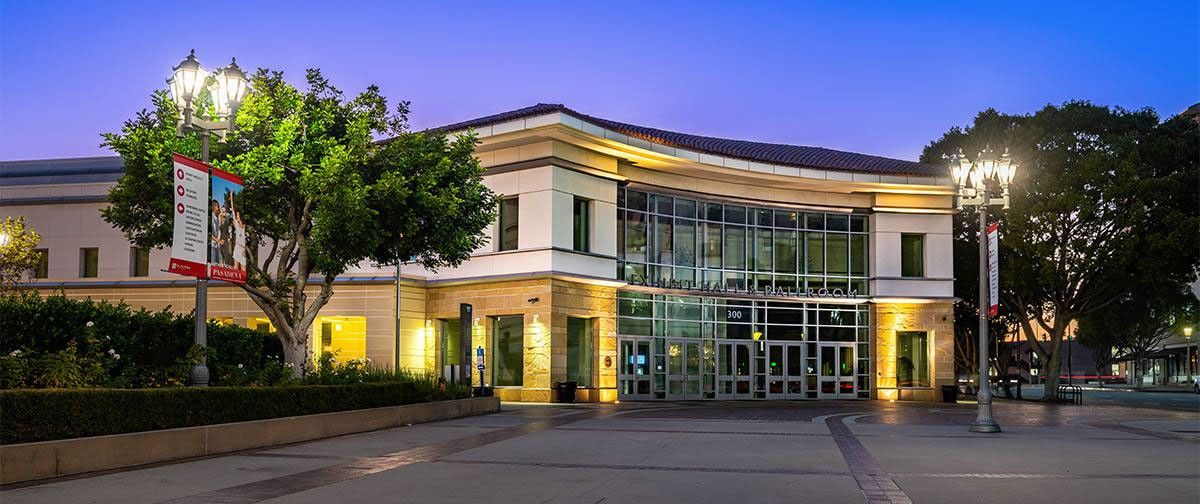
Pasadena Convention Center – Conference Center, 204
Summary
The opportunity to conduct focused science programs with small missions has increased as access to space becomes easier and more cost effective. This expansion opens the door to greater community participation in space missions, including by early-career scientists and those who may not have prior experience in building and designing such missions. This session seeks to bring together experts from the suborbital and low cost access to space community to hare their mission design process and experience launching missions for dedicated science.
As we approach the Astro2030 decadal survey it is timely to start discussions on innovative ways to perform science observations cheaper and faster by leveraging commercial capabilities for missions of all sizes.
Panel Moderator: Swara Ravindranath (NASA GSFC) Drew Miles (Caltech) Pablo Saz Parkinson (NASA HQ) Joseph Lazio (University of Michigan) Abe Falcone (Pennsylvania State University) David Ardila (JPL)
Cosmic Origins Science in the New Landscape of Space Astrophysics
Speaker
Swara Ravindranath, Deputy Chief Scientist of NASA’s Cosmic Origins Program (NASA GSFC)
Abstract
Cosmic Origins Science covers a broad range of topics that are fundamental to our understanding of the evolution of structure in the Universe and the physical processes that can explain the formation of galaxies, stars, and planets that we observe today. The various space telescopes that operate across the electromagnetic spectrum have been crucial to address some of the most fundamental questions related to our cosmic origins. The landscape of Space Astronomy is evolving fast with innovative technology, industry partnerships, and new commercial launch capabilities. In this talk, I will review the Cosmic Origins Program and discuss the new opportunities that offer strategic pathways for focused-science missions.
The Community Science (Ad ASTRA) Workshop is organized by the NASA Astrophysics Division to engage the community in defining future large, strategic astrophysics missions. Structured over three thematic days—Science, Capabilities, and Missions—the workshop provides a comprehensive framework to connect scientific priorities with technological readiness and mission implementation. Across all three days, plenaries, panels, breakout sessions, and poster contributions are designed to maximize community input. The outcomes of the workshop will help NASA prioritize mission concepts and shape a balanced, forward-looking astrophysics portfolio.
This workshop is organized by the NASA Astrophysics Program Offices in partnership with the Infrared Processing and Analysis Center (IPAC).
Important Dates:
Registration opens: March 31, 2026
Abstract deadline: June 24, 2026
Contributed talks/posters selection: July 1, 2026
Deadline for in-person registration: August 15, 2026
Deadline for virtual registration: August 31, 2026
Plan for the Workshop: Deliverables and Mandate (Day 2 focus)
EC PAG Chairs
9:10am
Innovation Workshop Summary
Innovation Workshop SOC speaker
9:50am
NASA Strategic Technology Gaps
Chief Technologist from PAGs
10:10am
Morning Break
10:40am
Emerging Technologies (session)
Presentations from community/industry members (TBA)
12:30pm
Lunch
Afternoon
2:00pm
Astrophysics Technology: Capabilities Needed
Parallel Breakout Sessions: What are the capabilities needed (software and hardware, platform, location) relevant to the ASTRA submitted mission concepts?
-Breakout categories TBD
Contributed presentations from community members (TBA after abstract selection)
4:00pm
Afternoon Break
4:45pm
Synthesis panel to summarize the breakout sessions on capabilities

 Login