
❌

Reading view

Supersonic!

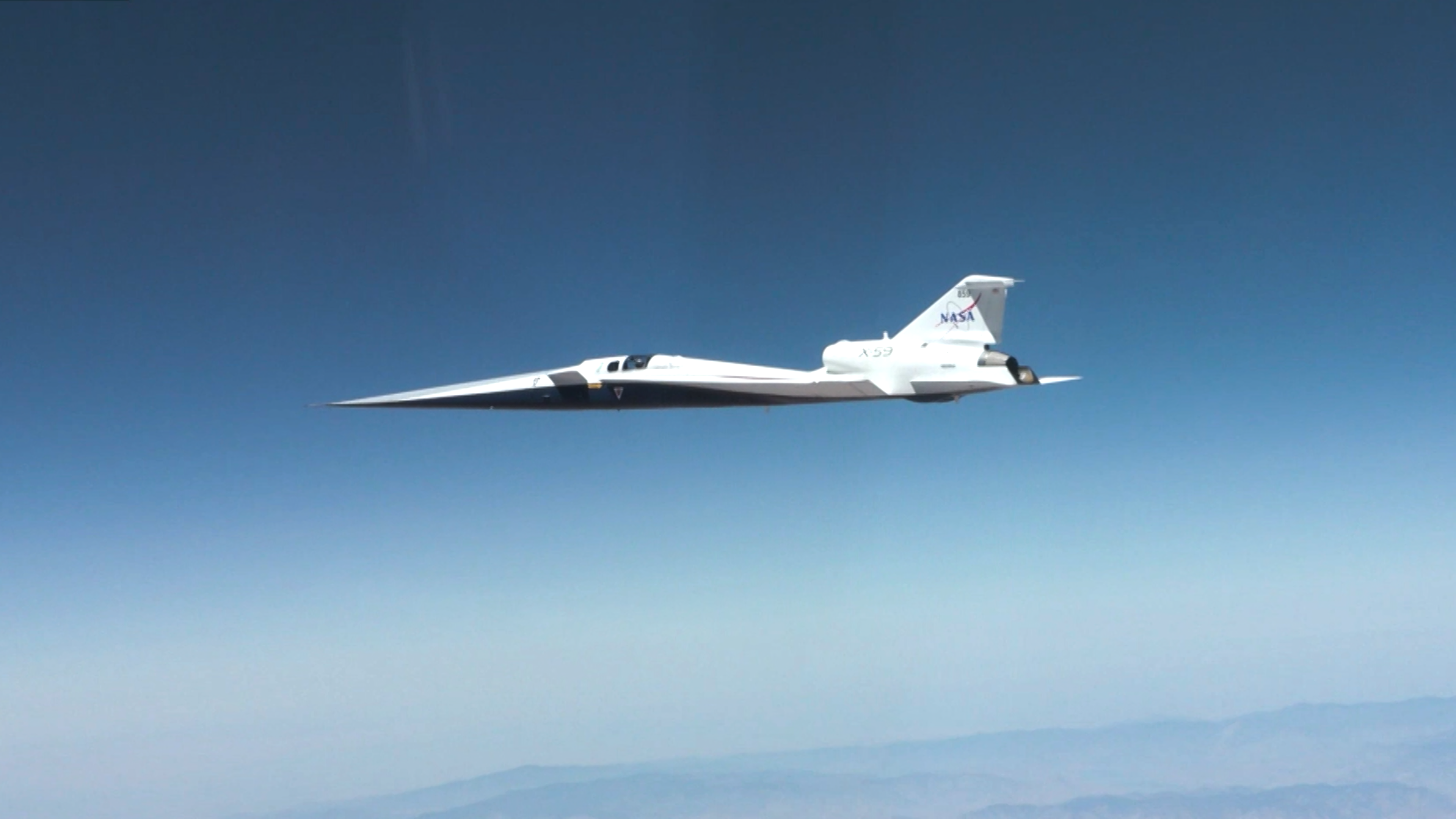
NASA’s X-59 quiet supersonic research aircraft flies through the blue sky. The plane has a distinctive long, sharp nose. There are mountains visible at the bottom of the photo.
NASA/Lori Losey

On June 5, 2026, NASA’s experimental X-59 aircraft flew faster than the speed of sound for the first time, setting the stage for demonstrating its quiet supersonic capabilities later this year. NASA test pilot Jim “Clue” Less took off and landed at Edwards Air Force Base in California, reaching a top speed of approximately Mach 1.1 (713 mph). The flight lasted 81 minutes, with the team focusing on flying qualities at both subsonic and then supersonic speeds.

The X-59 is the centerpiece of NASA’s Quesst mission, which aims to demonstrate quiet supersonic flight and help enable commercial supersonic flight over land worldwide. These advancements will help travelers reach their preferred destinations faster, spending less time in the air.

Learn more about the milestone and Quesst.

Image credit: NASA/Lori Losey
  •  

Colorful, Chaotic Jupiter

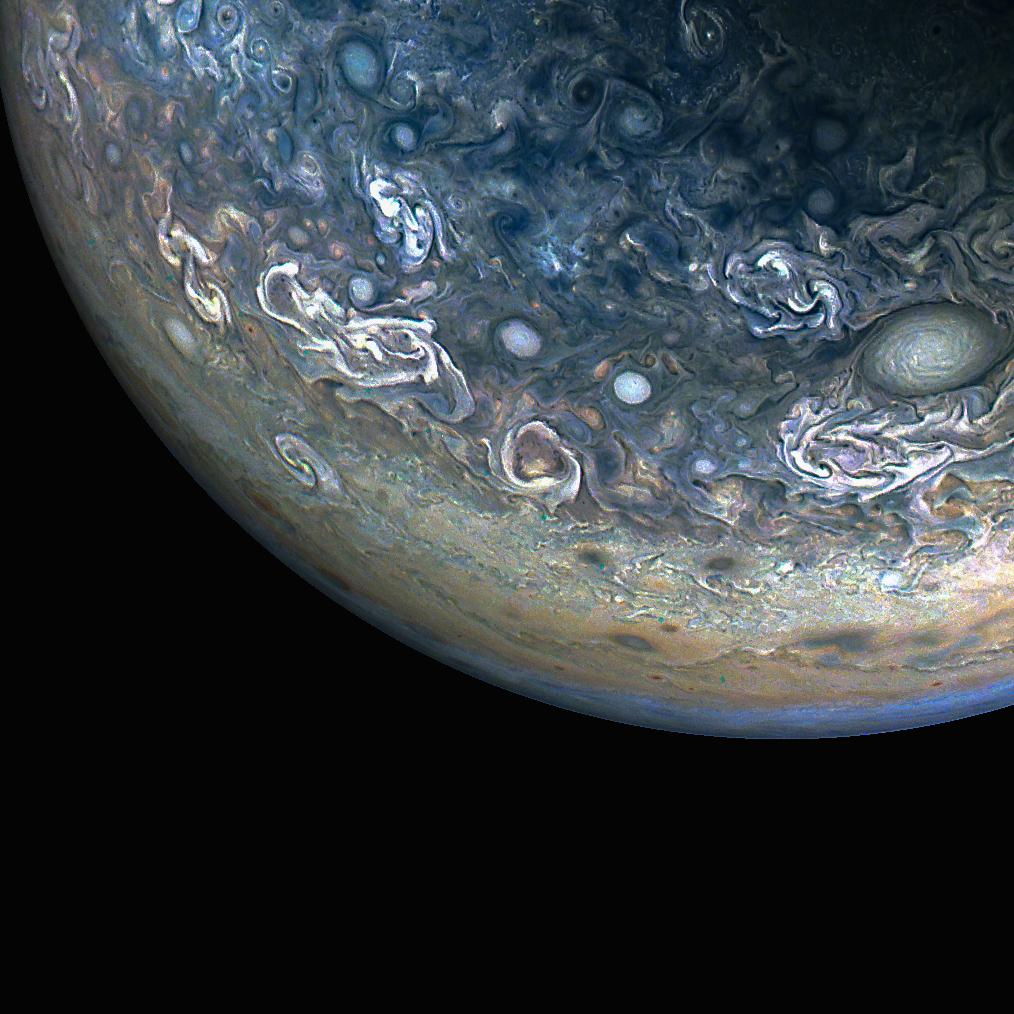
Three quarters of Jupiter can be seen in this photo; the darkness of space covers the bottom of the image. Green and blue swirls cover the planet's surface.
NASA/JPL-Caltech/SwRI/MSSS; Image processing by Gary Eason © CC BY

NASA’s Juno spacecraft captured this color-enhanced view of Jupiter’s northern hemisphere during its 61st close flyby of the giant planet on May 12, 2024.

Citizen scientist Gary Eason made this image using raw data from the JunoCam instrument, applying digital processing techniques to enhance color and clarity. It provides a detailed view of chaotic clouds and cyclonic storms in an area known to scientists as a folded filamentary region. In these regions, the zonal jets that create the familiar banded patterns in Jupiter’s clouds break down, leading to turbulent patterns and cloud structures that rapidly evolve over the course of only a few days.

Learn more about opportunities to do NASA science with citizen science projects.

Image credit: NASA/JPL-Caltech/SwRI/MSSS; Image processing by Gary Eason © CC BY

  •  
❌