❌

Reading view

7 futuristic aircraft moving closer to real-world service
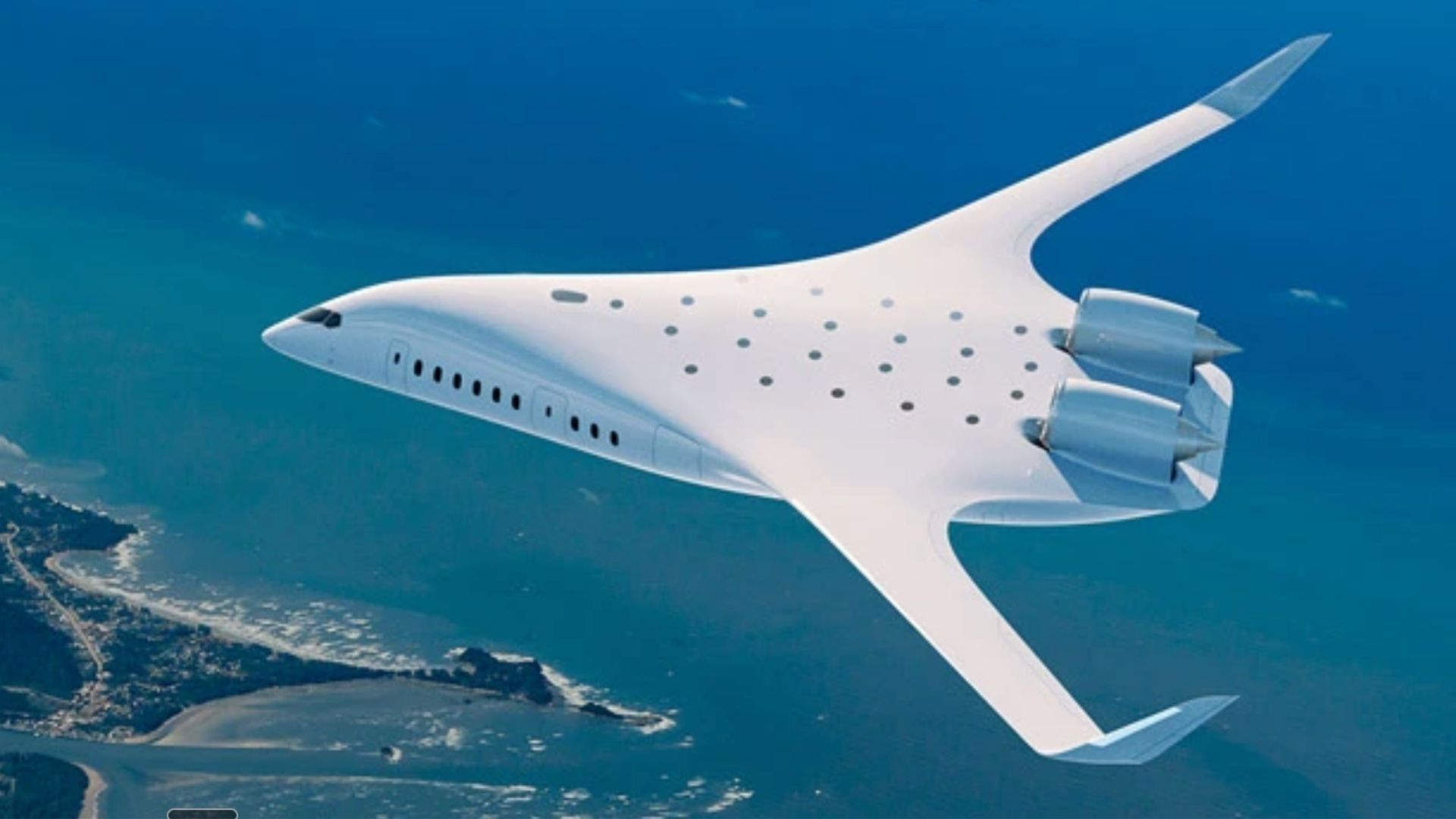
Aviation is entering a strange but exciting phase.

For decades, most passenger aircraft have followed the same basic design: a long tube, two wings, and engines under the wings. But that may not remain the case forever.

A new generation of aircraft is progressing at different speeds, ranging from early research concepts to full-scale flight demonstrators. Some are focused on cutting fuel burn. Others are built around electric propulsion, hydrogen, or completely new aircraft shapes.

Not all of them will enter service quickly. Some may arrive by the late 2020s, while others may take until the 2030s or even later. But all of them show where the future of aviation could be heading.

1. Boeing X-66A Truss-Braced Wing

Credit: Wikimedia Commons

Boeing’s X-66A is not a normal passenger plane. It is a NASA-backed demonstrator designed to test a new wing concept.

The aircraft uses an ultra-long, thin wing supported by diagonal trusses. This design is called the Transonic Truss-Braced Wing. The idea is simple: longer and thinner wings can reduce drag, but they need extra support to remain strong.

NASA and Boeing expect the design to cut fuel burn by around 8–10% compared with the best single-aisle jets available today. The first flight is planned for 2028.

If the technology works, it could influence the next generation of 130- to 210-seat aircraft in the early-to-mid 2030s.

2. Heart Aerospace ES-30

Credit: Heart Aerospace

The Heart Aerospace ES-30 is one of the more practical aircraft on this list.

It is a 30-seat hybrid-electric regional aircraft designed for short routes. On battery power alone, it can fly up to 124 miles (200 kilometers) with zero emissions.

In hybrid mode, its range can increase to around 249 miles (400 kilometers) with a full passenger load, or up to 497 miles (800 kilometers) with fewer passengers and reserves.

This makes it useful for short regional flights where fully electric aircraft may still struggle because of battery limitations.

Heart Aerospace is targeting entry into service around 2028. Airlines such as Air Canada, United, and Mesa have already shown interest through orders.

3. JetZero Pathfinder / Z4
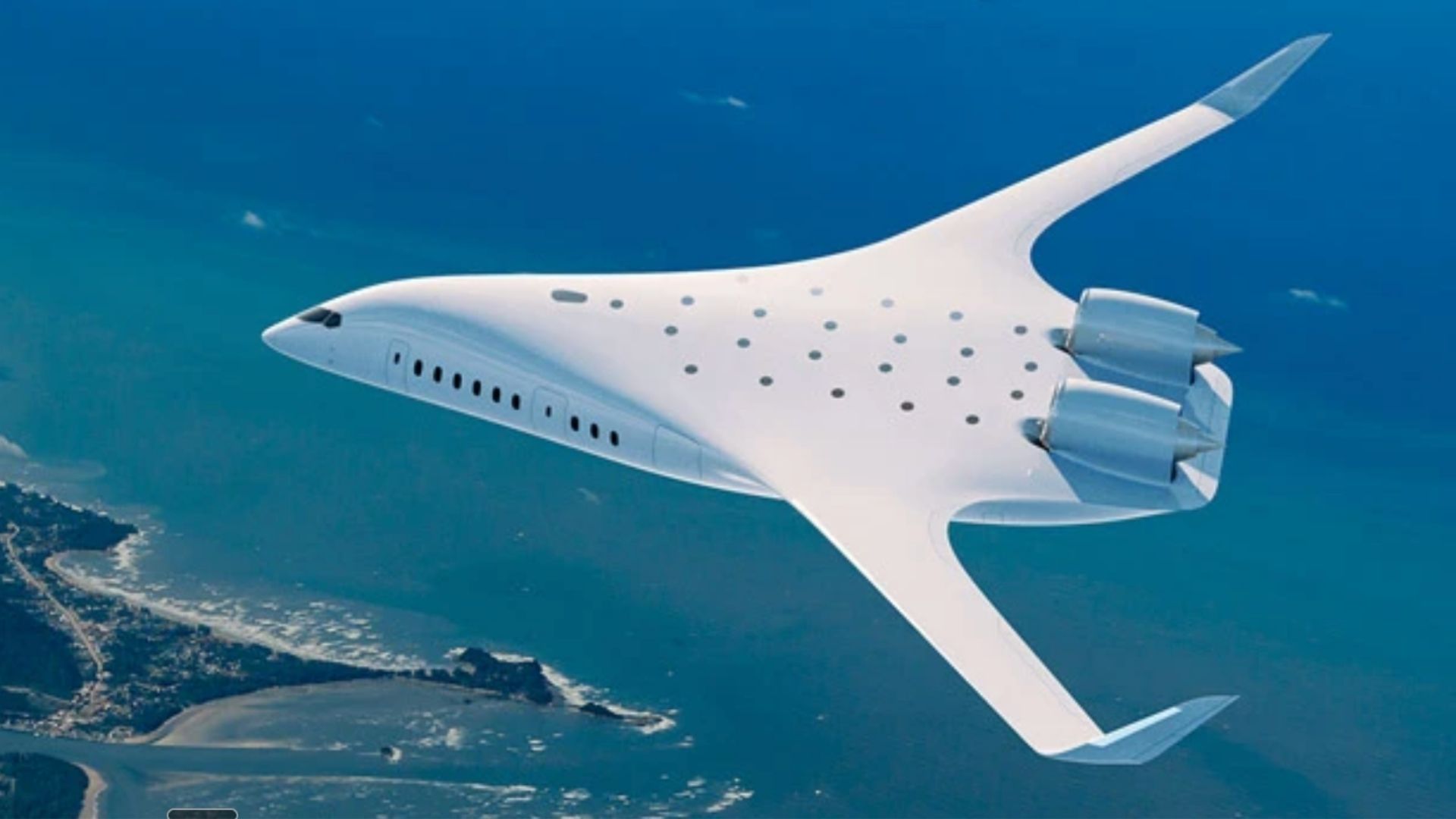
Credit: JetZero

JetZero is developing one of the most radical aircraft designs on this list.

The California-based startup is working on a blended-wing-body aircraft, where the wings and fuselage are merged into one large lifting surface. Instead of looking like a traditional tube-and-wing airliner, the aircraft has a much wider, flatter shape.

The main advantage is efficiency. Since more of the aircraft helps generate lift, the design can reduce drag and burn less fuel. JetZero claims its Z4 aircraft could cut fuel burn and emissions by up to 50% compared with similar aircraft flying today.

The 250-passenger Z4 is expected to have a range of roughly 5,754 miles (9,260 kilometers).

4. Airbus ZEROe Hydrogen Aircraft

Credit: Airbus

Airbus’s ZEROe program is one of the biggest attempts to bring hydrogen-powered aircraft into commercial aviation.

The original goal was to introduce a hydrogen aircraft around 2035, but the timeline now appears more likely to move toward the late 2030s or around 2040.

Early concepts included hydrogen turbofan aircraft, turboprops, and even a blended-wing-body design. Airbus has since focused more on fuel-cell-driven electric propulsion, where hydrogen is used to generate electricity for propellers.

If successful, ZEROe could become one of the world’s first large zero-emission commercial aircraft.

5. Bombardier EcoJet

Bombardier’s EcoJet is a futuristic business jet research project.

Like JetZero’s aircraft, it uses a blended-wing-body design to improve efficiency. Bombardier says the project could help cut emissions by as much as 50% compared with today’s business jets.

The company has already been testing an autonomous demonstrator with an 18-foot wingspan. The goal is to study aerodynamics, structures, and systems before applying the lessons to future aircraft.

There is no firm service date yet, but Bombardier sees EcoJet as a step toward the future of low-carbon business aviation.

6. Flying-V Long-Haul Concept
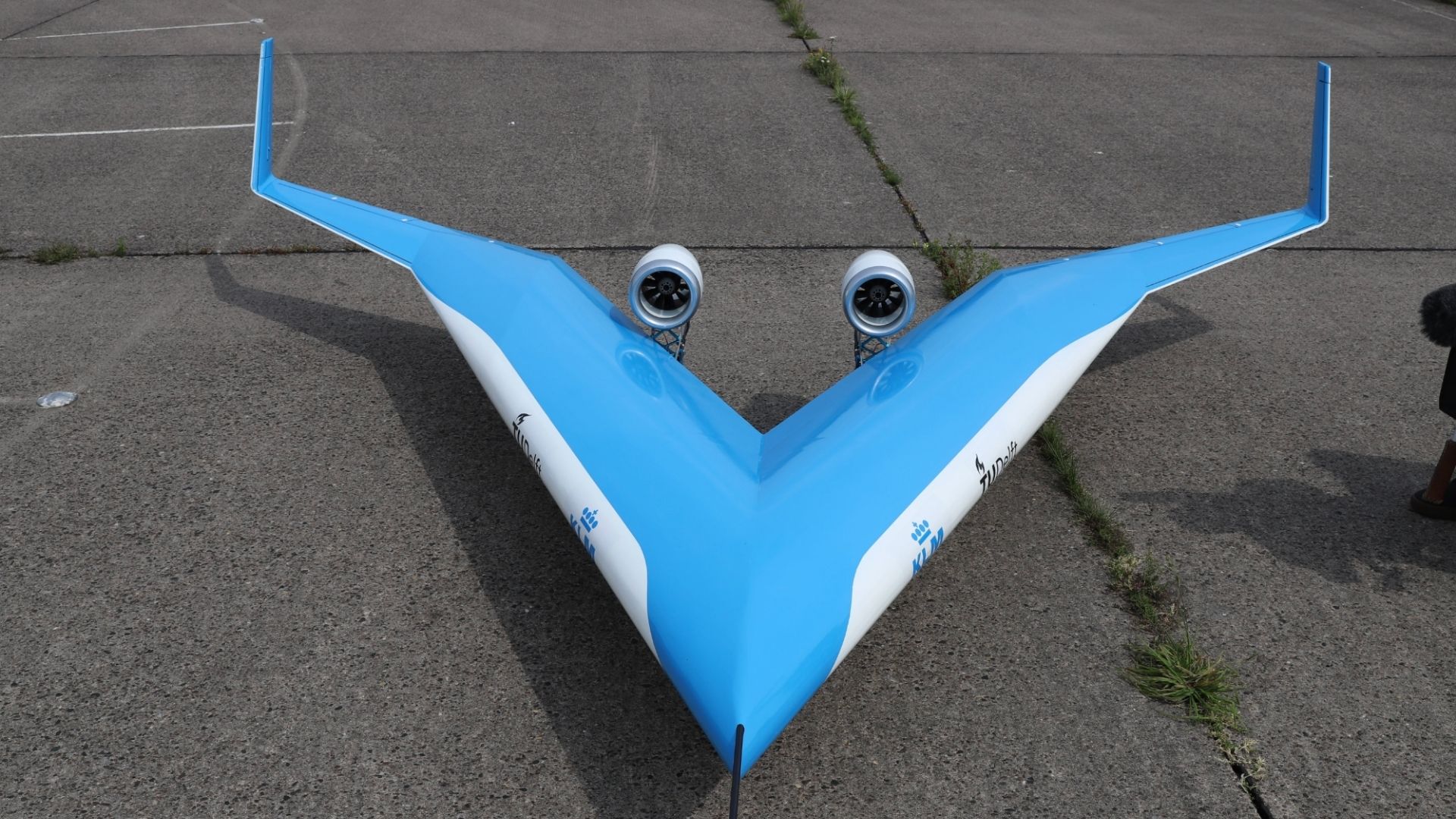
Credit: Flying V

The Flying-V is one of the strangest-looking aircraft concepts in development.

Created by KLM and TU Delft, the aircraft has a V-shaped design where passengers, cargo, and fuel are all placed inside the wings. It is designed to carry about the same number of passengers as an Airbus A350 while using around 20% less fuel.

A small-scale model has already completed its first flight. However, this is still a long-term project. Researchers believe a commercial Flying-V would not carry passengers before around 2040 at the earliest.

7. Eviation Alice Electric Commuter

Eviation’s Alice is a fully electric commuter aircraft designed to carry nine passengers.

It completed its maiden flight in 2022 and showed how quiet, clean short-range electric aviation could look.

However, battery limitations have made the project difficult. Its expected range has been reduced to around 288 miles (463 kilometers), and entry into service has been delayed several times.

The project was also paused in 2025. Still, if the company can solve its funding and technology challenges, Alice, or an aircraft inspired by it, could become one of the first fully electric commuter planes to enter commercial service.

Taken together, these seven projects show that the future of flight is not a single silver bullet, but a portfolio of electric, hybrid, hydrogen, and radically aerodynamic designs converging on the same goal – drastically lower emissions and noise without giving up speed or range.

  •  

7 natural wonders on Earth that look almost unreal

Earth is filled with places and phenomena so spectacular that they seem almost unreal.

From glowing skies to giant reefs, massive canyons, towering mountains, and roaring waterfalls, the planet’s greatest natural wonders show just how powerful and diverse nature can be.

While different lists exist, these seven natural wonders are unanimously celebrated for their scale, beauty, and uniqueness.

1. Aurora Borealis

Credit: Wikimedia Commons

The Aurora Borealis, or northern lights, is one of the most magical sights on Earth. It appears when charged particles from the sun collide with gases in Earth’s upper atmosphere, creating glowing waves of green, pink, violet, and sometimes red light.

The display is never exactly the same twice, which makes it feel alive and unpredictable. Seen in polar regions on clear dark nights, it is one of the few natural wonders that can turn the sky itself into a spectacle.

2. Grand Canyon

Credit: Wikimedia Commons

The Grand Canyon in Arizona, USA, is one of the world’s most famous geological landmarks. Carved by the Colorado River over millions of years, it reveals layer after layer of rock that tells the story of Earth’s ancient past.

Its vast scale, steep cliffs, and shifting colors make it look different throughout the day. At sunrise and sunset, the canyon becomes especially dramatic, with light and shadow deepening its immense depth.

3. Great Barrier Reef

Credit: Wikimedia Commons

The Great Barrier Reef off the coast of Australia is the largest coral reef system on the planet. Stretching over an enormous area, it is made up of thousands of reefs, islands, and cays.

Beneath the surface lies a thriving world of coral, fish, turtles, sharks, and countless other species. It is not only beautiful but also ecologically vital, serving as one of the richest marine habitats on Earth. Its scale and biodiversity make it a true natural treasure.

4. Harbor of Rio de Janeiro

Credit: Wikimedia Commons

The Harbor of Rio de Janeiro is famous for its stunning setting, where the sea meets steep mountains and rocky peaks. Sugarloaf Mountain and the surrounding coastline create a natural amphitheater around the city.

The combination of water, stone, and urban life gives Rio one of the most dramatic landscapes anywhere in the world. It is a place where geography and beauty come together in a way that feels almost cinematic.

5. Mount Everest

Credit: Wikimedia Commons

Mount Everest is the highest mountain above sea level on Earth and one of the most iconic peaks in human history. Rising from the Himalayas, it stands as a symbol of endurance, adventure, and extreme natural grandeur.

Its snowy summit and harsh conditions make it both beautiful and formidable. For climbers, it represents one of the greatest challenges imaginable; for everyone else, it remains a breathtaking reminder of how high and powerful the Earth can be.

6. Parícutin

Credit: Wikimedia Commons

Parícutin, in Mexico, is one of the rarest natural wonders because people actually witnessed its birth. In 1943, a volcano erupted suddenly in a farmer’s field and began growing rapidly from the ground.

Within a short time, it had formed a new volcanic cone and reshaped the surrounding landscape. Unlike ancient mountains or reefs, Parícutin is a modern geological event, making it a unique example of nature creating something new before human eyes.

7. Victoria Falls

Credit: Wikimedia Commons

Victoria Falls, on the border of Zambia and Zimbabwe, is one of the largest and most powerful waterfalls in the world. The Zambezi River plunges into a deep gorge, creating a massive curtain of water and a cloud of mist that can rise high into the air.

The local name, “The Smoke That Thunders,” captures the sound and force perfectly. Victoria Falls is unforgettable because it combines raw power with extraordinary beauty in one dramatic scene.

Taken together, these seven wonders highlight the many forms greatness can take in nature. Some are visible in the sky, some carved into stone, some hidden beneath the sea, and others formed by fire or water.

What they all share is the ability to inspire awe. They remind us that Earth is not only our home, but also a planet full of extraordinary wonders waiting to be seen.

  •  

MIT team uses diamond to cool gallium-nitride chip to boost wireless electronics

Researchers at MIT and elsewhere have developed a chipmaking technique that could help future wireless systems become faster, more powerful, and more energy-efficient.

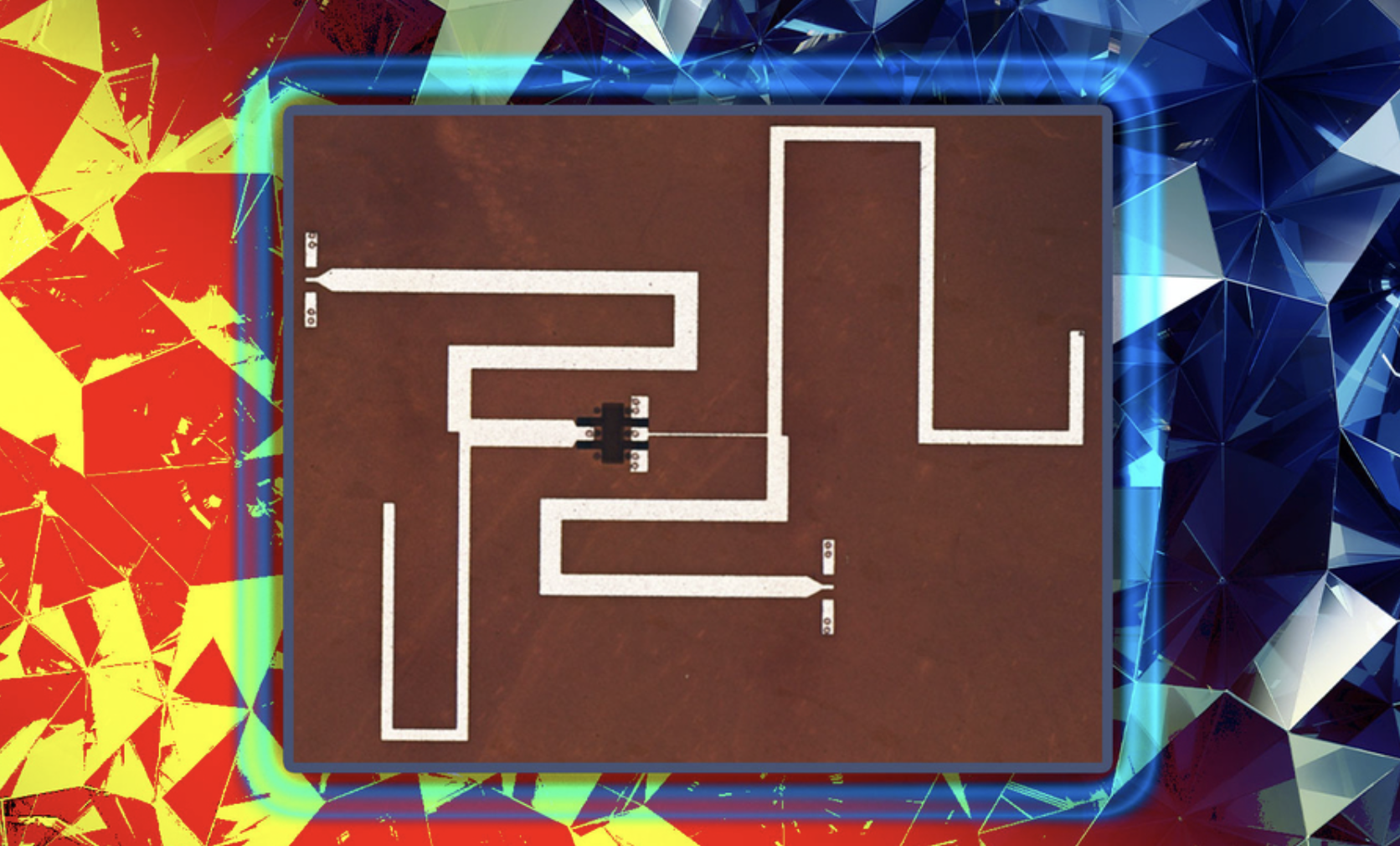
The team embedded gallium nitride transistors into an ultrathin diamond layer, enabling the diamond to act as a heat spreader within the chip. 

The approach helps normalize temperature across the device, letting the transistors approach peak performance without reducing reliability.

A promising alternative

Gallium nitride, or GaN, is seen as a promising alternative to silicon for demanding wireless applications such as 6G and satellite communications.

Silicon, which forms the foundation of most computer chips, has fundamental limits in how much power it can manage. GaN can handle higher speeds and energy levels, but heat remains a major obstacle.

As more GaN transistors are packed into smaller areas on silicon chips, localized hot spots can degrade reliability and hamper performance. The new diamond-based method is designed to address that bottleneck.

“No single material can do everything well in a wireless device, so these 3D heterogeneously integrated systems are here to stay,” said Pradyot Yadav, a lead author of a paper on this advance.

“The key challenge left has been reliability and thermal management, and we might have now unlocked the final step we need to make these systems operate at scale and high volume,” he added.

A multimaterial chip design for faster wireless systems

The work builds on heterogeneously integrated systems, where multiple materials are stacked into one package to use the strengths of each.

MIT researchers had previously stacked GaN on silicon and glass to create higher-performance chips.

However, each material in such a chip can operate at a different temperature, which can affect reliability.

The researchers used a lab-grown, jewelry-grade diamond. Diamond has the highest thermal conductivity of any known material, and advances in single-crystal diamond wafer growth have made its use in chips more feasible.

Earlier work involved growing ultrathin diamond layers on top of GaN transistors. But that process is difficult to scale and can introduce unwanted capacitances that slow circuit operations.

Instead, the MIT-led team embedded tiny GaN transistors, called dielets, into an ultrathin single-crystal diamond interposer.

Embedding transistors into the diamond

“By putting these GaN transistors into a diamond interposer, we are actually able to improve the performance of the device, as opposed to degrading it. We can get the best of both worlds,” Yadav said.

The process begins with a femtosecond laser cutting GaN dielets from a wafer and drilling precise cavities into the diamond substrate. A 20-micron die attach film is placed at the bottom of each cavity before the dielet is added.

New benchmark for GaN chips

The team then stacked dielectric and metal layers on top of the GaN and diamond to create a working circuit. Using the method, the researchers built a power amplifier for wireless communications.

The amplifier achieved higher output power, efficiency, and gain than any similar device the researchers found in the literature, including one they designed in prior work.

The results show that the technique could support demanding applications such as high-power radars, space communications, and industrial drones.

It could also be used to manage heat in systems that convert power in data centers, thereby improving energy efficiency.
  •  

Humanoid robot with embodied intelligence to run convenience store 24/7 in Hong Kong

Hong Kong is preparing to open its first convenience store operated by a humanoid robot, marking a new step in the city’s push to bring artificial intelligence into everyday public life.

The 24-hour outlet will be located on the Hung Hom waterfront and is expected to serve both residents and visitors in multiple languages.

Financial Secretary Paul Chan revealed the plan in his weekly blog, framing the project as part of Hong Kong’s broader effort to boost public understanding of artificial intelligence and support practical, people-facing applications of the technology.

The shop is being developed by a mainland Chinese firm specializing in embodied AI.

Its Hong Kong launch will be the company’s first venture outside the mainland, a move Chan described as an endorsement of the city’s open market and its role as a showcase for global innovation.

A humanoid robot behind the counter

The store will be powered by a humanoid robot nicknamed “Xiao Gai”, designed to interact directly with customers as they approach the outlet.

The robot can initiate friendly conversations, encourage browsing, and support purchases inside the compact retail space.

The store itself will use a nine-square-meter capsule format that can be configured for different product categories. According to the provided details, it can sell snacks, creative merchandise, and even over-the-counter medicines.

The model follows the company’s earlier “Galaxy Space Capsule” store in Beijing’s Haidian district.

That outlet was billed as the world’s first retail store routinely operated by a humanoid robot and has reportedly served around 1,000 customers daily since early August.

For Hong Kong, the waterfront capsule is positioned not just as a retail experiment, but also as a public-facing demonstration of how embodied AI could be integrated into ordinary city environments.

Embodied AI moves into public retail

Embodied AI refers to artificial intelligence placed inside physical systems, including robots and autonomous vehicles. These systems use sensors to read their surroundings, make instant decisions, and interact with the real world.

In the case of the humanoid robot convenience store, that means AI is not limited to a screen or chatbot interface. Instead, it becomes part of a physical service environment where customers can interact with a robot in person.

The company says the capsule format can help attract customers and create a high-tech service image for host cities. It claims nearby customer traffic can rise by 30–40 per cent after installation.

The firm is planning a wider rollout of 100 such capsules across 10 cities in the coming months.

Hong Kong pushes AI adoption

The robot-run store comes as Hong Kong looks to strengthen its position in embodied intelligence, talent, and innovation.

Chan also disclosed that a high-level government committee on AI development has been established in the city. The committee is expected to hold its first meeting this month.

The move signals that the administration is looking beyond long-term AI policy planning and toward practical deployments that residents and visitors can experience directly.

  •  

Electric excavator runs 50% longer using Danish engineering firm’s new hydraulic tech

A Danish engineering called Danfloss has developed a new digital hydraulic system designed specifically for electric construction equipment, claiming it can reduce energy consumption from a machine’s battery by 35% and improve runtime by more than 50%.

The breakthrough could prove significant for heavy-duty machinery, where electrification has often faced a major challenge: battery-powered machines must deliver enough runtime and productivity to match the demands of construction and mining work.

The project began with a Develon DX300LC-7 crawler excavator, which was converted into a fully electric machine.

The excavator was fitted with a Danfoss Editron EM-PMI375 drive motor, EC-C1200 inverter, and MC050 motor controller, along with three 140-kWh batteries.

The key change, however, came in the hydraulic system. Engineers replaced the excavator’s conventional swashplate hydraulic pump with a newly developed DDP180D pump motor designed to service the boom, arm, bucket, and swing functions.

Digital hydraulics cut battery demand

Unlike a conventional hydraulic setup that supplies constant power and pressure throughout the system, the new unit uses ten individually controllable outlets. These outlets provide hydraulic force only where it is needed, instead of continuously feeding the whole system at a peak-load level.

This allows designers to build around the machine’s average workload rather than its peak load. The result is a more efficient electric excavator that can perform significantly more work using the same amount of stored battery energy.

By reducing unnecessary hydraulic losses, the system cuts battery energy consumption by 35%.

In practical terms, this gives the machine more than 50% additional runtime, a major improvement for electric construction equipment that must operate for long work cycles in demanding environments.

“We are extremely encouraged by these results, but there is more work to do,” said Alasdair Robertson, senior director, Digital Displacement, Danfoss Power Solutions.

“Further gains are possible, and we will continue optimizing the system to maximize the energy savings and value for our customers,” he continued.

UK grant supports red diesel alternatives

The electrification project was partly funded through a grant from the UK’s Red Diesel Replacement Phase 2 Competition.

The program is designed to advance the development of lower-emission alternatives to red diesel used in the construction and mining industries.

Red diesel has long powered off-highway equipment, but industries that rely on heavy-duty machinery are increasingly looking for cleaner alternatives.

Electrification is one route, but battery size, runtime, and total cost of ownership remain central concerns.

Longer runtime could accelerate adoption

For electric construction machines, performance is not just about emissions. Operators also need smooth control, productivity, and cost advantages before battery-electric machines can be adopted more widely.

“Electric excavators offer excellent responsiveness, smooth control, a quiet cab environment and zero-emission operation,” added Robertson.

“With Dextreme Max, they can also deliver the runtime, productivity and total cost of ownership advantages required for wider adoption, thereby accelerating the decarbonization of heavy-duty machinery,” he said.

If the system can be scaled successfully, it could help make electric excavators and other heavy-duty machines more practical for real-world construction and mining operations.

By extending runtime while lowering battery energy demand, the technology could remove one of the biggest barriers facing off-highway electric vehicles.

  •  

Scientists design 2D materials with atomic precision for future devices, next-gen technologies

Scientists at the U.S. Department of Energy’s Argonne National Laboratory are pushing materials design closer to the atomic scale by showing how MXenes can be tailored almost atom-by-atom for advanced technologies.

In two recent publications, researchers demonstrated new ways to control the types of atoms in MXenes, where those atoms sit, and what chemical groups attach to their atom-thin surfaces.

MXenes, pronounced “max-eens,” are a family of two-dimensional materials often just a few atoms thick. They are mainly made from transition metals, such as titanium, vanadium, or molybdenum, bonded to carbon and/or nitrogen.

Expanding the MXene material family

MXenes begin as layered solids called MAX phases. When researchers chemically remove one type of layer from a MAX phase, the remaining sheets can be separated into thin, flat MXene layers.

“I like to imagine MAX phases as a textbook with all the pages glued shut and MXenes as a single page you want to extract,” explained Brian Wyatt, a Maria Goeppert Mayer Fellow at Argonne.

“You have to dissolve the glue and coax that page out. The glue and pages represent different chemical environments, so atoms prefer to be near certain layers,” he added.

In work published in Science, Argonne scientists created 40 different MAX phases, each containing at least two metals and, in some cases, as many as nine metals in a single structure.

The achievement nearly doubled the known chemical space that can be used to make MXenes.

When atomic order breaks down

The researchers found that atomic ordering can continue when a material contains up to six different metals. But when seven or more metals are added, the pattern breaks down and the atoms become truly disordered.

“This is where entropy, the natural tendency toward randomness, wins,” Wyatt said. “Nature likes some kinds of order, but once we add enough different ingredients, it becomes too hard for the atoms to stay organized,” he added.

Using secondary ion mass spectrometry, or SIMS, the team measured the material layer by layer to see where different atoms were located.

Designer materials for future technologies

“We like to say that these are like designer materials,” Wyatt said. “If I want a certain application, I use these compositions; if I want something different, I use others. The class is so big, we can design for what we need.”

One promising use is electromagnetic interference shielding, where MXenes can block unwanted signals even in nanometer-thick coatings.

Researchers are also studying them for catalysis, where their exposed 2D surfaces could reduce the need for costly materials such as platinum.

“The tunability of MXenes is key for catalysis,” Muhoza said.

“Sometimes you need specific metals as active sites, but only a small area of bulk material is actually active. With MXenes, you can put those metals on a 2D structure, so they’re all exposed,” he added.

The next challenge is scaling these materials for manufacturing and industry adoption. Artificial intelligence and machine learning may help researchers identify which element combinations are most worth testing.

  •  

US lab’s rotating detonation engine breakthrough could boost gas turbine efficiency

Researchers at the National Energy Technology Laboratory (NETL) have designed and tested a key component for rotating detonation engines (RDEs), an emerging combustion technology that could help make next-generation gas turbines more efficient, less fuel-intensive, and cleaner.

The work focuses on pressure gain combustion, a long-sought advancement in turbine technology.

Unlike conventional gas turbine combustion, which typically loses pressure during the combustion process, pressure gain combustion can increase pressure as fuel is burned.

This could significantly improve turbine performance while reducing fuel use and lowering nitrogen oxides emissions.

Detonation waves instead of conventional combustion

Rotating detonation engines operate in a fundamentally different way from today’s turbine combustors. Instead of relying on conventional flame-based combustion, RDEs use rapidly moving detonation waves inside a chamber.

These waves release energy quickly and generate high-pressure pulses that can potentially improve overall engine efficiency.

“We could achieve pressure gain combustion with RDEs because they operate using detonation waves rather than conventional combustion used in today’s gas turbines,” said NETL’s Justin Weber, who leads this project with his colleagues in the Lab’s Advanced Turbines research team.

“Detonations release energy more rapidly, forming a high-pressure pulse and shock wave. But transitioning this concept into reliable hardware has long posed scientific and engineering challenges — particularly in ensuring stable, repeatable detonation under varying operating conditions,” he continued.

That challenge has been one of the major barriers to turning RDEs from a promising laboratory concept into practical hardware for turbine-scale systems.

Computer modeling guides injector redesign

To address the issue, NETL researchers used high-fidelity computational fluid dynamics simulations to redesign the injector that delivers fuel and air into the detonation chamber.

Earlier injector concepts suffered from startup instabilities, making it difficult to reliably generate and sustain the detonation waves needed for RDE operation.

The team used CFD modeling to examine how injector geometry, flow distribution, and fuel-mixing behavior affected wave formation.

This approach helped researchers develop a novel-aero strut injector configuration. According to NETL, the new design can sustain detonation waves while producing a lower pressure drop across the injector, improving performance.

The research demonstrates how advanced modeling can accelerate hardware development by reducing reliance on trial-and-error testing. It also gives researchers a deeper understanding of how combustion dynamics change under extreme operating conditions.

Stable waves confirmed in testing

NETL then tested the redesigned injector using its water-cooled RDE test platform, a research rig built to withstand extreme thermal loads during high-pressure detonation.

“To validate the new design, we integrated the injector into NETL’s water-cooled RDE test platform — an advanced research rig designed to withstand extreme thermal loads during high-pressure detonation,” Weber said.

The result directly supports NETL’s Advanced Turbines Program, which is focused on maturing pressure gain combustion and reducing technical risks for next-generation gas turbines.

A stable injector is considered a critical building block for practical RDE-based systems. By demonstrating consistent detonation behavior across multiple conditions, NETL has moved the technology closer to real-world deployment.

Researchers now plan to continue refining RDE components and exploring integration with turbine hardware, with the goal of eventually bringing pressure gain combustion from the laboratory into commercial energy infrastructure.

  •  

US Army orders $11.2-million drone kits to detect battlefield chemical, biological threats

Teledyne Technologies Incorporated has announced that Teledyne FLIR Defense has secured an $11.2 million contract from the U.S. Army’s Capability Program Executive for Chemical, Biological, Radiological and Nuclear Defense to deliver more than 45 advanced CBRN unmanned aerial system kits.

The award is centered on equipping frontline units with unmanned systems that can detect, map, and assess hazardous environments without putting soldiers directly in danger.

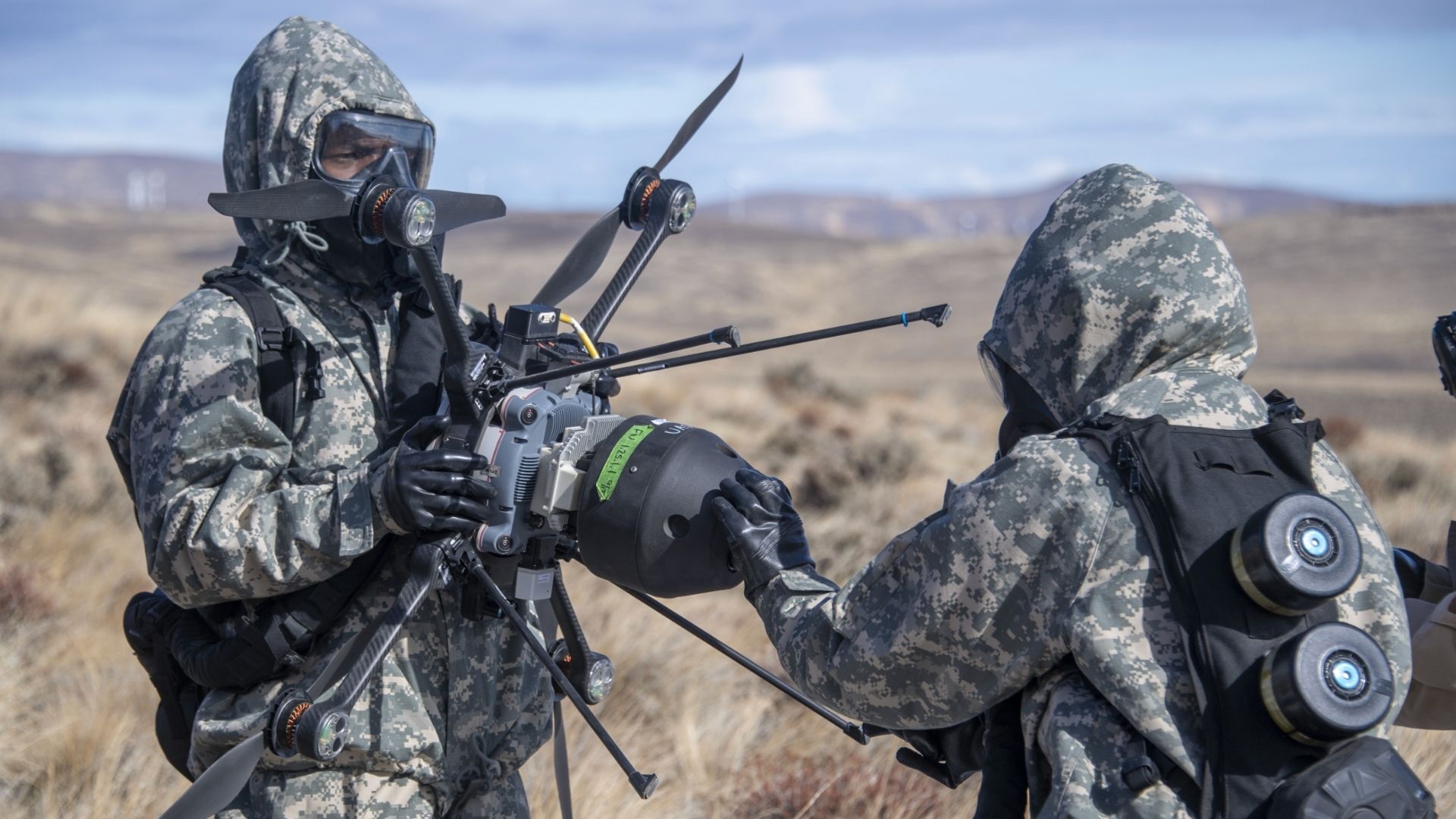
The kits are based on Teledyne FLIR’s R80D SkyRaider unmanned aerial system and will include modular chemical, biological, and radiological detection payloads, along with resilient communications technologies.

“Safe-guarding soldiers from weapons of mass destruction is at the core of our mission,” said Dr. JihFen Lei, President of Teledyne Defense and Aerospace Group and Senior Vice President of Teledyne Technologies.

“These SkyRaider-based sensor kits dramatically improve how units can detect and map CBRN hazards without exposing warfighters to dangerous environments,” he added.

Drone kits built for CBRN threat detection

The kits were developed under the U.S. Army’s Chemical, Biological, Radiological, and Nuclear Sensor Integration on Robotic Platforms program, known as CSIRP.

The program is focused on rapidly prototyping and fielding modular sensor solutions that can enhance drones and unmanned ground vehicles.

According to the announcement, CSIRP brings together advanced sensing, artificial intelligence, machine learning, autonomy, and communications technologies to improve robotic platforms used in hazardous environments.

For this contract, the R80D SkyRaider drone has been specially configured with semi-autonomous CBRN search and survey capabilities developed under the CSIRP program.

Once deployed, the drone can autonomously locate and characterize CBRN threats, giving operators a safer way to understand the risks present in contaminated areas.

Using detection payloads mounted on the drone, operators can view real-time hazard data through mapping, targeting, and communications tools.

This allows dismounted frontline units to rapidly assess contaminated environments while keeping personnel out of harm’s way.

Carrying modular payloads

Each kit includes the R80D SkyRaider drone carrying a selection of chemical, biological, and radiological detection payloads. The payload suite includes the Teledyne FLIR MUVE B330 biological sensor and features autonomous operation.

The modular nature of the system is a key part of the Army’s CSIRP effort, which aims to field sensor solutions that can be integrated onto robotic platforms for different operational needs.

In this case, the SkyRaider-based kit gives units a mobile aerial platform that can support CBRN search, survey, and hazard characterization missions.

The technology is intended to strengthen how frontline units respond to environments where chemical, biological, radiological, or nuclear hazards may be present.

Instead of sending soldiers directly into contaminated zones, operators can use the drone to gather hazard data remotely and in real time.

Deliveries expected in 2026

The sensor kits will be built at Teledyne FLIR Defense facilities in Elkridge, Maryland, and West Lafayette, Indiana. Additional engineering work will be performed in Stillwater, Oklahoma.

Deliveries under the $11.2 million contract are expected to begin in the second quarter of 2026.

For Teledyne FLIR Defense, the award adds to its work in integrated CBRN detection solutions and unmanned sensing systems.

For the Army, the SkyRaider-based kits represent another step toward using robotic platforms to help soldiers detect, map, and respond to dangerous battlefield hazards from a safer distance.

  •  
❌