❌

Reading view

Courtside Seats on Mars

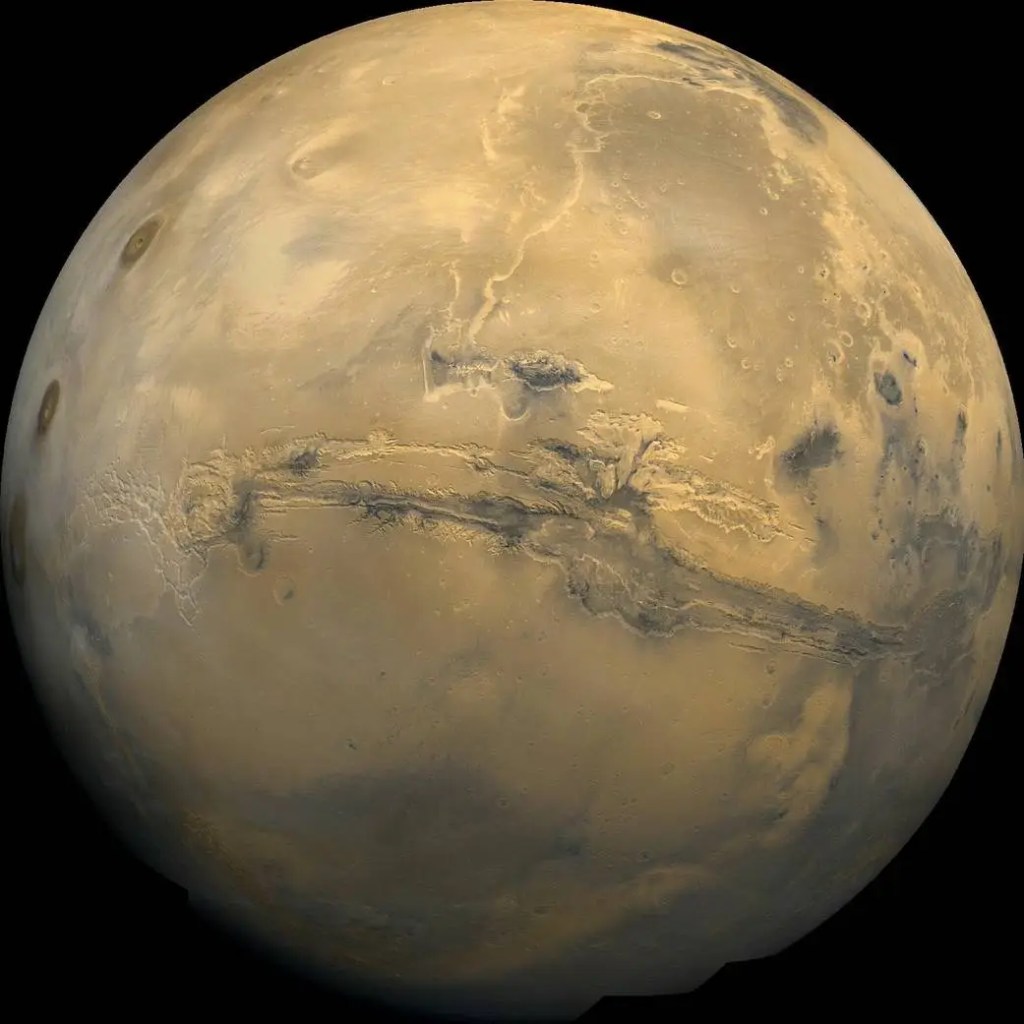
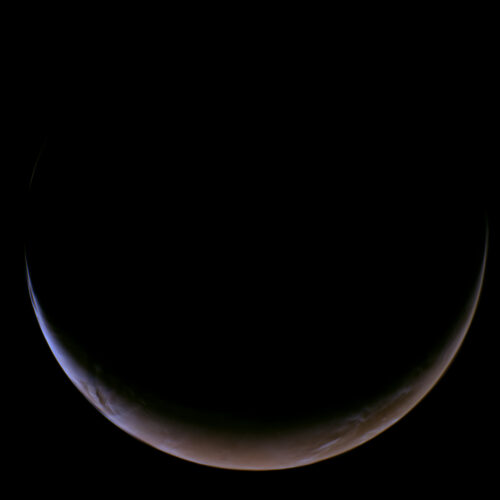
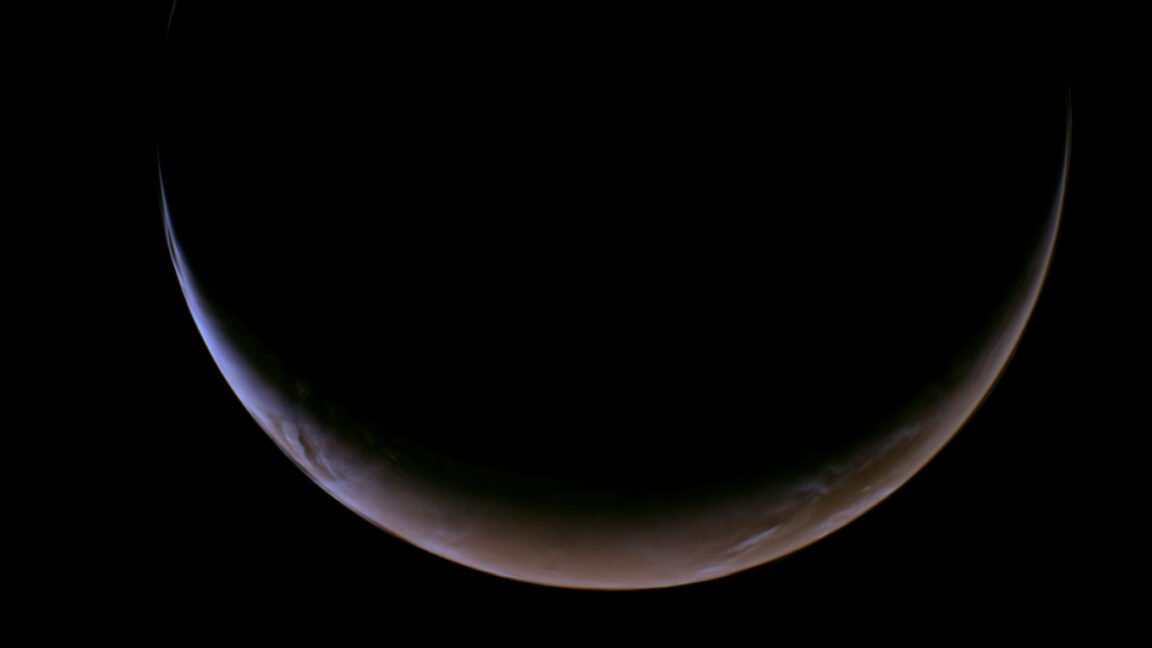
A photograph of an entire visible hemisphere of Mars.

When the third known object from the galactic space beyond our Sun barreled through the solar system last year, Earth was in a terrible spot to view its flyby. Thankfully, however, a spacecraft that was previously busy mapping Mars took advantage of much better positioning for a closer look.

Cheap Seats

Astronomers have now observed three interstellar objects as they’ve flown through the solar system: 1I/ʻOumuamua, which shocked astronomers in 2017; 2I/Borisov, which followed in 2019 and behaved almost identically to a solar system comet; and now 3I/ATLAS, which was found buzzing toward the Sun in July 2025. As soon as 3I/ATLAS was spotted, pretty much every telescope on the planet took a look. The data swiftly revealed much that intrigued astronomers: while 3I/ATLAS was behaving essentially like a standard comet, its chemistry was nothing like its solar system counterparts, and its coma and dust outflow were strangely shaped. Among other oddities, it seemed to counterintuitively have a dust tail that pointed toward the Sun.
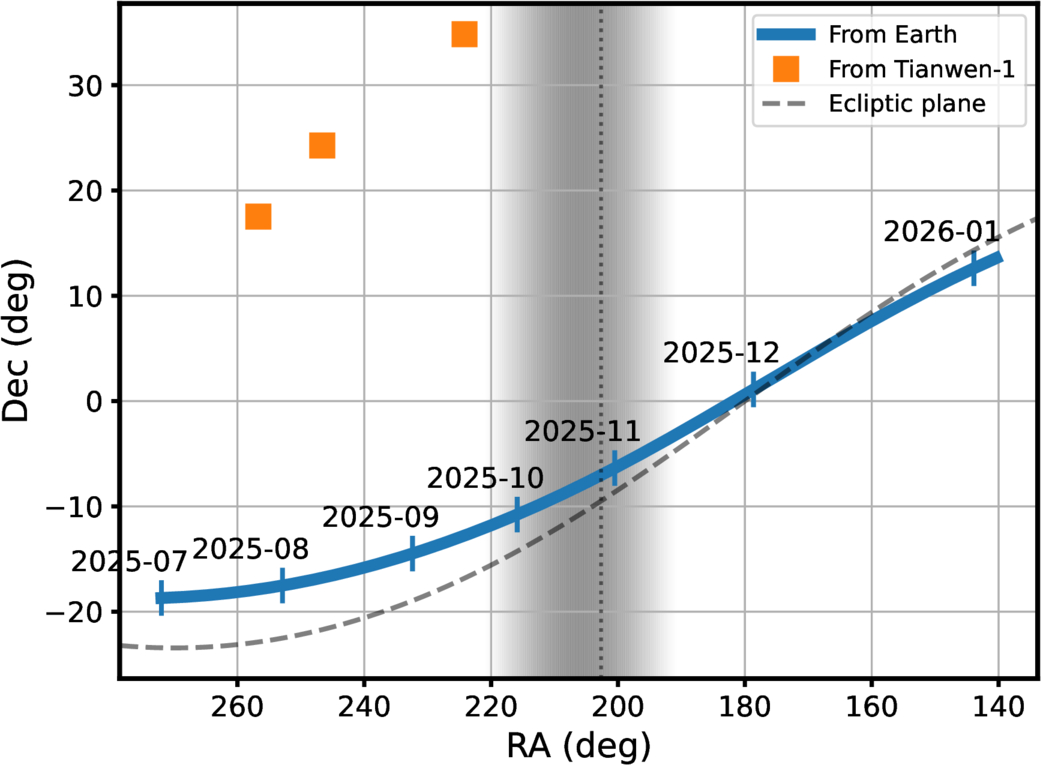
A plot showing that Earth-based observations could only get as best a 20-degree out-of-plane view, while Mars-based observations could get up to nearly 40.

3I/ATLAS’s path across the sky as seen from Earth versus the clearer line of sight from Mars. The shaded region represents the times where the comet was too close to the Sun for viewing. [Xin Ren et al. 2026]

Unfortunately for astronomers, 3I/ATLAS didn’t make it easy for them to study the shape of its coma. Thanks to a cosmic coincidence, the interstellar visitor was traveling almost perfectly within the plane of our solar system, and Earthbound observers were often limited to an edge-on view of its tail. Even worse, 3I/ATLAS looped around the back of the Sun from our perspective, meaning no one on the planet could observe the comet for a few weeks in the fall. This led a group of astronomers to consider their assets that are farther from home.

Better View from Mars

The Tianwen-1 spacecraft, which entered Martian orbit in early 2021 and has been diligently mapping the Red Planet ever since, has a high-resolution camera that’s normally pointed at the planet’s surface. By spinning the spacecraft around, a team of researchers led by Xin Ren (National Astronomical Observatories, Chinese Academy of Sciences) repurposed the camera to act as a small telescope when 3I/ATLAS flew by. In another cosmic coincidence, 3I/ATLAS happened to pass very near Mars last fall, and this close approach gave Tianwen-1 a great out-of-plane view of the coma. The orbiter managed to capture 57 images of 3I/ATLAS over three days last fall, representing China’s first-ever observations of an object from an asset in deep space.
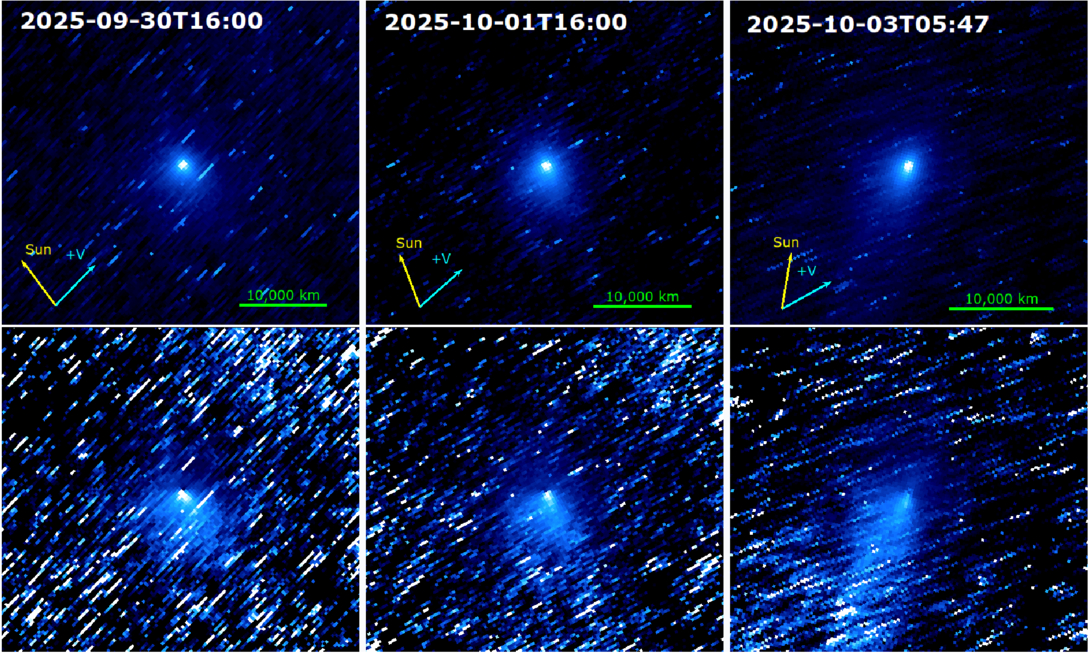
Multi-panel photographs of a comet against a background of streaked stars.

Stacked images of 3I/ATLAS from the Tianwen-1 orbiter across three epochs; the tail’s apparent shape shifts as the viewing geometry changes. Click to enlarge. [Xin Ren et al. 2026]

The team took full advantage of the great view and leveraged the spacecraft’s unique perspective to extract some intriguing results. By tracking how the gentle pressure of sunlight nudged the escaping grains, the researchers found that the coma is dominated by surprisingly large dust. With an average size of hundreds of microns across, the dust is more like coarse sand than smoke, and they found that it ambles away from the comet at just 3–10 meters per second. All told, 3I/ATLAS was shedding dust at roughly 1,000 kilograms every second. The big grains may be a fingerprint of a cold, distant birthplace: models suggest such grains collect in the frigid outer reaches of planet-forming disks, hinting that 3I/ATLAS was forged far from its parent star before being flung into the dark.

As new surveys begin to turn up interstellar interlopers more often, this improvised observation makes a tidy point: the spacecraft already scattered across the solar system can double as a fleet of opportunistic comet-watchers, each offering a view we simply can’t get from home.

Citation

“Interstellar Object 3I/ATLAS Observed from Mars by China’s Tianwen-1 Spacecraft,” Xin Ren et al 2026 ApJL 1003 L10. doi:10.3847/2041-8213/ae61b3

The post Courtside Seats on Mars appeared first on AAS Nova.

  •  

Let’s build the moon base, but not lose sight of Mars

Illustration representing NASA's moon-to-Mars ambitions. Credit: NASA

These are heady days for NASA and the space industry. The Artemis 2 crew flew around the moon, traveling farther into space than any humans previously had; NASA announced an […]

The post Let’s build the moon base, but not lose sight of Mars appeared first on SpaceNews.

  •  

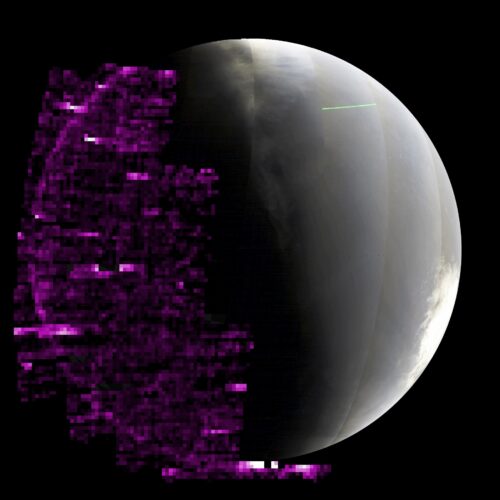
After 11 years at Mars, NASA's MAVEN spacecraft went out with a whisper

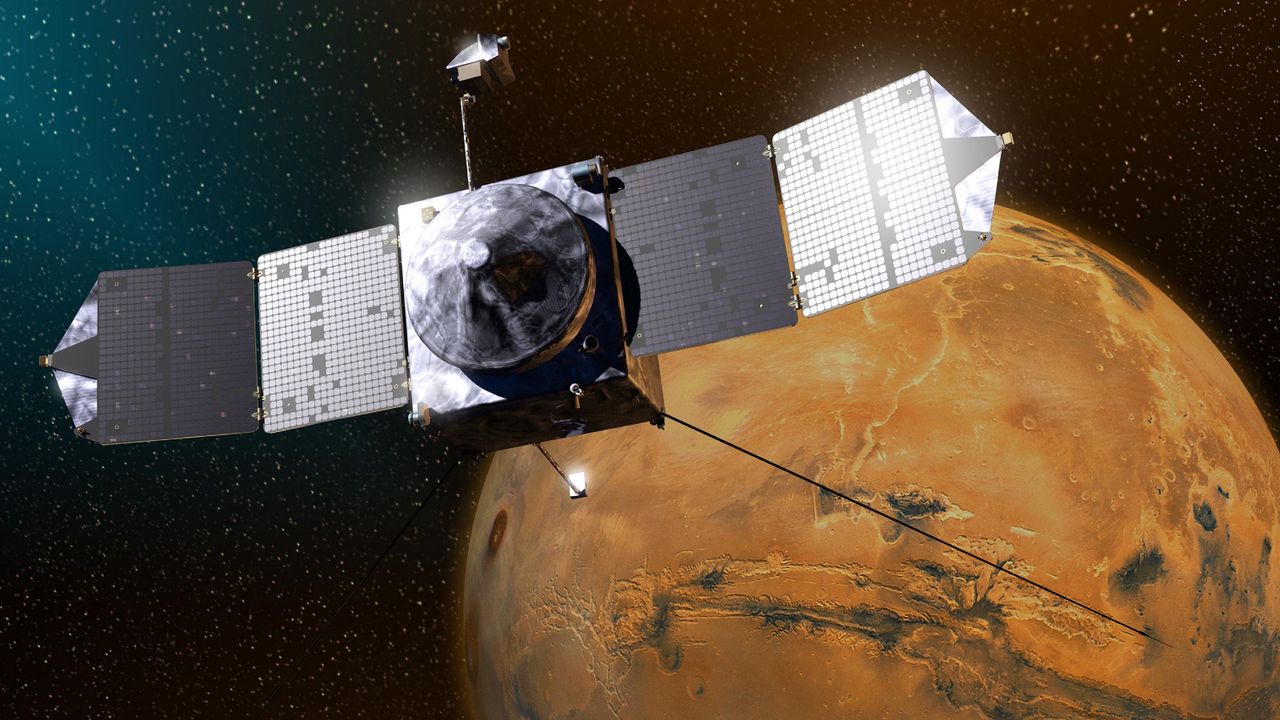
NASA's MAVEN spacecraft was in excellent shape when it disappeared behind Mars on December 6 of last year. The routine passage, called an occultation, was supposed to last less than an hour, but ground teams didn't hear from the spacecraft when it was supposed to regain contact with Earth.

The loss of communication triggered contingency plans for engineers to try to restore a link with MAVEN, which orbits Mars more than 200 million miles from Earth. To no avail, they listened for faint signals and uplinked commands in the blind. Hopes of saving the mission faded over time, and NASA officials announced Wednesday that they're giving up on it.

"NASA has ceased efforts to search for the MAVEN spacecraft and are beginning activities to decommission the mission," said Mike Moreau, MAVEN's project manager at NASA's Goddard Space Flight Center in Maryland. 

Read full article

Comments

© NASA/University of Colorado/LASP

  •  

Is Earth’s water why intelligent life evolved here?

Earth has many unique features for a planet, such as a magnetic field, a large moon, and plate tectonics. It’s also the only planet we know of that harbors life. These facts form the basis of the Rare Earth hypothesis, which posits that we haven’t found aliens because other planets in the Galaxy probably don’t have all the right conditions for life. 

Another characteristic of Earth is that about 30% of its surface is land and about 70% is ocean. Recently, Columbia University Assistant Professor David Kipping investigated whether the proportion of Earth’s surface covered by dry land versus ocean, or its land fraction, is another reason Earth is habitable not only for simple single-celled organisms, but also for intelligent species like humans. 

To test this hypothesis, Kipping created 4 statistical models of planets with different land fractions that intelligent aliens could potentially evolve on. First, he created an equation to describe the likelihood that a planet in its star’s habitable zone has a particular land fraction, known as a probability distribution. Kipping weighted this probability distribution toward the extreme ends, making it more likely that a planet would be covered by a single huge landmass or a single vast ocean than by a mix of both, as on Earth. 

Kipping then incorporated this land fraction probability distribution into his statistical models to calculate the probability that a random planet will have that land fraction and host intelligent life. The 4 scenarios Kipping tested were: 1) that intelligent life is more likely to emerge on land-dominated planets, 2) that it’s more likely to emerge on ocean-dominated planets, 3) that it’s more likely to emerge on planets with roughly equal amounts of land and ocean, and 4) that its emergence is independent of a planet’s land fraction. 

As a first step in determining the kinds of planets intelligent aliens would tend to emerge on, Kipping used each model to predict the probability that intelligent life would emerge on a planet with the same land fraction as Earth. He then compared these probabilities by calculating the ratios between each value. Because Earth is the only known planet with intelligent life, a model that predicted a greater probability for humanity’s existence on Earth would be more likely to reflect reality.

Kipping considered it strong evidence that a given model was more realistic than another if the ratio between 2 of them was greater than 10, meaning one model was 10 times more likely to predict the existence of Earth and humanity. Kipping found that no comparison of any 2 models passed this threshold. However, the models assuming that intelligent life prefers ocean-dominated planets or planets with a land-ocean balance were 2.5 and 3 times more likely to predict the existence of humanity than the model assuming that intelligent life prefers land-dominated planets. Additionally, the model assuming that intelligent life prefers a land-ocean balance was always more likely to predict humanity than any other model, though marginally. 

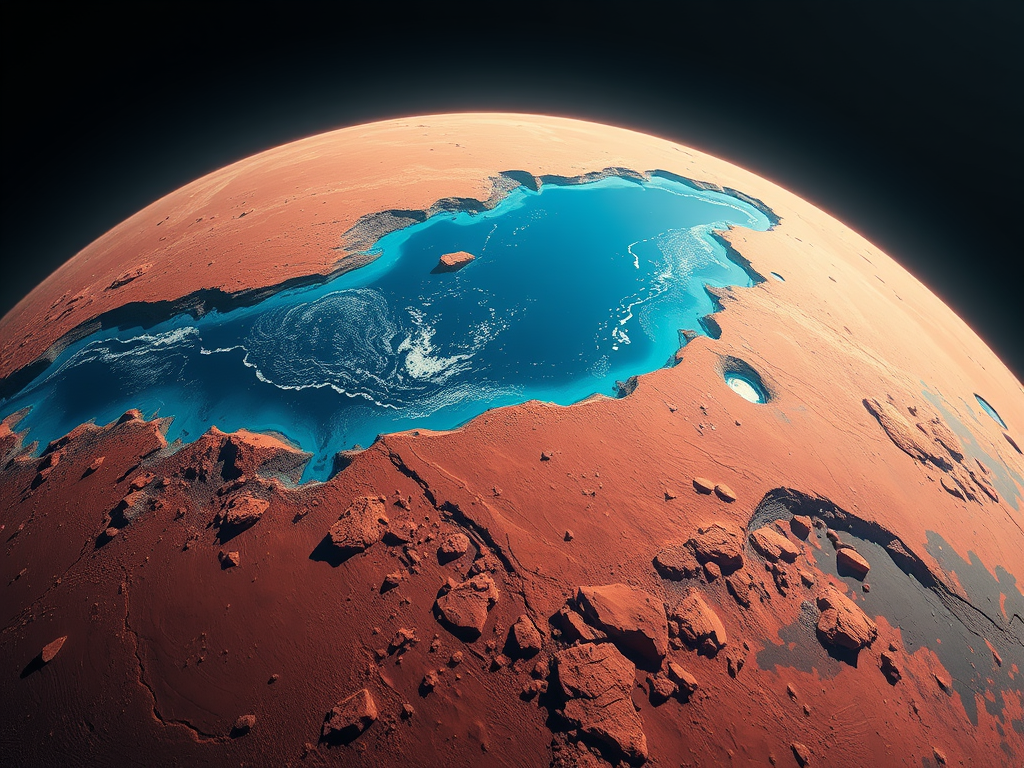
Kipping also addressed whether finding more planets with intelligent life would affect which model was deemed most realistic, for example, if scientists discovered conclusive evidence of life on Mars in its distant past. Here, Kipping identified 2 complications. First, it’s uncertain how much of Mars’s surface was once covered by water – some estimate it had a land fraction as high as 81%, while others estimate it was as low as 25%. Second, proving that Mars once had life would not prove it once had intelligent life.

Regardless, Kipping reran the models assuming that ancient Mars had a land fraction comparable to Earth’s. Adding this second data point produced ratios similar to those in the earlier Earth-only calculations, meaning it still didn’t make any single model 10 times more likely to predict the existence of humans and Martians, respectively. 

Kipping then took the 10-times threshold and reversed the calculations to find what conditions would exceed it. In doing so, he calculated that astronomers would need to find 14 other planets with intelligent life and known land fractions to robustly determine whether intelligent life is more likely to occur on desert planets, ocean planets, balanced planets, or without bias.

Kipping concluded that he can’t yet definitively state whether there is something special about Earth’s land fraction when it comes to producing intelligent species. However, Earth’s existence would suggest that intelligent life is unlikely to favor extreme desert planets, so the Milky Way probably isn’t filled with Tatooines and Jakkus. And while his analysis doesn’t debunk the Rare Earth hypothesis, it does undermine the argument that Earth’s ocean size explains why Earth is rare. 

The post Is Earth’s water why intelligent life evolved here? appeared first on Sciworthy.

  •  

NASA's Psyche spacecraft returns unfamiliar views of a familiar world

Not quite halfway through a six-year sojourn through the Solar System, a NASA spacecraft used a close encounter with Mars last week as a dress rehearsal for its arrival at the Solar System's largest metal asteroid in 2029.

The Psyche mission launched more than two-and-a-half years ago, in October 2023, from Kennedy Space Center, Florida, to kick off a journey of some 2.2 billion miles (3.6 billion km) to reach its unexplored namesake, the asteroid Psyche. The robotic research mission got an initial lift from a powerful SpaceX Falcon Heavy rocket. It uses plasma engines to gradually build up the impulse needed to reach its destination in the asteroid belt, between the orbits of Mars and Jupiter.

A flyby of Mars last Friday gave the spacecraft its most significant boost since launch. Navigators at NASA's Jet Propulsion Laboratory in California set up the spacecraft for a course taking it 2,864 miles (4,609 km) from the Martian surface, well above the planet's tenuous atmosphere. Psyche used Martian gravity like a slingshot to gain enough speed to reshape its orbit around the Sun, putting the probe on a path to intercept its asteroid target.

Read full article

Comments

© NASA/JPL-Caltech/ASU

  •  

Clay minerals suggest a warm, wet past for Mars

Most people think of Mars as a big red dustball, but researchers recently found Martian mineral deposits suggesting it was once warm and humid. The team used the Compact Reconnaissance Imaging Spectrometer aboard NASA’s Mars Reconnaissance Orbiter to analyze specific wavelengths of visible and near-infrared light from minerals on Mars’s surface to determine their chemical composition from afar.

Past researchers identified layered silicate minerals, called clays, across the Martian surface. Clays form when water interacts with rock, and record the amounts and chemical compositions of the waters that formed them. As water interacted with Martian surface rocks, it picked up more mobile elements like magnesium and iron and carried them to lower depths in the Martian soils, while less mobile elements like aluminum stayed in place. This process, called leaching, created 2 distinct layers of clays in the Martian rocks. 

Scientists have proposed 2 main hypotheses for how these layered clays formed on Mars. The first is that they formed through underwater leaching in pools or lakes sometime in Mars’ past. The second is that they formed across the Martian surface, where a widespread humid environment provided the moisture needed to leach them. 

To evaluate these hypotheses, a team led by researchers at Purdue University recently estimated the “true” thicknesses of Martian clay layers with a method scientists had previously only used on Earth. Rock layers containing clays can become tilted, making them appear thicker or thinner than they actually are. To address this discrepancy, the team used the High Resolution Imaging Science Experiment (HiRISE) tool on the Mars Reconnaissance Orbiter to create high-resolution elevation maps of the Martian surface. Then they combined these maps with surface composition data from the Compact Reconnaissance Imaging Spectrometer to create 3D composition maps. 

Using the 3D composition maps, the researchers found where each clay layer was exposed at the surface and traced it underground to estimate an angle of tilt. They then used trigonometry to calculate the true thicknesses of each clay layer. They analysed 46 regions across the Martian surface, and found that the combined thickness of both clay layers was around 20 to 680 feet (6 to 200 meters), with an average of about 190 feet (60 meters). That’s a maximum thickness as high as a 60-story building! 

Next, the researchers tested the extent of the clay deposits in a large ancient Martian valley known as the Mawrth Vallis Region. They focused on this region because it had large elevation changes, and scientists in the past had already collected high-resolution chemical composition and elevation data there. 

They explained that if the clay layers were restricted to the lowest parts of the valley where water once existed, and had changing thicknesses and boundaries between layers, this would provide strong evidence in favor of the “underwater leaching” hypothesis. In contrast, if the clay layers were more widespread, with consistent layer boundaries and thicknesses, this would provide strong evidence of a humid surface environment, in favor of the “surface leaching” hypothesis. 

The researchers found that the clay layers extended beyond the lowest parts of the valley and had consistent layer boundaries across more than half a mile (about a kilometer) of elevation change. Thus, they concluded that the clay layers formed by surface leaching in a humid environment. 

These findings conflict with climate models of early Mars, which generally suggest that the Martian surface rarely got above freezing temperatures. To address this discrepancy, the team proposed that these deposits could have formed over a long period of time rather than in a consistently warm and wet environment. If the surface was frozen most of the time, but got above freezing in short bursts, these clay deposits could still have formed, just over a much longer time period. In this case, the Mars climate models and the researchers’ findings would agree.

The researchers acknowledged that their study has some limitations, particularly regarding the sparse sample locations. Though they found strong evidence for a widespread humid environment on early Mars, more in-depth studies of locations like Mawrth Vallis could better constrain the specific surface environmental conditions under which these clays formed and potentially reconcile their data with Martian climate models.

The post Clay minerals suggest a warm, wet past for Mars appeared first on Sciworthy.

  •  

NASA's Psyche spacecraft returns unfamiliar views of a familiar world

Not quite halfway through a six-year sojourn through the Solar System, a NASA spacecraft used a close encounter with Mars last week as a dress rehearsal for its arrival at the Solar System's largest metal asteroid in 2029.

The Psyche mission launched more than two-and-a-half years ago, in October 2023, from Kennedy Space Center, Florida, to kick off a journey of some 2.2 billion miles (3.6 billion km) to reach its unexplored namesake, the asteroid Psyche. The robotic research mission got an initial lift from a powerful SpaceX Falcon Heavy rocket. It uses plasma engines to gradually build up the impulse needed to reach its destination in the asteroid belt, between the orbits of Mars and Jupiter.

A flyby of Mars last Friday gave the spacecraft its most significant boost since launch. Navigators at NASA's Jet Propulsion Laboratory in California set up the spacecraft for a course taking it 2,864 miles (4,609 km) from the Martian surface, well above the planet's tenuous atmosphere. Psyche used Martian gravity like a slingshot to gain enough speed to reshape its orbit around the Sun, putting the probe on a path to intercept its asteroid target.

Read full article

Comments

© NASA/JPL-Caltech/ASU

  •  
❌