A North Korean man is set to face trial in Tanzania this week following his arrest in April while in possession of 500 elephant tusks. Un Hyok Ra was arrested April 19 at a hotel in Dar es Salaam, and is scheduled on June 9 to answer to charges of unlawful possession of the ivory and intent to trade it. Tanzania is a signatory to CITES, the global wildlife trade convention, which requires parties to conduct forensic analysis of ivory seizures of 500 kilograms (1,100 pounds) or more to determine where it came from. This is intended to support investigations that go beyond the typically low-level traffickers who are caught in possession. Tanzanian police did not respond to questions from Mongabay about the origins of the seized ivory or who Ra allegedly planned to sell it to. During an administrative hearing on May 28, prosecutor Florida Wancelaus told the court only that investigations are ongoing. Chris Morris, founder of wildlife crime monitoring group Saving Elephants through Education and Justice (SEEJ), based in neighboring Kenya, estimated that 504 tusks would weigh roughly 2,500 kg (about 5,500 lbs). In an email to Mongabay, he said law enforcement in the region does not always meet the CITES requirement to conduct DNA analysis on confiscated ivory. “It remains to be seen if Tanzania will comply with this directive,” Morris wrote. Morris, a former war crimes investigator, said Tanzanian authorities have often withheld information that would help sister agencies in the region and beyond trace…This article was originally published on Mongabay
ELEPHANT MARSH, Malawi — At 5:30 am, trader Flora Kumilai is squatting before a heap of smoked catfish at Sorjin Market in southern Malawi’s Elephant Marsh, haggling with sellers over the price. “I found gold in fish,” she chuckles as she fills a third cardboard box. “And Elephant Marsh is the mine.” Kumilai, who has traveled here from Malawi’s commercial capital, Blantyre, will spend a week in the area, visiting other fish markets around the marsh until she has 12 of these boxes, around 900 kilograms (1,990 pounds) of smoked fish. Then she will band together with other traders to hire a truck to transport their goods back to Blantyre, 140 kilometers (87 miles) to the north. But for Kumilai, the final destination for her goods is more than 1,500 km (930 mi) away, at a market in Kasumbalesa on the border between Zambia and the Democratic Republic of Congo. She’s been in business for more than a decade now, mostly trading in produce within Malawi and sometimes importing clothes from Tanzania and South Africa for customers in the city. In October 2024, she changed course, when fellow traders introduced her to the cross-border trade in fish. In Kasumbalesa, most of Kumilai’s customers are from the DRC, she tells Mongabay in Chichewa. “They pay in [U.S.] dollars. When we change it on the black market to Malawi kwacha, it gives us a lot of money. That’s how I’m able to pay for my son’s education [at Chandigarh University in India].”…This article was originally published on Mongabay
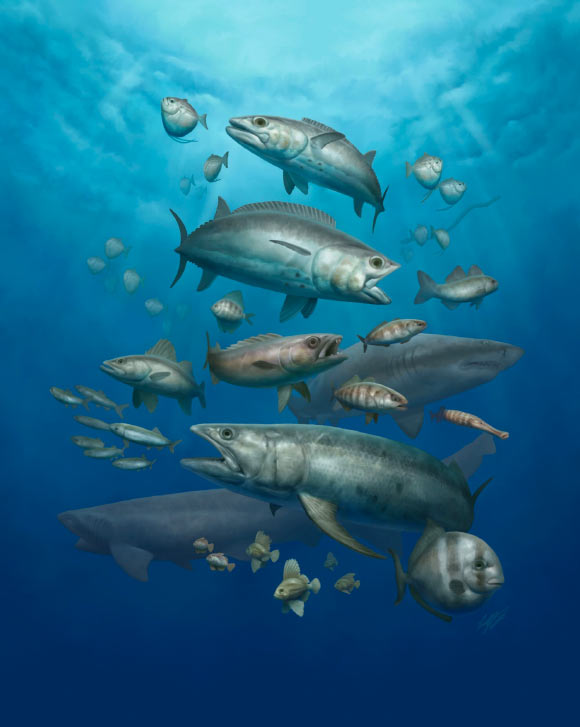
Paleontologists have described an assemblage of marine fish fossils from the 62.2-million-year-old site of Qreiya 3 in the Eastern Desert of Egypt, providing a window into this transition.
CHIRADZULU, Malawi — Diana Sitima’s farm on the outskirts of Malawi’s commercial capital, Blantyre, is both example and an exception. Where neighboring farmers have planted mostly maize for food and for sale in nearby markets, people drive out to buy sweet potato, pigeon peas and vegetables, bananas and avocado, and eggs produced on Sitima’s 3.5-hectare (8.6-acre) property. Sitima started farming in 1993. Unlike her neighbors, farming was a side hustle to begin with: she worked as an office assistant in Blantyre and her husband had a good job with a bank. Over the next seven years, she and her husband took out a series of micro-loans, renting small parcels of land and hiring people from the village to grow tomatoes for sale in the city. Sitima’s efforts went well, and because her family did not have to rely on their harvest for food or an income at that time, she was able to save the money she earned to take a next step. She quit her office job and acquired a farm of her own in Chiradzulu district, 15 kilometers (9 miles) east of the city. “That’s how I made money to be able to buy this land when it was put up for sale in 2006,” she says. While she was still a part-time farmer, Sitima attended several workshops, where she picked up ideas about agroecological farming — an approach combining crops, agroforestry, fish ponds, poultry and livestock, in a self-reinforcing system that protects soil health and reduces the…This article was originally published on Mongabay
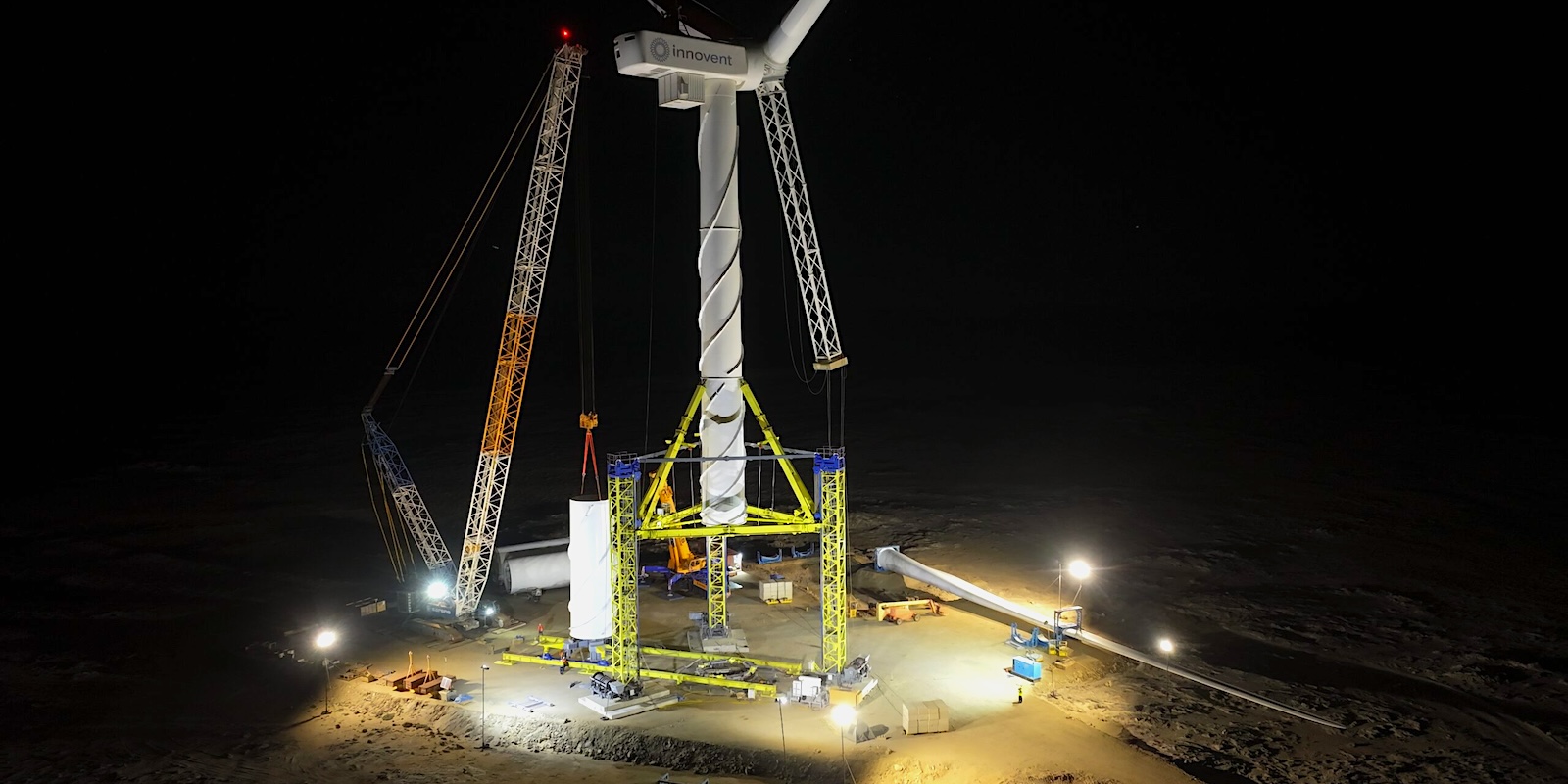
Fortescue‘s recently-acquired turbine subsidiary Nabrawind has done something that was believed to be impossible: they’ve installed a full-scale, energy producing wind turbine in harsh Namibian conditions using a new, crane-less deployment process.
The Northwest Africa (NWA) 12774, an angrite meteorite discovered in the Sahara Desert, likely in Mauritania, appears to be a fragment of a vanished protoplanet, offering the strongest evidence yet that a large planetary body formed and was later destroyed during the Solar System’s chaotic infancy.
The Bundibugyo virus, a little known type, previously had caused just two small outbreaks. Now it’s at the center of a rapidly widening epidemic in Africa.

 Login