Segundo a Apple, foram apresentadas à Comissão Europeia soluções que permitiriam trazer a nova Siri para o mercado europeu e garantir o suporte a outros assistentes inteligentes no iOS e iPadOS 27. No entanto, a Comissão Europeia terá recusado a proposta por não cumprir as regras do DMA.
Apple has taken the wraps off of its next-generation operating system updates at its Worldwide Developers Conference today, including iOS 27, iPadOS 27, and macOS 27 Golden Gate. And while the long-awaited Siri AI update is the headliner, Apple also emphasized its efforts to optimize its software, improving its performance and reliability.
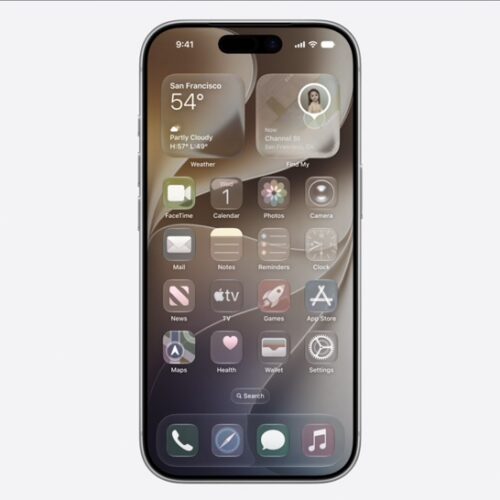
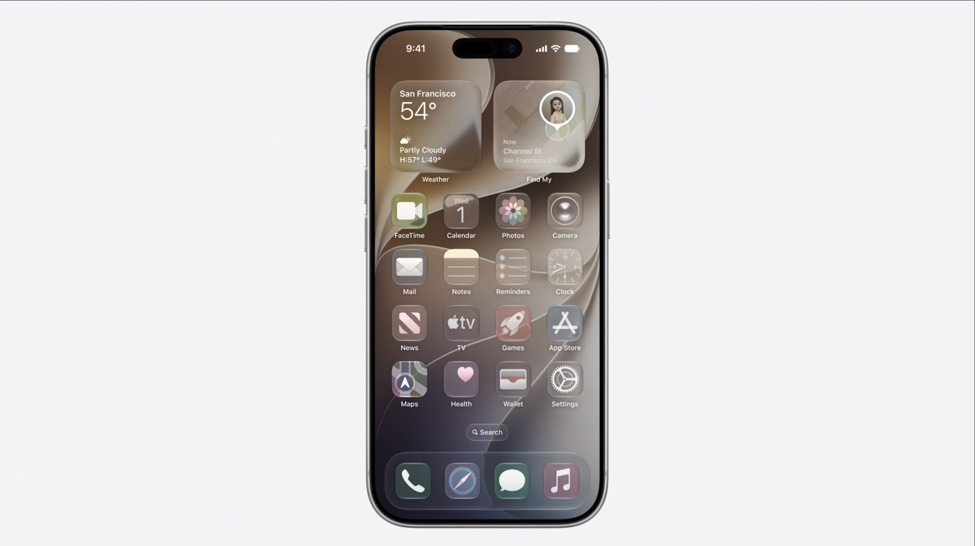
For starters, the company is continuing to refine the Liquid Glass design language that it introduced last year. A slider in the Settings will allow users fine-grained control over the translucency of the Liquid Glass effect, ranging from maximally transparent and glassy to fully tinted. Last year's redesigned icons are also being re-redesigned with more glass layers, which Apple says will make them sharper and more distinctive.
On macOS, Apple has also changed the way app toolbars and sidebars work, making toolbars more distinct, making the contents of sidebars extend all the way to the edge of the window, and reintroducing color to sidebar icons. Mac windows are also getting a "tighter corner radius," to address complaints about the way window resizing works in macOS 26 Tahoe.
Amazon no longer faces a July 30 cutoff for deploying half its planned 3,232 broadband satellites, but the reprieve comes with a temporary loss of spectrum priority that could give SpaceX and other rivals more leverage in orbit.
HWO Detector System Development Study; Responses Due 7 July 2026
8 June 2026
The Habitable Worlds Observatory Technology Maturation Project Office and Columbus Technologies are excited to invite you to participate in a Detector System Development Study focused on developing critical detector technologies for the Habitable Worlds Observatory. This request for proposals seeks information from qualified organizations capable of supporting detector technology maturation studies to advance candidate technologies toward Technology Readiness Level 5. Specifically, we are seeking responses to address one or more of the following detectors categories: photon-counting detectors for visible and near-infrared coronagraph applications, far-ultraviolet detectors, and large-format detectors for near-ultraviolet and visible applications. Details regarding the call for proposals, eligibility, required deliverables, and study phases are available at the Columbus Technologies website.
Respondents located at Government agencies including the Jet Propulsion Laboratory or NASA Centers (e.g., Goddard Space Flight Center, Ames Research Center, etc.) should submit their responses directly to Daniel Kelly (daniel.p.kelly@nasa.gov).
NASA-DARES Draft Strategy Open for Public Comment; Comments Due 2 July 2026
8 June 2026
The NASA Astrobiology Program and DARES Task Force 2 are pleased to announce the opening of the public comment period for the draft Decadal Astrobiology Research and Exploration Strategy (NASA-DARES).
The draft report, available in slide form, is available here: NASA-DARES Draft [PDF] . NB: Findings from Focus Area 9: Astrobiology in Society are forthcoming.
An abbreviated summary, presented at AbSciCon, is available for viewing here: NASA-DARES Presentation Video. The NASA-DARES presentation begins at approximately 38:27 in the recording.
Feedback on the draft Strategy should be submitted according to the following guidelines:
As relevant, please indicate the Focus Area(s) addressed by your comment at the beginning of your response.
Comments may be submitted by an individual or on behalf of a community group, organization, or other collective body.
Anonymous submissions will not be considered.
Comments will only be accepted as attached PDF files or as in-line email text.
Comments must be received no later than 11:59p Eastern on 2 July 2026. Comments received after this deadline will not be considered.
As a reminder, NASA-DARES is a non-consensus document. NASA-DARES is not intended to rank priorities, prescribe funding decisions, direct mission selections, establish policy, or replace decadal surveys or other consensus reports. The report is intended to capture a broad range of topics relevant to NASA Astrobiology. Inclusion in NASA-DARES should not be interpreted as an indication of future funding, programmatic priority, mission implementation, or agency commitment.
For inquiries related to this public comment period, please send an email to HQ-RFIastrobio@mail.nasa.gov addressed to Drs. Rachel L. Harris, Hannah Jang-Condell, and Becky McCauley Rench. Kindly use the subject line “Question RE: NASA-DARES Public Comment Period” when submitting your questions.
IXPE Cycle 4 Pre-Proposal Workshop Announcement; Register by 25 June 2026
8 June 2026
We are pleased to send out this first announcement for a pre-proposal workshop in preparation for Cycle 4 of the IXPE General Observer (GO) program.
IXPE (the Imaging X-ray Polarimetry Explorer) provides unique and powerful X-ray polarization capabilities and has been providing crucial insights into our understanding of X-ray production and the geometry of multiple classes of objects such as neutron stars and pulsar wind nebulae, as well as stellar and supermassive black holes, among others. Overall, IXPE provides simultaneous imaging, spectral, timing, and polarization data for 2-8 keV X-rays.
The workshop will be held virtually on Tuesday 30 June 2026, from 12 noon to 3p Eastern (9a to 12 noon Pacific). This session is presented to update the community on opportunities to propose for the upcoming Cycle 4 IXPE GO program, highlighting any changes from previous cycles. A description of the IXPE mission and a summary of its major scientific achievements will be presented. Opportunities for participation through the General Observer Program, which supports a broad range of opportunities, will be described in detail in an interactive forum. Presentations on user support services, data analysis and software tools, catalogs and other online resources will also be included, followed by ample time for general questions and discussion. More information can be found on the GO program website.
Registration is open to everyone. The meeting link will be sent via e-mail a day before the start of the meeting to all registered participants. There is no fee to participate in the workshop. Please register on or before 25 June 2026 to receive the link. To receive the link for the workshop, please register your interest by filling out this Google form.
HELIOTECH and Orbital Flight Symposium; Abstracts Due 17 June 2026
8 June 2026
We are thrilled to let you know that both registration and abstract submission are officially open for NASA’s 2026 Joint HELIOTECH and Orbital Flight Symposium! By bringing together NASA’s Heliophysics Technology Symposium and Heliophysics Orbital Flight Missions, this joint meeting aims to spark innovation and foster essential collaboration for advancing technology needed to explore not only the Sun-Earth-Moon system but also Mars and destinations beyond. Our intention is to create an engaging forum where technologists, scientists, and mission Principal Investigators (PIs) can connect, share, and collaborate.
Format: Hybrid—join us in person or virtually via Zoom
Call for Abstracts: Abstract submission is now open and will close on 17 June 2026. If you’re interested in presenting, please submit your abstract using the link below. Abstracts should be a maximum of 2,000 characters and entered directly into the submission Google form. Be sure to specify your preferred presentation type: oral (in-person preferred or remote) or poster (in-person only).
Registration: Registration for the symposium is now open as well, through the symposium website! We encourage everyone to register early, whether you’re attending on-site or virtually.
For additional information about the agenda, lodging, and ongoing updates, please visit our symposium website. We look forward to your participation and contributions and hope to see everyone for an exciting and impactful event!
O Decreto-Lei nº 113/226, publicado esta segunda-feira no Diário da República, cria o enquadramento legal para ensaios de condução autónoma na via pública, com exigências de segurança apertadas e processos administrativos simplificados.
Os developers já vão poder experimentar a Siri AI a partir de hoje, com a mais recente versão da assistente a chegar mais tarde ao público. No entanto, por enquanto, a nova Siri não vai chegar nem à União Europeia nem à China.
Fundada por João Matos Albino e João Graça, a Soko é uma plataforma que combina IA e a comunidade local para agregar eventos dispersos pela internet, redes sociais e pelas ruas. Lisboa é apenas o começo.
Astrophysical sources have already been detected in gravitational waves, in the tens to hundreds of Hertz range with LIGO, Virgo, and KAGRA, and in the few to tens of nanohertz range with pulsar timing arrays. New sources and physics will also be available with the planned LISA mission, at millihertz frequencies. Here I will talk about the remarkable prospects for physics and astrophysics in the decihertz range, including multimessenger science, essential information about stellar-mass and intermediate-mass black holes, tests of general relativity, and the possibility of a primordial background of gravitational waves.
Discussion of the white paper GR SIG plans to submit in response to the ASTRA initiative, as well as the endorsement of and feedback on this white paper by the community.
12 June 2026 12:00pm-1:00pm ET / 9:00am-10:00am PT
Community
Physics of the Cosmos
TYpe
Seminar
Ground- and Space-Based Astronomy in the 2030s/2040s
Speaker
Rob Petre, NASA / GSFC
Abstract
The three Astrophysics Program Analysis Groups (PAGs) – the Cosmic Origins Program Analysis Group (COPAG), the Exoplanet Exploration Program Analysis Group (ExoPAG), and the Physics of the Cosmos Program Analysis Group (PhysPAG) – have been asked to jointly report up to six community prioritized mission concepts, in addition to the X-ray and Far-IR flagship mission concepts recommended by Astro2020, to the NASA Astrophysics Division Director, for consideration for entrance into the ASTRA Initiative. These concepts should be selected in the context of the current and planned international suite of ground- and space-based observatories. In this talk we present results adapted from one of the Habitable Worlds Observatory (HWO) Community Working Groups, in which we lay out the context of ground- and space-based observatories and missions expected to operate in the 2030s/40s. We summarize outputs from our community-driven mission database, which outlines the science goals and capabilities of observatories and missions expected to operate during that time period. This information enables identification of synergies between these planned facilities and potential new concepts, as well as capability gaps in the planned suite of observatories that could be filled by entrants to the ASTRA Initiative.
Seja na navegação por interface de voz, controlar a música ou fazer chamadas e enviar mensagens, a Siri poderá ser muito útil no automóvel para não largar as mãos do volante.
Jensen Huang fechou em Seul uma série de acordos estratégicos com SK Hynix, SK Telecom, Naver, Doosan, LG e Hyundai, reforçando a aposta da Nvidia na Coreia do Sul como pilar central da sua expansão em IA e robótica.
La France éteint progressivement ses réseaux 2G et 3G. Fin 2025, encore 2,4 millions de personnes, majoritairement des seniors, utilisaient des téléphones incompatibles avec les réseaux actuels. Changer de mobile à 70 ou 80 ans, ce n'est pas anodin et c’est bien souvent les proches qui...
Selecionadas pela Startup Portugal e pela Unicorn Factory Lisboa, as 27 empresas vêm de sectores como IA, Machine Learning ou Tecnologia da Saúde, empregando mais de 200 pessoas e com investimentos captados superiores a 20 milhões de euros.

 Login