AT&T deepened its partnership with EV maker Rivian, confirming its 5G network will power connectivity inside its R2 model, which is slated for availability from 9 June.
The collaboration builds on a relationship dating to 2023, when AT&T became the connectivity provider for Rivian vehicles across the US and Canada.
With the R2 coming to market, the arrangement expands to cover the automaker’s next-generation platform, ensuring its more affordable mass-market model arrives with the same always-on network backbone as its predecessors.
The operator stated its 5G infrastructure will support faster over-the-air software updates, richer infotainment and real-time services which enable the R2 to improve performance and personalisation over time.
“Connectivity is increasingly central to how vehicles are designed, delivered, and improved,” stated Matt Harden, VP of connected solutions at AT&T.
At an automaker technology conference in the US state of Michigan, AT&T also revealed an expansion of its connected car platform in collaboration with Cisco and LiveOne, the parent of Slacker Radio.
The three-way arrangement is designed to simplify how automakers integrate premium entertainment into connected vehicles. AT&T’s wireless network provides the backbone, Cisco contributes multi-party billing infrastructure through its SIM management platform, and LiveOne will be supplying personalised audio content ranging from curated playlists to live programming.
Rather than requiring each automaker to negotiate separate connectivity deals with individual content providers, AT&T noted its platform acts as a single integration layer.
LiveOne joins existing AT&T partners including iM Media Labs and SiriusXM as part of a content ecosystem now reaching more than 60 of the world’s top automotive brands.
Verizon finalised the purchase of spectrum licences from the infrastructure company comprised of the remnants of UScellular not included in the sale of the bulk of its wireless assets to T-Mobile US.
The buy from Array Digital Infrastructure signs-off a deal struck back in October 2024. It was cleared by the US Federal Communications Commission on 14 May 2026.
Approving the deal the regulator endorsed Verizon’s view the buy would help the operator provide “a better overall experience to its customers” including by enhancing rural and indoor coverage in the parts of the country the assets cover.
In addition to the sale to Verizon, Array divested $168 million of assets to T-Mobile last month and completed a $1 billion deal with AT&T for other spectrum licences in January 2026.
Array noted the latest moves “further the objective” announced in May 2024 “to opportunistically monetise remaining spectrum following the sale of the T-Mobile wireless operation”.
Its president and CEO Anthony Carlson said the company had made “significant progress in our spectrum monetisation efforts and are pleased with the value realised in this sale”.
Array owns and operates shared wireless communications infrastructure in the US, including more 4,400 cell towers across the country.
In December, the company inked a partnership with Verizon which saw the latter sign-up to use its towers to strengthen its 5G network.
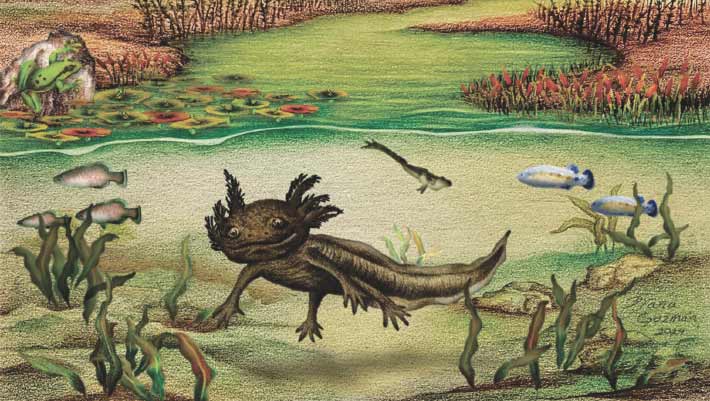
Paleontologists have identified a new species of the axolotl genus Ambystoma from several fossilized specimens found deep in the rocky outcrops of the Mexican state of Hidalgo.
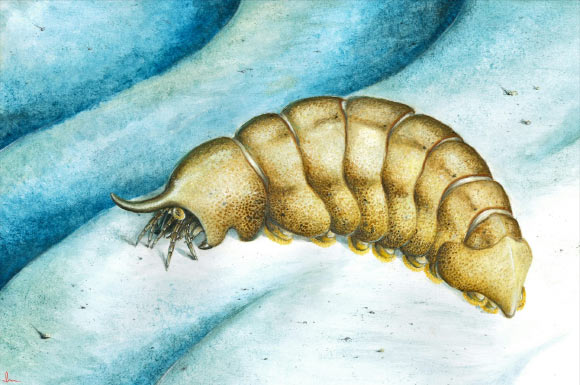
A new species of corcoraniid arthropod that lived during the Furongian epoch, between 497 and 487 million years ago, has been identified from an exceptionally preserved specimen found near Québec, Canada.
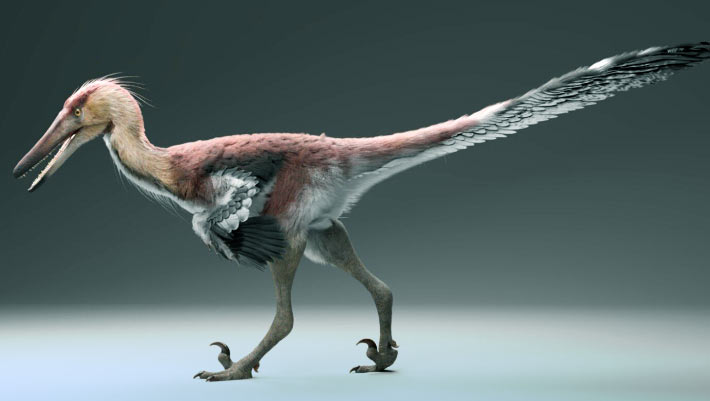
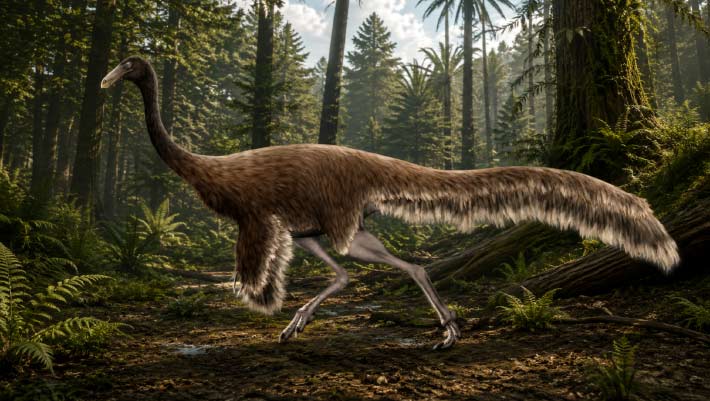
Paleontologists in Argentina have identified a previously unknown species of unenlagiid dinosaur that stalked freshwater wetlands during the Late Cretaceous epoch, adding to evidence that some dinosaurs specialized in catching fish.
By studying fungal microfossils in 66-million-year-old rock samples from the Denver Basin in Colorado, Johns Hopkins University microbiologists have confirmed that the dinosaur-killing asteroid impact triggered a worldwide fungal takeover, and uncovered a second, previously unknown ecological crisis just before it.
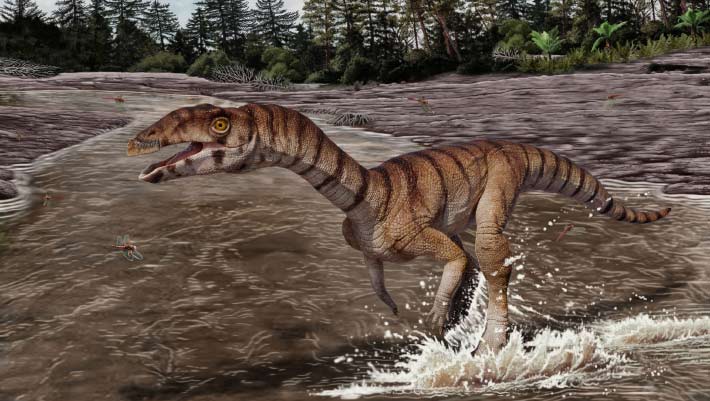
Paleontologists have described a new species of bipedal shuvosaurid archosaur from New Mexico, shedding light on a group of creatures that roamed North America during the Triassic period, more than 200 million years ago.
Paleontologists in Canada say they have recovered a dinosaur tail vertebra from 75- to 80-million-year-old marine rocks on a small island off the coast of British Columbia, providing the clearest evidence yet that bird-like ornithomimosaurs once roamed the ancient Pacific coastline of North America.
The dream of clean hydrogen has tantalized energy experts for years, but producing it has been tough. Many start-ups think the answer could lie beneath our feet.
 Login