❌

Reading view

Earth May Be Seeding Venus With Life, According to New Research
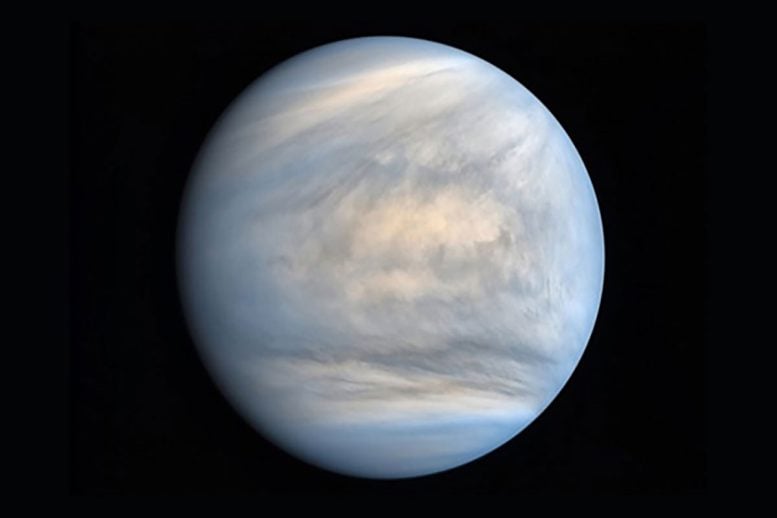
Venus Cloud Layers in UltravioletModels suggest that impact-ejected material from Earth could reach Venus’ clouds and potentially survive there briefly. Panspermia is the idea that life, or the ingredients needed for life, can move through space on asteroids, comets, and other objects. If life’s building blocks appear on one planet, a powerful impact could blast material from its surface [...]
  •  

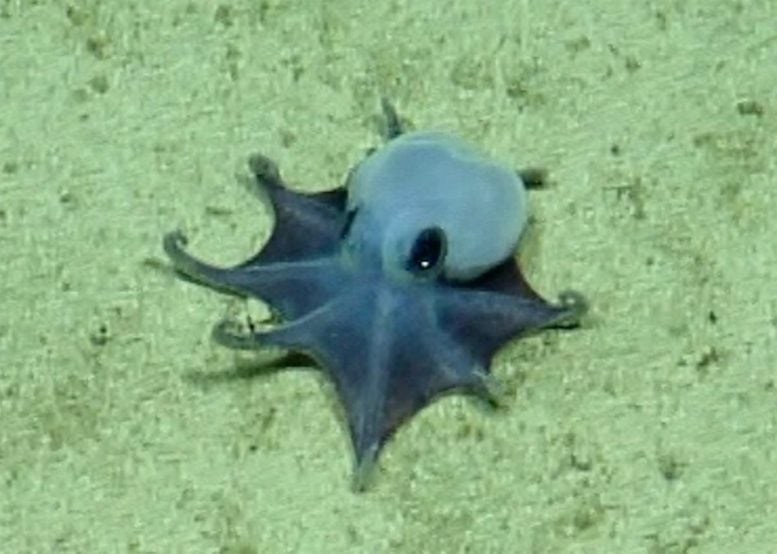
A Tiny Bright-Blue Octopus Found in the GalΓ‘pagos Is Completely New to Science

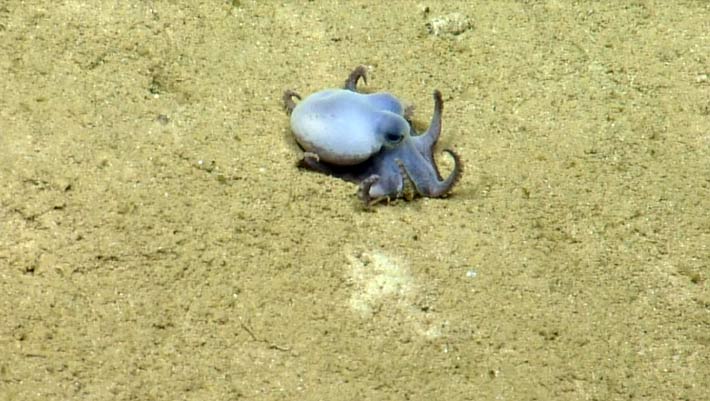
Blue Octopus GalΓ‘pagos IslandsA newly discovered tiny blue octopus from the GalΓ‘pagos is a striking reminder that the deep ocean still holds countless secrets. The GalΓ‘pagos Islands, located off the coast of Ecuador, are famous for their remarkable wildlife. More than a thousand species of plants and animals found there exist nowhere else on Earth, including giant tortoises [...]
  •  

New Dinosaur Species from Argentina May Have Specialized in Catching Fish

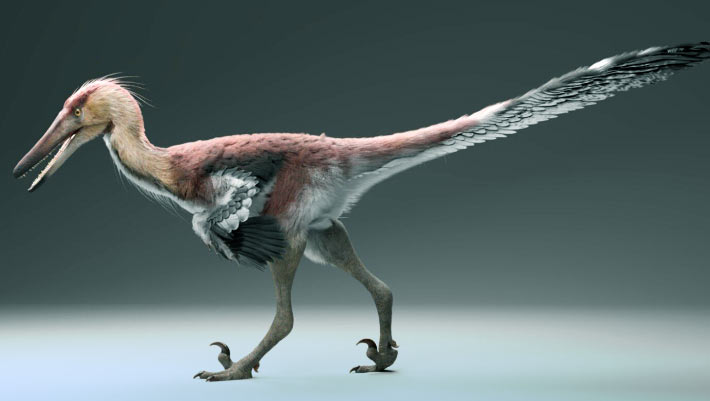
Life reconstruction of Kank australis. Image credit: Gabriel DΓ­az YantΓ©n.

Paleontologists in Argentina have identified a previously unknown species of unenlagiid dinosaur that stalked freshwater wetlands during the Late Cretaceous epoch, adding to evidence that some dinosaurs specialized in catching fish.

The post New Dinosaur Species from Argentina May Have Specialized in Catching Fish appeared first on Sci.News: Breaking Science News.

  •  

A Model for Ambition

Author(s): Susan Curtis

A theoretical approach that attempts to account for the psychology of human decision-making offers strategies for success in business, professional life, and politics.


[Physics 19, 78] Published Fri May 29, 2026

  •  

Fungi Bloomed Twice around End-Cretaceous Mass Extinction

The end-Cretaceous mass extinction was marked by both the Chicxulub asteroid impact and the ongoing eruptions of the Deccan Traps volcanoes.

By studying fungal microfossils in 66-million-year-old rock samples from the Denver Basin in Colorado, Johns Hopkins University microbiologists have confirmed that the dinosaur-killing asteroid impact triggered a worldwide fungal takeover, and uncovered a second, previously unknown ecological crisis just before it.

The post Fungi Bloomed Twice around End-Cretaceous Mass Extinction appeared first on Sci.News: Breaking Science News.

  •  

Cretaceous Bird from China Had Pair of Tail Feathers Twice as Long as Its Body

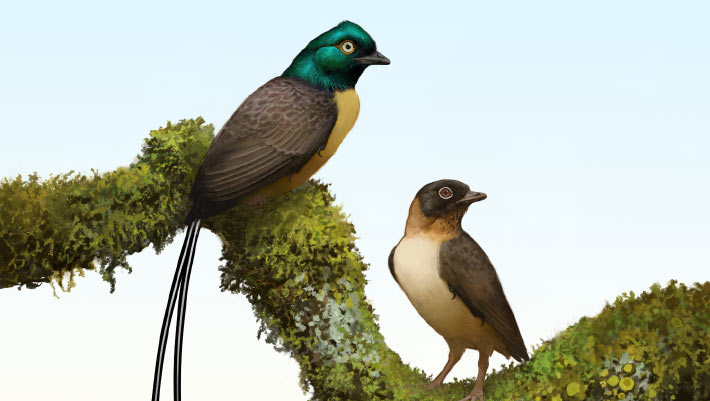
Plumadraco bankoorum is a new bohaiornithid enantiornithine bird with a pair of exceptionally long rectrices. Image credit: Ville Sinkkonen.

Named Plumadraco bankoorum, the newly-described species of enantiornithine bird lived in what is now northeastern China during the Cretaceous period, roughly 121 million years ago.

The post Cretaceous Bird from China Had Pair of Tail Feathers Twice as Long as Its Body appeared first on Sci.News: Breaking Science News.

  •  

Toothless, Bipedal Crocodile Relative Lived in New Mexico 212 Million Years Ago

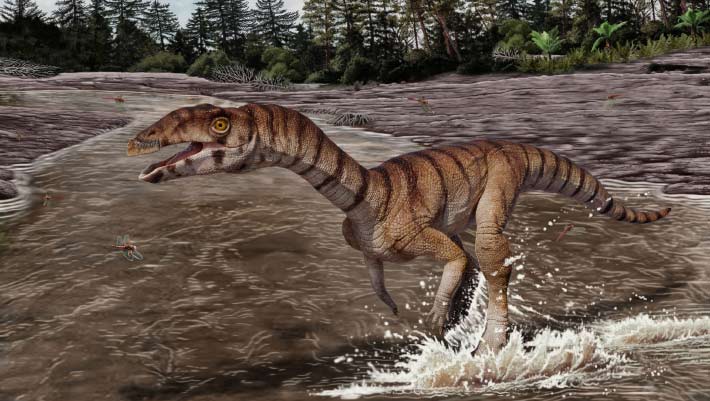
Labrujasuchus expectatus navigated the world on two legs with tiny arms and a toothless mouth tipped in a beak. Image credit: Jorge Gonzalez / NHMLAC Dinosaur Institute.

Paleontologists have described a new species of bipedal shuvosaurid archosaur from New Mexico, shedding light on a group of creatures that roamed North America during the Triassic period, more than 200 million years ago.

The post Toothless, Bipedal Crocodile Relative Lived in New Mexico 212 Million Years Ago appeared first on Sci.News: Breaking Science News.

  •  

Rare Ostrich-Like Dinosaur Fossil Found on Canadian Island

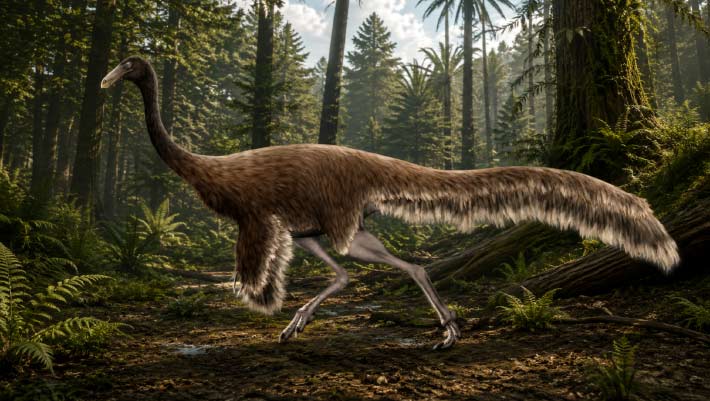
Life restoration of Quipalong henanesnsis, an ornithomimosaurian dinosaur that lived in what is now China during the Maastrichtian age of the Late Cretaceous, between 72 and 67 million years ago. Image credit: PaleoNeolitic / Sci.News.

Paleontologists in Canada say they have recovered a dinosaur tail vertebra from 75- to 80-million-year-old marine rocks on a small island off the coast of British Columbia, providing the clearest evidence yet that bird-like ornithomimosaurs once roamed the ancient Pacific coastline of North America.

The post Rare Ostrich-Like Dinosaur Fossil Found on Canadian Island appeared first on Sci.News: Breaking Science News.

  •  

New Species of Octopus Discovered in Deep Waters near Galapagos Islands

Microeledone galapagensis. Image credit: Voight et al., doi: 10.11646/zootaxa.5814.4.5.

A single female specimen, collected 1,773 m below the surface near Darwin Island, has been described as a new species of deep-sea octopus, and it doesn’t fit neatly into the Megaleledonidae family it belongs to, forcing a revision of the textbook definition.

The post New Species of Octopus Discovered in Deep Waters near Galapagos Islands appeared first on Sci.News: Breaking Science News.

  •  

Cows Can Recognize Familiar Human Faces, New Study Finds

Amichaud et al. found that cows not only recognize human faces, but can connect them with familiar voices. Image credit: NeiFo.

New research led by scientists from the French National Institute for Agriculture, Food, and Environment (INRAE) suggests cows (Bos taurus taurus) can distinguish between known and unknown people, and even match a familiar voice to the correct face.

The post Cows Can Recognize Familiar Human Faces, New Study Finds appeared first on Sci.News: Breaking Science News.

  •  

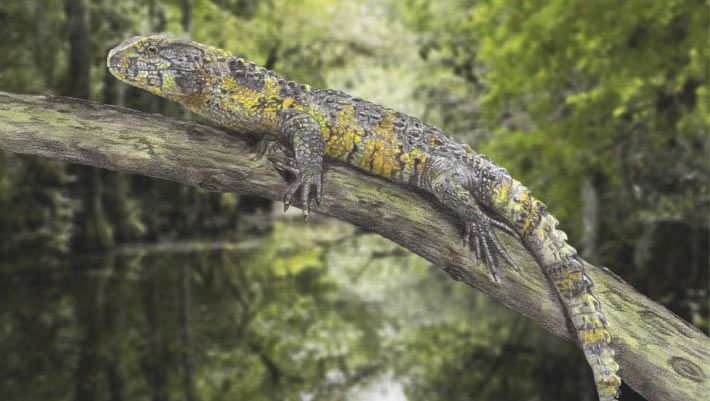
83-Million-Year-Old Crocodile Lizard Fossil Unearthed in France

Paleoartistic reconstruction of Acutodon villeveyracensis, the oldest known member of the pan-shinisaur lineage ever found in Europe. Image credit: Olivier Jansen.

Paleontologists have identified a new genus and species of pan-shinisaur lizard from a partial upper jaw discovered in southern France, pushing the presence of its lineage in Europe back by at least 30 million years.

The post 83-Million-Year-Old Crocodile Lizard Fossil Unearthed in France appeared first on Sci.News: Breaking Science News.

  •  

Canceling Quantum Noise

Author(s): Philip Ball

A new technique uses an β€˜anti-noise’ signal to cancel out the unavoidable quantum noise associated with precision measurements like those needed for gravitational-wave detection.


[Physics 19, 77] Published Fri May 22, 2026

  •  

3D Recordings of Swimming Algae

Author(s): Mark Buchanan

Measurements of the 3D fluid flow around a swimming microorganism could help researchers better understand the swimming dynamics of such microbes.


[Physics 19, 59] Published Fri Apr 24, 2026

  •  
❌