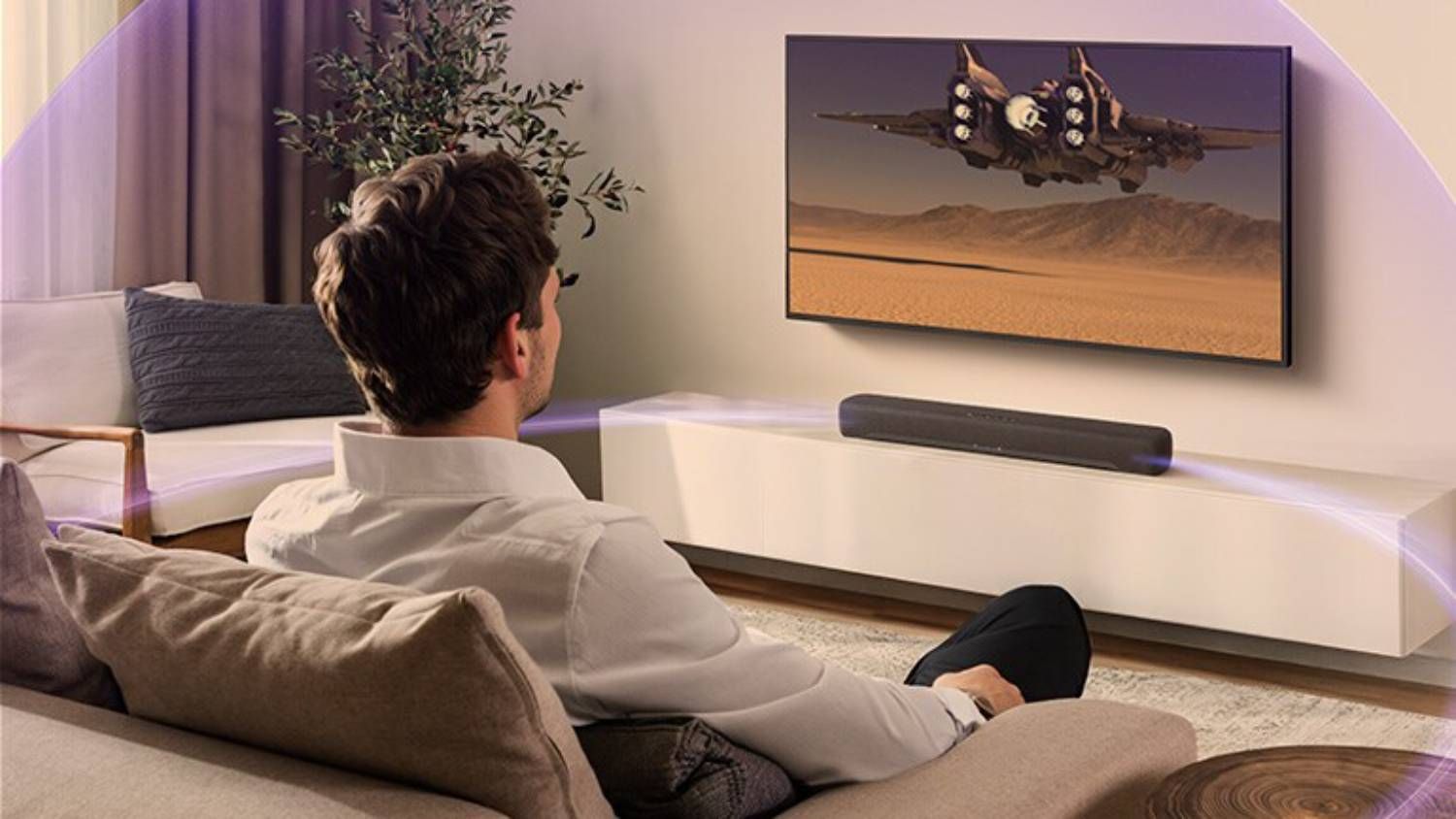
Yamaha unveils a new compact budget soundbar: the B200A
It's a 2.1-channel soundbar, but with virtualized Dolby Atmos support
Available for just $250 in the US in November 2026, with international availability looking likely to follow
Yamaha is on a tech announcement roll (which would be a great pun if we were talking about its motorbikes, but alas). Just two weeks after unveiling new compact streamers for the home, and a few months after its cool new active speakers, it has another audio release: a new Dolby Atmos-enabled soundbar that's relatively affordable.
This is the Yahama B200A, which gives you a much more affordable alternative to the likes of the Yamaha True X Surround 90A it released earlier this year.
The soundbar is set to go on sale for $249.99 in November (that's about £200, AU$400, but we're waiting for international availability. Yamaha's international sites have landing pages for the soundbar, so global releases seem likely, but we don't know when).
Most of the best Dolby Atmos soundbars sell for a lot more than that. In fact our favorite 'cheap' pick, the Sony HT-S2000, is about twice the price in the US (though is cheaper internationally, and is discounted regularly in the US).
What do you want from the 'bar?
(Image credit: Yamaha)
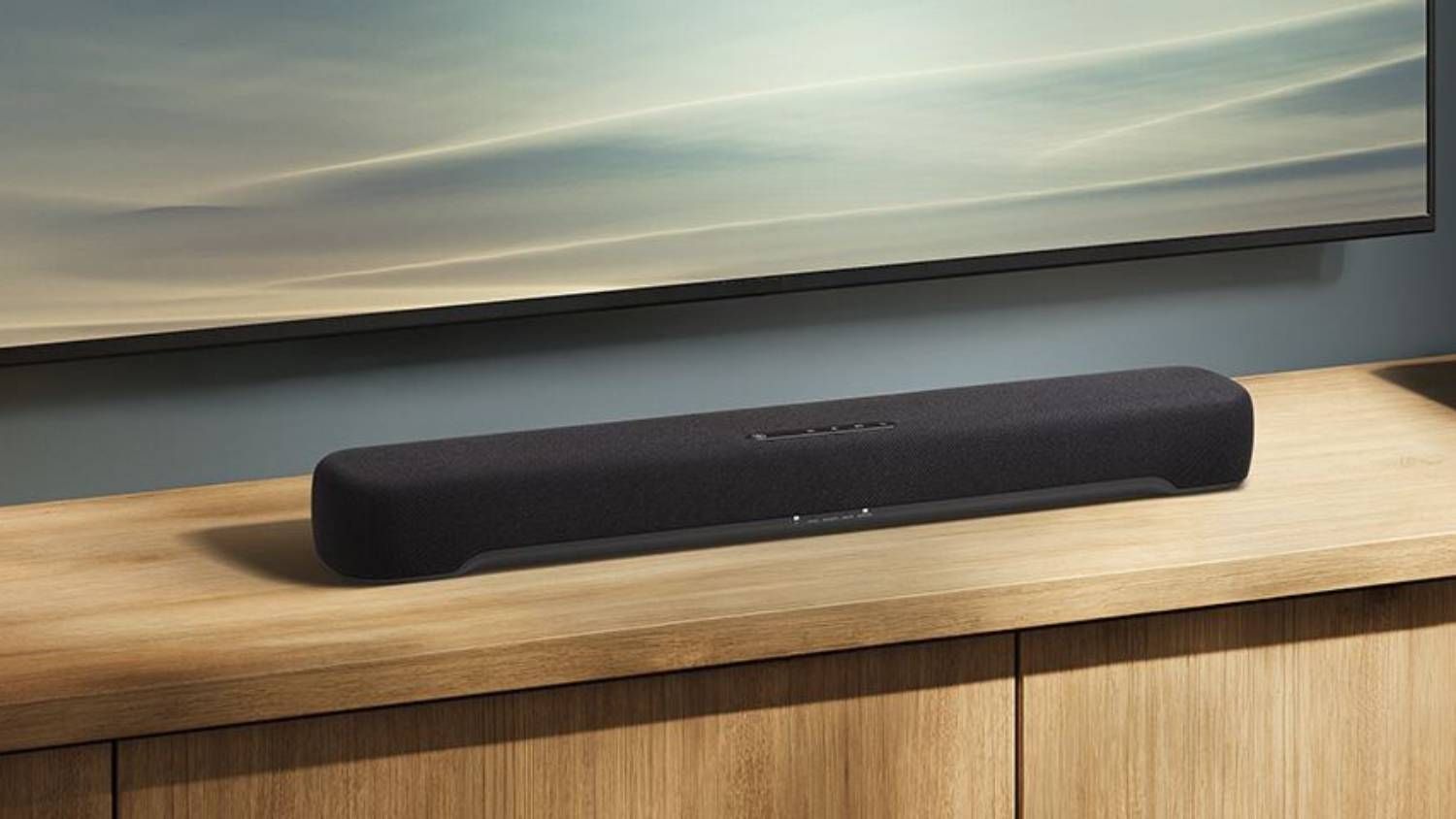
Yamaha is positioning the B200A as a compact soundbar — in fact, it's the only product labelled as such on the brand's website. It weighs 1.8kg and measures 23-5/8 x 2-1/2 x 3-3/4 inches (60 x 10.2 x 6.4cm), and promo images show people using it connected to computers as well as TVs.
Specs-wise, you're looking at dual 1.8-inch 20W cones for left and right sound, and a built-in three-inch 30W subwoofer, making it a clean 2.1-channel system.
What draws me to the soundbar is its connection options. You've got eARC, of course, and also optical and 3.5mm ports, plus Bluetooth 5.3. Yamaha's Sound Bar Remote app is used for wireless control.
But it's not just about specs and ports; Yahama wants you to know about its features (and not just Dolby Atmos). The soundbar has a Clear Voice feature which makes voices easier to hear, and a Game Sound Mode which emphasizes often-quiet audio cues like footsteps, incoming attacks or power-up sounds. There are also four EQ modes: Standard, Movie, Stereo and Game.
It's a fun range of features for a soundbar which won't cost that much; I see this thing doing gangbusters for people who want great specs without a high price, especially during sales seasons, given Yamaha's usual audio quality.
Qobuz wants you to make a memory-filled playlist, and explain it
You can win an iFi iDSD GR 2 for your efforts
World Alzheimer's Month runs through September
Alongside 'Fast songs for the gym' and 'Band 101 for introducing a partner to a band on the eve of going to their gig', remembering moments or periods of your life is one of the most important reasons we make playlists. I still listen to "mix-tapes" (in digital format, mostly) I made while living abroad, road tripping around the outback or preparing for big university parties.
Now, streaming service Qobuz has taken time off its war on AI slop to acknowledge the link between music and memory for World Alzheimer's Month, teaming up with hi-fi tech brand iFi Audio to do so.
World Alzheimer's Month runs through September, and during that time, Qobuz and iFi are running a competition to submit a memory-laden playlist, and perhaps win an iFi iDSD GR 2 for your efforts.
Wait, what's the link? Well, it has been shown that musical memory remains well-preserved in Alzheimer's sufferers, and so a song may help with memory recall.
I'm getting this from a study published in the National Library of Medicine, which suggests that music interventions can "delay and decelerate the neurodegeneration in individuals at risk". But my colleague and Audio Editor tells me she has seen music's profound effect on memory recall in a fellow dancer who (even in advanced stages of this progressive disease) could still perform decades-old choreography, if the music were played.
Many non-profits, including Music & Memory or Playlist for Life, exist to help people by providing training, awareness or music-based care, to aid those suffering with various degenerative illnesses.
What about that competition?
(Image credit: iFi / Qobuz)
Oh yes, the competition.
During September, Qobuz and iFi want you to make a playlist (on the former's hi-res download and streaming platform, of course) full of songs which bring you back to a certain time or important memory.
This page also lets you provide a 'short story' or description of what the playlist means to you. There's no stated word count, but this whole news story could be pasted into the field with without a problem.
Once you've submitted your playlist, you'll be in with a chance to win the iFi iDSD GR 2 DAC (or digital-analog-converter, to level up your music using, say, the USB-C port on your phone, and on to your wired headphones or earbuds), worth $529 / £529 / AU$849. And that's a great prize. We gave the iFi IDSD GR 2 a perfect, 5-star review, praising its sound quality and easy-to-use touch-screen. So good luck!
There's no indication of how the brands will choose a winner; if it'll be based on the description, or tracks, or at random. It's also not clear what will happen to the rest of the playlists; maybe Qobuz will publish some of its favorites for all to see, but perhaps the submission is just for the purposes of the competition. Either way, delving back into old albums and tracks that really take you back to a specific moment will be a cathartic — and sometimes profound — experience. Music's great, isn't it?
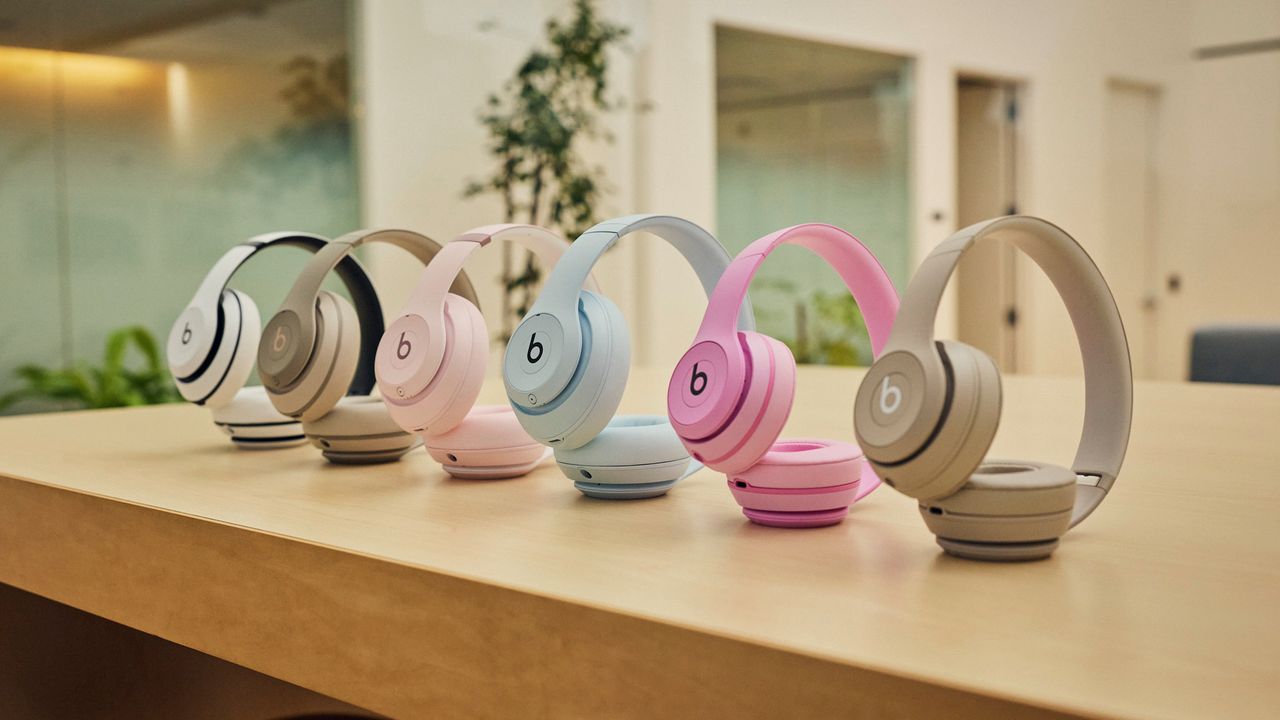
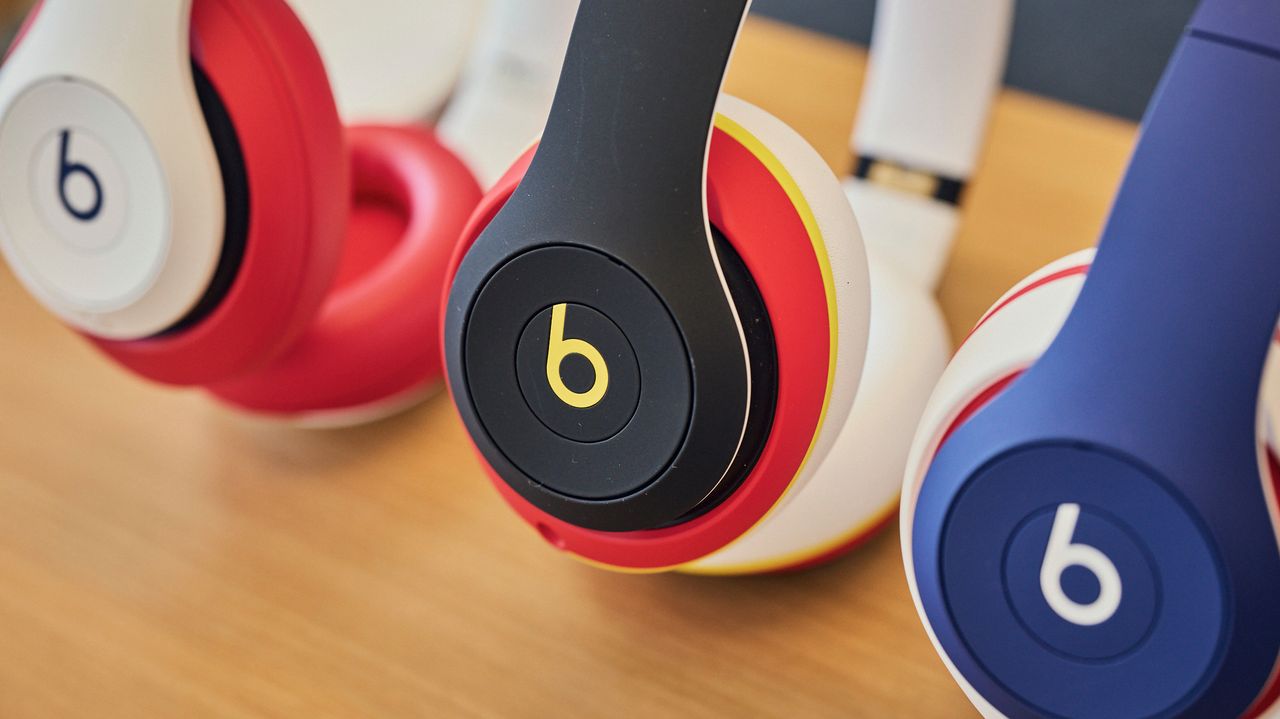
However, that latter point could be addressed later in the month. How come? because according to MacRumors, Apple just released a firmware update for the Beats 360 headphones. Yes, that same pair of Beats 360 headphones we've been hearing rumors about for months, but that have yet to be officially announced.
Why is Apple updating headphones that don't exist? Well, bear in mind we've been seeing them for months, as Apple gave them to multiple soccer World Cup players to show off during the tournament. Celebrity sportspeople need their tech updating too, after all.
There's no indication of what this update does, and it doesn't really matter. It's all about what this update suggests.
A Beats 360 release date just around the corner?
Because of this recent software update, many now think that the Beats 360 are due to be unveiled at some point in September.
While Apple already has just had its big product unveiling event of the year (on September 9, around 14 hours ago at the time of writing), that doesn't rule out new Beats devices. Apple generally lets its Beats sub-brand operate independently.
In fact, it would've been pretty bizarre if we had seen the Beats 360 shown off at the Apple event, for this fact.
We know a lot about how the Beats 360 look, thanks to plenty of leaks (and, of course, the fact that they were literally on the necks, heads and bags of a few soccer players months ago). They sound like a big step up from what we've seen, but as the launch of a new range, it's hard to know how they'll stack up to existing models.
Beats' last product launch was in October 2025, when it showed off the Powerbeats Fit, so maybe we'll see the brand take the same late-September-early-October window for its new device. Or devices? We've only heard about the Beats 360, but that doesn't rule out siblings of other form factors.
Amp and streamer which includes MM phono stage and HDMI eARC
Designed to be compact, so it won't take up as much space as a hi-fi stack
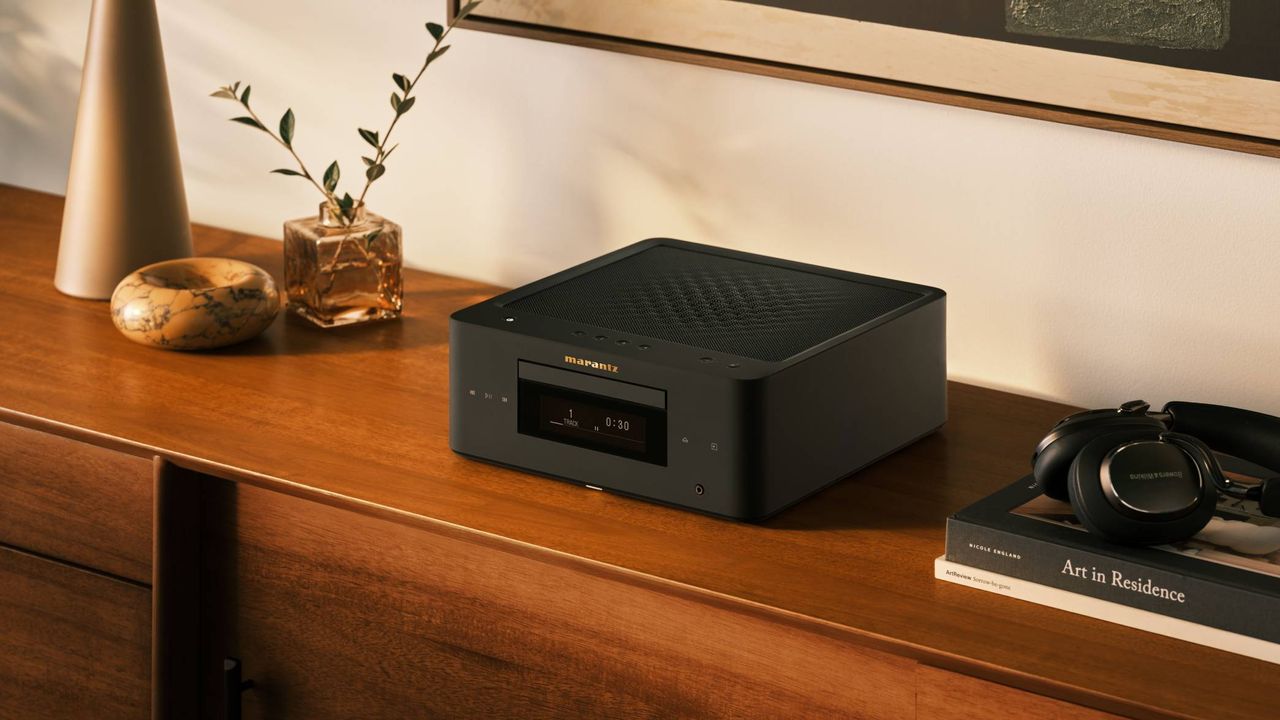
If you're under the assumption that your small home or rental apartment means you can't enjoy an advanced hi-fi set-up, Marantz's new release might have you re-thinking things.
The beloved heritage hi-fi giant has released a new device: The Marantz MCR 60n — and no, despite the name, it's not solely designed to play My Chemical Romance or songs written in Manchester.
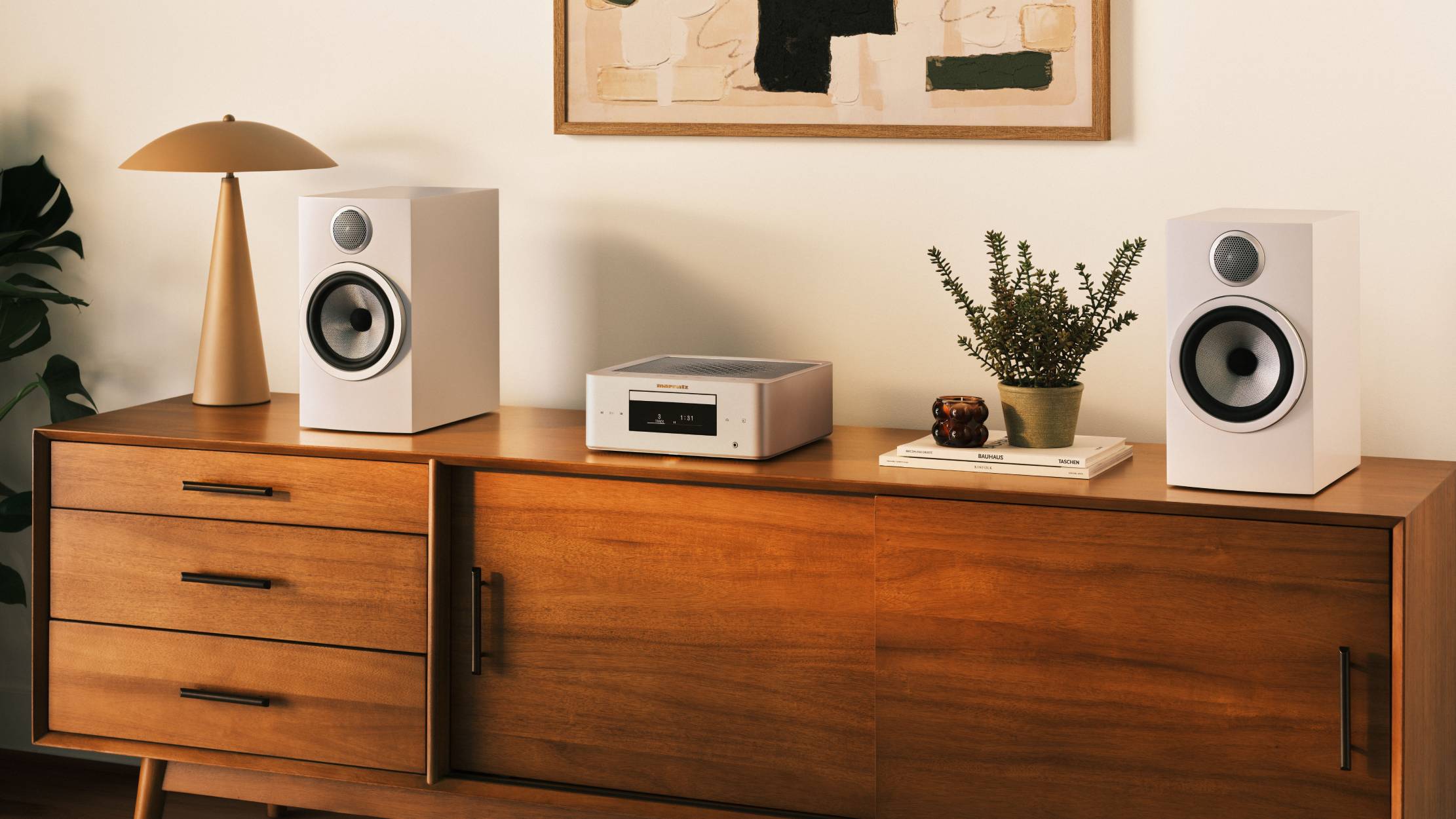
This combined streamer and amplifier has been devised as a "mini hi-fi player", according to the brand. While we weren't told its actual size, its footprint is noticeably smaller than a turntable's in the accompanying images.
It'll go on sale on September 15, 2026, and there are two models. For $1,000 in the US (about £740, AU$1,500) you can get the standard model, and there's one available in Europe with a DAB radio squirrelled in, for £800 (about $1,100, AU$1,1600).
So it's not cheap per se, but perhaps its range of features — and household name status — will make up for that.
New Beats headphones teased during 2026 World Cup...
... and Beats has been silent for following two months
Reddit fans think they'll come some time after iOS 27, in September
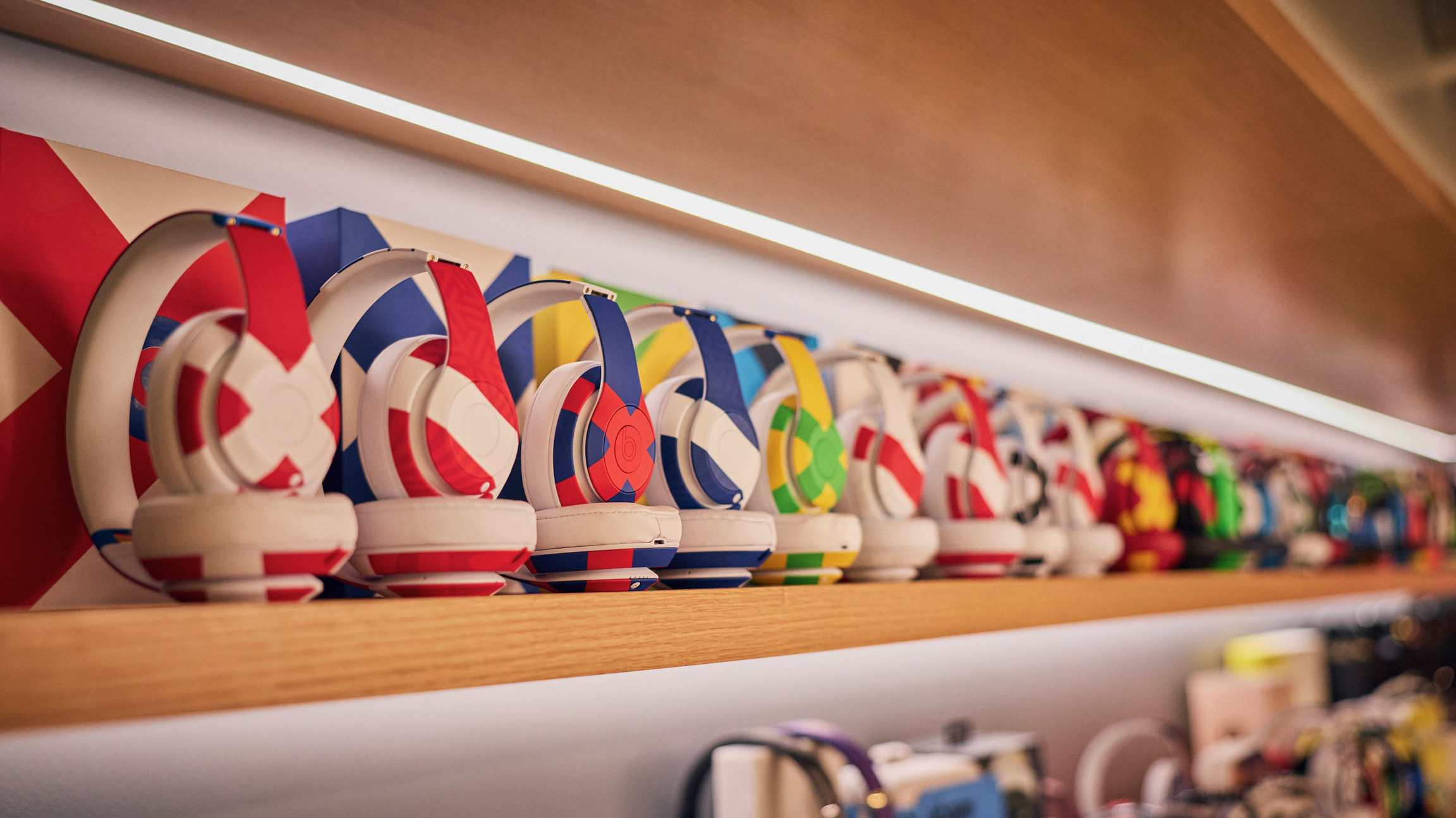
It's been two months since the sporting event of the summer began: the 2026 World Cup kicked off on June 11. That means it's also been two months since Beats started teasing its new headphones, putting them onto footballers like Lamine Yamal and Lee Kang-in to drum up some publicity.
However, if you were hoping for an imminent release, Redditors have some bad news.
In a post on the r/beatsbydre subreddit, which is currently awash with question regarding these headphones, one forum mod has a theory about when they'll come. User jforsander points out that every previous pair of Beats headphones had iOS support added months prior to their release.
Of course, this new pair of headphones hasn't, suggesting that they're still a long time away from an official launch. In fact, the user thinks that we won't even see this software support until September, because that's when iOS 27 will come.
It follows that the headphones will be released a few months later; perhaps even up to six months later. Gulp. Unfortunately, that tracks with what we heard when we visited Beats HQ — or rather, what we didn't hear. Clearly, Beats is in no rush to strike while the iron's hot.
Will we have to wait that long?
(Image credit: Beats)
It's worth taking this missive with a slight pinch of salt. If there's no existing software support for the Beats headphones, how were those footballers using them? Surely they weren't just decoration — not at such an important sporting event, where the right pre-match playlist would surely be of paramount importance?
The cynics among you might rightly point out that the players weren't ever photographed listening to the headphones, just wearing them around their necks or attached to their bags. And it's also possible that Apple found a temporary solution for their headphones, rather than a full software rollout.
But it still stands to reason that Beats would give them a way to sporting stars who could actually listen to the headphones, and so it's possible that software support exists and online sleuths… missed it?
Something that the Reddit poster points out is that Apple might simply have become better at hiding its updated software support for new Beats devices (Apple, of course, owns Beats). They call it unlikely, but feasible.
If we are waiting past September to hear any more about these new headphones, all the money spent on soccer players might have been wasted; the buzz garnered by the move is already dying down (that is, in most places beyond the r/beatsbydre subreddit). Hopefully Beats will shift into action sooner than that.
Brand called Saccater lists 'aéra' IEMs on Kickstarter...
... and very quickly jumps past funding targets
Designed to protect your hearing (and they look good too)
About one third of adults in the UK, and a similar number in the US, have some kind of hearing loss (according to RNID and Hearing Health Foundation respectively).
It stands to reason that those little music-playing speakers we place into our ear canals, really rather close to our ear drums (with their ever increasing driver sizes and/or driver counts nestled into the headshells) don't exactly help. But one company is offering something of an alternative.
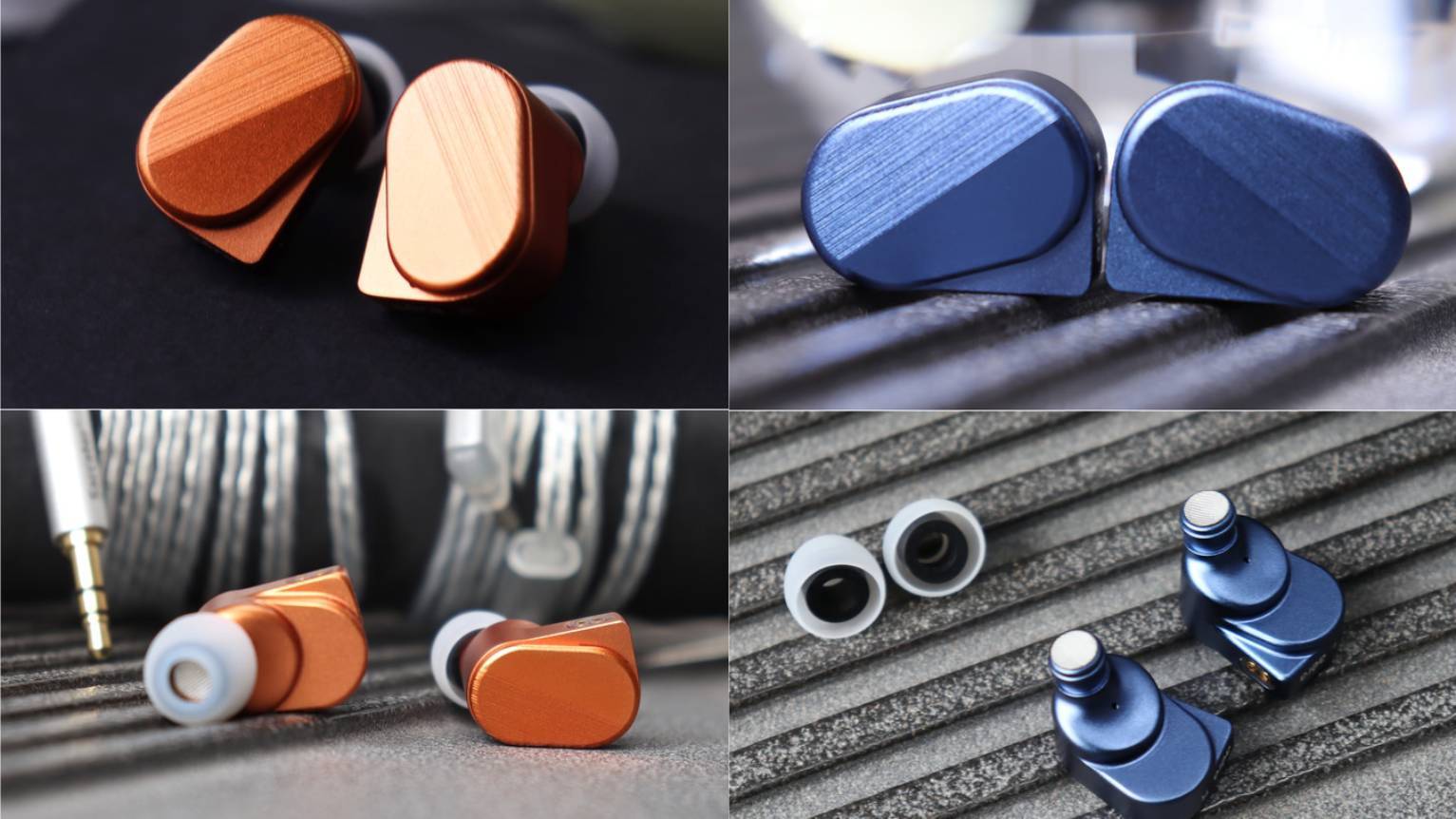
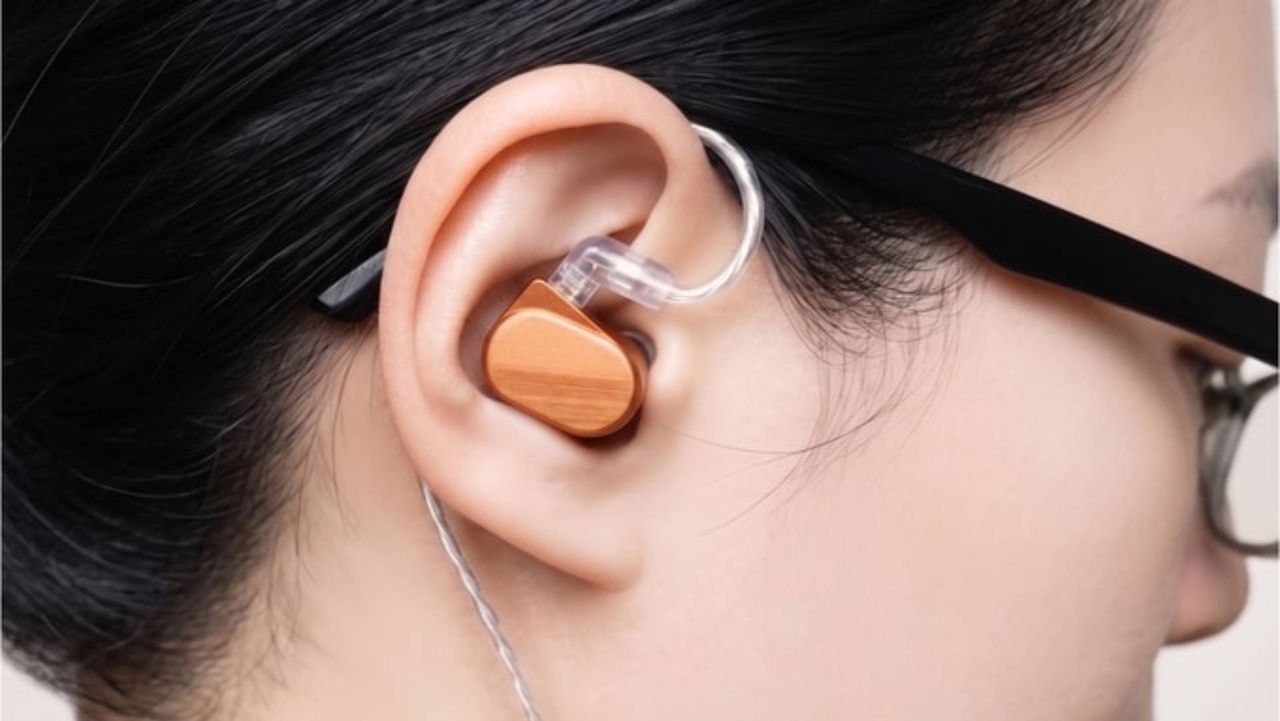
On Kickstarter, a brand called Saccater has unveiled some new in-ear monitors called aéra. These are audiophile-friendly buds with 9.6mm planar magnetic drivers, silver-plated copper wire and dual-sided concentric coils, but with some added extra considerations to protect your hearing.
That fits with Saccater's other Kickstarter projects; a series of earplugs designed for various everyday tasks. The aéra have already been fully funded on Kickstarter, with HK$210,000 (about $26,000, £19,000, AU$38,000) already pledged out of the modest HK$30,000 (roughly $4,000, £3,000, AU$6,000) goal. Each pair of buds cost HK$860 (about $110, £74, AU$150), and are due to ship in October 2026.
That means the Saccater aéra have hit their goal nearly seven times over, proving there's a big appetite for hearing-friendly earbuds.
Hear, hear(ing health)
(Image credit: Saccater)
You're probably wondering, what does 'hearing-friendly' actually mean in IEMs such as these — because they look just like the IEMs I know and love?
One of the key considerations is weight and design; according to Saccater, you perceive sound worse when your ear is uncomfortable, often prompting people turn turn up the volume higher than they need to. So the aéra use a "zero-pressure fit" and are incredibly light, at just 4g per bud.
Whether or not they actually protect your hearing health, then, they'll be pretty comfortable to wear.
The earbuds also come with a hearing manual to guide you through best practice to avoid damaging your ears, as well as the brand's other earplugs in the box, so you don't use the aéra just to block out noise. This latter is, according to Saccater, another way people unintentionally damage their hearing.
Despite the focus on hearing health, the aéra seem suitable for audiophiles too. They support 24 bit / 96kHz playback, a 20Hz-20kHz frequency response, and come with a range of ear tips to choose between.
They also look pretty simple and beautiful, ditching the shiny or textured designs of most modern IEMs for something understated.
Now, all of these specs and pledges are from Saccater itself, so it's hard to know just how effective the aéra will be. But the early success of the buds goes to show that hearing health is something we're all waking up to.
In the two weeks since the phones showed up at my door, I've taken hundreds of pictures on them (349 on the Fold 8 and 307 on the Ultra, to be precise). They've come with me on multiple holidays, been used for product photography for reviews I've published, and even accompanied me on a film location scout day, which saw them get a lot of use.
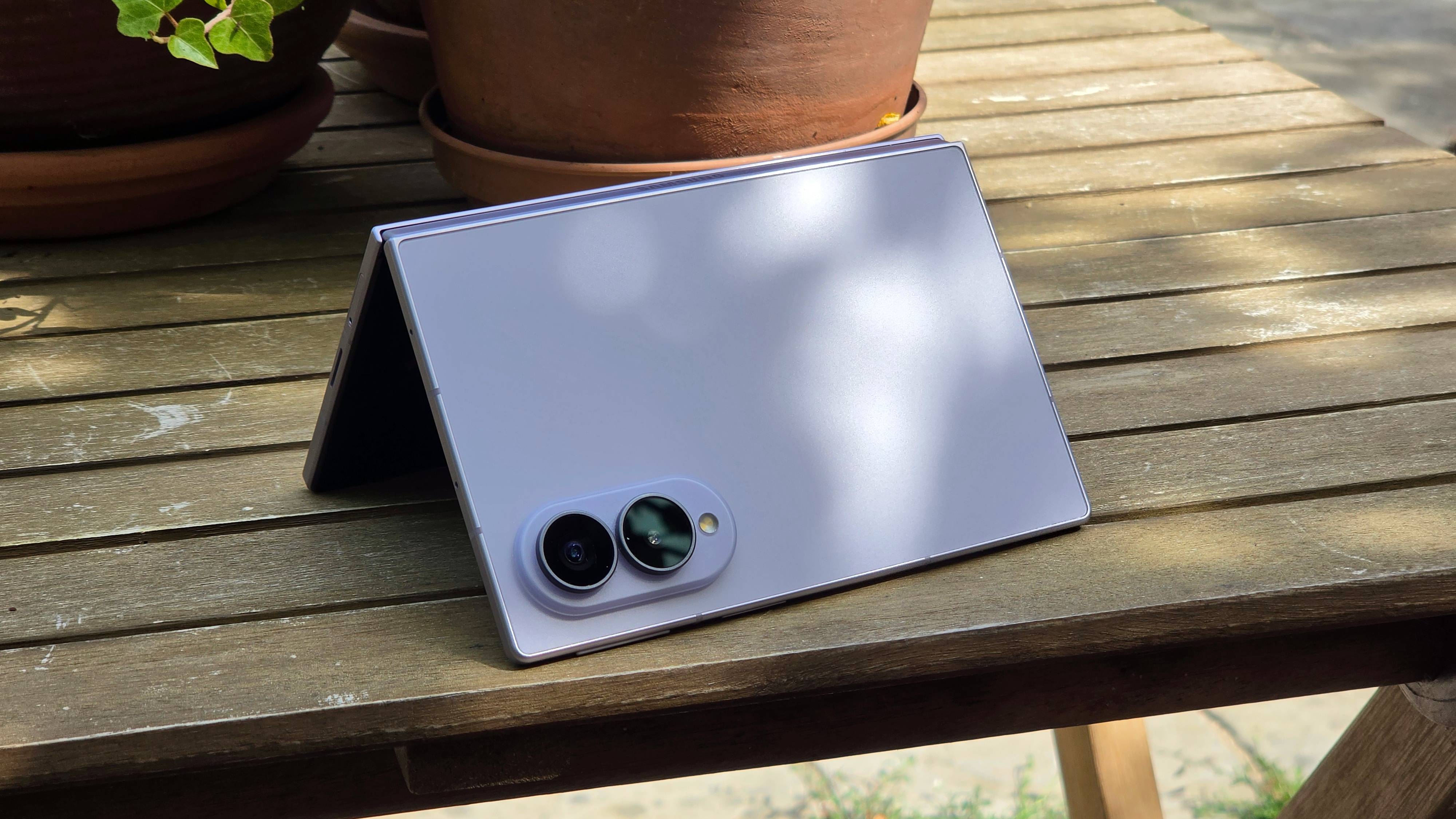
You'd expect that the Samsung Galaxy Z Fold 8 Ultra would be my default photography foldable. As I'll explain a little later, it's simply a better camera phone, offering better-looking photos thanks to having more cameras.
However, that's not been the case. When I need to grab a shot, I've found myself reaching for whichever pocket the 'standard' Galaxy Z Fold 8 is in. And the reason has little to do with its photography chops.
Size matters more than sensors
(Image credit: Future / Tom Bedford)
The benefit of the best camera phone over a DSLR or mirrorless camera is convenience. You don't have to sling them over your neck or tote them around in a carry case; they fit in your pocket and, more importantly, come out of your pocket in a pinch.
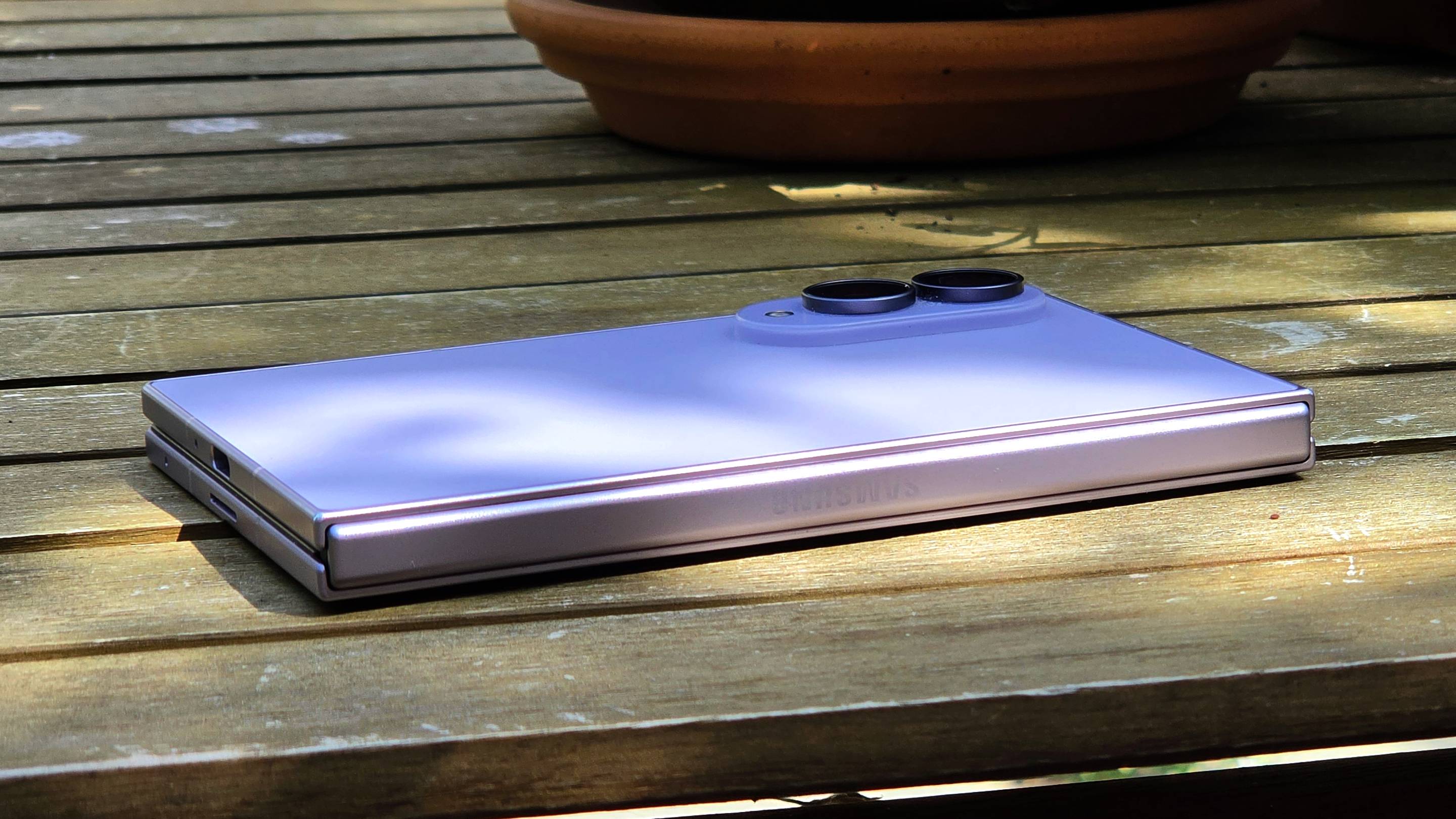
The Galaxy Z Fold 8 Ultra is a long, thin phone; we're talking 158.4mm tall and just 72.8mm wide when it's folded (8.9mm thick and 215g heavy, if we're trying to get all the dimensions). When I put it in my trouser pocket, it digs its way right into the bottom, yet still sticks out the top a fair way.
Yet removing it can be quite a faff due to its frame. I have to angle and adjust it, feeling like Ross, Rachel and Chandler trying to pivot it to remove it.
By contrast, removing the Galaxy Z Fold 8 from my pocket is a breeze because of how small and stumpy it is when folded (123.9 x 81.9 x 9.7mm, 201g, just so we've got everything). It comes out easier than an average, non-folding smartphone.
Quite a vapid reason to prefer one phone over the other, right? But try to imagine this removing process 50, 60, 70 times in one day, when I'm on holiday or a recce; the Z Fold 8 Ultra becomes more effort than it's worth.
In fact, most of the Z Fold 8 Ultra's shots are from specific shoots or sessions, when I knew I'd be using the phone lots, and so didn't put it in my pocket at all.
One is clearly a better camera phone
(Image credit: Future / Tom Bedford)
Despite the Samsung Galaxy Z Fold 8 being my preferred photography phone, I'm under no illusions about which takes better pictures.
Both phones have a 50MP f/1.9 ultra-wide camera, and two 10MP f/2.2 selfie cameras. But from here, the Ultra is, as you'd imagine, better.
For starters, its main sensor is more powerful, packing in 200 megapixels and an f/1.7 focal length, compared to the Z Fold 8's 50MP f/1.8. As photographers know, though, it's not all about megapixels, and I found it's the zoom lens that made the Ultra better.
The Galaxy Z Fold 8 Ultra has a 10MP telephoto camera which supports a 3x zoom. On paper, it's the same unit the Samsung Galaxy S26 Ultra packs.
A picture of some yellow flowers, in a garden, captured on the Fold 8....Future...and the same picture on the Fold 8 Ultra. So far, pretty similar, albeit with some added blur.FutureGetting closer into the flowers on the Z Fold 8, it basically looks like I've cropped the previous image...Future... but zooming in on the Z Fold 8 Ultra gives some real depth of field, making for a better picture.Future
A zoom lens gives the Z Fold 8 Ultra much, much more versatility for photography; in fact, I'd wager at least half of my pictures on the phone use this snapper. Its 67mm lens gives much nicer, softer depth of field than the main camera, even if the app keeps jumping between optical and digital zoom when you're using it.
When you zoom in on the Galaxy Z Fold 8, you're just getting digital zoom. The flower pictures above will show you how this looks in comparison to optical; it's fine, but to camera phone photographers, it won't compete.
As you'll notice when you look at the above pictures too, the Z Fold 8 Ultra offers some extra bokeh on the 1x zoom picture, likely thanks to the extra information presented from all those excess pixels it's capturing. However, for the most part, I've found them pretty matched when it comes to these 'standard' pictures taken on the wide camera.
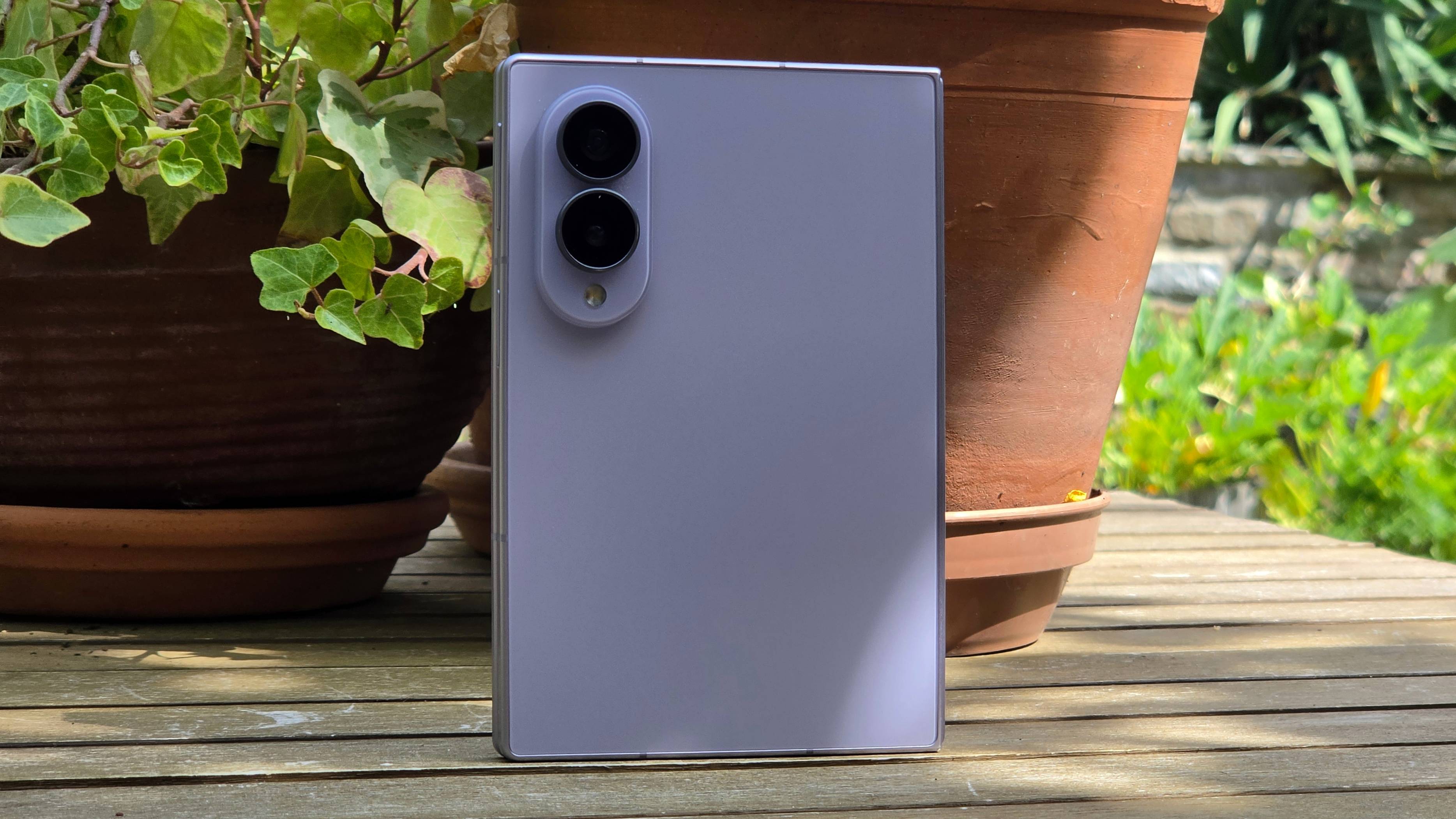
Want some more Z Fold 8 Ultra camera samples? Every shot of the Z Fold 8 in this article was taken on the Ultra phone, using the 3x camera (hence why you're not seeing the Ultra in the shots).
Photography is only part of the process
(Image credit: Future / Tom Bedford)
Despite its lesser camera performance, I'm still using the Galaxy Z Fold 8 as my go-to photography phone. And the convenience of pulling it out of my pocket is only one reason. Another is what happens once I've captured the picture.
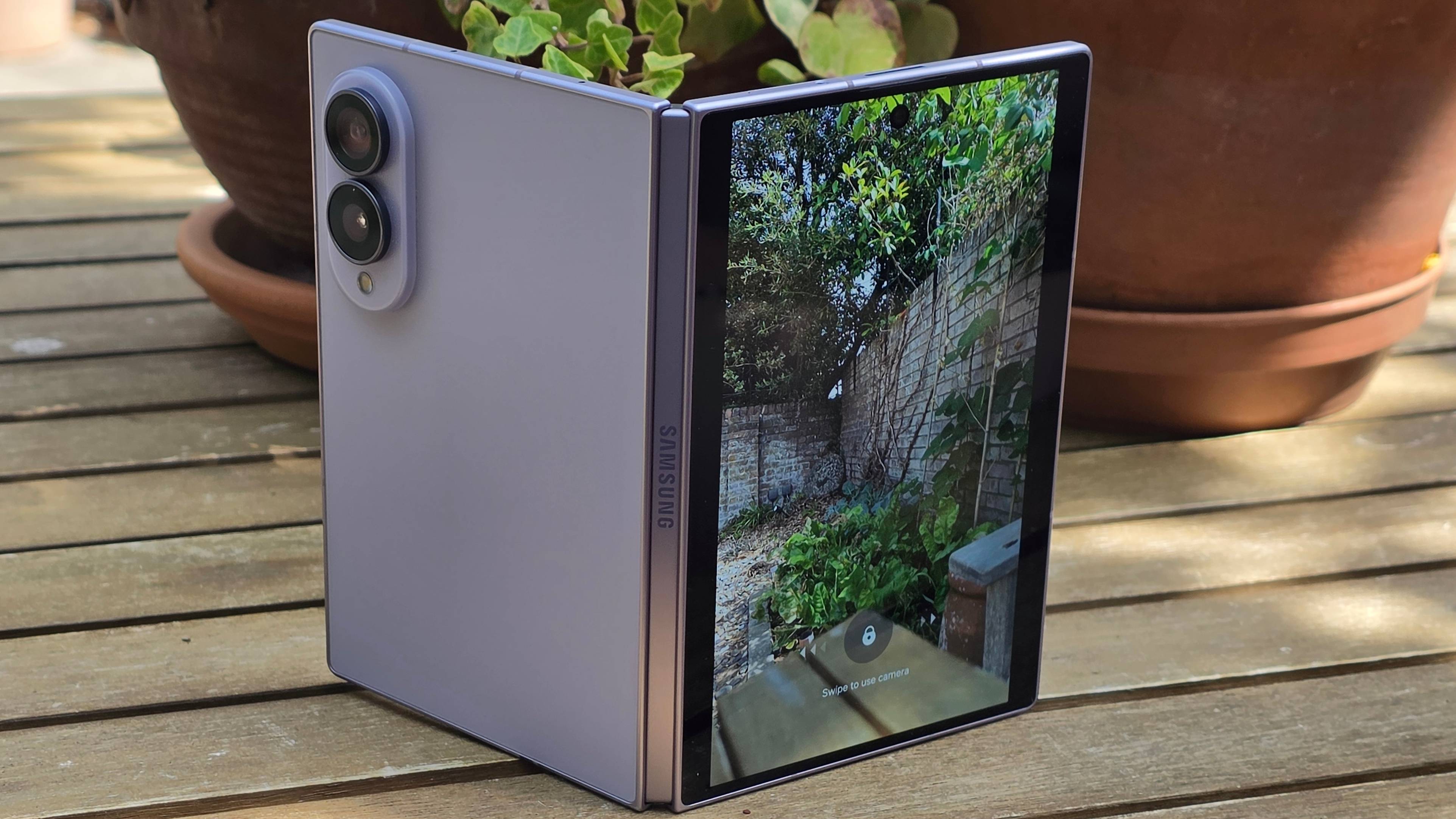
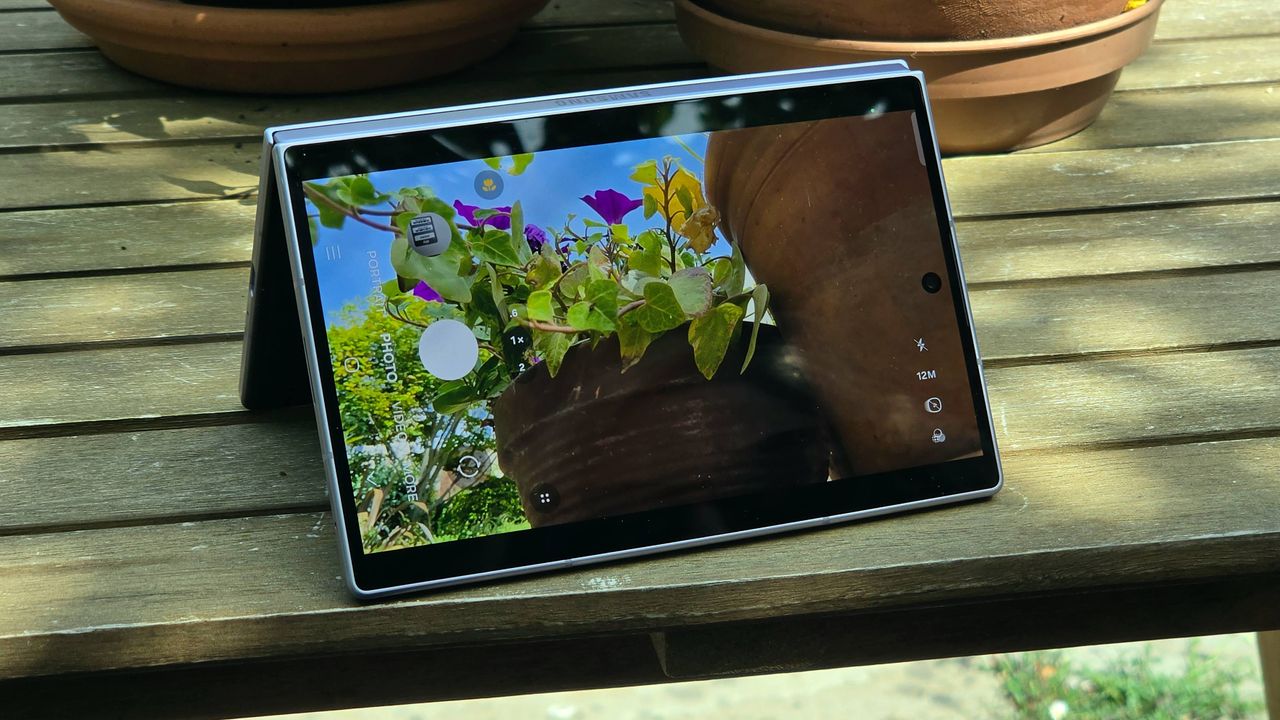
The inner, or main, screen of the Z Fold 8 has a 4:3 aspect ratio. For some comparison, the Z Fold 8 Ultra is 0.9:1, which is close enough to square that I feel comfortable referring to it as such for the rest of this article.
I don't know about you, but I don't capture or use square photos. I imagine you're in the same boat, given that Instagram basically single-handedly killed them off several years ago. No: for me, it's 16:9. Not only is this the required aspect ratio for every single website I write for, but it's a wide-screen aspect ratio which is appropriate for film reference shots, all-encompassing panoramas, or dramatic action shots. But the point I'm about to make would stand even more if you shoot in the camera app's default 4:3.
(Image credit: Future / Tom Bedford)
A wider display is much better for editing pictures. If you look at a wide snap on the Z Fold 8 Ultra's square display, you're given loads of black bars (or dead space) at the top and bottom. These are still present on the Z Fold 8, but much smaller, offering just enough space to house the edit controls.
When I'm holding an open Z Fold 8, I also find that my hands are in the perfect spot to easily manipulate the picture. Thanks to its display edges being taller, I have to move them around much more on the Ultra phone.
Based on coverage of the phones, both by critics and online users who've grabbed an early purchase of the phones, the aspect ratio is proving pretty divisive for the new phones. Some prefer the older shape of the Z Fold 8 Ultra; others like the 'passport'-style Z Fold 8. And for tasks like photo editing, I much, much prefer the latter.
Good, better, best
(Image credit: Future / Tom Bedford)
People who've read this article after glimpsing through the specs list of these new folding phones might find my preference for the worse one a little baffling. But those who've had hands-on time with the Z Fold 8 might understand my stance.
But if you're looking for a great camera phone, I'd be remiss not to mention something. Neither of these phones, not even the triple-camera Z Fold 8 Ultra, is actually a dedicated camera phone. They're fine for photography, but they won't hold a candle to the best mobiles on the market.
The Samsung Galaxy S26 Ultra would be a much better pick for people who want a camera phone, and don't need something that folds.
Don't just stick to Samsung, either. I've found most Galaxy phones have below-average battery lives — it's actually pretty poor on the Z Fold 8, at least compared to a non-folding phone, which cut some of my photo shoots short.
But if your main priority is a bending mobile, and the camera chops are a secondary consideration, don't rely on the specs list: the form factor is just as important.
Torn ear tips. Snapped charging case. Dented drivers. Like every other kind of gadget imaginable, the best headphones aren't built to last, and I'd wager that everyone reading this article has some skeletons (of old, ailing gadgets) in their (metaphorical) closet.
In fact, according to a European Union report, in 2024, 51% people kept their old smartphones even though they were no longer using them, and 34% were still holding onto their outdated laptops and tablets. We just don't know what to do with our old kit.
So, do you throw away your broken over-ear headphones and buy a new pair? Do you hunt down your nearest electronics recycling bank, or donate them to an organization which could use the parts? In recent years, the second-hand tech industry has boomed, with refurbishing and reselling sites such as Back Market and Refurbed ensuring that used gadgets get a second lease of life.
But too often, that first lease of life is all-too-easily abandoned. The tech you might be recycling — or consigning straight to landfill — might actually be easily repairable.
Per the BBC, a survey suggested that 7,000,000 wireless headphones (yes, seven-million) were thrown away in 2022, in the UK alone. And as we'll explore later, the majority of those may not have needed throwing away.
There's a simple truth. Gadget sellers are often loathe to admit it, worrying that repairing your own gadgets may affect their bottom line. And as we'll also soon learn, many companies seem to make repairs really quite difficult.
The thing is, your faulty gadget may be only a quick fix from working like new. From complicated pieces of kit such as AV machines and computers, to white-label toasters and kettles, electronics can often be repaired at home, for a fraction of the cost of buying new... within reason.
The long road to repairable tech
(Image credit: Pixabay)
Tech repairability isn't a new concept, but it's a rather new debate. Or, at least, it's one that's only recently been at the forefront of the news cycle, under the somewhat beige name 'right to repair'.
For two years now, repairability has been of growing importance to politicians as well as makers. In July 2024, the EU entered into force its 'Directive on repair of goods', and since Europe is a major market for tech companies, changes made for the region have been reflected in tech sold globally.
Designed to go hand-in-hand with several other EU policies on eco-friendly design, the repair directive is designed to make your gadgets easier to fix.
For example, electronics makers are now obliged to repair faulty kit, or make spare parts accessible for a reasonable price, so that third parties can do the repairs for you.
Some companies may look for loopholes — but not Fairphone
(Image credit: Future)
Before repairability was codified in legislation, it was still a focus for certain brands. One of those was Fairphone, a Dutch brand which began life as a campaign about conflict minerals in tech, and now makes phones and headphones. Miquel Ballester, its Head of Product, explained to us why it made the jump into physical devices:
"You can put the most ethically sourced materials in the world into a device, but if it dies in a year and a half because a battery's glued in, you've undone most of the good you just did".
He continued: "In the case of smartphones, earbuds, and headphones, repairability was what made the rest of the mission focus on bringing action into the industry. We've been fighting this fight for over a decade, long before 'right to repair' was something people brought up at dinner."
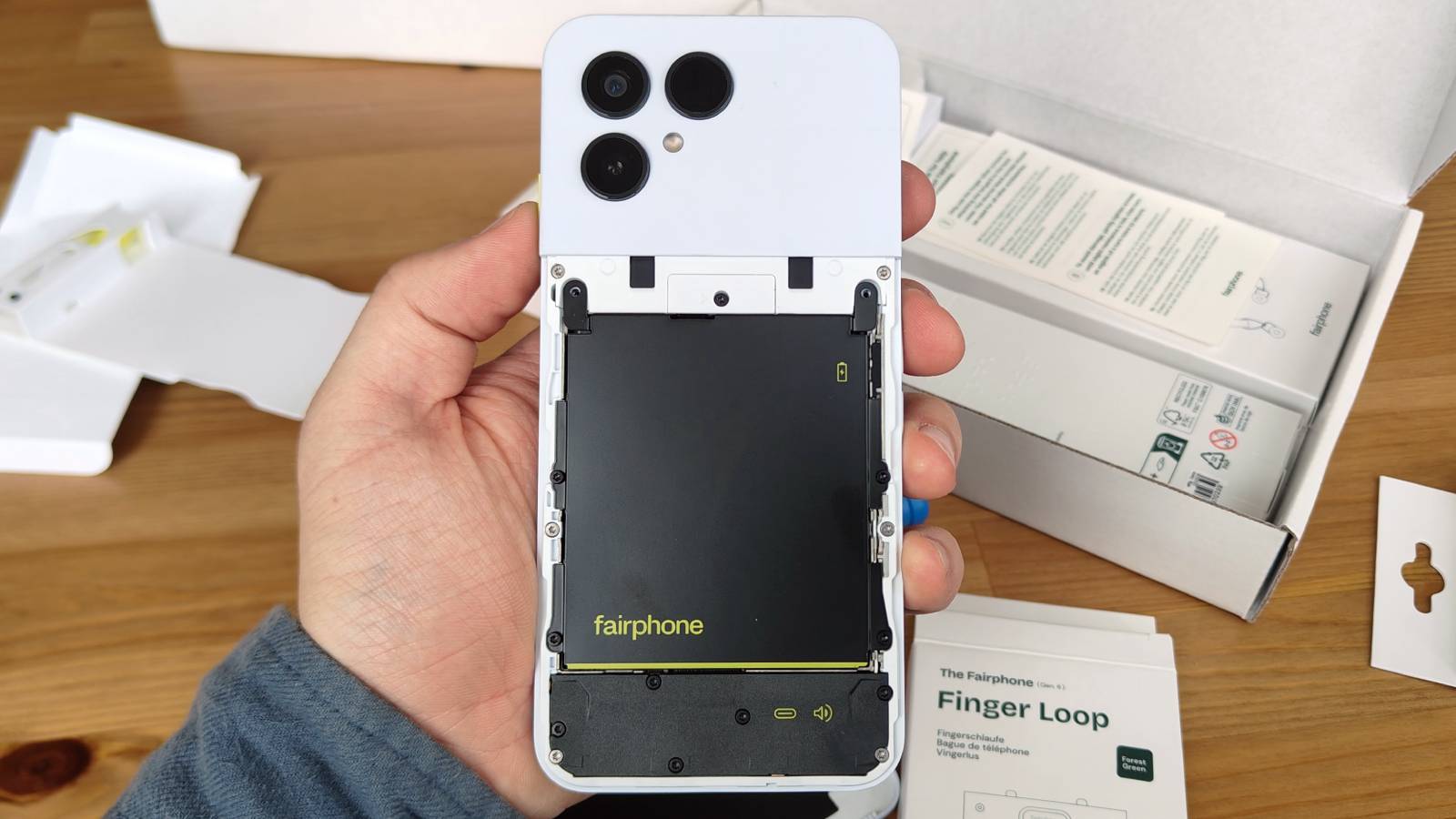
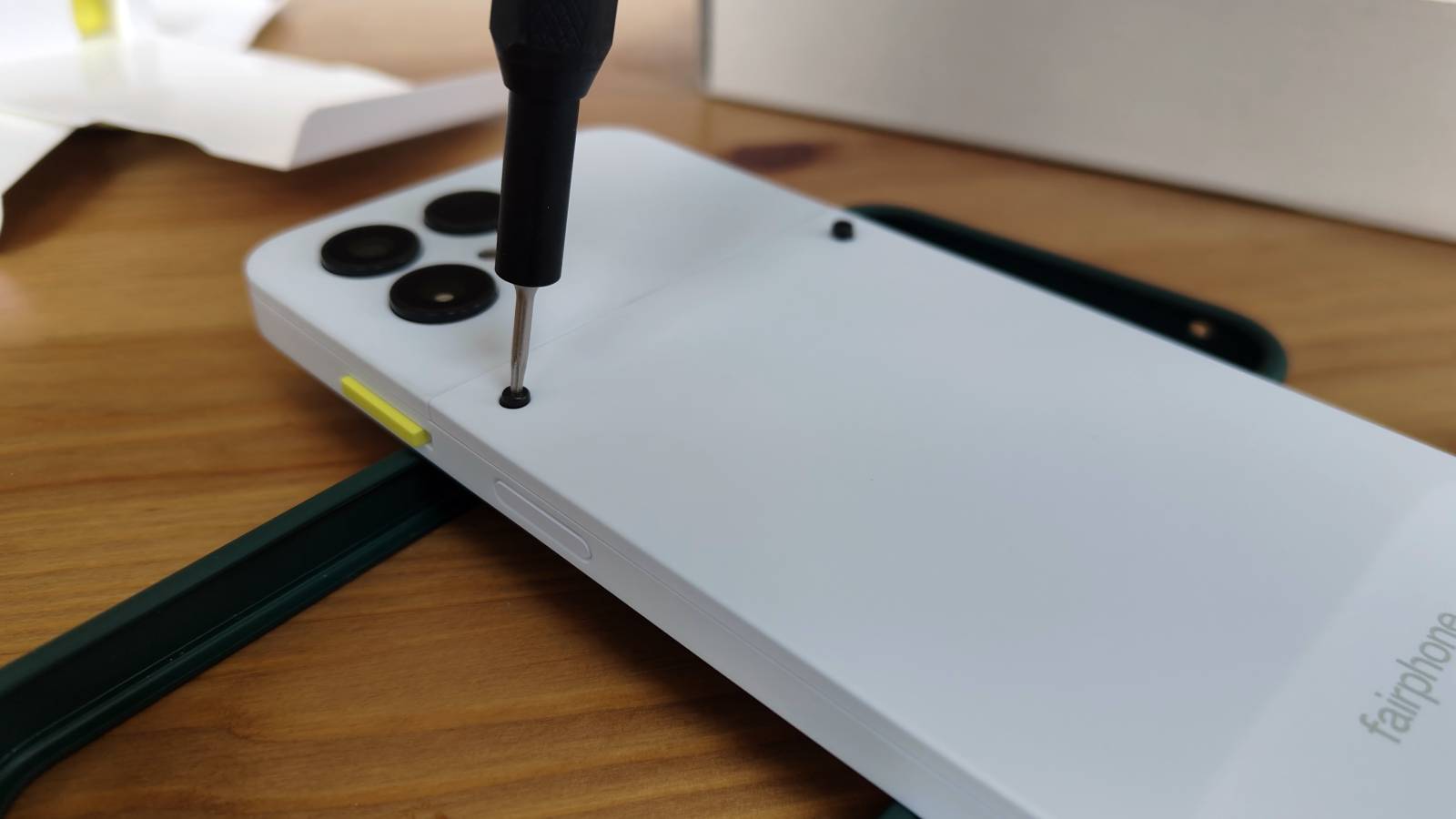
Fairphone devices are modular, meaning you can easily remove and replace the screen, camera, batteries, or other parts, all without having to extricate them from a tightly-packed device. The brand sells replacement parts online, so you can repair faulty components at home.
According to Ballester, Fairphone found that making its phones repairable didn't mean it had to change the performance and style of its products, but there was an impact on the price: "Designing for modularity means you're working with connectors, seams, and screws instead of glue and epoxy, and that adds a bit of cost compared to a phone that's built to be sealed shut forever".
We've been fighting this fight for over a decade, long before 'right to repair' was something people brought up at dinner
Miquel Ballester, head of product at Fairphone
Don't chase a high IP-rating (when you probably don't need it)
I also asked Ballester if any components or specs struggle in repairable gadgets. "Waterproofing is the one I'd point to first," he explained, railing against the trend of tech companies chasing an IP68 rating.
"Realistically, unless you're taking your phone free diving, IP55 gets you everything you actually need. It holds up against rain, spilled coffee, sweat at the gym, all the situations people actually put their phones through."
So, not IP68, which guarantees you protection for 30 minutes in a meter of water? "Chasing that rating basically forces you into permanent seals and factory-glued seams, because that's still the easiest way to guarantee a device survives being submerged.
"We'd rather give you a device that can be opened and repaired for the next seven years than one that survives a swimming pool once and then can't have its battery replaced. It's a genuinely difficult engineering line to walk, and I won't pretend IP68 wouldn't look nice on a spec sheet, but chasing it would mean compromising the thing we actually care about."
As mentioned, the EU's right to repair changes mean that companies may have to sell tools to repair their gadgets. But for Fairphone, that isn't a problem; they've been designed not to require proprietary tools. A Phillips screwdriver is all you need.
But how repairable is tech really?
(Image credit: Future)
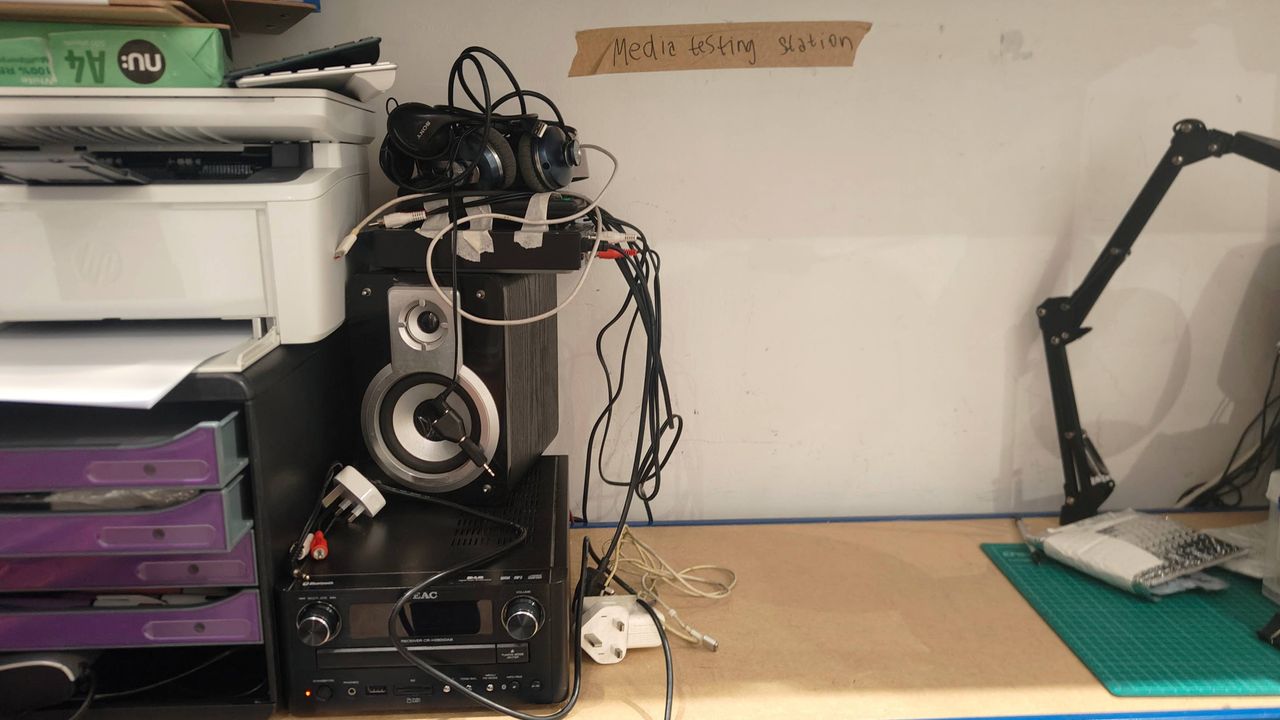
Just because a company doesn't make gadget repairability a selling point, doesn't mean that you can't easily fix it. To learn more about the repair process, I visited a local community repair shop called Fixing Factory, which operates several locations in London, UK.
Fixing Factory lets residents bring in broken items to get them repaired, but it also operates as a way to train volunteers in fixing household items.
When I visited the Fixing Factory's Camden location, the streets around the shop were abuzz — England was just hours away from its ultimately-unsuccessful World Cup match against Argentina. But inside the repair shop, a different kind of squad was assembled: a troop of junior repairers (volunteers learning how to repair tech) were being briefed on safety procedures.
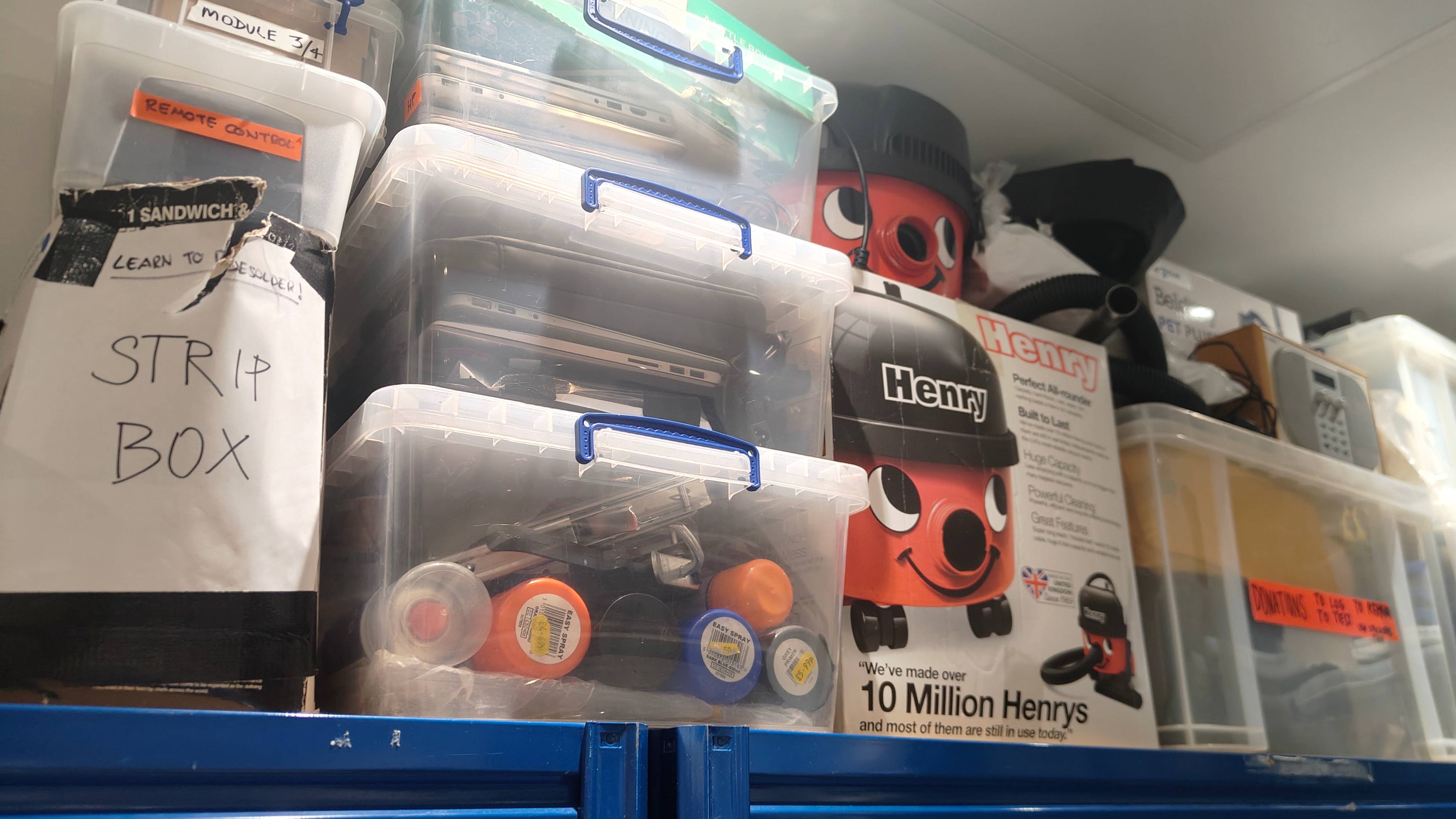
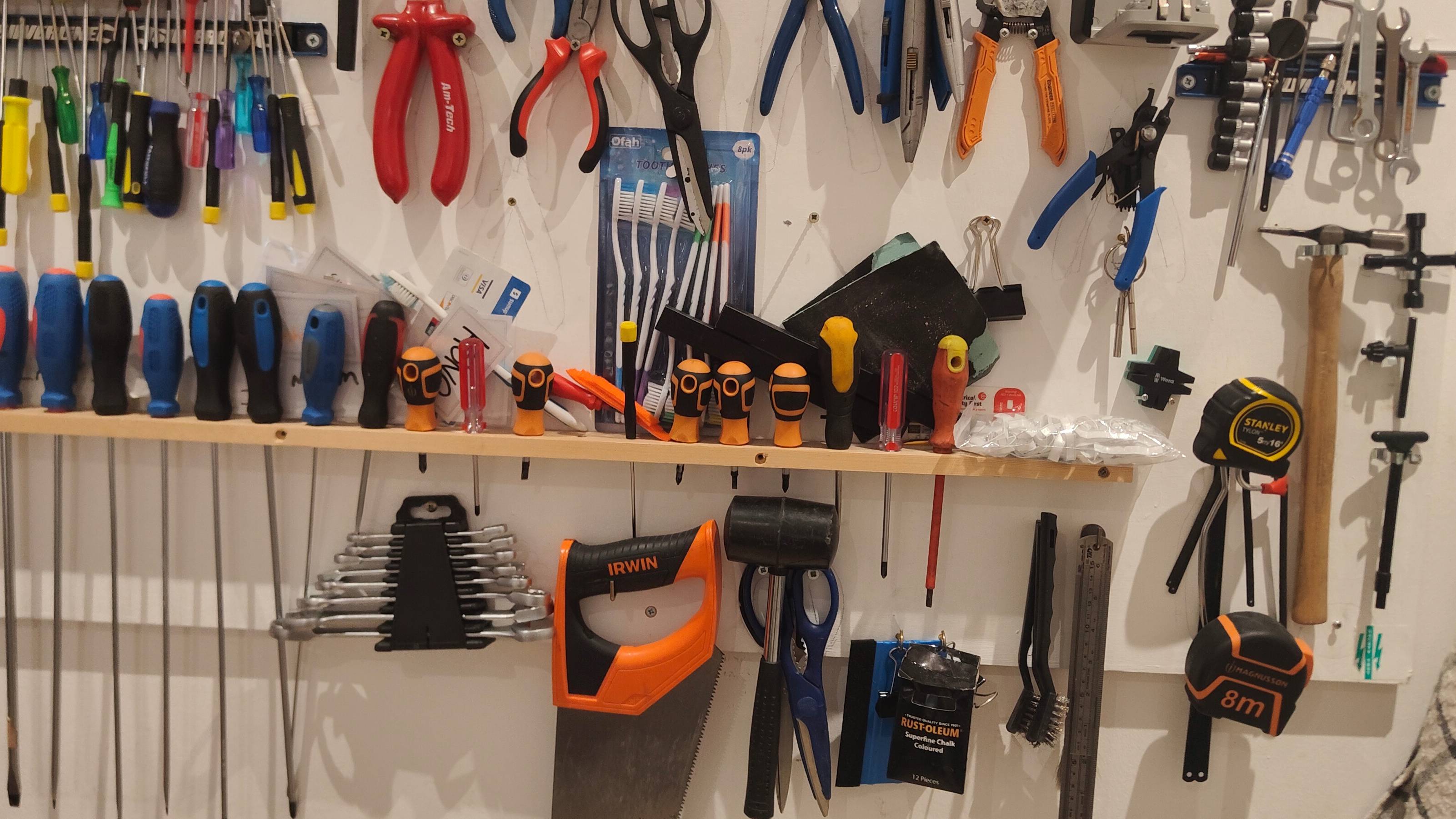
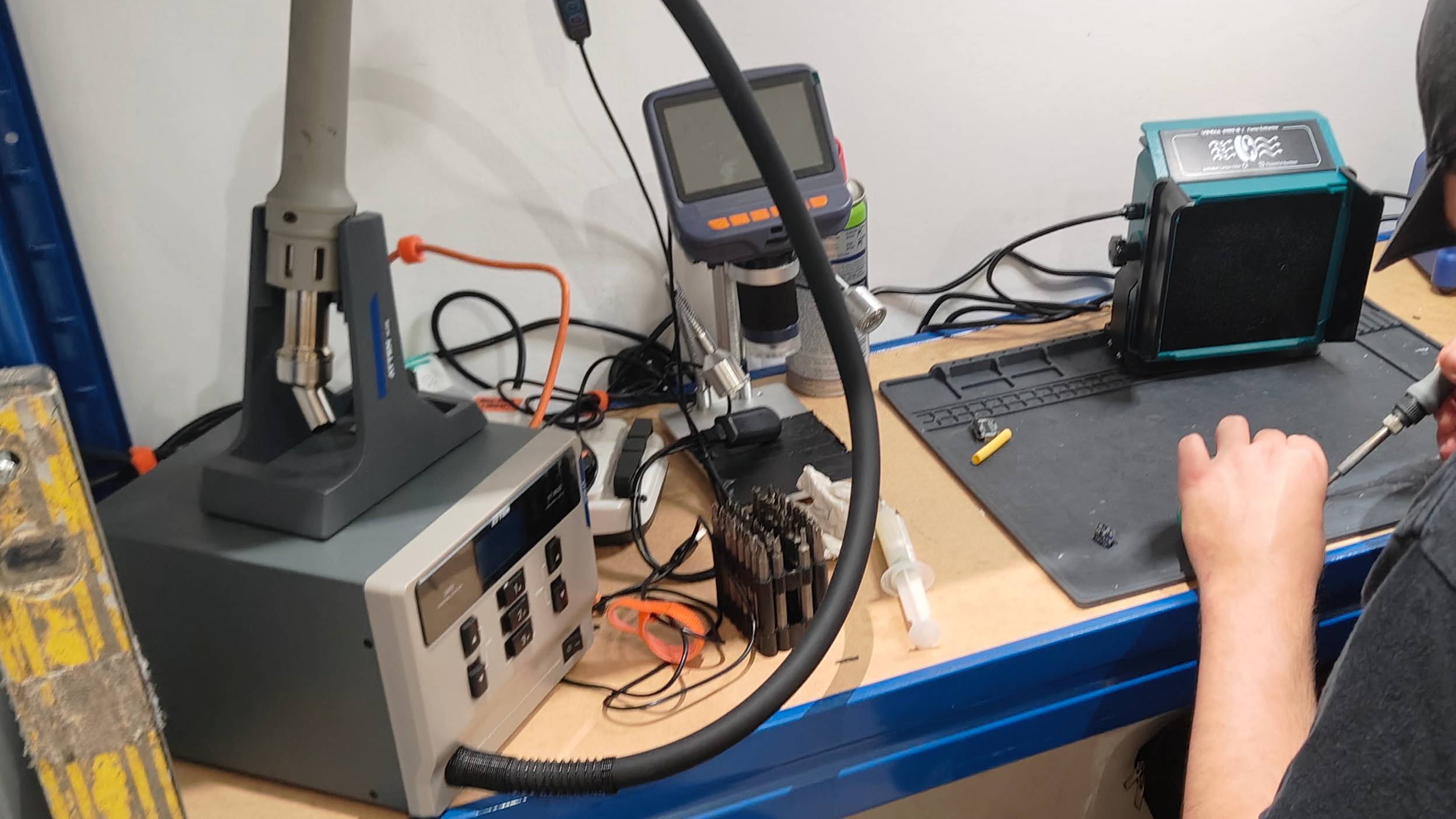
As I waited, I got to admire the huge collection of gadgets in various stages of repair (or lack thereof, in the cases of some training toasters). Laptops, vacuum cleaners, radios, even some throwback iPod nanos. Waiting alongside me was an older lady, who'd somehow managed to transport several startlingly-sized antique lamps in a series of backpacks and strollers, all ready to be repaired by the volunteers.
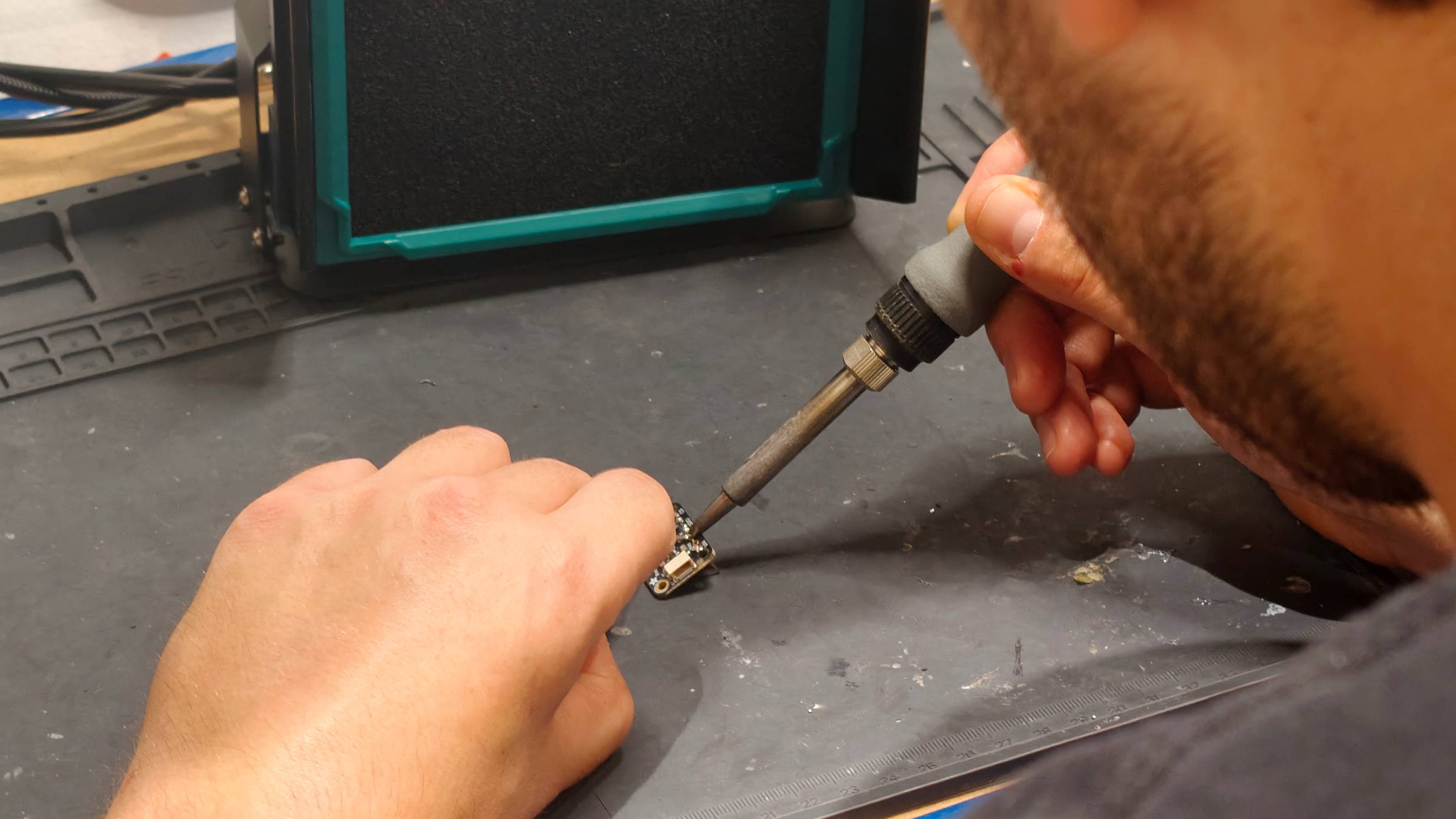
Not all of the Fixing Factory attendees were in training, and I was lucky enough to speak to several of the expert volunteers. They explained to me how to tell if a gadget can be repaired, what to do if you want to fix your tech, and when you should rely on an expert to bring your tech up to spec.
Identifying gadgets as repairable
(Image credit: Future)
One repair volunteer, describing themselves as a 'generalist' who liked to fix everything, told me how they'd helped create the teaching material for the trainees in the next room and explained how they work out if a gadget can be fixed in the first place.
"The first thing we do is we will safety check the device. If we've got a plug, we'll make sure we do PAT testing [a standardized way of checking the safety of portable appliances], and then everything goes into an RCD [Residual Current Device, which can instantly turn off power if something goes wrong] before we plug it in, and then we'll do a functional test.
"From there, we'll then diagnose what's going wrong and sit down with a member of the public, and work with them and go: 'okay, tell me the story, what happened, what's not working.'"
From what I was told, about half of the people with broken tech know why it's broken, either because of their own research or because the fault is obvious. And the other half "just have no clue".
We had far in excess of 70% repairability on e-waste
A Fixing Factory volunteer
The volunteer told me about a recent trial the group conducted, in which they went to a local recycling facility for several months, to log the kind of items thrown away and how much was actually repairable.
"We had far in excess of 70% repairability on e-waste. And so I like to think that's probably reflective of what comes into Fixing Factory locations."
I was staggered by that number; by the sounds of it, well over half of the gadgets we throw away could actually be fixed!
Stats from a similar study carried out by The Restart Project also found that only 12.4% of electrical devices thrown away were truly at the end of their life span. A further 7.2% needed repairs that were deemed too costly to be worthwhile; 9.5% were economical to repair; 36.2% were working just fine, and for the remaining 34.7% it wasn't possible to determine what state of life they were in.
Looking back at that 7,000,000 headphone figure I mentioned before, that'd suggest about 2.5 million of them could get back to a state of working just fine. Truly, the trash is not the first destination for faulty gadgets.
Do (or don't) try this at home
(Image credit: Future)
Repair shops such as Fixing Factory are one option for handling your broken tech, but how easy are they to fix at home? (Unless you have a Fairphone product, of course). I spoke to another Fixing Factory volunteer to find out.
Kevin, a student at a local university, told me: "You can literally fix anything if you watch enough YouTube... but it's pretty complicated".
He was one of many volunteers who flagged YouTube and the iFixit channel (and website) specifically, as an invaluable source of information for prospective home repairers. The site publishes teardowns, repair guides, and has an active forum to help you understand just how feasible a home repair is.
Sometimes, even this isn't necessary: "A lot of things are just dirty and need to be cleaned deeply."
You can literally fix anything if you watch enough YouTube
A Fixing Factory volunteer
This is something I understand all too well; a deep-clean of my home-built PC recently made me realize that I didn't need to buy new parts. It was just dusty.
Kevin gave some sage advice: "Take good notes or good photos to make sure you put [the gadget] back together correctly".
Another volunteer pointed out, though, that online guides and a little clean both play second fiddle to another, more important type of learning: "Sitting down with someone and sharing the experience, I think is something that's very valuable."
Not all tech is worth repairing
Most of the advice so far has pertained to smaller electricals and 'safer' items, but often you want to fix something more complicated. When I asked one volunteer whether home tech repairs were feasible, I was told: "Is it feasible? Yes. Is it safe? Questionable."
There are several dangers involved with lithium-ion batteries, the kind of which you find in most portable gadgets, and their predilection for catching fire is chief amongst them. You don't even have to be repairing them for disaster to strike.
The North London Waste Authority has identified several types of lithium-ion battery-toting gadgets — including smartphones and electric toothbrushes — as major fire risks. According to the organization, which handles waste disposal for seven London boroughs, "electrical items can easily catch fire if they are thrown into general waste and become damaged in waste vehicles".
A spokesperson told me that, across 2025, they saw at least 20 fires which could be linked to battery combustion. They even shared a video of one such incident, which you can see above. Stats from the National Fire Chiefs Council point to there being over 1,200 battery fires across the UK in bin lorries and waste sites that same year.
One false move and you can suddenly have a nasty fire.
Fixing Factory volunteer
And it's even worse if you're intentionally trying to fiddle around with them.
"One false move and you can suddenly have a nasty fire," one volunteer told me, adding, "Equally, when you're dealing with mains voltage, you can suffer some serious burns, let alone cardiac arrest. I would encourage anybody to find a friendly electrician, or someone with some qualifications, or a place like Fixing Factory."
(Image credit: Labutin.Art / Shutterstock)
Unrepairable tech isn't a manufacturing accident, as the Senior Workshop Manager and Operational Specialist of the Fixing Factory location I visited, Petra Backovska, explained to me. "Sometimes, you find that tech isn't built to be repaired, or repaired easily. And if there's something that wasn't made to be repaired, they make it really hard for you to do it — you can actually break it very, very easily".
Backovska identified cheap electronics manufacturers as a prime culprit for unrepairable tech, where important considerations are forgotten in favor of low costs and mass production. But more complex electronics were just as bad: "There could be things that need to have a CE mark on every item [as opposed to one for the entire gadget]".
If there's something that wasn't made to be repaired, they make it really hard for you
Petra Backovska, Senior Workshop manager at Fixing Factory
This is a mark affixed to most tech products sold in the European Economic Area to show that they're compliant with European health, safety and environmental standards. It'll be familiar to anyone who lives in the area; inspect any gadget within arm's reach, you'll likely find the mark hidden somewhere.
"So if the item doesn't have a CE mark, it's not safe, and we're not going to touch it anyways. So that could increase the number of things that we turn down, because we just don't know if it was manufactured safely."
I was also told that such a mark doesn't necessarily mean tech is safe: "Sometimes the mark is actually fake, and someone just slapped it on and didn't actually do all of the standardized testing in the process, which allowed them to produce something in large quantities very quickly, to sell it very cheap. But that also means that the item is not safe."
So how do you know if something should be repaired at home, or by an expert? Every volunteer advised that, if in doubt, consult an expert or take it to a repair shop: "It's that classic thing: asking is always the safest way."
There's a hard way to learn, and an easy way
(Image credit: Future)
Given the risks mentioned, I asked whether repairing tech from home could actually be dangerous, but was told by Backovska, "It doesn't have to be, but you need to have some training and follow the safety steps."
"If you jump into something just guessing things, then you're learning the hard way — and the hard way might be that you give yourself an electric shock. If you don't have experience with repairing, bring it to your local repair group."
I was told that Fixing Factory works with regulators, safety experts and product designers in order to create health and safety processes. These are taught to trainee volunteers, many of whom pass them onto customers whose goods are broken.
One of the volunteers I spoke to helped develop the training courses I got to witness, and told me that gadget-specific skills were often passed along, between volunteers and gadget owners.
The money and the waste
(Image credit: Photo by Tom Fisk via Pexels)
At the heart of the matter, two key reasons define why tech repairs are important. The first is economical: it will often be much cheaper to fix a device than to buy a new one. Second is the environmental impact: e-waste is a massive (and growing) problem, and keeping a hold of old gadgets (by repairing them) reduces the amount of clutter in landfill.
I love to quote a United Nations stat looking at e-waste from 2022: apparently, it'd fill roughly "enough trucks to form a bumper-to-bumper line encircling the equator". Our planet has a gastric band of junk, and hopefully, it'll push us to stop throwing away electronics. It's one of the core drives behind the aforementioned EU legislation.
The Restart Project is a UK-based charity which focuses on the right to repair electronics; it lobbies for legislation, helps organize repair groups (like the Fixing Factory I visited) and educates on the state of electronics. I spoke to Fiona Dear, co-Director at The Restart Project, to learn where repairable tech is going in the future.
There's nothing much on the horizon for other product categories
Fiona Dear, Co-Director at The Restart Project
"We have seen a bit of change [from companies] in recent years, and that's generally as a response to legislation. Even if the legislation isn't enacted, [manufacturers' changes are] in anticipation of legislation."
At the moment though (and in Europe, at least), this is limited: "There's only really legislation for two kinds of products. The first is white goods like dishwashers, and there's been legislation in place for a few years now. And it's just expanded to smartphones and tablets in Europe — that's why we're seeing a difference.
"Unfortunately, there's nothing much on the horizon for other product categories". That's why it's such a shame that, as mentioned earlier, wireless earbuds have seen a repairability exemption.
A problem of parts pairing
(Image credit: Future)
When I asked how technological changes are affecting repairability, one massive problem reared its head, which Dear called out specifically: "Parts pairing".
Parts pairing is a software limitation some brands apply to their devices. The gadgets will recognize when non-native parts are added, and throw up an error message when you try to use them.
For example, a phone might not let you use a new screen, a pair of headphones might reject their drivers, or a laptop might not play with a battery you install. In fact, software seems to be public enemy number one for tech repairability at the moment.
"A dishwasher or even a toaster, might have some kind of smart element in it," Dear explained, "which means it's dependent on software, and software isn't designed to last for as long as the mechanics of the product".
As iFixit points out in its guide to parts pairing, this is done by brands to encourage you to use its own repair services, instead of third-party ones (or repairing your own tech at home, using replacement parts). Often, the brand in question has unique access to make these error messages disappear. Dear flagged refurbished smartphones as being especially susceptible to this practice.
Parts pairing is one of the more cynical practices in this industry
Miquel Ballester, head of product at Fairphone
"Parts pairing is, in my personal opinion, one of the more cynical practices in this industry", Fairphone's Miquel Ballester explained. "Every component we ship, whether it's a battery in a Fairphone or bud and case battery in Fairbuds, is built to be freely interchangeable".
But software limitations remain an issue for tech longevity. "The repair experts who point out that software is the real bottleneck are right. It's exactly why we also treat long-term software support as inseparable from the repairability story".
The brand's latest mobile, the Fairphone 6, has a guaranteed 8 major Android updates, one of the longest life spans pledged by an Android maker. For many years, any more than two years' updates were a rarity, but nowadays companies are offering more and more updates. The Samsung Galaxy S26 and Google Pixel 10 series, for example, both have 7 years in the can.
Did you know TechRadar now has membership?
(Image credit: Future)
Become a TechRadar Insider by simply clicking 'Join Now' at the top of this page. Have a question? Please email membership@techradar.com
When I told peers that I was working on a tech repair piece, I received some intriguing reactions. Some view it as a great way to keep your gadgets ticking along (as it should be), but stories of cowboy repairers abound.
But the high proliferation of gadget repair stores is indicative of something different: a strong demand for our gadgets to keep working longer. Tech shops aren't fronts for dodgy dealings; they fix the devices we use every day, which is probably a more lucrative market than narcotics or single-use vapes.
Over the last few years, the rise of AI has driven up memory prices, causing gadgets to cost a lot more money, and new purchases to be more and more of a treat. You've surely noticed that electronics purchases nowadays cost a lot more (and bundle in some useless AI tools as a consolation prize, but that's a gripe for another day).
With no sign of that slowing down, gadget repairs are only going to be more and more important. And so a change is needed: a change in attitude to tech fixing, a change in our own skill sets so we're able to do so at home, and a change in legislation so that companies have to make it easier for us to mend our ailing electronics.
I've long pointed to the flagship Shokz OpenDots One as the best open earbuds in the clip-style category, so I'll admit that I watched the release of the brand's budget-grade option with trepidation.
All too often, a brand's wallet-friendly earbuds tend to fit poorly, cut too many features, completely miss the mark sonically, or launch at a price point that doesn't make sense. But I'm happy to report that the Shokz OpenDots Air side-step those issues.
In fact, for most buyers, this pair just makes so much more sense than its sibling, the Shokz OpenDots 2. That's despite the set you're here to read about being an inferior model, on paper.
Like the numbered OpenDots, the Air uses dual 11.8mm drivers; you're only going to be able to hear a difference in sound quality if you really need Dolby Atmos or some of the unique Shokz features (which, I'm guessing, most people don't).
The OpenDots Air take a largely similar design too, which means they're just as reliable in your ear on long runs or gym sessions. Now and then, I did find them to pinch a little, which I take to be the fault of a few design tweaks, but it was nothing that stopped me using them.
There's more: the battery life is great, the carry case is nice and small and the connection was reliable. But some carry-overs are a little less desirable: like other OpenDots, the touch controls are finicky to use. And while Shokz offered some of the best-sounding open earbuds last year, the Air (and 2) launch to a much more competitive market.
What sets the OpenDots Air apart from the 2-suffixed set, making them a better buy, is the price; you can get them for roughly 25% less. For most buyers, I'd say that you should save your money and buy the Air... unless any of the other fantastic cuff-style buds (which typically do undercut any of Shokz' options) pique your interest.
After all, the Shokz premium is still in play, even with its more affordable buds.
Shokz OpenDots Air review: Price and release date
(Image credit: Future)
Launched on June 4, 2026
Sells for $129.95 / £129.99 / AU$219
Cheaper alternative to OpenDots 2
The Shokz OpenDots Air were released on June 4, 2026, alongside the OpenDots 2. That was about 10 months after the original OpenDots One became available.
You can buy the earbuds for $129.95 / £129.99 / AU$219, so they're markedly cheaper than the $199.95 / £179.99 / AU$339 OpenDots 2. The original OpenDots One also went for that price, though a year on they're easy to find at around $150 / £150 / AU$239 (and even less during sales).
Note also the flagship Shokz OpenFit Pro, (more 'traditional' shell-like open earbuds) which include noise reduction and launched in January 2026, at the significant cost of $249.95 / £219 / AU$399.
I'll continue to refer to the OpenDots Air as affordable cuff-style buds, but that's only in comparison to the OpenDots 2 and the other Shokz options listed above. Remember, Shokz is a class-leader in this category, and you pay for that. You can easily find great alternatives for even cheaper (we've even listed a few at the bottom of this review).
Shokz OpenDots Air review: Specs
Drivers
2x 11.8mm
Active noise cancellation
No
Battery life
9 hours (buds), 36 hours (case)
Weight
6.3g (buds), 37.3g (case)
Connectivity
Bluetooth 6.1
Frequency response
100Hz-40kHz
Waterproofing
IP55
Shokz OpenDots Air review: Features
(Image credit: Future)
You'll get 9 hours of listening; 36 with case
EQ has four presets, 5-band custom mode
App is pretty light on features
You're getting 9 hours of battery life with the Shokz OpenDots Air; at least, that's the cited listening time, and from my testing, I have no cause to doubt it. That's a hair below the OpenDots One / 2's 10 hours, but the difference is negligible, and it's still a solid battery life.
The case rounds that figure up to 36 hours of listening, including recharges. That's more in line with industry standards.
As with most open earbuds, there's no noise cancellation here. It's a shame, because Shokz is one of the few companies to offer ANC-adjacent tech in open-ears (the OpenFit Pro have 'noise reduction', but we tested it and it's the same thing), and I find it's even more useful in earbuds of the like.
(Image credit: Future)
While the OpenDots Air aren't as featured-packed as many other earbuds, downloading the Shokz app lets you play around with what there is.
Possibly the best reason to download the app is the equalizer; there are four presets (standard, vocal enhancement, bass enhancement and an audio leakage reduction mode), as well as a simplistic five-band custom EQ which lets you create your own mix.
The app also lets you turn on Multipoint Pairing, change what the touch controls do, turn on (or off) microphone noise cancellation in calls, and turn on (or off) wear detection.
Admittedly, the list is a little svelte. Beyond review purposes, I only opened the app a single time, and that was to double-check I hadn't accidentally turned gesture controls off (I hadn't, more on that later).
Features score: 3.5/5
Shokz OpenDots Air review: Design
(Image credit: Future)
Svelte carry case
Attractive blue marbled design
Not designed to stick in the ear
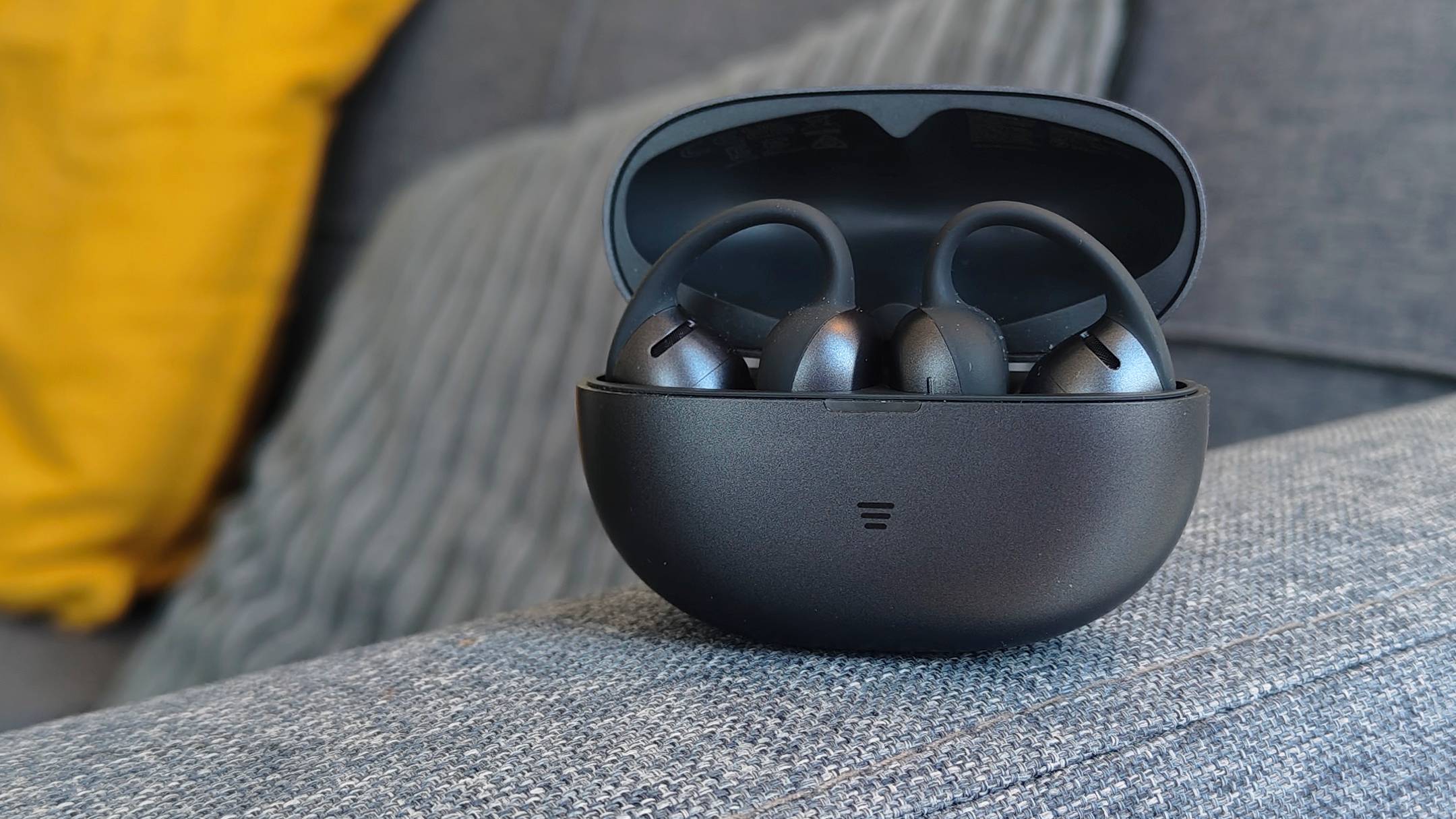
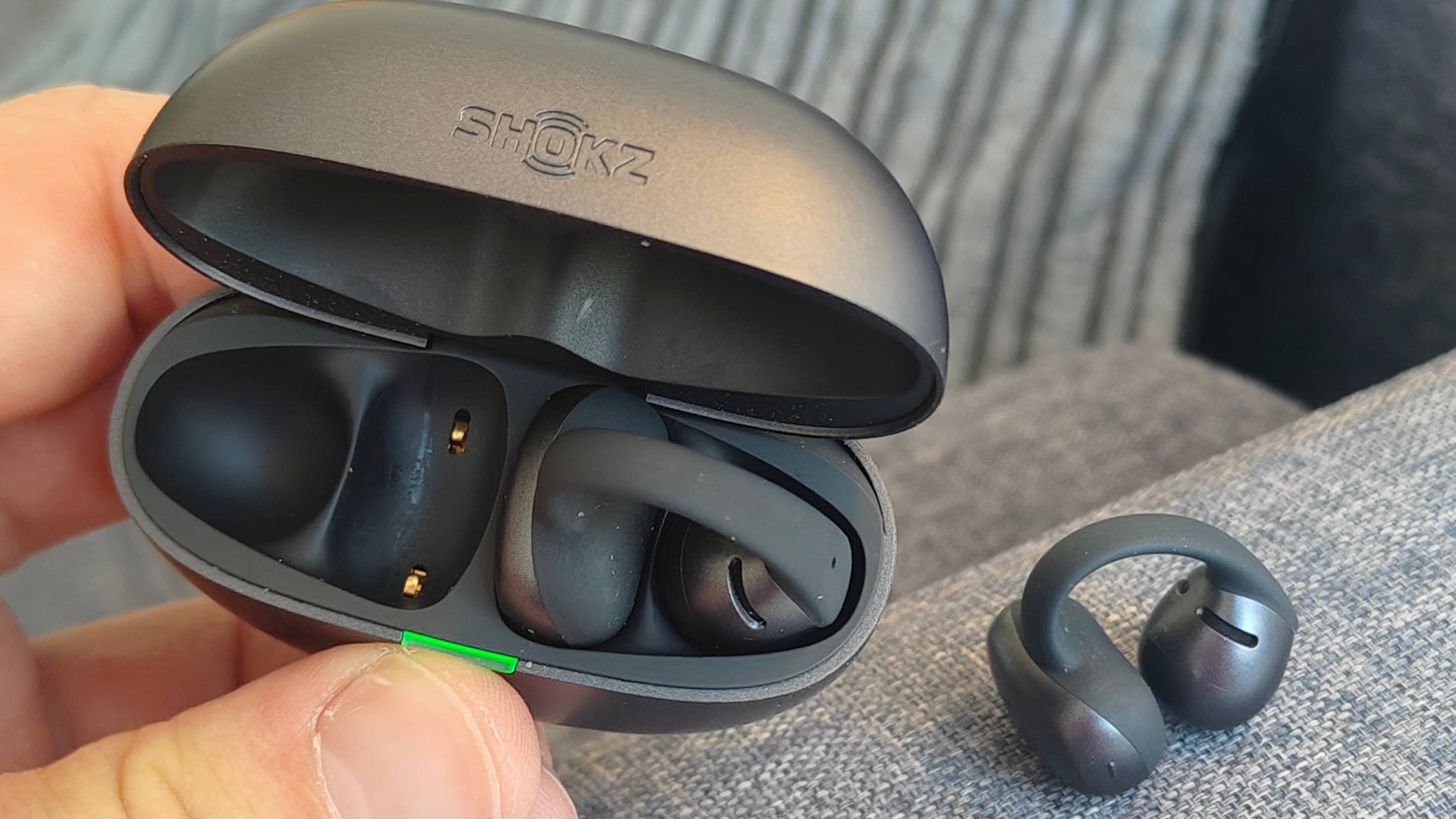
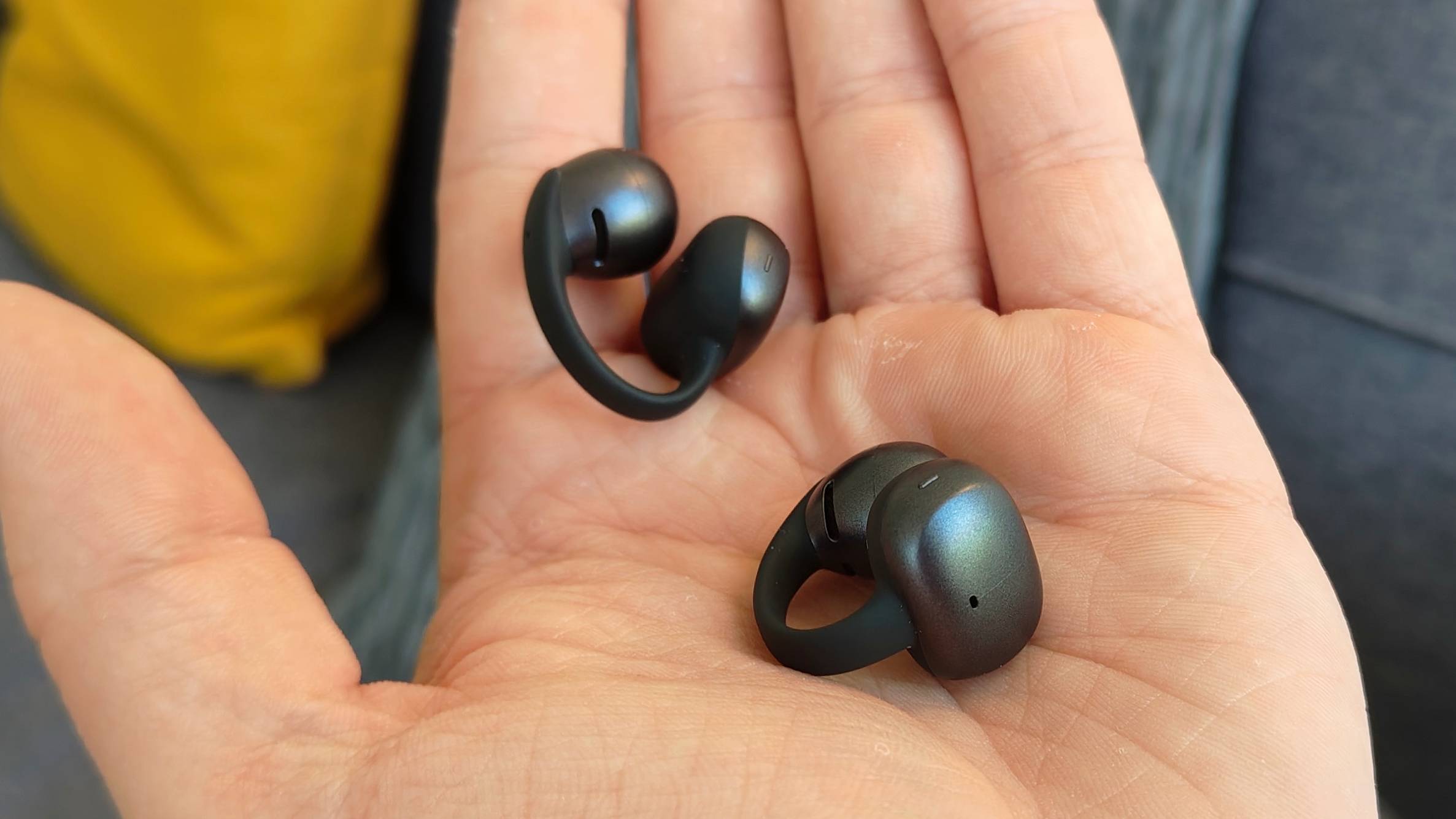
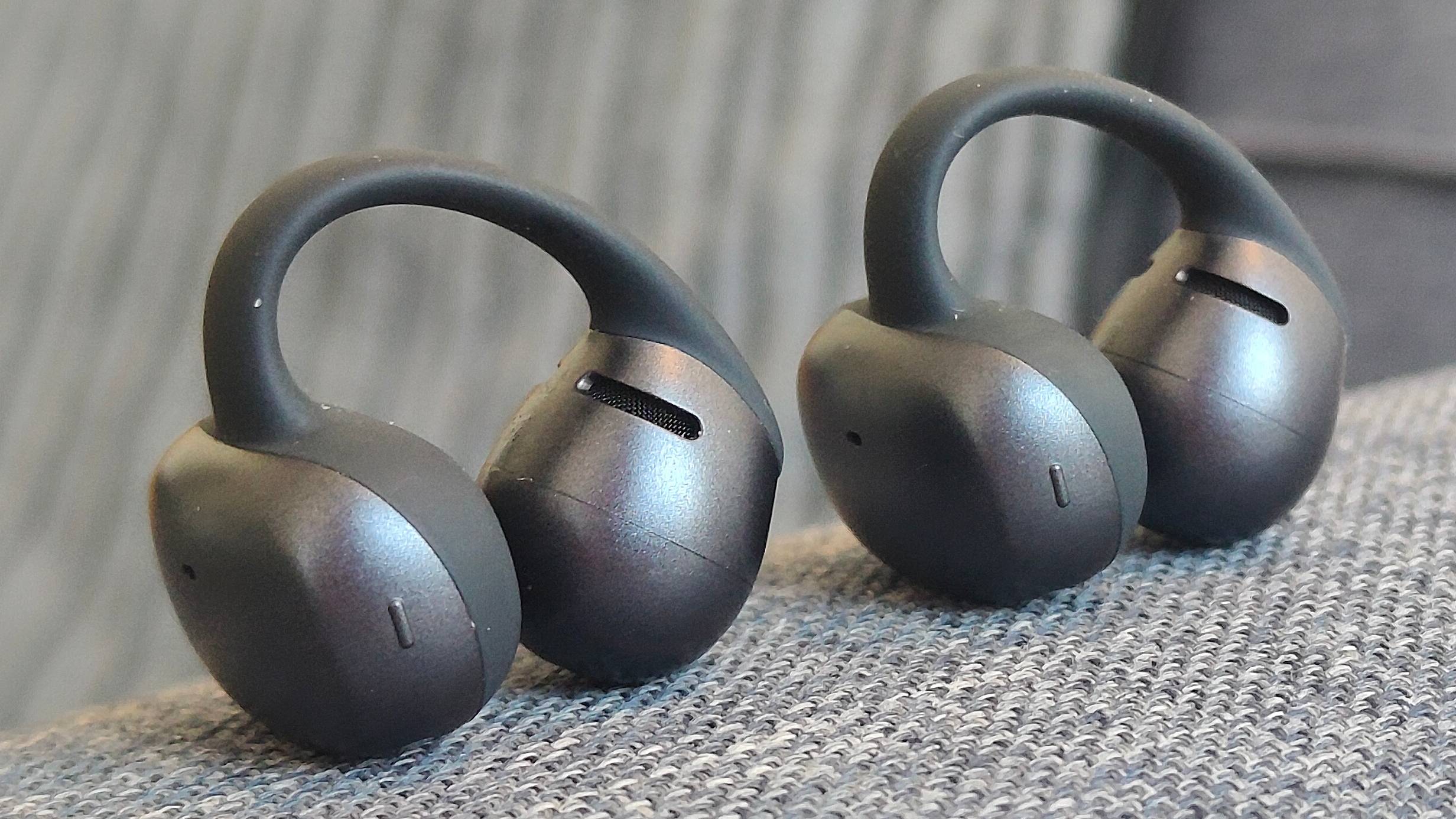
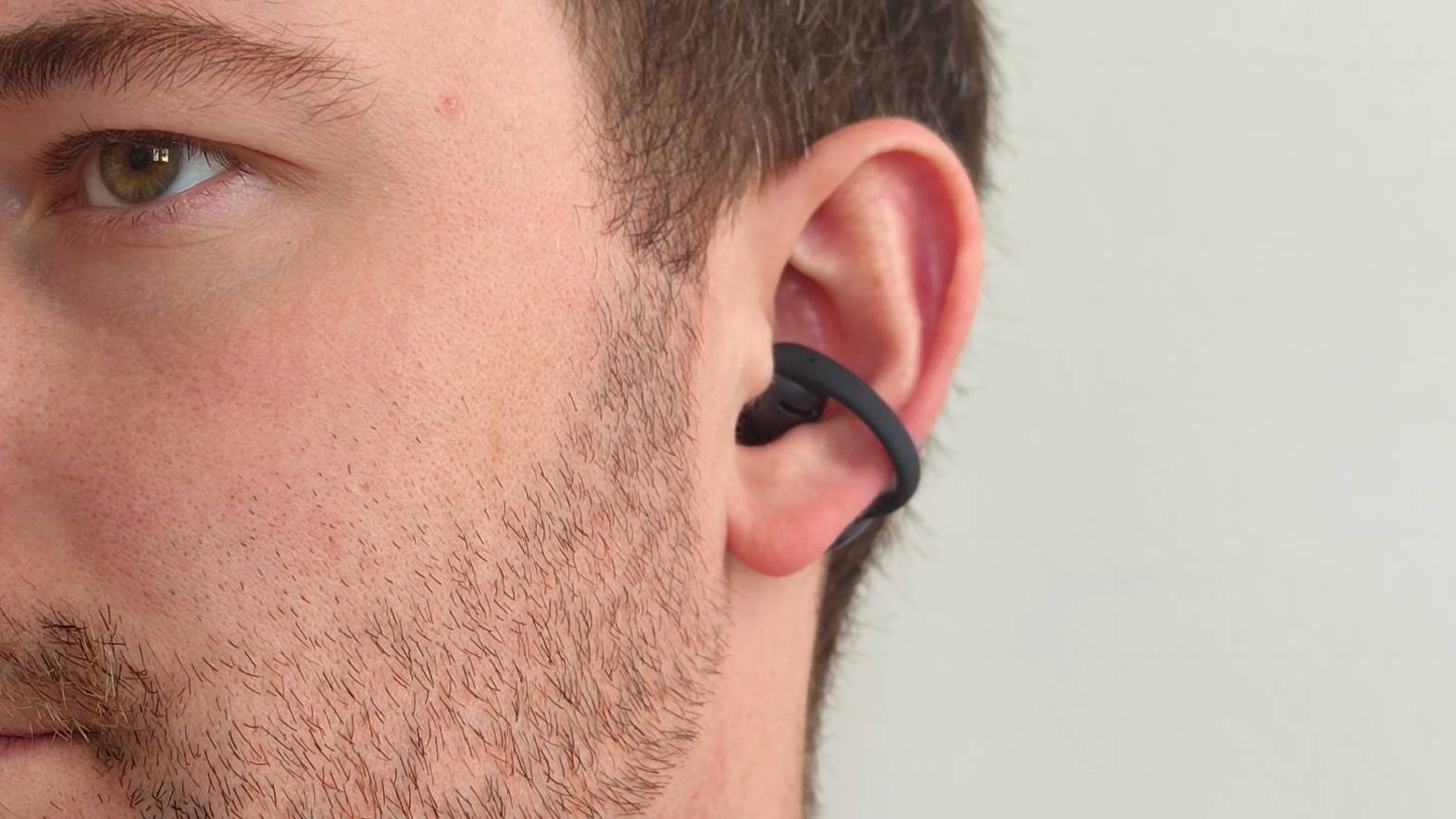
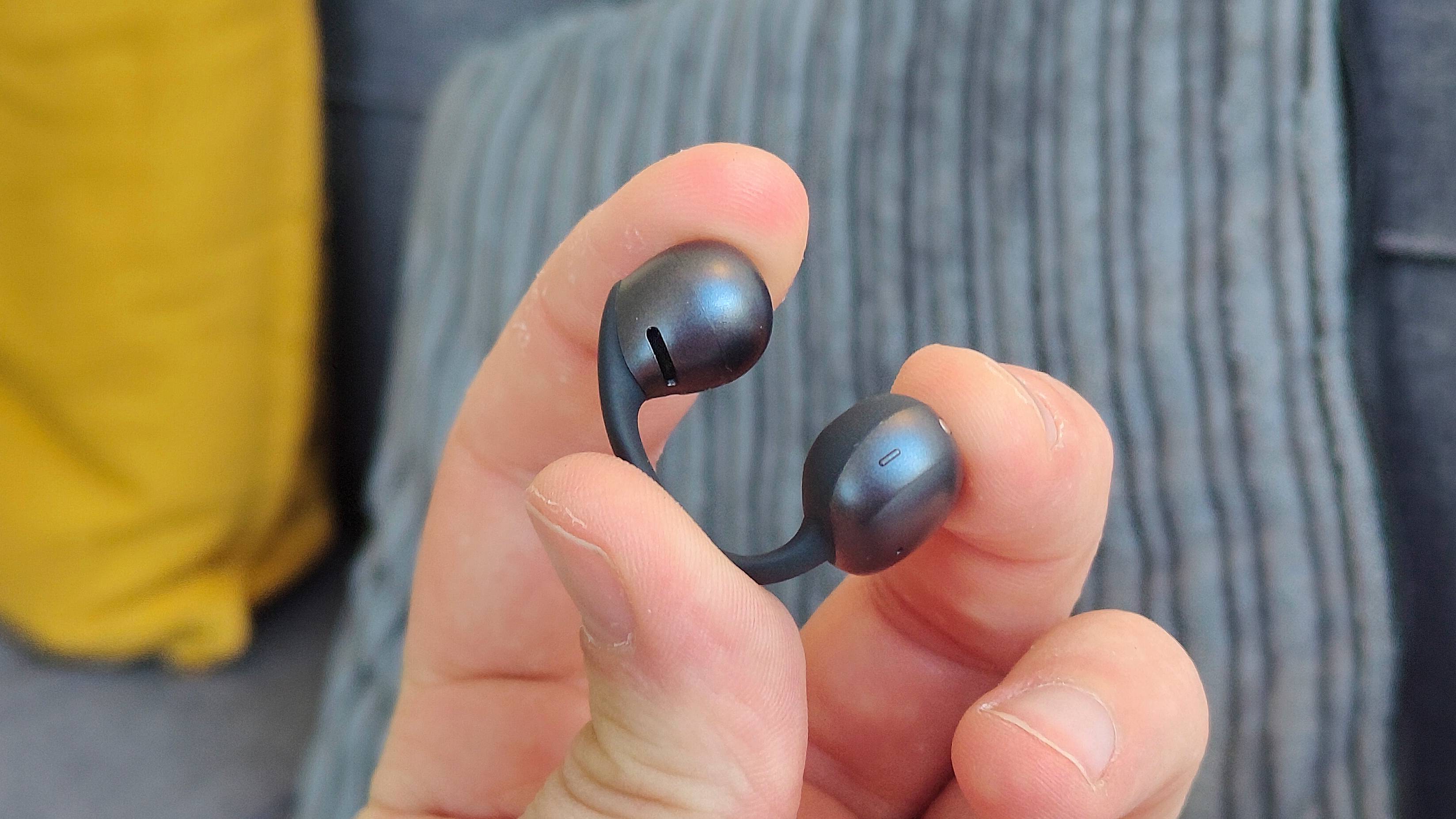
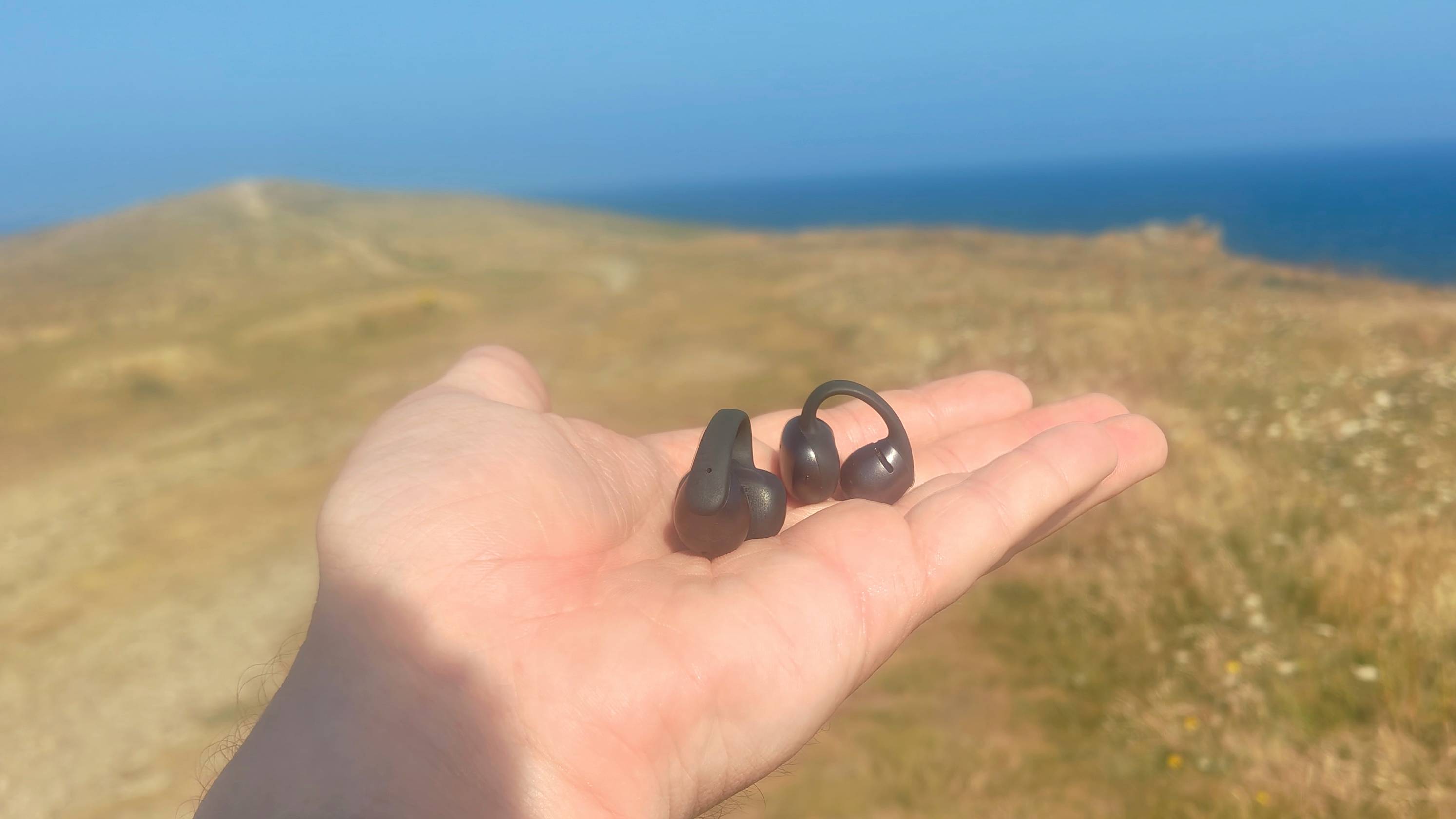
They ain’t called clip-on buds for nothing – the OpenDots Air are clip-shaped earbuds with a C-shaped band joining a rounded earbud with an ovoid counterweight. The 'dot' goes in your ear-well, the 'egg' sits just behind it, looping around the lower part of the helix.
The earbuds weigh 6.3g each, with silicone and plastic making up the casework of the earpiece. I tested them at the gym, on cycles and on runs (and in other, less-intensive settings) and never had a fit issue; that’s a benefit of this form factor, and I’ve never had a wobbly clipper.
However I did find that the Air could pinch a little during longer wear sessions, and I was surprised by the relief I felt at removing them after an hour-plus run. On the topic of criticisms, the buds technically have touch controls, but I could barely get them to pick up my touch. You have to be incredibly precise to find the right spot, and I quickly gave up on using them. At this level, it's not a deal-breaker in this type of design (at least not yet), but it's my job to notice.
(Image credit: Future)
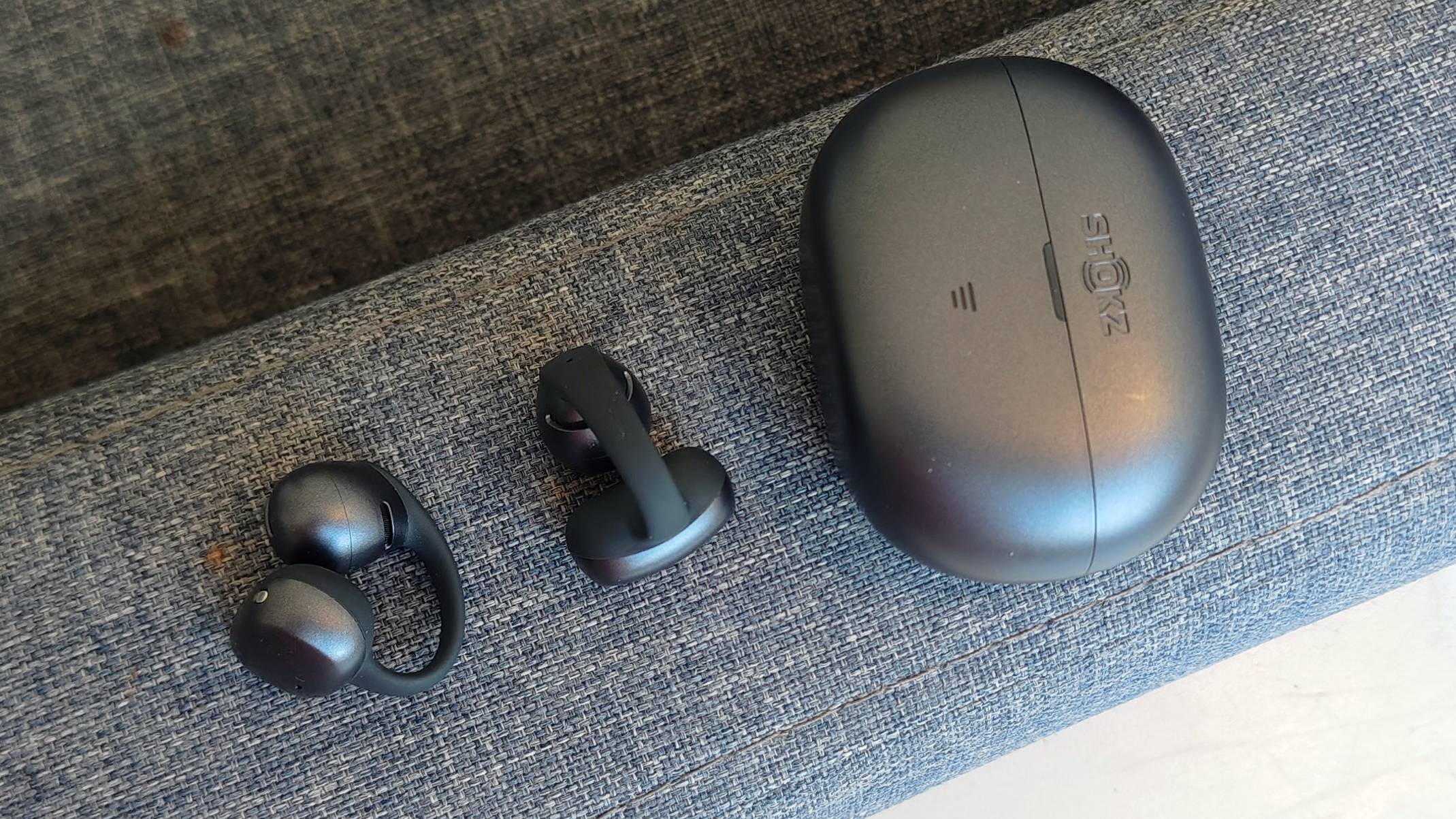
You can buy the earbuds in black or purple, a choice which carries over to the charging case. They’re IP55 protected, which means they’re safe from dust and jets of water, but you shouldn’t take them swimming.
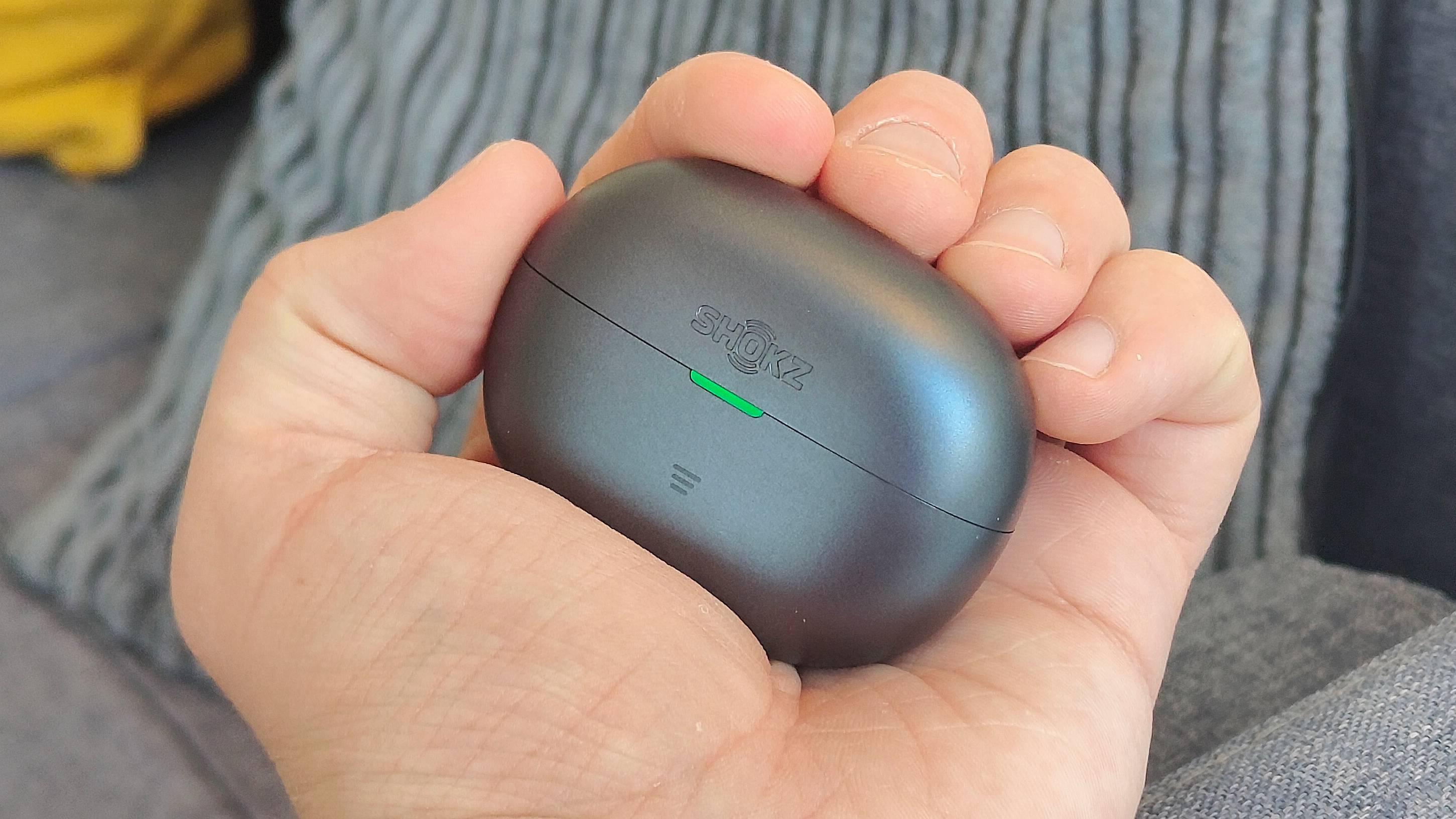
The charging case is lighter than most I’ve seen, tipping the scales to the tune of 37.3g — that’s without the buds, and you’re looking at a total package that’s under 50g. It’s nice and small too, and I really appreciate case like this that’s lightweight and portable like this: it disappeared in my pockets with no problem.
The simplicity extends to the ports and buttons; you’re getting a USB-C port but no wireless charging, unlike the OpenDots 2, and intriguingly no Bluetooth pairing override. I don’t recall the last time I saw an earbud case without this ‘hope-you-don’t-need-it’ feature, but Shokz apparently thinks you don’t need it at all.
Design score: 4.5/5
Shokz OpenDots Air: Sound quality
(Image credit: Future)
Dual 11.8mm drivers
Well-defined treble and bass
Some premium features missing
Shokz has found an audio set-up it likes and has stuck with it. As with the OpenDots One and OpenDots 2, the OpenDots Air have two custom 11.8mm drivers providing the music. The company is coy on what each of these drivers are actually handling, but I’m guessing at least one is tuned towards low-end, given how much "Bassphere" is mentioned in marketing.
(What’s Bassphere? Um, a marketing word, by the sounds of it, and Shokz is quite light on specifics. I've done my due journalistic diligence in trying to dig through the fluff to get granular on Bassphere, but have been unsuccessful. It seems to be what the company refers to as its two-driver system.)
The OpenDots Air do miss some features of their pricier stablemates. There’s no Dolby Atmos tuning, for one, and it lacks a few other Shokz-designed features, including MirrorPitch (which aims the sound into your ear) and Bassphere 2.0 (like 1.0, but designed to reduce distortion which could arise from the two-driver system).
Okay, I’ve been dancing around the topic; how do the Shokz OpenDots Air actually sound? They’re rather good, for open-ears — they’re not quite on par with the higher-end OpenDots, or some varied rivals, but I enjoyed listening to music with them.
(Image credit: Future)
It’s clear to my ear that one of the drivers is dialled into the low end, giving bass a clear scooping distinction that’s often missing in open-ears. Songs like Brian Kelley’s Beach Cowboy or Kasabian’s Superpowers offer clean low-end that sit comfortably below higher-frequency sounds, without blowing it out.
The lack of support for better-than-vanilla codecs such as LDAC, or seemingly any higher-quality streaming, means audiophiles might not find these an enjoyable listen. I can’t pretend they’re on par with ‘standard’ in-ear earbuds costing this much, including ones which are geared towards sports users. But for fitness-first listeners who need their ear canals free to hear traffic, they’re all you need.
Naturally, when you’re out and about, the bass will struggle a little bit — it has a harder time cutting through surrounding noise than treble does. That’s par for the course for this kind of earbud, but it bears repeating for those not familiar with the form factor.
Sound quality: 4/5
Shokz OpenDots Air review: Value
(Image credit: Future)
Great value for money compared to Shokz roster
Other cufflinks undercut these
If you’re comparing the OpenDots Air solely to the OpenDots 2, they're great value: you’re basically getting the same earbuds for a sizeable discount. I see the Air being the better buy for most people, out of the two.
But when you look at the wider earbuds market, my recommendation gets a bit more muted. I’ve tested plenty of pairs of clip-style earbuds that hover at, or below, the £/$100 mark, which perform basically the same as the OpenDots Air do. If you’re not married to buying Shokz buds, then you’ll find a few different money-saving alternatives below.
Value: 4/5
Should I buy the Shokz OpenDots Air?
Shokz OpenDots Air score card
Attributes
Notes
Rating
Features
The battery life is great, but beyond it, there aren't many features.
3.5/5
Design
Both the buds and the case are lightweight and reliable to use.
4.5/5
Sound quality
Despite some missing features, the audio quality will tick exercisers' boxes.
4/5
Value
They're the best OpenDots for your money, though some rivals will draw your gaze.
4/5
Buy them if…
You need workout buds Between the reliable build, the simple and pleasing sound mix and the lightweight chassis, these are great running, cycling or gym companions.
You're tempted by the other OpenDots I don't mean to downplay the strengths of Shokz' other buds, but these are the best cuff-style options it sells.
You need a case that disappears I kept losing the OpenDots Air's case in my bag pockets, that's how small it was.View Deal
Don’t buy them if…
You have sensitive ears While these fit well 99% of the time, now and then my ears grew achy, and people with sensitive ears may have a bad time with them.
You're on a budget If you've been drawn to the Air as a budget pair of open-ears, I'm sorry that you had to discover that they're only budget by Shokz standards.
Shokz OpenDots Air review: Also consider
The open earbuds market is incredibly competitive. Here are some others that I've tested and would recommend.
Shokz OpenDots Air
Apple AirPods Pro 3
Soundpeats Clip1
Drivers
2x 11.8mm
2x 11.8mm
12mm
Active noise cancellation
No
No
No
Battery life (ANC on)
9 hours (buds), 36 hours (case)
10 hours (buds), 40 hours (case)
8 hours (buds), 32 hours (case)
Weight
6.3g (buds), 37.3g (case)
5.6g (buds), 52g (case)
5g (buds), 55.5g (case)
Connectivity
Bluetooth 6.1
Bluetooth 5.4
Bluetooth 5.4
Waterproofing
IP55
IP54
IPX5
Shokz OpenDots One This older pair matches the Air in most departments, and beat them in one or two. You can find them for only a hair more than the Air now, and sometimes for even less. Read our full Shokz OpenDots One review
Soundpeats Clip1 For a much more affordable alternative, the Soundpeats Clip1 offer a solid build, some great audio features and great value for your money. If you're not committed to Shokz, it's well worth checking them out. Read our full Soundpeats Clip1 review
How I tested the Shokz OpenDots Air
(Image credit: Future)
Tested for one month
Paired with Android phone for Spotify, streaming and games
Used during multiple kinds of activities
I used the Shokz OpenDots Air for roughly a month to write this review. This ensured they underwent some extensive testing.
This testing included countless runs, several cycles, many gym sessions, loads of walks around my neighborhood, plays on various kinds of public transport, a house move, and a trip to a surf town during a holiday.
During this time, the buds were paired to my Android smartphone. They got most of their use through Spotify, but I also used them for calls, watching some YouTube videos and playing games.
I've tested gadgets for TechRadar since early 2019. Since that time I've reviewed countless earbuds, including loads of open-style ones and the Shokz OpenDots One.
Skullcandy launches Crusher 1080 ANC, new premium over-ears
They mark the debut of three Bose-made features in a non-Bose product
Just launched and available right now, for $280 / AU$399.99 (about £210)
It is as I foretold: after we saw Skullcandy teases about new headphones, the brand has unveiled exactly the pair of cans I predicted. Meet the Skullcandy Crusher 1080 ANC; they're the pair that skate legend (and brand ambassador) Tony Hawk is pointing at in the picture above — yes, it really is him.
These are, according to the brand, its "best-sounding product" (although interestingly, not the most expensive because Skullcandy's Aviator 900 cans are a little pricier) and in case you didn't know, a 1080 in skateboarding involves three complete skateboard and body rotations performed either frontside or backside.
As a new member of its Crusher line-up, part of the draw will be the adjustable bass (see the big dial on the ear cup), but there's a lot more to celebrate besides that.
You can buy the Crusher 1080 ANC right now; they cost $279.99 / AU$399.99 (about £210) so they're a little cheaper than the likes of the $449 / £449 / AU$699 Bose QuietComfort Ultra Headphones (Gen 2) which they borrow features from.
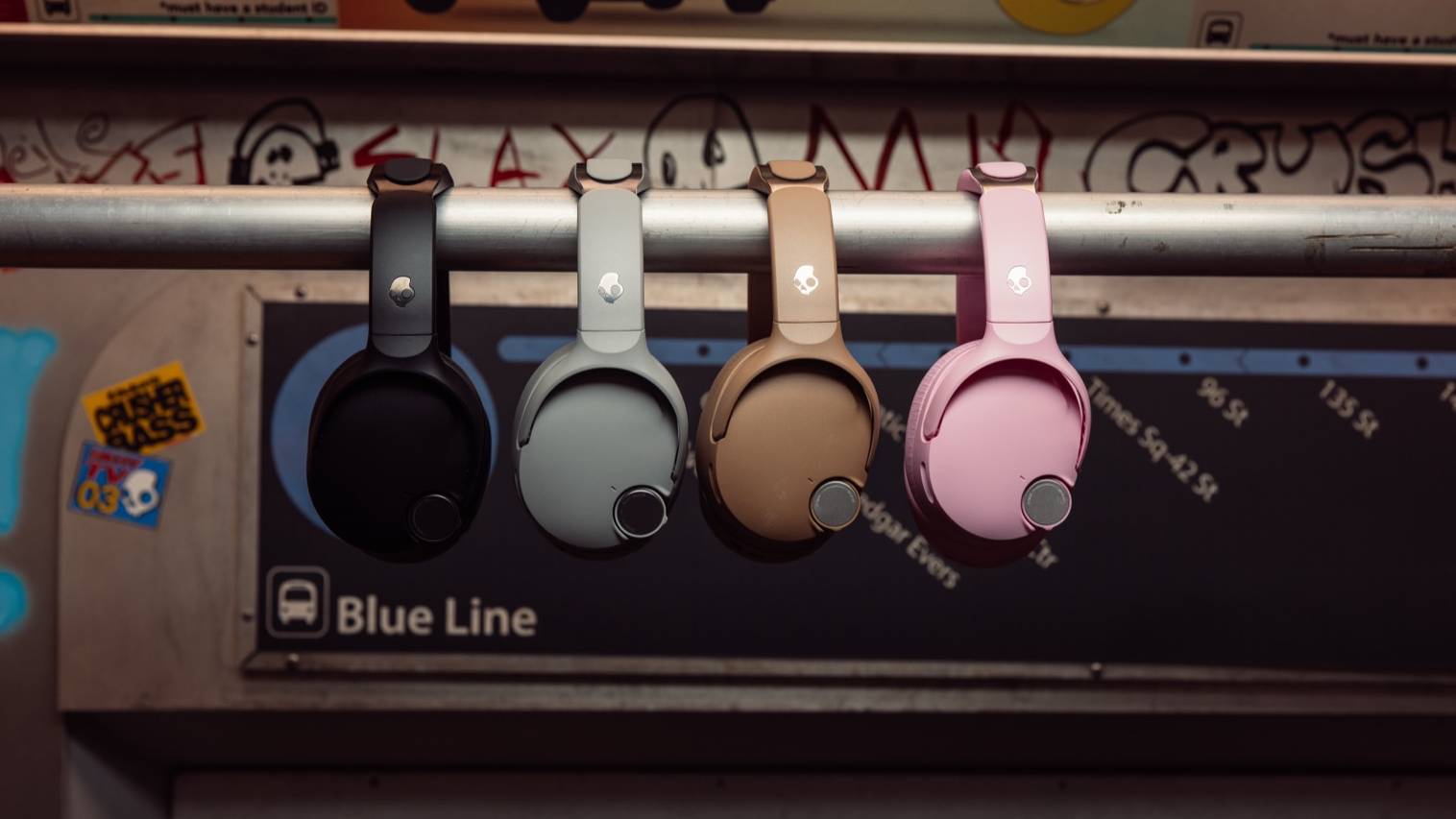
They come in black, gray, brown, and pink, as you can see modelled sans Tony Hawk below. I rate them in the following order: brown, pink, gray, black, though I'd love to see a camo or floral redesign as Skullcandy is wont to do.
Colors aren't why you'll buy the Crusher 1080 ANC, though. No, it'll be because they offer three new Sound by Bose features at a non-Bose price...
That which we call a Bose by any other name would smell as sweet
(Image credit: Skullcandy)
We've seen Skullcandy headphones with Bose features before, but the Crusher 1080 ANC are the first pair of cans not made by the brand which have three specific features. And these three features are a big selling point of the product.
The biggest will be Bose QuietControl ANC, which is a massive draw within Bose's own products (including the QuietComfort Ultra Earbuds 2nd Gen). The company's noise cancellation is best-in-class, and now that proprietary Bose technology is baked into Skullcandy's headphones too. To many, this could be a reason to buy the Crusher all on its own.
Bose's TrueSpatial audio with head-tracking (for surround sound profiles irrespective of source material) and WaveForm audio engine (for snappy digital signal processing) are also stepping foot off the Good Ship Bose for the first time with the 1080. These will be great little extras to refine and finesse what Skullcandy already offers.
And that's before we even mention the Sound by Bose tuning and SpeechClarity voice pickup, to improve the music you listen to and your call quality. The latter is new to Skullcandy, but we've seen the former on some earbuds like my beloved Method 360.
And what about the headphones themselves, beyond the Bose stuff? Skullcandy hasn't confirmed the drivers, but I'd guess they'll be 40mm and joined by woofer units.
The battery life is 60 hours with ANC off and 50 hours with it on, which is pretty impressive; there's a 5-band EQ and other features via the Skullcandy app (not Skull-IQ, which some of the firm's earbuds use). Pictures show a dial on the side of the headphones, amongst other physical controls; I'd wager this is a redesigned bass slider, and given how easy it is to miss this on my Crusher 540 Active, I appreciate the rethink.
Reading between the lines, and having tested the Method 540 earlier this year (a 540 is a one-and-a-half skateboard and body rotation performed either frontside or backside, which I cannot do), I get the impression that Skullcandy is undergoing a push to really level up.
The company doesn't seem to be abandoning the commitment to bass that's defined its products in the past (or its love of athletes as brand ambassadors), but seems to want to bring that into a better-rounded audio package with higher-fidelity music on offer. And if the Skullcandy Crusher 1080 ANC is the culmination of this process, I'm really intrigued to know how they sound.
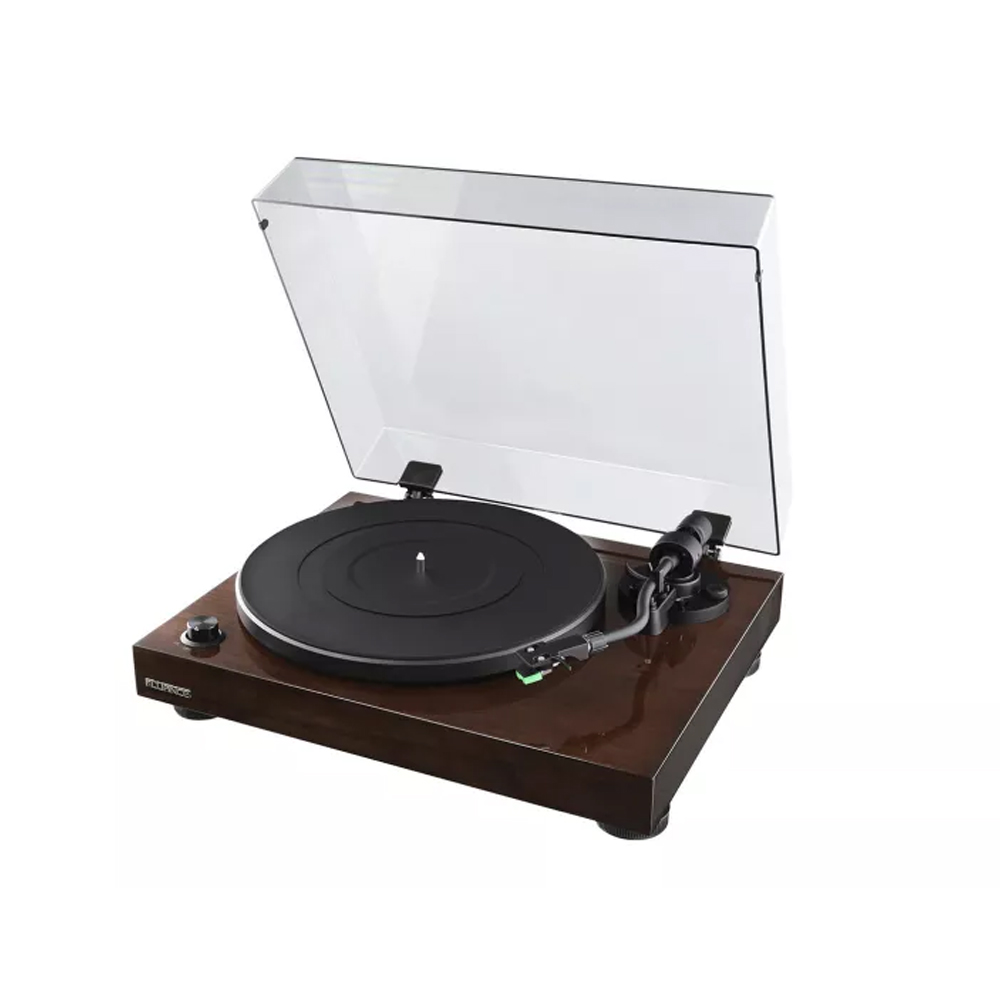
Everyone's getting back into vinyl these days, whether it's for that hit of nostalgia or because you don't want Spotify feeding you AI slop (vinyl, at the time of writing, does not facilitate AI slop… let us all hope it stays that way). And a new discount from Fluance makes picking up its entry-level turntable even easier.
This is the Fluance RT81, which we called "Easily the best starter turntable you can buy" when we tested it back in 2024. And it's a relatively affordable model even without a discount, designed to offer you the record-playing basics without expensive audiophile features.
A warning: turn back now if you're not reading this between 8:25am and 8:25pm ET on Wednesday, June 4 (that's 5:25am - 5:25pm PT, though it's not clear if Fluance will budge the window for Westerners). This discount is available as a Lightning Deal on Amazon, as part of Prime Day deals, so it's only live for a slender 12-hour window.
Fluance RT81:was $299.99now $239.99 at Amazon Turntable discounts aren't hugely common, so any kind of reduction is something that'll turn heads. It's great that the sale is on an entry-level model, lowering the price of entry for prospective vinyl fans a little. And the discount? It's the lowest our trackers have seen… View Deal
Hold the needle a sec: the Fluance RT81 does miss one feature common in entry-level turntables, which you should probably know about before you buy.
The turntable doesn't feature Bluetooth connectivity (which plenty of new spinners do in 2026), so you can't pair it with your JBL speaker to enjoy your tunes, say. Instead, you'll need to connect wired speakers via RCA (those white and red dual cables).
While audiophiles prefer to avoid Bluetooth for record listening, due to the compression inherent in Bluetooth losing some of the detail within the vinyl, it's much more common in entry-level record players. The feature makes it much easier to integrate a player into your home hi-fi set-up if you only own wireless tech.
So it's only worth buying the Fluance RT81 deal if you can fit a wired turntable into your home, or you already have a set of stereo speakers that you want to put to good use.
If that's no issue, you'll find the RT81 a nice, good-looking and convenient starter turntable. It's easy to set-up and use, and it sounds pretty great.
The deal will save you $60 which, admittedly, is about the cost of one record these days, but you've probably inherited a collection of those. Instead, I'd put the money towards one of the best stereo speakers so you can use the Fluance properly.
Said SUV has an advanced sound system to turn audiophile heads
You might know the brand from its beloved Focal Bathys headphones, or more recently for its expensive floor-standing speakers, but Focal is also making great strides in another musical arena: automotive.
The company has teamed up with car company DS Automobiles to unveil a brand-new audiophile-adjacent car: the DS No 7.
I'm no automotive journalist, but even I can tell you that this is a partially- or fully-electric SUV which seats four people comfortably and — given the 14 Focal speakers that'll be dotted around them — rather happily too, I'd venture.
The electric model costs £49,190 (about $66,000, AU$100,000, though DS Automobiles doesn't sell in those regions) while the hybrid one goes for £38,290 (roughly $52,000, AU$80,000). Although that may sound pretty pricey, it's actually cheaper than some Focal tower speakers…
The Focal point
(Image credit: Focal)
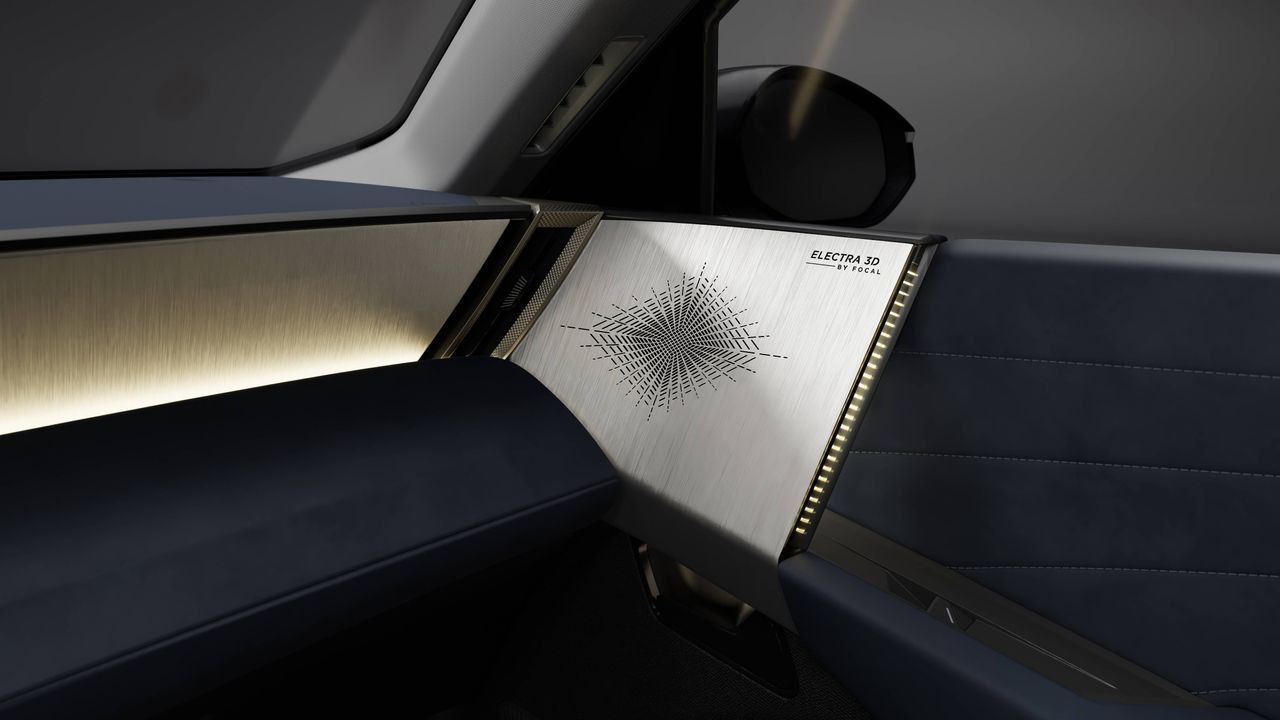
Let's get to the meat of the thing: audio. Focal's presence here is to make an in-car audio system sound sublime. To that end, the French audio specialist has kitted out the DS No 7 with 14 speakers, to create a surround-sound system. These include two tweeters mounted on the roof, four woofers and a subwoofer called a Power Flower (yes, really). The 14 are spread across the vehicle, to fill the car with sound.
Keeping the car audio running is a 690W class D amplifier. It also uses a Focal-made DSP to emphasize the spatial benefits of all these speakers, whether you're seated in the front seats or the back ones.
Focal has also contributed some design ideas to the car, to improve audio. The windows are laminated, and materials used in the design absorb sound, to control audio nasties like echo and diffraction.
As an audio journalist, I've always been led to believe that car sound systems are a means to fight a losing battle. No matter how refined your driver set-up is, if it's fighting with the noise of the street and other vehicles (and the fact that the driver isn't seated in the middle 'sweet spot' unlike on a motorbike where the driver's ears are naturally equidistant from speakers), you're going to be having an imperfect time.
So maybe Focal's found a way to fix this. Or perhaps it's a sound system for when you're idling somewhere quiet, watching TikToks on your phone…

 Login