❌

Reading view

Search for Hidden Cosmic Companions in Sun’s Backyard

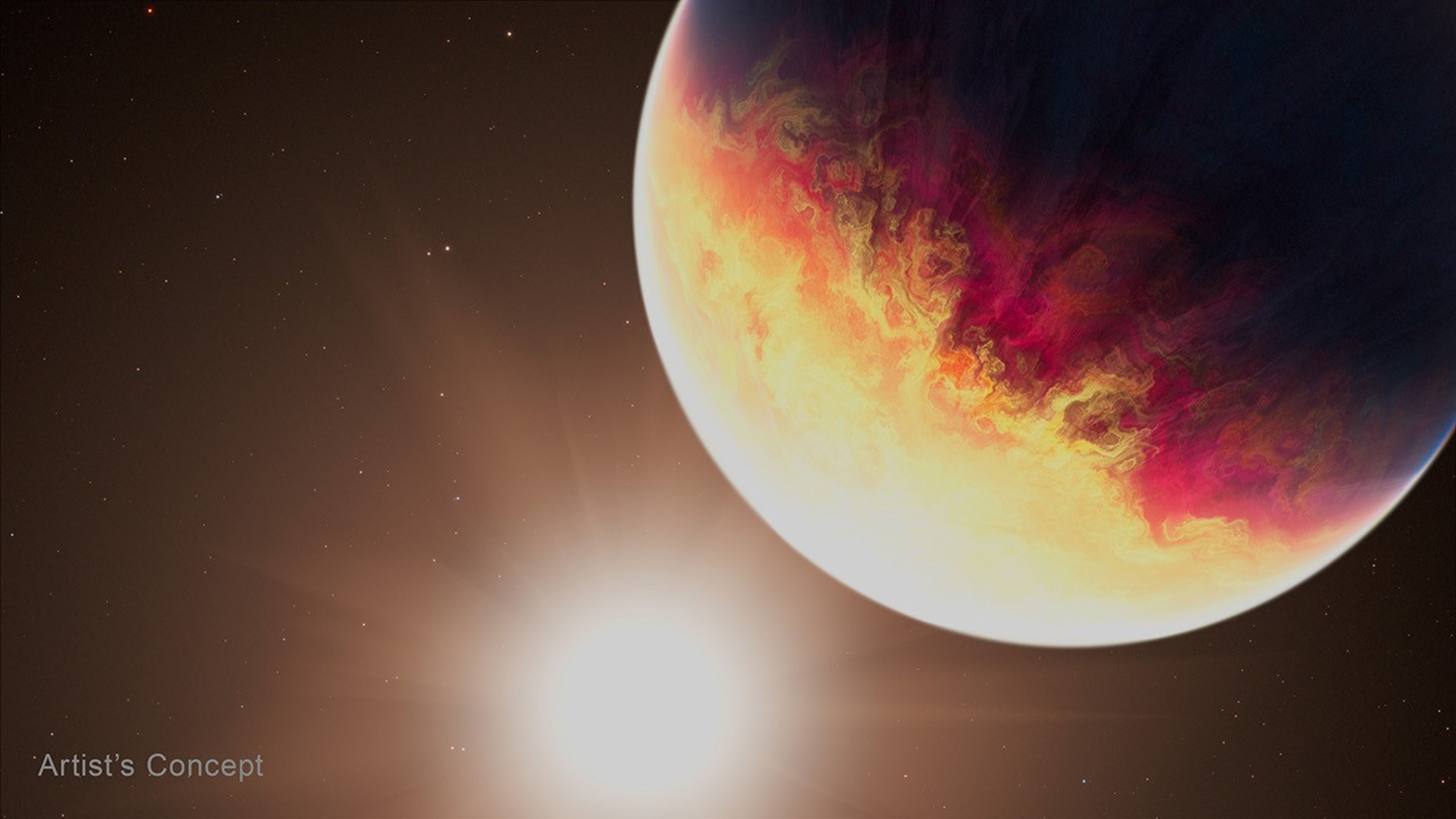
Some stars have planets. Others are orbited by brown dwarfs, balls of gas too massive to be planets, but too low-mass to be stars. Astronomers love these brown dwarf-star pairs because being paired with a star helps reveal a brown dwarf’s age. Ages of astronomical objects are often hard to measure, but essential for understanding how they form. 

Now, you can join NASA’s new Backyard Worlds: Binaries project and help astronomers discover these rare and interesting pairs. As a volunteer, you’ll inspect images from NASA’s Wide-field Infrared Survey Explorer (WISE) space telescope. Brown dwarfs may appear as small dots moving across a field of otherwise static stars. 

“We need your help to gain critical insights into these enigmatic cosmic objects,” said project lead Aaron Meisner.

Brown dwarfs are common but mysterious because they are so faint. There’s one for every three or four stars in our corner of the Milky Way galaxy. They are important laboratories for understanding giant planets like Jupiter.

Join the Backyard Worlds: Binaries project today and help astronomers understand where and when brown dwarfs form! You can also try one of our other brown dwarf-related projects: Backyard Worlds: Cool Neighbors! Anyone with a laptop or cell phone can participate. Participation does not require citizenship in any particular country.

Share

Details

Last Updated
Jun 18, 2026
Editor
NASA Science Editorial Team

The post Search for Hidden Cosmic Companions in Sun’s Backyard appeared first on NASA Science.

  •  

Amendment 59: Several Updates to the ROSES-25 Summary of Solicitation

Research Opportunities in Space and Earth Sciences (ROSES)-2025 is an ongoing “omnibus” or “umbrella” solicitation meaning that it includes many individual program elements each with its own topics and due dates. Refer to Table 3 of ROSES-25 for a list of those program elements. The ROSES-25 “Summary of Solicitation” is the front matter that sets the default backstop rules for each of the program elements in ROSES-25.

ROSES-25 Amendment 59 makes several additions, changes, and clarifications to the ROSES-25 Summary of Solicitation to conform with Agency and administration priorities, see Sections I, I(g), II(a), II(b), III(b), III(d), V(b)ii, VI(c) & VIII(b). New text is in bold.

Important and substantial revisions to 2 CFR 200, the government-wide guidance for grants and cooperative agreements are proposed to take effect October 1, 2026, see https://www.federalregister.gov/documents/2026/05/29/2026-10817/regulation-for-federal-financial-assistance#h-8. Many types of currently allowable costs, such as but not limited to publications, research or events outside the United States, and domestic conferences may be restricted, denied, or may be allowable by legal exception or special award conditions only. Public comments on the revisions to 2 CFR 200 may be submitted until July 13, 2026, at https://www.regulations.gov/commenton/OMB-2026-0034-0001

On or about June 15, 2026, this Amendment to the NASA Research Announcement “Research Opportunities in Space and Earth Sciences (ROSES) 2025” (NNH25ZDA001N) will be posted on the NASA research opportunity homepage at https://solicitation.nasaprs.com/ROSES2025 and will appear on SARA’s ROSES blog at: https://science.nasa.gov/researchers/solicitations/roses-2025/

Questions concerning this amendment to ROSES-25 may be directed to SARA@nasa.gov.

The post Amendment 59: Several Updates to the ROSES-25 Summary of Solicitation appeared first on NASA Science.

  •  
❌