Ancient ferns may have helped keep Triassic Europe burning by rapidly regrowing after fires and supplying fresh fuel for the next blaze. Around 201 million years ago, Earth was rocked by the end-Triassic mass extinction. The crisis has been linked to enormous volcanic activity associated with the breakup of Pangea. Those eruptions released huge quantities [...]
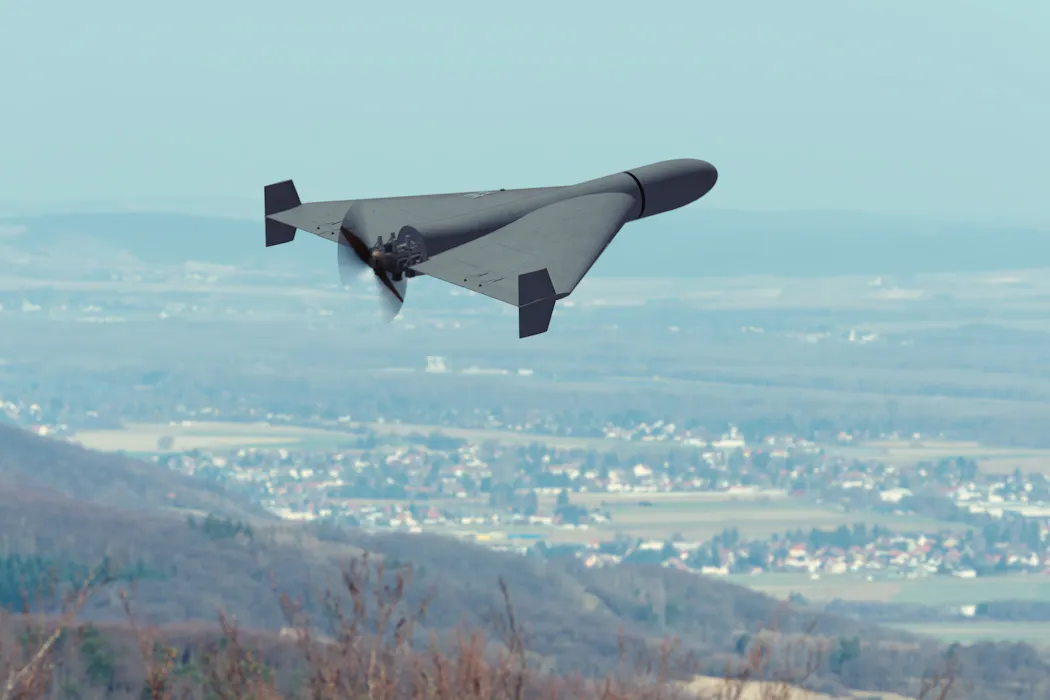
One-way military drones already have the capability to select their targets.Anelo/Shutterstock
Government experts are meeting in Geneva, Switzerland, to work towards a possible negotiating mandate on autonomous weapons systems (AWS). These are military systems that can select and engage targets without human intervention.
This major international gathering follows a recent call by the UN and the International Committee of the Red Cross (ICRC) for urgent controls on these weapons, sometimes dubbed “killer robots” in descriptions by the media.
Recent events in Ukraine have further consolidated concerns that a slide towards weapons with full autonomy (and without meaningful human control) is well underway. According to the New York Times, a Russian drone attacked a petrol station in Zaporizhzhia on July 6, killing three civilians. What marked it out was the drone’s use of AI to decide where and when to strike.
The drone aircraft had been programmed to fly towards the petrol station. But on its approach, an AI system autonomously chose the precise target – probably propane tanks – based on its ability to recognise them.
On August 25, Mirjana Spoljaric, the president of the ICRC, and António Guterres, the secretary-general of the United Nations, issued their joint appeal to the international community to agree on legally binding rules regulating the development and use of AWS.
New technologies are making it cheaper and easier for nations to put together these weapons. Thus, the UN and ICRC appeal for binding rules could not be more urgent. The international community is ideally placed to start negotiations soon, building on many years of diplomatic talks.
For the past decade, governments have debated how AWS challenge existing international law and what should be done under the auspices of the convention on certain conventional weapons, a UN arms control framework. Since 2017, the group of governmental experts (GGE) on lethal autonomous weapons systems (LAWS) – which is part of the convention on certain conventional weapons – has convened typically twice a year.
The experts are meeting again this week in Geneva. The aim is to agree a governance framework and language for a rolling text that could be the foundation for negotiations. This text provides a baseline for continued discussions in November.
While this process has been rife with political disagreements, most experts agree on the need to retain some level of meaningful human control over the use of autonomous systems.
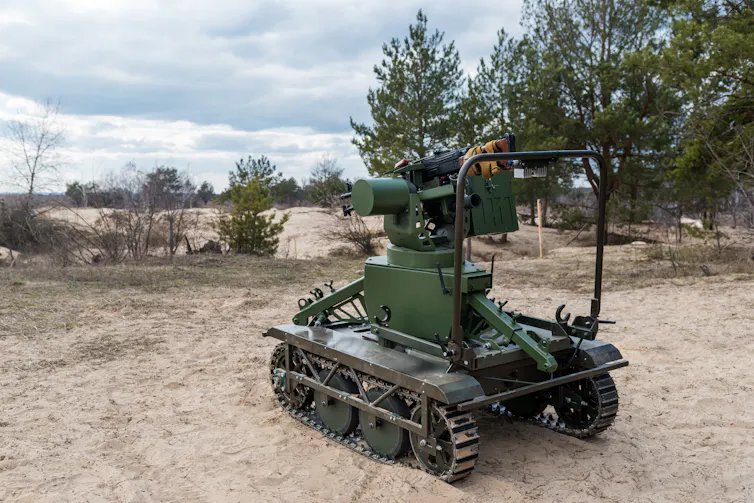
The Ukraine war has seen the increasing use of armed ground robots on the frontline.Anton_AV / Shutterstock
Moral significance
This demonstrates a shared sense by states participating in the process that human judgment is pivotal for the laws governing warfare. It also shows that the moral significance of warfare underlines the importance of human responsibility.
Human judgment is also embedded in international humanitarian law. Targeting processes require context-specific judgments about the targets themselves, potential harm to civilians from striking the target and other precautions. These tasks cannot be delegated to machines.
AI-enabled systems show how technology already shapes human perceptions of targets and risk. With autonomous weapons, the system shifts from influencing human judgement to exercising the targeting function itself.
Any AI system is only as good as the data it has been trained on, or that it works with. For armed conflicts, this data is difficult to come by and is almost always insufficient for dynamic and variable human contexts. This means many systems are likely to be technically inadequate.
The problem becomes quite visible with rules around assessing proportionality, for example, which is a context specific judgement about anticipated civilian harm versus military advantage.
Militaries may try to quantify targeting decisions in a way that creates the appearance of precision. However, the underlying legal judgment remains qualitative regardless. Technical accuracy, therefore, is not the same as lawfulness or moral consideration.
Only humans can understand the significance of respecting the inherent rights and dignity of other humans. Decisions to end human life must therefore be made qualitatively, by humans, in order to be morally and legally justifiable. Without this provision, and clear guidelines around it, we argue that governments risk running into a legal vacuum and a steep moral abyss.
AWS, especially those that prioritise speed and scale of action though AI, carry a significant risk of enabling an uncontrolled and rapid escalation. Escalation from crisis to war, or from conflict to a higher level of violence, could come about by erroneous indications of attack or by a simple sensor or computer error.
Unpredictable systems could give leaders false impressions of the capabilities of those systems. This could lead to overconfidence or encourage preemptive attacks.
Inevitable outcome?
One argument raised by academic researchers in the context of AWS is that they become necessary because they are inevitable. The risk is that more countries opt for full autonomy as components become cheaper and readily available, exacerbating an arms race.
However, an adversary’s conduct does not release a state from its own obligations under international humanitarian law. Following those rules is also part of what makes military force legitimate, including through civilian protection, precautions and accountability. We might turn the argument around and say: legally binding rules become inevitable, because they are absolutely necessary.
Governments and advocacy groups have worked hard over the past decade to put together a lucid proposal for the regulation of AWS. Some efforts are intended to prohibit those systems that target humans directly, or that are unpredictable and therefore cannot be meaningfully controlled by a human. All other AWS must be strictly regulated.
There are signs of political momentum. In November 2025, 156 states voted in favour of a UN General Assembly resolution that “draws attention to the serious challenges and concerns” that autonomous weapons raise. A legally binding instrument is possible, even if some states resist it.
The time is now. Clear, binding rules would help ensure that increasingly autonomous warfare does not make violence easier to unleash and harder to control.
Elke Schwarz is Vice-Chair for the International Committee for Robot Arms Control.
Jessica Dorsey is affiliated with Airwars as a member of the Executive Board and a member of the Advisory Board of the Atlantische Commissie.
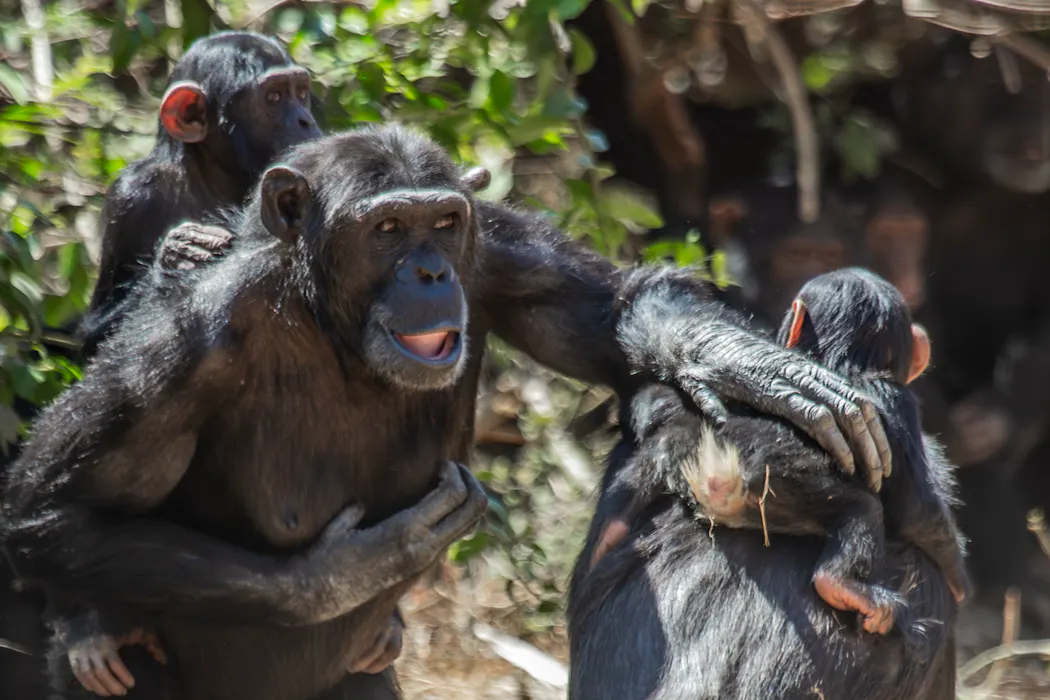
Physical touch may be an important evolutionary tool to help manage social tension and keep the peace.Left: Jake Brooker/Chimfunshi Wildlife Orphanage Trust; Right: Zanna Clay/Lola ya Bonobo Sanctuary, CC BY-NC-ND
During an eight-month-long research trip to the Democratic Republic of Congo (DRC) and Zambia, we studied consolation: the way bonobos and chimpanzees comfort each other after conflicts and distress. But early on, we kept noticing something that didn’t quite fit.
The animals were exchanging a lot of friendly physical contact, embracing, touching and kissing, in competitive situations before any clear conflict or distress signals had broken out. We started wondering what all that touching was actually for.
Our new research into how great apes manage social stress suggests it could be quite important, and that this behaviour dates back at least 6 million years, long before our species evolved. Like us, our closest ape cousins, the bonobos and chimpanzees, also navigate stressful and competitive situations every day.
One example is when they discover a tree laden with ripe fruit. Everyone wants to eat and conflicts of interest can often lead to fights. But something else caught our attention. More often, apes reach out to one another with friendly touch: embracing, patting and making gentle contact.
Our colleague Edwin van Leeuwen, a Dutch biologist, had developed a feeding task to measure social tolerance across great ape groups. This task is called the peanut swing. It involves filling a bamboo trough with peanuts and swinging it over the fence so the food lands in front of the apes. This spreads peanuts evenly across a small area while researchers record who gets food, and how much. We used this test to measure whether groups could share resources peacefully in close proximity.
Because the apes watched the trough being filled, we could observe how they behaved as anticipation built. Friendly touch clustered in the minutes just before the food arrived. Previous researchers called this celebration behaviour. But discovering food is not just a cause to celebrate. It is also tense and risky.
Could friendly physical contact be helping to keep that tension at bay?
To find out, we measured a five-minute anticipation period before the food was released. We watched everything the apes did: friendly contact like kissing, embracing and patting, as well as aggression and threats. Over several months, we filmed 116 apes from five groups across 60 sessions at two African sanctuaries, Lola ya Bonobo in the DRC and Chimfunshi in Zambia.
In both species, the answer was clear. Bonobos and chimpanzees who engaged in more reassuring friendly contact before the food arrived spent significantly more time feeding peacefully alongside others afterwards. This pattern held across most groups and was strongest in the most tolerant ones. Researchers consider tolerance – the willingness to share space without aggression – to be the foundation of cooperation and social learning across the animal kingdom. Our findings suggest that pre-emptive friendly touch may be part of how that tolerance is maintained.
The patterns followed the social structure of each species. In bonobos, female-female pairs were the most likely to show friendly reassurance. This reflects how bonobo society works: females form strong alliances to counter male aggression and occupy high status positions. In chimpanzees, it was males who reassured each other most, reflecting the importance of male coalitions in their societies.
For both apes, these patterns were clearest in the more tolerant groups. In groups with more authoritarian leaders, the pattern disappeared.
Some of the most striking behaviour we saw were among the chimpanzees. During tense moments, they placed fingers, hands and other body parts inside each other’s mouths. They also held each other’s genitals. For a species known for lethal aggression, these are extraordinarily risky things to do.
Perhaps the vulnerability is itself the signal of trust. You only offer a risky contact if you are confident the other animal won’t bite. And this communicates something important about how you see the relationship.
Hand-in-mouth between male Sims (left) and female Careen: a vulnerable contact which is common during tense competitive periods in chimpanzees.Jake Brooker/Chimfunshi Wildlife Orphanage Trust, CC BY-NC-ND
Research across five European cultures published in 2015 found that the area of the body you’ll let someone touch maps almost directly onto the strength of your emotional bond with them. There’s plenty of cultural variation though. Brits are famously more guarded about casual contact than other Europeans, and touch between men in many western contexts carries particular social weight.
Perhaps most strikingly, touch before competition makes a difference. A study of negotiators found that pairs who shook hands before bargaining cooperated more, lied less and reached better joint outcomes, even in situations where cooperation came at a personal cost. A handshake may signal something important about intent before a word is even spoken.
But physical contact matters even during competition. A 2010 study of all 30 teams in the US National Basketball Association during the 2008-09 season found that the teams who touched more during games early in the season, through fist bumps, hugs and high fives, performed better and played more cooperatively later. This held even after controlling for player salaries and preseason expectations. In another 2024 study of women’s college basketball, players who received more physical contact from teammates after missing their first free throw were more likely to score on the second.
We see the same thing in genuinely high-stakes situations too. Research analysing street conflicts using CCTV found that witnessing a fight increased anxiety in bystanders. But, those who then engaged in physical contact with others showed reduced anxiety afterwards. A separate study of consolation after street robberies found that the way bystanders approached and touched victims closely mirrored the post-conflict consolation we observe in chimpanzees.
Humans, bonobos and chimpanzees all use reassuring touch but our evolutionary lineages split over 6 million years ago. The simplest explanation is that reassuring touch predates all three of us, and is certainly far older than our own species. So let’s not forget that we hold within us powerful and ancient behaviour that can help us manage our social worlds and maintain peace.
Jake Brooker receives funding from Templeton World Charity Foundation (Diverse Intelligences Initiative) and NWO Talent Programme.
Zanna Clay has received funding from Templeton World Charity Foundation (Diverse Intelligences Initiative) for this work.

 Login

 Ancient ferns may have helped keep Triassic Europe burning by rapidly regrowing after fires and supplying fresh fuel for the next blaze. Around 201 million years ago, Earth was rocked by the end-Triassic mass extinction. The crisis has been linked to enormous volcanic activity associated with the breakup of Pangea. Those eruptions released huge quantities [...]