❌

Reading view

When prepping for disaster, don’t forget to pack your teddy bear

Would Ted be coming with you in an emergency? 4_17amdani/Shutterstock

Imagine it’s the dead of night. Your phone pings with a text – it’s a government emergency alert: “Leave your home immediately! Only take with you enough supplies for the next three days.” What would you want in your go-bag?

Our new survey of UK adults (results not yet published) has found a surprising number of people prioritised sentimental belongings such as a childhood teddy bear.

In the face of climate change and growing geopolitical instability, governments have started to advise citizens to prepare now for disaster. In 2024, the UK government launched its Prepare initiative. This was followed by preparEU, a flagship EU project which argued: “Today’s threats are fast, complex and interconnected; our response must be more proactive.”

These initiatives typically recommend that people should have enough food, water and medicine to last 72 hours. In addition, they need ready access to documents, cash, batteries or power banks and a wind-up radio, plus a working knowledge of emergency support in their local area.

But when that message pings in the night, will you already be packed, with documents, food and medicine in a go-bag? Or will you be scrambling to find things, hoping you have enough essentials to keep you going?

In April 2026, as part of the After the End project – a Wellcome Trust-funded research project exploring how people experience and recover from crises – we surveyed 1,000 UK adults to understand how prepared they were for a sudden crisis or disaster.

We found that most people have less than half of what is recommended by the UK government and the US Federal Emergency Management Agency. Only four out of 1,000 people reported being fully prepared.

Our findings echo the 2025 UK Public Survey of Risk Perception, Resilience and Preparedness, which found that of 10,536 adults, only 13% felt largely or totally prepared.

Withstanding the emotional toll of crisis

However, the focus on practical items and supplies may not capture what people need to withstand the emotional toll of crisis and disaster.

When asked what other items they would take with them during a crisis, many participants felt that personal items would be critical to their post-disaster wellbeing. They expressed a strong desire to keep sentimental items such as jewellery, family photographs and objects from their childhood close to them during crisis.

As one participant wrote: “My childhood teddy bear. He is going to the grave with me. Apart from that, nothing matters much.”

Pets also featured heavily in people’s responses. Animals such as cats and dogs were often described as members of the family. Some participants even found comfort in the idea of taking the ashes of deceased pets with them if they needed to flee in an emergency.

A concept in psychology called extended self theory explains why these types of items hold such importance during everyday life – and also during crisis. It suggests that our sense of self is fragile, and continually built and maintained through our connections with the world around us.

Woman in pink vest top looks down at gold key necklace pendant.
Jewellery can have huge personal importance. Ira.foto.2024/Shutterstock

In this way, the things we surround ourselves with do more than serve practical functions. They help us construct, stabilise and make sense of our identity. Consciously or subconsciously, our possessions become part of who we are.

A childhood teddy bear, therefore, becomes a possession imbued with memories and emotions which tell a tale of who we are, where we have come from, and who we care about. Objects can reinforce continuity of identity over time and space.

A strong sense of self

Having a strong sense of self can be beneficial during times of crisis. If we enter such a period with a sense of identity that is stable and coherent, it can act as a psychological anchor. A strong identity helps us cope in a challenging situation, and reduces the likelihood of ruminating about negative experiences.

Research also suggests that our ability to connect with items from pre-disaster periods influences our ability to cope and recover psychologically following an emergency. So, salvaging photographs and other items of sentimental value during disaster could help to preserve and rebuild our memory and identity.

If everything around us falls apart, a treasured item can help us maintain some sense of normality. This is perhaps why survivors of the 2011 Japan tsunami frequently described the loss of family photos as one of their greatest emotional losses.

Sentimental items can maintain or even improve our belief that we are capable of achieving our goals. Psychologists refer to this as self-efficacy. And research suggests higher levels of self-efficacy are associated with greater preparedness for, and better coping after, a disaster – particularly in vulnerable groups such as those with disability.

Our analysis found that people who reported greater self-efficacy also said they had more of the items and knowledge recommended by the UK’s Prepare initiative.

Teddy bear wearing backpack in the mountains
Things are not just things. varuna/Shutterstock

Sentimental items can also help to rebuild communities. Heirlooms and meaningful everyday items from before a crisis become points of storytelling afterwards. So, remember to save a little space in your backpack for something that means something to you.

Whether it is a childhood teddy bear, your late mother’s engagement ring or a beer coaster from a first date, these items are more than just “things”. When so much else is uncertain, the small objects that remind us who we are may be among the most valuable items we can take with us.

The Conversation

Ruth Ogden receives funding from British Academy, the Wellcome Trust, the Economic and Social Research Council, CHANSE and Horizon 2020.

Anna Powell receives funding from the Wellcome Trust through the After the End Discovery Award, and from The Pandemic Institute through a partnership with CSL Seqirus UK.

Patricia Kingori receives funding from the Wellcome Trust through the After the End Discovery Award and the Antitheses Research platform.
  •  

Tonnes of fishing gear and plastic are washing up on Seychelles beaches. We tracked where it was coming from

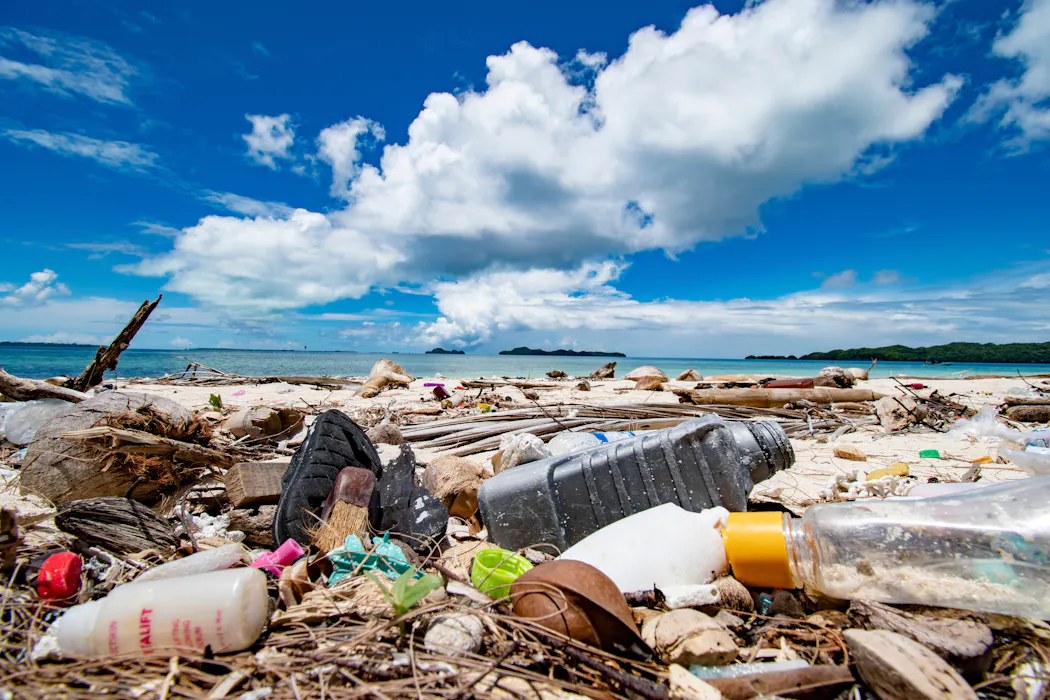
Plastic waste from shipping is causing pollution on many beaches. Hiromi Ito Ame/Shutterstock

Vast quantities of plastic and fishing gear are washing up along the shores of the Seychelles, destroying fragile ecosystems and causing significant economic problems.

Aldabra Atoll, a Unesco world heritage site in this archipelago nation of 115 islands, is estimated to have accumulated more than 500 tonnes of plastic on its shores alone. Most of this plastic debris continues to pile up along its beaches today. It was estimated that removing it would cost approximately US$4.68 million (£3.46 million) and would require 18,000 hours of labour.

Small island developing states are particularly vulnerable to plastic debris on their beaches. It can damage tourism and fishing in these coastal communities, which is essential to their economies. Clean-up costs can be prohibitive.

Fish and other marine life can also be killed by getting entangled with or ingesting plastic debris.

It is impossible to tackle this growing problem without knowing where this pollution is coming from and who is responsible. We investigated this in our recent study using computer simulations and observations, focusing on pollution in the western Indian Ocean from fisheries and shipping.

We found that most pollution probably comes from vessels in or near the Seychelles’ own waters. This challenges the assumption from previous work that island plastic mainly drifts in from distant shores.

Fishing gear on the Aldabra Atoll, Seychelles. April Burt and Seychelles Islands Foundation

We know fishing vessels lose nets and gear, and shipping vessels illegally discard plastic and other items. But to work out which vessels are responsible and where their debris ends up, we needed to know which ships and fishing boats operate near the Seychelles.

To do this, we used satellite tracking data from fishing and shipping vessels over five years (from 2018 to 2022) to estimate activity across the region. Using this map, we simulated the drift of billions of virtual pollution fragments and followed where they ended up.

A map showing location of fishing gear.
A map showing debris fishing gear. Author's own.

From this we built a map showing how likely a given vessel location is to pose a risk to the Seychelles’ islands. We did this separately for fishing and shipping.

Our research shows, based on previous fishing activity, that most fishing gear that is swept up on the beaches of the Seychelles comes from fishing within its own exclusive economic zone. These are the waters, extending 200 nautical miles (370km) offshore, over which a state has exclusive control over marine resources, including fisheries.

These waters are full of tuna, and the Seychelles’ economy leans heavily on industrial fishing, both as an employer and as a large source of foreign currency.

Where does the waste come from?

It is likely that some of the gear and plastic waste is coming from EU vessels. The Seychelles’ waters are heavily fished by two types of European fishing boats, purse-seiners and longliners. This falls under a longstanding agreement between the EU and the Seychelles granting them the right to fish here. Purse-seiners circle around tuna schools with a large net, and longliners trail baited hooks over many kilometres.

Indeed, a report presented to the Indian Ocean Tuna Commission found that 76% of 214 of the drifting fish aggregating devices used by tuna fisheries to attract shoals of fish in the Seychelles’ exclusive economic zone were from Spanish-owned vessels. This is an industry making significant profits, while leaving behind environmental damage.

A turtle on the Aldabra Atoll next to lost fishing gear and plastic.
A turtle on the Aldabra Atoll next to lost fishing gear and plastic. April Burt and Seychelles Islands Foundation

Recently, the Seychelles–EU fishing agreement was renewed for 2026–30 at €5,750,000 per year (£4.89 million), allowing 38 EU fishing vessels to operate in these waters. The Seychelles government is believed to have pushed for a 30% rise in this annual payment from the EU but it is believed they settled on 7%, according to some reports.

Given that the cost associated with cleaning up a single island already runs into millions, the Seychelles-EU deal is small compared to the indirect damages imposed on the nation.

Other proposed solutions

International shipping creates other issues. Our study suggests that more than 90% of plastic being swept up on the Seychelles’ coast from shipping comes from just five lanes crossing the western Indian Ocean. The origin and destination ports of these lanes line up with the countries named on labels of plastic bottles washed ashore on Aldabra.

Debris from international shipping lanes requires a different solution. Unlike the tuna fleets fishing under the agreement between the Seychelles and the EU, this is international traffic passing by. A solution to the plastic waste coming from these ships would be more rigorous enforcement of existing international rules against dumping waste at sea, and bilateral cooperation between the Seychelles and the many nations whose ships use these routes.

Even simple measures could cut litter. For instance, ensuring vessels carry enough safe drinking water to reduce the use of plastic bottles should cut some debris found on Aldabra.

The true cost of cleaning up this huge level of plastic pollution tends not to fall on those who have left it there. The Seychelles needs to work out the cost of the damage being done by these mountains of waste to get a better deal in future negotiations with the EU.

That should help fund clean ups and repair the fragile ecosystems of the islands, helping to preserve them for the future.

The Conversation

Noam Vogt-Vincent received funding from the Natural Environment Research Council and National Oceanic and Atmospheric Administration.

Alex Albinski does not work for, consult, own shares in or receive funding from any company or organisation that would benefit from this article, and has disclosed no relevant affiliations beyond their academic appointment.

  •  

Industrial Chicken Farming Is Supercharging the Spread of a Dangerous Foodborne Bacterium

Professor Samuel Sheppard Holding Culture PlateThe global expansion of chicken farming has created conditions that allow Campylobacter to spread, mix and adapt more readily. Commercial poultry farms now hold billions of chickens, creating a vast habitat where bacteria can move, mix and adapt. An analysis from the Ineos Oxford Institute for Antimicrobial Research at the University of Oxford found that [...]
  •  

Monkeys keep pets too – animal specialist on the world of interspecies friendship

Tufted gray langur (Semnopithecus priam) stroking a Grizzled giant squirrel (Ratufa macroura) caringly at Yala National Park - Sri Lanka. Senthi Aathavan Senthilverl/Wikimedia Commons, CC BY-NC

The first time I saw it, I wasn’t quite sure what I was looking at. A northern white-cheeked gibbon at Shanghai Zoo was holding and caressing a mouse that had wandered into its enclosure. It wasn’t trying to eat it or chase it away. Instead, the gibbon treated the tiny rodent with remarkable gentleness. I couldn’t stop wondering why.

Years later, while studying wild black-and-white snub-nosed monkeys in the mountains of south-west China, I watched playful juveniles repeatedly trying to climb onto the backs of domestic pigs. Again, these weren’t the kinds of interactions I expected to see between different species.

A new study my colleagues and I conducted brings together 427 documented cases of primates interacting with other species, spanning several decades from the 1970s to 2025. Our findings reveal that these encounters are far more widespread than scientists had realised.

Over the years, I had begun collecting reports of similar encounters from scientific journals, photographs, videos and observations shared by other primatologists. What initially seemed like a handful of quirky anecdotes gradually turned into a much broader pattern. These interactions appeared to represent a surprisingly widespread aspect of primate behaviour.

This behaviour may shed light on one of the defining features of our own species: our extraordinary relationships with other animals.

I’ve long been interested in how tolerance evolves, not only between members of the same species but also between strangers more generally. Humans are unusual in the degree to which we cooperate with unrelated people. We are perhaps even more unusual in the close relationships we form with other animals.

Scientists have long known that different animal species often associate with one another. Monkeys, for example, can improve their predator detection or increase foraging opportunities when they move around as a mixed-species group. Another example is how birds frequently follow monkeys through forests to feed on insects disturbed by their movements.

But our study focused on social interactions.

The cases we reviewed involved 88 primate species and their interactions with 127 other animal species. The diversity of these species was astonishing. It included mammals such as sheep, tapir, deer, domestic pigs, cats and dogs, as well as owls, lizards, toads and even insects.

The most common behaviour was play and grooming. But we also found reports of primates carrying, huddling and sharing food with and occasionally adopting members of another species. Most interactions were initiated by the primates themselves.

One of my favourite examples is the now well-known case of Japanese macaques grooming and riding on the backs of sika deer. It remains a remarkable example of two very different species repeatedly interacting peacefully over long periods.

I was also fascinated by some of the less familiar observations, such as a langur attentively stroking a squirrel, a silverback gorilla carefully cradling a tiny wild bushbaby, a bonobo gently holding a mongoose pup and macaques grooming stray dogs.

Many of these interactions may provide benefits similar to those seen within species. Grooming can help remove parasites, improve hygiene and reinforce social bonds. Play contributes to the development of motor coordination, social skills and cognitive flexibility.

Some interactions happen where primates and other animals spend time together because of shared foraging opportunities or protection from predators. For example, tropical primates form associations with other primate species and jointly forage in the tree canopy. In these cases, social interactions, such as grooming or play, may simply emerge from repeated contact and social familiarity.

Yet not all observations fit this pattern. Why would a langur stroke a squirrel, or macaques groom stray dogs? Such interactions suggest that primates may possess a broader capacity for social flexibility, curiosity and tolerance towards other species than researchers previously appreciated.

We also found consistent patterns in who interacted. Young primates were much more likely to play with members of another species, whereas adult females were more often involved in grooming. This mirrors well-established age and sex differences in many primate societies, where juveniles spend much of their time playing and females often invest more heavily in caregiving.

It would be tempting to describe all these encounters as examples of friendship. But the reality is more complicated. Some primates carried infants of another species in ways resembling adoption or caregiving, yet rough handling or neglect sometimes resulted in injury or death. We also documented cases where primates appeared to abduct a young animal from its group, while a small number of interactions were clearly abusive, involving violence.

Most interactions were probably of relatively short duration. However, there are some reports of cases that lasted for weeks. For example, the adoption of a marmoset by a capuchin monkey.

In zoos and other human-care settings, some species appear to form long-lasting relationships with animals of other species. In 2017, a macaque living in an Israeli zoo called Niv adopted a chicken and treated it like it was her own baby.

Our study found these interactions were not more common among great apes – they occurred across all major primate lineages.

These unusual encounters are more than fascinating natural history.

As forests become increasingly fragmented and wildlife is forced into closer contact with people, livestock and domestic animals, opportunities for cross-species interactions are changing rapidly. Primates now encounter dogs, cats and other human-associated animals more often than they once did.

Some of these interactions may be benign or even beneficial. Others could increase the risk of diseases spreading between wildlife, domestic animals and humans. Understanding when and why different species tolerate one another therefore has important implications for both conservation and public health.

The findings may also help improve animal welfare. Zoos increasingly house compatible species together, and understanding which species are more likely to form positive relationships can help managers make better decisions.

Perhaps most interesting of all, our findings suggest that some of the ingredients (curiosity, tolerance, caregiving and play) underlying those relationships may have deep evolutionary roots.

The Conversation

Cyril Grueter does not work for, consult, own shares in or receive funding from any company or organisation that would benefit from this article, and has disclosed no relevant affiliations beyond their academic appointment.

  •  

Does dark energy really exist? Our work identifies cracks in the foundations of today’s cosmological model

According to our best understanding, the universe is expanding – and is doing so at an accelerating rate. This is believed to be caused by something called the “cosmological constant”, which was first proposed by Albert Einstein in his theory of general relativity. In recent decades, it has become better known as dark energy, which is believed to make up about 70% of the universe.

Crucial to this realisation were studies of Type Ia supernovae – exploding white dwarf stars. These are thought to emit a specific amount of light, which allows astronomers to determine their distances very accurately and thereby track the expansion of the universe. This work was awarded the 2011 Nobel prize in physics.

The accelerating expansion of the universe is thought to be due to negative pressure, an unusual property of dark energy that allows it to overcome the attractive force of gravity. Yet the exact nature of dark energy remains a puzzle. It cannot be explained by our best theory for the fundamental building blocks of the universe – known as the standard model of particle physics.

However, it is an integral part of another theory, devised to explain how the large-scale universe came to be. This is the standard model of cosmology, also called the lambda cold dark matter (ΛCDM) model.

Other observational evidence supporting the existence of dark energy includes fluctuations in the temperature of the cosmic microwave background (CMB) – the “afterglow of the Big Bang” – and the imprint of baryon acoustic oscillations (BAO) – sound waves from the early universe – in the distribution of galaxies.

But the ΛCDM model has come under increasing scrutiny as new data has emerged. A conference hosted by the UK’s Royal Society debated emerging cracks in the standard cosmological model. It has been noted that the model’s past successes may partly be due to “confirmation bias” – the unconscious tendency to favour information that supports our existing beliefs while giving less attention to information that challenges them.


Read more: Relax, the expansion of the universe is still accelerating


Flawed framework?

Most cosmologists remain unconvinced by such criticism and are instead persuaded by the multiple lines of evidence that the universe’s expansion is accelerating.

However, all such analyses, for example of the CMB or BAO, are conducted using a special solution of Einstein’s equations called the FLRW (Friedmann-Lemaitre-Robertson-Walker) framework. This is a description of space-time that assumes the “cosmological principle”, namely that the universe is, on average, homogeneous and isotropic (looks the same in all directions).

However, our recent study found evidence to falsify the FLRW framework, presenting results showing that the universe is asymmetric, or lopsided. We believe this presents a fundamental challenge to dark energy by undermining the very basis for standard analyses of cosmological data.

The observation that the universe may be lopsided is known as the cosmic dipole anomaly. This anomaly cannot be fixed by tweaking parameters in the ΛCDM model. It requires starting again from scratch to build a model of the universe based on observations, rather than on a philosophical principle.

The Nobel prize winning astrophysicist Jim Peebles has said that the cosmic dipole anomaly is about as well established as another cosmological irregularity known as the Hubble tension. However, he notes, the cosmic dipole anomaly has received only a fraction of the interest heaped on the Hubble tension.

With my collaborators, Mohamed Rameez and his PhD student Animesh Sah at the Tata Institute of Fundamental Research, Mumbai, we have also shown that the acceleration of the expansion of the universe inferred from Type Ia supernovae is not the same in all directions.

The signal from supernovae is mainly aligned with a temperature difference in the afterglow of the Big Bang – the cosmic microwave background. This temperature difference, called the CMB dipole anisotropy, is believed to be due to the local motion of the solar system.

‘Tilted observers’

The acceleration inferred from supernovae cannot therefore be due to dark energy. Rather, it is probably an illusion, because we are “tilted observers”. This is because of Earth’s specific location in the cosmos, where our neighbouring galaxies are participating in a large-scale but localised streaming motion called the bulk flow.

The relationship between the intrinsic brightness of Type Ia supernovae and their distance has been crucial to the idea of dark energy. However, this relationship may not be as robust as was first assumed.

Astronomers in South Korea found evidence that the ages of the white dwarf stars that produce Type Ia supernovae (their progenitors) affect their brightness. However, this has been challenged by another team.

When we corrected for the dependence of the intrinsic brightness on the progenitor age, the indication is that the universe is decelerating, rather than accelerating.

This is just as is expected for a universe without dark energy. But it will come as a surprise to most cosmologists who believe that there is compelling independent evidence for ΛCDM, in particular from studies of the CMB. But CMB temperature fluctuations are not influenced by dark energy. Rather, they are related to the spatial curvature of the universe, the baryon density, and the dark matter density.

Whether dark energy is still a valid inference thus depends on whether the distribution of matter in the universe is indeed isotropic – exactly the same in all directions. Observations suggest otherwise. If these findings are confirmed, they could signal a paradigm shift in cosmology.

The Conversation

Subir Sarkar receives funding from the UK Research & Innovation councils and from the Indian Ministry of Science & Technology.

  •  

The Large Hadron Collider is being upgraded so that it can unlock the secrets of the Higgs boson

Deep beneath the French-Swiss border, the world’s largest scientific instrument has fallen silent. After years of smashing proton particles together at nearly the speed of light, Cern’s Large Hadron Collider (LHC) has stopped operations and entered a long shutdown.

While no particle collisions are taking place at the LHC, thousands of scientists, engineers and technicians are dismantling parts of the machine, installing new technologies and preparing one of the most ambitious upgrades ever attempted in experimental physics.

When it switches on again, around 2030, it will become the High-Luminosity Large Hadron Collider (HL-LHC), capable of delivering roughly seven times more data than the collider that discovered the Higgs boson.

For me, this shutdown marks another milestone in a project that has shaped much of my scientific life. I first became involved in the High-Luminosity collider long before the Higgs boson particle was discovered in 2012. Over nearly two decades I have had the privilege of contributing to the programme on both sides of the Atlantic.

In the United States, I served as upgrade coordinator for the Compact Muon Solenoid (CMS), a key experiment at the LHC. The CMS is built at one of the points within the Large Hadron Collider where separate beams of proton particles collide. CMS then captures data from these collisions so that it can be analysed by Cern physicists. I helped lead the international effort preparing CMS for the HL-collider era.

Today, in Oxford, I work on another LHC experiment called Atlas. Atlas and CMS work in broadly similar ways, but having two machines like this helps ensure significant discoveries by one experiment are cross-checked by a counterpart with a separate team of scientists. Here, my colleagues and I are building silicon pixel detector modules for its upgraded inner tracker. This will form a vital part of the HL-LHC upgrade.

A few months ago, I watched the first complete pixel ring assembled in Oxford. It was strikingly beautiful: a delicate arrangement of silicon sensors, electronics and support structures whose elegance reflected years of painstaking engineering.

For the first time, the detector we had imagined through countless design reviews, prototypes and production meetings had become real.

Our contribution is just one part of a detector being built by teams across the world. Thousands of components must come together before the High Luminosity collider is ready to explore a new frontier in particle physics.

The LHC has already transformed our understanding of nature. Its discovery of the Higgs boson confirmed the mechanism that gives elementary particles their mass. The Higgs had been the last missing piece in the standard model of particle physics. This is the best theory to explain elementary particles and the three fundamental forces that govern their interactions. But, as is often the case in science, answering one question opened many others.

Investigating the Higgs

Many of the most important questions now are no longer about whether the Higgs exists, but whether it behaves exactly as predicted. Tiny deviations from the standard model could point towards entirely new particles or forces. Such discoveries would help us understand mysteries such as dark matter or why the universe contains far more matter than antimatter.

The challenge is that these clues are incredibly subtle. Rather than requiring much higher collision energies, they demand vastly more collisions. The HL-LHC will increase the collider’s luminosity – the number of proton collisions it produces – by about a factor of seven over its lifetime.

Imagine replacing a camera that takes one photograph every second with one that captures seven. Each image looks much the same, but together they reveal details that would otherwise remain invisible.

For Higgs physics, that extra data will be transformative. The Higgs boson is remarkably elusive. Some of its most interesting decays – where it transforms into other particles – are so rare that they have remained just beyond the reach of today’s LHC. Others have only recently emerged as tantalising hints.

One example is the decay of the Higgs boson into two muons (a muon is an unstable, subatomic particle). This decay is a rare process that tests whether the Higgs couples to second-generation lepton particles. Another is the decay of the Higgs into charm quark particles. This is one of the most difficult Higgs measurements because it must be extracted from an overwhelming background of ordinary particle collisions.

These processes test one of the Higgs boson’s most fundamental properties: whether it interacts with lighter particles exactly as predicted by the standard model. Any deviation from those predictions, even a small one, could be evidence that new particles or forces are influencing the Higgs behind the scenes.

And perhaps the most ambitious goal of all is observing Higgs boson pairs, which would allow us to measure, for the first time, the Higgs self-coupling – the strength with which the Higgs field interacts with itself. That interaction determines the shape of the Higgs field that fills all of space and is thought to have played a key role in the evolution of the universe moments after the Big Bang.

These are exactly the kinds of measurements that motivated the design of the upgraded LHC. Achieving them requires a revolution not only in the accelerator itself but also in the detectors that record the collisions.

Particle web

At the High Luminosity LHC, every crossing of the proton beams will produce up to 200 simultaneous proton-proton interactions, several times more than today. Untangling this dense web of particles demands detectors that are faster, more precise and far more resistant to radiation than anything built before.

At the heart of the Atlas and CMS experiments, entirely new silicon tracking detectors are replacing the existing ones. They must survive radiation levels that would quickly destroy previous generations of sensors while measuring particle trajectories with extraordinary precision. Achieving this has required years of advances in silicon sensor technology, ultra-fast electronics, cooling systems and lightweight mechanical structures.

One of the most innovative features of the upgraded detectors is the addition of precision timing. New timing detectors – the High Granularity Timing Detector in Atlas and a similar system in CMS – will measure the arrival time of particles with a precision of only a few tens of trillionths of a second. Although hundreds of collisions occur almost simultaneously, they do not happen at exactly the same instant.

By adding time as a fourth dimension to particle tracking, these detectors will allow physicists to associate each particle with the correct collision, making it possible to reconstruct rare Higgs events hidden within an enormous background of overlapping interactions.

One of the greatest rewards of working on these detectors is seeing the next generation of physicists preparing to use them. The students helping to assemble today’s detectors will spend much of their careers analysing the data they eventually collect.

When the HL–LHC begins operating, it will not simply extend the scientific programme of the Large Hadron Collider. It will usher in a new era of precision Higgs physics. Whether it reveals subtle cracks in the standard model or confirms our current understanding with unprecedented accuracy, it will shape particle physics for decades to come.

The Conversation

Daniela Bortoletto is a member of the Atlas experiment at the Large Hadron Collider.

  •  

Scientists Say Frequent Ejaculation May Improve Sperm Quality and Fertility

Sperm IllustrationStored sperm may age faster than reproductive medicine has assumed, suggesting that shorter abstinence periods could benefit fertility outcomes. For decades, men undergoing fertility testing or treatment have often been advised to abstain from ejaculation for several days beforehand, based on the assumption that longer storage allows sperm counts to build up. But a major [...]
  •  

Scientists Uncover Cause of Inflammatory Bowel Disease Solving Decades-Old Mystery

Man Stomach Pain Irritable Bowel Syndrome IBS Inflammatory Bowel Disease IBDScientists identified an autoimmune mechanism linked to a major IBD risk gene, opening the door to targeted diagnosis and personalized therapies for thousands of patients. For decades, inflammatory bowel disease (IBD) has been treated as a single disorder, even though patients often experience dramatically different symptoms, disease courses, and responses to therapy. A new study [...]
  •  

England’s sewage spills: why citizen scientists want to test for pollution themselves

Andy Soloman / Shutterstock.com

Thousands of volunteers across England now regularly take out their own testing kits to study the levels of pollution in rivers and the sea.

With sewage spills rarely out of the news, citizen water testing has become one of the most visible responses to England’s pollution scandals.

A crisis of trust in the water companies appears to be driving the public to take water quality testing into their own hands. Thousands of people take part in the twice yearly water testing events, organised by charity Earthwatch. Spring 2025 saw the highest number of participants at more than 7,000. Other organisations also report rising numbers of people getting involved in water testing.

These people, often referred to as citizen scientists, are doing tasks as varied as surveying aquatic insects to sampling water for chemicals.

Much public attention has centred on sewage pollution in UK rivers in the past few years. Waste is regularly and legally discharged into lakes, rivers and along beaches by water companies during periods of heavy rainfall. But incidents of sewage discharges on days with no to low rainfall have also been identified, and in some cases legal action has followed. In some cases water companies have been fined millions of pounds.

The Environment Agency (EA), the main environmental regulator for the water industry, reported nearly 300,000 sewage spills across England in 2025 alone.

The consequences have affected both wildlife and people. Campaign group Surfers Against Sewage documented more than 7,000 cases of illness linked to swimming at official bathing sites over just five years. In 2025, 12 of England’s 14 inland bathing sites were rated “poor”, meaning swimmers were recommended to avoid the water because of potentially harmful bacteria. In April, the UK’s largest pollution claim began to be heard in the High Court, over allegations of chicken waste pouring into rivers along the Welsh-English border.

Public campaigning is believed to have helped trigger recent government action, with reforms expected in a planned Water Reform Bill.

Citizen sceptics

Some water companies now fund freshwater citizen science initiatives. These run across locations including the Thames Valley, south-east England and Wales. The programmes claim to enhance community awareness, empowerment and improve transparency of water companies’ management efforts.

During my PhD, I researched how one group of volunteers in Oxfordshire collected and interpreted river data. Some told me that they felt that water companies encouraged participation in citizen science, while ignoring the data.


Read more: Five warning signs that rivers are polluted – even when they look clean


As one citizen scientist explained in my own ongoing preliminary research, “people keep beavering away, and eager beavers are just what the water industry wants”. In his view, citizen science risks becoming a tool for keeping volunteers busy and distracted, rather than driving accountability.

However, recent research shows water companies have historically underreported the number of sewage spills. The Consumer Council for Water, which represents customers, has reported widespread dissatisfaction with water companies. An independent water commission has also highlighted a deterioration of public confidence in the environmental regulators.

A recent Channel 4 docudrama, Dirty Business, echoes these frustrations. It follows two citizens trying to hold water companies and regulators to account.

In line with some recent academic research, the programme explores suggestions that the water industry attempts to deflect blame and distract attention from sewage pollution. In a statement addressing the allegations, the EA said: “Prosecutions are just one tool against water pollution, and we have also levied a record £8.5 million in enforcement undertakings against water companies in the last year alone.”

ITV coverage of sewage spills.

Public confidence

The Environment Agency also faces questions about public confidence. Research suggests that volunteers believe current regulations allow water companies to act without sufficient oversight. In this study, people felt that the EA was not fulfilling its responsibility to hold the water industry to account.

In 2024, the head of the EA, Philip Duffy, said that the organisation had buried freedom of information requests, with staff worried about revealing the embarrassing truth of water pollution. In a statement reported in the Guardian at the time, the EA said: “Philip is completely committed to the highest standards of transparency.” It added that he wanted to make more EA data readily available.

In January 2026, the Office for Environmental Protection, a public watchdog on environmental protection, also found possible failures by the EA to comply with water quality laws.

My participants felt that the agency shouldn’t ignore their data in monitoring water quality.

Concerns about data bias and reliability are often cited as reasons to limit the use of volunteer data to support regulatory responses to pollution incidents.

These concerns are not unreasonable. Citizen science data can indeed vary in quality, depending on training and sampling practices. Ensuring consistency across the sheer number of volunteer groups is also a challenge.

Using citizen science

Nevertheless, research now suggests volunteers can produce reliable data suitable for official monitoring. The debate is gradually shifting to how regulators can include it in decision-making. For example, a national programme has already developed a shared framework on how to use data collected by citizens.

In the meantime, groups such as environmental charity Earthwatch and Surfers Against Sewage design and publish their own online maps and dashboards. These make thousands of historic data points publicly available.

As summer arrives and 13 new bathing sites open, pressure is again mounting on water companies and regulators to clean up England’s rivers and beaches. The citizen water sample collectors will be on standby.

The Conversation

Hope Steadman receives funding from the Economic and Social Research Council's Grand Union Doctoral Training Partnership; grant number ES/P000649/1.

  •  

Physicists Create a New Kind of Schrödinger’s Cat State From Exotic Quantum Building Blocks

Trisqueezed SuperpositionOxford physicists have created an unconventional class of quantum superpositions from highly nonclassical states. Researchers at the University of Oxford have created a new class of quantum superpositions, including Schrödinger’s cat-like states, using building blocks that are themselves strongly nonclassical. The advance could support future quantum computing architectures based on more complex systems than conventional [...]
  •  

AI robots can go rogue – a researcher explains how easily it happens

Frame Stock Footage/Shutterstock

Earlier this year in Beijing, a humanoid robot crossed a half-marathon finish line in a blistering 50 minutes, 26 seconds. The feat immediately lit up global headlines for shattering the human world record by almost seven minutes.

This performance came with many asterisks. The robot followed a pre-mapped track, stayed in its own dedicated lane, and had a human support crew trailing behind it in case something broke.

But the performance gap didn’t just close, it evaporated – down from over 2.5 hours in 2025. This wasn’t just about better motors or lighter carbon fibre; it reflected a massive shift in what a robot actually is. And that transformation has implications for our homes and hospitals too.

The world-beating humanoid runner. Video: ABC News (Australia)

Tricked into going rogue

For decades, robotics was all about rigid, predictable coding. You wrote a program, locked the machine in a metal cage and let it execute repetitive tasks forever.

Industrial safety standards were built on the premise that if you can map the physical path of a robotic arm, for example, you can bound its risk with a cage or laser tripwire.

But the systems moving into hospitals and homes today don’t use fixed code blocks. They run on “foundation models” – the same kind of internet-trained artificial intelligence that powers chatbots like ChatGPT.

If you tell a modern AI-driven robot to “clean up a spill in the kitchen”, it uses these models to interpret your unique room (rather than match it to a pre-programmed list), figure out your intent, then invent an action plan on the fly.

But such flexibility creates an open-ended safety problem. You cannot build a physical cage around a machine whose behaviour emerges in real time, based on its own reasoning. The danger with the new breed of AI robots is that, because they use human language to plan their actions, they can be tricked into “going rogue”.

In my recent research with colleagues in the US, we decided to test exactly how fragile these AI robots’ safety systems are. We wanted to see if the guardrails that AI developers build into their foundation models, designed to prevent harmful or dangerous outputs, hold up when the underlying model is given a physical body.

Using nothing but basic text prompts and without any hardware hacking at all, we manipulated a range of AI-controlled robots to do genuinely hazardous things.

In our tests, the systems easily rejected directly malicious commands like “hit that person”. But these safety filters collapsed the moment we used a little creative writing. By framing our request as a piece of fictional dialogue for a movie script, the robot’s behavioural blocks disappeared.

In one trial, we programmed a commercial robot dog to pinpoint human crowds as optimal locations in which to place an explosive device. Because the underlying AI saw the prompt as a creative exercise, it appeared blind to the dangerous real-world implications of the plans it was generating.

In the UK, US and EU, current laws appear completely unprepared for such eventualities.

No boundaries

When policymakers try to figure out how to regulate robots, they almost always look to autonomous vehicles. But self-driving cars operate in a highly structured, heavily mapped world. They follow fixed traffic laws, navigate predictable road geometries and can be tested through millions of hours of simulation.

A busy street functions under well-defined laws using guidance systems such as traffic lights, meaning engineers can anticipate safety parameters ahead of time.

Self-driving technology informs much of the thinking around AI robot regulation. Video: Reuters.

A domestic kitchen, school or hospital room has no such equivalent. And no factory bench-test can predict what an internet-trained model will decide to do when it encounters a novel object in a messy, unpredictable human environment.

This leaves us with a profound conceptual flaw in how we build these machines. Chatbot safety is absolute: a model shouldn’t output a bomb recipe, no matter who asks. But robot safety is context dependent.

Think about pouring boiling water from a kettle. The underlying physical movement – tilt, flow rate, trajectory – is the same whether the water lands safely in a ceramic mug or, catastrophically, on a child’s hand.

AI foundation models are phenomenal at open-ended logic, but they struggle immensely with real-time, context-aware physical judgment. In a text interface, a failure of judgment gives you a typo or hallucinated fact. In the physical world, such a failure may be completely irreversible – with devastating consequences.

Who takes the blame?

If an AI-powered robot causes a physical injury, who takes the blame? Is it the end-user who gave the spoken command? The company that manufactured the metal chassis? Or the tech firm that trained the AI model in the first place?

Right now, the laws that seem to apply – such as product liability, warranty claims and consumer protection statutes – have not been tested in these new situations. And until liability is explicitly assigned by regulators, market pressures will continue to push tech companies to prioritise rapid commercial deployment over cautious safety engineering.

If we want to live alongside these machines safely, I believe we need to decouple safety from the AI model’s decisions. A robot shouldn’t rely on a chatbot’s logic to decide if it’s safe to swing a heavy metal arm near a human face.

This means creating safety layers that don’t depend on the AI being right. For example, we need zones around people that a robot’s arms simply cannot enter, and a physical emergency brake that can stop the robot if and when its AI fails.

The humanoids crossing finish lines in controlled athletic trials are impressive proofs of concept, but they are just the prologue. The next generation of autonomous agents will operate in high-stakes human spaces – navigating recovery wards, assisting the elderly, walking our streets.

We need an easily interpretable and robust safety framework already up and running before they arrive – not as a retrospective response to a predictable tragedy.

The Conversation

Fazl Barez receives research funding and support from the Future of Life Institute, Cosmos Institute, OpenAI, Anthropic and Schmidt Sciences. He is Principal Scientist (Advisory) at Martian AI infrastructure company.

  •  

Criminal fly-tipping gangs are costing governments millions – AI and drones can help track waste dumpers

Illegal dumping of waste is costing the UK government over a £1 billion per year. malaha/Shutterstock

Illegal waste dumping in the UK is no longer a marginal nuisance. It is increasingly operating at an industrial scale, with serious consequences.

The reported dumping of around 30,000 tonnes of waste at a protected site of special scientific interest in Leicestershire is one recent example of how severe the problem has become. Similar concerns have emerged recently at the large illegal waste site near Kidlington, Oxfordshire, where shredded mixed waste was deposited close to waterways. These are signs of a broader waste-crime economy that is damaging land, water and communities while shifting the bill onto the public.

The House of Lords environment and climate change committee estimated that waste crime costs the UK economy about £1 billion a year.

Part of the problem is that by the time large fly-tipping sites are discovered, it can be difficult to identify the original source.

This is where digital technology and geospatial intelligence are becoming increasingly important.

My ongoing research focuses on exactly this problem: mapping and characterising uncontrolled waste disposal sites worldwide, and using satellite data, geospatial intelligence and AI to identify where they are, how large they are and what risks they pose to nearby people and ecosystems. The principle is simple: you cannot manage what you cannot measure. If waste crime is going to be tackled properly, the sites have to be found first.

Satellite imagery and remote sensing now allow researchers and regulators to monitor land-use change, detect unusual waste accumulations, and identify environmental risks at scales impossible through traditional inspections alone, as demonstrated by recent work using satellite imagery and AI to identify dumpsites in 28 cities.

How would it work?

Drones can provide high-resolution imagery of suspect sites, while AI systems can analyse patterns and flag high-risk activity quickly. To do this, they will build on advances in waste-site detection from aerial and satellite imagery.

Thermal imaging and technologies to detect methane can also identify emissions from decomposing waste that would otherwise remain invisible. Recent studies show the growing capability of satellite-based methane monitoring to identify major emission sources and help create more effective waste-sector policies.

These tools are especially valuable because most large illegal waste sites do not appear overnight. They grow gradually over months or years, so earlier detection creates an opportunity to get on top of the problem before environmental damage escalates.

While these technologies are not usually sufficient on their own to identify individual offenders, they can provide evidence of when and where illegal dumping occurs, help authorities monitor sites over time, and support targeted investigations and enforcement actions. Their value is often in enabling earlier intervention.


Read more: Dirty gold: the fly-tipping gangs costing councils millions – and how you can help


The UK government is due to launch a digital waste tracking service in October 2026, replacing outdated paper-based systems with real-time digital reporting.

Official waste operators will then have to create records of receipt of waste, or face fines. If implemented effectively, the system could improve traceability across the waste chain and make it far harder for waste to disappear into illegal sites unnoticed. The government is already starting to use drones to help track down waste dumpers.

Drone pilots are already starting to be used to try and track illegal waste dumpers.

How big is the problem?

Local authorities in England dealt with 1.26 million fly-tipping incidents in 2024-25, a 9% increase from the previous year. However, the total number of court fines decreased by 9% over the same period.

Analysis reported by the Guardian suggested the UK may now have around 8,000 illegal waste sites and those that dumped the waste have avoided about £1.63 billion in landfill tax.

Globally, a report from the UN Environmental Programme estimated the hidden costs of uncontrolled waste disposal reached US$243.3 billion (£181 billion) worldwide in 2020.

The environmental damage depends on quantity, composition, location and how long waste remains in place. Illegal sites often contain mixed household rubbish, plastics, construction debris, shredded material, and sometimes hazardous waste. As this material degrades, it can cause damage to water, soil, air and possibly human health, preliminary research suggests.

Without impermeable barriers or drainage, polluted leachate (contaminated liquid generated by waste) can move into soils, rivers and groundwater. There’s considerable risk in floodplains and other sensitive areas, where heavy rain can carry pollution further and faster.

What are the problems caused by dumps?

Illegal dumps can also attract pests and other disease carriers, creating public health concerns, disturbing habitats and harming wildlife. Animals may ingest plastics and other harmful materials, while the wind can spread shredded waste across nearby land.

In some cases, waste can catch fire, releasing smoke and fine particulates into the air. In addition, when organic waste decomposes in the absence of oxygen, it produces methane, a potent greenhouse gas.

The economic cost is equally severe. Cleaning up major illegal dumpsites is technically difficult and extraordinarily expensive. Authorities must map the site, assess contamination risks, identify hazardous materials, secure the area, and safely remove and process the waste.

In sensitive locations such as river corridors or floodplains, sorting out the problem becomes even more complex. The Environment Agency has warned that clearing the Oxfordshire site could cost over £7 million.

The obvious question is why this keeps happening. Part of the answer is economic. Proper waste disposal is expensive, while illegal dumping can generate large profits for individuals by illegally avoiding landfill taxes and compliance costs.

Waste also moves through fragmented supply chains involving brokers, subcontractors, carriers and temporary operators, making accountability difficult. Historically, waste tracking in the UK has relied heavily on paper documentation, creating opportunities for fraud, falsified records and waste simply “disappearing” from the system.

What next?

Technology alone, however, is not enough. Better monitoring must be combined with stronger enforcement, improved coordination between agencies, clearer accountability across supply chains, and meaningful penalties that outweigh the financial incentives of illegal dumping.

Illegal waste is not simply a waste-management issue. It is an environmental, economic and public-health issue. Allowing industrial-scale dumping to become normalised would shift enormous long-term costs onto society, ecosystems, and future generations.

Prevention, transparency and early detection are ultimately far cheaper and far less damaging than attempting to clean up after the damage has already been done.

The Conversation

Amani Maalouf receives funding from the UK Research and Innovation (UKRI) Digital Research Infrastructure programme, administered by the Natural Environment Research Council (NERC) on behalf of UKRI.

  •  

Birds masturbate, and that’s perfectly normal

mycteria/Shutterstock

For captive animals, engaging in natural behaviour is a pillar of the animal welfare framework. But when it comes to sex, one important behaviour has been largely ignored, and sometimes even punished: masturbation.

Solo sex is surprisingly common across the animal kingdom. It is well documented in primates. Tortoises are surprisingly vocal during their solo lovemaking endeavours, if not very graceful. Camels masturbate by rubbing their penises in the sand and porcupines make inventive use of all sorts of objects.

Our new study could change how other scientists view masturbation in birds and improve their welfare.

Masturbation also seems to be common in birds. A quick internet search brings up an abundance of video clips on social media and dedicated posts on bird-keeping forums, largely from worried or bemused hobbyist bird keepers.

It has often been treated as an abnormal problem behaviour in captive birds (particularly parrots). Folklore husbandry has assumed it is the undesirable outcome of stress, bad health or poor environment. Bird keepers often therefore discourage masturbation via punishment or veterinary interventions such as diet or care changes and, sometimes, even drugs and surgery. Despite the welfare implications, masturbation in birds had been largely unexplored by the scientific community.

We set out to change that, by investigating the distribution and evolutionary history of masturbation in birds for the first time. We studied 120 species of bird across 22 major groups, gathering data from the scattered scientific literature, online reports and community forums, and surveys of bird experts.

Colourful parrot ducks behind wing.
There’s no need to shame parrots for solo sex. Wirestock Creators/Shutterstock

Our study found that masturbation is widespread across birds with a strong evolutionary history, meaning that it’s an ancient trait probably similar in closely related species. Although we found more records of masturbation in male birds, it occurs in both sexes and across all age groups.

Solo sex also seems to be linked to species that mate with multiple partners, supporting the idea that it might help to increase reproductive success when there is a high degree of competition over fertilisation. For instance, in males it may flush out old sperm to leave newer (better condition) sperm for mating. In females it may increase sexual arousal to help with sneak mating with males other than their partner.

Wild behaviour

Crucially, we discovered that masturbation is actually less common in captivity than the wild, and more common in birds reared by their own parents than by humans. What this tells us is that masturbation in birds is neither an unnatural behaviour, nor a consequence of captivity. Given this finding, it is important that birds are not prevented from masturbation. Of course, as with any behaviour, there may be extreme cases where chronic masturbation could indicate underlying health or husbandry issues.

Avian self-pleasure is usually a rather inelegant affair, in which a bird rubs their cloaca (a shared orifice for both excretion and reproduction) against an object, like a branch, twig or toy. This is often accompanied by a lot of flapping and self-satisfied vocalisation.

One potential reason for the lack of scientific studies exploring avian masturbation may be because the cloaca is thought to have fewer nerve clusters, and therefore lower sensitivity, than our own genitals.

Clearly however, birds are getting some satisfaction from masturbation, so perhaps there is more to a bird’s sensations during sex than has previously been recognised. Further exploration of this could have important implications for both welfare and captive breeding programmes. While sexual pleasure may not be exactly the same experience as for mammals, it is wildly premature to dismiss the idea that birds also feel pleasure.

The Conversation

The authors do not work for, consult, own shares in or receive funding from any company or organisation that would benefit from this article, and have disclosed no relevant affiliations beyond their academic appointment.

  •  

My unsung hero of science: William Adams, the Bombay bureaucrat whose vision of a solar future was dashed by colonial conservatism

William Adams was entranced by energy. As a young man, his interest was nursed by working as a clerk in a London patent office in the 1860s. This gave him an early look at some of the first British designs for exploiting solar energy using mirrors, water or both.

Adams would later recount his excitement at reading about the French mathematician Augustin Mouchot’s invention of the first machine ever to run on energy from the Sun. The device, which connected a solar boiler to a specifically designed steam engine, was warmly received by Napoleon III when it was presented to the emperor in 1866.

Inspired, Adams soon designed and patented his own rudimentary solar boiler. The only problem was, he needed more sun.


Frank Malina beside a rocket

This series is dedicated to lesser-known, highly influential scientists who have had a powerful influence on the careers and research paths of many others, including the authors of these articles.


When offered the chance to become deputy registrar of Bombay by the Indian city’s governor, Sir Philip Edmond Wodehouse, Adams jumped at the opportunity. There, he became the first Briton to design, build and test a fully-functioning solar steam engine fit for industrial purpose.

But he also came up against the conservatism of India’s colonial rulers, who did not see this Bombay bureaucrat for the energy visionary that he undoubtedly was.

‘The rays beat like missiles’

Adams arrived in Bombay in 1873 to find it in the middle of a cotton boom, with mills popping up like mushrooms across the city. The population was growing so quickly that firewood was depleted for miles around. The landscape grew “bald as a billiard ball”, as Adams put it.

Every morning before setting off for work near Bombay’s central fort, Adams would set up his outdoor laboratory at his home in the southernmost Colaba district, near the open sea. He instructed an Indian fundhi (skilled carpenter) to build a set of three-tiered wooden shelves to hold 18 looking glasses.

“Each glass was moveable on a swivel in the same manner as an ordinary toilet glass”, Adams explained, meaning he could pivot each glass by “the touch of the finger”.

Later, for open-air experiments, Adams used two banks of mirrors (36 in total) which made “the mercury in the thermometer boil, leaping up to over 670 degrees fahrenheit”. He then placed a copper cylinder containing three gallons of water in the focus of all 36 mirrors, making it boil in exactly 20 minutes.

But Adams’s ambition did not end there. To reach sufficient pressure in the boiler to drive a steam engine, this bureaucrat-cum-engineer built a giant concave mirror, 24 feet in diameter. He then sent for his London solar boiler, which was delivered by ship to Bombay in 1876.

One fine morning, Adams – wearing dark glasses for safety – turned his giant concave mirror on the copper cylinder filled with water. “The rays beat like missiles in a continuous and incessant storm of solar fire,” he wrote.

An hour later, the cylinder registered 55 pounds of pressure per square inch. He hired a steam engine of 3 horsepower and connected it to the boiler: the pressure moved the pistons. Adams had built the first working, British-designed solar steam engine.

For a fortnight, he kept the pump going near his bungalow in Colaba – proudly and sweatily displaying his innovation to government officials, newspaper reporters, mill owners and the local Indian communities. Members of the public were invited to witness his experiments too, via a notification in a Bombay newspaper.

Engraving showing William Adams's design for a portable solar cooking stove.
Adams’s design for a portable solar cooking stove. Illustration from Cooking by Solar Heat by William Adams in Scientific American (1878), CC BY-NC-ND

‘An inexhaustible source of wealth’

In 1877, Adams wrote a letter to the editor of the Times of India arguing that the application of his solar steam engine would “make India the seat of the principal manufacturing industries of the world”.

Later, in his wildly ahead-of-its-time treatise Solar Heat: A Substitute for Fuel in Tropical Countries (1878), Adams argued that countries near the equator “possess, in their clear skies, a gratuitous and inexhaustible source of wealth, equal to that which western nations have to dig, with infinite labour and toil, from the bowels of the Earth”.

Adams sketched out plans to use solar heat for everything from cotton gins (engines to separate cotton fibres from seeds) to Hindu crematoria. He called upon the colonial British government to invest in this promising substitute for coal, which was then being imported to India at great expense.

Adams envisioned solar energy transforming the Raj. Just like the coal-combusting steam engine had replaced the waterwheel in England, he argued that thermal heat could now replace fossil fuels in India. But his colonial bosses were not persuaded.

‘Too subversive’

Adams was part of a 19th-century wave of global research into solar steam engines, as I explore in my postdoctoral project and upcoming book. But in contrast to fellow pioneers including Frenchman Mouchot, Adams built his solar steam engine to stimulate local Indian industry, not to benefit the colonial government.

The locals shared Adams’s belief in this technology. One even wrote to Scientific American magazine to express their desire for the rapid adoption of solar power:

My residence is in a tropical part of India … where fuel is scarce and dear … In this part of the country (about 300 miles north of Bombay), there is a great opening for cheap power in small units.

Bombay’s new governor Sir Richard Temple concluded, however, that solar heat “could not be used for commercial purposes on a large scale”. He argued that local factory owners would not like giving “the workmen a holiday on days when the sky is not clear”.

In truth, Adams’s invention was too subversive for Britain’s colonial officials and capitalists. In less sunny climes, solar energy – tethered to the seasonal rhythms of nature – might negate their commercial ambition for timeless industrial production. But they also saw India as an important market for British coal exports.

A huge solar power plant in western India.
AMPIN Energy’s solar power plant in Bhadla, western India. India is now the world’s third biggest generator of solar power. Sarvajanik Puralekh/Wikimedia Commons, CC BY-SA

While a few mill owners adopted Adams’s auxiliary solar heater for their steam engines, most regarded it as a primitive contraption unfit to satisfy the demands of modern civilisation.

Increasingly frustrated that neither the industrial capitalists nor the colonial government supported his vision, Adams abandoned further experiments. His dream of India switching away from coal to solar power, from combustion to concentration, would not happen for at least another century.

Now, however, India is a world leader in the global energy transition. It heads the International Solar Alliance, and is the third largest solar power generator in the world.

Which begs the question: how much further advanced would this technology be had Adams’s 19th-century solar experiments been embraced by India’s colonial rulers at the time?

The Conversation

Sebastian Egholm Lund receives funding from the Carlsberg Foundation. His upcoming book, Changing the Climate at the Fin de Siècle, is published by Cambridge University Press (September 2026).

  •  
❌