Since Star Trek began sending its crews out to explore strange new worlds 60 years ago, the franchise has both imagined and inspired new concepts for travel across the vast distances of space.
Among the most intriguing are “wormholes”: mysterious tunnels through spacetime that connect otherwise distant places.
Star Trek always has a difficult balance to strike in making its portrayals both accessible and scientifically accurate. With wormholes, it generally favoured the former on their occasional appearances.
On screen, one end of the wormhole will often appear as a swirling vortex or tunnel. In fact, computer simulations of these theoretical space shortcuts suggest that the opening would look more like soap bubbles or crystal balls, with their surfaces showing distorted and multiplied images of whatever lies on the other side.
You could fly all around this opening and enter it from any direction, and rather than reaching the centre of the bubble, you would emerge from another similar bubble (the other end of the wormhole) somewhere totally different.
Of course, the most important question for both Starfleet captains and theoretical physicists is: should you fly into a wormhole? The job of a starship captain may be to boldly go, but as a very risk-averse physicist, I’m not so sure.
The first Star Trek wormhole
“Wormhole distortion has overloaded the main power systems!” These words, spoken by Commander Willard Decker in Star Trek: The Motion Picture (1979), marked the first appearance of a wormhole in Star Trek.
Video: SYL Ranch Darkroom.
A warp drive malfunction leads to the creation of a distorted region of spacetime that sucks in the Starship Enterprise, leading to a breakdown of the ship’s systems and a potentially deadly collision with a random asteroid.
It is a typically pioneering reference to what was, at the time, a niche research topic. John Wheeler, professor of gravitational physics at Princeton University, had first coined the term with Charles Misner in their 1957 paper Classical Physics as Geometry, which aimed to describe electric charges like electrons as the ends of tunnels in space.
The first descriptions of traversable wormholes that satisfied Einstein’s equations of general relativity – configurations of matter that balance the spacetime curvature of the tunnel – were then independently published by H.G. Ellis and K. A. Bronnikov in 1973, although they didn’t use Wheeler’s moniker.
Six years later, the first Star Trek wormhole wasn’t an accurate depiction of what scientists and science fiction enthusiasts now understand by the term. For one thing, the wormhole doesn’t appear to lead anywhere, and it dissipates once the crew regain control of the ship and drop out of warp speed.
Nevertheless, as a researcher studying black holes and the early universe, I am rather fond of this scene – in part because it is actually possible to imagine warp drives (engines that bend spacetime to move the ship at faster-than-light speeds) distorting spacetime in this way.
If you put exotic matter (one with a negative pressure) into a small region of spacetime, Einstein’s equations of general relativity tell us that region can expand exponentially fast. And if the space around it is not expanding in the same way, where can all that new space go?
The answer, at least in this hypothetical scenario, is that it must balloon out into an entirely new universe, creating a wormhole in the process – a narrow passage that links the two regions.
If you’re thinking this sounds implausible, Einstein’s theory of general relativity is actually perfectly ok with things being larger on the inside. Indeed, such scenarios may (speculatively) have arisen from rare fluctuations in the early universe.
No slow-mo
Star Trek’s first depiction of a wormhole gets one aspect precisely wrong, though. In the film, the wormhole’s “temporal distortion” makes the crew move and speak in slow motion, struggling to fire the photon torpedoes that will save them from asteroid-impact obliteration.
While the gravitational time dilation predicted by Einstein could be a feature of wormhole spacetimes, it would not be experienced as slow motion by those who fly in. For them, time would pass completely normally, with their watch ticking at one second per second.
They might, however, emerge to find that their friends had aged far more than they had. But these friends wouldn’t have experienced time in fast-forward either. Both sides think time has passed normally, they just disagree about the amount.
Again, this seems like it shouldn’t really be allowed – but the same effect is experienced by clocks on GPS satellites put into orbit around the Earth. When brought back to Earth again, they are found to have experienced more time than an equivalent clock left on the Earth’s surface, due to having spent time in a weaker gravitational field.
Next Generation wormholes
By the late 1980s, Star Trek wormholes had achieved the ultimate sign of technological maturity – somebody was trying to sell one.
This depiction, in the series Star Trek: The Next Generation (1987-94), more closely resembled the traversable wormhole framework co-developed by Kip Thorne in 1988. The US astrophysicist and future Nobel laureate had begun exploring the theoretical requirements for the existence of wormholes as portals connecting distant regions of space in the same universe.
Video: Robin Sellex.
Thorne showed that for a wormhole to be held open in a way that makes it traversable would require an exotic form of matter, violating certain energy conditions that physicists think ought to be respected at large scales.
As the Next Generation crew find out, you don’t just want to buy any old traversable wormhole – you need it to be a stable one. The original Ellis-Bronnikov wormhole uses the right kind of exotic matter as scaffolding to hold it open. But even tiny disturbances will cause it to rapidly collapse – as has been demonstrated in many numerical simulations.
A spinning version of the Ellis-Bronnikov wormhole appears potentially more robust, but its so-called “nonlinear stability” is yet to be established. Flying a starship through one of these would be a useful, if rather risky, test.
The space between what is mathematically possible and physically realistic has always been a key part of the magic of Star Trek, inspiring several generations of scientists to explore strange new spacetimes. But if a soap-bubble wormhole ever appears in front of my spacecraft, I would always let Starfleet go first.
Katy Clough receives funding from the Science and Technology Facilities Council (STFC) and the Simons Foundation. She will be speaking at the Star Trek Lates event at the Science Museum in London on Tuesday, September 8.
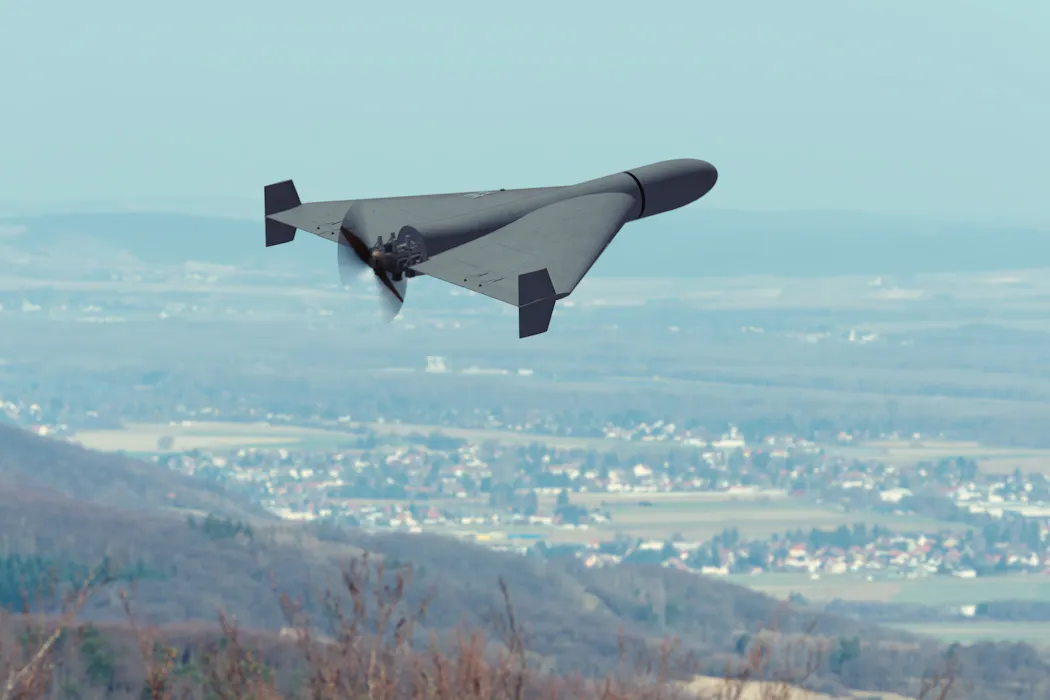
One-way military drones already have the capability to select their targets.Anelo/Shutterstock
Government experts are meeting in Geneva, Switzerland, to work towards a possible negotiating mandate on autonomous weapons systems (AWS). These are military systems that can select and engage targets without human intervention.
This major international gathering follows a recent call by the UN and the International Committee of the Red Cross (ICRC) for urgent controls on these weapons, sometimes dubbed “killer robots” in descriptions by the media.
Recent events in Ukraine have further consolidated concerns that a slide towards weapons with full autonomy (and without meaningful human control) is well underway. According to the New York Times, a Russian drone attacked a petrol station in Zaporizhzhia on July 6, killing three civilians. What marked it out was the drone’s use of AI to decide where and when to strike.
The drone aircraft had been programmed to fly towards the petrol station. But on its approach, an AI system autonomously chose the precise target – probably propane tanks – based on its ability to recognise them.
On August 25, Mirjana Spoljaric, the president of the ICRC, and António Guterres, the secretary-general of the United Nations, issued their joint appeal to the international community to agree on legally binding rules regulating the development and use of AWS.
New technologies are making it cheaper and easier for nations to put together these weapons. Thus, the UN and ICRC appeal for binding rules could not be more urgent. The international community is ideally placed to start negotiations soon, building on many years of diplomatic talks.
For the past decade, governments have debated how AWS challenge existing international law and what should be done under the auspices of the convention on certain conventional weapons, a UN arms control framework. Since 2017, the group of governmental experts (GGE) on lethal autonomous weapons systems (LAWS) – which is part of the convention on certain conventional weapons – has convened typically twice a year.
The experts are meeting again this week in Geneva. The aim is to agree a governance framework and language for a rolling text that could be the foundation for negotiations. This text provides a baseline for continued discussions in November.
While this process has been rife with political disagreements, most experts agree on the need to retain some level of meaningful human control over the use of autonomous systems.
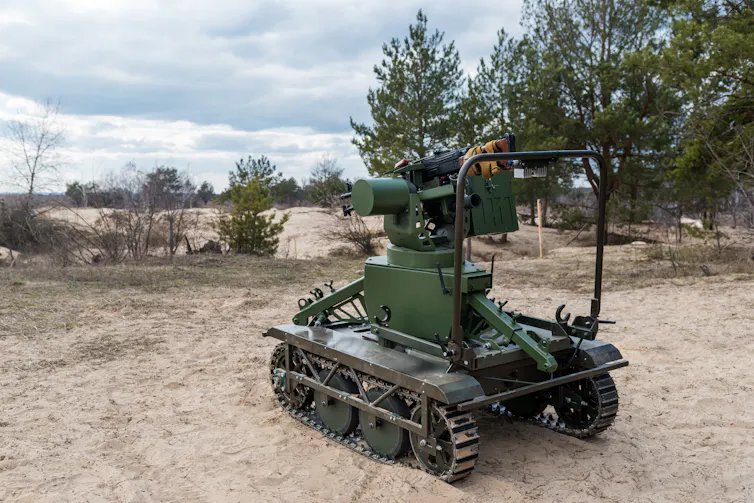
The Ukraine war has seen the increasing use of armed ground robots on the frontline.Anton_AV / Shutterstock
Moral significance
This demonstrates a shared sense by states participating in the process that human judgment is pivotal for the laws governing warfare. It also shows that the moral significance of warfare underlines the importance of human responsibility.
Human judgment is also embedded in international humanitarian law. Targeting processes require context-specific judgments about the targets themselves, potential harm to civilians from striking the target and other precautions. These tasks cannot be delegated to machines.
AI-enabled systems show how technology already shapes human perceptions of targets and risk. With autonomous weapons, the system shifts from influencing human judgement to exercising the targeting function itself.
Any AI system is only as good as the data it has been trained on, or that it works with. For armed conflicts, this data is difficult to come by and is almost always insufficient for dynamic and variable human contexts. This means many systems are likely to be technically inadequate.
The problem becomes quite visible with rules around assessing proportionality, for example, which is a context specific judgement about anticipated civilian harm versus military advantage.
Militaries may try to quantify targeting decisions in a way that creates the appearance of precision. However, the underlying legal judgment remains qualitative regardless. Technical accuracy, therefore, is not the same as lawfulness or moral consideration.
Only humans can understand the significance of respecting the inherent rights and dignity of other humans. Decisions to end human life must therefore be made qualitatively, by humans, in order to be morally and legally justifiable. Without this provision, and clear guidelines around it, we argue that governments risk running into a legal vacuum and a steep moral abyss.
AWS, especially those that prioritise speed and scale of action though AI, carry a significant risk of enabling an uncontrolled and rapid escalation. Escalation from crisis to war, or from conflict to a higher level of violence, could come about by erroneous indications of attack or by a simple sensor or computer error.
Unpredictable systems could give leaders false impressions of the capabilities of those systems. This could lead to overconfidence or encourage preemptive attacks.
Inevitable outcome?
One argument raised by academic researchers in the context of AWS is that they become necessary because they are inevitable. The risk is that more countries opt for full autonomy as components become cheaper and readily available, exacerbating an arms race.
However, an adversary’s conduct does not release a state from its own obligations under international humanitarian law. Following those rules is also part of what makes military force legitimate, including through civilian protection, precautions and accountability. We might turn the argument around and say: legally binding rules become inevitable, because they are absolutely necessary.
Governments and advocacy groups have worked hard over the past decade to put together a lucid proposal for the regulation of AWS. Some efforts are intended to prohibit those systems that target humans directly, or that are unpredictable and therefore cannot be meaningfully controlled by a human. All other AWS must be strictly regulated.
There are signs of political momentum. In November 2025, 156 states voted in favour of a UN General Assembly resolution that “draws attention to the serious challenges and concerns” that autonomous weapons raise. A legally binding instrument is possible, even if some states resist it.
The time is now. Clear, binding rules would help ensure that increasingly autonomous warfare does not make violence easier to unleash and harder to control.
Elke Schwarz is Vice-Chair for the International Committee for Robot Arms Control.
Jessica Dorsey is affiliated with Airwars as a member of the Executive Board and a member of the Advisory Board of the Atlantische Commissie.
Amy, a 27-year-old software developer, has struggled with disordered eating since she was a teenager. “But after learning to code, I got much better,” she said in a research interview. “I often code for ten or more hours without stopping.” Her psychiatrist, however, worried that Amy has replaced one compulsive behaviour with another.
“Digital addiction” is often used to describe our relationship with smartphones, social media and other digital technologies. This way of thinking suggests that people get “hooked” on digital activity because their body becomes “addicted” to dopamine. It borrows from models of substance addiction: the focus is on the physical need to keep using a substance because the body has adapted to it, despite harmful consequences. The implied solution is straightforward: abstinence, which translates into practices like digital detox.
But Amy’s story, which forms part of our ongoing research, points to a more complicated reality of our relationship with digital technology. Coding consumed much of her time and attention, yet it also helped her earn an income and build a professional identity. Like many forms of digital engagement, it was not just a distraction but a way of navigating life.
As research shows, for many people digital technologies are not only a source of entertainment but key components of their education, work and social mobility. Unlike in the case of addictive substances, opting out of digital life is easier said than done when schools, banks and public services increasingly require it.
How people relate to digital technology isn’t just about them as individuals. It’s shaped by their personal vulnerabilities, but also by digital environments intentionally built to hook us, and by the wider social conditions people live in.
So comparing smartphones to substances like alcohol, tobacco or drugs can be misleading. It overlooks the fact that digital devices have become a kind of essential infrastructure for daily life. Given how we have built our lives around them, these technologies are now very difficult to live without.
How, then, do we develop a sustainable relationship with technologies such as smartphones that are both indispensable and potentially harmful?
The sugar model
Amy’s story with disordered eating may be useful here. Recovery from an eating disorder isn’t about eliminating food altogether, but about learning to live with it.
In the same way that we cannot remove food from our lives, it is also difficult to remove digital technologies from our everyday. So the challenge becomes developing ways of living with them.
Take, for example, sugar. In many countries, foods high in sugar are subject to a wide range of public health measures. Think national food safety standards, public health interventions, school nutrition policies, limits on advertising. So it’s not about focusing on one thing only. Rather, it’s the interaction between all of these interventions that shapes patterns of consumption and impacts wellbeing.
When using a smartphone, it can be easy for hours of time to seemingly disappear.SWEETLOUISE/PIXABAY, CC BY
A similar approach is needed for digital technologies. At the level of state and industry governance, this includes regulation of platform and design – particularly when it is aimed at capturing and holding users’ attention.
Just as food labels describe ingredients, nutrition and additives, digital products could disclose what data they collect, what algorithms they run on and what psychological techniques keep their users engaged.
The UK’s decision to ban social media for under 16s while continuing to expand digital literacy and coding education reflects an important point: not all digital technologies are the same.
“Digital use” cannot be treated as a single category to be either embraced or banned. Like sugar, the question is not whether children should have it at all, but what kinds, in what quantities, and in what conditions.
Reflecting on our own digital habits remains important. But tracking screen time is like counting calories: it tells us how much, but not necessarily why. We have to ask ourselves what role digital technologies play in our lives.
Are they helping us work, connect, rest, escape, cope, feel less or more alone? Without this kind of reflection, self-tracking risks turning a complex social issue into a matter of individual self-control.
Understanding digital technologies through the lens of food rather than addiction shifts the emphasis in important ways. Both are domains where necessity, pleasure, risk and social obligation are intertwined, which is why abstinence may not be an adequate, long-term response.
Instead of treating excessive technology use as a matter of personal discipline, approaching them like some foods locates it within broader systems of design, industry governance, state policy and social practices. The challenge then is to integrate these different levels to make life with digital technologies sustainable.
New research examines how gravity can be reconciled with thermodynamics through the Gravity from Entropy theory. Galaxies, stars, planets, and life emerged as the Universe expanded and became more complex. Yet the second law of thermodynamics says that the total entropy of an isolated system should rise over time, creating a fundamental question: how can [...]
DNA carries the instructions for life, but additional molecular systems help determine how those instructions are used. New research in a sea anemone reveals an unexpected role for one of these systems. DNA is often described as the blueprint of life, but a blueprint is only useful if someone knows how to read it. Across [...]
White storks (Ciconia ciconia) are a majestic bird with a two-metre wingspan and an enormous circular nest.
The recent release of these stunning birds at multiple sites in England, with more releases planned and a public consultation under way has kicked off a debate about whether non-native birds should be part of rewilding projects.
The government advising body Natural England says it does not consider white storks to be native birds. But some experts disagree and say it is a native species and was hunted into extinction in the 1400s.
What is a native species?
In the UK, native species are those which have been present throughout the last 12,000 years. This includes migratory species which breed in or visit the UK. It also includes species which have been eradicated by humans but reintroduced.
In England, a licence is needed to introduce any species which is not ordinarily resident, or a regular visitor, to England. This is partly because these species could become invasive, a term used when a species cause substantial environmental or socioeconomic harm.
But even when species are not native, they can have value for rewilding projects.
The white stork’s biggest contribution to rewilding is likely to be their ability to inspire the public interest in nature. Storks in Europe are so popular that there are special stork villages which are managed for tourism, and people can see these iconic species up close.
White storks were reintroduced in Sussex as part of a rewilding project and are now breeding.
White storks are definitely regular visitors to England, and rare but present in the subfossil record (the last 4000 years). This status as a regular visitor means they fall somewhere between a native and non-native species – they are not considered a priority for introduction, but no license is required for their release.
Introduced non-native species can cause problems. A good example is Japanese knotweed (Reynoutria japonica), brought to the UK by the Victorians as an ornamental plant. It rapidly spreads and causes damage to the structure of buildings and essential services such as water and drainage pipes. Controlling it now costs the UK £247 million each year.
Introduced species are also a major conservation challenge, such as the damage to seabird populations by invasive cats, rats and other animals feeding on their eggs and chicks. If a rewilding project introduces a non-native species, it could become invasive and cause serious disruption to native species already in the landscape.
But evaluating the impact of adding new species to the landscape is important even when a species is considered native. The Scottish beaver trial was conducted to evaluate the impact of introducing beavers (Castor fiber) from Norway in 2008. Eighteen years later, beavers are a key part of many rewilding projects, from London to large estates in Scotland.
What can white storks add?
White storks are charismatic species which are viewed positively by most people, and this could increase engagement with nature. In Poland, tourists travel hundreds of kilometers to visit white storks, making them valuable for rewilding projects which use tourism to raise funds.
Non-native species are also introduced as “ecological analogues” which means they provide the same ecological function as extinct species. The steppe bison (Bison priscus) which roamed the UK in the Pleistocene period were mixed feeders, which means they ate a combination of grasses, leaves and the woody parts of plants. By feeding on a variety of plants and plant parts, mixed feeders like bison can encourage a patchwork of habitats in a landscape. The native steppe bison is extinct in the UK, but projects like Kent Wildlife Trust’s Wilder Blean project have introduced the related, but non-native, European bison (Bison bonasus) to provide these functions.
Adapting to warming climate
Better adaptation to future climates is another reason to include non-native species in rewilding projects. As the UK’s climate changes, species are moving from places where they are considered native to new areas which suit them better. The southern small white butterfly (Pieris mannii) has spread northwards in Europe and was first seen in the UK in 2025. This small butterfly has successfully made the journey over the ocean, but other species may require human help to move to new areas with more suitable climates.
As an island nation with many locally extinct species, the introduction of species has formed a key part of UK conservation, including rewilding projects. It does matter whether a species is native or not. Although both could benefit rewilding projects, non-native species carry greater risks to local environments and have higher regulatory requirements.
The white stork’s status as a regular visitor could allow them to sidestep the regulatory requirements for non-native species, though impact on the environment should also be considered.
But as their nests can attract birds such as swallows and martins, introducing white storks could have broader benefits to the landscape.
Sarah Papworth does not work for, consult, own shares in or receive funding from any company or organisation that would benefit from this article, and has disclosed no relevant affiliations beyond their academic appointment.
Quantum computers are coming. Or, at least, that’s what current predictions say. These machines harness the power of quantum mechanics, the set of rules governing how physics operates at atomic and sub-atomic scales.
Because of this, they operate in radically different ways to current machines. Tasks requiring trillions of years on existing supercomputers might be reduced to days on future quantum computers. They could tackle a range of challenges that are out of reach for existing technology.
These potential challenges include code-breaking. In 1994, the American computer scientist Peter Shor came up with a quantum algorithm capable of breaking the form of encryption that would later underpin routine email messaging and internet security. Shor’s advance drew interest from the US military and intelligence community, which began investing in the emerging field.
While decryption is often touted as a potential use for quantum computers, there are now protections against attempts to use them in this way. And in recent decades, other exciting applications have emerged. So is the threat to secure communications being overstated?
Currently, nobody knows for sure which quantum computing technologies will prevail, when the obstacles to their production will be overcome, or who will build one first.
But we can make educated guesses. Quantum computers built for specialised tasks will probably arrive before machines for more generalised uses. Between 10 and 20 years is a plausible guesstimate for the emergence of practical machines – amid considerable uncertainty. The US and China appear to be market leaders, so the big breakthrough could come from one of them.
It’s perhaps understandable why decryption is the poster child for quantum computing applications. The security of our digital world relies on cryptography, which provides a toolkit of mathematical techniques that underpin cyber security.
Digital secrets are protected by encryption, which converts meaningful data into an unintelligible form. If quantum computers could unscramble current encryption, they could expose highly sensitive data. Useful, perhaps, for nation states tracking terror cells or spying on strategic competitors – but bad news for everyone else.
Cryptography apocalypse
If we fail to act, this digital disaster might indeed happen. But researchers in this field have not been sitting on their hands. In the last decade, they have developed standards for new encryption techniques offering protection against quantum code-breaking. This area is known as post-quantum cryptography.
Many governments have announced timelines designed to motivate organisations to migrate from existing cryptography to the new post-quantum encryption standards. If everyone moves swiftly, by the time cryptographically-relevant quantum computers are built, our data should be sufficiently protected.
Yet stories of a pending cryptography apocalypse – sometimes referred to as “Q day” – still abound. So why, as we manoeuvre towards a future protected by post-quantum cryptography, are headlines still obsessed with decryption?
Well, everyone loves an origin story. The quantum algorithm developed in 1994 by Peter Shor caused a sensation. Cryptographers immediately commenced the hunt for new types of encryption invulnerable to Shor’s algorithm. More significantly, this theoretical breakthrough helped drive the actual development of quantum computers, since Shor’s algorithm was arguably the first convincing application for these machines.
There’s a tangibility to this quantum threat. The (often overblown) idea of a Q-Day posits that we awake one morning and our cyber security has suddenly been lost. In contrast, most constructive use cases for quantum computers seem more abstract. They might greatly assist mathematical modelling of scientific problems such as climate change, along with complex simulations of how physics works.
Other end uses sound fantastical. For example, quantum computers might help us find a cure for cancer or harness vast clean energy from nuclear fusion. In the absence of a proven killer app, decryption often prevails as a prominent, imagined end use. And the prospect of doomsday always focuses human minds.
Other uses
Quantum computing has also become firmly embedded in great power competition. China, the US and Russia, among others, are all pushing the development of quantum computers. To some in government, the consequences of losing a quantum computing race are unthinkable. What if your strategic rival can decrypt your secrets, but you can’t decrypt theirs?
The question is, are these anxieties really driving the stacks of cash being pumped into the field?
Setting aside political advantages, as well as criminal gains, the real money from quantum computing is not going to be made from decryption.
A range of quantum computing companies are now promoting their technologies and there’s barely a mention of decryption. Instead, other compelling uses are being trumpeted. Quantum computers would excel at optimisation, which is all about finding the most efficient solutions to complex problems that classical computers struggle with.
This could transform parts of the finance industry that deal with large-scale, complex transactions, and intricate investment strategies. It could also make supply chain logistics easier to manage. Quantum computers could supercharge drug discovery and lead to the development of new industrial materials.
Most of these remain unrealised visions, but the prospect of breakthroughs and enrichment fuels investment.
Quantum computing could be a lucrative gamechanger in the field of drug discovery.Andrey_Popov
So, there’s a genuine geopolitical power struggle in play, but it’s no longer solely or even primarily about decrypting secrets. Quantum competition between great powers concerns first-mover advantage across a broad base of technological domains. Ultimately, it’s about who’s going to make money.
Early progress seems most likely in industrial materials and optimisation. Later opportunities may involve advanced mathematical modelling and predictive simulations.
If quantum computers surpass the sceptics’ doubts to become capable of breaking current encryption, this will probably be a much later development. And if everyone’s done their post-quantum cryptography migration, it will hopefully be largely irrelevant.
As an expert on personality disorders, people often ask me about psychopathy. It seems everybody has had an ex, a boss, a neighbour or a relative who they suspect has traits of it. People are curious about how to recognise psychopathy, and whether it can explain certain harmful behaviour. It’s easy to see why. Psychopathic people are everywhere – from books and movies to newspaper articles and academic papers.
But while such questions are usually asked with confidence, the answers are far less straightforward. In fact, a growing number of academic papers have failed to find evidence that psychopathy exists at all. Could the disorder be something we’ve just invented because it’s convenient, doing away with old concepts of good and evil? Some experts believe so. But I am not so sure.
Psychopathy is normally identified by a few specific traits. These include a lack of empathy and remorse, callousness, impulsiveness, shallow emotions, arrogance and manipulation.
We’ve all come across people who have a combination of these traits. Perhaps they are emotionally detached, cruel, untruthful or even violent. There is no denying that such characteristics exist. What is difficult to prove is that people with psychopathy actually have those traits. Why? I believe it’s down to a mismatch between what we expect psychopathy to look like and how personality actually unfolds in the real world. And this gap is where much of the confusion begins.
The empathy paradox
A recent systematic review of empathy research, which included 66 studies and 5,711 people assessed with a common tool called the Hare Psychopathy Checklist (PCL), found that 89% of all tests failed to show that those with psychopathic traits were less empathetic than others. If psychopathy is defined by a lack of empathy, why is it so difficult to demonstrate? At first glance, this seems like a serious challenge to the concept itself.
The Insights section is committed to high-quality longform journalism. Our editors work with academics from many different backgrounds who are tackling a wide range of societal and scientific challenges.
A similar lack of clear evidence has been found for other traits often linked to psychopathy. Research examining shallow emotions, in particular a lack of fear, using measures such as skin conductance (which can estimate sweating), startle reflexes and autonomic arousal (increased heart rate) has often produced mixed findings. Claims that people with psychopathy have extreme impairments in moral reasoning have likewise been challenged.
In fact, recent reviews have questioned whether any single deficit in a specific trait can be consistently linked to psychopathy. So what’s going on?
As we shall see, the issue may not be that empathy, immoral reasoning or a lack of fear is absent in those with psychopathy, but that these traits are being measured in overly narrow ways.
A zombie idea?
Some researchers have taken these inconsistencies a step further. In a recent essay in Aeon, one of the authors behind this body of work argues that psychopathy may be what researchers call a “zombie idea”. This refers to a concept that continues to be widely accepted despite weak or inconsistent evidence, like the old idea that the Earth was at the centre of the universe.
The idea is that psychopathy persists because it is intuitively appealing. Like outdated scientific beliefs that lingered long after being challenged, it offers a compelling explanation for behaviour that is otherwise difficult to understand.
It’s an interesting thought. Psychopathy is culturally familiar and has long been associated with extreme and disturbing behaviour. This makes it an attractive concept for explaining antisocial acts – it offers a seemingly objective framework for behaviour that can feel deeply unsettling. It provides a sense of certainty in situations that are complex and uncomfortable.
Take the rapist and serial killer Ted Bundy. Even when he faced justice for his heinous crimes, Bundy didn’t show remorse – always sporting a movie star smile. This is impossible for most people to comprehend, and Bundy has been branded as psychopathic countless times. This has in turn helped to shape public and scientific ideas about what the label means.
But this is precisely where the problem lies. Human behaviour is rarely so clear-cut. Bundy himself had a range of different problems that may have contributed, including obsession and substance abuse issues. The appeal of psychopathy as a concept may come from its simplicity – the idea that there is a distinct type of person who lacks empathy and poses a clear risk. The reality is likely to be far more nuanced. And the “zombie idea” argument forces us to confront the possibility that the concept has endured because it is useful rather than well-defined – academically, forensically and culturally.
How psychopathy is measured
To understand why the evidence is so mixed, let’s look at how psychopathy is actually assessed. In psychiatric and forensic settings, it is most commonly measured using structured tools such as the Psychopathy Checklist-Revised (PCL-R). This approach combines interview data with information about a person’s behaviour and life history.
This means that clinicians consider traits such as superficial charm, grandiosity, pathological lying and lack of remorse alongside behavioural patterns such as repeated rule-breaking, unstable relationships, poor work history, aggression, early conduct problems and criminal records.
This has proven useful in prisons and psychiatric units. Recent evidence, drawing on many studies, suggests the PCL-R can indeed help identify future risky behaviour in such settings, particularly in relation to re-offending and institutional misconduct. This implies that structured assessments may capture something clinically relevant in high-risk populations.
Another issue is that psychopathy is not included as a formal diagnosis in the Diagnostic and Statistical Manual of Mental Disorders (DSM). Instead, it overlaps with antisocial personality disorder, which focuses more on patterns of behaviour such as rule-breaking, impulsivity and aggression.
This creates an important tension. Psychopathy is often used to describe underlying personality traits, while antisocial personality disorder is defined by observable behaviours. In practice, these do not always align. Someone may engage in harmful behaviour without displaying the emotional features associated with psychopathy, while others may show emotional detachment without criminality.
This ambiguity is not just a technical issue. It shapes how the construct is used in practice. In forensic settings, psychopathy is often treated as a meaningful indicator of risk. But if the boundaries of the construct are unclear, then its application becomes more difficult to justify.
The real problem: measurement
A large part of the difficulty may therefore lie in how we measure psychopathy – and the traits we believe underlie it.
Importantly, many of the studies included in the recent psychopathy and empathy review used the PCL-R in forensic settings, meaning psychopathy was often assessed through structured clinical interviews alongside criminal histories and file reviews. In other words, the psychopathy assessments themselves were frequently extensive and clinically informed.
Yet despite this, the evidence linking psychopathy to empathy deficits remained inconsistent. This suggests the problem may lie less in identifying psychopathic traits themselves and more in how empathy is tested.
Many studies rely on narrow laboratory tasks or self-report questionnaires designed to capture specific components of empathy, such as recognising facial expressions, in controlled settings. While these methods offer experimental control, they may fail to reflect how empathy operates in real-world relationships, conflicts and situations involving personal gain.
The recent review on psychopathy and empathy, for example, drew on a wide range of standard empathy measures, including self-report questionnaires and laboratory tasks such as recognising emotions in faces or voices, interpreting photographs of eyes, or responding to hypothetical scenarios. These are established tools, but they often assess specific components of empathy rather than how empathy operates in real-world relationships, conflicts or situations involving personal gain.
Empathy is not a single ability. It involves recognising emotions, understanding perspectives and responding appropriately. Someone may be able to recognise distress without feeling concern, or understand another person’s perspective without acting on it. These distinctions are rarely captured in simple tests. Different studies may be measuring different aspects of empathy, leading to apparently contradictory results.
For example, how someone responds to distress may depend on who the other person is, what the relationship is and what is at stake. These are not variables that can easily be reproduced in a laboratory setting. A person with psychopathy may in fact have some level of basic empathy, as measured on these tests, but be able to completely switch it off when it’s in their interest. As a result, the findings may tell us more about how people perform in artificial laboratory conditions than how they behave in everyday life.
In this sense, researchers may be trying to capture a complex pattern of traits using tools that are too narrow to detect it reliably.
In other academic studies, the measurement of psychopathy in itself could be a problem. When psychopathic traits are measured in the general population, such as students or people taking tests online, they often rely on self-report questionnaires rather than the full PCL-R – asking people about to assess their own thoughts, feelings and behaviour. Such studies were indeed included in the review about moral reasoning and psychopathic traits.
But psychopathy is, after all, famously linked to lying and manipulation, pointing to a deeper paradox. Researchers are relying on self-report measures to assess traits that, by definition, involve deception. If someone is motivated to present themselves in a certain way, or does not recognise their own behaviour as a problem, then their responses may not reflect their underlying traits.
Different kinds of psychopathy?
Another issue is how psychopathy has traditionally been framed in clinical practice. It is often treated as a distinct category – something a person either is or is not. But research on personality more broadly suggests that traits exist on a spectrum. Characteristics such as empathy, impulsivity and emotional regulation vary across individuals rather than being confined to a specific group.
If psychopathic traits are distributed along a continuum, then it is perhaps unsurprising that studies struggle to find clear-cut differences between groups. What looks like inconsistency in the evidence may instead reflect the fact that we are trying to draw firm boundaries around something that is inherently gradual and variable.
This shift is already reshaping how personality disorders are understood more broadly, moving away from rigid categories.
Even within traditional models of psychopathy, researchers have long recognised that psychopathic traits can vary. The PCL-R, for example, separates Factor 1 traits such as superficial charm, grandiosity, manipulation and lack of remorse from Factor 2 traits such as impulsivity, aggression, irresponsibility and chronic rule-breaking.
These two dimensions often relate to different outcomes and may appear in different combinations. For example, there may be more Factor 1 personality traits without severe antisocial behaviour in the general population, while there are more elevated Factor 2 traits in prisons. This means that studies focusing on different samples may appear inconsistent – measuring different parts of the same broader construct.
A useful comparison can be found in research on narcissism. Narcissism was once treated as a single construct, typically associated with grandiosity and entitlement. However, it is now widely understood to include distinct forms, such as grandiose and vulnerable narcissism.
Grandiose narcissism is characterised by confidence, dominance and a sense of superiority. But, as I and other researchers have shown, vulnerable narcissism, by contrast, is associated with insecurity, hypersensitivity and emotional reactivity. Both fall under the same broader construct, but they present very differently in everyday life.
This distinction matters because it shows how a concept can appear inconsistent until its underlying variation is recognised. Psychopathy may be in a similar position. What appears to be conflicting evidence in the literature may reflect the fact that different studies are capturing different aspects of a broader construct, often using different measures of psychopathy to do so.
Gender differences
Another limitation is that much of the initial research on psychopathy has been conducted in male, forensic samples – often focusing on people in prison. These have then been used to develop general tests of psychopathy that may not be relevant to a general population of men and women who are not criminals.
Traits associated with psychopathy may present differently outside these contexts. In women, for example, these traits may be expressed in more relational ways – through patterns of manipulation, emotional detachment and aggression that is less overt.
Some studies have suggested that women who commit violent crimes tend to score relatively higher on interpersonal and affective traits (closer to Factor 1) than on the overtly antisocial behaviours (captured by Factor 2), compared with male violent offenders. This may help explain why female presentations can be overlooked when assessment tools are heavily skewed towards male behaviour.
A similar pattern has been observed in narcissism research. Early models focused heavily on externally visible traits, such as overt grandiosity, entitlement and assertiveness, which are more commonly associated with men. Only more recently has vulnerable narcissism – defined by low self-esteem, hypersensitivity, and feelings of shame – been recognised as more typical of female expressions of narcissism.
If our understanding of psychopathy is based on a narrow subset of individuals, then it’s likely to miss important variations in how these traits are expressed.
Why this matters
Taken together, these issues help explain why psychopathy can feel both familiar and elusive. The traits often associated with it – emotional detachment, reduced empathy, impulsivity – do exist and appear in real interactions. But they rarely present in the clear, consistent way that diagnostic labels suggest.
Instead, they emerge unevenly, shaped by context, relationships and other aspects of personality. This gap between real life and formal measurement has real-world consequences. In prisons, it can influence decisions about risk, sentencing and rehabilitation. And in the workplace, it may mean that employers miss psychopathic traits in the people they promote – they may appear charming and reliable to those who are senior to them – leading to chaos and suffering among staff.
Rather than asking whether psychopathy exists, a more useful question may be why it has been so difficult to define and measure in a consistent way.
The evidence does seem to suggest that it may be too narrowly framed and too simply measured. A more effective approach may involve treating these traits as existing along a continuum, recognising their variability across people and contexts and combining multiple methods of assessment rather than relying on any single tool. For example, this might include integrating clinical judgement with patterns of behaviour over long periods of time to build a more complete picture of how these traits manifest.
Seen in this light, psychopathy may not be a “zombie idea” after all. Perhaps it is just a concept that we have yet to fully understand. The challenge is not to abandon it, but to refine how we study it – and how we interpret what we find.
To hear about new Insights articles, join the hundreds of thousands of people who value The Conversation’s evidence-based news. Subscribe to our newsletter.
Ava Green does not work for, consult, own shares in or receive funding from any company or organisation that would benefit from this article, and has disclosed no relevant affiliations beyond their academic appointment.
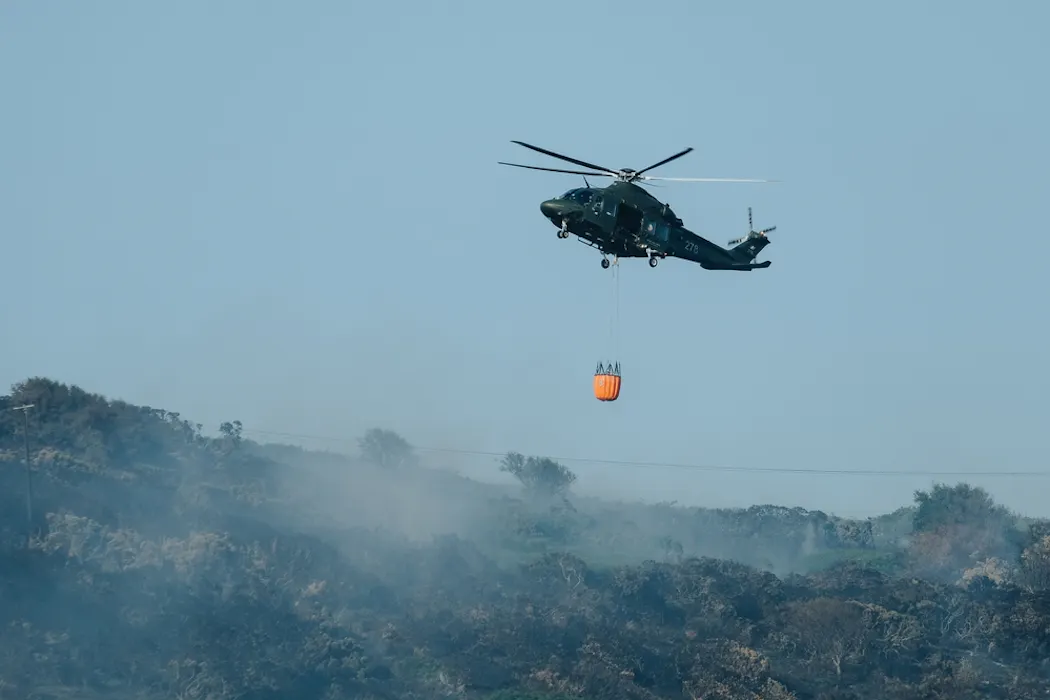
An Irish Air Corps helicopter extinguishing a wildfire in Howth, Dublin, in 2023.Thomas Halpin/Shutterstock
The most destructive wildfire season on record in Europe was in 2025, with more than one million hectares burned and tens of thousands of people displaced by fires across the continent.
For people in Ireland and Britain, the type of destructive wildfires that ravage southern Europe each summer can seem like a distant problem. But these fires are not confined to the dry Mediterranean landscapes of Spain, Portugal and Greece. In recent years, they have started to extend into regions more commonly associated with rain-soaked hills and bogs.
Similar warnings were issued nationally in Ireland over the Easter bank holiday weekend, when the public was urged to avoid lighting fires or bringing barbecues into the countryside. The threat of wildfires is only expected to ramp up this summer as temperatures rise further.
These are important messages. But focusing only on how fires start risks missing a slower and less visible transformation already unfolding across many upland landscapes. The real wildfire story in places like Ireland and Scotland is not just about climate or how fires start. It is also about how rural upland landscapes themselves are changing.
Changing farming styles
Recent research explores how decades of agricultural policy reform under the EU’s common agricultural policy, alongside falling farming populations and declining active land management, are reshaping vegetation patterns across Ireland’s uplands.
Historically, many upland landscapes were actively managed through livestock grazing, cutting and controlled patch burning. These practices helped maintain open landscapes and reduced the build-up of highly flammable vegetation.
But that balance has shifted. Reduced grazing pressure and changing land management practices are contributing to the expansion of highly flammable vegetation such as gorse, heather and purple moor grass.
While lower grazing pressure can bring biodiversity benefits and support natural regeneration, it can also increase the amount and proliferation of flammable vegetation across the landscape, known as fuel loads and fuel continuity. In practice, this means larger and more connected stretches of vegetation that allow fires to spread more rapidly and across greater distances.
This is especially concerning in upland areas where the average age of people working on farms is rising, and active land management is declining. Rural depopulation and labour shortages mean fewer people are available to manage what is known as commonages in Ireland and common grazing in Scotland. That means less maintenance of grazing systems and a reduction in the small, controlled vegetation burns that historically decreased wildfire risk by clearing vegetation and creating firebreaks. As one upland farmer in County Kerry recently described it to me: “It’s a bomb waiting to go off.”
Increasing flammability
Climate change is intensifying these risks. Hotter, drier conditions increase the likelihood that vegetation will dry out, increasing flammability. But climate alone does not explain why some landscapes burn more severely than others.
Wildfire risk is also shaped by what is growing on the land, how landscapes are managed, and whether fuel loads are reduced or allowed to accumulate over time. Experts responding to the recent Scottish fires also highlighted the role of vegetation build-up, prolonged dry conditions and changing land management in shaping fire behaviour, warning that historically wetter regions may face increasing wildfire risks in the future.
Similar patterns have already emerged across parts of southern Europe, where rural depopulation and land abandonment have contributed to increasingly severe wildfire regimes.
Recent research from Italy has shown abandoned land, declining grazing and reduced active land management have contributed to fuel accumulation, and to the build-up of dense, continuous vegetation – conditions associated with increasingly large and severe wildfires. While the climates and landscapes of Ireland and Scotland differ from the Mediterranean, similar long-term changes are beginning to emerge here.
This creates a difficult tension for policymakers and conservationists. Reduced grazing pressure and natural regeneration can support biodiversity recovery in upland systems. Yet these same changes may also increase wildfire risk where vegetation becomes dense, continuous and unmanaged. The challenge is therefore not choosing between farming or conservation, but finding ways to support landscapes that can sustain biodiversity, rural livelihoods and wildfire resilience together.
Wildfire risk in Ireland and Scotland can no longer be understood simply as a problem of careless ignitions or extreme weather. It runs much deeper than that. It is increasingly tied to long-term changes in how upland landscapes are farmed, governed and managed.
If future policy is serious about reducing wildfire risk, it must look beyond seasonal warnings and begin addressing the deeper forces reshaping our uplands.
Will Hayes is affiliated with the Department of Geography at Royal Holloway, University of London, and the Leverhulme Centre for Wildfires, Environment and Society. Funding for this research was provided by the Leverhulme Trust.

 Login