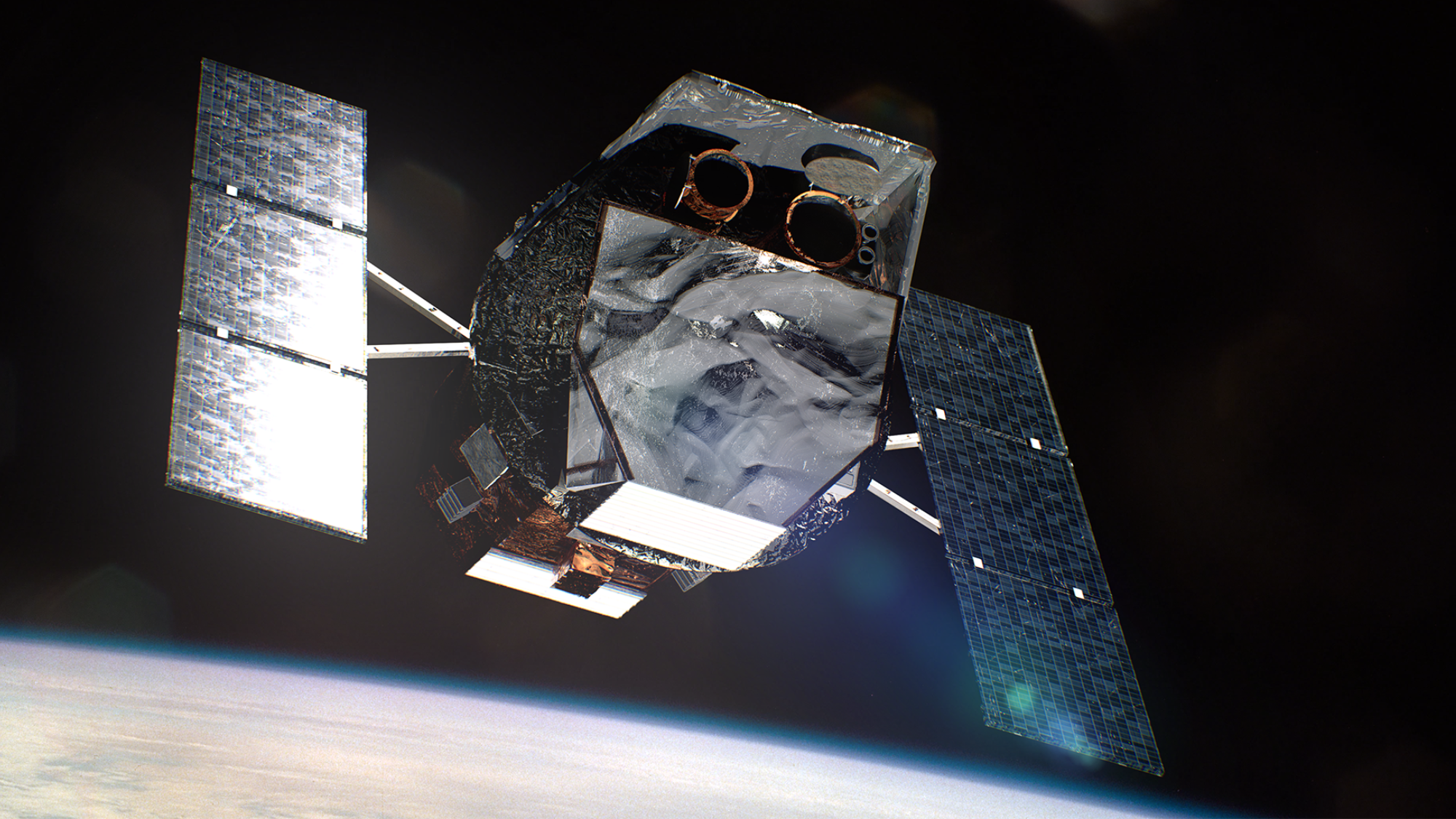
NASA’s Neil Gehrels Swift Observatory is back to business after months flying in a stripped-down mode while it waited for a rescue mission that ultimately failed. On August 26, the agency switched Swift’s Ultraviolet/Optical Telescope and X-ray Telescope back on. A third instrument, the Burst Alert Telescope (BAT), remains offline while a team works to return it to data collection in the coming weeks.
Earlier this month, Link, the Katalyst Space spacecraft that was originally set to rescue Swift conducted in-space tests and maneuvers to test its capabilities for future, and hopefully successful, missions.
“Katalyst continues to demonstrate as many of LINK’s capabilities in space as possible, to collect data to inform future spacecraft servicing technology and operations,” per a statement from NASA on September 4.
It also snapped a few photos of Swift from about 9 miles away. “We got so close, but so far,” Katalyst’s CEOGhonhee Lee told the Associated Press.
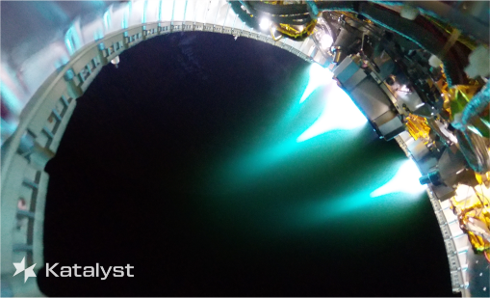
LINK fires all three of its xenon-fueled thrusters simultaneously in this image captured by the spacecraft on August 30, 2026. Image: Katalyst Space.
The shutdowns, put in place in February, were part of an effort to give Swift more time. The observatory has studied powerful explosions called gamma-ray bursts since 2004. Unlike other low-orbit satellites, Swift does not have a propulsion system that can counteract the pull of the Earth orbit. At the same time, increased solar activity has caused the Earth’s upper atmosphere to expand, increasing the atmospheric drag on Swift faster than anticipated.
That force would eventually cause the satellite to fall into the Earth’s atmosphere and burn up. So, in 2025, NASA enlisted Katalyst Space to build Link to capture Swift and lift it into higher orbit. However, those plans were scrapped on August 19 after Link went into an uncontrollable spin.
With science operations now resumed, NASA believes Swift will reach an altitude 185 miles (300 kilometers) for the next one to two months. After that threshold, “operating the telescope becomes difficult, and the spacecraft’s rate of descent quickly increases,” the agency explained in a statement.
At that point, the satellite’s 22-year observation of the cosmos will finally come to an end. It’s expected to fall back to Earth sometime between October and late December. One thing is for certain, Swift served us well.
The deep-sea is filled with weird creatures: goblin sharks (Mitsukurina owstoni), vampire squid (Vampyroteuthis infernalis), and… walking fish? For the first known time, a team of scientists in China filmed a strange, shrimp-like fish walking backward along the seafloor.
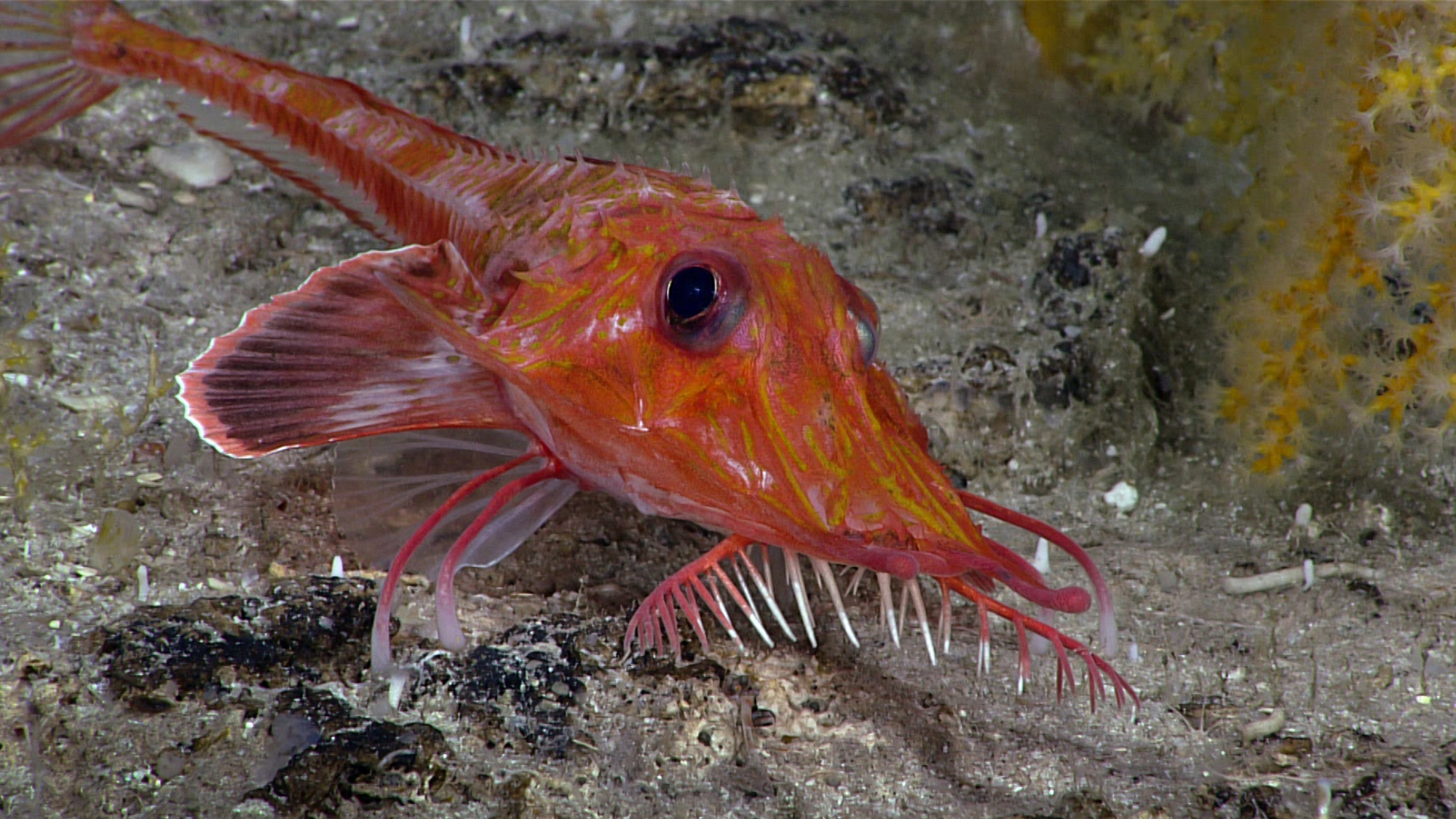
The fish, Scalicus engyceros, is a species of armored searobin, a group of fish known for weird anatomy. Their bodies are covered in bony plates, while stiff free fin rays stick out of its pectoral rays like tiny legs it can use to “walk.”
The new study, published in the journal Ocean-Land-Atmosphere Research, not only provides video evidence of the animal’s sea-floor strolls, but it also marks the first time backwards locomotion has been described in fish.
“[Our] study delivers a paradigm-shifting revelation: the deep-sea fish Scalicus engyceros, a representative of fishes characterized by highly specialized free pectoral-fin rays, is among the few fish species known to walk,” said Han Tian, a postdoctoral researcher at Sun Yat-sen University in Guangzhou, in a statement.
The video was taken from a deep-sea diving vehicle in the northern South China Sea that also helped the researchers observe the fish’s other unique traits. It has outward-extending barbels that resemble a farmer’s rake. While the barbel makes it awkward for the fish to walk, it provides “an advantage in probing, digging, or hunting for food buried in the sediment,” according to the team.
Like other deep-sea creatures, Scalicus engyceros also has large eyes. The researchers note that the fish did not seem to react to the approaching vehicle, but it did appear to react to its light beam before swimming away. This suggests its eyes have at least some sensitivity to light, perhaps pointing to the fish not having lived in this habitat for very long.
While there’s still much to learn about this mysterious creature, advancements in technology are helping scientists better understand the life way beneath our oceans’ surface.
“Modern deep-sea diving vehicles allow not only discovery of new species but also add a new in situ, functional dimension to the study of species based solely on the morphology of preserved specimens,” said Tian.
“By observing deep sea animals alive in their surrounding environment, we can gain insight into the adaptation and evolution of the species. These walking fish harbor far more novel behavioral and evolutionary adaptations than previously assumed.”
A lot of us like to start our days with a cup of coffee. Whether it’s a pour-over you make at home or a latte from your favorite coffee shop, many people need caffeine to wake up and feel alert.
If you rely on coffee as a productivity hack, you might be wondering if there’s a time of day that would optimize its effects on the brain. It turns out the answer isn’t that straightforward. How the body reacts to caffeine depends on factors such as age, metabolism, and tolerance. So, here’s what the experts say about how to time that cup of joe.
What effect does coffee have on the body?
Caffeine is the central stimulant found in coffee and other foods like tea, soda, and chocolate. It helps us feel more awake by blocking adenosine, a naturally occurring chemical that builds up in the brain while we’re awake. Experiencing morning grogginess, or sleep inertia, is related to residual adenosine in the brain, though other factors like your sleep quality also play a role. As adenosine builds up throughout the day, it makes us feel increasingly tired and helps signal to the brain that it’s time for sleep.
Since caffeine has a similar chemical structure to adenosine, it fits into the same receptors in the brain. When caffeine binds to these receptors, it blocks adenosine from doing its job. As a result, the brain receives fewer of the signals that make us feel tired, helping us feel more awake, alert, and energized.
Caffeine is the central stimulant found in coffee. Video: How does caffeine keep us awake? – Hanan Qasim, TED-Ed
“But this perceived energy does come at a cost,” says Dustin Lee, an assistant professor of psychiatry and behavioral science at Johns Hopkins, in an email to Popular Science. The brain adapts to these conditions incredibly well, so over time, the brain produces more adenosine receptors.
The more receptors your brain has, the more caffeine it needs to feel alert, eventually leading to caffeine tolerance and withdrawal. “Withdrawal symptoms, which I’m sure most of us have some familiarity with, include headache, irritability, fatigue, and difficulty concentrating,” Lee explains.
If you want to quit caffeine or miss your usual cup of joe, then you’re likely to experience these symptoms very quickly. They usually start within 12 to 24 hours after stopping caffeine, peak within 48 hours and resolve within two to nine days.
When should you drink coffee?
“There’s no set answer for everyone,” says Marie-Pierre St-Onge, a professor of nutritional medicine at Columbia University Medical Center, to Popular Science. It depends on your age, metabolism, and caffeine tolerance.
“Peak caffeine absorption occurs rapidly, at about 30 to 60 minutes after ingestion,” says Lee, so a simple answer to the question would be to drink coffee about an hour before whatever activity that would benefit from caffeine’s stimulating effects. If you’re going on a run, for example, you might want to get some caffeine in before heading out, says St-Onge. That’s why its use is limited by some sports governing organizations like the National Collegiate Athletic Association.
You shouldn’t really need caffeine right when you wake up, as your body should already be alert, says St-Onge. “If you’re starting to feel a slump a few hours after waking up, that would be when to drink coffee.”
Both Lee and St-Onge stress that the answer to when you should drink coffee really depends on the individual. The ability to metabolize caffeine slows down with age, so the amount of time to clear caffeine from your bloodstream gets longer as you get older. Your circadian rhythm also changes as you get older, which means you might get tired earlier in the day.
“Compounded, [these changes] make it so that you would want to consume your caffeine earlier as you get older,” explains St-Onge.
“Caffeine dose matters just as much as the time at which you drink your cup of coffee,” adds Lee.
A cup of coffee can actually have a wide range of caffeine—the dose can depend on the ratio of coffee to water, how you brewed your cup, and even bean type. And “tolerance has a major effect on caffeine’s effects, so the morning cup of coffee might serve more to partially reverse overnight caffeine withdrawal, so that should be taken into consideration as well,” he says. Basically, that means that for regular coffee drinkers, the first cup of the day is contributing to reversing the effects of not having had any caffeine since the day before.
When should you not drink coffee?
“Not too close to bedtime,” says St-Onge. If you’re finding that you’re having trouble falling asleep, make sure that you’re not drinking coffee too late in the afternoon.
Drinking coffee on an empty stomach can also be too abrasive for some people, and may lead to side effects like increased jitters and an increased urge to go to the bathroom. (Though the idea that it can lead to stomach ulcers is a myth.) If you’re someone with a sensitive stomach, try eating something alongside your cup of coffee to be safe.
So, don’t fret too much the next time you’re thinking of when to have a cup of coffee. Just remember: not too late, and not too much. Then you might become dependent on the stuff.
In Ask Us Anything, Popular Science answers your most outlandish, mind-burning questions, from the everyday things you’ve always wondered to the bizarre things you never thought to ask. Have something you’ve always wanted to know? Ask us.

 Login