Founder’s Briefs: An occasional series where Mongabay founder Rhett Ayers Butler shares analysis, perspectives and story summaries. When researchers began cataloging dragonflies in Guainía, a remote region in eastern Colombia, the scientific record contained only about 10 species. By working with Indigenous communities, they’ve found nearly 120. “When we started, very little was known,” Yiselle Cano, biodiversity leader of the Dragones Guainía project, told contributor Manuel Fonseca for Mongabay. “I think we must be close to 120 species by now,” Cano said. “It’s a hugely diverse group, because it includes dragonflies native to the Orinoco, Amazonas, and dragonflies that are endemic to the Guiana Shield.” The diversity makes Guainía a hotspot for dragonflies and damselflies. It may also provide insights on what is happening to the region’s water. These insects depend on healthy freshwater ecosystems, and their aquatic habitats are coming under growing pressure from mining, deforestation, poorly managed waste, and rapidly expanding tourism. Cataloging the insects was only part of the work. Once the researchers had begun filling gaps in the scientific record, they held workshops to share their findings with local communities. There they encountered another gap: the language of biology meant little to people whose understanding of the landscape had been formed outside scientific taxonomies. Some participants didn’t speak Spanish at all. Community leaders invited everyone, from young children to elders who retained ancestral knowledge. As researchers displayed the dragonflies found around puddles, streams, and rivers, participants tried to identify them in their own languages. “This is…This article was originally published on Mongabay
Twenty years ago, scientist and Mongabay board member Debby Ng joined a team documenting life at Terumbu Bayan, a coral reef south of Singapore that was about to be reclaimed. There she encountered a pair of false clownfish living in an anemone. The mother was unusually aggressive, even for a species known to be feisty. She repeatedly charged Debby, a diver thousands of times her size, biting her several times. Then Debby saw what she was protecting: a brood of eggs. She could already see tiny eyes through the thin membranes. Eyes of the brood of false clown anemonefish. Photographed by Debby Ng in 2006. Soon an alarm sounded, calling Debby and the other scientists out of the water. From the dive boat, they watched the first barges tip rock and fill directly into the channel, sending a plume of sediment through the shallows where they’d been swimming minutes earlier. The team had salvaged some of the hard corals and a tiger-tail seahorse, but there was only so much they could move. The smaller animals, including shrimp and nudibranchs, had to be left behind along with topshells that sat in crevices and cowries with eggs attached to the reef. Debby still remembers that clownfish. False clown anemonefish parents. Photo by Debby Ng. I first wrote about the dive last year in Requiem for a Clownfish. It resurfaced for me recently after The Woke Salaryman adapted the account into a comic. In August, Prime Minister Lawrence Wong announced that several islands…This article was originally published on Mongabay
Founder’s Briefs: An occasional series where Mongabay founder Rhett Ayers Butler shares analysis, perspectives and story summaries. On the final day of a two-week expedition, where researchers were searching for a “lost” species along Papua New Guinea’s Sepik River, Helen Asu arrived with two small, greenish-brown fish. She had caught them while fishing for prawns with an umben, a traditional hand net, near Imbando village in East Sepik province. They were spinach pipefish (Microphis spinachioides), a species known only from the Sepik and not recorded by scientists since 1985, reports Mongabay’s Spoorthy Raman. “It was honestly an incredible moment,” said Jerrica Agebigo, a researcher at the Papua New Guinea University of Technology and the New Guinea Binatang Research Centre, who led the expedition. “When Helen showed the fish to us, I immediately realized that we had found something very special.” The spinach pipefish is a freshwater relative of seahorses and seadragons. It grows to about 15 centimeters (6 inches) and uses its elongated snout to catch small prey. Its coloring helps conceal it among water lilies and other plants along the banks of the Sepik, Papua New Guinea’s longest river. Almost everything else about it remains uncertain. The specimen used to describe the species was held at Hamburg’s natural history museum, but was destroyed during the second world war. When the fish was last assessed for the IUCN Red List in 2016, it was classified as data deficient. It later became one of the 10 most sought-after species on the…This article was originally published on Mongabay
Soon after becoming president and chief executive of the Wildlife Conservation Society, Adam Falk visited the giraffe keeper at the Bronx Zoo. What struck Falk was the source of the keeper’s commitment. If a giraffe needed help in the middle of the night, he said, the keeper would come in because of his bond with the animal. Falk recognized something familiar. Before joining WCS, he had been a theoretical physicist, a professor at Johns Hopkins University, president of Williams College, and president of the Alfred P. Sloan Foundation. Academics often pursue highly specialized work that matters deeply to them. A university leader has to support those individual efforts while helping the institution work toward shared goals. Falk found much the same challenge at WCS: leading people whose motivation is rooted in the work itself. Adam Falk with Joe Nappi, a Senior Keeper in the Mammal Department, and a Giraffe at the Bronx Zoo. Photo courtesy of WCS. He took over WCS in July 2025 without professional experience in zoology or conservation. That was unusual for the head of an institution founded in 1895, which now operates four zoos and an aquarium in New York alongside conservation programs in more than 50 countries. His first year gave him an outsider’s view of a field with its own history and assumptions. One of his early observations was that conservation work involves people as much as animals. Public campaigns often focus on wildlife, especially large and familiar species. Field programs depend on relationships…This article was originally published on Mongabay
Founder’s Briefs: An occasional series where Mongabay founder Rhett Ayers Butler shares analysis, perspectives and story summaries. For more than three decades, Willie Tucker has helped care for Sierra Leone’s western chimpanzees and watched the pressures on them change, reports contributor Patricia Sia Ngevao for Mongabay. Tucker, widely known as “Pa Willie,” helped establish Tacugama Chimpanzee Sanctuary in 1995. Since then, the sanctuary has rescued and cared for hundreds of chimpanzees, many confiscated from the illegal pet trade. It now houses more than 120 critically endangered western chimpanzees (Pan troglodytes verus), indicating that trafficking remains a serious problem. Tacugama’s work also shows why wildlife protection cannot be separated from local livelihoods. The sanctuary supports nearby communities through livestock, seed, and other livelihood programs intended to reduce dependence on hunting and forest resources. Families with more dependable sources of food and income may have less need to exploit wildlife habitat. Such programs can also give communities a direct stake in conservation and make restrictions on forest use more workable. Public recognition has helped as well. In 2019, Sierra Leone designated the western chimpanzee as its national animal. Tucker says the decision increased awareness of the species and encouraged greater respect for it. National symbols do not protect habitat by themselves, but they can support education, enforcement, and political attention. Tacugama’s experience offers several practical lessons for conservation organizations. Rescue centers can do more than rehabilitate individual animals. They can train local staff, document wildlife crime, assist law enforcement, educate visitors, and…This article was originally published on Mongabay
Founder’s Briefs: An occasional series where Mongabay founder Rhett Ayers Butler shares analysis, perspectives and story summaries. The best-known wildlife recoveries in the U.S. are often associated with the West. Yet some important gains have occurred east of the Mississippi, among cities, roads, farms, and landscapes altered over several centuries. Andrew Moore’s new book, Beasts of the East: The Fall and Rise of America’s Eastern Wilderness, examines the decline and partial return of animals that once occupied the region in abundance. Before European settlement and large-scale land conversion, eastern habitats supported bison, elk, moose, woodland caribou, cranes, black bears, passenger pigeons, and Carolina parakeets. Many disappeared as forests were cleared, wetlands drained, and wildlife hunted. Some losses were permanent. Other species have returned through reintroductions, habitat restoration, hunting restrictions, and long-term management, reports Mongabay’s Erik Hoffner. The state of Kentucky now has roughly 10,000 elk (Cervus canadensis) across a 16-county restoration zone, the largest herd east of the Mississippi. At Nachusa Grasslands in the state of Illinois, conservationists have restored tallgrass prairie on former farmland and reintroduced bison (Bison bison). Forest regrowth across parts of New England has helped moose, bears, fishers, and otters expand their ranges. These recoveries have also brought some problems. An animal may find enough food and cover while still struggling to coexist with people. Elk damage crops, browse vegetation, and get hit by vehicles. Pumas (Puma concolor) could survive in much of the East, where forests and deer are plentiful, although proposals to restore them…This article was originally published on Mongabay
For people trying to protect the Amazon, one problem has persisted for decades. A hectare of intact forest stores carbon, regulates water, supports wildlife, and provides food and materials for the people who live there. Much of that value does not appear in an economic ledger. Cattle, timber, soy, and gold do. For a farmer, a company, or a local government, clearing forest can therefore produce income more readily than keeping it standing. The Amazon bioeconomy grew from efforts to change that calculation. It includes forest products, agroforestry, biotechnology, carbon markets, and other businesses that depend on maintaining living forests. The aim is to make such activities commercially viable at a scale that matters. Mariano Cenamo spent most of his career working on that problem. He was 23 when he moved from São Paulo to Manaus in 2003. Trained as a forestry engineer at the University of São Paulo, he had first come to the Amazon for an internship. He stayed at the encouragement of Virgílio Viana, a former professor who was then Amazonas state’s environment secretary. Cenamo was struck by the gap between conservation work and the economic realities of people living in the forest. Environmental groups were doing important work, he later recalled, but local livelihoods often sat outside the conservation discussion. In 2004 he helped establish what became Idesam, the Institute for the Conservation and Sustainable Development of the Amazon. At first there was barely an institution. Cenamo later described himself as an “ING”, an indivíduo não…This article was originally published on Mongabay
Deforestation in the Brazilian Amazon has fallen to its lowest level in 13 years, according to new satellite data from Brazil’s National Institute for Space Research (INPE), continuing a decline that began after President Luiz Inácio Lula da Silva returned to office in 2023. INPE’s DETER alert system detected 2,874 square kilometers (1,110 square miles) of deforestation in the Amazon between August 1, 2025, and July 31, 2026. That was 36% below the previous 12-month period and 55.6% below the average of the preceding decade. The total is the lowest since INPE introduced the current DETER system in 2015. Including data from its predecessor system, the last time alerts were lower was the 2012/13 deforestation year, when 2,766 sq km were recorded. Accumulated deforestation for Aug 1-Jul 31 in recent years according to INPE’s DETER alert system. Image by Mongabay DETER is designed as a rapid-response system for enforcement agencies. It uses satellite imagery to identify new forest clearing quickly enough for authorities to investigate and intervene. It differs from PRODES, INPE’s higher-resolution annual monitoring system, which provides Brazil’s official deforestation rate. Preliminary PRODES figures for the year ending July 31 are expected in October or November. PRODES data for the year ending July 2025 had already put Amazon forest loss at its lowest level in 11 years. The latest DETER figures indicate that clearing fell further during the following year. If PRODES shows a decline similar to that recorded by DETER, Brazil could register its lowest official Amazon deforestation…This article was originally published on Mongabay
Founder’s Briefs: An occasional series where Mongabay founder Rhett Ayers Butler shares analysis, perspectives and story summaries. A harpy eagle needs large trees for nesting and enough surrounding forest for its young to learn to fly. The Amazon also depends on the eagle. By controlling populations of monkeys, sloths, and other animals, the predator helps limit damage to the forest canopy. Its decline can therefore indicate broader changes in the ecosystem. Governments often assess biodiversity by counting species. These figures are useful, although they don’t show whether an ecosystem is still functioning. A recent paper in Frontiers in Science argues that conservation policy should also track ecological processes, including predation, migration, pollination, and the movement of water and nutrients, reports Mongabay’s John Cannon. The authors propose using the Three Global Conditions Framework, developed in 2019, to decide what different landscapes require. It divides the planet according to the degree of human influence. Large, relatively intact areas need protection from new development. Landscapes where farming and settlements coexist with nature require management that maintains ecological functions. Heavily altered areas need restoration. The approach could help countries meet the Kunming-Montreal Global Biodiversity Framework, which calls for the loss of nature to be halted and reversed by 2030. Progress varies widely among countries. The agreement is not legally binding, and national governments determine how its targets are applied. The paper uses the term “nature positive” to describe an outcome in which ecosystems are healthier at the end of the decade than they were…This article was originally published on Mongabay
A tiger once put its head beside a passenger in Vinod Rishi’s jeep. Its face, he wrote years later, wore a “quizzical expression.” Then it moved away, leaving the men unharmed. Rishi called it “a King with a big heart.” Decades after the encounter, he could still recall the position of the tiger’s head and the look on its face. Rishi, who died in Dehradun on July 29, held some of the highest positions in Indian wildlife administration. He was the first director of Project Elephant, additional director general of forests for wildlife, and director of the Indira Gandhi National Forest Academy. During 38 years in the Indian Forest Service, he worked in the Sundarbans and Buxa tiger reserves, Jaldapara Wildlife Sanctuary, and the national parks of Singalila and Neora Valley. Born in Jalandhar, Punjab, he trained as an engineer at the Indian Institute of Technology Delhi and graduated in 1968. He joined the forest service the following year. His engineering background clearly influenced the way he approached conservation. He paid close attention to methods, evidence, and whether a plan would work in the field. His early career in West Bengal brought him into contact with tigers, rhinos, elephants, and the administrative problems surrounding each of them. At Darjeeling Zoo, he studied animal biology at close range. The experience later contributed to work on captive breeding for snow leopards and the conservation of red pandas in Singalila. In the Sundarbans, he worked on conflict between people and tigers. When newspapers…This article was originally published on Mongabay
Founder’s Briefs: An occasional series where Mongabay founder Rhett Ayers Butler shares analysis, perspectives and story summaries. Roads through Brazil’s forests divide primate habitat and sometimes force animals that normally remain in the canopy onto the ground. Researchers in the Amazon are testing rope bridges that allow them to cross above traffic. Eight bridges were installed in 2024 in Alta Floresta, in northern Mato Grosso state, reports contributor Suzana Camargo for Mongabay. Camera traps recorded 15,000 crossings by arboreal animals over the next 15 months. No roadkill was reported at the monitored sites. Six primate species used the structures, among them black-faced black spider monkeys (Ateles chamek), Schneider’s marmosets (Mico schneideri), and the critically endangered Alta Floresta titi monkey (Plecturocebus grovesi). The bridges contain several layers of rope for species with different forms of movement. Some walk across them, while others swing by their arms or use their prehensile tails. Cameras record successful crossings as well as animals that approach and retreat. The footage suggests that some species need time to become accustomed to the structures. Tufted capuchins took seven months to use one of the bridges. The work follows a project started in 2021 along the BR-174 highway, which passes through the Waimiri-Atroari Indigenous Territory. Members of the Waimiri-Atroari community helped select sites for 32 bridges. Cameras have recorded about 1,250 primate crossings there over the past five years, giving researchers information on which designs work best. Roads can also separate wildlife populations and reduce gene flow. This is…This article was originally published on Mongabay
A backcountry ski run can depend on decisions made years before the snow falls. Forest plans determine where motorized vehicles may travel. Congressional appropriations affect whether trails are maintained and land-management agencies can enforce their rules. Public meetings give skiers, snowmobilers, conservationists, and local residents a chance to argue over how mountains should be used. David Page knew this work in detail. He also knew how to describe what it felt like to move through those mountains. Page, the executive director of Winter Wildlands Alliance, died on July 7th in a multi-vehicle crash on Teton Pass in Wyoming. He was 57. Rio, the family dog who often accompanied him outdoors, died in the accident as well. He had come to conservation advocacy through writing. Raised in Denver, he studied history and Spanish literature at Dartmouth, comparative literature at Berkeley, and creative writing at the University of California, Irvine. He wrote for the New York Times, Men’s Journal, Skiing, and other publications, and became a senior correspondent for POWDER. His guide to Yosemite and the southern Sierra Nevada went through three editions. His articles were closely reported and attentive to the people in them. “The Human Factor,” an examination of the decisions that lead experienced skiers into avalanche danger, was a finalist for a National Magazine Award in 2015. It was later used in avalanche courses. Another article described the immigrant workers whose labor sustains many ski towns. He also wrote about major descents, disappearing whitebark pines, solitary skiers, remote slopes,…This article was originally published on Mongabay
Founder’s Briefs: An occasional series where Mongabay founder Rhett Ayers Butler shares analysis, perspectives and story summaries. In the Central African Republic, a country often seen mainly through the lens of instability, a different story is unfolding in its southwest. In March, Mongabay Africa program director David Akana and I spent time in and around Dzanga-Sangha National Park, speaking with researchers, conservationists, community members, and park officials. What we heard was not quite reflected in the usual narrative. Bayanga, the town at the park’s edge, has seen a modest rise in visitors. Dzanga Bai, where forest elephants gather in high densities within the park, and a population of habituated lowland gorillas, remain the main draws. According to local officials, around 800 tourists visited in 2025, a small figure by global standards, but meaningful locally. “There is growth,” said Gervais Pamongui, a deputy director of the Dzanga-Sangha Protected Areas. He attributed this to both the site itself and a degree of stability that has held in the region. Others made similar points, though often with caveats. A tour guide, Léonce Madomi, described the country’s reputation for insecurity as “both true and false,” noting that Bayanga has largely avoided the disruptions seen elsewhere. Lodges report steadier business. Guides and trackers have more consistent work. Some residents point to income that supports school fees or medical care. Yet the gains are uneven and limited in scale. Tourism employs a narrow slice of the population, and basic constraints remain, from poor roads to food…This article was originally published on Mongabay
At the former Umatilla Chemical Depot in eastern Oregon, the weapons were gone, though their presence had shaped the land. Concrete bunkers stood among sagebrush and dry grass. Pronghorn moved through the open country. Badgers, once common there, had largely disappeared. Their absence mattered to the small owls that lived close to the ground. Burrowing owls do not usually dig their own homes. They occupy tunnels made by mammals, especially badgers and prairie dogs. At Umatilla, the decline of those animals had removed much of the owls’ shelter. By the late 2000s, only a few breeding pairs remained. David H. Johnson, who died on June 15th, aged 69, decided that the shortage of burrows could be addressed. He and his collaborators buried plastic barrels and connected them to the surface with lengths of pipe. The structures were crude substitutes for badger burrows, intended to keep the population breeding while the recovery of its habitat remained a longer-term task. The owls accepted them. Within a year, the number of breeding pairs had risen. Over the following decade, the depot became home to one of the region’s most closely studied burrowing-owl populations. Researchers banded chicks, recorded calls, tested nest designs, and tracked the birds’ movements. By 2024, they were monitoring more than 100 nesting attempts and had banded nearly 500 chicks that season. Johnson had been interested in owls since childhood. At 11, while camping alone, he heard an eastern screech owl calling outside his tent. The bird landed close enough for…This article was originally published on Mongabay
The plane sprayed the soy fields beside the forest. Residents of Khikatxi said the single-engine aircraft appeared several times during each harvest and passed over Wawi Indigenous Territory. They worried about pesticides reaching their water, gardens, animals, and homes. People reported itching and diarrhea. Crops weakened, streams grew cloudy, and some game animals seemed to smell of agricultural chemicals. For years, Khuiusi Khisêtjê watched the farms advance around his people’s land. In 2018 he made a decision. The community would rebuild its village ten kilometers deeper in the forest. Leaving a village is difficult. Houses must be rebuilt, paths cleared, gardens planted, and daily routines restored. The old place contained years of work and memory. Khuiusi Khisêtjê had already lived through several such upheavals. He knew what was lost when people were forced from their land. He also knew when it had become unsafe to remain. The move took the Khisêtjê farther from the expanding agricultural frontier. It was one more decision in a life devoted to the survival of his people. Khuiusi, who died in Goiânia on July 3rd, at about 80, belonged to a generation that saw the Khisêtjê come close to extinction. He was born when his people still lived beyond the settled frontiers of central Brazil. Their villages lay among rivers, forest, and savanna in a region that would later form part of the Xingu Indigenous Territory and the adjoining Wawi Indigenous Territory in Mato Grosso. Contact with outsiders brought disease, violence, and displacement. Epidemics killed…This article was originally published on Mongabay
When Mongabay Latam began publishing in 2016, the decision felt like a logical next step. Mongabay Indonesia, launched four years earlier, had shown that a locally led, local-language newsroom could build an audience for sustained environmental reporting. Spanish offered the chance to apply that approach across a region extending from Mexico through Central America and the Andes to Chile and Argentina. The political and ecological conditions varied widely, but the need was similar: important environmental stories were going unreported, or receiving attention only after a crisis became difficult to ignore. Latin America and the Caribbean are the most biologically diverse region on Earth, holding nearly half of the world’s tropical forests and unusually large shares of its mammals, birds, fish, insects, reptiles, amphibians, and plants. The Spanish-speaking countries in Mongabay Latam’s coverage area include some of the richest parts of the Amazon rainforest, the tropical Andes, Mesoamerica, the Chocó, and the eastern Pacific. These landscapes face growing pressure from mining, agriculture, infrastructure, organized crime, and climate change. Macaws in Peru. Image by Rhett Butler for Mongabay. I was also drawn to the region’s cultural and intellectual range. Latin America has produced many responses to these pressures, including Indigenous territorial governance, community forestry, new legal approaches to nature, and locally designed conservation programs. A regional news service could document environmental damage while also examining how people were responding to it. Mongabay Latam’s staff and contributors built the newsroom that followed. Editors developed the judgment, relationships, and institutional memory needed to…This article was originally published on Mongabay
For much of the year, migratory songbirds were treated as temporary visitors to the tropics. They arrived from the north, spent the winter, and departed again. Ornithologists paid more attention to their journeys and breeding grounds than to the months they passed farther south. The birds were often described as transients, moving through tropical forests without becoming part of them. What they did there, and how firmly they occupied those places, remained poorly understood. Years of catching, banding, and watching them suggested a different account. In the forests of southern Mexico, individual birds returned to familiar patches and defended feeding territories. They were regular members of tropical bird communities for months at a time. A bird that appeared to be a passing visitor might return to the same small area year after year. Its life in the tropics was structured, local, and essential to its survival. Migration could not be explained only as an escape from northern winters. Its origins might instead lie in dispersal from warmer regions, as birds gradually extended their ranges toward seasonal food and breeding opportunities. John Hilton Rappole, who died on June 30th, aged 79, pursued this argument for much of his career. It became known as the dispersal theory of bird migration. The theory challenged a long-standing explanation for why birds crossed continents. His commitment to it reflected his approach to science. He relied on sustained field observation, questioned established assumptions, and was prepared to defend an idea over many years. He was less…This article was originally published on Mongabay
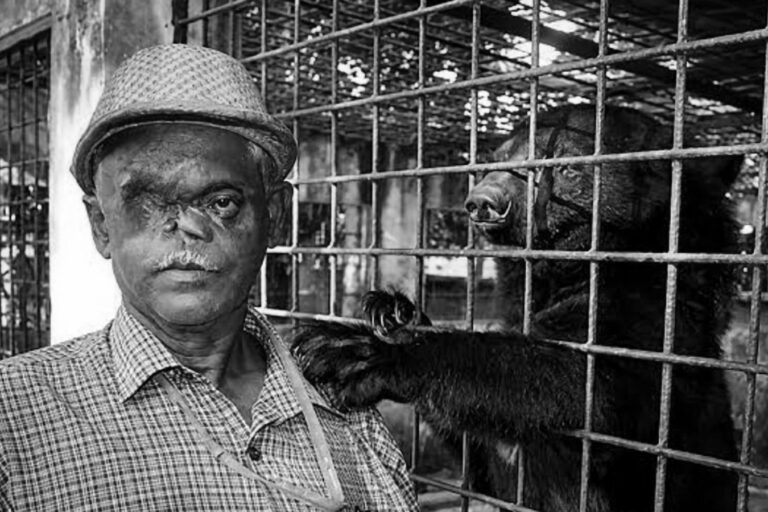
The bear came out of the forest with enough force to kill him. It mauled the hunter badly and cost him an eye. He spent three months in a hospital recovering. There, he began asking himself questions that had not troubled him much before. Why was he hunting? Why was he killing? Hunting had come to him through his family. His father and grandfather were known around Sreemangal, in northeastern Bangladesh, for killing leopards, wild boars, and other animals that threatened people or crops. As a boy, he accompanied his father into the forest. After his father died, he continued hunting. He became a gunsmith and a guide, familiar with animal tracks, forest paths, and the habits of creatures that most people encountered only by accident. Sitesh Ranjon Deb holds a pair of jungle cats in his house in Sreemangol, Bangladesh. Image via Agence France-Presse (AFP) After the bear attack, Sitesh Ranjan Deb, who died on July 14th, gave up hunting. He began capturing injured animals, removing snakes from houses, treating wildlife recovered from traffickers, and returning animals to the forest. The grounds of his home became a treatment center. It eventually developed into the Bangladesh Wildlife Service Foundation, one of the country’s best-known privately established wildlife-rescue institutions. The center remained closely tied to his household. Its patients occupied bedrooms, courtyards, cages, and improvised treatment spaces. Jungle-cat cubs, pythons, slow lorises, monkeys, birds, and other animals passed through. Those requiring constant attention stayed close to the family. Deb kept photographs…This article was originally published on Mongabay
His nephew recalled that the children were taught to chant, “Hyenas are beautiful!” as often as possible. On visits to Kruger National Park, he got them out of bed at midnight to look for bushbabies and again at five in the morning to search for big cats. Wildlife was often most active at inconvenient hours, and he expected anyone accompanying him to adjust. Michael “Gus” Mills, who died on July 13th, spent more than 40 years studying Africa’s large carnivores, especially hyenas, wild dogs, and cheetahs. He published more than 150 scientific papers, chapters, and reports, advised conservation bodies, and trained younger researchers. Much of his working life was spent in a vehicle on a sandy track, waiting beside an animal that might sleep for most of the day. Gus and Margie Mills. Sourced via the Endangered Wildlife Trust At school he had seemed an unlikely future scientist. He described himself as a “very bad student,” failed South Africa’s high-school leaving examination, and was told that science was beyond him. After passing the examination on a second attempt, he joked that he had earned an MA: “Matric Again.” Three years of psychology persuaded him that he did not want to be a psychologist. Zoology held his attention. A visit to Kruger in 1954, when he was eight, had already pointed him toward field biology. “It did something to me,” he said. From then on he wanted to work in the bush. After studying at the University of Cape Town and…This article was originally published on Mongabay

 Login