❌

Reading view

AI will not pilot future spacecraft like a human captain; its practical role is narrower and more important, choosing routes, spotting hazards and keeping missions working when Earth is minutes or hours away
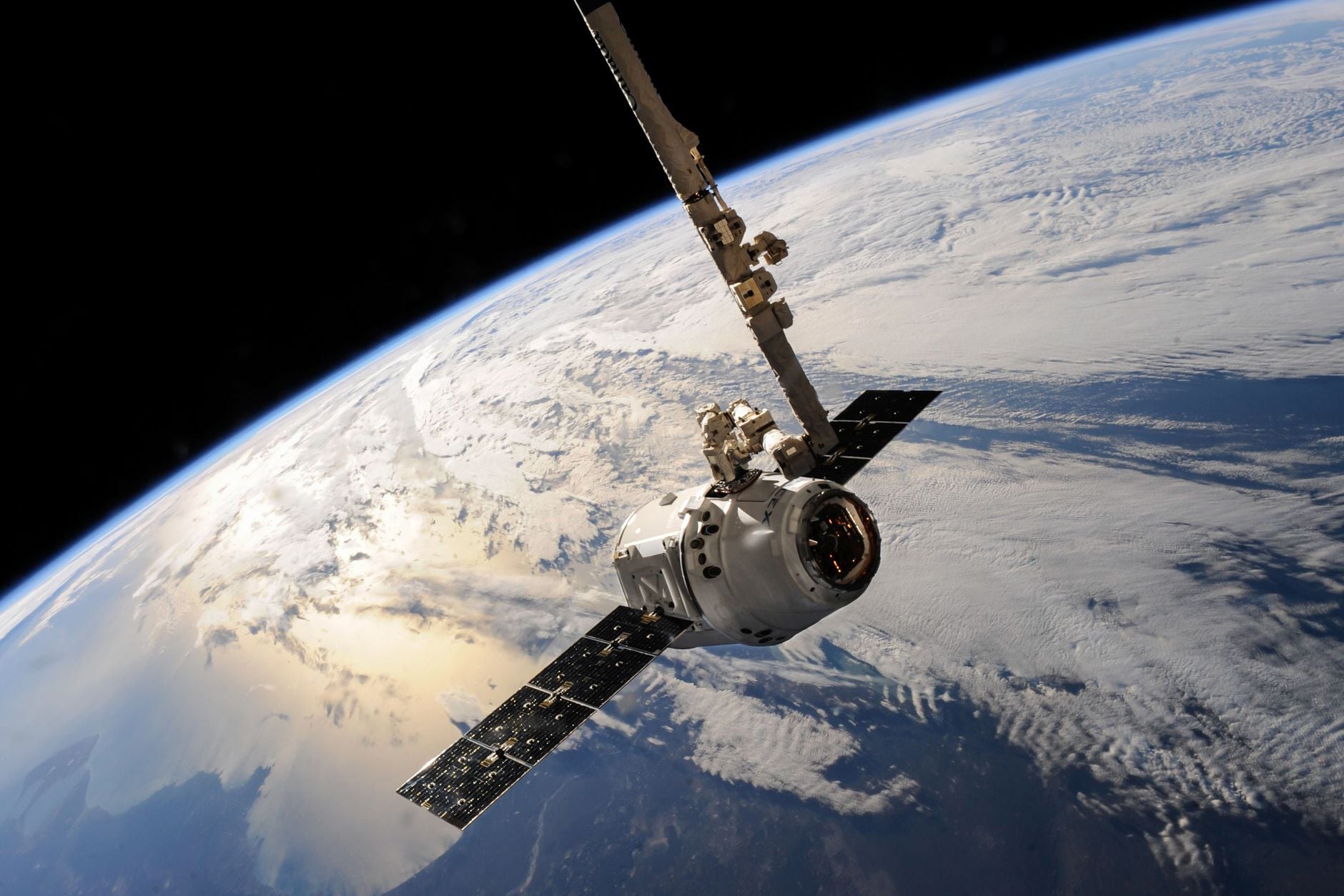
Representative image of a satellite travelling above Earth

AI is likely to become important to future space travel for a fairly unglamorous reason: Earth is too far away to make every decision in time.

A spacecraft near Mars may wait minutes for a radio command. At the outer planets, the delay stretches into hours. A vehicle approaching an asteroid, descending towards unfamiliar ground or responding to a failing component may need to act before a human team can see the problem, discuss it and send an answer back.

That does not mean future spacecraft will be handed to a talking machine captain. On the evidence available today, the practical role is narrower: recognising a local situation, choosing among approved actions and keeping a mission working within limits set by people.

Spacecraft autonomy began before the current AI boom

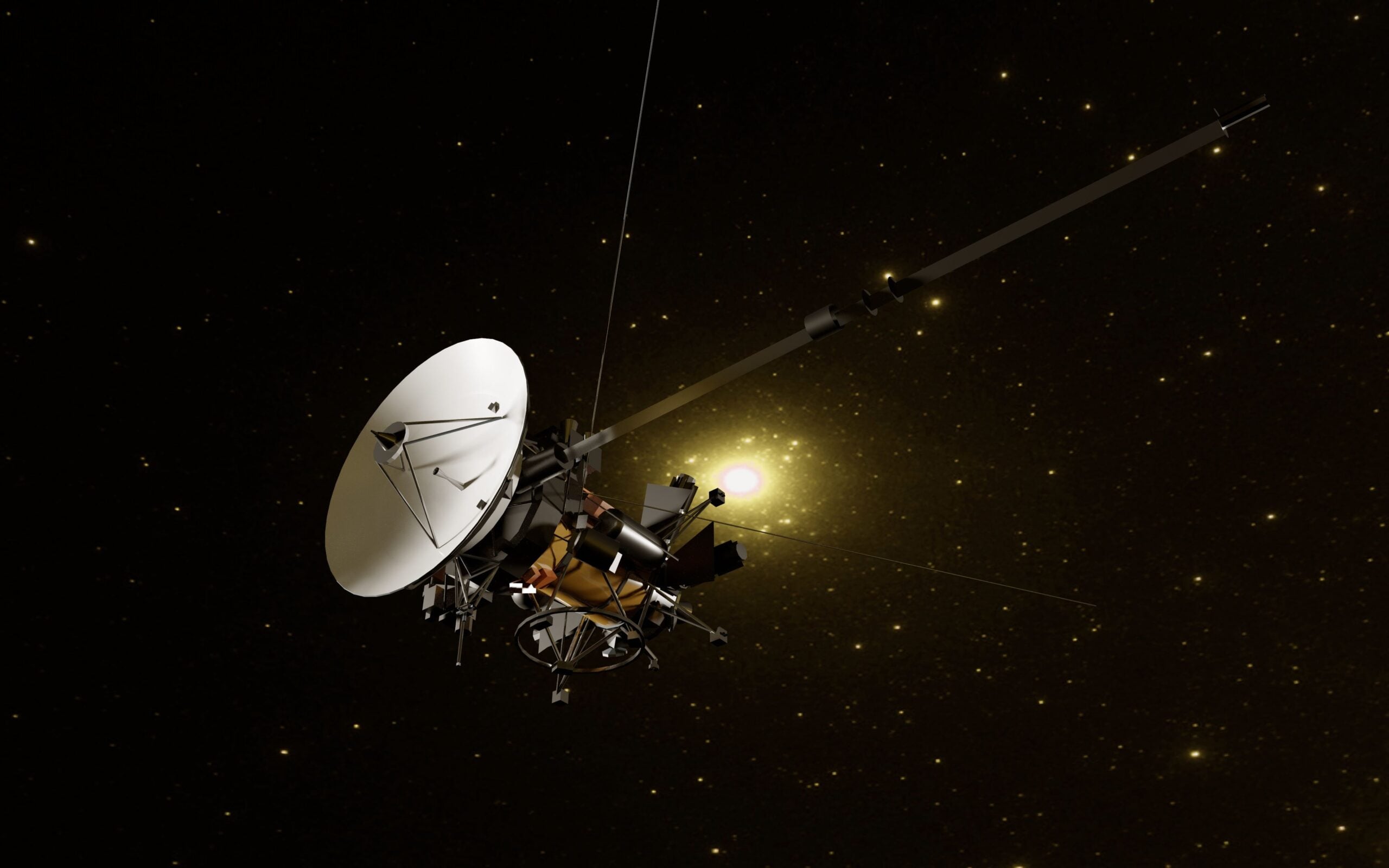
NASA tested an onboard artificial-intelligence system on Deep Space 1 in 1999. The Remote Agent experiment received high-level goals, produced plans, executed them and responded to four simulated faults inserted by the mission team. It also encountered a software bug during its first run, a useful reminder that autonomy creates new failure modes as well as new capability.

Deep Space 1 separately tested autonomous optical navigation. The spacecraft photographed asteroids against background stars, calculated its position and commanded its ion propulsion without waiting for engineers to perform each navigation calculation on Earth.

These systems were not generative AI. They were purpose-built planning, diagnosis and navigation software, designed around a constrained mission. That distinction remains useful today.

I wrote earlier about how AI already flying in space tends to solve one specific physical problem. Future capability will probably grow by joining many such bounded systems, not by installing a single general intelligence and asking it to improvise.

DART showed why decisions sometimes have to stay onboard

NASA’s DART spacecraft had to strike Dimorphos, an asteroid moonlet roughly 150 metres across, while closing at about six kilometres per second. During the final phase, human intervention would have been too slow and the target did not separate clearly from the larger asteroid until late in the approach.

DART’s SMART Nav system used images from its camera to identify the bodies, select Dimorphos, calculate corrections and command manoeuvres. The system guided DART through the last four hours without human control, ending in the intended collision on 26 September 2022.

That is autonomy with a sharply defined objective.

The spacecraft was not deciding whether the mission was wise or inventing a new scientific goal. People had designed, tested and authorised the decision structure. The machine handled the part that had to occur faster than the radio link allowed.

Newer AI can assist with planning before it flies

In December 2025, NASA’s Perseverance team completed the first two drives on another world whose waypoints had been generated by AI. A vision-language model examined orbital imagery and elevation data, identified terrain features and proposed a route.

The AI was on Earth, not steering the rover live. JPL engineers ran its commands through a digital replica of Perseverance and checked more than 500,000 telemetry variables before transmission. The rover then drove 210 metres on 8 December and 246 metres on 10 December, according to JPL’s account of the demonstration.

This suggests a near-term division of labour. AI can examine large image sets, propose waypoints and reduce routine planning work. Engineers can test those proposals against mission rules. Onboard navigation can then handle nearby rocks and other hazards as the vehicle moves.

Each layer has a different job, and each can be checked differently.

Hera will test more autonomy around an asteroid

ESA’s Hera spacecraft is due to reach the Didymos system in November 2026 to examine the aftermath of DART’s impact. ESA describes Hera as having autonomy comparable to a self-driving car, although the comparison refers to sensor fusion and local navigation rather than road-driving software transplanted into space.

Hera will combine camera images, laser-altimeter readings, inertial sensors and star-tracker data to build a working picture of the two asteroids. Its experimental modes are intended to recognise surface features and make navigation decisions near bodies whose weak gravity and irregular shapes are difficult to model perfectly from Earth.

If those tests work, the same broad approach could help later spacecraft rendezvous with small objects, inspect damaged satellites or land in places where detailed maps are incomplete. It would be evidence for particular navigation methods, not proof that a spacecraft can manage an entire mission alone.

Future travellers will need systems that know their authority

For robotic probes, autonomy can mean more observations and less time waiting. For crews, it could help monitor equipment, flag anomalies, manage inventories or compare possible responses while Earth is unavailable. Yet a system making suggestions for astronauts is not the same as one controlling life support or propulsion, where an error could be irreversible.

The harder engineering question is therefore not simply how capable the AI becomes. It is how its authority is bounded, how uncertainty is displayed, what happens when sensors disagree and how people regain control.

I recently looked at the much larger physical barrier in the possibility of sending a probe to Alpha Centauri. AI cannot provide the propulsion, shielding or energy such a mission lacks. It could, however, help a small vehicle operate for decades without expecting Earth to supervise every choice.

That is the credible future role: not replacing mission control, but carrying a carefully tested part of mission control aboard the spacecraft when distance makes immediate help impossible.

The post AI will not pilot future spacecraft like a human captain; its practical role is narrower and more important, choosing routes, spotting hazards and keeping missions working when Earth is minutes or hours away appeared first on Space Daily.
  •  

Mercury is the Solar System’s smallest planet, but its metallic core fills about 85 per cent of its radius, leaving a rocky shell so thin that cooling has crumpled the surface into cliffs hundreds of kilometres long

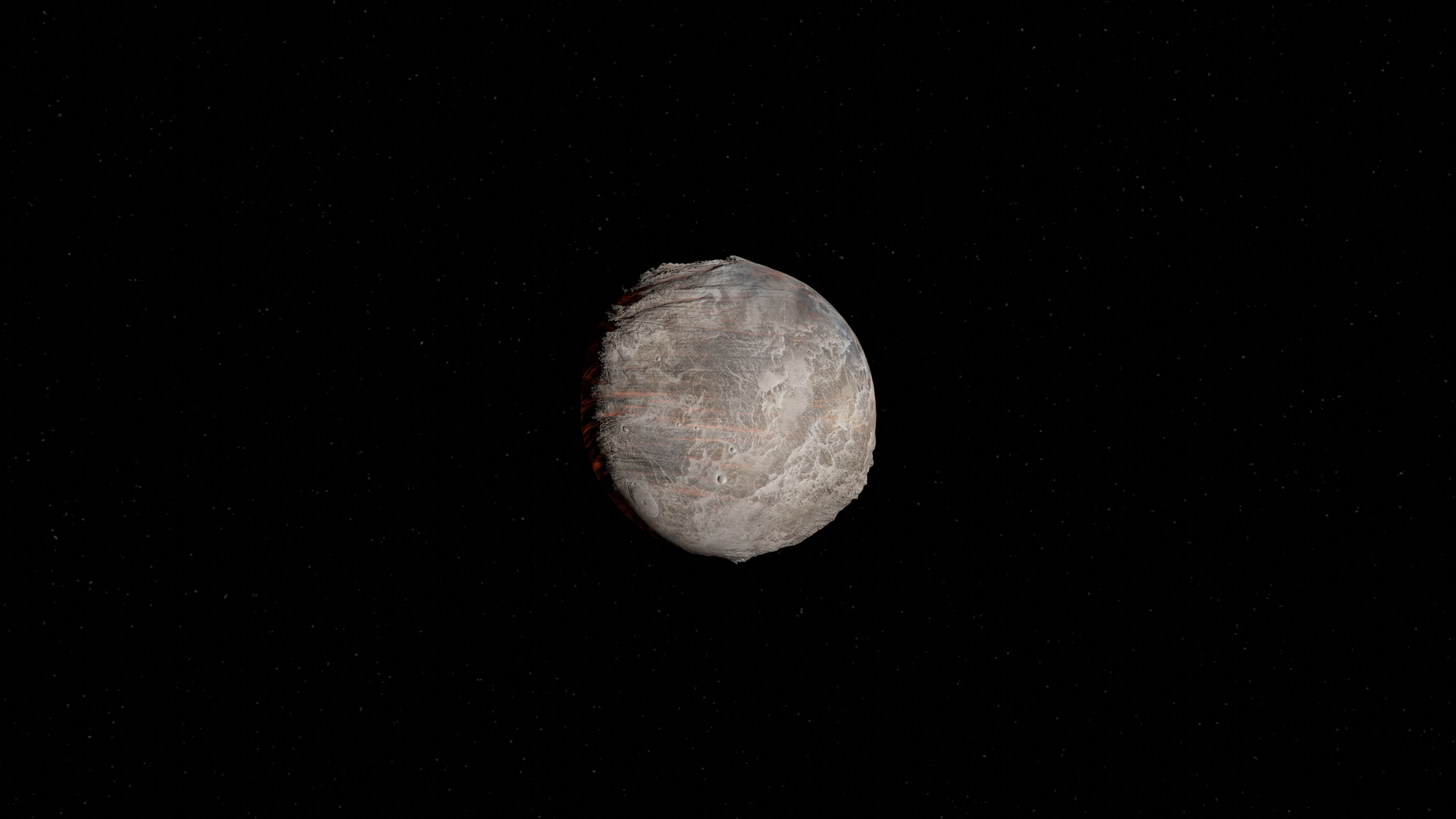
Representative view of a rocky, cratered world

Mercury is the smallest planet in the Solar System, but most of the distance from its centre to its surface passes through metal. NASA puts the radius of Mercury’s metallic core at about 2,074 kilometres, compared with a planetary radius of 2,440 kilometres. That is roughly 85 per cent of the planet’s radius.

The percentage needs reading carefully. It describes radius, not volume, and it does not mean the remaining 15 per cent is all crust. NASA estimates that Mercury’s combined rocky mantle and crust are about 400 kilometres thick. There is also evidence that part of the core remains molten or liquid, which helps explain how such a small world still generates a magnetic field.

I find the surface consequence more revealing than the ratio itself. As Mercury lost interior heat, the planet contracted. Its rigid outer shell had to fit around a slightly smaller interior, so parts of the crust broke and were pushed over neighbouring ground. The result is a global population of long, curved cliffs that record the cooling of the planet below them.

A small planet built around a large core

Mercury’s bulk density is second only to Earth’s among the planets. Yet Earth gains much of its density from the intense pressure produced by its greater mass. Mercury is genuinely rich in metal for its size.

Its internal arrangement is not simply a solid iron ball wrapped in stone. Measurements of Mercury’s gravity, rotation and magnetic field from NASA’s MESSENGER spacecraft indicate a layered interior, including a metallic core that is at least partly liquid. The exact composition and boundaries of those layers remain subjects of active modelling.

The reason Mercury ended up with so much metal is also unsettled. Proposed explanations have included the loss of rocky material during an early collision, extreme heating near the young Sun and formation from unusually metal-rich starting material. None has closed the case by itself. The core size is measured far more securely than the story of how it formed.

Cooling turned contraction into cliffs

Materials generally contract as they cool. On Mercury, that gradual loss of interior heat reduced the planet’s volume enough to deform its outer shell. Because the crust could not slide neatly into a smaller sphere, compression forced blocks of rock up and over one another along thrust faults.

Planetary geologists call many of the resulting landforms lobate scarps. “Lobate” describes their rounded, lobe-like shape, while a scarp is a steep slope or cliff produced by fault movement. These are not mainly cliffs carved by rivers, waves or glaciers. They are the surface expression of crustal shortening.

The scale can be hard to read in spacecraft photographs with no trees or buildings for comparison. NASA reports that the largest scarps extend for hundreds of kilometres and rise more than 1.5 kilometres in places. A traveller approaching one would face a landform longer than many terrestrial mountain ranges, even though Mercury’s entire diameter is only 4,880 kilometres.

MESSENGER found a larger contraction than expected

Mariner 10 revealed Mercury’s great scarps during three flybys in 1974 and 1975, but it photographed less than half the planet. MESSENGER changed the picture after becoming the first spacecraft to orbit Mercury in 2011.

Using global photographs and topographic measurements, the mission team mapped almost 6,000 ridges and scarps. A 2014 analysis concluded that Mercury’s radius had decreased by as much as seven kilometres as the interior cooled, a substantially larger contraction than researchers had inferred from the incomplete Mariner 10 coverage. NASA’s global map of those structures shows them spread across the planet rather than confined to one basin or hemisphere.

Seven kilometres is small beside Mercury’s present radius, about three-tenths of one per cent. Across a whole planet, however, that change is enough to build thousands of faults and folds. The cliffs are an accumulated record of strain, not evidence that the planet suddenly collapsed.

Some faults may be geologically young

The broad contraction began billions of years ago. The harder question is when it stopped, if it has stopped at all.

During MESSENGER’s final 18 months, the spacecraft flew lower and returned sharper images. Researchers identified small, crisp scarps that should not have survived for billions of years under constant impacts from meteoroids. A 2016 study interpreted some as younger than 50 million years, a short interval in planetary geology.

A later 2023 paper in Nature Geoscience, led by Benjamin Man, mapped small troughs called grabens on top of larger contraction structures. The researchers identified 190 examples they regarded as certain. They measured them at roughly 10 to 150 metres deep, generally less than one kilometre wide and tens of kilometres long.

The team estimated that the grabens were about 300 million years old or younger because continued impact debris would otherwise have softened or buried such shallow features. Their distribution was consistent with prolonged contraction and activity on the larger faults into geologically recent times.

This is evidence, not a direct measurement of a fault moving today. The 2023 result is one study, not settled consensus about present activity, and no seismometer has yet recorded a Mercury-quake. The careful claim is that the planet appears to have cooled and contracted for much longer than an old, small world might suggest.

BepiColombo is almost ready to take the next look

MESSENGER ended with a planned impact on Mercury in April 2015. The next orbital investigation is now approaching. According to the European Space Agency’s current mission schedule, BepiColombo’s European and Japanese orbiters are due to enter Mercury orbit together on 21 November 2026 and separate in December.

The mission carries a laser altimeter, cameras, a magnetometer, radio-science equipment and instruments designed to examine surface composition and temperature. Combining topography with gravity and magnetic measurements should improve estimates of the core’s structure and Mercury’s rocky shell. Higher-resolution surface observations may also reveal whether the smallest scarps and grabens are more widespread than MESSENGER could see.

BepiColombo will not make billions of years of cooling easy to reconstruct. It will give researchers a second global orbital dataset, collected with different instruments, for testing whether Mercury’s thin shell is still adjusting to the metal-rich world beneath it.

The cliffs make the interior visible

Mercury’s core cannot be photographed directly, and the planet’s surface gives few obvious hints of an interior that fills 85 per cent of its radius. The cliffs connect the two. Their lengths, heights, ages and fault geometry preserve part of the history of heat leaving the core and mantle.

That history is still incomplete. The measured contraction is real, the young-looking structures are real, and the possibility of present tectonic activity remains open. Mercury’s grey surface is not merely an old impact record. It is also the outer skin of a planet that has spent billions of years fitting itself around a slowly cooling core.

The post Mercury is the Solar System’s smallest planet, but its metallic core fills about 85 per cent of its radius, leaving a rocky shell so thin that cooling has crumpled the surface into cliffs hundreds of kilometres long appeared first on Space Daily.

  •  

Voyager 1 is down to two working science instruments, and the fix that just bought its twin, Voyager 2, another year of power is now being tested on a probe NASA says no longer behaves quite like its sibling

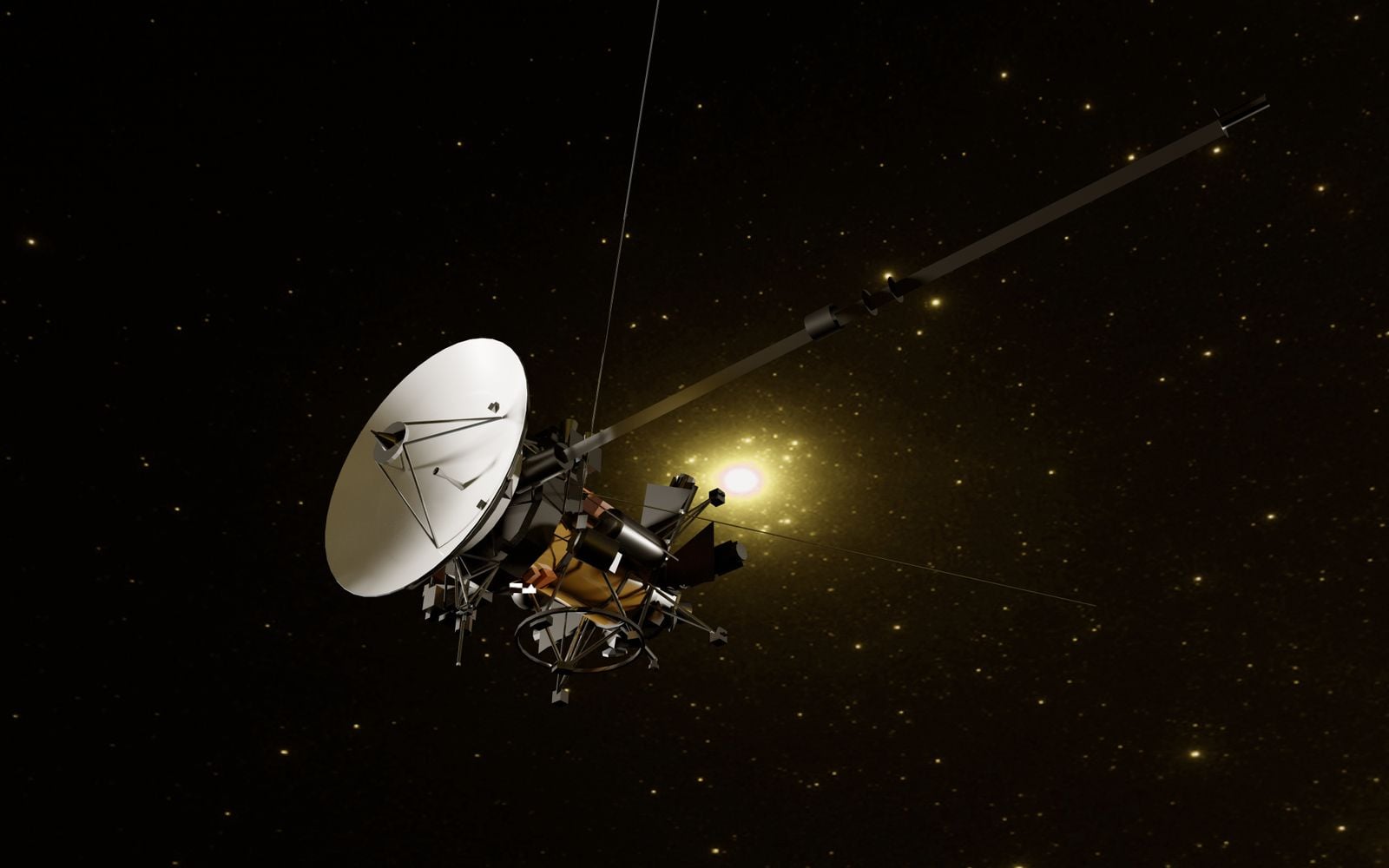
Artist concept of a Voyager spacecraft against a starfield

Voyager 1’s power test came back at the end of July, and by Kareem Badaruddin’s own account it went about as well as an engineer could hope. Badaruddin is the Voyager project manager at NASA’s Jet Propulsion Laboratory, and what he’s describing is the early stage of an attempt to do for Voyager 1 what a nearly identical procedure just did for its twin, Voyager 2: buy a dying power supply another year of science, on a spacecraft nobody can reach, touch, or send a spare part to.

I wrote a while back about the sliver of plutonium that’s kept both Voyagers running for close to half a century, and this is really that same story arriving at its next decision point. Voyager 1 needs the fix worse than Voyager 2 did. It has less power in reserve, it’s already lost more of its original instruments, and in February this year it came close to tripping its own emergency shutdown during a routine manoeuvre. Whether the fix behaves the same way on Voyager 1 as it did on Voyager 2 is, as of this week, still an open question, and NASA’s own engineers have said they’re not entirely sure of the answer.

A tighter margin than its twin ever had

Voyager 1 currently has two working science instruments left: a magnetometer and a plasma wave subsystem. Voyager 2 has three. Both spacecraft launched in 1977 with ten identical instrument sets, mostly built for flybys of Jupiter, Saturn, Uranus and Neptune that wrapped up decades ago, and both have been shedding instruments ever since, in an order the mission’s engineers settled on years in advance.

Voyager 1’s most recent loss came in April, when NASA switched off its Low-energy Charged Particles experiment, the instrument that had measured ions, electrons and cosmic rays almost continuously since launch. The shutdown wasn’t part of the planned sequence running ahead of schedule. It was prompted by an unexpected power dip during a roll manoeuvre on 27 February, one that brought Voyager 1 close enough to its automatic undervoltage fault protection that engineers chose to retire the instrument rather than risk a shutdown they hadn’t chosen themselves. A small motor inside the instrument, using half a watt, was deliberately left running, specifically so the whole thing could be switched back on if the power situation ever improved.

The same design, a different spacecraft

The fix both probes are attempting is nicknamed the Big Bang inside the mission, and the name refers to how it’s done rather than what it does. Rather than switching off one low-priority load at a time, engineers turn off several ageing devices at once, tape recorders and heaters that had been drawing power for decades, and replace them in the same moment with lower-power alternatives, all while keeping the spacecraft’s electronics above the temperature at which they’d fail for good. On Voyager 2, the swap went ahead in July and freed up close to ten watts a year, enough to keep its three remaining instruments running for at least another year.

Voyager 1 is next, and this is the part I find genuinely interesting rather than just procedurally interesting. Badaruddin has said plainly that although the two spacecraft were built to the same design, the team has observed real differences between them after forty-nine years of separate flight. That’s not a small caveat. It means a fix that worked cleanly on one twin isn’t guaranteed to work the same way on the other, even though the hardware started out identical. Voyager 1 is also farther out, more than 25 billion kilometres from Earth compared with Voyager 2’s roughly 21 billion, which means a command takes close to a day to arrive and just as long for confirmation to come back.

What the next few weeks decide

The power test Voyager 1 passed at the end of July checked whether the swap would draw more electricity than expected. The next hurdle is a thermal test, provisionally scheduled for the end of August, which checks whether the spacecraft’s temperature holds inside safe limits once the swap is made, since a heater or an electronic component that drops too cold in interstellar space doesn’t recover. If that goes well, the actual implementation on Voyager 1 follows, on the same cautious timeline that governs everything the mission does now, where a single command takes close to a day just to arrive.

There’s a genuinely hopeful detail sitting at the end of all this. If the fix frees up enough power on Voyager 1, NASA has said there’s a real chance the Low-energy Charged Particles experiment could be switched back on, not replaced, the same physical instrument, resuming measurements it’s been taking since 1977. I don’t want to overstate that. It depends on results NASA hasn’t published yet, and the agency has been careful not to promise it. But it’s the kind of small reversal that doesn’t happen often in a mission that has otherwise been a long, one-way process of turning things off.

What I’d watch next

Two dates sit ahead of each other on the calendar. The thermal test is due by the end of this month, and Voyager 1 is separately expected to cross one light-day from Earth in mid-November, a distance at which a signal travelling at the speed of light takes a full day to arrive. Neither date guarantees anything about the other. But together they’re a reasonable way to think about where this mission actually is: still capable of a genuine engineering surprise, still adding distance every second, and still, forty-nine years on, being managed one careful decision at a time by people who can’t see it, can’t touch it, and have learned to work within that.

The post Voyager 1 is down to two working science instruments, and the fix that just bought its twin, Voyager 2, another year of power is now being tested on a probe NASA says no longer behaves quite like its sibling appeared first on Space Daily.

  •  

Travelling at the speed of light is not just hard but impossible for anything that has mass, since it would take infinite energy, so the real question is how close we could get and whether the loopholes physicists talk about are more than mathematics

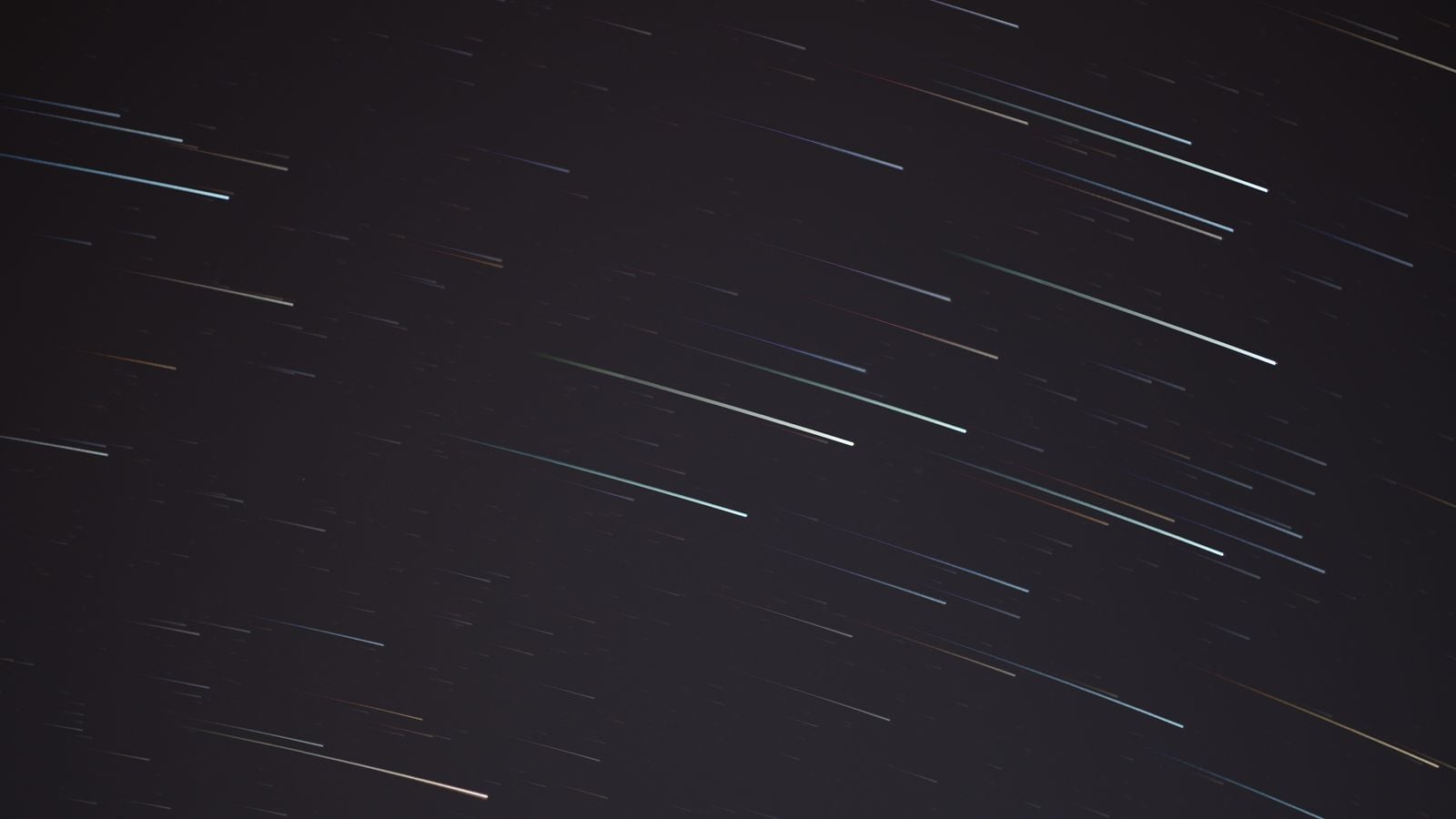
Long-exposure star trails in a night sky

Every space story worth its salt eventually reaches for lightspeed, the moment the engines catch and the stars streak. It is one of the oldest dreams in science fiction, so it is worth saying plainly what the physics actually allows, and what it flatly does not.

The blunt answer is that travelling at the speed of light is not merely difficult for anything with mass. It is impossible, and not in a way that a better engine will one day fix.

I am a writer with a long interest in this material, not a physicist, so treat this as a careful reading of settled science and clearly labelled speculation, kept apart.

Why light speed is a wall, not a target

The problem is built into relativity. The faster you push an object, the more energy each additional increment of speed demands, and the returns shrink as you approach the speed of light. To actually reach it, the energy required rises without limit. You would need an infinite amount, which is another way of saying it cannot be done.

Light itself gets to travel at light speed for one reason: photons have no mass. Massless things must move at that speed, and things with mass never can. The speed of light is not a speed limit that a clever enough spacecraft might one day break. It is closer to a feature of the shape of spacetime, the same for everyone, everywhere.

So the honest reply to “will we ever travel at the speed of light” is no, not us and not our machines, because we are made of mass.

How close could we get

The more interesting question is how near that wall you can press, and here the news is better, at least in principle.

There is no limit stopping you from approaching light speed, only from reaching it, and relativity throws in a strange gift on the way. As you travel faster, your own clock runs slow relative to the people you left behind. A crew moving close to light speed could in theory cross many light-years while ageing only a little, even as decades or centuries passed back on Earth. The distance does not shrink, but the time you personally spend crossing it can.

The gap between that principle and anything we can build is enormous. The fastest object we have ever launched, NASA’s Parker Solar Probe, travels at less than a tenth of one per cent of light speed. Even nature rarely gets close: a star whipped around the black hole at our galaxy’s centre reaches only about 3 per cent of light speed at its fastest, and that is one of the quickest large objects we know of.

The closest thing to a real plan

One concept comes nearer than the rest. Breakthrough Starshot, an initiative announced in 2016, proposes to skip heavy engines entirely and instead push a fleet of gram-scale probes with a ground-based laser, accelerating tiny light sails to around 20 per cent of the speed of light. At that pace a probe could reach the nearest star system, Alpha Centauri, in roughly twenty years rather than tens of thousands.

It is important to be clear about its status. This is a design and a research programme, not a spacecraft. The engineering problems, from a laser array of unprecedented power to a sail that will not vaporise, are unsolved. But it is the nearest thing to genuine near-light-speed travel that anyone has seriously put on paper.

The loopholes, and what they cost

If you cannot go faster than light through space, general relativity leaves a stranger door ajar: rearranging space itself.

In 1994 the physicist Miguel Alcubierre found a solution to Einstein’s equations describing a warp drive, a bubble that contracts spacetime in front of a ship and expands it behind, so the ship sits still while space does the moving. Wormholes, tunnels between distant points, are also valid solutions on paper. Neither would break the local speed limit, which is what makes them so tempting.

The catch is the same for both, and it is severe. They require what physicists call exotic matter, a form of negative energy that we have never observed and do not know how to make. Early estimates for a warp bubble needed more negative energy than the mass-energy of the entire observable universe. Later work trimmed that figure dramatically, but it remains vast, and the fundamental obstacle stands.

Recent designs have taken the opposite tack, dropping the exotic matter to stay within known physics, but the versions that need no negative energy are subluminal. They stay below light speed. As things stand, the maths permits shortcuts that the physics of building them cannot yet reach.

Where that leaves the dream

Put together, the picture is honest rather than romantic. At the speed of light, no, not for anything with mass. Close to it, physics allows what our engineering cannot presently manage, though concepts like Starshot show what trying would look like. Faster than it, only inside equations that call for a substance nobody has ever found.

None of this is likely to change at the level of the physics. What is worth watching is the near-lightspeed end, where a laser-driven sail or some successor might one day turn a fraction of the speed of light from a diagram into a departure.

The post Travelling at the speed of light is not just hard but impossible for anything that has mass, since it would take infinite energy, so the real question is how close we could get and whether the loopholes physicists talk about are more than mathematics appeared first on Space Daily.

  •  

Asteroid mining gets sold as a trillion-dollar gold rush, but the economics point the other way: hauling platinum back to Earth would crash its price, so the only prize that adds up is mining water and burning it as fuel in space

Illustration of a spacecraft in deep space

Every few years asteroid mining returns to the headlines as a trillion-dollar gold rush waiting to happen, usually attached to a single staggering number about how much some metal-rich rock is theoretically worth. It is a genuinely exciting idea. It is also one where the economics tend to run in the opposite direction to the pitch.

I am a writer with a long interest in this beat, not an engineer or an economist, so take this as a careful reading of the material rather than expert testimony. The short version is that the case for asteroid mining is real, but almost nothing like the version that gets sold.

The graveyard of the first gold rush

This has been tried before, with serious money behind it. In the 2010s two well-funded companies, Planetary Resources and Deep Space Industries, set out to mine asteroids and drew backing from high-profile investors.

Neither mined anything. As CNBC reported, both ran short of the money needed to cover enormous development costs and were absorbed by other companies by 2018 and 2019, one of them pivoting to blockchain. The lesson was not that the resources are not there. It was that the timelines are long, the capital required is vast, and investors ran out of patience long before anyone reached an asteroid.

Why the trillion-dollar numbers mislead

The valuations that drive the headlines are the least useful part of the story. The metal asteroid 16 Psyche is often quoted as being worth something like ten quintillion dollars, a figure that dwarfs the entire world economy.

Two things are wrong with reading that as a business plan. The first is that the number assumes you could deliver all that metal to Earth at no cost, when the delivery is the entire problem. The second is more fundamental: if you actually did land that much platinum or gold, you would flood the market and collapse the price of the thing you came to sell. The markets for precious metals are small by weight, and they do not have room to absorb asteroid-scale quantities without the value evaporating.

It is worth adding that NASA’s Psyche mission, now on its way to the asteroid, is not a mining venture at all. It is a science mission to study a metal-rich world, which the agency now estimates is somewhere between 30 and 60 per cent metal. Nobody is going to mine Psyche, and there is no technology that could.

The prize that actually adds up is water

Strip out the gold-rush fantasy and a more sober case remains, and it is not about bringing anything home at all.

The expensive part of anything in space is lifting mass off the Earth against its gravity. A litre of water already in orbit is therefore worth far more than a litre sitting in a reservoir here, because you have not had to pay the enormous cost of launching it. Many asteroids, the dark carbonaceous ones, are thought to hold water ice, and water can be split into hydrogen and oxygen, which is rocket fuel, or used directly for life support.

So the version of asteroid mining that pencils out is not platinum sold on Earth. It is water and simple materials mined in space and used in space, to refuel spacecraft and supply habitats without hauling everything up from the ground. An analysis in the Harvard International Review makes this point plainly: the real economic logic points to servicing activity in orbit and beyond, not to enriching commodity markets back home.

This is a much less glamorous business than a space gold rush, and it is also the only one that currently makes physical sense.

The current attempt

A new generation is trying anyway, with more modest aims. The startup AstroForge is the most visible, and its record so far is a fair snapshot of how hard this is.

Its Odin spacecraft launched in February 2025 to scout a metallic near-Earth asteroid, but the company lost contact with it not long after deployment, ending the mission early. A follow-up probe, Vestri, is intended to actually dock with a small metallic asteroid, which would be a real first for a private spacecraft. It has not happened yet.

The targets, sensibly, are near-Earth asteroids, the ones whose orbits bring them close to us and make them reachable with reasonable amounts of fuel. These are the same objects we track for planetary defence, including ones like Apophis, which will pass close to Earth in 2029. Accessibility, not raw value, is what makes an asteroid worth visiting.

None of this is investment advice, and I have no idea whether any of these companies will succeed. What I can say is that the sober question worth watching is not which rock is worth the most on paper. It is whether anyone can mine water in space and sell it to the next spacecraft, because that, and not a platinum windfall, is the business that would actually change how we operate off the Earth.

The post Asteroid mining gets sold as a trillion-dollar gold rush, but the economics point the other way: hauling platinum back to Earth would crash its price, so the only prize that adds up is mining water and burning it as fuel in space appeared first on Space Daily.

  •  

Mars has such thin air that around noon near the equator, sunlit ground beneath your boots could reach 24 degrees Celsius while the air around your head remained below freezing — allowing one standing person to span temperatures resembling spring and winter at the same time.

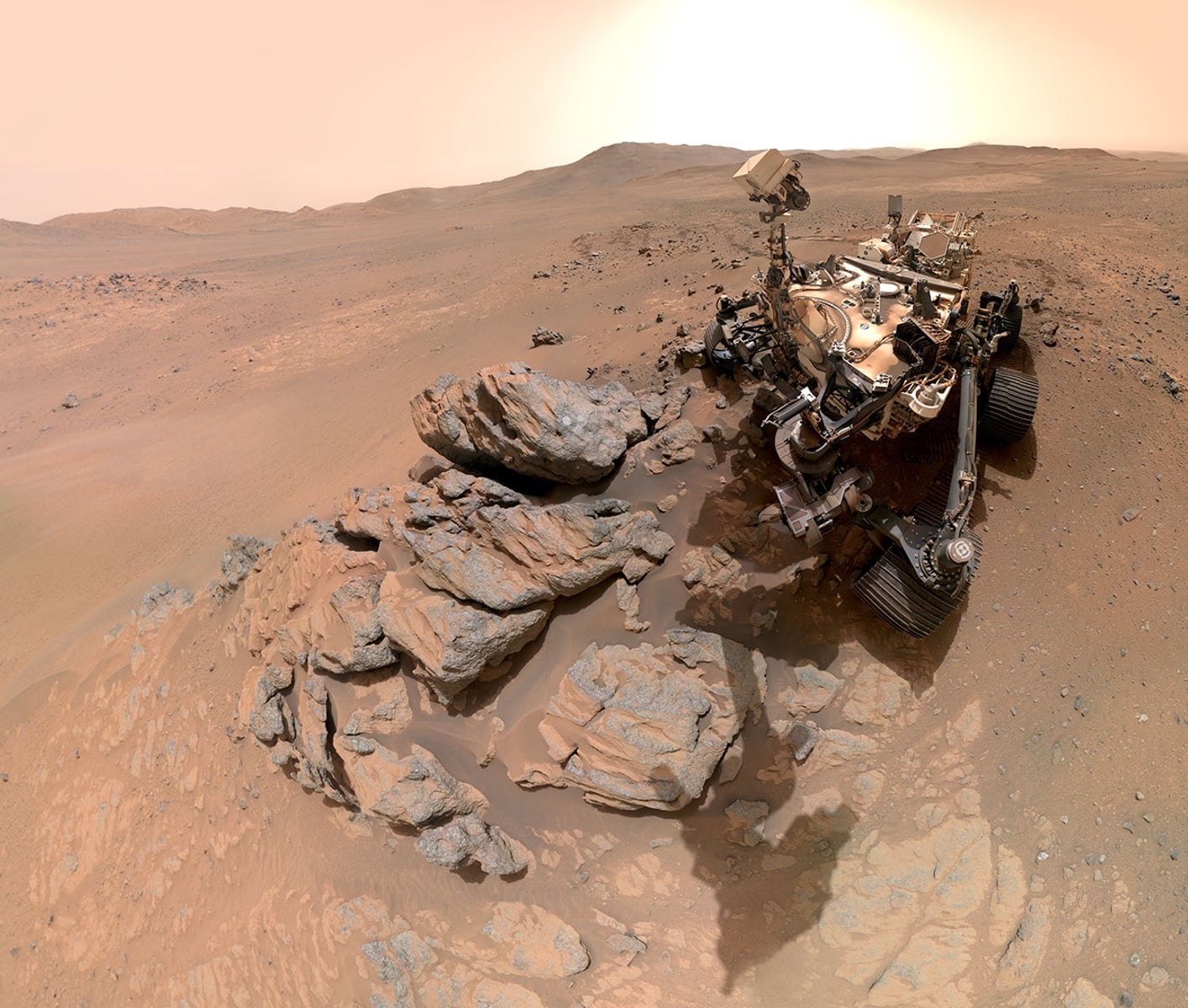
Perseverance rover and its long shadow on the sunlit surface of Mars

Imagine placing two thermometers on Mars at noon. One lies flat against dark, sunlit soil near the equator. The other hangs roughly at the height of a standing person’s head.

The lower thermometer could read 24 degrees Celsius, a mild spring day by Earth standards. The upper one could remain at or below freezing. Nothing separates them except about two metres of the thinnest lower atmosphere any person in a spacesuit is likely to encounter.

NASA uses almost exactly this comparison in its Mars facts guide: spring at your feet and winter at your head. It sounds like a piece of planetary trivia, but it captures something fundamental about Martian weather. On Earth, the air is usually effective enough at moving heat that we treat the temperature of the ground and the temperature of the atmosphere as parts of the same experience. On Mars, they can behave like neighbouring but weakly connected systems.

The 24-degree figure is a plausible local surface temperature, not a promise about every equatorial noon. Season, dust, slope, colour, elevation and the material underfoot all matter. The real point is the vertical contrast. Sunlight can briefly warm the ground above freezing while the sparse gas above it stays bitterly cold.

The first trick is that ground temperature is not air temperature

A weather report on Earth normally gives air temperature measured in shade, not the temperature of sunlit concrete or beach sand. Those surfaces may be far hotter than the reported maximum. We know the distinction in daily life, but the atmosphere mixes enough heat through its lowest layers that a standing person does not ordinarily place their shoes in one season and their face in another.

Mars pushes the same distinction to an extreme. The ground absorbs sunlight and converts it to heat. A thermal infrared instrument can measure the energy radiated by that skin of dust and rock. A separate sensor measures the gas surrounding a rover. Both values are real, but they describe different material with very different capacities to absorb, store and transport energy.

That is why the warmest number quoted for Mars is usually a surface temperature. The air is much less willing to follow it. Even at the equator, a patch of ground that has crossed zero degrees does not imply a warm afternoon atmosphere.

There is almost no air available to carry the heat

The atmosphere at the Martian surface has less than one per cent of the pressure of Earth’s atmosphere at sea level. It is mostly carbon dioxide, but the abundance of a greenhouse gas by percentage is not enough to make a strong greenhouse blanket. The total quantity of gas overhead is small.

On Earth, molecules colliding with warm ground pick up energy. Convection, turbulence and wind then move that energy upward and sideways. Water vapour, clouds and oceans store and redistribute still more heat. Mars has weather, clouds and vigorous dust storms, but its near-surface gas contains far fewer molecules through which heat can travel.

This thinness has appeared repeatedly in the Mars machines I have written about. Ingenuity had to spin unusually large rotors at extraordinary speed to fly in air around one per cent as dense as Earth’s. MOXIE needed a pump to gather enough carbon dioxide before it could make oxygen. The same scarcity that makes lift and gas collection difficult also weakens the exchange of heat between soil and atmosphere.

The result is not zero heat transfer. The warmed surface drives turbulence and convective vortices, including dust devils. It simply cannot force the lowest two metres towards one uniform temperature as efficiently as Earth’s denser air usually does.

Perseverance measured the gradient directly

This is no longer only a thought experiment. The Mars Environmental Dynamics Analyzer, or MEDA, on Perseverance measures temperatures in and around Jezero Crater. Its sensors distinguish the surface from atmospheric layers at different heights.

NASA reported typical early MEDA observations in which the surface rose from about minus 83 degrees Celsius before dawn to 5 degrees at noon, while the air remained between about minus 83 and minus 23 degrees. Those particular days did not reproduce the 24-degree example, but they showed the same separation between a rapidly heated surface and colder air.

A 2023 analysis of MEDA measurements in the Journal of Geophysical Research: Planets quantified the vertical structure. For a set of repeatedly observed sols, the daytime temperature difference was concentrated in the first 1.45 metres above the ground. Near noon, the gradient reached about 26 degrees Celsius per metre.

The precise value changes with conditions, and it should not be applied to every place and season. Yet it gives physical substance to NASA’s spring-and-winter comparison. The lowest part of the Martian atmosphere can contain an enormous temperature change across the height of one human body.

Curiosity saw the distinction too. In one early sequence at Gale Crater, ground temperatures ranged from 3 to minus 91 degrees Celsius while air temperatures ranged from minus 2 to minus 75. The ground achieved both the warmer daytime peak and the colder nighttime minimum. It responded faster in both directions.

The kind of ground beneath the boots matters

Not every Martian surface heats at the same rate. Fine, loose dust has low thermal inertia. It changes temperature quickly when sunlight arrives and quickly loses that heat after sunset. Solid rock conducts and stores more energy, so it warms and cools more slowly. Particle size, cementation and material buried beneath the surface all affect the curve.

Planetary scientists use thermal inertia to interpret those differences from orbit. A region that remains relatively warm after sunset may contain rock, bedrock or coarser material. A dusty surface may produce a sharper afternoon peak and a steeper fall into night.

Colour and orientation matter as well. Darker ground generally absorbs more sunlight. A slope facing the Sun receives energy at a more direct angle than a shaded one. Airborne dust can reduce the sunlight reaching the surface while also changing how radiation moves through the atmosphere. Elevation changes the already low pressure.

There is therefore no single Martian noon temperature. I made a related point when writing about the immense, gently rising landscape of Olympus Mons: a global description can conceal what a person would encounter at ground level. On Mars, even two nearby patches of terrain can follow different thermal schedules.

A warm sole would not make a comfortable astronaut

The image of warm boots risks making an equatorial noon sound more hospitable than it is. An unprotected person could not stand there and compare sensations. The pressure is too low for the human body, the atmosphere contains almost no oxygen, ultraviolet and ionising radiation reach the surface, and liquid water is unstable under most present conditions.

A real astronaut would be separated from both ground and air by a pressure suit, insulation, boots and a controlled thermal system. The suit would manage heat generated by the body while limiting heat gained from sunlight and lost through radiation, contact and the surrounding gas. It would not simply transmit a pleasant 24 degrees from the soil to the foot.

There is another counterintuitive detail. Mars can have fast winds, but because the gas is so thin, those winds carry less force and exchange less heat than winds of the same speed on Earth. The cold air at head height would not feel like an ordinary terrestrial winter gale. Without a suit, the low pressure would be the immediate emergency. With one, thermal engineering determines the experience.

This is why my earlier look at the difficulty of building a home on Mars could not reduce the problem to an average temperature. A habitat must survive daily cycling, cold-soaked nights, sunlit surfaces, dust, radiation and a near-vacuum while maintaining one narrow indoor climate for people and equipment.

Mars loses the afternoon almost as quickly as it gains it

The warm ground is temporary. Once the Sun drops, a dusty surface radiates energy into the cold sky and has little atmosphere above it to return that energy. The same weak coupling that allows soil to become much warmer than the air at noon permits it to plunge below the air during the night.

That daily swing has shaped the history of Mars exploration. Solar-powered rovers conserve energy through cold periods and use heaters to keep critical components within operating limits. Batteries, lubricants, cameras and electronics experience a thermal environment that expands and contracts every sol. Opportunity ultimately endured far beyond its original design, but as I wrote in the account of its fourteen-and-a-half-year journey, sunlight remained both its power source and its final vulnerability.

The spring-underfoot image lasts only because sunlight is arriving faster than the particular ground can shed it. It says nothing about the night before, the night ahead or a shaded patch a few steps away.

One body can reveal a whole climate system

There is something useful about reducing Martian climate to the height of a person. Global averages tell us that Mars is cold. Pressure figures tell us that its atmosphere is thin. A vertical temperature profile shows what those statements mean together.

Sunlight crosses the sparse atmosphere and heats the soil. The soil tries to warm the gas touching it. There are too few molecules to distribute that energy efficiently, so a steep gradient forms just above the surface. Turbulence carries some heat upward, but the afternoon never becomes uniform. Then sunset removes the source and the ground rapidly gives back what it gained.

On Earth, weather surrounds us. On Mars, the most dramatic piece of weather may fit between the soles of a pair of boots and the top of a helmet.

NASA’s comparison is memorable because it compresses an alien climate into human proportions. Spring and winter can occupy the same standing person, not because Mars has found a loophole in temperature, but because it lacks the thick, mixing atmosphere that quietly makes our own experience of temperature feel coherent.

The post Mars has such thin air that around noon near the equator, sunlit ground beneath your boots could reach 24 degrees Celsius while the air around your head remained below freezing — allowing one standing person to span temperatures resembling spring and winter at the same time. appeared first on Space Daily.

  •  

Ganymede is a moon, yet it is larger than the planet Mercury, may contain more water than exists on Earth’s surface, and even generates its own magnetic field, making it less like a conventional moon than a full-sized world that happens to orbit Jupiter.

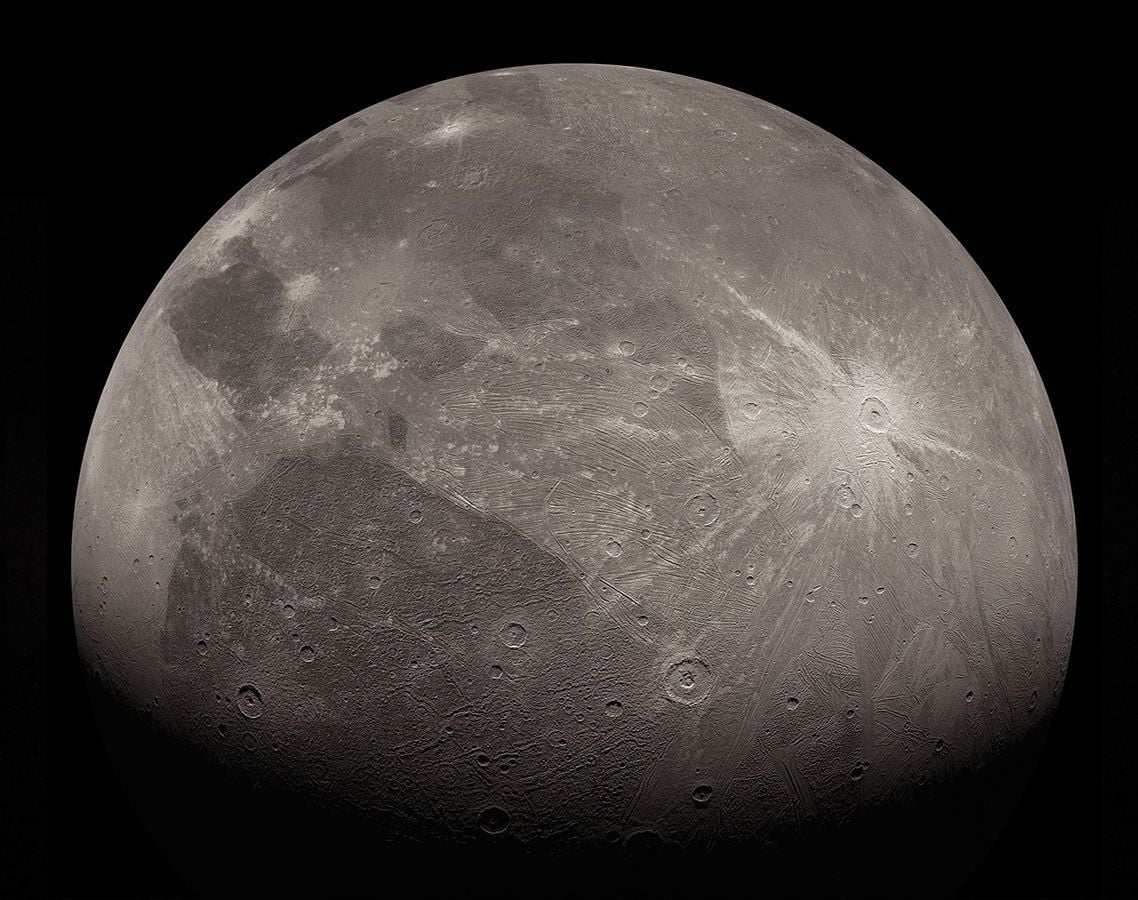
Enhanced and reconstructed Juno view of Jupiter's moon Ganymede

Calling Ganymede a moon is correct, but it does very little to prepare us for what the object actually is.

It is the largest moon in the Solar System, with a diameter of about 5,262 kilometres. It has an iron-rich core, a rocky mantle, an immense layer of water and ice, an old and geologically complicated surface, a thin atmosphere, auroras and a magnetic field generated inside the moon itself. If it travelled around the Sun rather than Jupiter, nobody encountering it for the first time would mistake it for a minor piece of debris.

That does not mean Ganymede has been misclassified. A moon is defined by what it orbits, not by how geologically accomplished it appears. But Ganymede is a useful reminder that the word describes an orbital relationship, not a level of complexity. This is a full-sized world living as one component of the Jupiter system.

Larger than Mercury does not mean heavier

The cleanest comparison begins with size. JPL lists Ganymede’s mean radius as 2,631.2 kilometres. Mercury’s mean radius is 2,439.4 kilometres. Ganymede is therefore almost 8 per cent wider than the smallest planet.

It is not, however, more massive. Ganymede has only about 45 per cent of Mercury’s mass. The difference is composition. Mercury is an unusually dense, metal-rich planet, while Ganymede is a much lighter mixture of rock and water ice. Mercury’s average density is about 5.43 grams per cubic centimetre; Ganymede’s is about 1.94.

This distinction matters because the familiar sentence, “Ganymede is bigger than Mercury,” can accidentally create the wrong mental image. The moon has a larger volume, but much less material packed inside it. Its surface gravity is only around 15 per cent of Earth’s, lower even than the Moon’s.

The comparison also exposes why size alone cannot decide whether something is a planet. Mercury independently circles the Sun. Ganymede completes an orbit around Jupiter every 7.15 days. Its status follows that architecture, even though its body is more planet-like than the word moon tends to imply.

Under the crust is a differentiated world

Small Solar System bodies are often imagined as frozen mixtures that never became warm enough to organise themselves internally. Ganymede did. NASA’s current overview describes a deep metallic core, a surrounding rock shell and an outer system of water and ice. In other words, the moon differentiated into layers, as the rocky planets did.

The surface keeps part of that history. Dark, heavily cratered terrain records very old ground. Brighter regions are crossed by long grooves and ridges, evidence that the crust was stretched, fractured and resurfaced. Ganymede is no longer as visibly active as neighbouring Io, but it is not a featureless ball that simply froze in place.

The contrast with its parent planet is almost comic. As I explored in an earlier article about why there is no solid surface on Jupiter to land on, the giant planet becomes progressively denser with depth until hydrogen behaves like an electrically conducting metal. Ganymede, despite orbiting that enormous fluid world, offers recognisable ground, internal layers and geological provinces. The moon is the place with the planetary surface; the planet is not.

The water claim is large, but easy to misunderstand

The statement that Ganymede may contain more water than Earth does not describe an open sea. No camera has looked through the crust, and no probe has sampled the liquid. The evidence comes from several indirect measurements, including how Ganymede responds to Jupiter’s changing magnetic environment.

One especially elegant test used the moon’s auroras. Jupiter’s magnetic field should make those glowing bands rock back and forth by about six degrees. In Hubble observations, they moved by only about two degrees. A conductive, salty ocean beneath the crust provided the best explanation, because electrical currents in the water generate a secondary magnetic response that damps the motion.

The 2015 model associated with those observations placed an ocean roughly 100 kilometres thick beneath about 150 kilometres of mostly ice. Those figures are estimates, not a sonar reading. Other models allow a layered arrangement in which liquid water is separated by different phases of high-pressure ice, closer to a club sandwich than one unbroken sea.

Even with that uncertainty, Ganymede’s total water inventory may exceed all the water on Earth’s surface. The careful wording matters. Earth also stores water inside its mantle, and Ganymede’s water is not necessarily all liquid at once. The comparison concerns the moon’s enormous combined water layer and the oceans, ice and surface water visible on Earth.

This is part of the larger change I wrote about in the expansion of the habitable-zone idea beyond sunlight. It also explains why the list of credible hidden-ocean moons keeps growing. Yet water volume alone does not make Ganymede habitable. If high-pressure ice separates the ocean from rock below, the chemical exchange available at a rocky seafloor may be limited. The depth that protects the water also makes it extraordinarily difficult to investigate.

The moon carries a magnetosphere inside a magnetosphere

Ganymede’s most unusual property is not its size or even its water. It is the only moon known to generate its own intrinsic magnetic field. NASA’s Galileo spacecraft detected the field during close encounters beginning in 1996. The leading explanation is a dynamo operating in a liquid, electrically conducting part of the metallic core, broadly the same physical mechanism that sustains Earth’s global field.

The distinction between intrinsic and induced fields is important. The buried saltwater ocean appears to develop an induced response as Jupiter’s external field changes around it. The stronger, permanent field comes from much deeper inside Ganymede. Measurements and modelling describe a small Ganymede magnetosphere nested within Jupiter’s much larger one.

That arrangement produces auroras near the moon’s poles, but it should not be confused with an Earth-like protective cocoon. Ganymede has only a very tenuous atmosphere, and it remains immersed in Jupiter’s radiation and plasma environment. A magnetic field can organise the charged particles around the moon without turning its surface into a safe refuge.

There is still an active question about how such a small world has retained the fluid motions needed for a dynamo. Space Daily recently examined the proposal that Ganymede’s core may still be evolving. The details are not settled, but the field is direct evidence that the moon is not internally inert.

Ganymede is a world, but not an isolated one

It is tempting to describe Ganymede as a planet that happens to have been captured by Jupiter. That would go too far. Ganymede’s history and present behaviour are inseparable from the system it inhabits.

Its orbit participates in the Laplace resonance with Europa and Io. For every orbit Ganymede completes, Europa completes about two and Io about four. Their recurring gravitational tugs prevent the orbits from becoming perfectly circular and help redistribute energy through the moons. I described the same mechanism in an article about Europa’s place in Jupiter’s three-moon gravitational machine.

Past tidal heating may have helped Ganymede separate into its present layers, and Jupiter controls the magnetic environment in which its ocean signal is measured. The moon is also tidally locked, keeping the same face towards Jupiter as it travels around the planet. Its planet-like qualities therefore do not make it independent. They show how elaborate a satellite can become while remaining physically bound to a larger system.

This is the more interesting lesson than a debate over labels. A moon can have the diameter of a planet, the interior architecture of a planet and a dynamo usually associated with planets, while its geology and energy budget remain shaped by a relationship no solitary planet has.

JUICE is going there because Ganymede requires an orbiter

Most of what we know about Ganymede comes from fly-bys, remote observations and measurements made during brief passages. ESA’s Jupiter Icy Moons Explorer, or JUICE, is designed to change the scale of the investigation.

JUICE launched in April 2023 and is scheduled to reach Jupiter in July 2031. After a tour of the Jovian system, the mission plan calls for insertion into orbit around Ganymede in December 2034. If successful, it will become the first spacecraft to orbit a moon beyond Earth’s own.

Its instruments are meant to treat Ganymede as a system rather than a single target. Radar will probe the icy shell. Magnetic measurements will separate signals from the core, ocean and Jupiter. Laser altimetry, radio science and cameras will examine the moon’s shape, gravity, surface and response to tides. Together, those observations should constrain how thick the ice is, how the water is arranged and how the deep interior keeps its field alive.

Ganymede does not need to be promoted from moon to planet for any of this to count. “Moon” tells us that it goes around Jupiter. “World” tells us that it has a history, structure and physical identity worth studying on its own terms. Ganymede is both, and the tension between those descriptions is exactly what makes it so revealing.

The post Ganymede is a moon, yet it is larger than the planet Mercury, may contain more water than exists on Earth’s surface, and even generates its own magnetic field, making it less like a conventional moon than a full-sized world that happens to orbit Jupiter. appeared first on Space Daily.

  •  

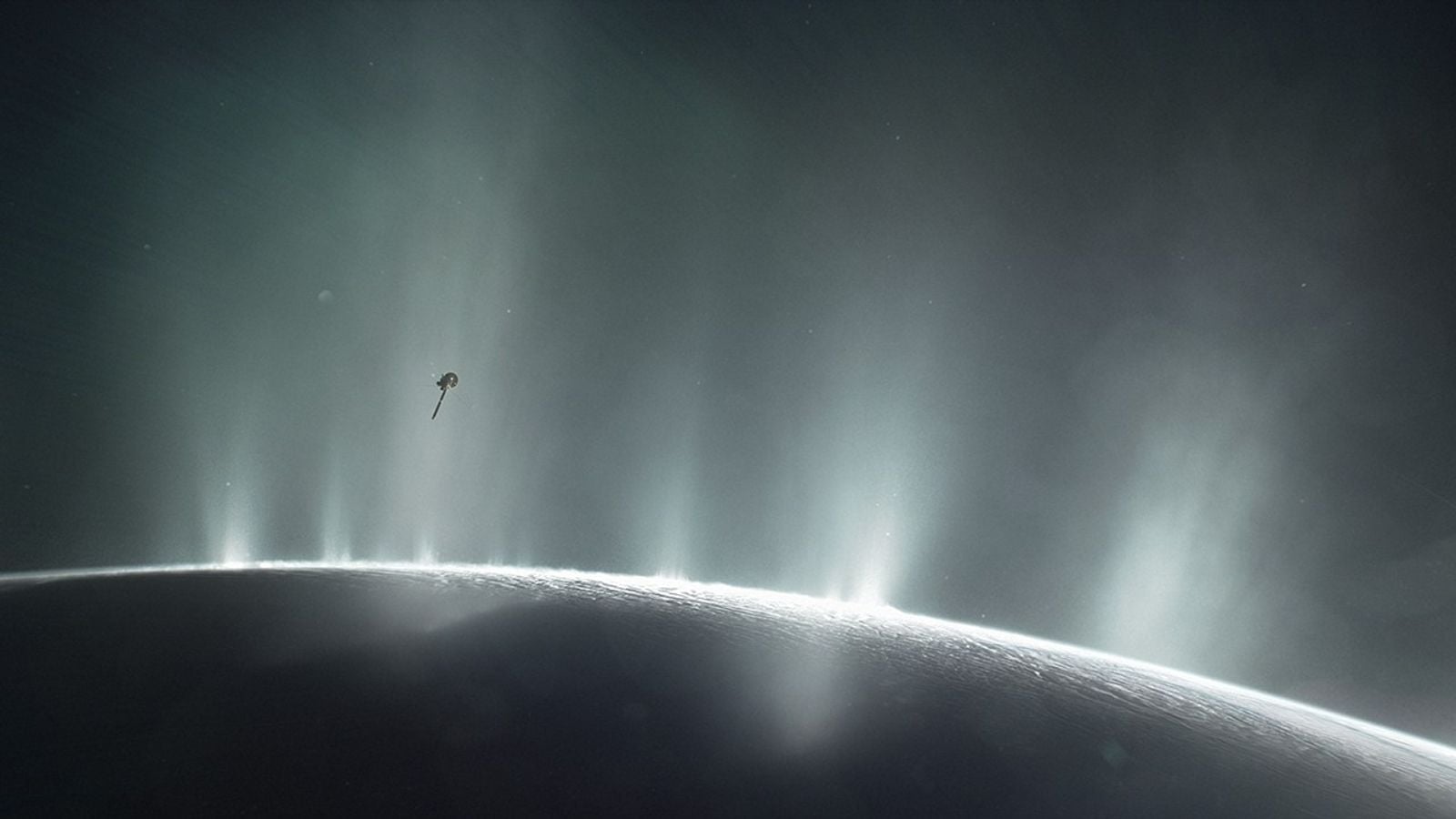
Enceladus hides a salty ocean beneath its ice but also blasts that ocean directly into space, which means a spacecraft can test water from a potentially habitable sea simply by flying through the plume — no landing, drilling, or journey through kilometres of frozen crust required.

NASA illustration of Cassini flying through jets above Enceladus

Most ocean worlds present the same brutal engineering problem. The water may be scientifically irresistible, but it is buried beneath an ice shell that no spacecraft has yet drilled through.

Enceladus is different. Saturn’s small icy moon pushes water vapour and frozen droplets through fractures near its south pole, accelerating the material into space. A spacecraft can cross that plume with its instruments open and analyse ocean-linked material without touching the surface.

NASA once described these eruptions as “free samples” from the moon’s global ocean. That phrase captures the extraordinary advantage, but it can also make the measurement sound cleaner than it is. The plume offers access, not a perfectly preserved jar of seawater. Understanding what happened between ocean and instrument is part of the science.

I find that distinction almost as interesting as the plume itself. Enceladus has removed the largest physical barrier for us. It has not removed the need to interpret what comes through.

The moon brings its ocean to the spacecraft

Enceladus is about 500 kilometres across. Beneath its bright crust is a global salty ocean in contact with a rocky core, while four long south-polar fractures, nicknamed the tiger stripes, vent water vapour and ice grains.

Some grains fall back onto the surface. Others escape the moon’s weak gravity and supply Saturn’s broad E ring. NASA estimates that water leaves the fractures at about 1,300 kilometres per hour, carrying salts, ammonia, methane, silica particles and organic material into a region a spacecraft can reach.

This matters because drilling through an alien ice shell is not simply a matter of attaching a longer bit. A lander would need to descend safely, generate substantial power, operate autonomously, prevent terrestrial microbes from being carried downwards and communicate through or around the ice. The deeper it travelled, the harder every one of those problems would become.

A plume fly-through replaces that entire descent with navigation and mass spectrometry. The moon has already done the lifting.

Cassini sampled gas and grains separately

NASA’s Cassini spacecraft was not built to investigate an Enceladus ocean because nobody knew the ocean or plume existed when it launched in 1997. Once the jets were discovered, mission planners redirected later encounters around the opportunity.

Cassini ultimately completed 23 targeted fly-bys of Enceladus. Its Ion and Neutral Mass Spectrometer measured gases, while its Cosmic Dust Analyzer recorded tiny solid particles that struck its target plate and produced clouds of ions. The masses and arrival times of those ions created chemical fingerprints of individual grains.

During the E21 encounter in October 2015, Cassini passed only 49 kilometres above the surface. NASA stated in its fly-by briefing that the pass would sample material from the ocean but could not detect life. The spacecraft simply did not carry the right instruments for a definitive biological test.

What it could do was establish a chain of evidence for habitability. In my earlier article on Enceladus’s salts, molecular hydrogen and phosphorus, I followed the separate measurements that point to liquid water touching rock, a possible source of chemical energy and a nutrient used by all known terrestrial life. Those findings came from material available above the moon, not from a probe lowered into its sea.

The plume is an ocean sample after processing

The word “direct” needs care. Material in the plume is linked to the subsurface ocean, but it has travelled upwards through long, cold fractures and changed phase along the way.

Ocean water can form droplets that freeze into ice grains. Dissolved gases leave the liquid at different rates. Water vapour condenses on the fissure walls as the mixture rises into colder ice. Some compounds become concentrated in the escaping gas, while others are depleted. Gas and solid grains can therefore tell different parts of the ocean’s story.

A 2022 paper by Lucas Fifer, David Catling and Jonathan Toner in The Planetary Science Journal modelled this chemical fractionation between ocean and plume. One earlier model discussed in the paper estimated that more than 99 per cent of the water vapour could condense onto the fissure walls during eruption. Because the other gases do not condense in the same way, their measured proportions above the surface cannot simply be copied into a table and labelled “ocean composition”.

The ice grains are especially valuable because salt-rich particles appear to begin as ocean droplets. Even they are not identical. Cassini found that only about 1 to 4 per cent of plume grains carried organics at high concentrations. A bulk average could dilute the rare, chemically interesting grains until their signals nearly disappeared.

Space Daily’s editorial team has already covered the plume’s water, phosphate, hydrogen and varied organic chemistry. The measurement lesson beneath that list is that a future spacecraft should analyse many grains individually and record where and when each one was collected.

A grain hitting a spacecraft becomes the experiment

There is no scoop dipping gently into the plume. At fly-by speed, an ice particle slams into an instrument, vaporises and ionises. The collision destroys the original grain, but the ions produced by the impact reveal what it contained.

Speed changes the spectrum. In October 2008, Cassini crossed fresh plume material at about 17.7 kilometres per second. A 2025 study led by Nozair Khawaja in Nature Astronomy reanalysed 1,519 spectra collected during roughly six minutes of that encounter and identified several families of organic fragments, including signals consistent with aromatic and oxygen-bearing chemistry.

The speed was both helpful and limiting. It broke water clusters apart, exposing signals that were obscured at slower impacts, but it also fragmented larger molecules so severely that their original structures could not always be reconstructed. The authors explicitly said the conditions did not allow quantitative analysis. They could identify possible chemical groups, not measure the precise concentration of every original compound in the ocean.

A purpose-built spacecraft could approach more slowly, use instruments with a wider mass range and repeat its passes through different parts of the plume. It could combine grain measurements with gas analysis, imaging and observations of how plume output changes as Enceladus moves around Saturn.

A future instrument may be able to read part of a cell

The most striking laboratory result I found came from a 2024 Science Advances paper led by Fabian Klenner. The team placed cells of a cold-water bacterium into droplets, froze them and simulated the impact-ionisation spectra that a modern spacecraft instrument might record at four to six kilometres per second.

In those experiments, characteristic signals remained identifiable even when an ice grain contained less than one whole cell’s worth of material. The work supports analysing individual grains rather than mixing billions of particles into a bulk sample, because any biological material might be concentrated in a very small minority of them.

It does not show that Enceladus contains cells, or guarantee that alien biology would resemble the organism used in the laboratory. It demonstrates instrument sensitivity under a controlled analogue. A convincing claim of life would still require several independent signals and careful exclusion of non-biological chemistry and contamination.

That caution is not a minor footnote. As Space Daily’s editorial team argued in its article on what a null result at Enceladus could mean, a habitable environment and an inhabited one are different scientific claims.

No drilling does not mean an easy mission

Enceladus orbits roughly 1.4 billion kilometres from the Sun. Reaching Saturn takes years, sunlight is weak, communications are slow and entering an orbit that permits repeated low-speed plume crossings requires substantial propulsion and careful navigation.

The spacecraft itself must also be kept clean enough that a trace of amino acid, lipid or terrestrial cell does not masquerade as evidence from the moon. In my article on Cassini’s deliberate destruction in Saturn, I looked at the same contamination problem from the other direction. Cassini was disposed of before loss of control could create a future impact risk at Enceladus.

Europe has now placed the moon at the centre of its long-range planning. In 2024, ESA identified Enceladus as the top target for its first large-class Voyage 2050 mission. The concept could launch in the early 2040s, arrive around a decade later, conduct a Saturn-system tour and eventually collect ejected material close to the surface, potentially combining plume sampling with a landing. It remains a future programme rather than a spacecraft ready to fly.

The long timetable is frustrating, but the destination offers an unusual bargain. Other ocean worlds ask us to infer chemistry through magnetic fields, surface deposits or radar echoes. Enceladus places newly erupted material in the path of an instrument.

We do not need to build a machine that crosses kilometres of ice before we can ask whether the ocean contains useful energy, complex chemistry or possible biological patterns. We need a clean spacecraft, the right mass spectrometers and enough careful passes through a plume that the moon keeps providing.

The ocean remains hidden. Its samples do not.

The post Enceladus hides a salty ocean beneath its ice but also blasts that ocean directly into space, which means a spacecraft can test water from a potentially habitable sea simply by flying through the plume — no landing, drilling, or journey through kilometres of frozen crust required. appeared first on Space Daily.

  •  

Did prehistoric humans actually live in caves?

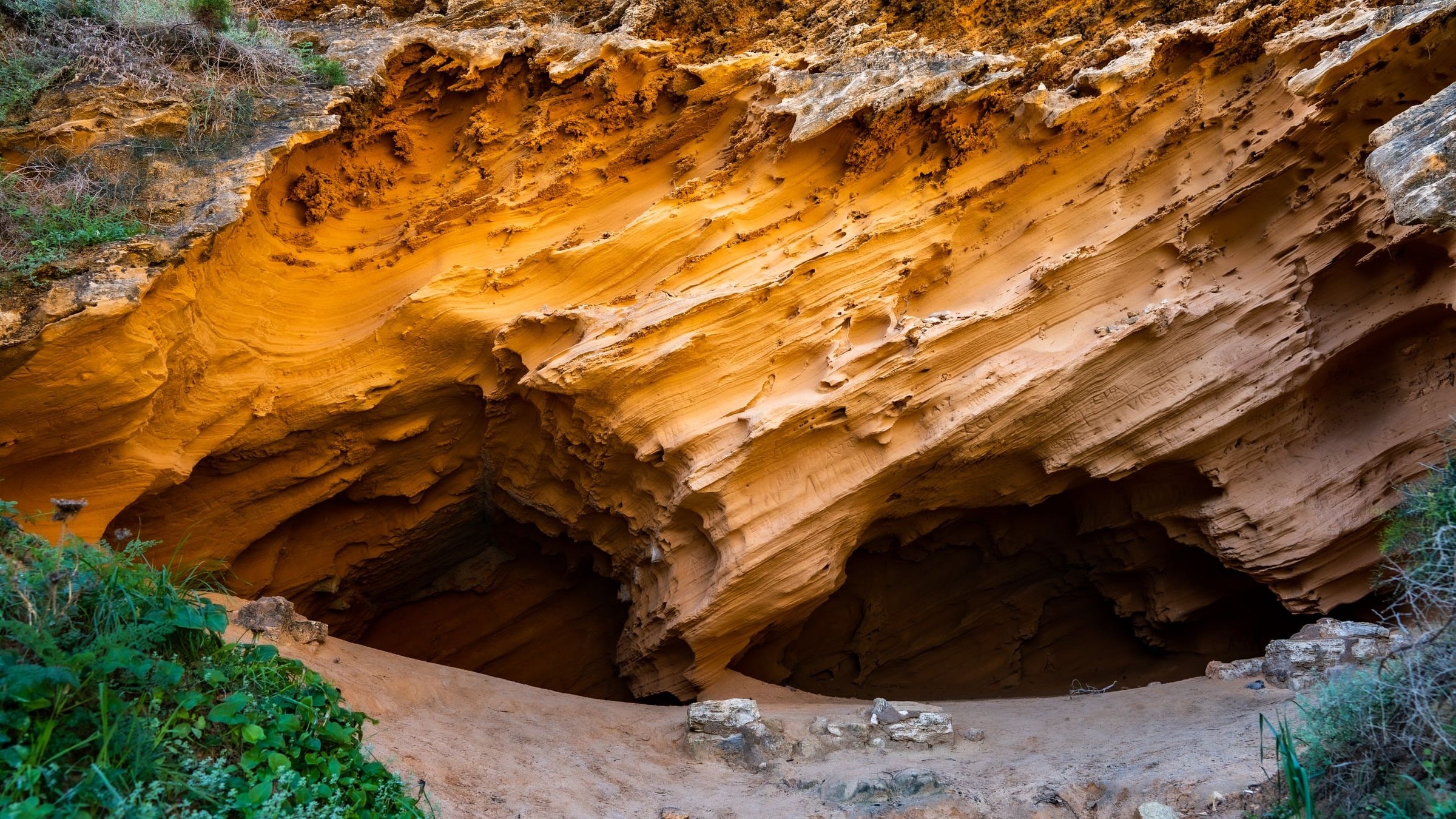
A broad sandstone cave entrance illustrating the sheltered daylight zone prehistoric people could use

The short answer is yes. Some prehistoric humans really did live in caves.

The longer answer is that the word “caveman” has taken one genuine part of prehistoric life and expanded it into a complete lifestyle. Neanderthals and Homo sapiens used caves for shelter, work, food preparation, burial, art and probably ceremonies. They also lived in open-air camps, beside rivers, on plains and under shelters built from wood, hides, grass, bone and whatever else the local landscape provided.

Most did not spend their entire lives deep underground.

I realised while looking into this that the image in my own head was still basically a childhood cartoon: a family gathered around a fire in a dark stone chamber, with the cave functioning like a permanent house. The archaeology is more mobile and varied than that. It also contains a useful warning about how the evidence that survives can quietly decide the story we tell.

A cave entrance could make an excellent home

For a mobile group without permanent architecture, a well-positioned cave or rock shelter solved several problems at once. A stone roof blocked rain and snow. Walls reduced wind. The interior moderated temperature, and the entrance could provide daylight, ventilation and a view over animals moving through a valley.

Caves were not equally useful. A damp shaft, a narrow fissure or a chamber that flooded seasonally was no home. A broad, dry entrance facing the Sun could be valuable enough for people to return to across hundreds or thousands of years.

The part near the mouth mattered most for ordinary life. It offered the benefits of a roof without the total darkness, stale air and smoke problems of the deeper cave. Archaeologists often use the separate term “rock shelter” for a shallow overhang that provides cover without becoming a long underground passage.

At residential cave sites, the evidence can be unmistakable: hearths, ash, cut animal bones, discarded stone flakes, tools at different stages of manufacture and sediments repeatedly trampled by people. Both Neanderthals and early modern humans left such traces in caves and rock shelters, including sites returned to across many generations.

That still does not make every cave deposit a home. Predators dragged prey into caves. Water moved bones. People entered for brief tasks, left objects, buried the dead or returned seasonally. A human tooth in a chamber proves presence. It does not, by itself, prove that a family slept there every night.

Why caves dominate the story

Caves are unusually good archives.

Caves can shelter remains in conditions rarely found outside. The US National Park Service describes Pleistocene fossils preserved by drying in Grand Canyon caves, including dung, skin and hair tens of thousands of years old. Archaeological bone and other organic material can likewise survive beneath a stone roof after comparable material disappears from exposed sites. Fine layers of sediment can accumulate in the same protected place, recording separate occupations one above another.

They are also easy for archaeologists to notice. A cave is a bounded place that can be mapped, excavated and revisited. An ancient camp on an exposed plain may now be buried beneath metres of sediment, scattered by a river, ploughed apart, covered by a city or eroded away completely.

Michael Jochim made the bias unusually plain in a 2019 review of the limits of Palaeolithic archaeology. Cave sites, he wrote, are overrepresented because they are highly visible, while many open-air sites are discovered only by accident during construction or mining.

This creates a kind of archaeological survivor effect. If one household spends a winter under a rock shelter and another builds a hide tent beside a lake, the first may leave a dense, protected layer of ash, bone and stone. The second may leave a faint scatter that wind, water and later human activity erase.

Thousands of years later, it can look as though only the cave group existed.

Open-air sites change the picture

Enough open-air sites have survived to show that prehistoric people were not tied to stone roofs.

At ’Ein Qashish in northern Israel, archaeologists recovered Neanderthal remains, animal bones and stone artefacts from an open landscape near a river. The site was used repeatedly between roughly 70,000 and 60,000 years ago. The 2019 PLOS ONE analysis of ’Ein Qashish concluded that the setting drew repeated occupations and offered a rare view of Neanderthal mobility outside caves.

The wider pattern is not that caves were homes while open sites were merely workplaces. A separate Scientific Reports study of the Neanderthal remains at ’Ein Qashish describes a habitation context used repeatedly, making the site part of a settlement and mobility system rather than an isolated outdoor visit. Across the wider record, some open sites were hunting stations or places to obtain stone, while others preserved hearths, food processing and repeated activity consistent with camps.

People could also make shelter. Spain’s National Museum and Research Centre of Altamira describes Upper Palaeolithic humans as living in caves, rock shelters and freestanding huts. Archaeologists look for post holes, stone settings, hearths and concentrations of material that may mark the remains of windbreaks or dwellings.

The details are often debated. Wood rots. Hides vanish. A ring of stones can have more than one explanation. Even the frequently illustrated shelter at Terra Amata in France has generated arguments over how much of the pattern was produced by people and how much by natural processes.

Later Upper Palaeolithic sites give clearer examples. At places in eastern and central Europe, hunter-gatherers built dwellings using timber and mammoth bone. Those structures do not mean everyone lived in mammoth-bone houses any more than a painted cave means everyone lived underground. They show that prehistoric housing changed with climate, available material, group size and how long people expected to stay.

Living in a cave usually meant living near its mouth

Popular images often place daily life far inside the darkness because that looks more dramatic. It would usually have been inconvenient.

Beyond the daylight zone, every visit required fuel and a reliable flame. Uneven floors made movement difficult. Smoke from hearths needed somewhere to go. Water could drip or pool, and cave-dwelling bears, hyenas and other animals were not imaginary competitors.

The distribution of remains often reflects this. Jochim’s review notes that activities in caves tended to cluster near the mouth, where usable space, light and airflow were better. A cave could therefore function less like a bunker and more like a deep veranda: a protected edge between the outdoors and the underground.

Occupation was often intermittent. Mobile hunter-gatherers followed animals, plants, stone sources, water and seasonal conditions. A particularly good shelter might become a recurring stop within that wider circuit. One group could use it for weeks, leave, and return in another season. A later population might occupy the same place centuries after everyone connected with the earlier visit was gone.

A thick archaeological layer can compress all of those separate episodes into what looks like continuous residence.

Deep caves had other meanings

Prehistoric people did go far underground. The reasons were not always domestic.

At Bruniquel Cave in southwestern France, Neanderthals broke stalagmites and arranged the pieces into large rings 336 metres from the entrance. A 2016 paper in Nature dated the structures to about 176,500 years ago and documented traces of fire. Whoever built them could organise work and manage light in a place of complete darkness.

There is no good evidence that the Bruniquel chamber was an ordinary living room. Its depth is what makes it so unusual.

Chauvet Cave offers a different example. France’s Ministry of Culture identifies two major periods of human use and 435 animal images, made using engraving, charcoal and red paint. The earliest use dates to roughly 36,500 years ago, with another period between about 30,000 and 31,000 years ago. Its deep decorated chambers record art and symbolic activity, not an ordinary residential floor.

Painted chambers, deliberate constructions and burials tell us that caves could be more than shelter. They might hold memory, danger, identity or shared practices that are difficult to reconstruct from objects alone.

The cave was part of the social landscape, not simply a prehistoric apartment.

Where the caveman image came from

The stereotype has a history. Some of the first ancient human fossils recognised by European science came from caves and rock shelters. The Neanderthal type specimen was found in 1856 in the Feldhofer cave in Germany’s Neander Valley. Later discoveries at sites such as Cro-Magnon, La Chapelle-aux-Saints and Shanidar reinforced the association.

Caves also gave museums and illustrators a convenient scene. Stone walls survive into the present, whereas a hide windbreak on an Ice Age plain does not. Cave paintings supplied an immediately recognisable background. By the time films and cartoons inherited the image, “cave” had become a visual synonym for “prehistoric.”

But “prehistoric humans” covers several human species, millions of years and almost every kind of environment people could enter. In much of Africa, where our lineage spent most of its history, suitable caves were not available everywhere. Humans still moved through grasslands, woodlands, coasts and river systems.

So did prehistoric humans live in caves? Yes, sometimes, and some caves were important homes used repeatedly.

They also camped outside, built shelters and moved between places. The better answer is that prehistoric people used the landscape flexibly, while the cave record survived well enough to make one part of that life look like the whole thing.

The post Did prehistoric humans actually live in caves? appeared first on Space Daily.

  •  
❌