❌

Reading view

Dengue cases have fallen by about 70 percent in the parts of Singapore where the government releases mosquitoes on purpose. It breeds 5 million males a week, none of which bite, and the females they mate with lay eggs that never hatch.
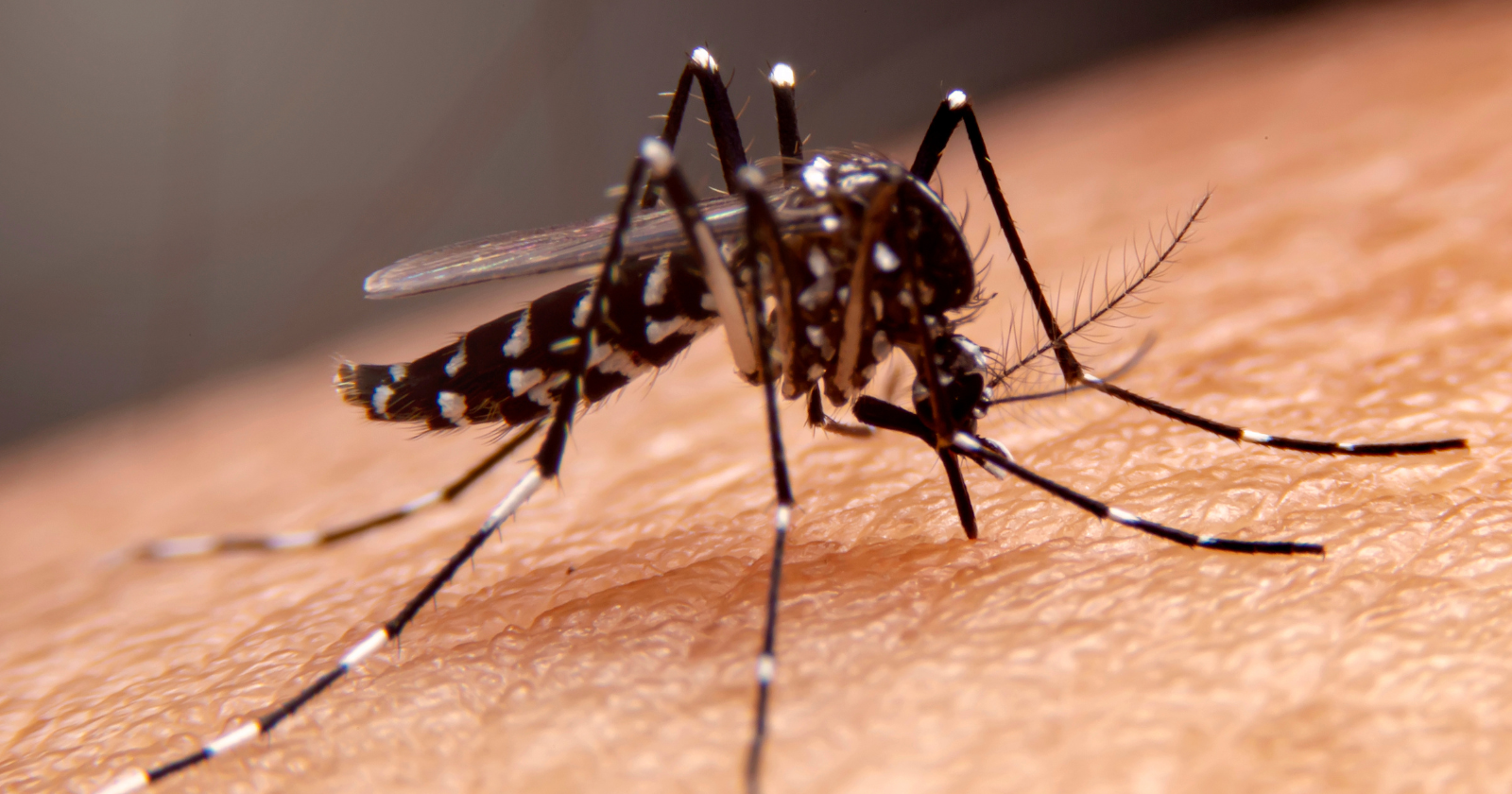
Mosquito feeding on human skin

If you told most people that a country’s public health strategy involved deliberately breeding and releasing millions of mosquitoes a week, they would assume something had gone terribly wrong. Mosquitoes are the enemy. You spray them, you drain their breeding sites, you cover yourself in repellent. You do not, under any circumstances, run a facility that produces them by the millions and sends employees out on scheduled morning shifts to let them loose in residential neighbourhoods.

But that is exactly what the Singapore government has been doing since 2016, and the results are now peer-reviewed, published in the New England Journal of Medicine, and genuinely stunning. Once you understand the trick, this becomes one of the most elegant pieces of public health engineering you will ever come across.

The mosquitoes on purpose

Singapore’s National Environment Agency runs the whole thing under the name Project Wolbachia. At its production facility, technicians breed Aedes aegypti mosquitoes at industrial scale. These are the same mosquitoes that transmit dengue, Zika, and chikungunya. The ones being bred here, however, have been infected with a bacterium called Wolbachia pipientis, specifically the wAlbB strain, which occurs naturally in many insect species but is not typically found in Aedes aegypti.

Once the mosquitoes reach the pupal stage, the facility sorts them by sex. Only males get released, twice a week on weekday mornings, into the residential neighbourhoods where the programme is running. Here is the key point that catches everyone off guard: male mosquitoes do not bite. Only females do. Males feed on nectar. So releasing them by the million into your neighbourhood adds precisely zero to the local biting-mosquito problem.

If you like the idea of a country quietly engineering its own wildlife, this one goes further. Singapore spent sixty years turning itself into the greenest city on earth — and then had to deal with what actually moved in. Worth a watch:

What happens when they mate

The Wolbachia trick works through something called cytoplasmic incompatibility. When a male carrying Wolbachia mates with a wild female that does not carry the bacterium, her eggs get fertilised, they look normal, she lays them, and then nothing hatches. The bacterium disrupts the very first cell division in the developing embryo. Every egg is a dead end.

You can see where this is heading. Do this twice a week for months on end across an entire neighbourhood, with millions of released males competing for every wild female’s attention, and the wild mosquito population starts collapsing. The females run out of viable mates. The next generation shrinks. Eventually you are looking at a neighbourhood where the mosquitoes that could give you dengue have effectively been erased from the local landscape.

The numbers, which are extraordinary

The peer-reviewed results were published in the New England Journal of Medicine in February 2026, and they held up under the most demanding trial design available. Fifteen residential clusters across Singapore, holding a combined 724,428 people. Eight got the Wolbachia releases. Seven got nothing. The researchers tracked every dengue test result from those 15 clusters for two years, from mid-2022 to late 2024.

In the treated clusters, adult female Aedes aegypti populations dropped by roughly 78 per cent, from a baseline abundance index of 0.18 down to 0.041. In the untreated control clusters, the population actually rose over the same period, from 0.19 up to 0.277. And the dengue outcomes matched: residents in the release areas were 71 to 72 per cent less likely to contract dengue than residents in the untreated areas. The effect held across every age group, both sexes, and every year of the trial.

Where it is going next

You might reasonably wonder how much of Singapore is covered. According to the NEA’s latest update in March 2026, Project Wolbachia is protecting about 35 per cent of Singapore households, on track to hit 50 per cent by the end of 2026, with new release sites launching this year in Bukit Panjang, Little India, Pioneer, Toa Payoh, and Ang Mo Kio. Total household coverage will exceed 800,000 homes.

The programme is not officially a silver bullet. Singapore’s environment minister has been careful to emphasise that Wolbachia releases complement rather than replace the traditional approach of source reduction, insecticide spraying, and public education. But the picture is shifting fast. What started as a small phase 1 trial in 2016 is now a nationwide vector control programme that other tropical cities are studying carefully.

What this actually is

Look, I know this sounds like science fiction. A city that fights mosquitoes by breeding more mosquitoes. Eggs that never hatch because a bacterium interferes with cell division. Millions of male insects released weekly into apartment blocks where no one notices because males never bite. Every piece of it is real, all of it has been through the highest tier of peer review, and it is working better than any dengue intervention that came before it.

The reason it works is that the technique does not try to poison the mosquitoes, trap them, or block them from breeding. It just gives the wild females a whole lot of male suitors whose reproductive contribution is zero. The wild population outcompetes itself. That is judo. And Singapore, of all places, turned out to be exactly the right setting to prove it works.

The post Dengue cases have fallen by about 70 percent in the parts of Singapore where the government releases mosquitoes on purpose. It breeds 5 million males a week, none of which bite, and the females they mate with lay eggs that never hatch. appeared first on Space Daily.
  •  

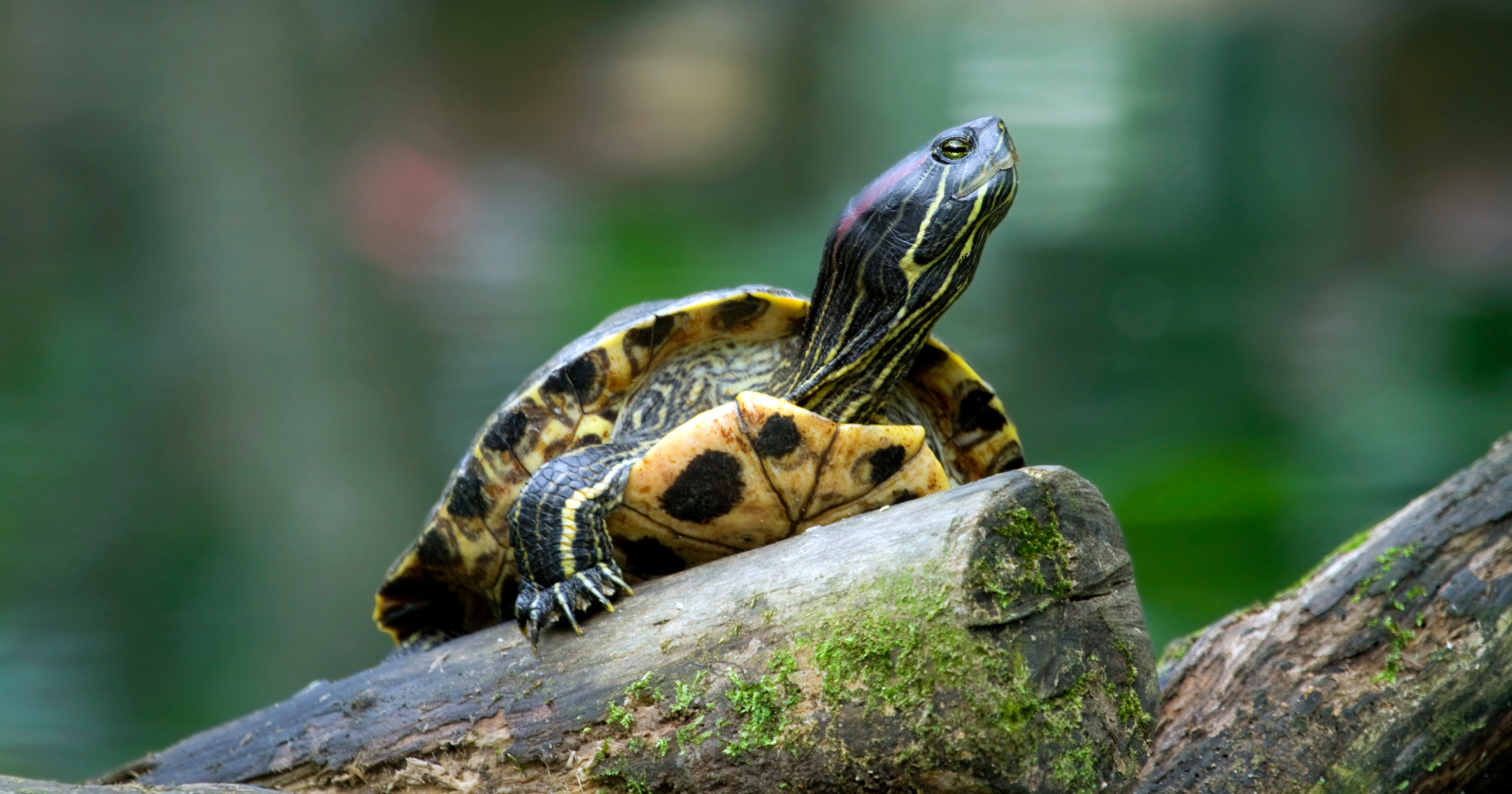
Between 1989 and 1997 the United States shipped more than 50 million pet turtles abroad, and enough of the red-eared sliders were later dumped in ponds and rivers when they grew too big that the species now outcompetes native turtles on every continent but Antarctica, listed among the 100 worst invaders on Earth.

The story begins with a cartoon. In late 1987 a low-budget animated series called Teenage Mutant Ninja Turtles began airing on American children’s television, and within eighteen months it had become the most successful children’s franchise of its decade. Sales of turtle-themed toys, lunchboxes, video games, and Halloween costumes went through the roof. And so did sales of actual pet turtles. American reptile farms, most of them clustered along the Mississippi River basin where the red-eared slider is native, ramped up production to meet the demand. Hatchlings the size of a fifty-cent piece were shipped by the tens of millions to pet stores across the United States and around the world.

What almost nobody selling the turtles bothered to mention was that a hatchling red-eared slider grows into an adult red-eared slider weighing up to three kilograms, requiring a hundred-gallon tank with filtration, and living for forty years or longer. Within a few years, unwanted adult sliders started turning up in ponds, rivers, and public parks in countries where the species had never existed before.

How 52 million turtles left the country

According to the International Union for Conservation of Nature’s Global Invasive Species Database entry on Trachemys scripta elegans, compiled by the IUCN Species Survival Commission’s Invasive Species Specialist Group and citing the original Telecky 2001 tally of the United States pet turtle export trade, more than 52 million red-eared sliders were exported from American turtle farms to overseas pet markets between 1989 and 1997. The primary destination was China, though large numbers also went to Japan, Taiwan, Thailand, South Korea, and Singapore, along with substantial shipments to France, Spain, Italy, Germany, the United Kingdom, Australia, South Africa, and Brazil. The reason American farms could produce sliders at that scale was that the species is remarkably easy to breed in captivity. The reason they were so easy to ship was that a hatchling turtle weighs almost nothing and can be packed into ventilated boxes by the hundreds.

The European Union, watching this happen in real time, banned the import of Trachemys scripta elegans on 22 December 1997. That single regulatory decision effectively ended the American export trade to Europe overnight. By the time it came into effect, however, the damage across the European continent was already done. Feral populations had established themselves in France, Spain, Italy, Portugal, Slovenia, Greece, Germany, Austria, Switzerland, the Netherlands, Belgium, Poland, Latvia, and the United Kingdom. Similar populations were showing up in the wetlands of every country the trade had reached. The turtles that had already been sold were still alive. Their owners were still tiring of them. The ponds behind their houses were still available.

If our animal kingdom fascinates you, you’ll enjoy this video we made on the recorded adventure of a young elephant bull, and what his route revealed: 

What happens when a tank turtle meets a lake

The red-eared slider turns out to be an unusually well-equipped invader. It reaches sexual maturity in three to four years, which is faster than most native freshwater turtles it competes with. Females can lay up to six clutches per year of up to thirty eggs each, giving the species a reproductive rate roughly two or three times higher than the European pond turtle it is now displacing across much of the continent. Adults tolerate a wide range of water conditions, from clean rural rivers to heavily polluted urban canals. They are omnivorous and will eat almost anything a freshwater environment can offer. They are aggressive at basking sites and will physically displace smaller native turtles from the sunning logs they need for thermoregulation.

The competitive dynamic has been most extensively studied in France, where researchers from the University of Paris-Sud have been documenting the interaction between introduced sliders and the native European pond turtle (Emys orbicularis) for the past two decades. What they have found is that in ponds where sliders are present, the native pond turtles are pushed to lower-quality basking sites, tend to survive at lower rates, and produce fewer offspring per breeding season. The European pond turtle is classified as Near Threatened on the IUCN Red List. Every additional slider in a European wetland adds to the pressure. Similar competitive displacement has been documented in Washington State against the Pacific pond turtle, in Australia against native short-necked turtles, and across Asia against a dozen freshwater species that had evolved in the absence of anything resembling a Mississippi-basin generalist.

According to The Nature Conservancy’s 2019 Cool Green Science article on American species invading other countries, written by staff science journalist Justine E. Hausheer, the geographic reach of the red-eared slider now covers essentially every continent where freshwater habitat and moderate temperatures exist. Established feral populations have been confirmed in the western United States, Australia, New Zealand, Europe, Great Britain, South Africa, the Caribbean, the Middle East, Southeast Asia, and several Pacific island groups. Only Antarctica remains slider-free, and even that exemption is only because Antarctica has no freshwater ponds and does not get above freezing for most of the year. If it did, and it had ponds, the sliders would probably be there too.

The IUCN Species Survival Commission’s Invasive Species Specialist Group formally listed the red-eared slider on the Global Invasive Species Database’s roster of the hundred worst invasive species anywhere in the world. The species now ranks number 93 on that list. It sits alongside brown rats, feral cats, cane toads, and the emerald ash borer as a species whose global spread has caused measurable and lasting ecological harm. Australia’s Vertebrate Pests Committee has assigned it a threat category of EXTREME. Multiple European countries have banned its sale, its keeping as a pet, or both. Illegal shipments continue anyway. Buddhist mercy ceremonies in parts of East Asia continue to release captive-bred sliders into rivers as an act of religious devotion, unaware or unbothered that the specific animal being released is an invasive species that will outcompete the native turtles the ceremony was originally designed to protect.

What the whole episode represents is one of the more improbable ecological consequences of a late-1980s children’s television programme. The Ninja Turtles cartoon ran for ten years. American reptile farms produced tens of millions of live turtles to meet the resulting demand. The turtles grew larger than their owners expected. The owners released them into the nearest available water. And forty years later, a native North American reptile that once occupied the freshwater ponds of a few states along the Gulf Coast now occupies almost every freshwater pond on the planet warm enough to support it. The turtles never asked to be there. They just weren’t given much choice. And once they arrived, they turned out to be remarkably well-suited to staying.

The post Between 1989 and 1997 the United States shipped more than 50 million pet turtles abroad, and enough of the red-eared sliders were later dumped in ponds and rivers when they grew too big that the species now outcompetes native turtles on every continent but Antarctica, listed among the 100 worst invaders on Earth. appeared first on Space Daily.

  •  

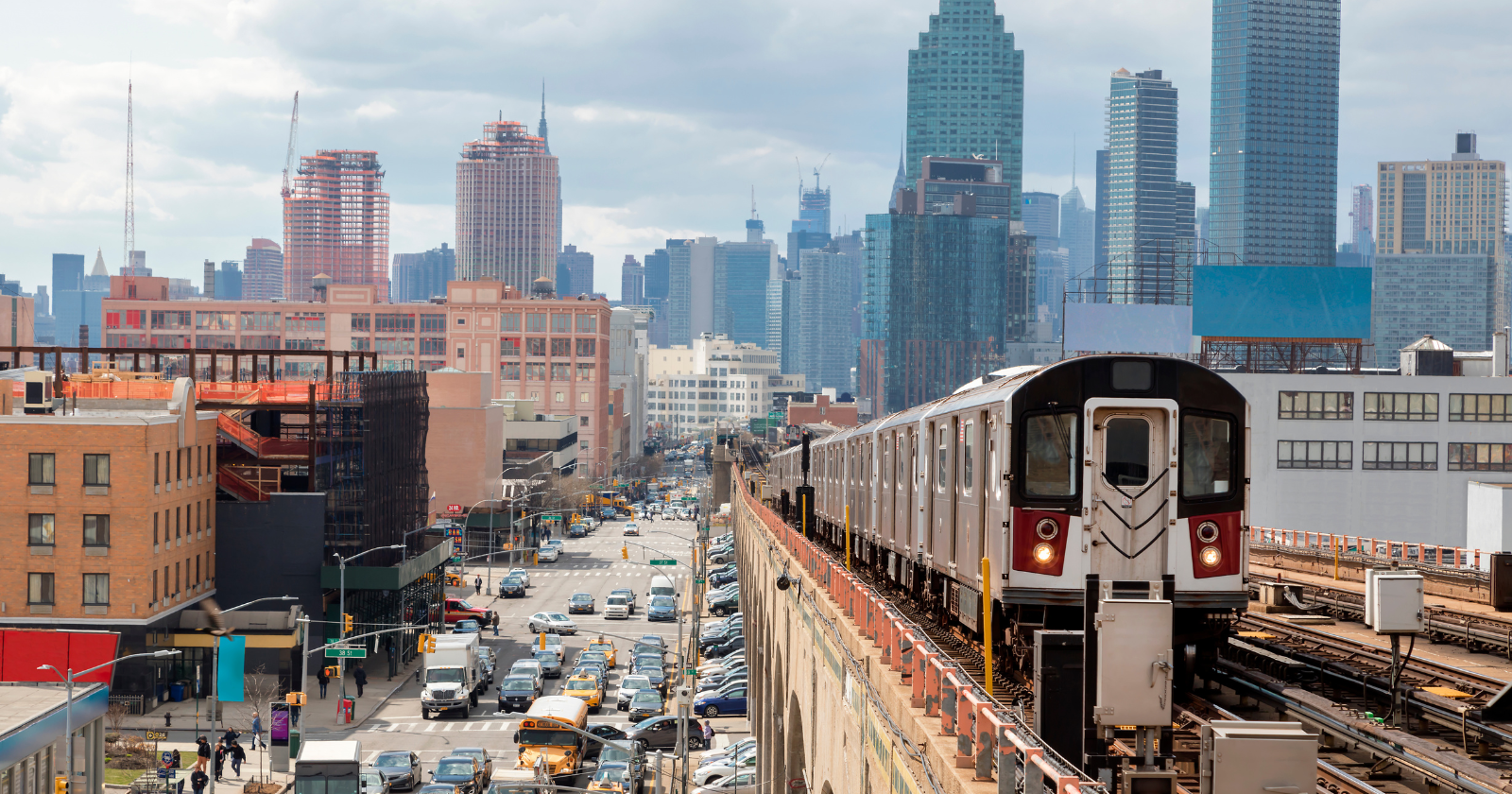
More than 2,500 retired New York subway cars were dropped into the Atlantic between 2001 and 2010, not as illegal dumping but as a planned reef programme, and marine biologists who kept watch found the sunken trains quickly turned into some of the richest artificial habitats along the eastern seaboard.

The Metropolitan Transportation Authority, which runs the New York City subway system, had a problem in the late 1990s. It was in the middle of a major fleet modernisation programme that was going to retire roughly two and a half thousand ageing subway cars over the following decade. These were mostly the red-painted R-33 and R-36 cars that generations of New Yorkers had ridden through the 1970s, 80s and 90s, followed by the older stainless steel Brightliners that would come off the tracks later. Each retired car was worth essentially nothing as scrap. Each also cost the MTA roughly twelve thousand dollars to dispose of through conventional demolition. Which meant the total disposal bill for the fleet retirement, at prevailing rates, was going to run to something north of thirty million dollars. And the MTA, being a public transit authority in a permanent state of budget crisis, was not enthusiastic about that particular expense.

The solution the agency arrived at, in partnership with a handful of coastal state governments and the U.S. Fish and Wildlife Service, was one of the more counterintuitive recycling programmes of the early twenty-first century. Instead of paying to demolish the cars, the MTA would clean them, ship them south by rail and barge, and drop them into the ocean off the eastern seaboard. There they would form artificial reefs. The states would get new marine habitat for essentially free. The MTA would save the disposal costs. And the fish would, in theory, work out what to do with the rest.

How you turn a subway car into a reef

According to the New York Transit Museum’s own summary of the MTA Artificial Reefing Program, produced in collaboration with the programme’s former director Michael Zacchea and Robert Martore of the South Carolina Department of Natural Resources, the operation ran from August 2001 through to April 2010 and deployed more than 2,500 deaccessioned train cars to underwater sites off the coasts of New Jersey, Delaware, Virginia, South Carolina, and Georgia. The first phase concentrated on the Redbird fleet, which was already being pulled off the tracks in 2001, and which had a particularly recognisable red livery that made the sunken cars a photographable subject long after they had gone down. The Delaware Bay took approximately six hundred and nineteen Redbird cars alone, at a site now known as the Redbird Reef, located sixteen and a half nautical miles off Indian River Inlet at a depth of around eighty feet. Subsequent phases involved the stainless steel Brightliner fleet, which was deployed at reef sites further down the coast through the second half of the decade.

The engineering of the actual reef deployment was not trivial. Each car had to be stripped down first. According to the New Jersey Division of Fish and Wildlife’s own news bulletin on the deployment of 44 stainless steel subway cars at the Atlantic City Reef site in April 2008, every car went through a full preparation process before it went into the water. Windows were removed. Wiring was pulled out. Plastic components, degradable materials, hydraulic fluids, oils, and grease were all stripped or drained. The remaining shell was inspected to make sure that when the car eventually corroded, nothing toxic would leach into the surrounding marine environment. Only after that inspection was the cleaned steel body loaded onto a barge and towed offshore.

The actual sinking process was almost comically straightforward. The cars, weighing around eighteen tonnes each in their prepared state, were rolled off the deck of the barge by a hydraulic tipping mechanism and simply dropped through the water column to the seabed below. The MTA covered all of the cleaning, transport, and deployment costs. Individual cars in the New Jersey deployment measured roughly sixty feet long, ten feet wide, and eleven feet tall. Deployed in tight clusters at pre-selected coordinates, they formed roughly the same kind of hard-structure habitat that a natural rocky reef would offer, but at a scale and geometry that had never previously existed on the sandy Atlantic continental shelf.

What the fish did with them

What happened next surprised the marine biologists monitoring the sites, though it probably shouldn’t have. The subway car reefs, unlike almost any natural feature of the mid-Atlantic seabed, offered vertical structure. They offered cavities and shelter. They offered hard surfaces for sessile organisms to colonise. And they were essentially unlimited in supply. Marine invertebrates began settling on the exposed steel within weeks. Barnacles arrived. Blue mussels followed. Sponges and soft corals began to establish themselves on the vertical surfaces. Within a year or two, the once-bare metal shells of the retired subway cars had become the physical scaffolding of thriving benthic communities that had not existed anywhere on that stretch of ocean floor beforehand.

The fish arrived in response. Delaware’s Department of Natural Resources and Environmental Control has since documented that the invertebrate communities colonising the artificial reef structures provide up to four hundred times more food per square foot than the bare sandy ocean floor they replaced. Species that had been effectively absent from the region because of the lack of suitable habitat began to appear regularly at the sites. Sea bass, tautog, tuna, mackerel, flounder, scup, and triggerfish were all documented in significant numbers within a few years of the deployments. Recreational fishing operators in the coastal towns of Delaware, New Jersey, and Virginia found their nearshore catches rising. Dive operators found themselves with a genuinely unusual attraction to offer. The sunken subway cars, which had cost the MTA nothing to dispose of and had cost the states essentially nothing to acquire, became one of the more productive artificial reef complexes anywhere on the North American Atlantic coast.

The programme was not without complications. Inspection reports from New Jersey in 2009 found that some of the newer stainless steel subway cars were showing significant structural damage after only a few years underwater, which prompted the state to pause further stainless steel deployments while investigations continued. Not every car remained intact. Not every deployment site delivered the ecological returns the biologists had hoped for. And the specific question of whether artificial reefs simply concentrate existing fish populations rather than creating new ones is still debated within the marine biology community. But the general pattern held across the majority of the deployment sites through the 2010s and 2020s. The bare sand became structured habitat. The structured habitat became invertebrate communities. The invertebrate communities became feeding grounds. And the feeding grounds became fisheries.

By the time the programme officially ended on Earth Day 2010, 2,580 New York subway cars had been placed on ocean reef sites along the eastern seaboard of the United States. The MTA had saved something close to thirty million dollars in disposal costs. Delaware alone had received nearly a thousand of them. The Redbird Reef off Slaughter Beach now covers roughly 1.3 square miles of what used to be featureless sand and is one of the most biologically productive stretches of continental shelf in the entire mid-Atlantic region. Which is a strange kind of legacy for a fleet of subway trains that once carried millions of people through the tunnels underneath Manhattan and Queens. The trains never made it to the recycling yard. They made it to the ocean floor instead. And the fish have been living in them ever since.

The post More than 2,500 retired New York subway cars were dropped into the Atlantic between 2001 and 2010, not as illegal dumping but as a planned reef programme, and marine biologists who kept watch found the sunken trains quickly turned into some of the richest artificial habitats along the eastern seaboard. appeared first on Space Daily.

  •  

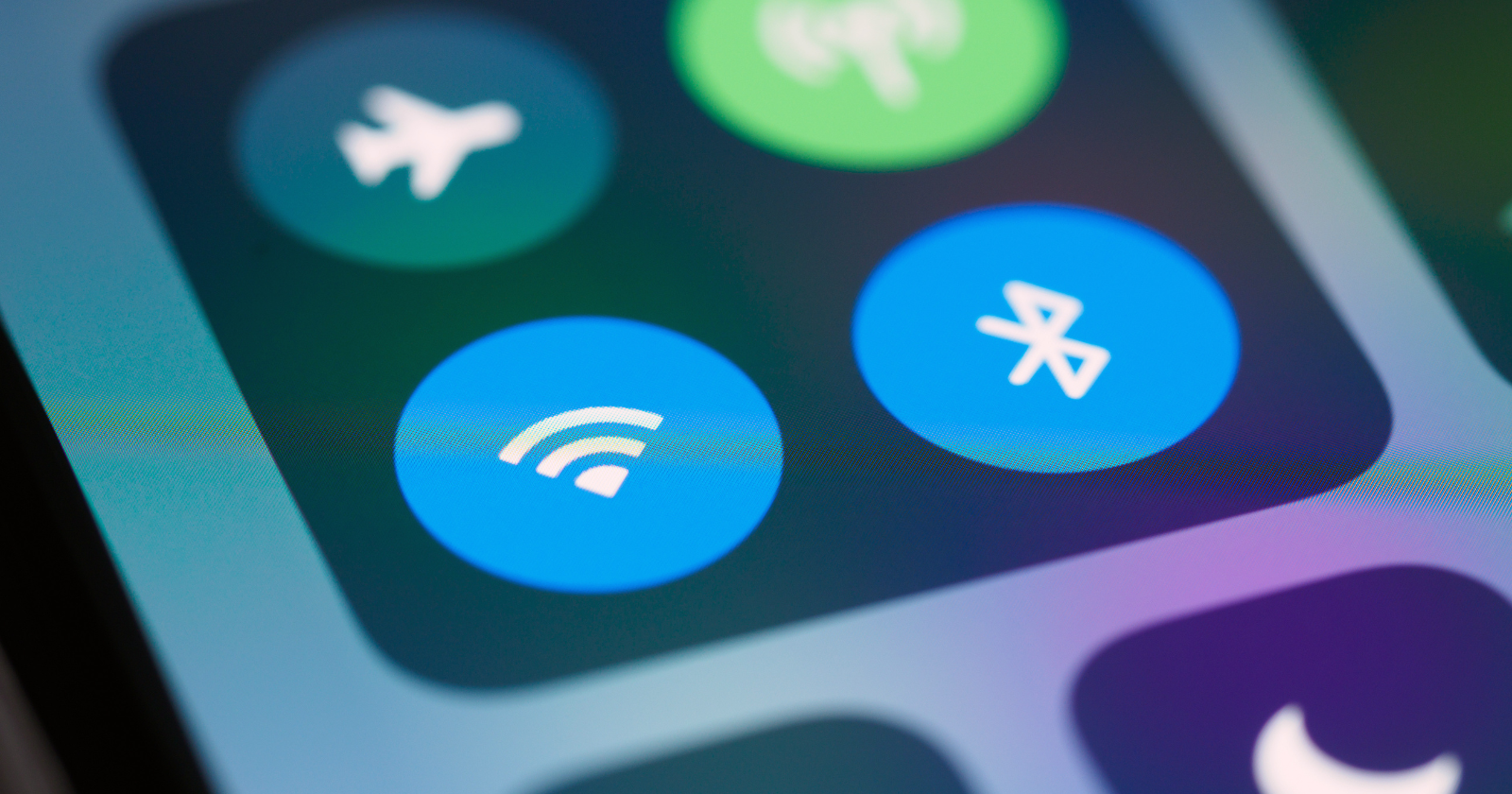
The Bluetooth symbol on your phone is actually a thousand-year-old Viking monogram. It belongs to a Danish king who united warring tribes, and the reason his name ended up on billions of devices was never even meant to be permanent.

Pick up your phone. Open the settings. Find the small blue rectangle with the pointy angular symbol inside it, the one you have been ignoring since the first mobile device you ever owned. That specific little glyph, on the accumulated historical evidence of the past thirty years of wireless technology, is the personal monogram of a Danish king who ruled from approximately 958 to 986 AD, died in the year Halley’s Comet last returned to Earth before 1066, and has been buried in Roskilde Cathedral for the better part of a thousand years.

His name was Harald Gormsson. His nickname, according to the surviving Old Norse records, was Blåtand. Which translates directly into modern English as Bluetooth.

The whole story of how his personal monogram ended up on every wireless device on the planet is one of the more genuinely accidental facts of the modern technology industry.

The king in question

According to the official history maintained by the Bluetooth Special Interest Group, the industry consortium that owns the technology standard and runs its trademark, Harald Bluetooth was a considerably more interesting historical figure than the somewhat comic nickname suggests. Between roughly 958 and 986, he unified the previously fragmented tribes of what is now Denmark into a single kingdom, brought Norway into the same political sphere, and was responsible for the formal Christianisation of the Danes, an achievement he commemorated by carving one of the earliest known references to the country of Denmark on a runestone that still stands today in the small town of Jelling.

The nickname itself, on the surviving linguistic record, appears to have come from a physical peculiarity. He had, according to the accounts that reached the medieval Icelandic chroniclers, a prominent dead tooth that had darkened to a shade closer to grey-blue than to healthy white. In an era before dentistry, this was the kind of visible personal feature that stuck. The great unifier of Scandinavia became, in the mouths of his contemporaries and their descendants, the man with the blue tooth.

His initials, in the runic alphabet of his time, were ᚼ for the H sound in Harald and ᛒ for the B in Blåtand. In the Younger Futhark script used in tenth-century Scandinavia, those two characters look nothing like the modern Latin letters H and B. What they look like, when combined into a single glyph in what scholars call a bind rune, is the exact symbol currently sitting on every Bluetooth-enabled device in the world.

On a related note, I came across a video that dives into the effect our phones are quietly having on us. You’ve probably felt it before, but this video will put a name to the feeling:

The Toronto bar

The story of how the king’s monogram ended up on modern electronics has been recounted in detail by the person primarily responsible, an Intel engineer named Jim Kardach. According to Kardach’s own 2008 account, published in EE Times under the title “Tech History: How Bluetooth got its name”, the origin of the whole naming decision took place in a Toronto bar in late 1997.

Kardach was at the time working on short-range wireless radio at Intel. Three separate industry efforts were running in parallel. Intel had a project called Biz-RF. Ericsson had one called MC-Link. Nokia had a third called Low Power RF. All three companies were trying to build essentially the same thing, which was a small, low-power wireless standard that would let phones, computers, and peripheral devices talk to each other without cables. In late 1997, after a joint industry meeting in Toronto that Kardach later described as having gone badly, he and Ericsson engineer Sven Mattisson went out drinking together and, being history enthusiasts, started swapping stories about the medieval Scandinavian kings Mattisson had been reading about in Frans G. Bengtsson’s Viking-era novel The Long Ships.

One of the kings in the book was Harald Bluetooth. Kardach, on his own subsequent account, went home from the trip and read further, ordering Gwyn Jones’s A History of the Vikings, and found a photograph of the runestone Harald had commissioned. Harald had united the fragmented tribes of Scandinavia into a single political unit. The three technology companies, if they could ever agree on a single standard, would be uniting the previously fragmented world of consumer electronics into a single wireless protocol. The parallel was, on Kardach’s telling, too neat to ignore. He proposed the name Bluetooth as a temporary internal code name for the project.

The bind rune of Harald’s initials became the working logo. Kardach later created a PowerPoint slide showing Harald holding a mobile phone in one hand and a notebook in the other.

How it stayed

The name was not, on any of the surviving contemporary correspondence, meant to be permanent. According to both the Bluetooth SIG’s own account and Kardach’s, the intention was for the marketing departments of the participating companies to come up with a more polished official name in due course, and for Bluetooth to be quietly retired once something better arrived.

Two names were shortlisted as replacements. One was RadioWire, which was Intel’s preferred candidate. The other was PAN, which stood for Personal Area Networking. The launch of the industry consortium was scheduled for early 1998. The trademark clearance process for RadioWire dragged past the deadline. A search for PAN turned up so many unrelated uses of the acronym on the newly emerging commercial internet that its usefulness as a brand collapsed. The Bluetooth Special Interest Group was formed in February 1998, under Kardach’s temporary code name, on the understanding that the name would be replaced later.

The first Bluetooth-enabled products shipped in 1999. By then, according to a National Geographic feature on the technology’s Viking origins, the name had already acquired sufficient market recognition that rebranding would have cost more than continuing to use it. The tech press was writing about Bluetooth. Trade shows had Bluetooth banners. Product packaging was going to press. Nobody wanted to spend the money to change everything. The temporary code name became the permanent one, and the bind rune of a tenth-century Danish king’s initials became the visual identity of a wireless standard that would, over the following quarter century, be installed on more than five billion devices per year.

Kardach himself, on his own account of the whole episode, has been surprised at the trajectory ever since. He was inducted into the Bluetooth Hall of Fame for his role in the naming decision. He retired from Intel as chief power architect in 2012. And the symbol he first proposed as a working code, drawn from a book about medieval Scandinavians he happened to be reading during a badly-timed Toronto business trip, has become one of the most reproduced pieces of graphic design in the world.

None of this was meant to happen. Harald Bluetooth did not know his initials would end up in the pocket of every person on the planet. Kardach did not intend the code name to survive marketing review. The Bluetooth SIG did not plan to build a global brand around a Scandinavian pun. What connects all of these accidents is the strange gravitational pull of anything that becomes familiar quickly enough. Once a placeholder gets attached to a project long enough for the trade press to start using it, and long enough for it to appear on the sides of shipping products, the cost of changing it starts to exceed the cost of simply leaving it in place. And so, on the accumulated evidence of thirty years of consumer electronics history, the temporary becomes the permanent, and the initials of a long-dead Viking king continue to appear, every day, on the connection screen of every device you own.

Kiran Athar is not a historian or a technology industry analyst. She writes about history, technology, and the ordinary corners of modern life where the two intersect, drawing on peer-reviewed research and primary-source scholarship.

The post The Bluetooth symbol on your phone is actually a thousand-year-old Viking monogram. It belongs to a Danish king who united warring tribes, and the reason his name ended up on billions of devices was never even meant to be permanent. appeared first on Space Daily.

  •  

Why is ChatGPT drinking bottles of fresh water to answer your questions, and who is actually paying for it?

Here’s the thing about the water going into ChatGPT. It’s real water. It’s fresh. It’s drinkable. And most of the time, it’s not coming from anywhere near the person typing the question.

You are not paying for that water. Neither is OpenAI. Neither is Google, Microsoft, Meta, or Amazon, at least not in any way that resembles what the water is actually worth to the communities losing it. Someone else is paying, and if you have never heard their names, that’s because they aren’t the sort of people the AI industry finds it useful to talk about.

The families in Montevideo

In the first half of 2023, Uruguay was living through its worst drought in more than seventy years. Reservoirs supplying the capital ran dry. According to a Project Syndicate analysis by researchers Friederike Rohde and Paz Peña, republished by the Heinrich Böll Stiftung in November 2025, the Uruguayan government’s response was to relax its drinking water standards and pump brackish water from the Río de la Plata estuary into the public supply.

For weeks, working-class families in Montevideo were boiling salty tap water and trying to make it drinkable for their children.

During those same weeks, the government granted Google permits to draw from the remaining fresh water reserves for a proposed data centre.

That is not a hypothetical. It is not a projection. It is what happened, in one specific city, in one specific year, to one specific set of families whose taps ran salt while a foreign tech company was licensed to take the fresh water they could not have.

The residents in Fayette County

Nothing about this pattern is limited to countries you might be tempted to describe as vulnerable. According to a Fortune investigation published in May 2026 by news editor Catherina Gioino, residents of an affluent subdivision in Fayette County, Georgia, spent most of 2024 noticing that their water pressure was tanking. Something was drawing enormous quantities of water from the same system that fed their homes.

The county utility eventually traced the problem to a 615-acre data centre campus called Project Excalibur, owned by a company that is itself owned by Blackstone. One of its water hookups had been installed without the utility even knowing it existed. Another was flowing unmetered and uncharged. By the time officials caught up, the developer had consumed 29 million gallons of local water without authorisation. The retroactive charge was roughly 147,000 dollars. No fine was imposed.

In Tucson, Arizona, where the city council had already voted unanimously to reject a proposed data centre because the region gets seven to ten inches of rain a year, a construction contractor obtained a permit for water inside the city’s service area, transported it outside city limits, and used approximately 650,000 gallons of it on the rejected project without authorisation. The city shut off the meter. Construction continued.

The women in Cerrillos

The most sustained resistance to any of this has come from a group of women in the working-class Cerrillos district of Santiago, Chile, who in 2019 formed a neighbourhood organisation called MOSACAT after learning that Google was planning to build a data centre in their community. The proposed facility was projected to consume 7.6 million litres of fresh water a day. That is roughly what their entire neighbourhood uses in a year.

MOSACAT read the environmental report themselves. They organised. They took the case to a Chilean court. And in September 2024, that court forced Google to redesign the cooling system and undergo a fresh environmental review.

They are still fighting.

Why is this happening?

The pieces that connect these stories, the reason the same arrangement keeps repeating from Montevideo to Fayette County to Santiago, the specific mechanism by which drought-stressed regions become attractive rather than off-limits to the world’s largest technology companies, and the actual scale of what is being taken, are the substance of the video attached to this piece.

It walks through where the water goes, how much of it never comes back, and the far larger number that almost nobody in the industry reports.

Click here to watch the short video.

The post Why is ChatGPT drinking bottles of fresh water to answer your questions, and who is actually paying for it? appeared first on Space Daily.

  •  
❌