It's hard to imagine how we'd interact with computers today without the work of engineer and inventor Douglas Engelbart, who pioneered many aspects of computer science and also invented the computer mouse. The breadth and depth of his work led him to believe that humanity's digital era could be the most significant in its history.
The digital revolution
Engelbart, then a researcher at the Stanford Research Institute where he led the development of interactive computing, was delivering a demonstration now considered by many as legendary.
Quote of the day
This article is part of TechRadar Pro's QOTD project to provide an insight into the minds of the brightest and most recognized figures in the technology industry today and in years gone by. Read the full series here.
This spoken presentation, known as 'The Mother of All Demos', involved a 90-minute showcase in which his team described their progress to a captivated audience.
Engelbart wasn't standing at a podium, but at a computer that was based 30 miles away in his research lab. The event cycled between spoken passages, live demos, and different members of the team using teleconferencing to speak about different technologies.
A new era
During this talk, he delivered his opinion that their work, which would lay the foundation for advancements in the years to come, was a more important contribution than both writing – and even printing.
This was an incredibly bold prediction, because he was comparing the digital revolution to core aspects of the human condition. Writing and printing fundamentally opened pathways for sustainable knowledge transfer, allowing humanity to pass on and build on progress over the course of millennia.
If anybody was poised to know the significance of the computing era, it was Eglebart. His work was at the heart of many of the technologies that we take for granted today, including the humble computer mouse. In 1964, he built a small, carved wooden block featuring a single button on top and two metal wheels beneath to track movement. He went on to demonstrate this for the first time at his 1968 demo.
BERLIN — Lenovo has unveiled a concept laptop that uses high-speed air to silently cool its processor, instead of conventional fans or heat sinks. The new system is powered by a tiny computer chip that can fit between your fingers.
The new laptop, called AeroBlade, is fitted with four low-power cooling chips that are both "solid-state," meaning there are no moving parts, and "active" — they use a deliberate cooling mechanism — as opposed to relying on passive thermal energy transfer.
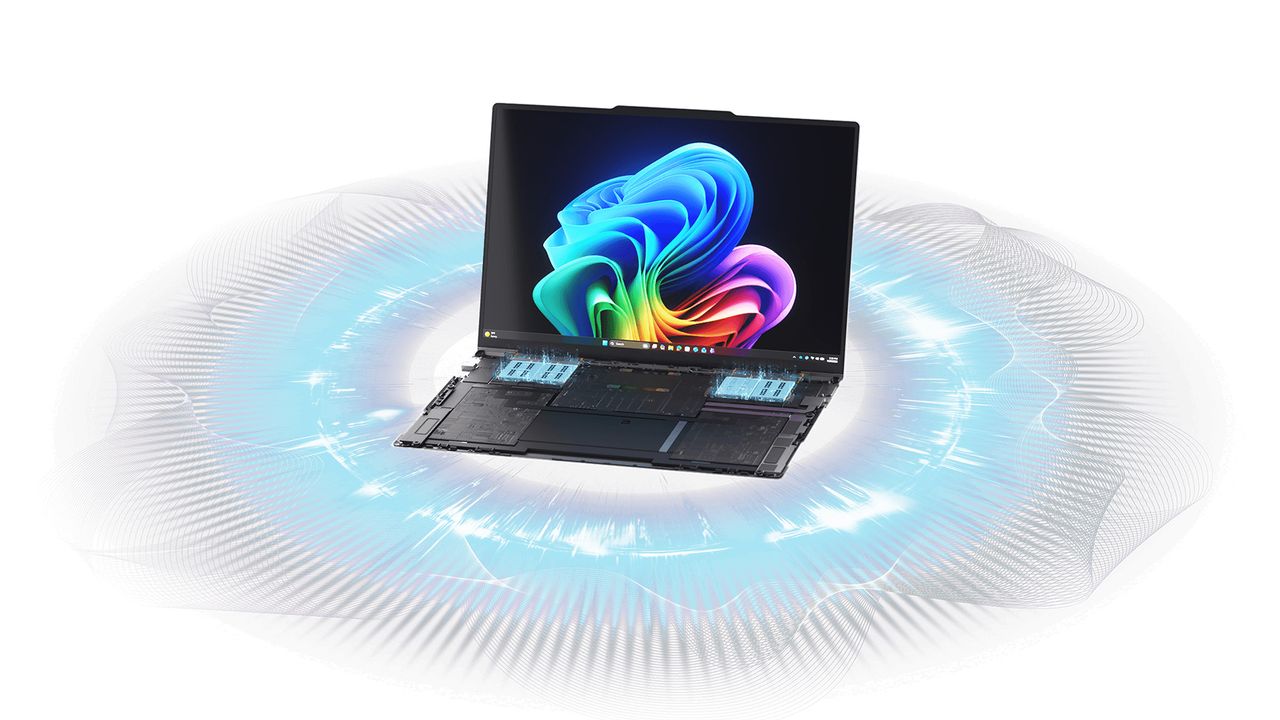
The cooling chips contain tiny membranes that vibrate at ultrasonic frequencies to create 2,000 pascals of back pressure, forcing ambient air through tiny internal jets onto a copper base layer at speeds of around 124 miles per hour (200 kilometers per hour). This air carries heat away from the laptop's central processing unit (CPU) and graphics processing units (GPU), before being violently expelled from tiny vents at its rear hinge.
Lenovo representatives unveiled their new AeroBlade machine at Lenovo Innovation World '26, which took place Sept. 3 at IFA 2026 in Berlin, which itself ran between Sept. 4 and 8.
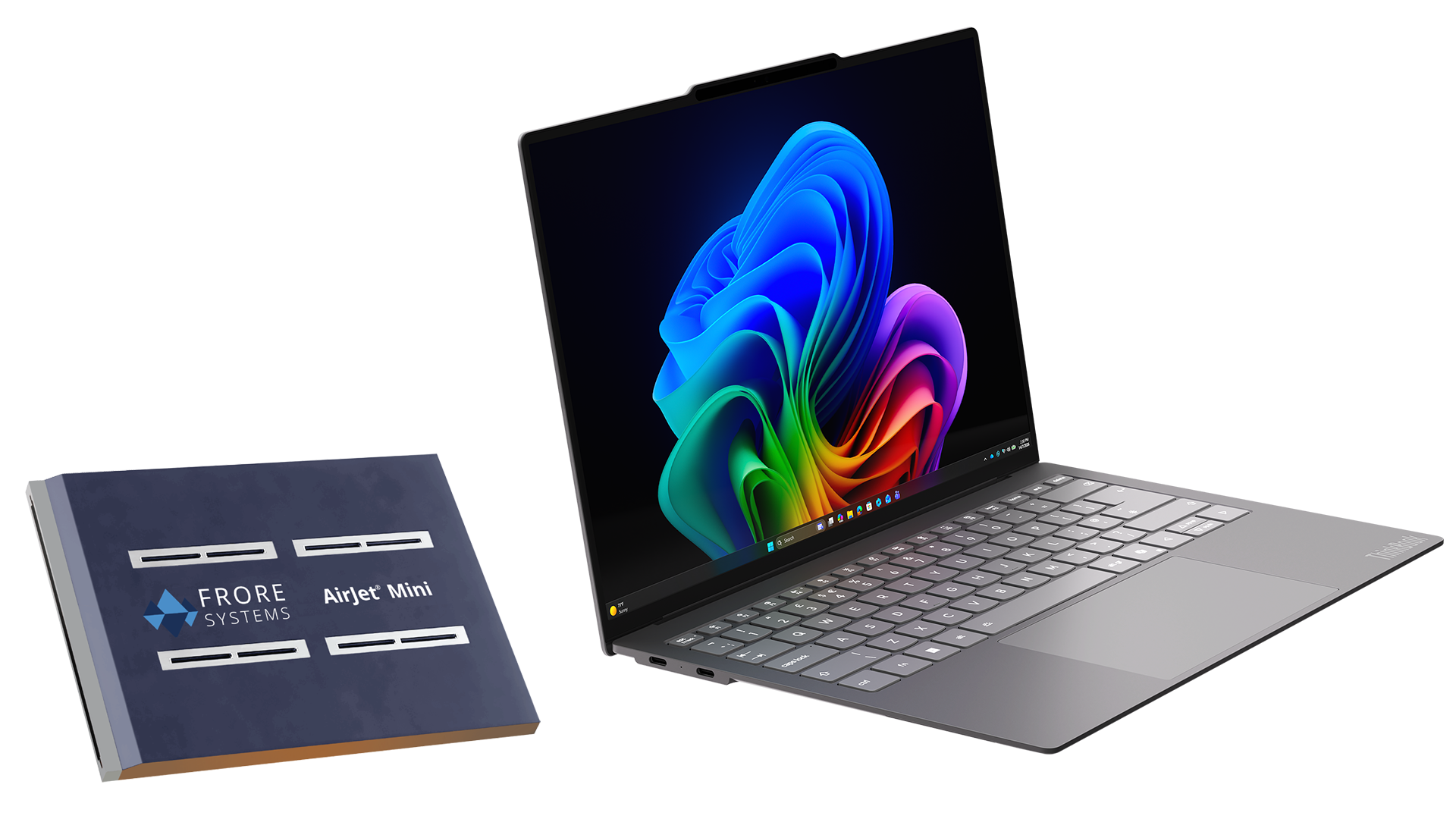
Made by engineers at Frore Systems, the low-power AirJet Mini chip measures 1.63 x 1.06 x 0.1 inches (41.5 x 27 x 2.65 mm) and weighs just 0.02 pounds (9 grams). Because it contains tech designed to replace conventional cooling technologies, the AeroBlade, which is fitted with a 14-inch (355.6 mm) OLED display, is much thinner and lighter than comparable laptops
The AeroBlade measures less than 0.39 inches (10 mm) thick — where comparably sized machines measure 0.51 inches (12 mm) at their thinnest — and weighs just 1.8 pounds (830 g). Laptops as light as this exist, like the 1.76-pound (799 g) Acer Swift Blade 14, but they're rare. Counterparts with 14-inch screens are normally considered light if they fall between 2.2 to 2.86 pounds (1 to 1.3 kilograms).
A new approach to keeping cool
Four AirJet Mini chips are fitted inside the new Lenovo concept laptop. (Image credit: Lenovo and Frore Systems)
Both companies are framing the introduction of this technology as a way to cool down the next generation of high-end laptops that will wield on-device artificial intelligence (AI).
Most laptops marketed as "AI PCs" just feature a neural processing unit (NPU) that can run simple AI workloads, such as manipulating or enhancing a webcam's video feed in real time.
But some future laptops will aim to let users run powerful large language models or AI agents without needing to connect to the internet. An example is the forthcoming series of Nvidia RTX Spark laptops, which will feature a new chip designed specifically to orchestrate AI agents locally.
Running on-device AI models usually demands significant power funneled into professional-grade graphics processing units (GPUs). Fans are deployed in all kinds of laptops to keep their chips cool, but they can be noisy. Instead of or in addition to fans, passive heat sinks, found in machines like the MacBook Air or the Microsoft Surface Pro, use metal plates positioned close to heat sources to absorb thermal energy. But these laptops are more prone to throttling — when their software pulls back performance to reduce temperature.
The AirJet Mini is a different way of cooling, relying on its own high-velocity jet mechanism to flush hot air away. Frore representatives said in a statement that the device operates at just 21 decibels at peak power — equivalent to the sound of leaves rustling or a whisper — and is capable of removing 7.5 watts of heat. Four of these chips would remove 30W of heat — which is in line with the heat expulsion of conventional laptop fans, although there is variation between models.
The AeroBlade's 2,000 pascals of back pressure a measure of opposing force pushing against the direction of airflow) is roughly 10 times that found in regular laptop fans, which typically falls between 100 and 200 pascals.
Although the underlying cooling technology is a few years old, having first been announced in December 2022, AeroBlade represents the first time it's been used in a fully operational laptop. The chip was previously integrated into the ZOTAC ZBOX PI430AJ Pico mini PC in 2023, while there are no commercially available tablets or laptops available with this chip. The AeroBlade laptop remains a concept model, with no information yet as to when production-ready machines fitted with this new cooling technology will emerge.
Can you match these ancient devices to their pictures? Find out with our computing quiz!
Elon Musk has been at the heart of promoting various companies throughout the 21st century, with two of his most prominent companies anchored in the notion of mass production. In the case of his infamous clunky and angular Tesla Cybertruck, he encountered several difficulties in bringing the prototype to market.
Planting the seed
Musk was speaking about the rigors of bringing the Cybertruck to life during an appearance on the Joe Rogan podcast.
Quote of the day
This article is part of TechRadar Pro's QOTD project to provide an insight into the minds of the brightest and most recognized figures in the technology industry today and in years gone by. Read the full series here.
Rogan asked how far away Musk was from delivering the vehicle to people, with Musk revealing at the time that the timing was about a month away.
But the prototype was initially unveiled in November 2019. Explaining the delay, the Tesla CEO hinted that the process of manufacturing the vehicle proved much harder than expected given the need for consistency in producing each model.
Rinse and repeat
There's an element of common sense in buying into the idea that making a prototype is much easier than mass-producing a finished version of that product.
Not only is there a much lower tolerance for error, but establishing the supply chain for materials, components, and resources is far more complex. Then there's the economics of it all – ensuring that the cost to produce one vehicle can, at least, be recouped by a customer should there even be a willingness to pay for it.
It's reminiscent of the "production hell" phrasing that Musk has also frequently deployed through the years – especially during a manufacturing crisis between 2017 and 2018. During this time, the Tesla production line became a futuristic and automated process known as the "alien dreadnought" – but this robotic network eventually slowed down manufacturing and prevented Tesla vehicles from being ready on time.
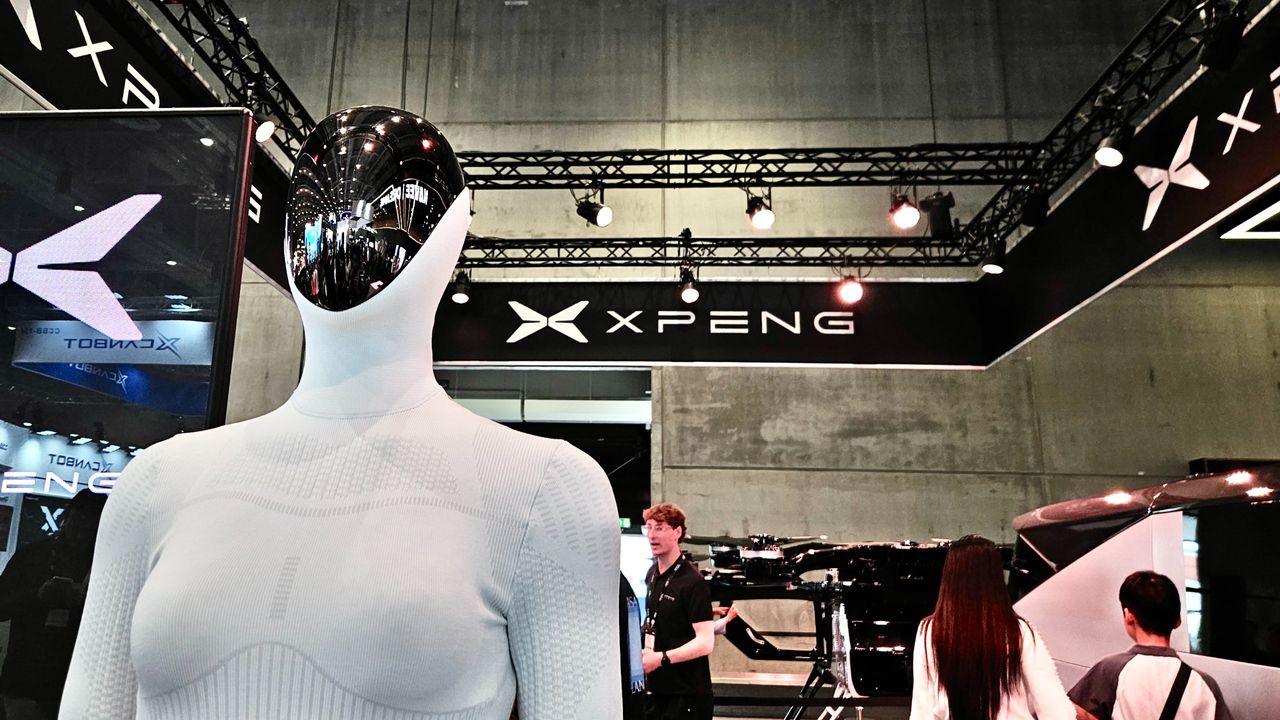
BERLIN — An eerily lifelike humanoid robot made by Chinese technology company Xpeng has now entered mass production, company representatives revealed. They say it'll be the first such machine to walk itself off the production line.
The humanoid robot, dubbed IRON, went viral last year after presenters sliced it open onstage to prove a human wasn't inside. Xpeng will now produce units through its existing production facilities, with no word on how many its factories will aim to build.
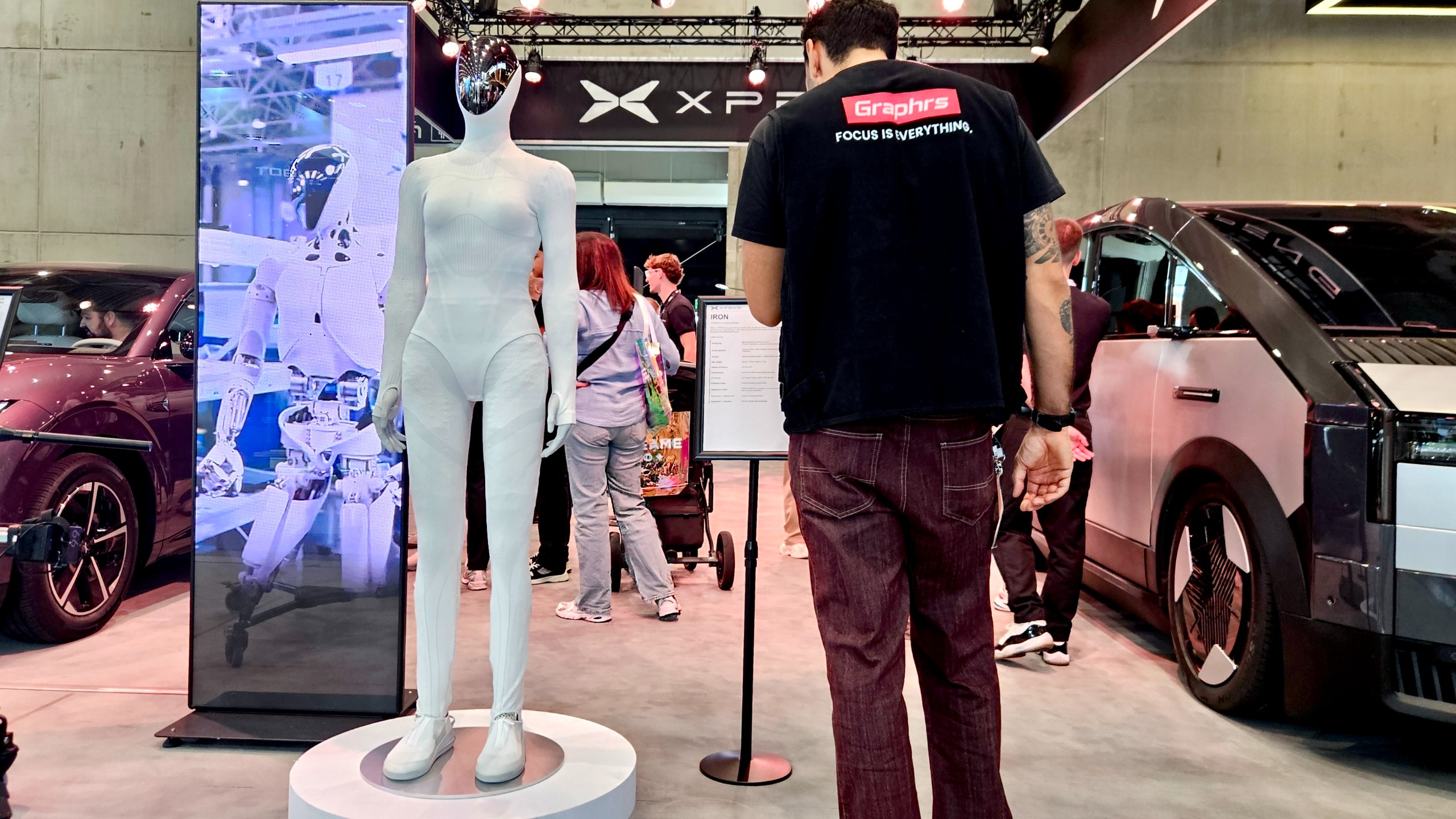
The fabric skin-clad machine comes in different body shapes and even genders, but all stand approximately 5 feet 7 inches tall (173 centimeters) and weigh 143 pounds (65 kilograms). The prototype included 82 degrees of freedom (DoF) head to toe, including 22 DoF in each hand, which differs from the production version's 76 DoF and 21 DoF respectively. They can also move at speeds of up to 6.5 feet per second (approximately 2 meters per second), which is equivalent to a fast power walk.
In conversations with Live Science at IFA 2026, held in Berlin between Sept. 4 and 8, Xpeng representatives claimed that their machines will one day be used in homes to help with domestic chores like cleaning and folding laundry. They likened the introduction of humanoid robots more generally to the rise of smartphones in the mid-2000s and expect robots to proliferate on a similar scale over the next few years.
As such, they have extremely lofty expectations for IRON, with the company branding it the world's first "high-level, general-purpose" humanoid robot. Representatives added that it can receive instructions, plan its strategy, navigate the environment intelligently, and avoid obstacles without trial and error. The robot also has a "self-charging" feature, meaning it will seek out designated charging cabins and plug itself in when low on battery.
The rise of humanoid robots
If the claims bear out, it will place IRON among the first such machines powered by artificial intelligence to be built on a massive scale. Competitors that have also entered mass production include American robotics company Figure AI's Figure 03, which in May participated in a live-streamed production line demonstration, as well as the Chinese AGIBOT, which reached 15,000 units in June.
One notable company that hasn't entered its robot into mass production is Tesla. The Optimus robot is still in factory assembly, and its release has been delayed four times since 2022, most recently last year. Xpeng representatives were keen to point this out in briefing materials shared with Live Science, without mentioning other humanoid robot makers.
IRON's makers claim it's more advanced than its counterparts. Rather than building separate AI engines, the company has deployed the same "world model" to power the robot as that used in its fleet of AI-enabled electric vehicles (EVs) and its flying car prototypes.
The prototype IRON humanoid robot is 5 feet 6 inches tall and weighs 143 pounds. (Image credit: Keumars Afifi-Sabet/Live Science)
One of the biggest challenges in robotics is that, given the physical world's messiness, AI systems struggle to navigate and manipulate their environment unless conditions are controlled. That's why we're used to seeing robots either completing tasks slowly or getting things spectacularly wrong. Researchers, therefore, are increasingly focusing on building world models and other layers like improved vision-language-action (VLA) systems that enable them to better plan their actions a few steps ahead.
Xpeng representatives won't share detailed information about the proprietary AI system powering IRON, but each robot features three frameworks that combine so it can function autonomously.
The frameworks include VLA, which combines visual perception, natural language, and physical motor control; a vision-language model (VLM) — combining vision encoders with text readers; and a vision-language-task/thought (VLT) model, which representatives say gives IRON reasoning capabilities that enable it to think through assigned tasks.
Each IRON robot is powered by three Turing AI chips that offer a collective 2,250 trillion operations per second (TOPS) of AI processing power. This means it can run a model equivalent to Meta's Llama 3.2 (launched in 2024) locally without needing to access the internet. By contrast, most new laptops that can perform simple on-device AI tasks (like altering your webcam video feed in real time) tap into approximately 50 TOPS.
"We aim to build a new type of robot with full generalization capabilities that can truly become part of everyday life, create a better life for people, and ultimately become a companion in their lives," said He Xiaopeng, the company's chairman and CEO, in a statement shared with Live Science.
The company will first install these robots in its own showrooms and technology campuses while it continues to validate new ways to use them. Then in 2027, external shipments will target commercial customers for roles in areas such as customer service or guided tours in China primarily, and then in other countries.

 Login