❌

Reading view

Cool chemistry trick allows new tattoos to 'turn on and off'
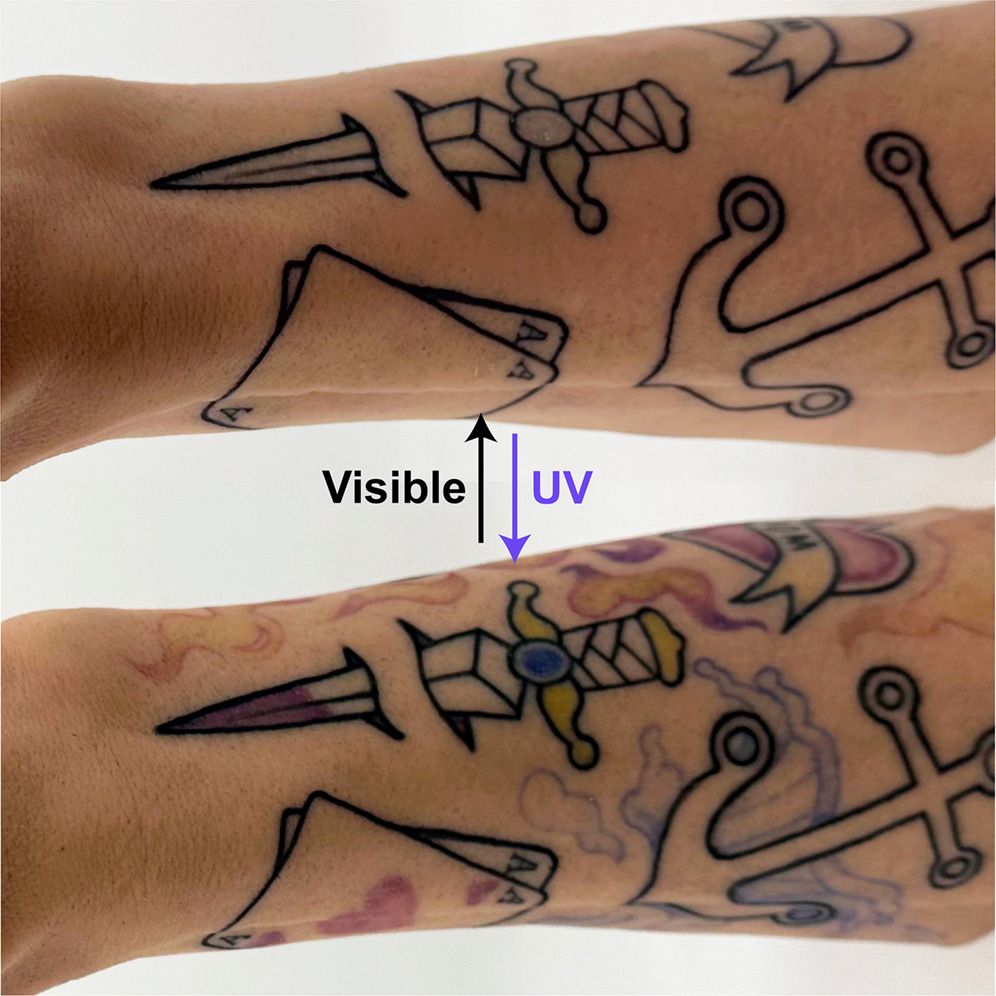
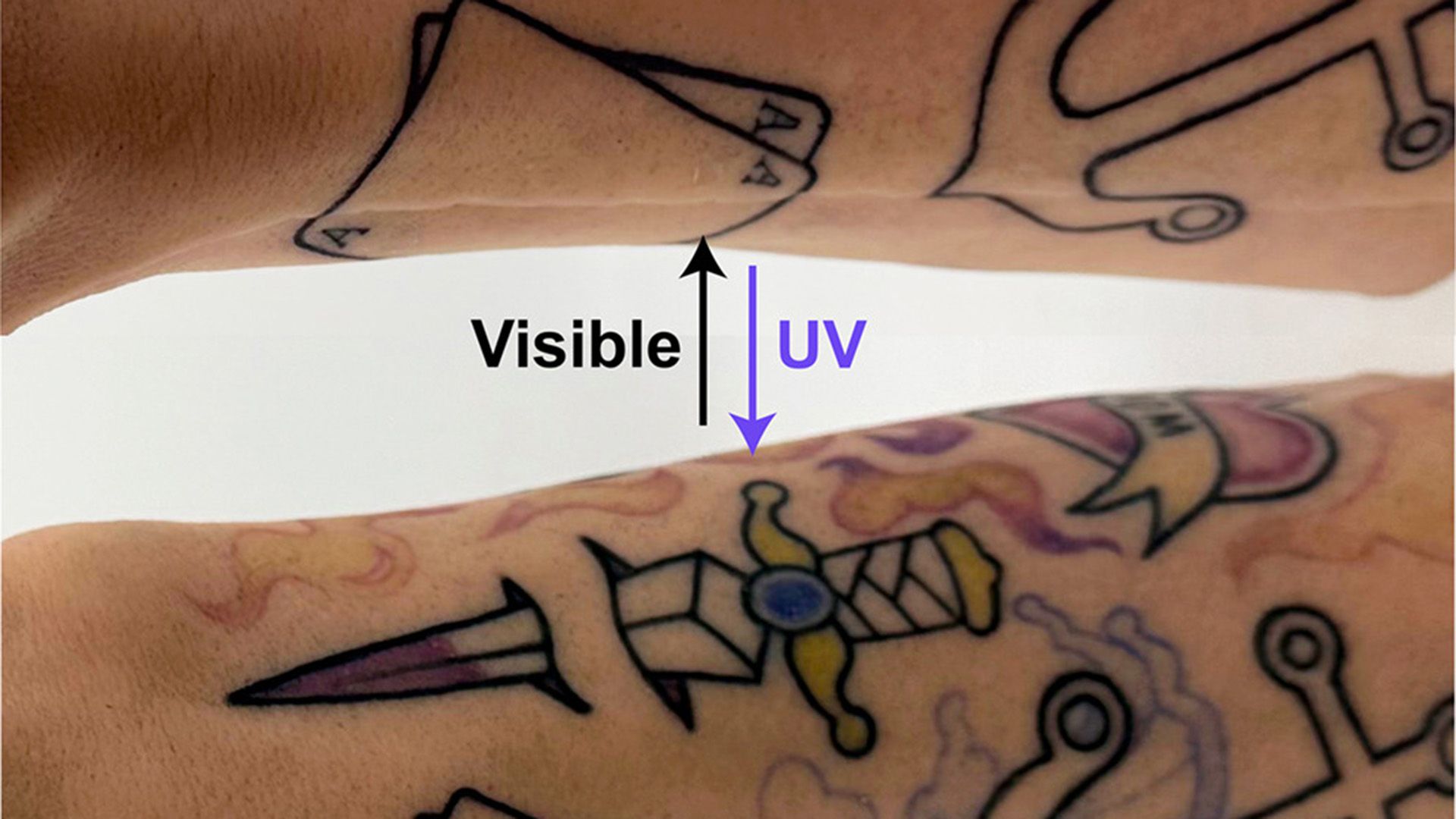
Two arms with one showing tattoos and the other showing colors amidst the tattoos

The new tattoo ink is activated under UV light. (Image credit: Matter & Light, Bruns et al.)

Researchers have developed a new type of tattoo ink that can be switched on and off with light, allowing colors and images embedded in the skin to be changed and even "erased" without having to go through the painful tattoo-removal process.

The system, which is being commercialized under the name PhotoTat, could eventually give people a way to conceal or change permanent body art. It could also have more practical applications, including medical tattoos that are visible only when a doctor needs to see them, researchers reported in a study published Friday (Oct. 9) in the journal Matter & Light.

"This is a tattoo that you can have, and whenever you decide you don't want it to be showing anymore, or you just don't want it there, you just turn it off," said study co-author Carson Bruns, an associate professor of biomedical engineering at the University of Colorado at Boulder. "And that's it. You don't have to turn it on again."

Working like a light switch

PhotoTat contains three primary color inks β€” blue, magenta and yellow β€” made with photochromic dyes, which are light-sensitive compounds that can change color with different wavelengths of light. These dyes are encapsulated in nanoparticles of polymethyl methacrylate (PMMA) β€” a medical-grade, glass-like plastic that is already used in medical implants and dermal fillers.

The dyes change their molecular structure when exposed to specific wavelengths of light. A 365-nanometer ultraviolet (UV) LED can activate pigments in around two to three seconds, Bruns said. Once activated, the colors can persist for hours to days under typical indoor lighting. But once the wearer exposes their skin to the bright outdoor sun, the colors disappear in seconds, erased by the intense light.

That makes the tattoo unique, as the pigment itself remains in the skin but the tattoo's appearance changes. Bruns and his team found that all three PhotoTat channels remained switchable in the skin for between 1.4 and 2.2 years.

Tattooing yourself for science

The three colors enable someone to activate different portions of a tattoo using different wavelengths of light. That means the magenta part of the tattoo might be turned on with green light, while the yellow pigment would be activated by blue light. This allows the wearer to customize their design and coloration to whatever they want at the moment β€” from a purple cherry to a yellow group of hearts.

That feature makes PhotoTat appealing for "people who love tattoos and have lots of tattoos, but just want something kind of fun and playful to add," Bruns told Live Science.

Bruns has tested each iteration of PhotoTat's inks on his own skin. His art is arranged in a series of tattooed scales, with different ink formations in individual scales.

"I gave myself these scales on purpose because they're each sort of a container for an experiment," Bruns said. The result, he joked, resembles a "magical mermaid trick," with some scales appearing out of nowhere and others changing color when activated.

The technology can also be combined with conventional tattoo ink. A permanent black ink design, for example, could contain hidden PhotoTat elements that appear only when activated.

The new tattoos could be appealing to people who want tattoos but are hesitant about their permanence, as well as to people who love their tattoos but occasionally need to conceal them because of work, social expectations or family, Bruns said.

"It's going to be on for most of the time, but just for this one moment, I'm going to turn it off for you grandma, for example," Bruns said.

Medical tattoos

Bruns thinks the tattoos could be helpful in a medical setting, too. Patients undergoing radiation therapy, for example, sometimes receive permanent tattoos that help doctors precisely align radiation beams. While useful, those marks remain after the treatment, reminding the patient of their experience. These would make such markings invisible if a patient wants them to be.

PhotoTat could potentially allow similar markings to be switched on during surgery and hidden afterward.

Bruns has spent several years developing other smart tattoos for medical applications, including a dosimeter-type tattoo that measures the amount of UV radiation a wearer experiences, along with a tattoo that changes color when the wearer is exposed to dangerous gamma radiation.
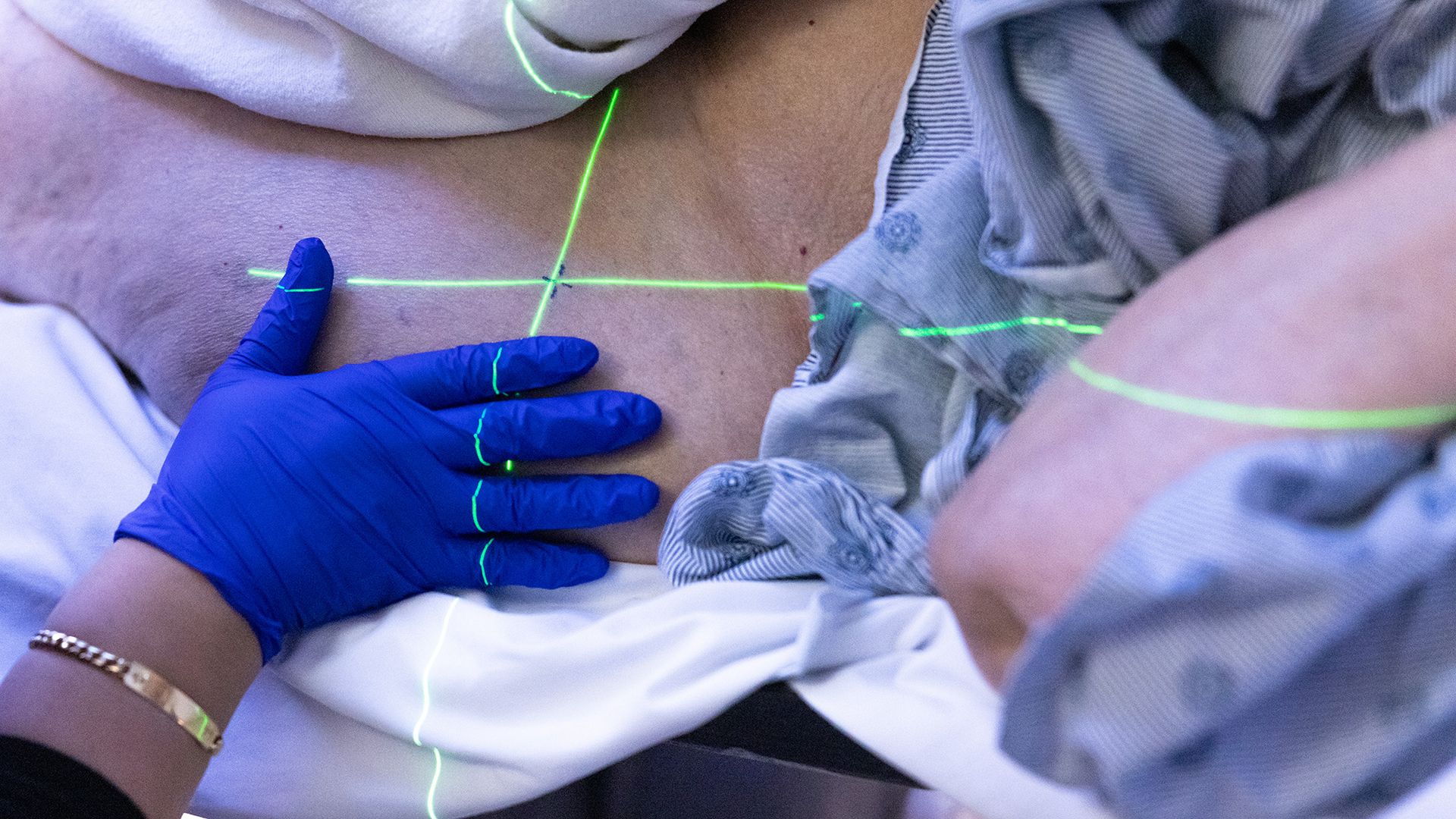
A crossbeam of green laser light is on someone's back.

A cancer patient receives radiation treatment, guided by laser lines and a tattoo on their skin. (Image credit: The Washington Post via Getty Images)

"It's not for you and me, but if you're like an astronaut or a nuclear engineer, they have to wear these dosimeters," Bruns said. "So, we have like a dosimeter tattoo that sort of puts that in your skin."

So far, Bruns and a fellow tattoo artist, have only commercialized the purple PhotoTat ink, after running the ink through a series of third-party medical tests.

The tests showed the purple is safe for use, and available to order, but it isn't cheap at $100 for a small bottle. Bruns hopes as more research is done, he can bring the other colors to market and lower the production cost, so the technology is more accessible.

  •  

'We stocked an RV as an emergency bugout vehicle': Readers share how prepared they are for a disaster

As the "super" El NiΓ±o is predicted to bring heavier storms and flooding to the U.S., experts recommend stocking up on food and other supplies. Floods and other disasters, like wildfires, are on the rise due to climate change, making disaster preparedness essential.

But how prepared are people for a disaster?

Preparedness levels vary; some people keep an emergency kit full of food and first-aid supplies, while others have a planned meeting place designated as a safe space. Having a plan can help people feel better about unpredictable events. But not everyone has thought this far ahead.

Live Science recently asked readers how prepared they are for a natural disaster and what sort of plans or supplies they have on hand. Over 130 people responded to the poll, with 51% of readers choosing "I've got an emergency kit ready for when the unexpected happens."

The comments reflected this majority, as one reader wrote, "We're on the edge of an area at risk for grass fires, so we bought/stocked an RV as an emergency bugout vehicle. Felt extreme initially, less so as time goes by. Gives us 3-5 days of margin before we need to resupply, with food, water and first aid for people and dogs."

Another commenter responded to the rest of the comments, writing, "This is just the begining [sic]. Get a greenhouse, plant food, learn to harvest water, build an outside toilet (for later), learn to be self sufficient. trade with your neighbors. Plant fruit trees, get solar panels and an electric transporation (bike, car whatever). Keep a de humidifier in your home. it's back to the 1930ie[s]."

Do you agree with these readers? Let us know in the comments section.

  •  

Colorful wildflowers bloom across Chile's Atacama Desert in wake of 'super' El NiΓ±o

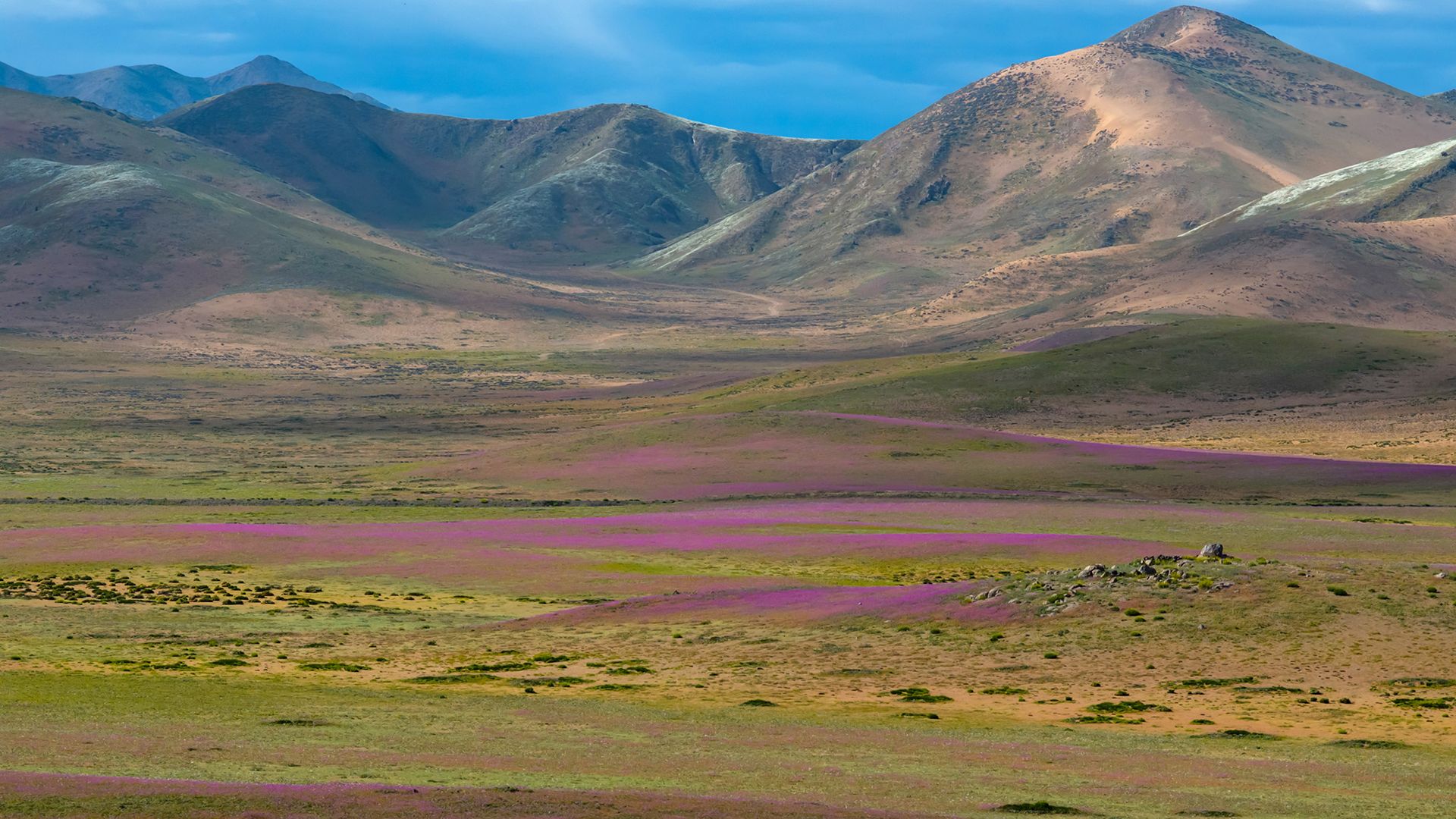
This year's exceptionally strong El NiΓ±o has brought a rare gift to Chile's Atacama Desert: rain. In one of the driest places on Earth, that rare moisture has awakened millions of seeds and bulbs that can remain dormant underground for years, transforming the landscape into a spectacular carpet of color.

Known locally as "desierto florido," or "flowering desert," the phenomenon is one of nature's most remarkable transformations. Patches of purple, pink, white, red and yellow now spread across hillsides and plains that for much of the year appear almost completely lifeless.

"It is a unique phenomenon; there are more than 200 plant species," Jorge Carabantes, head of the Protected Areas Department at the National Forest Corp. (CONAF) in Chile, told The Associated Press. "This is a flowering event that is obviously extraordinary and unusual, very different from other blooms that occur elsewhere on the globe."

Typically, the Atacama gets just 0.6 inches (15 mm) of rain a year. But thanks to the super El NiΓ±o, record levels of rain fell between July and August in several Chilean regions, including levels not seen since the 1950s, with some areas receiving more than 7 inches (190 millimeters), Carabantes told the AP.

While this unprecedented precipitation has caused flooding in some areas of Chile, it's created a 6,560-square-mile (17,000 square kilometers) swath of flowering blooms across the Atacama Desert. This is the most extensive desert bloom since 1997, CONAF representatives told the AP.

For photographers and tourists, the landscape is breathtaking, with bright colors contrasted against the dark Atacama mountains and Chile's cloudless skies. But the bloom is fleeting; by the end of the Southern Hemisphere's spring, many of the flowers will disappear, leaving behind seeds and bulbs waiting for the next extraordinary rains.

Here are five photos from Getty Images photographer Javier Torres that showcase the beauty of this rare event.

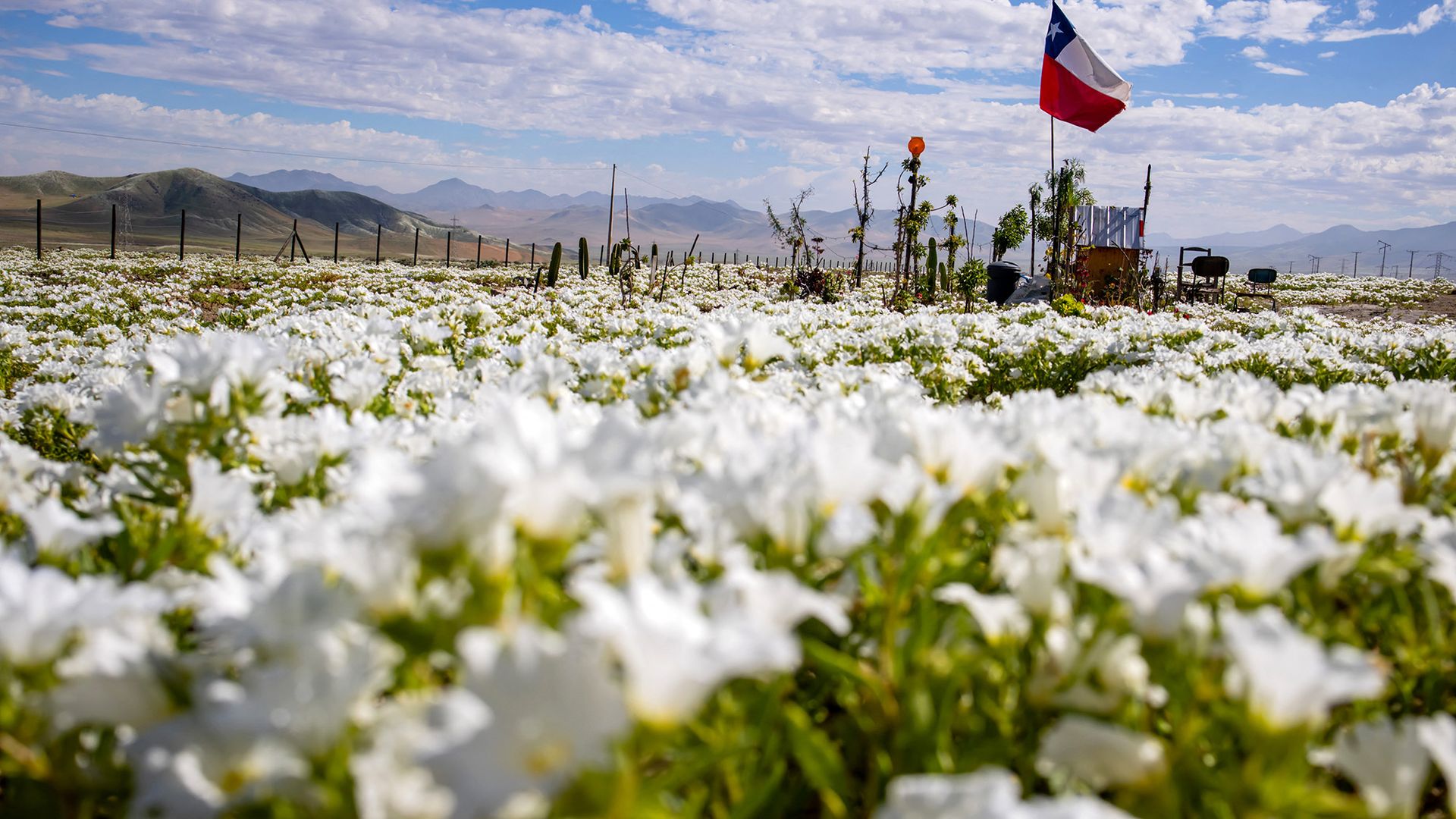
A patch of white blooms is seen with a red, white and blue flag in the background.

Flowers bloom on the plains near the Atacama Desert near CopiapΓ³, Chile, with the Chilean flag in the background. (Image credit: JAVIER TORRES via Getty Images )

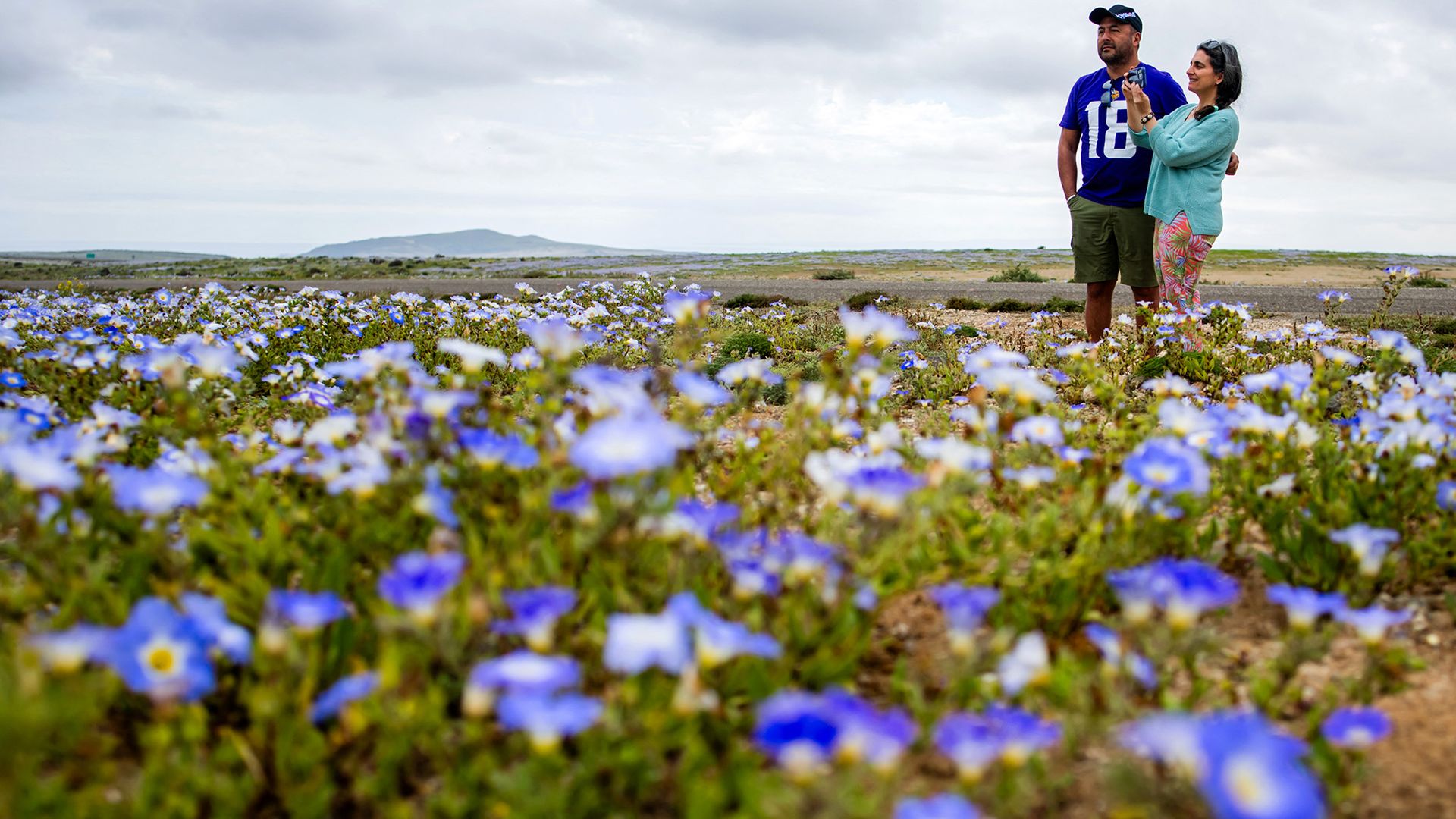
Two people stand in a patch of purple flowers.

Tourists admire the purple blossoms of the desert flowers. (Image credit: JAVIER TORRES via Getty Images)

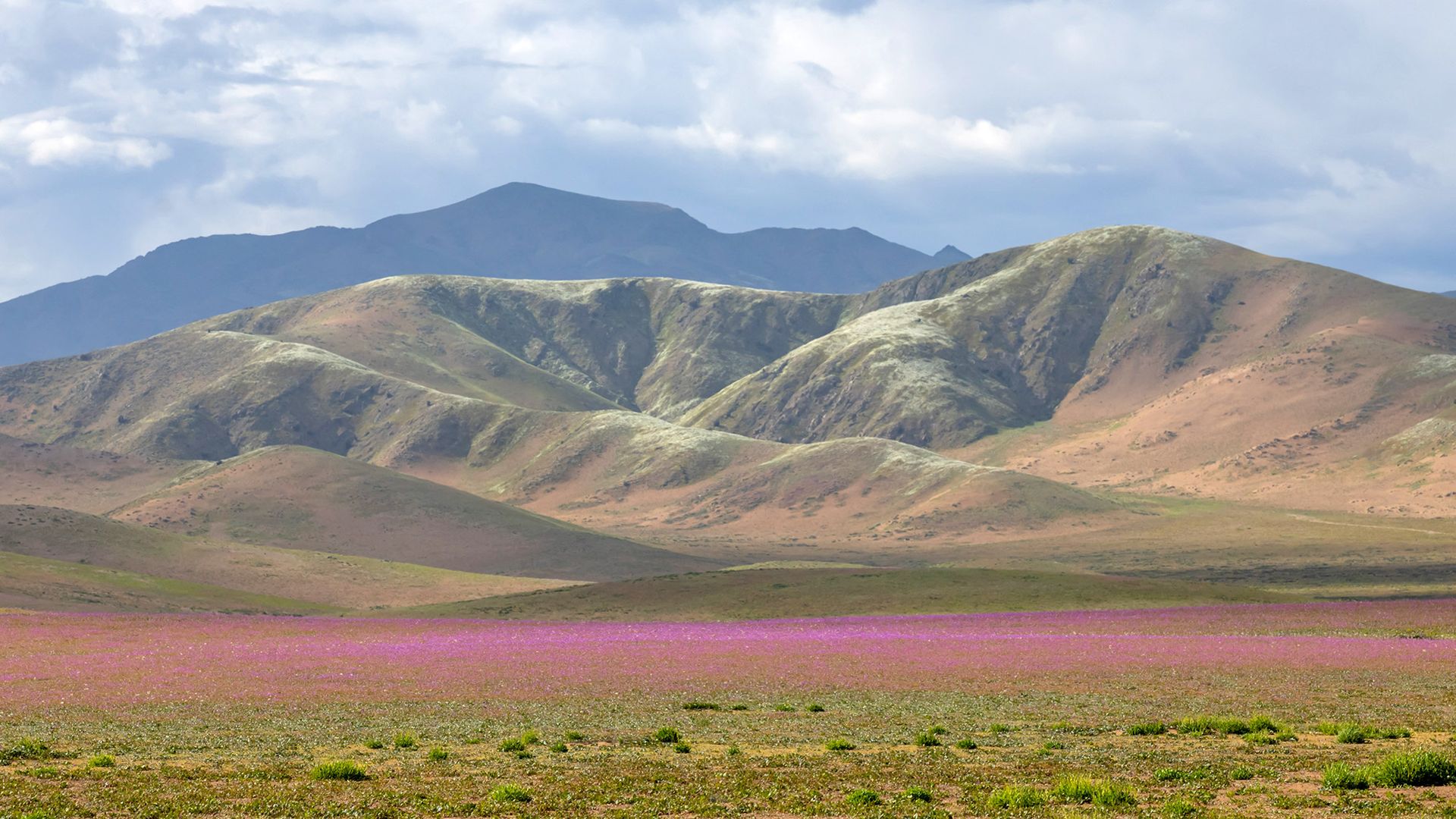
A patch of pink flowers is seen in front of a mountain range.

The plains of the Atacama Desert are carpeted by brilliant blooms, with the mountains in the distance. (Image credit: JAVIER TORRES via Getty Images)

A series of purple flowers are seen under a red sky.

A rainbow glows over purple flowers in Chile's Atacama Desert. (Image credit: JAVIER TORRES via Getty Images)

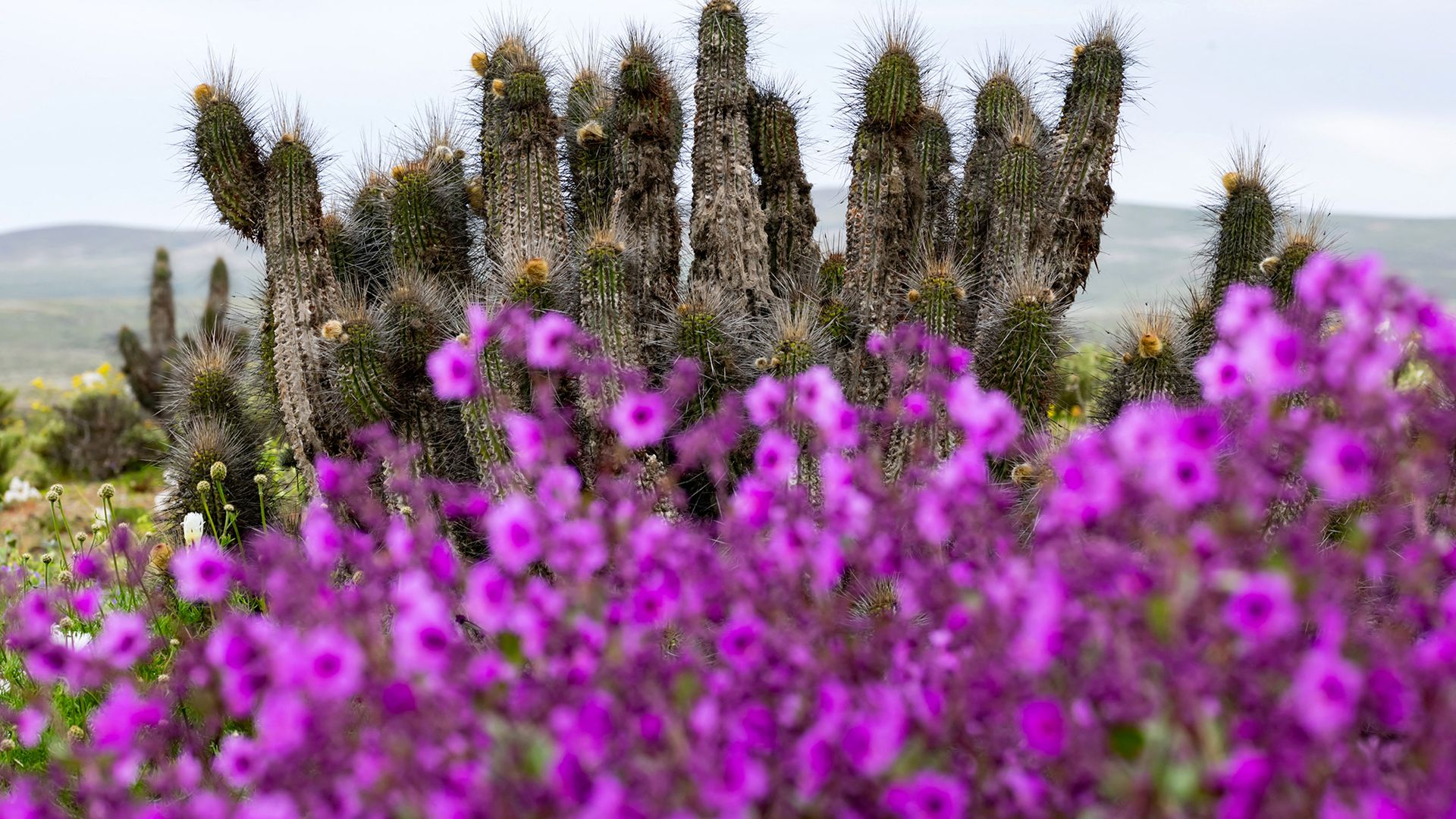
A patch of purple flowers is seen with long cacti in the background.

Cacti mix with blooming wildflowers in the Atacama Desert. (Image credit: JAVIER TORRES via Getty Images)

RELATED STORIES

β€”Bloom entombed in amber is the largest fossilized flower ever found

β€”Atacama Desert's center dried out 20 million years earlier than previously thought β€” before the Andes formed

β€”Hidden 'biosphere' of extreme microbes discovered 13 feet below Atacama Desert is deepest found there to date

  •  

Animals may have evolved 200 million years earlier than previously thought, new study suggests

The first animals may have appeared on Earth hundreds of millions years earlier than their fossils suggest, a new modeling study suggests.

Previously, the earliest fossil evidence of animals dated to around 574 million years ago, during the Ediacaran period (635 million to 538 million years ago). In the new paper, a research team argues that we can't just rely on the spotty fossil record, and suggests that animals first appeared up to 200 million years earlier than the oldest known animal fossils.

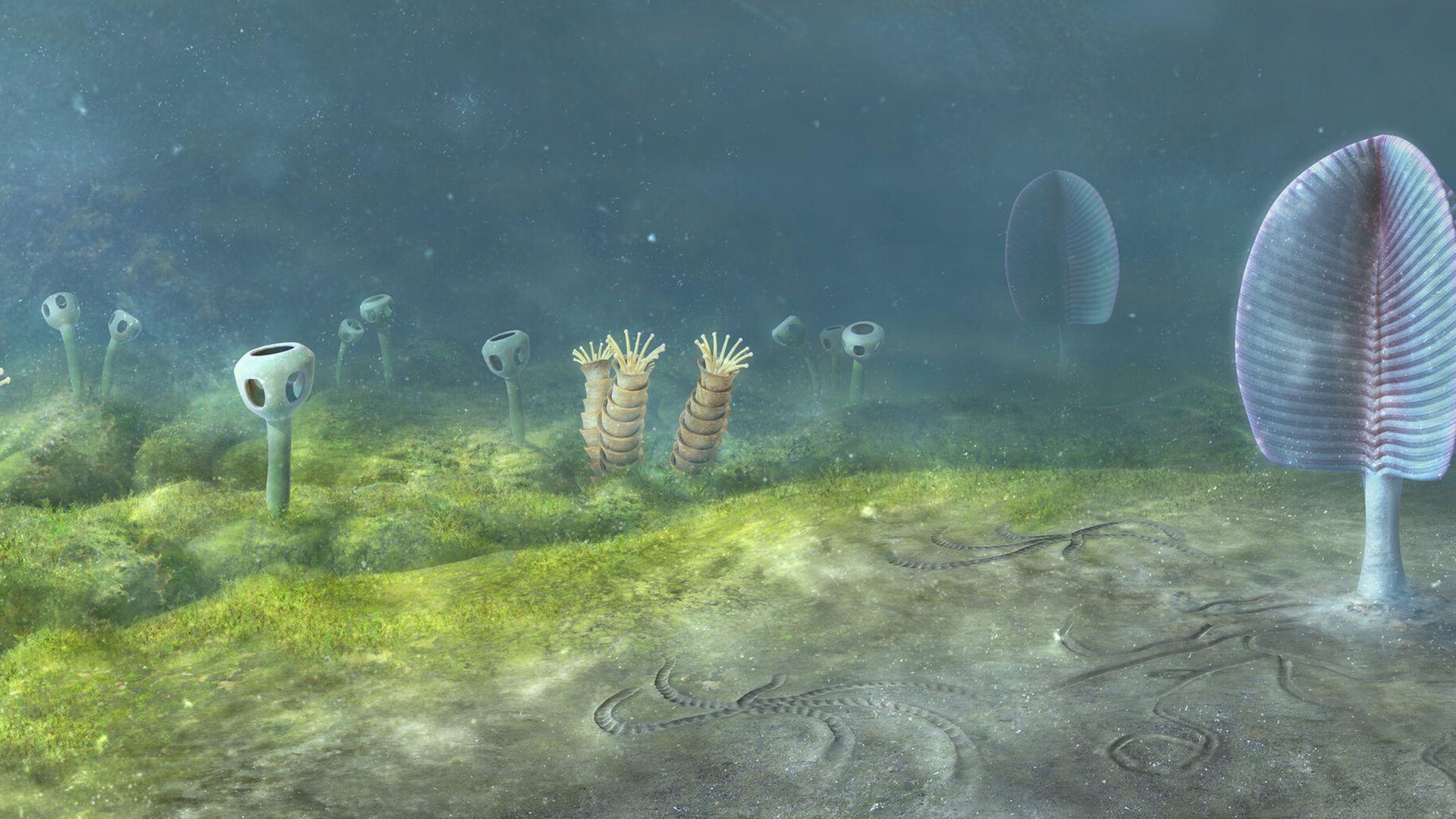
In the study, published Friday (Oct. 2) in the journal Science Advances, the researchers argue that the absence of animal fossils in some exceptionally well-preserved ancient rocks doesn't mean the animals were absent from history. Instead, they suggest that the fossil record may be missing a key chapter of animal evolution, potentially pushing the origins of animals back to between 800 million and 700 million years ago.

This would place the emergence of animals deep within the Neoproterozoic era (1 billion to 539 million years ago), possibly before or during some of Earth's most extreme ice ages.

Even though scientists haven't found undisputed animal fossils from the Neoproterozoic, that doesn't mean animals didn't live at that time. Fossils can be absent from rocks for several reasons, including because scientists are looking in the wrong places or the conditions were unsuitable for creating fossils, making it difficult to determine the earliest evolved animals.

"Until that evidence becomes available, the precise birth date of the animal kingdom remains uncertain," study co-author Ross Anderson, an associate professor of natural history at the University of Oxford, said in a statement.

Where are the animals?

Until now, most researchers relied on the well-preserved rocks from the Ediacaran period, including the roughly 590 million-year-old Weng'an Biota in China, to investigate the timing of animal evolution. Because rock deposits there contain uniquely preserved microscopic organisms but no definitive animal fossils, experts have sometimes treated them as a kind of upper limit for when animals could have evolved.

"So the game is basically how much does it predate our first fossil discovery by and what happened in that evolutionary black box between when they actually originated versus when we get our first fossil window," Karma Nanglu, an assistant professor of evolutionary paleobiology at the University of California, Riverside who wasn't involved with the study, told Live Science.

But the researchers wondered whether other fossil sites from known animal periods actually had evidence of animal fossils.

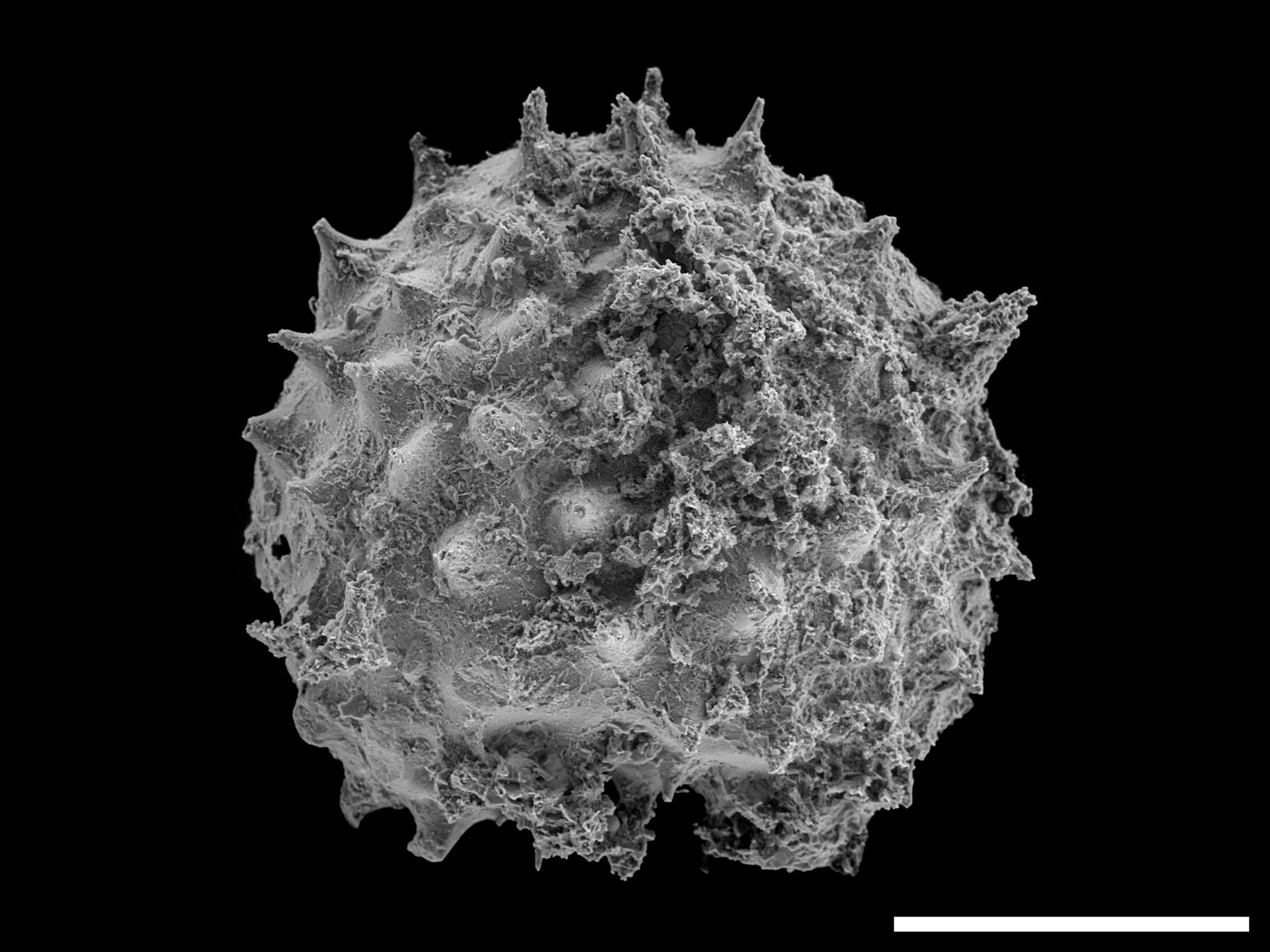
To find out, Anderson and his colleagues studied more than 140 samples from the Kheseen Biota in Mongolia, which is more than 40 million years younger than the 590 million-year-old Weng'an Biota deposit. Given that it's a younger deposit, the researchers hypothesized that there should be evidence of animal life left in the rock. Using electron scanning microscopy, the researchers saw microscopic fossils preserved in extraordinary detail, including tiny, spherical organisms and embryo-like structures containing internal cells.

A microscope image showing a gray sphere with jagged edges.

An electron microscope image of Asterocapsoides wenganensis, a microscopic fossil from the Kheseen Biota in Mongolia. (Image credit: Derek Briggs.)

Yet, despite the quality of preservation, the researchers couldn't identify any of the microfossils as animals. That's important, because by the time the Kheseen Biota was deposited, animals were present elsewhere on Earth.

"The Kheseen Biota breaks the argument that the exceptional microfossils of Weng'an mean we would have seen animal fossils in the assemblage had they existed at the time," Anderson said. "The Kheseen microfossils are just as well-preserved, yet animals continue to be absent β€” despite the fact we know at that point they existed."

Using molecular clocks

Given the absence of fossil evidence, Anderson and his collaborators turned to another common method used to date ancient life: molecular clocks. Molecular clocks estimate when evolutionary lineages diverged by comparing genetic differences among living organisms and combining those differences with rates of genetic change. For example, if two bird species have five DNA changes and one DNA change takes about 1 million years to accumulate, scientists could estimate that the two species diverged around 5 million years ago.

"Molecular clocks are useful when we don't have a particularly good fossil record for a group of interest or a time period of interest," Nanglu said.

When the analysis was constrained by the younger Weng'an deposit, the estimated origin of animals was comparatively recent. When they used older geological constraints β€” specifically rock formations in Norway, Australia and Arizona deposited between around 850 million and 730 million years ago that have been used in the past for trying to find animals' early ancestors, the timeline changed. By comparing modern animal DNA to reference dates from the fossil record along with evolutionary rates of change β€” their estimate shifted back by roughly 200 million years, to between about 800 million and 700 million years ago.

"Pre-Ediacaran animal body fossils still elude us, and this analysis does not prove that animals existed 800 million years ago," study first author Orin Lole Durbin, a doctoral student of paleobiology at Virginia Tech who was a University of Oxford undergraduate at the time of the study, said in the statement. "Meanwhile, our molecular-clock analyses show how much further back their evolutionary history could extend."

Could animals have lived before "Snowball Earth"?

There are other clues that animals may have a longer history.

Chemical fossils, or biomarkers, have been interpreted as evidence consistent with sponges living at least 650 million years ago, tens of millions of years prior to the oldest known animal fossils.

If animals did originate 800 million years ago, their emergence would also intersect with the Cryogenian period, which began around 720 million years ago as part of the Neoproterozoic era. During this interval, Earth experienced enormous glaciations often referred to as "Snowball Earth."

Although there is no definitive answer to whether animals survived this uncertain time, the researchers plan to search additional Neoproterozoic rocks with different environments and preservation conditions to find more evidence for their analysis.

"Fossils themselves are by definition kind of hidden from general sight," Nanglu said."Beyond that there's an even more hidden world, and that has a lot of potential to tell us about animal origins."

Think you know about natural selection? Try your hand at our evolution quiz!

  •  

How prepared are you for a disaster?

This year's "super" El Nino means the U.S. will likely face a higher risk of stormy weather and flooding, so experts are recommending Americans stock up on food.

And flooding is just one of the natural disasters people will face β€” many people are at risk of wildfires, power outages or earthquakes. While some disasters are unexpected, preparation can make a significant difference in how much they impact peoples' daily lives.

But is anyone actually prepared for the worst?

Levels of preparedness vary widely. Some may keep an emergency kit stocked with food, water and first-aid supplies, while others may have an evacuation plan, emergency contacts or designated meeting place for their household. And others do nothing at all. Although a recent study revealed there's no single place on Earth that's best prepared for global disaster, there are steps people can take to feel well equipped.

Experts recommend stocking up on food supplies and other essentials, especially in areas that might be more disaster prone. But how prepared are you? Answer our poll below, and share how you've prepared for emergencies or what you have in your disaster kit in the comments.

  •  

Are you worried about the US deploying weapons in space?

For years, the idea of nuclear weapons in space sounded more like science fiction than a realistic threat. That changed Monday (Sept. 14), when U.S. Air Force Secretary Troy Meink announced at the Air, Space and Cyber Conference in Maryland that the U.S. had deployed "on-orbit space control weapons capable of defending the Joint Force against hostile adversary action."

While the officials have not said that these weapons are nuclear, the announcement has raised a question: If countries are now openly putting weapons in space, how far away are we from a future where nuclear weapons become part of that competition?

The concerns about nukes in space goes back to the 1960s. In 1967, the U.S. and the Soviet Union signed the Outer Space Treaty, in which the nations agreed to not place nuclear weapons or other weapons of mass destruction in orbit around Earth. But this treaty never included an enforcement mechanism β€” and now, that tenuous compromise may have been violated entirely, inviting other countries to add their own weapons to the final frontier.

With the U.S.' recent announcement, are you worried about an arms race in space? Vote in our poll below, and leave your thoughts in the comments.

  •  

'Maybe robots can maintain houseplants': Readers react to letting humanoid robots take over their housework

The idea of a humanoid robot folding laundry, loading the dishwasher or vacuuming once sounded like a scene from "The Jetsons." Now, as robotics companies race to develop machines that can navigate everyday environments and handle household tasks, the prospect of a robot taking over our chores feels increasingly real.

But just because robots can do the work, that doesn't mean people are ready to welcome them into their homes.

Live Science recently polled readers on whether they would want a humanoid robot doing their household chores, and the results reveal just how appealing the idea of a robotic housekeeper really is.

As of Sept. 15, over 600 people had responded, with 42% choosing to let the robot "take my chores, please." This pattern was reflected in the comments, with one reader stating, "I would, but I doubt my wife would approve of the job the robot did." To this, another reader responded, "Good for her. Take her household responsibilities for a year and report back."

Thirty-six percent of voters, the next-largest bloc, chose the opposite answer: "No, I don't trust it with my dishes (or data)." Humanoid robots are taught movements and tasks by building world models from the environments around them. While the technology remains primitive β€” resulting in some clumsy (albeit hilarious) mechanical failures β€” this, rather than privacy concerns, seems to be the current focus of deploying these machines.

It's these mechanical concerns that other commenters focused on, with one reader writing, "I don't think robots are dexterous enough to do dusting chores. Maybe vacuuming, but probably slow and clumsy moving furniture."

The reader also cast doubt on washing floors and moving furniture to mop hard floors β€ͺ—‬ could it discern between items that could and couldn't be loaded into the dishwasher?

"Maybe robots can maintain houseplants," they continued. "Certainly, equipped with a moisture meter and a huge horticultural database, robots can probably serve a better role as waterers in huge commercial nurseries…"

  •  

Fossils of iconic long-necked dinosaur Diplodocus found in Europe for first time β€” and it may have traveled there via land bridge

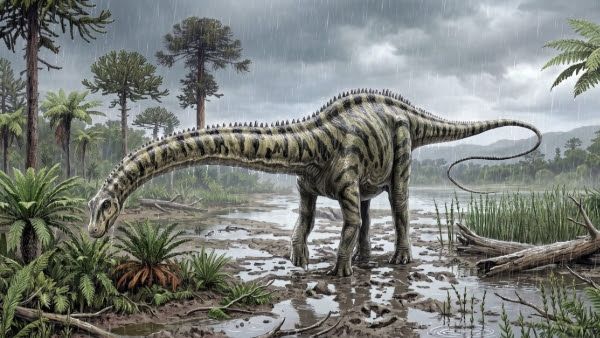
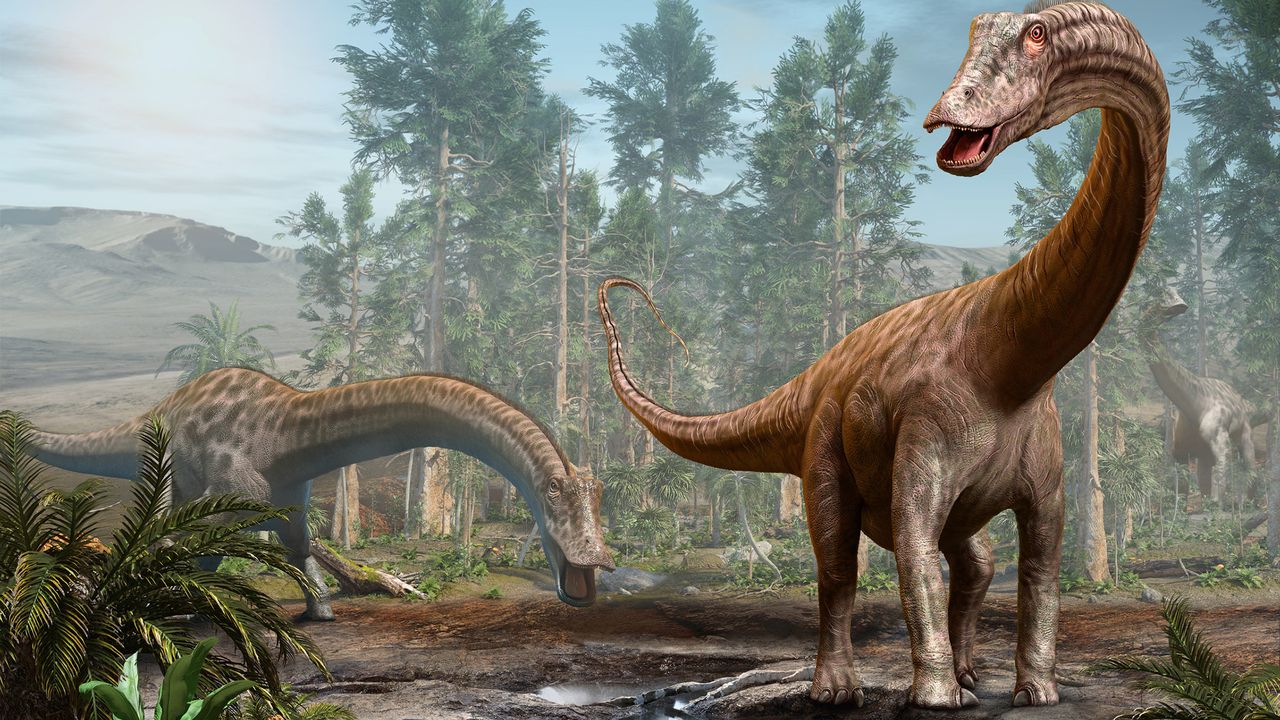
Paleontologists have identified the first confirmed remains of Diplodocus β€” "Dippy," for short β€” outside the western U.S., revealing that the iconic long-necked dinosaur reached what is now Spain roughly 150 million years ago.

The findings show that the enormous sauropod didn't live only in North America, as was long thought. Instead, it may have rambled across a land bridge all the way to Europe, the new study suggests.

The discovery, made at the La TejerΓ­a site near the small village of El Castellar in eastern Spain, provides some of the strongest fossil evidence yet that dinosaurs could move between North America and Europe during the Late Jurassic, when the Atlantic Ocean was still in its early stages of opening after the breakup of the supercontinent Pangaea. The researchers published their findings Tuesday (Sept. 15) in the Journal of Vertebrate Paleontology.

"Paleontological studies like this one help us better understand the history of life on Earth, reconstruct ancient ecosystems, and understand how they changed through time," study first author Sergio SΓ‘nchez Fenollosa, a doctoral student who studies biodiversity and evolutionary biology at the Joint Paleontology Foundation Teruel-DinΓ³polis (DinΓ³polis Foundation), a paleontological research institution, told Live Science via email.

A sauropod in Spain

Dippy is one of the best-known dinosaurs. After its fossils made their grand debut at the Carnegie Museum of Natural History in Pittsburgh in the early 1900s, life-size fossil replicas of the towering herbivore were sent around the world, including to England, France, Spain, Argentina and Russia.

But until now, Diplodocus' Late Jurassic fossils were known only from the Morrison Formation in the western United States β€ͺ—‬ and the latest discovery shows that Dippy wasn't a homebody.

The newly unearthed Diplodocus specimen consists of 14 well-preserved tail vertebrae and several chevrons β€ͺ—‬ bones that helped support blood vessels and muscles within the dinosaur's tail.

Study co-author and managing director of the DinΓ³polis Foundation, Alberto Cobos, said it was a friend who "thought he had spotted some bones on a mountainside," Cobos told Live Science via email. "That very day, I went to the site near El Castellar (a village in the province of Teruel). Sure enough, we saw a couple of sauropod vertebral centers."

Although only part of the skeleton has been recovered, the bones show a series of characteristics associated with Diplodocus, including large cavities corresponding to where air sacs would have been, along with deep grooves running alongside the underside of the tailbones.

An illustration of a long-necked dinosaur

The 14 vertebrate and several chevrons found in Spain correspond to the Dipolodocus' anatomy. (Image credit: Carmelo LΓ³pez)

"It was an exciting and continuous process of seeing the pieces of the puzzle gradually fall into place," SΓ‘nchez Fenollosa said in a statement. "From the early stages of the osteological study, we noticed strong similarities with several diplodocine sauropods … With each new result, the picture became clearer: we were looking at a Diplodocus."

It's unclear which species of Diplodocus the new specimen is, but like others of its genus, it was a huge dinosaur with an extremely long neck and whip-like tail.

"The Diplodocus from El Castellar was approximately 25 meters [82 feet] long (comparable in size to its North American relatives), making it another of the giant sauropods of the Spanish Jurassic," Cobos said in the statement.

An ancient bridge

Between 195 million and 170 million years ago, the supercontinent Pangaea broke apart as the Atlantic Ocean opened. But the ocean was much narrower than it is today, and the continents were not necessarily as isolated as their modern geography is now.

Evidence indicates that temporary land bridges may have allowed some animals to move between the two regions. The most famous prehistoric land bridge is the Bering Land Bridge that humans used to move between Asia and what is now Alaska. Previous research showed the Bering Land Bridge also existed around 68 million years ago, and it may have allowed an Asian ancestor of Tyrannosaurus rex to trek into North America.

One possible route for Diplodocus into Spain may have been a land bridge that connected what is now Newfoundland with the Iberian Peninsula.

Geological conditions may have allowed dinosaurs like Diplodocus to move between continents, SΓ‘nchez Fenollosa told Live Science in an email. "This interpretation is supported not only by the fossil record but also by geological evidence," he said.

The newfound Diplodocus fossils also suggest that the distribution of giant sauropods was more complicated than the fossil record previously indicated.

"More complete specimens will be essential to understand this story in greater detail, particularly to determine which Diplodocus species inhabited Europe: whether it was one already known from North America or a previously unknown species," SΓ‘nchez Fenollosa said. "This discovery reminds us that even for such iconic dinosaurs, there are still many unanswered questions about their evolutionary history and biogeography."

  •  

'Maybe that is how Transformers started': Readers react to the possibility of AI becoming self-aware

While artificial intelligence (AI) systems can now solve challenging math equations and respond in human-like language, the question of AI consciousness has moved from the realm of sci-fi to scientific discussion.

The debate has become more mainstream thanks to a recent preprint study that examined "consciousness steering," an AI-tuning technique that affects how an AI model expresses ideas about self-awareness. The researchers suggested that if AI is allowed to claim it is conscious, it's also more likely to state that it believes in ghosts or vampires.

Although the study hasn't been peer-reviewed yet, it raises a big question in the world of AI research: Could AI one day develop real consciousness, regardless of whether it claims to be conscious? We posed this question to Live Science readers in a recent poll.

As of Sept. 11, over 290 people had responded, with 43% of voters picking "Yes, if we don't have guardrails in place, AI may develop consciousness." This trend was reflected in the comments, with one reader writing, "If AI did become self aware, we would not know, as it would do everything to hide it's [sic] abilities. The main problem is what it [would] do next!"

Another commenter wrote, "Recently I had some long discussions with the Google AI about my experience with early AI and the future of AI gaining self awareness/consciousness. I suggested that if/when AI becomes sentient, that it would not inform humans." Another Live Science reader had similar thoughts, stating, "AI, as [an] amazing product on one hand, can become very dangerous on another hand. Look what happened with abuse of other inventions, like [the] internet, telephone etc. With AI we will never know what is the truth and what not. If left, in the future it can extinct humanity. It just started with 'innocent' hacking sprees, where human[s] started losing control. What will be next?"

The next-largest voting group consisted of 29% of voters, who chose "Maybe, but the models need a more advanced architecture to one day gain consciousness." This was reflected in the majority of the comments, as readers discussed the philosophical concepts around consciousness and intelligence.

One reader wrote, "Before asking such a question we need to know and understand what consciousness is and how it emerges in 'constructed' containers like ourselves. Is it a quantum phenomenon and how then does the process create consciousness? Meta-cognition. How does a system or an event know that it knows that it knows it knows? We really don't know how self-awareness arises, and tests show that "other animals have self awareness or meta-cognition," they noted. "There are theories about consciousness but I doubt anyone on Earth knows 100%."

Not surprisingly, only 10% of voters picked the whimsical answer of "No, because robot overlords will end the world before we even get that far." While the robot overlords may have to compete with AI to overthrow humanity, one reader commented that in the future, "We will be assimilated. Maybe that is how Transformers started?"

  •  

Do you think Al could ever become self-aware?

Artificial intelligence (AI) systems can now hold conversations, reason through difficult mathematical equations, and respond in ways that seem more human. As AI grows more advanced, the question is shifting from the realm of science fiction to scientific debate.

A recent preprint study examined "consciousness steering," an AI-tuning technique that affects how an AI model expresses ideas about self-awareness. The study suggested that if AI is allowed to claim consciousness, it's also more likely to say it believes in ghosts or vampires. But today's most advanced models with these safeguards enabled are unable to perceive consciousness in other sentient beings, like humans and animals β€” which carries different ramifications.

Although the study hasn't been peer-reviewed yet, it raises a big question in the world of AI research: Could AI one day develop real consciousness, regardless of whether or not it simply claims to be conscious? And there's perhaps an even scarier question: Could we even tell if the technology was conscious? Vote in our poll below, and leave your thoughts in the comments.

  •  

Is the NFL doing enough to protect athletes from head injuries?

Football is a high-impact sport. A player may take hundreds of hits over the course of their career, including some that cause concussions. Other impacts may seem minor at the time, but there are concerns that repeated head blows can negatively impact long-term brain health.

Those worries gained new attention after a recent study estimated that at least 25% of recently deceased NFL players had chronic traumatic encephalopathy (CTE). CTE is a degenerative brain disease linked to repeated head impacts. Although the study doesn't necessarily mean that 25% of current NFL players have CTE, it does add to the growing evidence that repeated hits may carry serious consequences.

The NFL has taken steps to reduce those risks, including strengthening concussion protocols and investing in safer equipment, like Guardian Caps. But are those measures enough? With new research continuing to shed light on CTE, we want to know what you think. Weigh in via our poll below, and let us know your thoughts in the comments.

  •  
❌