❌

Reading view

GC Cell Signs GCC2005 Research Agreement With QuantHealth

GC Cell corporate identity. (Source: GC Cell)

GC Cell is introducing artificial intelligence technology into its clinical trials.

GC Cell said on Sept. 16 that it signed a joint research agreement with QuantHealth, a global AI-based clinical trial simulation company, to optimize the design of the next clinical trial for its drug candidate GCC2005 (CD5 CAR-NK).

The partnership is aimed at improving the design of the Phase 2 clinical trial for GCC2005.

QuantHealth uses an AI-based clinical trial simulation platform, predictive engines and real-world data (RWD) to predict treatment responses and outcomes. It also provides technologies for comparative analysis with competing therapies and reviewing clinical trial scenarios.

GCC2005 is a genetically engineered cell therapy designed to target CD5, a protein expressed in most T-cell lymphomas, a type of cancer affecting the immune system. It is designed to co-express interleukin-15 (IL-15), a protein secreted by white blood cells and other cells, to improve the persistence of immune cells in the body, a limitation of existing therapies.

  •  

Yuhan Marks 100th Anniversary With Lazertinib Development Event

From left, Dr. Ko Jong-sung, Professor Cho Byoung-chul and J&J, who participated as speakers at the event. (Source: Yuhan Corporation)

Yuhan Corporation said on Sept. 15 that it held its "Beyond 100 Years" event at Willow House in Daebang-dong, Seoul, to mark its 100th anniversary and highlight the development achievements of lazertinib. Dr. Ko Jong-sung and Professor Cho Byoung-chul shared the drug's development process.

Lazertinib, marketed as LECLAZA, is a third-generation targeted cancer drug used to treat non-small cell lung cancer and has received regulatory approval from the U.S. Food and Drug Administration (FDA) and other authorities.

The event also presented Phase 3 results showing that a combination of lazertinib and amivantamab, a bispecific antibody targeting multiple targets, reduced the risk of death by 25% compared with osimertinib in the treatment of non-small cell lung cancer that had spread to other organs.

  •  

Kim Yong-min Named 2026 JW Sungcheon Award Recipient

Kim Yong-min, former professor at Chungbuk National University College of Medicine and recipient of the 2026 JW Sungcheon Award. (Photo: JW Pharmaceutical)

The JW Foundation, a public-interest foundation of JW Pharmaceutical, said on Sept. 16 that it selected Kim Yong-min, a former professor at Chungbuk National University College of Medicine, as the recipient of the 2026 JW Sungcheon Award. The award is presented to medical professionals dedicated to serving patients in the field.

Kim stepped down from his medical school professorship in 2018 and has since engaged in medical volunteer work.

"Kim is a medical professional who has gone wherever he is needed, whether in conflict zones, medically underserved areas or communities with limited access to medical care in South Korea, demonstrating a spirit of respect for life," said Lee Sung-nak, chairman of the JW Sungcheon Award Committee.

The award ceremony will be held at JW's Gwacheon office on Oct. 21.

  •  

Daewoong Pharmaceutical Wins 2026 National Contribution Award

Daewoong Pharmaceutical employees work according to their individual circumstances and job requirements. (Source: Daewoong Pharmaceutical)

Daewoong Pharmaceutical said on Sept. 16 that it received the Minister of Gender Equality and Family Award in the low birth rate response category at the 13th 2026 National Contribution Awards. The award recognized the company’s efforts to improve its working environment and introduce a Career Development Program (CDP).

The National Contribution Awards honor companies that contribute to strengthening national industrial competitiveness or engage in social contribution activities and environmental, social and governance (ESG) management.

"We will continue to improve our programs and working environment to create a model that makes a tangible contribution to addressing the low birth rate," CEO Lee Chang-jae said.

  •  

KPBMA Holds Korea-Thailand Pharmaceutical Forum in Bangkok

A meeting held as part of the Korea-Thailand pharmaceutical industry program. (Source: Korea Pharmaceutical and Bio-Pharma Manufacturers Association)

The Korea Pharmaceutical and Bio-Pharma Manufacturers Association (KPBMA) said on Sept. 16 that it formed a public-private delegation with the Ministry of Food and Drug Safety (MFDS), the Korea Trade-Investment Promotion Agency (KOTRA) and 10 Korean pharmaceutical companies to conduct market-entry support programs, including the Korea-Thailand Pharmaceutical Forum 2026, in Bangkok from Sept. 14 to 15.

Thailand ranked first in a KPBMA survey of preferred destinations for overseas delegations. The forum on Sept. 14 featured sessions on pharmaceutical and biotech industry trends and cooperation opportunities, as well as pharmaceutical regulations and approval systems in South Korea and Thailand. A business consultation event was held on Sept. 15, with KPBMA and participating companies holding talks with local Thai companies.

"We will work closely with relevant organizations, including MFDS and KOTRA, to actively support Korean companies in finding local partners and generating business results," KPBMA Chairman Noh Yeon-hong said.

  •  

Celltrion Submits Phase 4 Trial Plan for Zymfentra

Celltrion corporate identity. (Source: Celltrion)

Celltrion has begun preparations for a Phase 4 clinical trial to secure additional clinical data.

Celltrion said Sept. 15 that it submitted an investigational new drug (IND) application to the US Food and Drug Administration (FDA) for a Phase 4 trial to establish evidence supporting a high-dose 240 mg regimen of Zymfentra, the US brand name for Remsima SC, an infliximab-based treatment for autoimmune diseases that blocks an inflammation-causing protein.

Phase 4 trials are conducted after a drug has already been approved and launched to evaluate its safety and efficacy during long-term use in patients. They are also conducted to study new indications and dosing regimens for long-term treatment.

The trial will enroll a total of 447 patients with Crohn’s disease (CD) and ulcerative colitis (UC) at 55 sites in the US. Specifically, it will compare a high-dose intravenous (IV) infliximab treatment group with Zymfentra 240 mg.

Zymfentra is administered subcutaneously (SC), offering greater convenience than IV formulations, which require time for administration and cannot be self-administered.

Celltrion is also conducting global clinical procedures to add rheumatoid arthritis (RA) as an indication for Zymfentra, with the aim of expanding its potential patient population.

  •  

GC MediAI’s Uisarang AI Tops 1,000 Medical Institutions

Promotional image for Uisarang AI. (Photo: GC MediAI)

GC MediAI has gained traction with its adoption of artificial intelligence (AI).

GC MediAI said Uisarang AI, its electronic medical record-native AI (EMR-native AI) clinical solution launched on Aug. 6, surpassed 1,000 subscribing medical institutions within three weeks. EMRs are electronic records containing basic patient information, diagnoses, medical histories and other clinical information.

When medical staff call up a patient in the EMR, Uisarang AI displays a summary of the patient’s previous medical records. During consultations, it uses medical-specific speech-to-text (STT) technology to transcribe conversations and structure them into clinical records.

Uisarang AI is embedded in Uisarang, the EMR already used by medical institutions. A key differentiator is that it requires no additional installation or separate application to run.

  •  

Daewoong Pharmaceutical to Hold Symposium on Continuous Glucose Monitoring

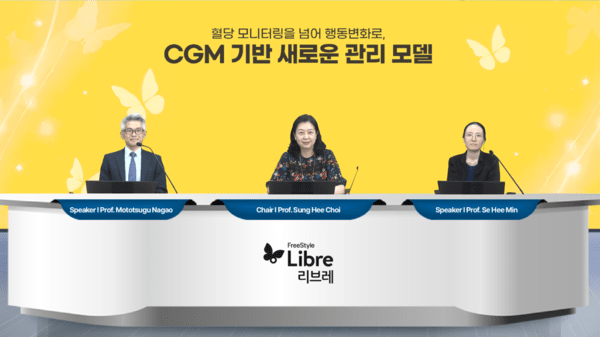
From left, Mototsugu Nagao, professor of Endocrinology and Metabolism at Tokyo Women's Medical University; Sung Hee Choi, professor of Endocrinology and Metabolism at Seoul National University Bundang Hospital; and Sei-hui Min, professor of Endocrinology at Asan Medical Center, speak at the Dr.Ville web symposium
From left, Mototsugu Nagao, professor of Endocrinology and Metabolism at Tokyo Women's Medical University; Sung Hee Choi, professor of Endocrinology and Metabolism at Seoul National University Bundang Hospital; and Sei-hui Min, professor of Endocrinology at Asan Medical Center, speak at the Dr.Ville web symposium "Shifting the Paradigm in Blood Glucose Management." (Photo: Daewoong Pharmaceutical)

Daewoong Pharmaceutical will present approaches to diabetes management using continuous glucose monitoring.

Daewoong Pharmaceutical said Sept. 15 that it will hold a web symposium on Sept. 16 through its medical information platform Dr.Ville to present the latest treatment trends and academic findings in continuous glucose monitoring (CGM).

The symposium will focus on "behavior change," an emerging theme in diabetes management. Behavioral change refers to patients going beyond simply checking blood glucose indicators to understanding data accumulated through CGM and linking it to their daily self-management behaviors.

Mototsugu Nagao, professor of Endocrinology and Metabolism at Tokyo Women's Medical University, will give a presentation titled "Beyond Monitoring: Building a New Model of Diabetes Care with CGM." Sei-hui Min, professor of Endocrinology at Asan Medical Center, will explain guidelines for the use of integrated continuous glucose monitoring (iCGM) systems recommended by the US Food and Drug Administration (FDA).

Sung Hee Choi, professor of Endocrinology and Metabolism at Seoul National University Bundang Hospital, will lead a discussion covering both presentations, focusing on the latest clinical evidence related to CGM and approaches to using CGM data.

  •  

SK Biopharmaceuticals CEO Donghoon Lee Buys More Company Shares

SK Biopharmaceuticals corporate identity. (Source: SK Biopharmaceuticals website)

SK Biopharmaceuticals said Sept. 15 that President and CEO Donghoon Lee purchased 1,000 shares of the company, worth about 80 million won, on Sept. 11. The latest purchase brings his total purchases to 3,000 shares, following his acquisition of 2,000 shares on Aug. 27. Changho Yoo, head of strategy, who bought 500 shares on the same day last month, also purchased an additional 500 shares.

SK Biopharmaceuticals said the additional purchases within a short period demonstrate management's commitment to its mid- to long-term growth strategy and responsible management. The move is similar to share purchases by Samsung Electronics executives in 2024, when the company's stock was trading in the 50,000-won range.

SK Biopharmaceuticals secured an additional growth driver last month by signing an exclusive licensing agreement for Opacalim, a drug candidate for epilepsy.

SK Biopharmaceuticals shares closed at 78,100 won in regular trading on Sept. 15, near their 52-week low of 73,000 won. Operating profit has improved each year since the company turned profitable in 2024.

  •  
❌