❌

Reading view

The Boox Palma 3 brings an Android update and a premium design to the brand’s compact ereader range

  • The Boox Palma 3 has been announced
  • This is a phone-sized ereader with a 6.13-inch screen
  • Key upgrades include Android 16, stylus support, and a more premium build

If you’re in the market for a phone-sized ereader, you now have another option to consider, as the Boox Palma 3 has just been unveiled — and this successor to the Onyx Boox Palma 2 has some of the key features found on the rival ViWoods AiPaper Reader.

For one thing, just like the ViWoods device, the Boox Palma 3 now has a premium build, with an anodized aluminum frame and a textured fiberglass backplate in place of its plasticky predecessor.

And it’s also had an Android upgrade, launching with a ViWoods AiPaper Reader-matching Android 16, which is up from Android 13 on the Boox Palma 2 and Android 15 on the Onyx Boox Palma 2 Pro.

For me, that’s particularly important, as Android versions don’t tend to get updated on these sorts of devices, so you’re typically stuck with whatever software they launch with; old versions of software can mean security issues, and app incompatibility problems can crop up sooner.

Beyond that, the Boox Palma 3 also benefits from active stylus support, so you can use it with the Boox InkSense Plus stylus. The AiPaper Reader doesn’t have stylus support, nor does it come with a camera, whereas here you get a 16MP one, so those are two potential advantages of the Boox Palma 3.

Personally, I’m not sure I’d want to use a stylus on a device this small, nor do I have much use for a camera on an ereader — but it could be handy for scanning documents, if you’re so inclined.
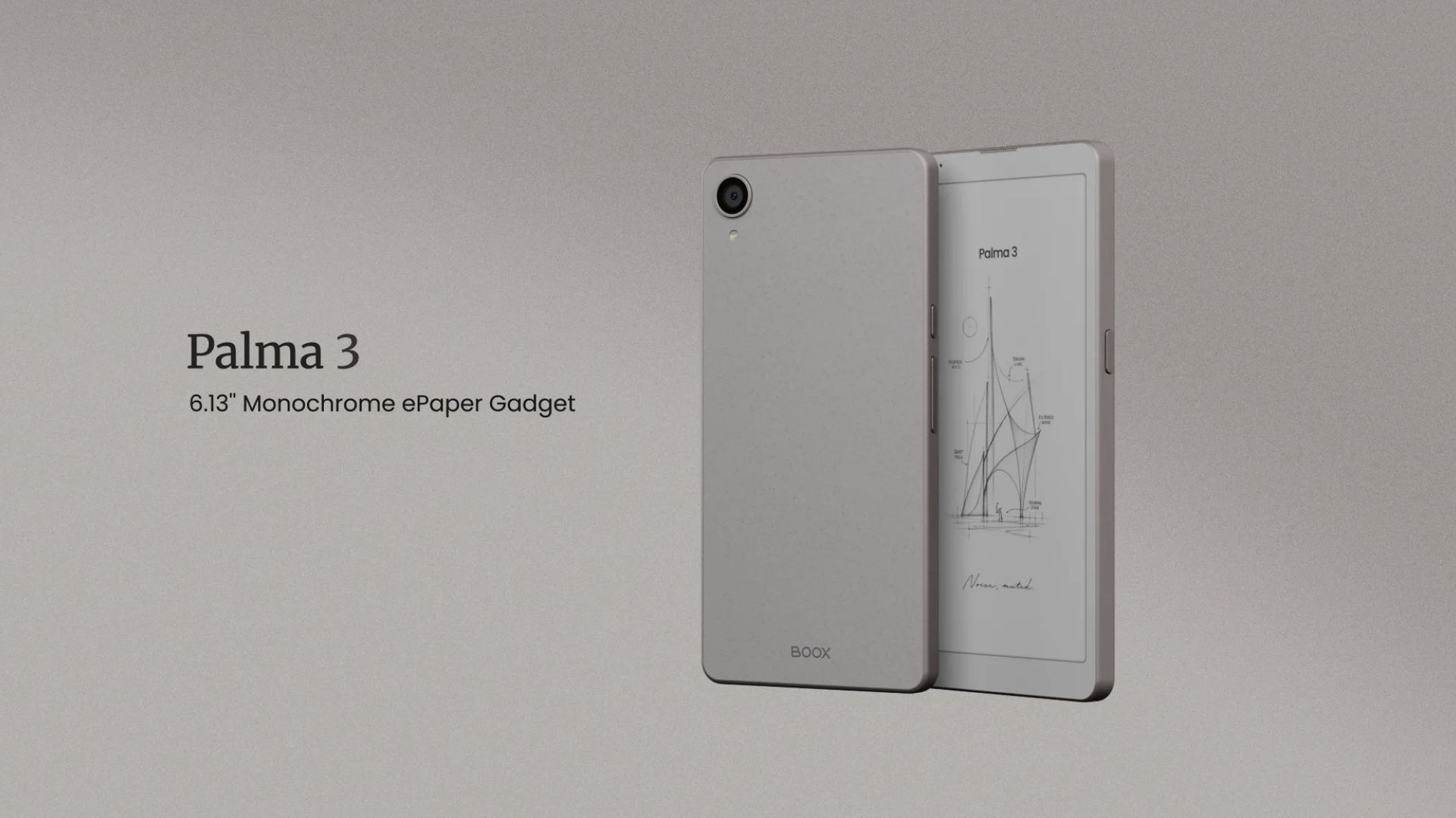
The Boox Palma 3

(Image credit: Onyx)

Similar specs and a heavier build

That camera and the rest of the specs, though, are largely in line with those of the Boox Palma 2, including a 6.13-inch 824 x 1648 e-paper touchscreen with 300 pixels per inch, 6GB of RAM, 128GB of storage, a microSD card slot, a front light (supporting both warm and cold color tones), a 3,950mAh battery, a USB-C port, a fingerprint sensor, a speaker, and microphones.

But despite being marginally smaller than the Boox Palma 2 at 159 x 78 x 7.8mm, the Palma 3 is actually 25g heavier at 195g.

That also makes it heavier than the 138g ViWoods AiPaper Reader and the 170g Boox Palma 2 Pro — the latter of which additionally gives you a color screen and an extra 2GB of RAM.

So, this may not be a complete home run — or a total upgrade for anyone who owns the Palma 2 Pro.

Indeed, the Palma 3 is actually priced lower than the Palma 2 Pro, coming in at $339.99 (around £250 / AU$475), though a launch discount softens that price to an even lower $319.99 (roughly £235 / AU$450).

There’s no confirmed pricing for other regions yet, but for reference, while the Palma 2 has been discontinued, the Palma 2 Pro sells for $399.99 / $379.99 / AU$679, and its rival, the ViWoods AiPaper Reader, retails for $279 / £254.99 / AU$399.12.

You also can’t actually buy the Boox Palma 3 yet, but the company lists it as coming soon.

  •  

Qualcomm's new Snapdragon chipset has been built to help ease the RAM crisis

  • Qualcomm has detailed its next flagship Snapdragon chipset
  • It features a Hexagon NPU that reduces the reliance on RAM for AI tasks
  • It also includes the world's first 5GHz mobile CPU

AI is transforming technology, but it’s also causing some real issues, especially with regard to RAM, which is now in high demand and short supply (cue spiraling RAM prices). But Qualcomm’s upcoming flagship smartphone chipset could help address this issue.

In a series of blog posts, the company has revealed that its new, as-yet-unnamed mobile silicon brings AI processing closer to the chipset, reducing its reliance on RAM in the process.

It achieves this in large part through a new Hexagon NPU (neural processing unit), which uses various techniques to power “larger-model-class AI experiences with low power consumption and memory requirements” so that AI on phones can be both responsive and private — in other words, it won’t need masses of RAM or to communicate with cloud servers so frequently.

As a result, it’s possible that phones will be able to keep up with growing AI demands without enormous RAM requirements, which in turn could help ease the RAM crisis.

Additionally, the Hexagon NPU includes an Element Accelerator that speeds up AI operations, and it has 50% more Large Shared Memory, which “helps keep model state, context, and KV-cache data closer to the accelerators, reducing trips to external memory and helping agents answer, revise, plan, and act with less waiting” for a smoother experience.

Big upgrades to the CPU and GPU as well

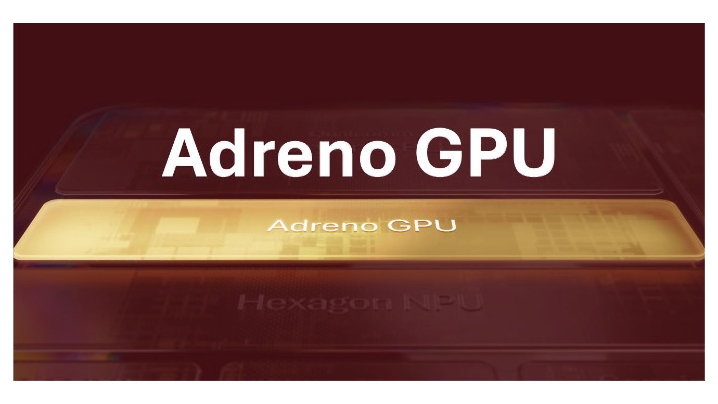
An Adreno GPU

(Image credit: Qualcomm)

But the NPU is not the only significant selling point of this chipset, as Qualcomm also explained that its new silicon sports the world’s first 5GHz mobile CPU — which, unsurprisingly, means it’s also the world’s fastest mobile CPU.

This CPU also includes a new FlexCache feature, which reduces how often the cores need to reach system memory, helping ensure peak performance is maintained even when memory is limited — which, as with the changes to the NPU, could reduce reliance on RAM.

The GPU, meanwhile, is the largest generational leap yet for Qualcomm, promising major gains in graphics performance and power efficiency. And this element of the chipset helps with AI too, as it includes Adreno Matrix Cores, which are AI-dedicated GPU cores, “designed to run advanced AI models directly inside the graphics pipeline.”

It also includes Adreno Neural Fusion — an AI-driven rendering technology that improves visuals while reducing power consumption.

So, it sounds like this could be a comprehensive upgrade, and while Qualcomm hasn’t confirmed which phones will use this as-yet-unnamed chipset, it’s likely at least some models in the Samsung Galaxy S27 series will ship with it early next year, while other high-end Android handsets from Oppo, Xiaomi, and Honor could get it even sooner.

  •  

How to watch today's ‘Surprise and Shine’ Apple event — plus last-minute rumors for the iPhone Ultra, AirPods 5, and more

The biggest phone event of the year has arrived. Today (September 9), Apple is holding its ‘Surprise and Shine’ event where — among many other things — we’re expecting to see the foldable iPhone Ultra unveiled.

This phone has been rumored for years, so it’s almost hard to believe that it could finally be launching today, but all signs suggest that it is — and it won’t be alone, as other phones, plus new wearables and AirPods, look set to be unveiled too.

So, below, we’ve detailed how to watch today's Apple Event, along with all the things we expect to see announced in Cupertino. And to follow along with the announcements as they happen, head to our Apple Event 2026 live blog.

How to watch Apple’s iPhone Ultra launch

Today's major Apple launch is being held at the Steve Jobs Theater in Apple Park, Cupertino, California. As with all these events, it will also be streamed online, so you don’t have to attend in person to witness it.

It starts at 10am PT / 1pm ET / 6pm BST, which is 3am AEST on September 10 for people in Australia. So there’s a good chance you’ll either be at work or asleep while it happens, but you’ll be able to view a recorded version of the video after the live stream has ended, and we’ll also have full coverage of the event here on TechRadar, so you can always just stick with us for our analysis and impressions.

As for how to watch, that’s easy: simply hit play on the video embedded above. Alternatively you can head to YouTube, or Apple’s event page. You’ll also be able to view the livestream on Apple TV.

So, there are lots of ways to watch today's event, and if you press the ‘Notify me’ button on that video, you’ll also get a reminder when the event is starting.

What to expect at Apple’s iPhone Ultra event

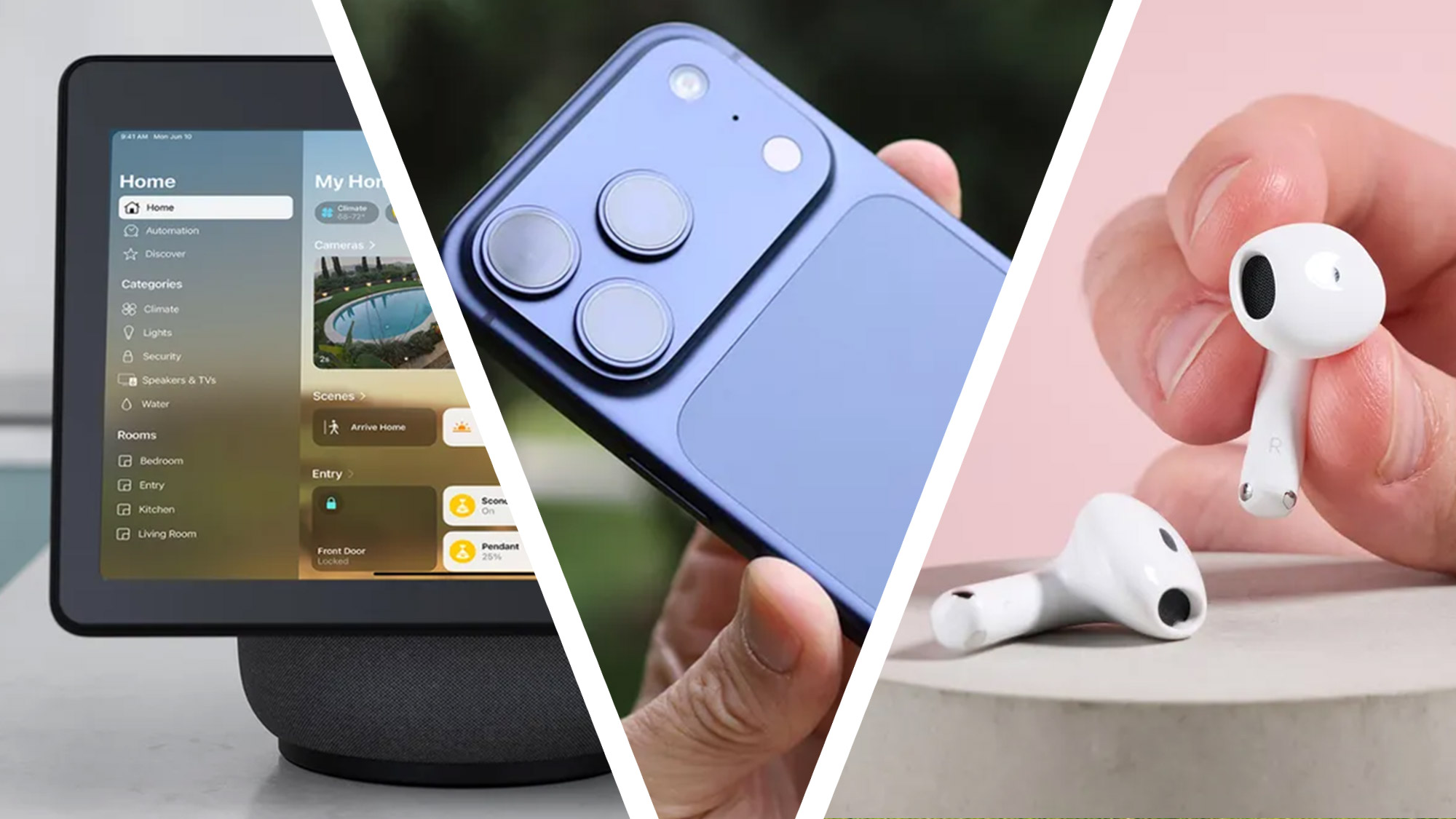
A collage image showing the rumored new Home Hub display, iPhone 18 Pro and AirPods 4

(Image credit: Apple; Future)

The iPhone Ultra is almost certainly going to be the most eye-catching announcement at Apple’s Surprise and Shine event. This foldable phone will reportedly have a passport-like form factor similar to the Samsung Galaxy Z Fold 8, with a 7.8-inch foldable display and a 5.5-inch cover screen.

But in addition to this, we’re also expecting Apple to announce the iPhone 18 Pro and the iPhone 18 Pro Max. These will likely have similar designs to the iPhone 17 Pro series and the same screen sizes, but a powerful new chipset and potentially a variable aperture camera.

And it’s not just phones at this event — we’re also expecting to see the Apple Watch Series 12 and the Apple Watch Ultra 4. The main updates here could be the addition of Touch ID and an upgraded chipset, and the Ultra 4 might also gain new sensors.

The AirPods 5 could also land here, as might Apple’s first smart home display, and we might also see updates to the company’s HomePod mini and Apple TV 4K lines.

Beyond hardware, we also expect all of Apple’s next software versions to launch in finished form at today's event, including iOS 27, iPadOS 27, watchOS 27, macOS 27, and tvOS 27, with the headline feature in most of them likely to be Siri’s AI overhaul.

And finally, today's Surprise and Shine event will be the first public outing for Apple’s new CEO, John Ternus, so it will be interesting to see how he comes across.

  •  
❌