❌

Reading view

Antigravity A1 Follow Me Bundle review: a game-changing wearable bundle that changes how you fly the 360 drone

Antigravity A1 Follow Me Bundle: two-minute review

When the Antigravity A1 launched in 2025 it was the world’s first 360-degree drone, and for a brief time the only such drone, until the DJI Avata 360 was released shortly after. These two models remain the only 360-degree drones currently available, with their differing designs offering slightly different propositions for drone pilots, depending on what you’re aiming for.

You can fly both drones with FPV goggles and Motion Controllers, though the Avata 360 can also be flown with a standard drone controller. The Antigravity A1’s design makes it look like a camera drone, but with top and bottom 360-degree cameras, while the standard kit's FPV goggles and Motion Controller let you fly immersively with a 360-degree view of your surroundings; you can look around as you fly, which is quite an experience.

A 360-degree drone lets you reframe photos and videos after you’ve captured them, opening up a wealth of creative potential. They're not for everyone, but they undoubtedly provide both an interesting flying experience and equally interesting editing possibilities. The Antigravity A1 Follow Me Bundle is designed to expand the functionality of the drone, and the creative options available to users, further.
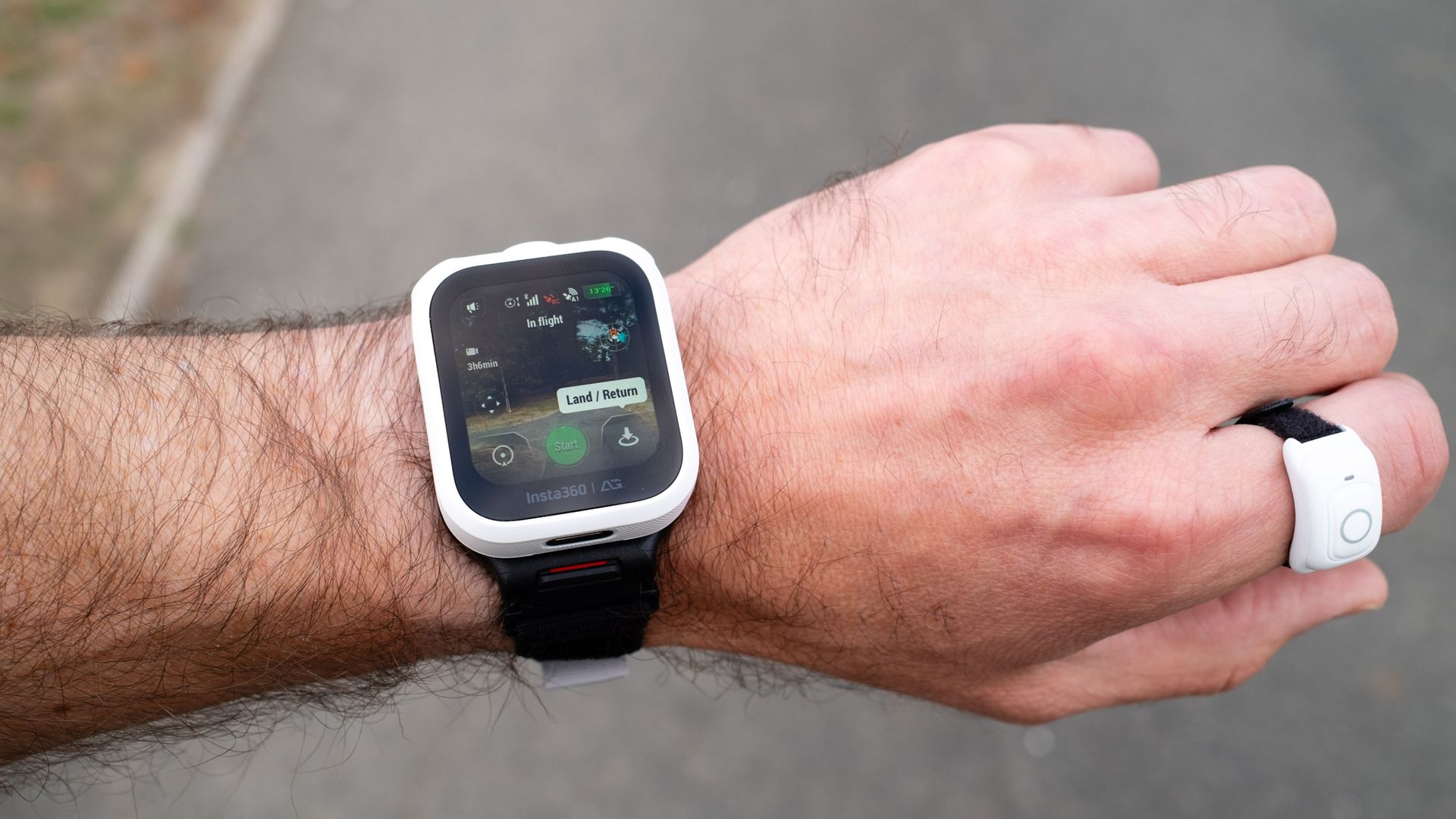
Antigravity A1 Follow Me Bundle Watch and Ring Remote being worn
James Abbott
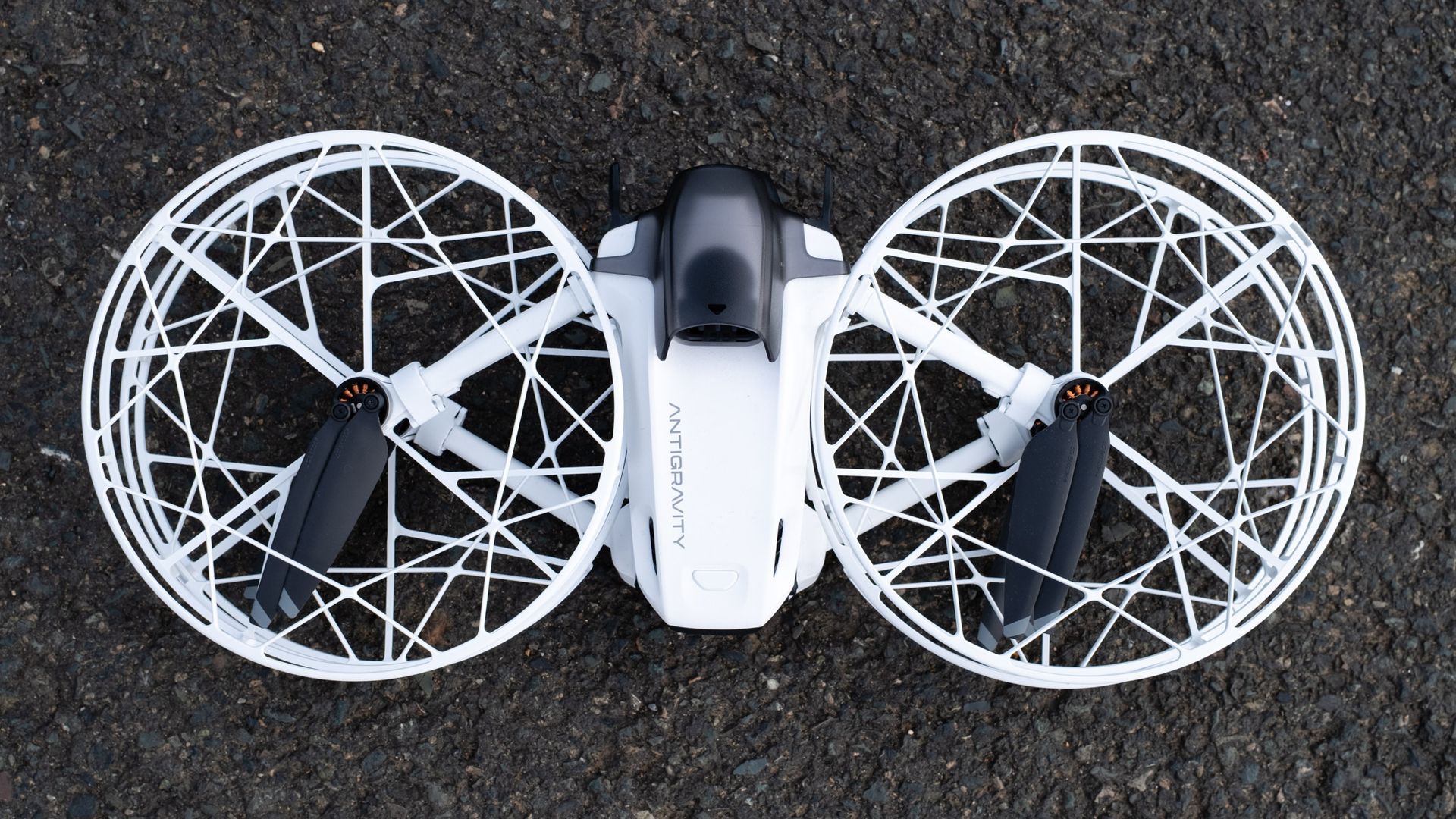
Antigravity A1 Follow Me Bundle A1 folded with propeller guards
James Abbott
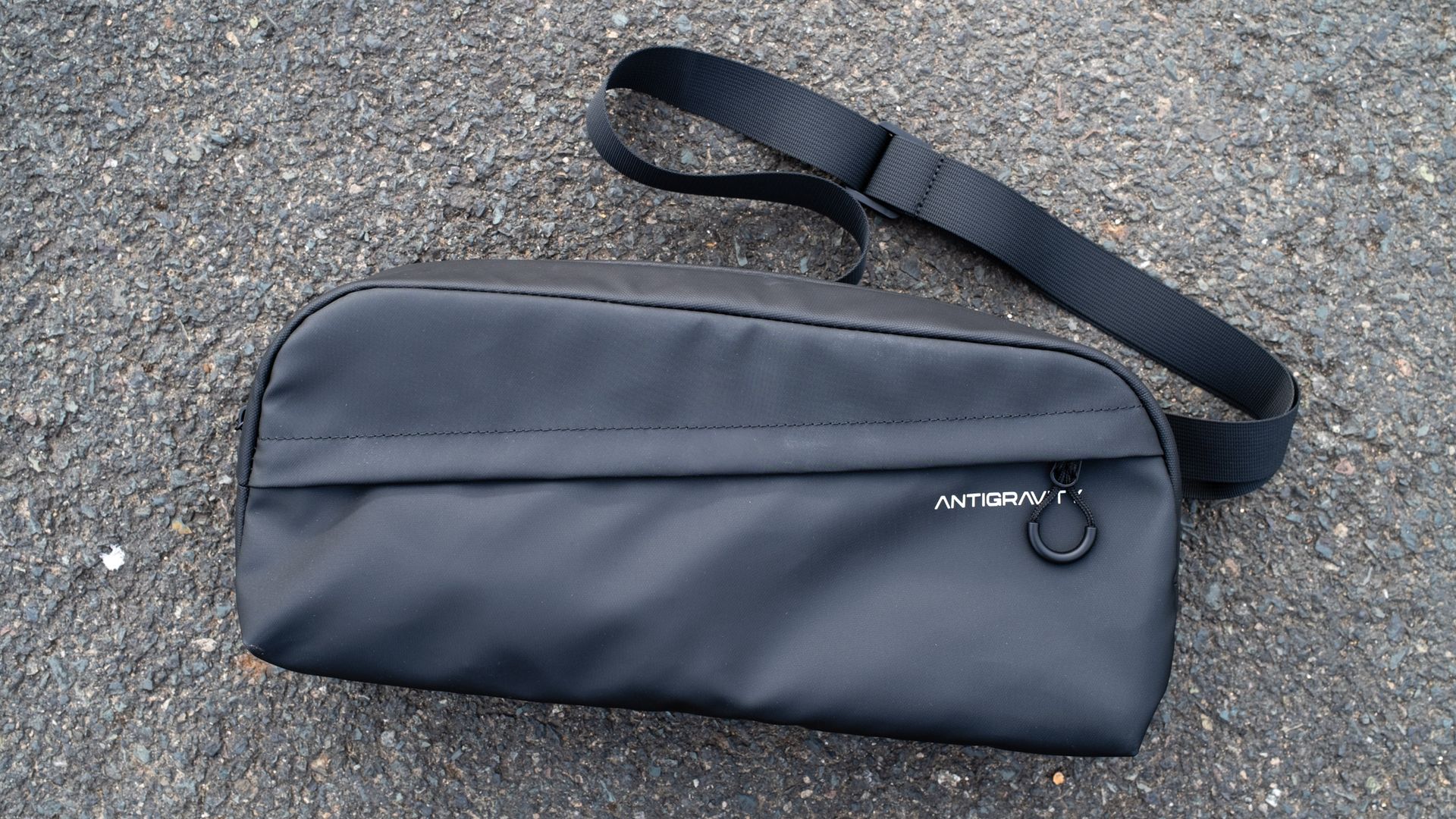
Antigravity A1 Follow Me Bundle carry bag
James Abbott

The Antigravity A1 Follow Me Bundle enables hands-free shooting, and obviates the need to use the A1’s FPV goggles and Motion Controller for flight. It also improves subject tracking, and offers automated flight patterns for capturing selfies, similar to the DJI Neo 2.

The Follow Me Bundle includes several accessories, with the Watch Remote allowing you to set the flight mode, and the Ring Remote allowing you use gestures to adjust the position of the A1 when in flight.

The Watch Remote also features built-in GNSS for greater precision when the drone is tracking you during fast-paced activities such as cycling, and allows you to select the subject that will be tracked.

The Follow Me Bundle also opens up one-tap cinematic shots, which are automated flight patterns, alongside advanced subject-tracking modes. The former include Fly Away, Antigravity Line, Ascend, Oval Orbit, Spiral Ascent, Arc Shot and Arc Out, while the tracking modes include Manual Mode, Deep Track, Orbit Follow, Cycling Track and Ski Track.

The one-tap cinematic shots, like any automated flight patterns, may feel a bit 'samey' after a while, but they’re fun to try out. It’s the new subject-tracking modes that are most interesting.
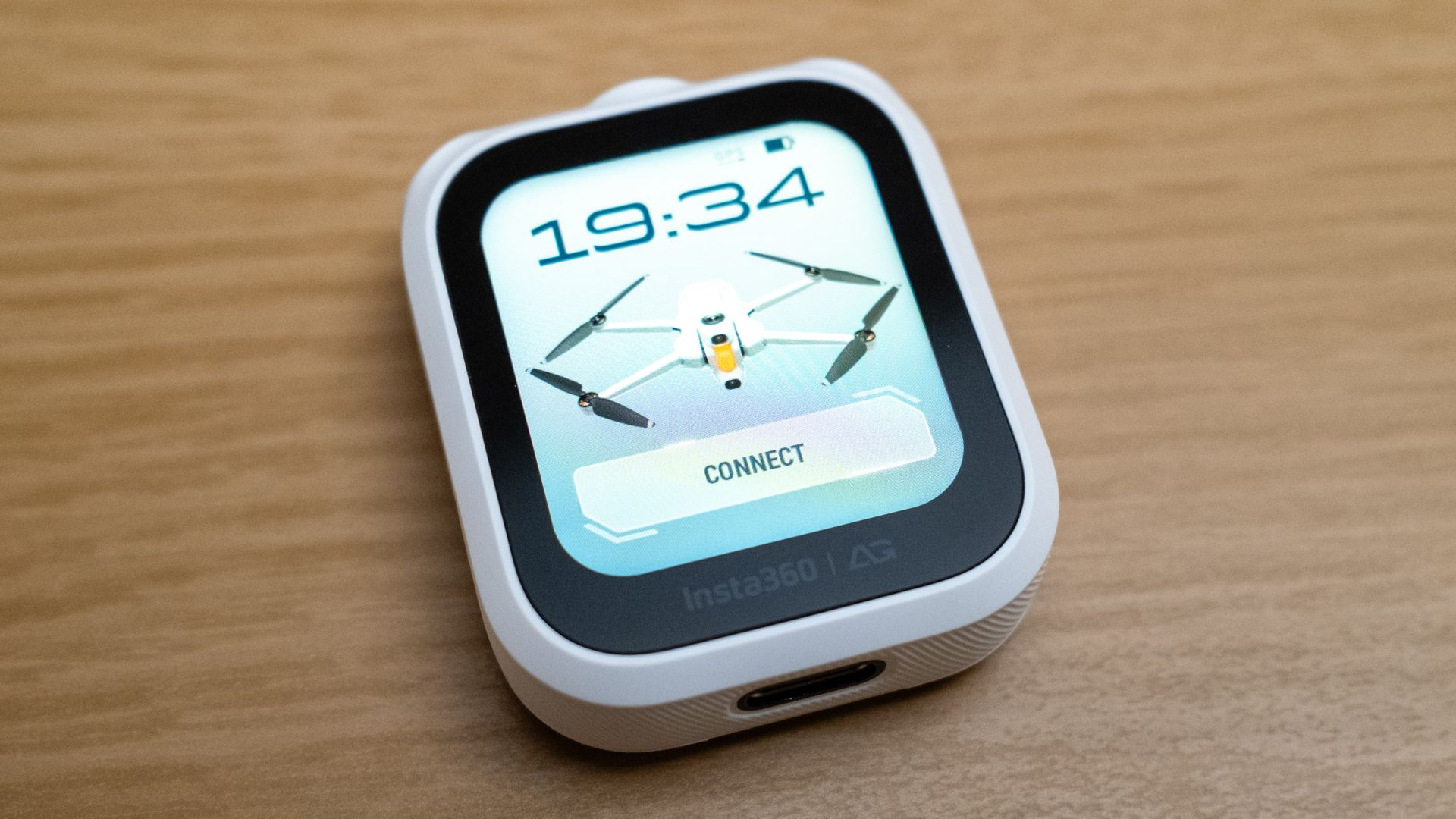
Antigravity A1 Follow Me Bundle Watch Remote screen
James Abbott
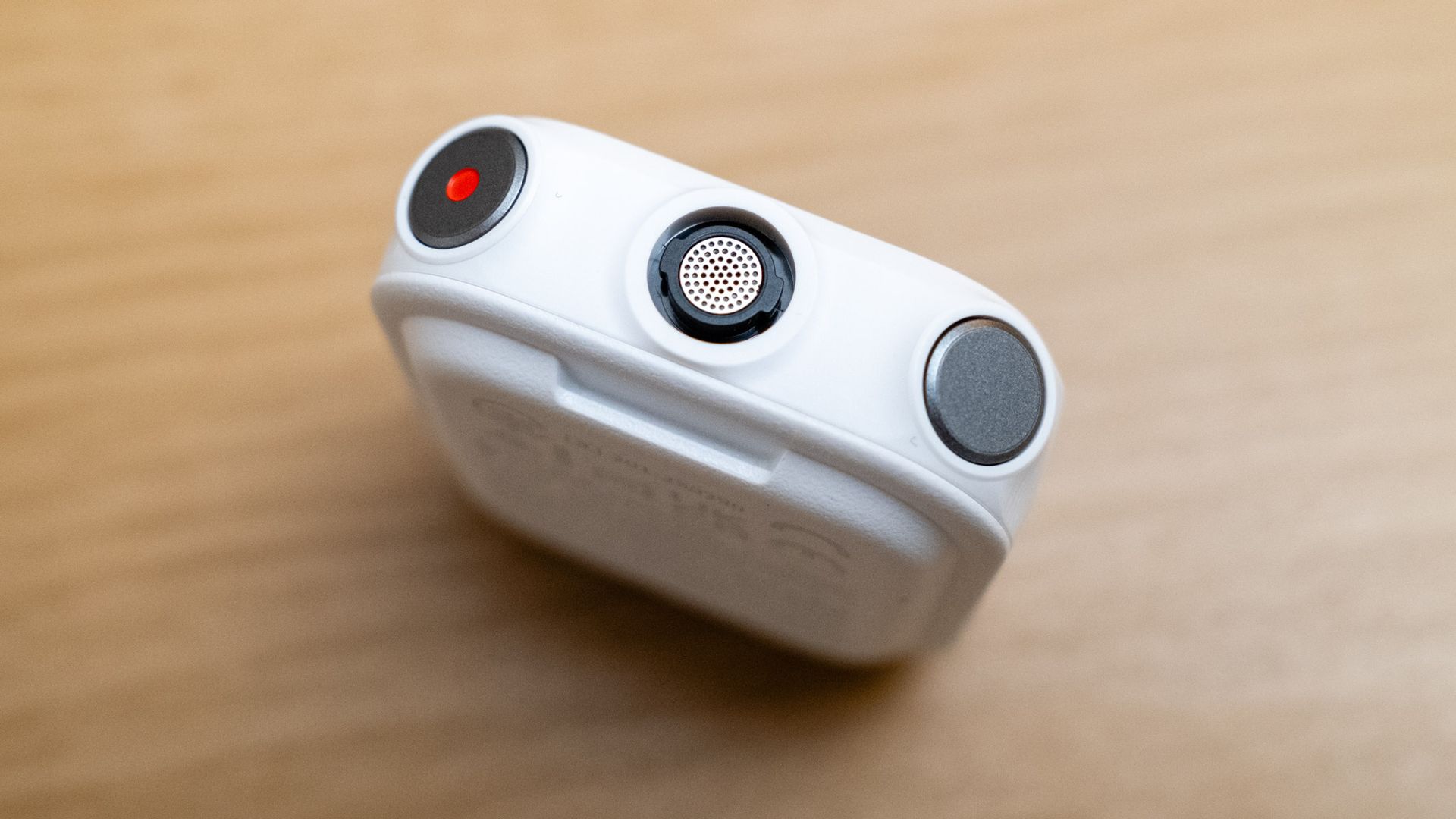
Antigravity A1 Follow Me Bundle Watch Remote buttons
James Abbott
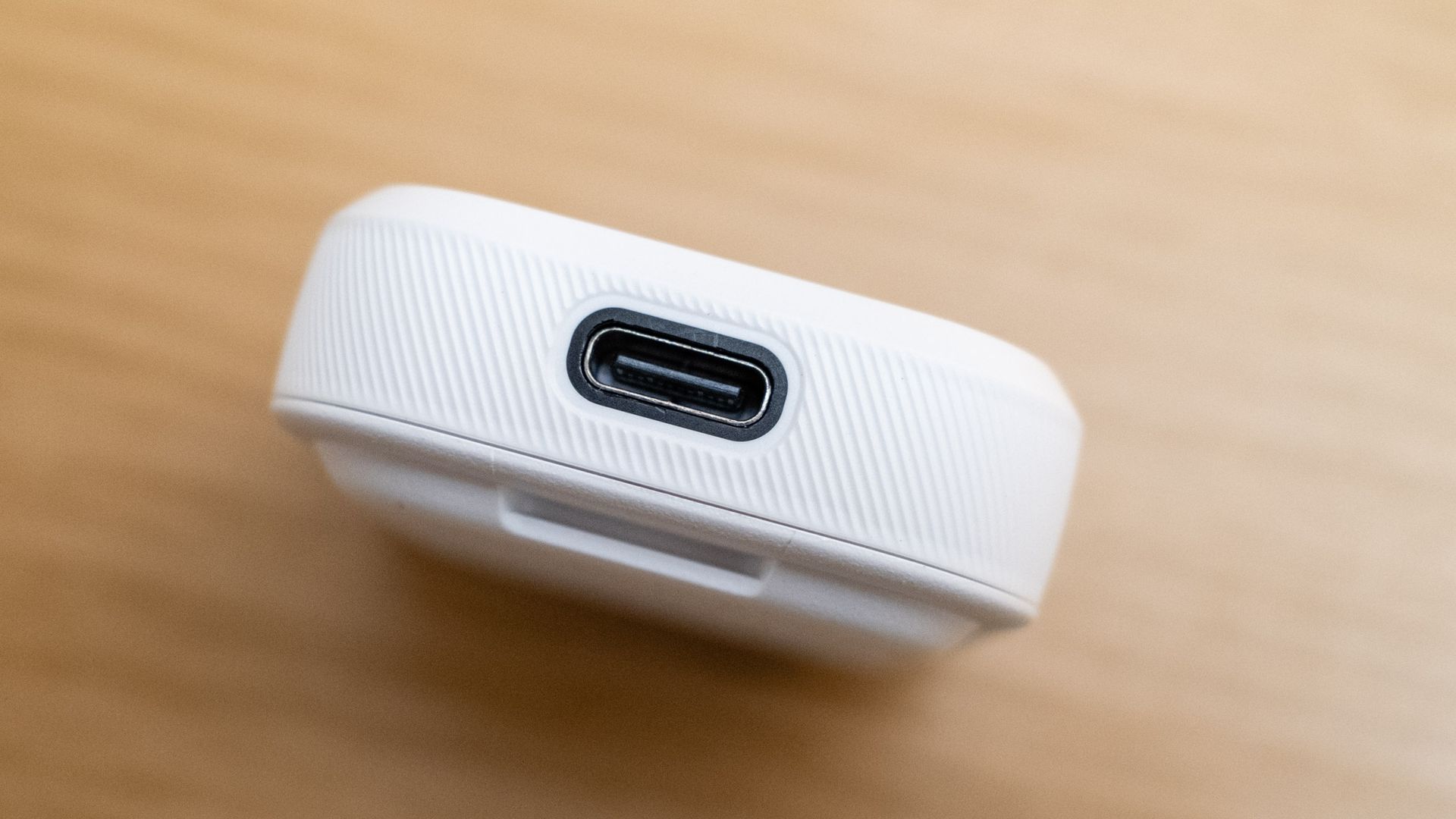
Antigravity A1 Follow Me Bundle Watch remote USB-C
James Abbott
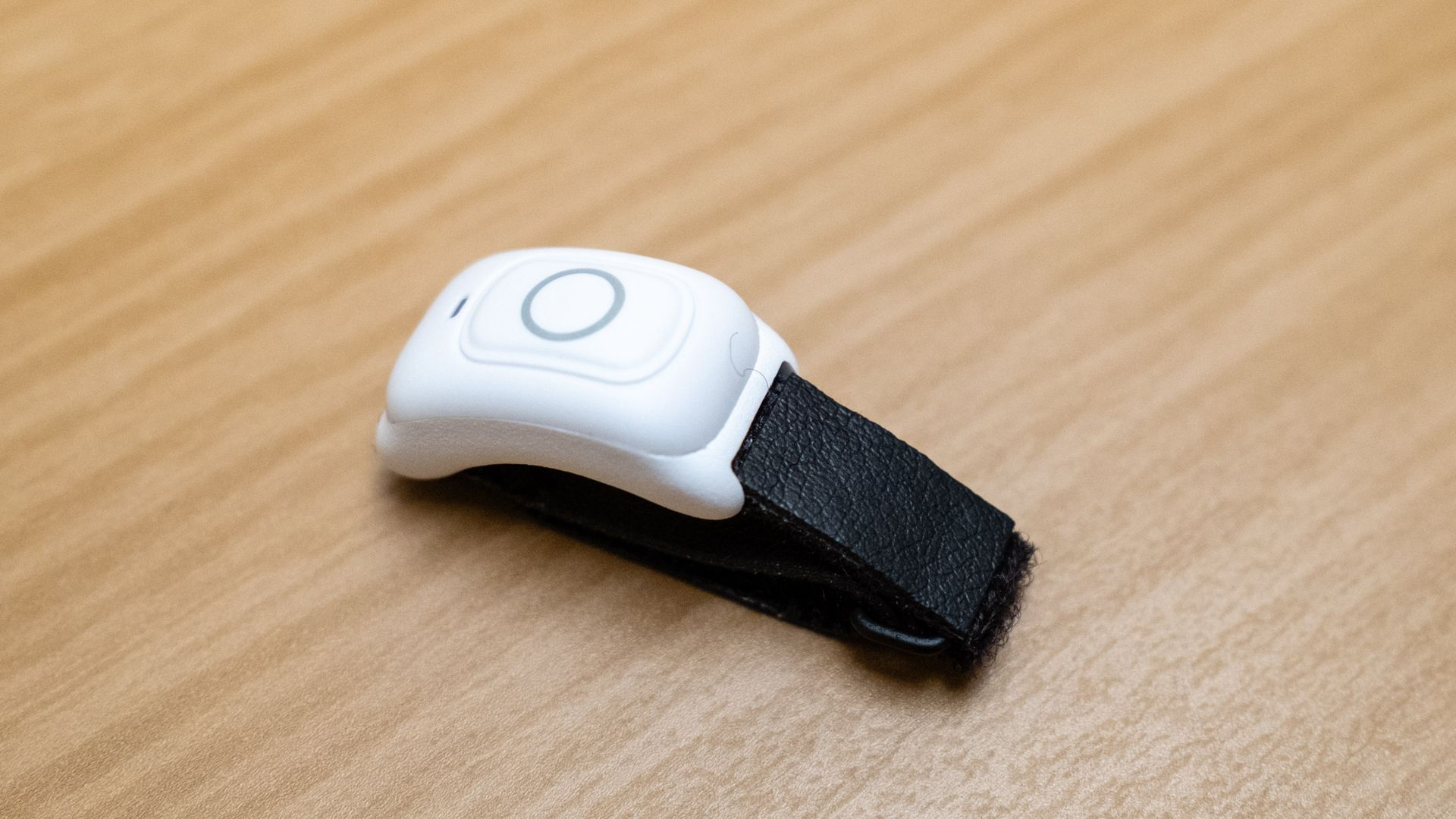
Antigravity A1 Follow Me Bundle Ring Remote
James Abbott
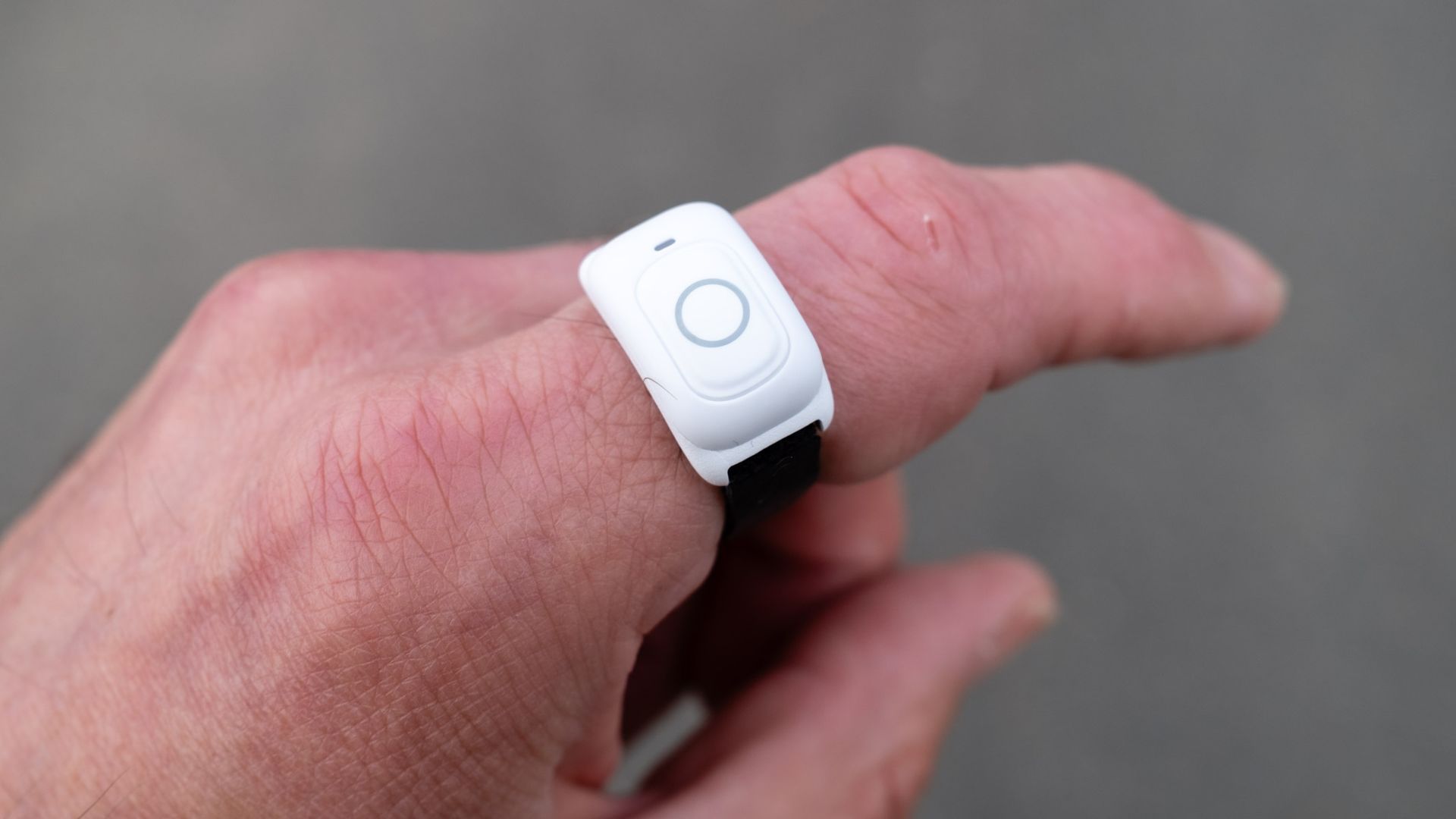
Antigravity A1 Follow Me Bundle Ring Remote on finger
James Abbott

The subject-tracking modes and one-tap cinematic shots can’t be faulted, and the Antigravity performs incredibly well here. I had it track me while running, skateboarding, and cycling through complex environments, including between and under trees, and the A1 didn’t miss a beat. Not to mention, you get the bonus of being able to reframe footage and add effects in Antigravity Studio.

The Watch Remote enables you to initiate take-off and landing and Return to Home, and make basic adjustments to the drone’s position, alongside setting the flight mode and selecting the subject to be tracked.

The Ring Remote offers a Drag-to-Fly feature, where you press and hold the button on the ring, and can then move your hand and arm to adjust A1’s flight position in relation to you to fine-tune its tracking distance and position.

The Watch Remote is about the same size as a smartwatch, with a 1.72-inch LCD screen. It is, however, about 1.5x the depth/thickness of your average smartwatch. The Ring Remote fits a finger circumference of 1.8-2.8 inches / 46-70mm. Both offer IP67 water resistance and, as we’ve discussed, a unique way to control your Antigravity A1 drone.

The main downside of the kit — cost aside, which we'll get to below — is that the propeller guards increase the weight of the drone. The propeller guards take the A1 from the coveted 249g weight, to 351g, meaning the A1 becomes slightly more restricted when this accessory is used.

Antigravity A1 Follow Me Bundle: key specs

Camera:

Dual 1/1.28-inch sensors

Video resolution:

Up to 8K

Frame rates:

8K up to 30fps / 5.2K up to 60fps / 4K & 1080p up to 30fps / 4K & 1080p slow motion at 100fps

Video transmission range:

Up to 6.2 miles / 10km (Tested in FCC environments)

Flight modes:

Manual Mode, Deep Track, Orbit Follow, Cycling Track, Ski Track, Fly Away, Antigravity Line, Ascend, Oval Orbit, Spiral Ascent, Arc Shot, Arc Out

Battery:

2360mAh, up to 24 minutes flight time / 4345mAh, up to 39 minutes flight time

Charger type:

USB-C / Battery Charging Hub

Weight:

12.04oz / 351g

Dimensions:

Folded: 5.56 x 3.79 x 3.20 inches / 141.3 x 96.2 x 81.4mm

Unfolded (propellers extended): 12.15 x 15.05 x 3.51 inches / 308.6 x 382.3 x 89.2mm

Antigravity A1 Follow Me Bundle: Price and availability

The Antigravity A1 Follow Me Bundle is available in two kits: one that includes the Antigravity A1 drone and another that’s just the follow accessories for existing A1 owners. The Follow Me Bundle includes the Watch Remote, Ring Remote, Propeller Guards, Lens Guards, a USB-C cable and a Cross Body Bag. This costs $340 / £309 / AU$539, while the kit with all this and the A1 drone, alongside other drone accessories, costs $799 / £639 / AU$1159. The Propeller Guards can also be purchased separately, and these cost $40 / £32 / AU$70.

This is quite expensive when you consider the fact that the DJI Neo 2 only costs $259 / £209 / AU$409 for the basic kit. Sure, if you’ve already got an Antigravity drone, the new Accessory Bundle, including just the accessories, expands the functionality of what you have, but the DJI Neo 2 is smaller, lighter and can be controlled in several different ways. The main and obvious advantage of the Antigravity A1 Follow Me Bundle is the fact that you can capture 360-degree video, which you can’t do with the DJI Neo 2.

One thing that I would like to see with the Antigravity A1, and this could also be released as a kit and standalone accessory purchase, is a standard drone controller; one that allows you to fly the drone without the need for the FPV goggles and Motion Controller, or even the Watch and Ring Remotes. This would make flying even easier and more convenient – simply opening up yet another way to fly the A1. Anyhow, let’s get back to the Follow Me Bundle.

Antigravity A1 Follow Me Bundle: Also consider
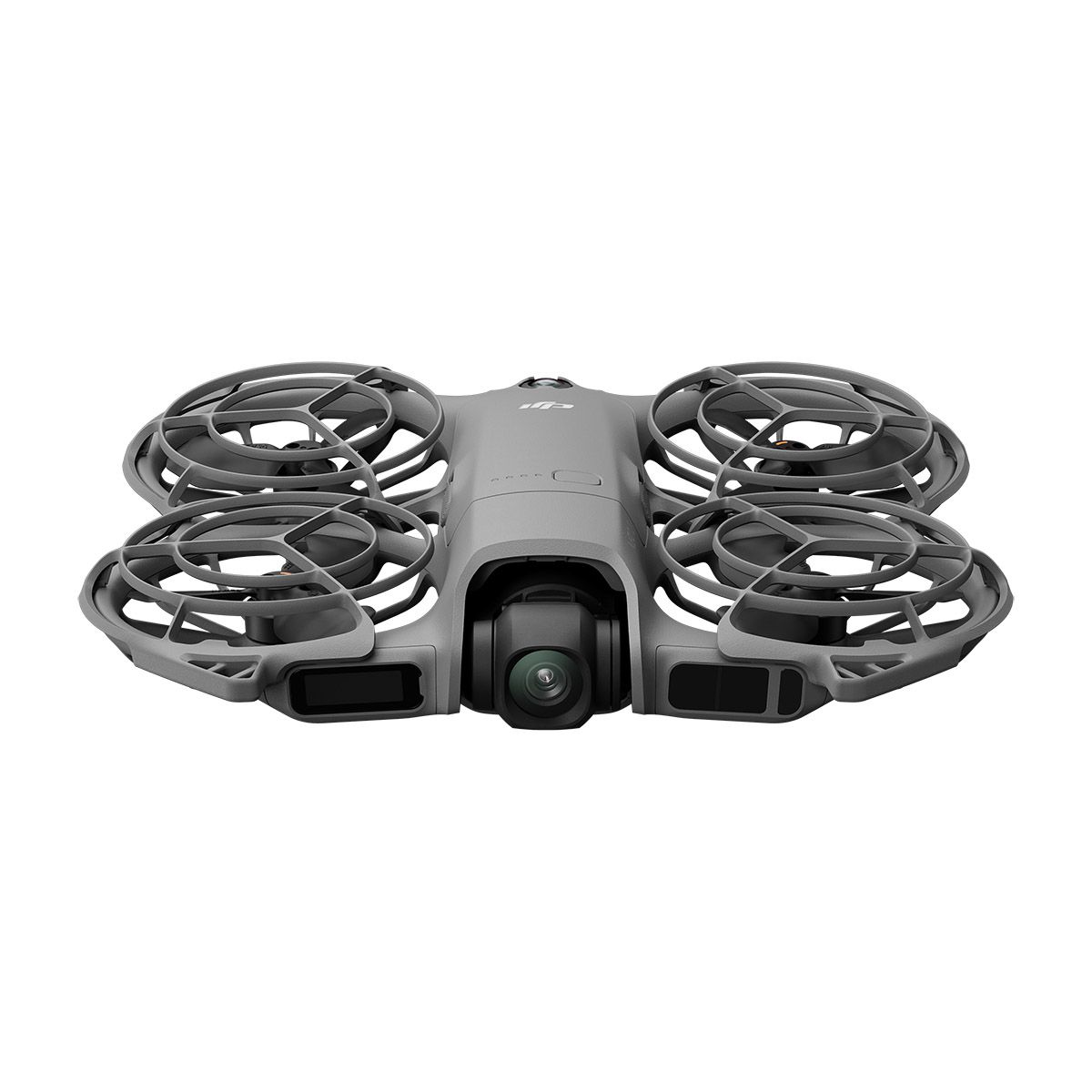
DJI Neo 2

The DJI Neo 2 allows you to capture effortless aerial selfies thanks to its intelligent subject tracking that automatically follows you. Gesture controls let you operate the drone hands-free. The drone is lightweight and compact, and although it’s not a 360-degree drone, it offers fantastic subject tracking and selfie modes in an affordable package with several control options available.

Read our DJI Neo 2 review
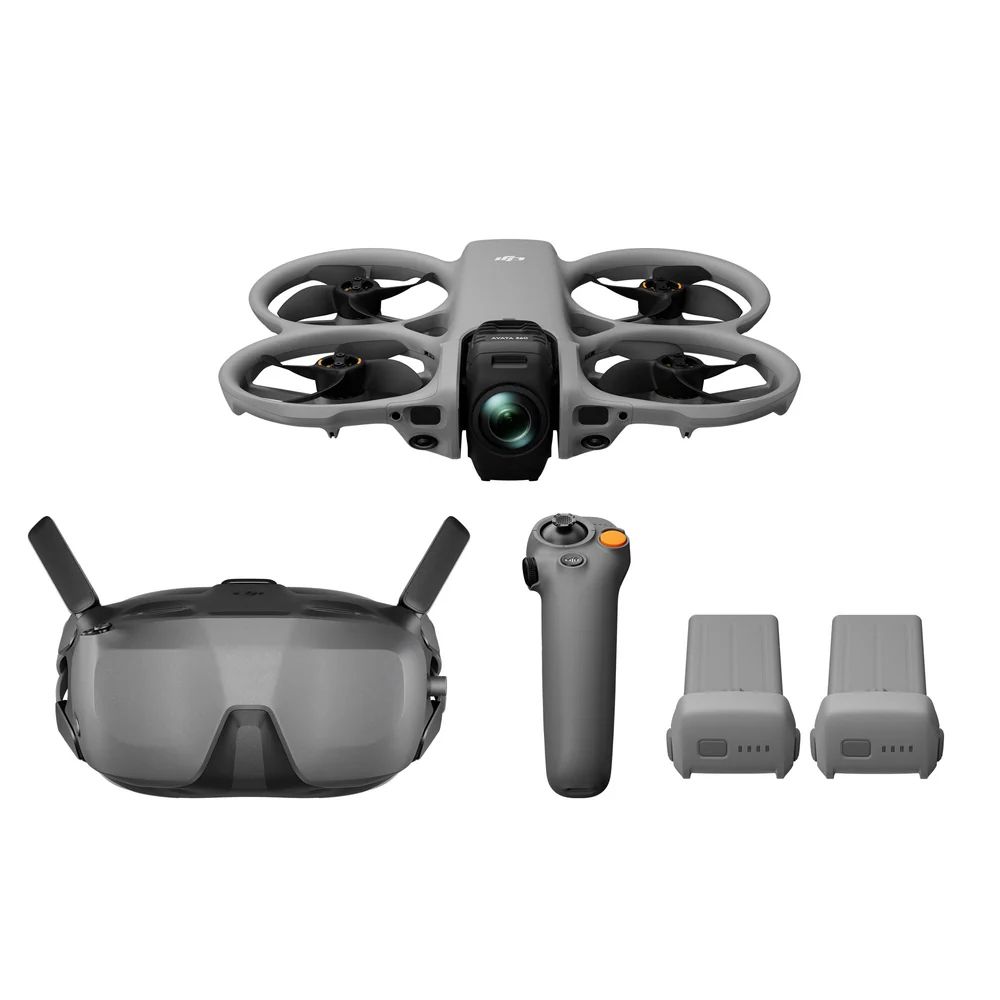
DJI Avata 360

The DJI Avata 360 is excellent for capturing 360-degree photos and videos. Its intelligent subject-tracking features, including ActiveTrack 360°, make it easy to follow moving subjects automatically, while Spotlight modes provide additional creative control. These are more basic in some ways than the Antigravity A1 Follow Me Bundle, but it’s the only other 360-degree drone available, and it offers some subject tracking functionality off the shelf.

Read our DJI Avata 360 review

Should I buy the Antigravity A1 Follow Me Bundle?
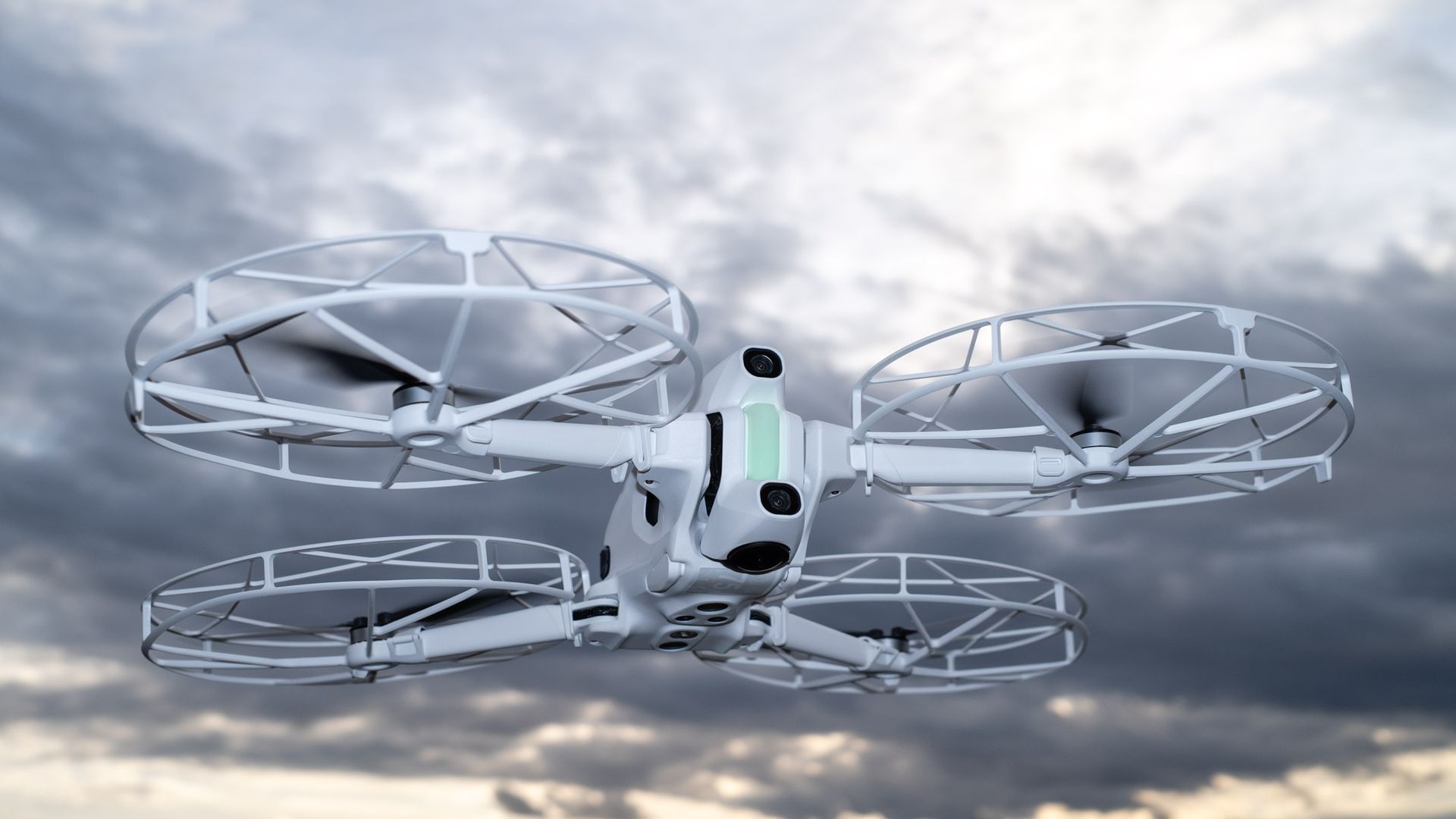
Antigravity A1 Follow Me Bundle A1 in flight with propeller guards

(Image credit: James Abbott)

Buy it if...

You want subject tracking capabilities on a 360-degree drone

The subject tracking capabilities of the Follow Me Bundle are impressive, to say the least. Plus, you can shoot up to 8K 360-degree footage.

You already own an A1

If you already own an Antigravity A1 and would rather expand its functionality rather than buying another drone, the accessory bundle is for you.

Don't buy it if...

You’re on a tight budget

Whether or not you already own an Antigravity A1, the basic DJI Neo 2 kit is less expensive than the Follow Me Bundles and offers similar flight functionality.

You don’t need or want 360-degree tracking

This is a no-brainer, but if you don’t need or want subject tracking and selfie functionality in a 360-degree drone, this is not the kit for you.

How I tested the Antigravity A1 Follow Me Bundle

  • All functionality tested
  • Tested in complex environments
  • Used with different modes of transport

The Antigravity A1 Follow Me Bundle was tested over several weeks, tracking myself skateboarding, cycling and running. I also tested the one-click cinematic shots while standing to show how these look with focus on the subject.

To put the subject tracking through its paces, I chose to walk, skate and cycle under and around trees to see how the drone’s collision avoidance coped, alongside how the GNSS tracking on the Watch Remote performed.

All video footage was reframed as simply as possible, with focus on the subject maintained with a ‘normal’ field of view. I chose not to use any special effects to make the capabilities of the tracking modes apparent.

First reviewed October 2026
  •  

"A great budget lens for astrophotography, the sharpness produced at f/1.8 and f/2.8 is exactly what you want." Viltrox AF 16mm f/1.8 FE lens review

Key specs

Type: Full-frame prime lens

Focal length: 16mm

Maximum aperture: f/1.8

Lens mount: Sony FE, Nikon Z

Weight: 19.4 oz (550 g)

Dimensions: 3.35 x 4.06-in (85.2 x 103 mm)

Filter thread: 77 mm

Release date: May 2023

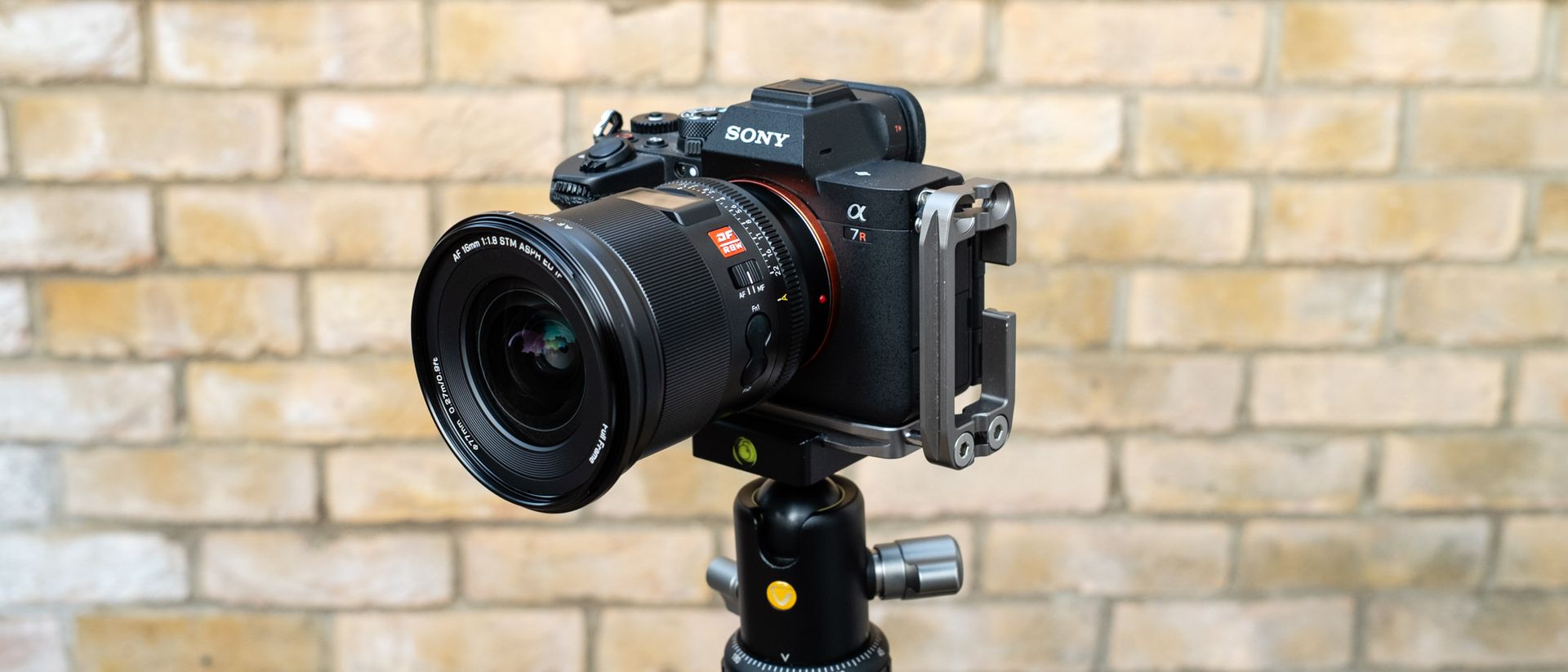
As you know, prime lenses come in a wide range of sizes and focal lengths, and every once in a while, one comes along and seems to grab you by the scruff of your neck. One such lens is the Viltrox AF 16mm f/1.8 FE, which is an impressive and useful lens for astrophotography thanks to its wide-angle field of view and fast maximum aperture.

This lens is one of the wider prime lenses that are available and could be one of the best third-party lenses for astrophotography. With a price of just $464 (£533), this is one of the most cost-effective wide-angle primes, but rather than being a second-rate lens, its build quality and image quality are fantastic. It’s not the best, but it’s undoubtedly a lens you would enjoy.

Image quality is excellent overall, with no need for lens corrections, except for vignette removal when shooting wide open. With near-perfect sharpness and minimal distortion and aberrations straight out of the camera, perhaps the weight of the lens is a small price to pay.

The lens is made up of 15 elements in 12 groups and is built like a tank, with an all-metal body. It is pretty heavy, though, weighing in at 19.4 oz (550 g) despite its relatively compact size. Attach this lens to one of the best Sony cameras and you will have a formidable combination. The 16mm f/1.8 is also available in the Nikon Z-mount.

Viltrox AF 16mm f/1.8 FE lens review

Viltrox AF 16mm f/1.8 FE: Performance

Viltrox AF 16mm f/1.8 FE front view

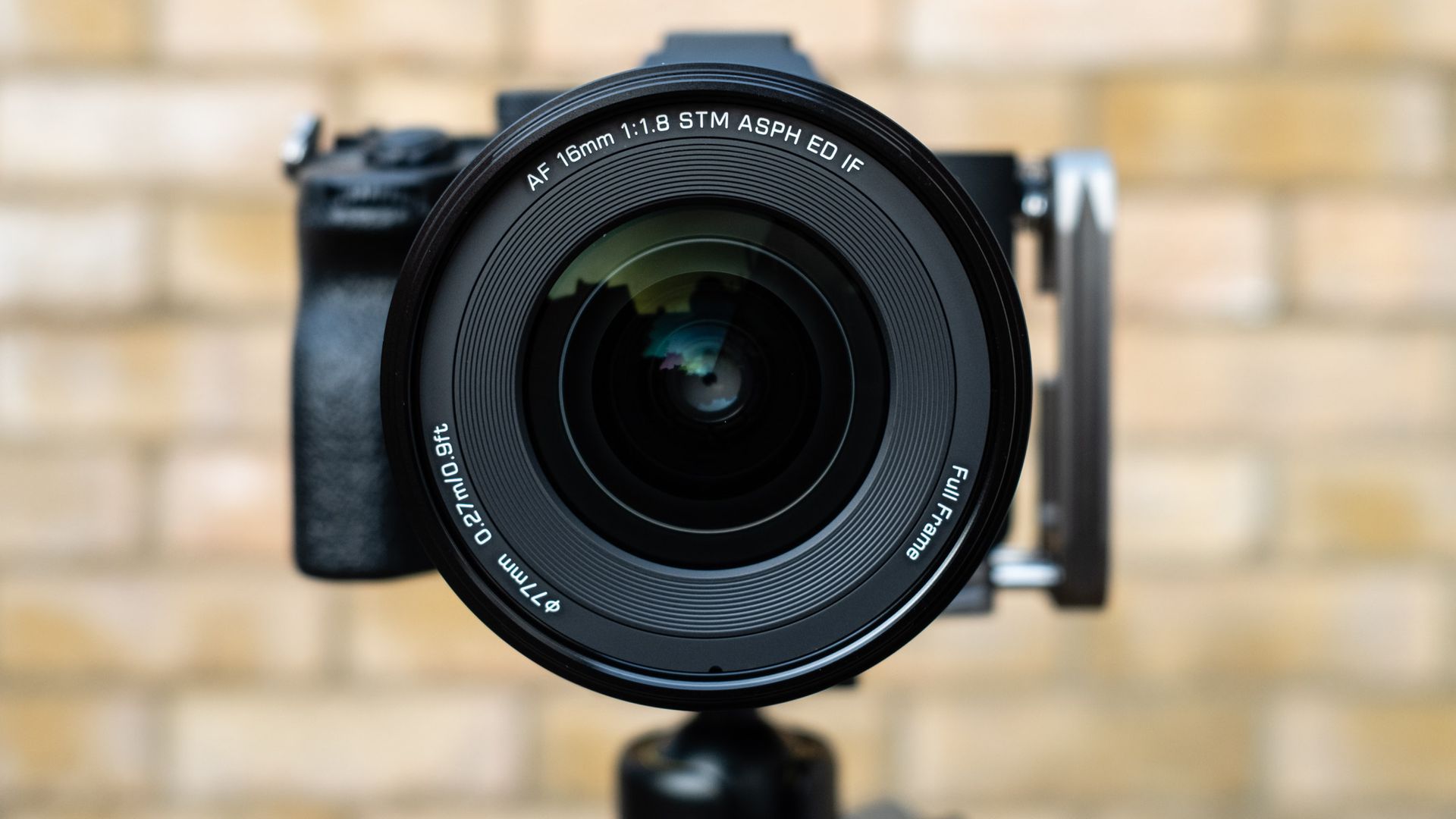
The Viltrox AF 16mm f/1.8 FE has a 77 mm filter thread. (Image credit: James Abbott)
  • Great image quality
  • Impressively sharp at f/1.8
  • Excellent corner sharpness

With a focal length of 16mm and a maximum aperture of f/1.8, this is clearly a great lens for astrophotography from a technical point of view. The light-gathering capabilities are excellent, to say the least, and during testing it was possible to shoot at a range of ISO levels with a moonless sky. Even ISO 800 was often high enough for a correct exposure.

The image quality produced by the 16mm f/1.8 is great, with excellent levels of sharpness across the frame. What’s most important here is that even corner sharpness is fantastic when wide open at f/1.8. This is the aperture setting where vignetting is at its strongest, but it reduces drastically when you stop down to f/2.8 and is completely gone by the time you stop down to f/4.

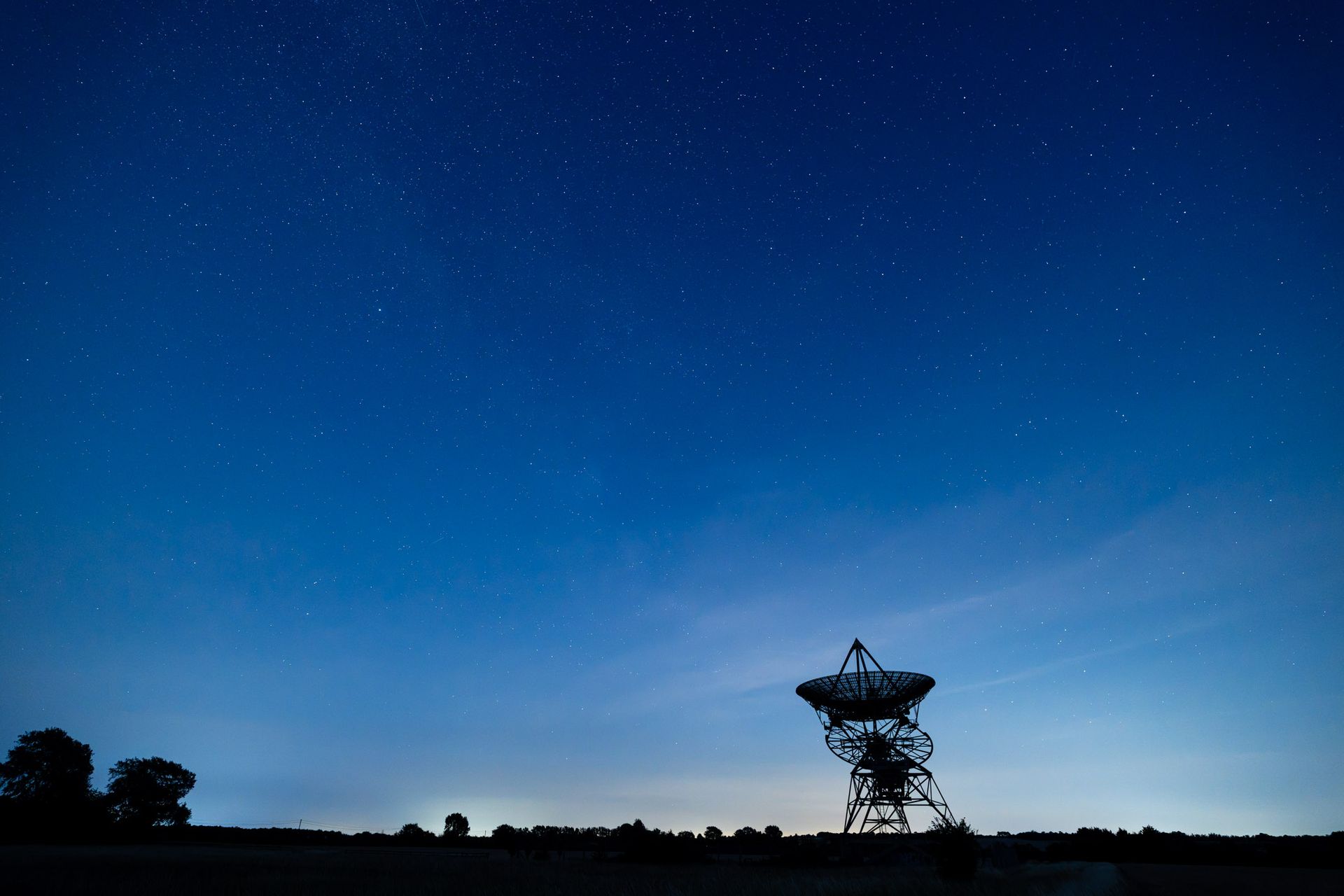
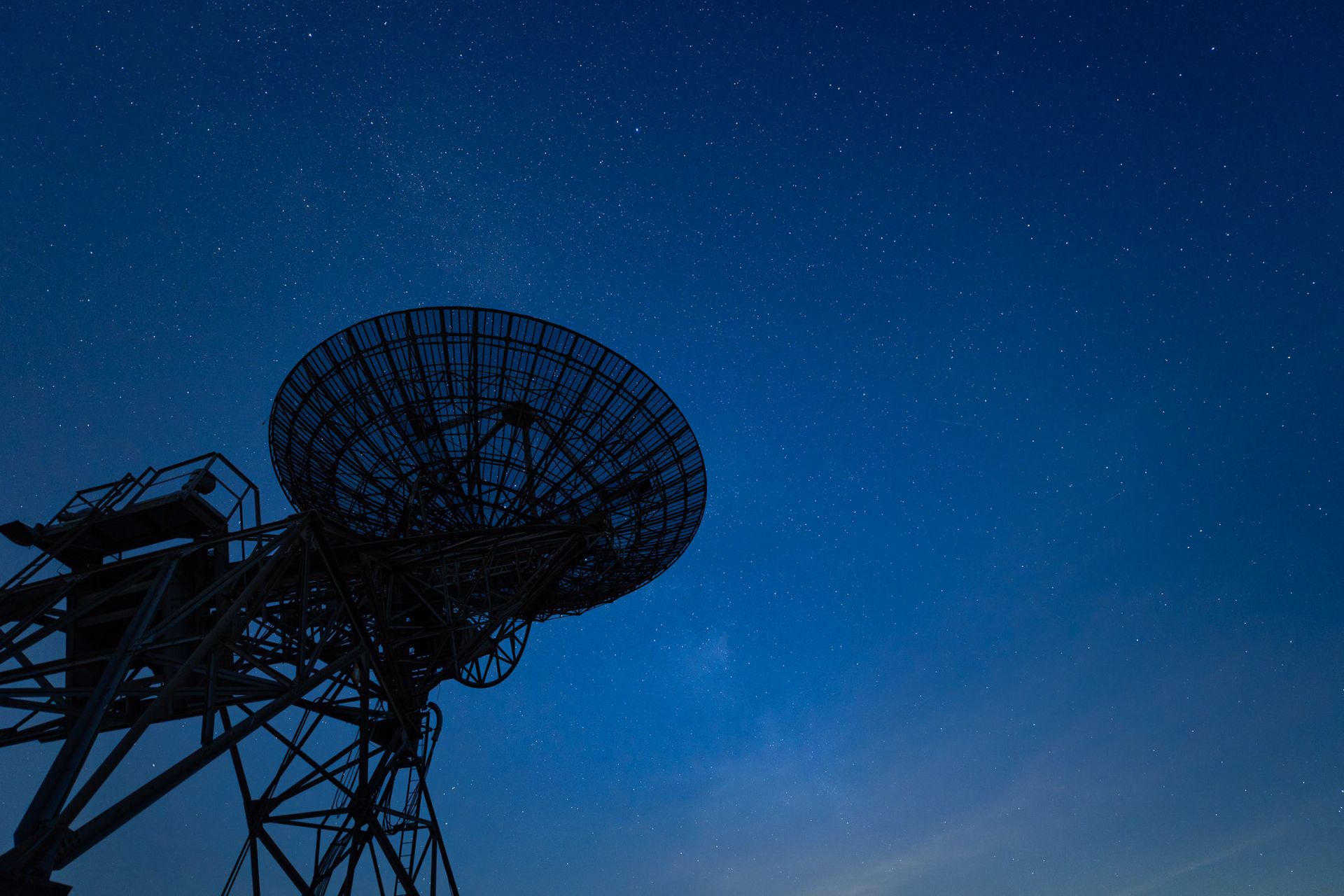
Photo of a radio telescope in front of the night sky taken with the Viltrox AF 16mm f/1.8 FE
Aperture f/2.8, shutter speed 5 secs, ISO 1600. Shot with a Sony A7R V and a Viltrox AF 16mm f/1.8 FE on a Three Legged Thing PUNKS Brian 2.0 tripod.James Abbott
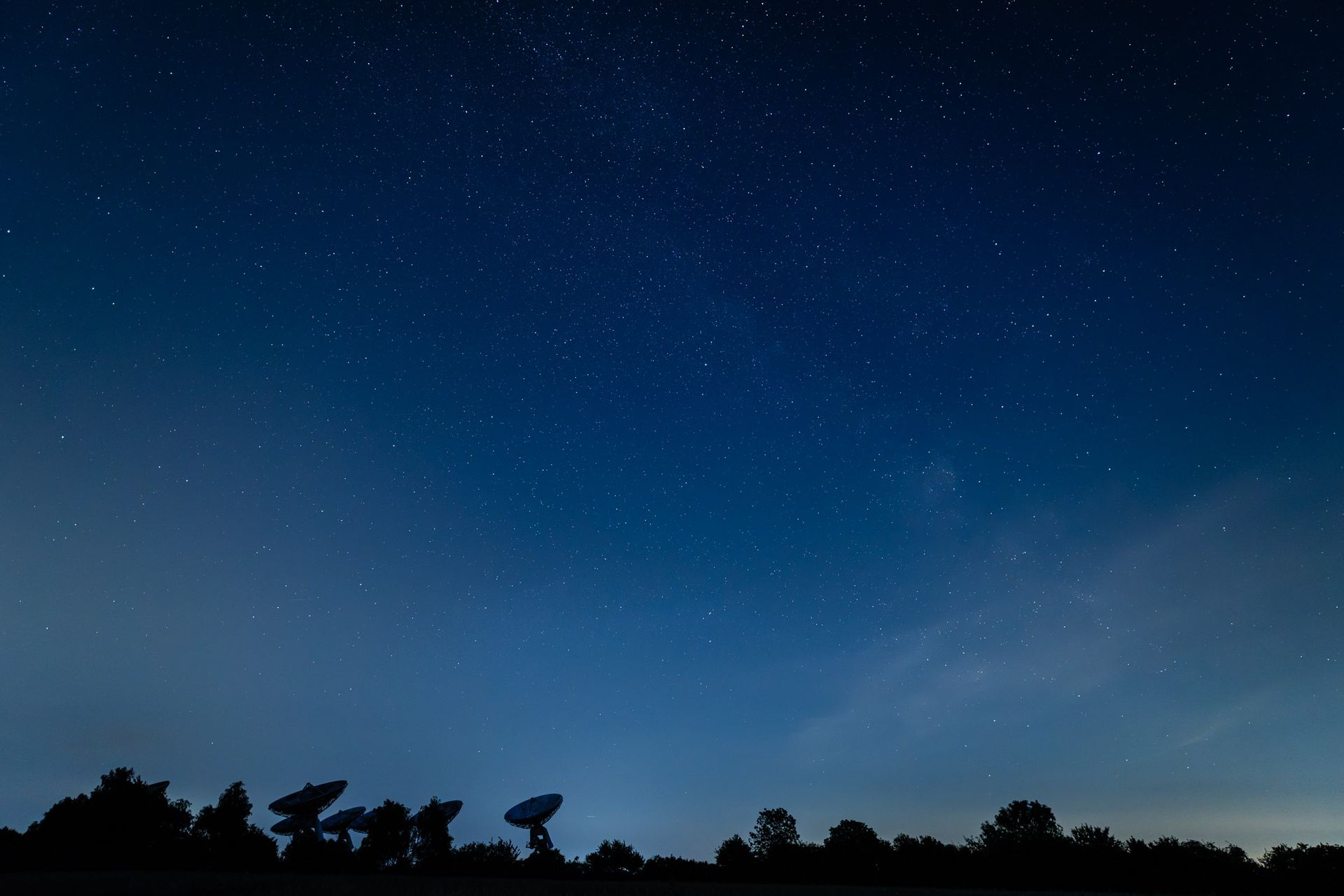
Photo of radio telescopes in front of the night sky taken with the Viltrox AF 16mm f/1.8 FE
Aperture f/1.8, shutter speed 5 secs, ISO 400. Shot with a Sony A7R V and a Viltrox AF 16mm f/1.8 FE on a Three Legged Thing PUNKS Brian 2.0 tripod.James Abbott
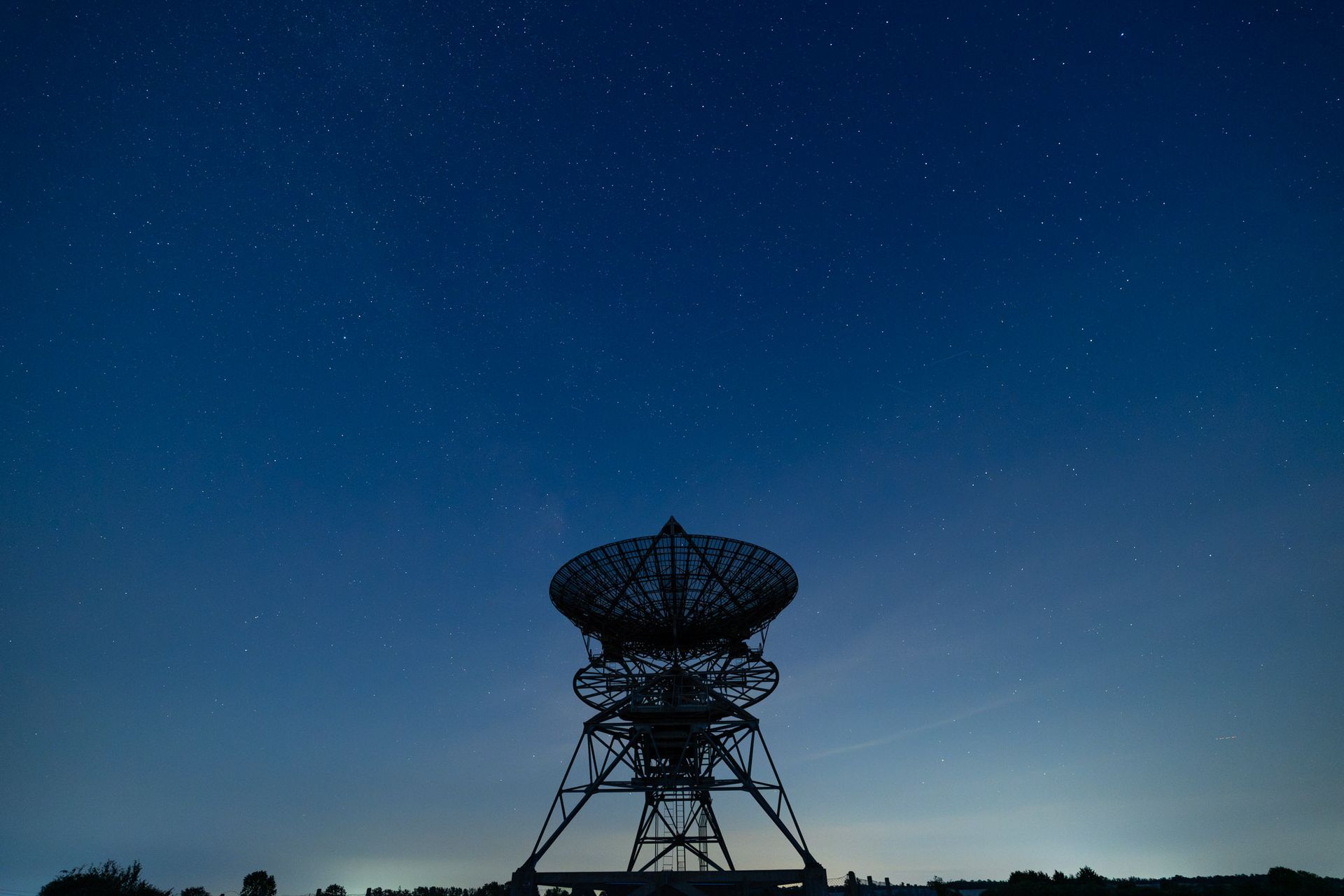
Photo of a radio telescope in front of the night sky taken with the Viltrox AF 16mm f/1.8 FE
Aperture f/2.8, shutter speed 5 secs, ISO 1250. Shot with a Sony A7R V and a Viltrox AF 16mm f/1.8 FE on a Three Legged Thing PUNKS Brian 2.0 tripod.James Abbott
Photo of the night sky taken with the Viltrox AF 16mm f/1.8 FE
Aperture f/1.8, shutter speed 5 secs, ISO 800. Shot with a Sony A7R V and a Viltrox AF 16mm f/1.8 FE on a Three Legged Thing PUNKS Brian 2.0 tripod.James Abbott
Photo of a radio telescope in front of the night sky taken with the Viltrox AF 16mm f/1.8 FE
Aperture f/1.8, shutter speed 5 secs, ISO 800. Shot with a Sony A7R V and a Viltrox AF 16mm f/1.8 FE on a Three Legged Thing PUNKS Brian 2.0 tripod.James Abbott

Luckily, though, there is a lens profile in Adobe Camera Raw and Adobe Lightroom that completely removes vignetting. There’s also only minimal chromatic aberration and a tiny amount of barrel distortion, which is impressive given the wide field of view produced by the lens.

As mentioned before, sharpness is great wide open and improves incrementally as you stop down up to the sweet spot of the lens, which is f/8. Sharpness drops slightly at f/11, and it’s at f/16 where diffraction begins to soften the image overall. This increases further when you stop down to f/22.

These latter apertures aren’t relevant to astrophotography; the medium ones aren’t either but the sharpness produced at f/1.8 and f/2.8 is exactly what you want.

Viltrox AF 16mm f/1.8 FE: Design

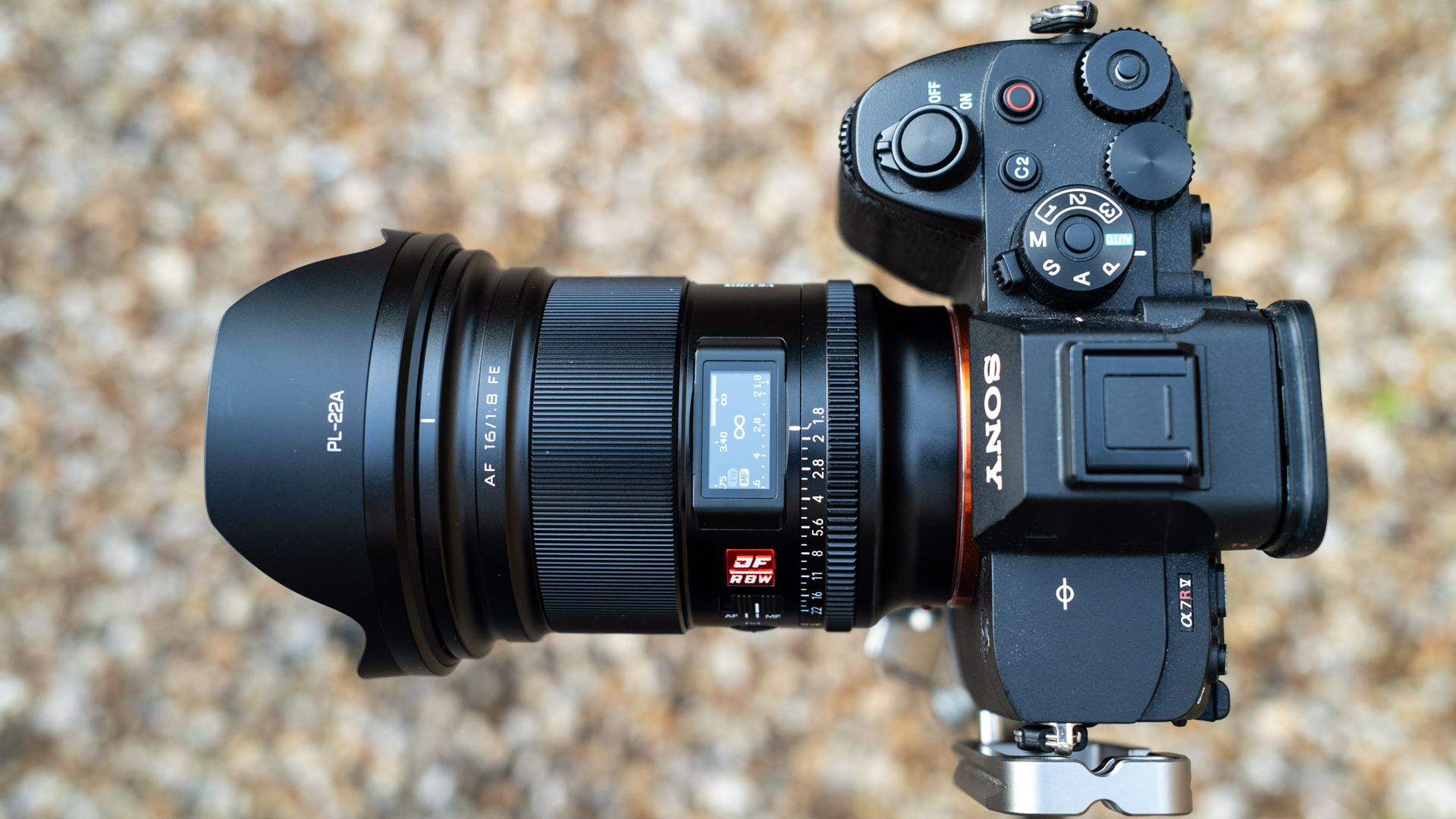
Viltrox AF 16mm f/1.8 FE top view

The Viltrox AF 16mm f/1.8 FE lens is compact but quite heavy. (Image credit: James Abbott)
  • Weather-sealed build
  • Compact yet heavy
  • Great handling

The 16mm f/1.8 lens is something of an oddity in one respect: it’s both compact and heavy considering its size, although this comes down to its optical construction. The lens weighs 19.4 oz (550 g) with a size of just 3.35 x 4.06 in (85.2 x 103 mm). It does, however, balance well with Sony A-series cameras.

The 16mm f/1.8 is made up of 15 elements in 12 groups, including four ED glass and three aspherical lenses. The optical construction is designed to deliver sharpness, detail and high contrast with minimal distortion. It’s fair to say it achieves these. Of course, you will experience some perspective distortion when tilting the lens up to capture more of the night sky when there are ground elements in the foreground.

Unlike some wide-angle lenses, the front element isn’t bulbous, and it features an HD nano multilayer coating with a water-resistant and antifouling coating. The filter thread is also just 77mm, so you can easily attach screw-in and square filters if you use them for your astrophotography.

The minimum focusing distance of the lens is 10.6 inches (27 cm), which is great for landscape photographers but less important for astrophotographers.

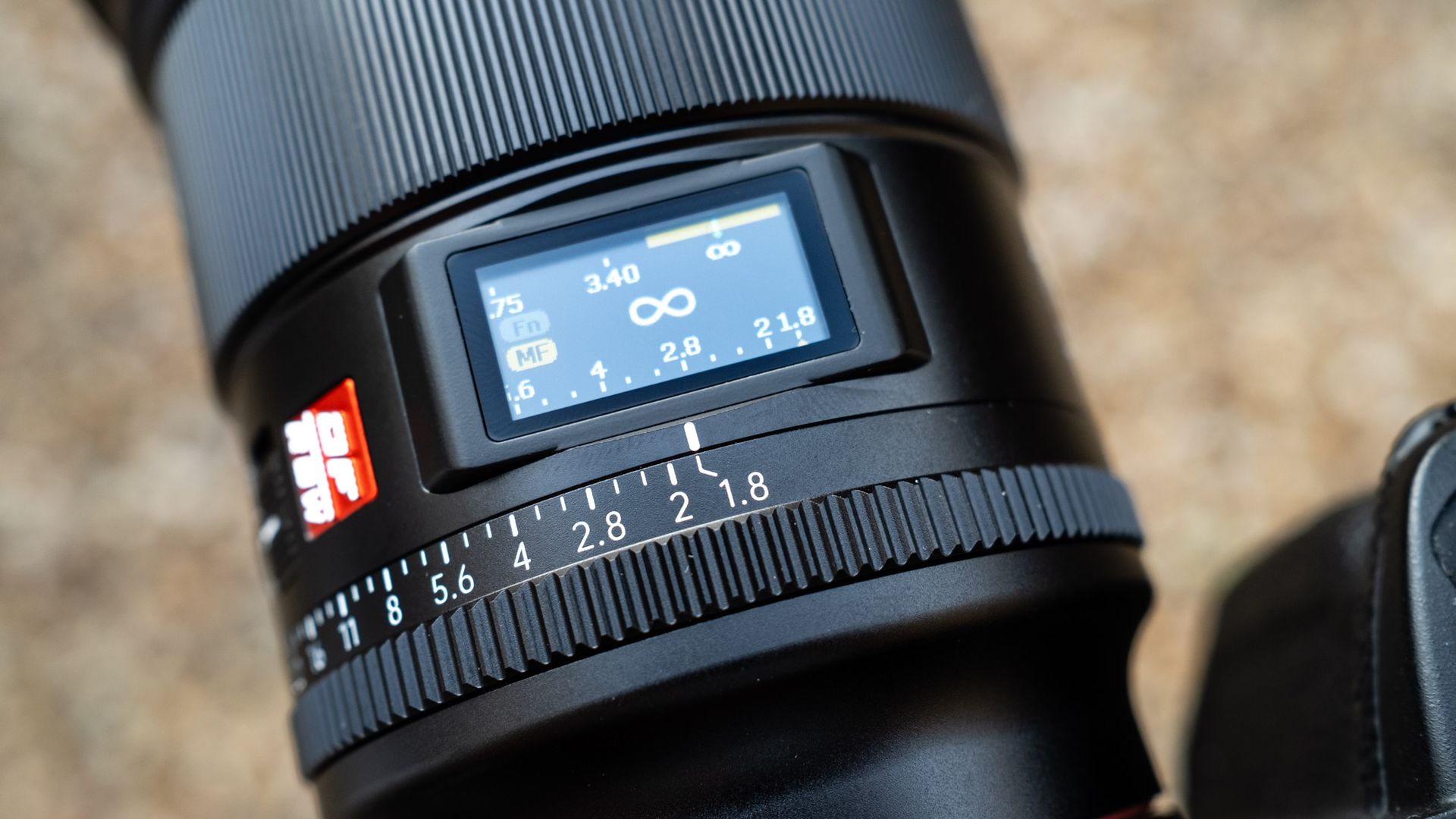
Viltrox AF 16mm f/1.8 FE color screen
The color screen is great for night shooting.James Abbott
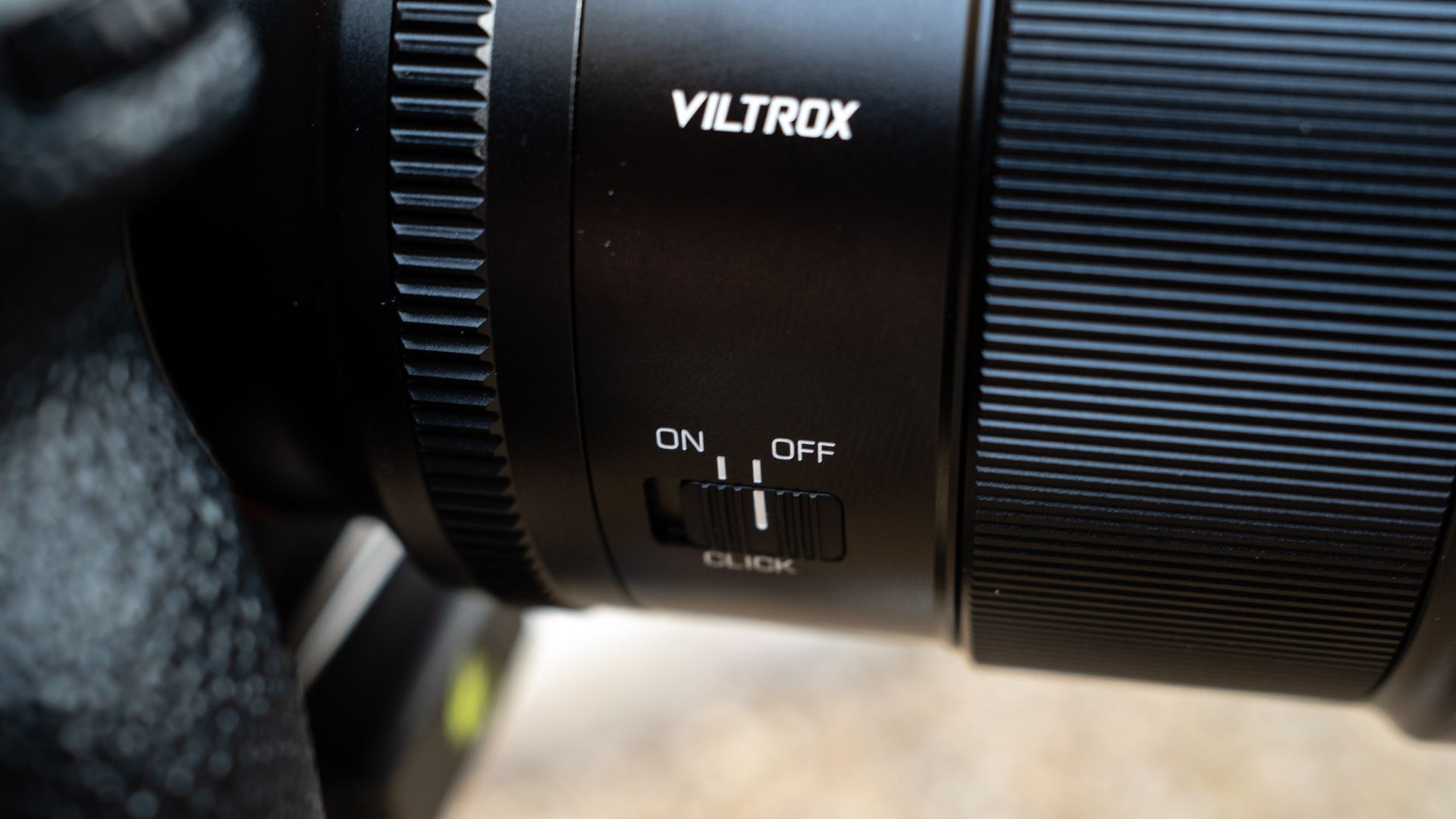
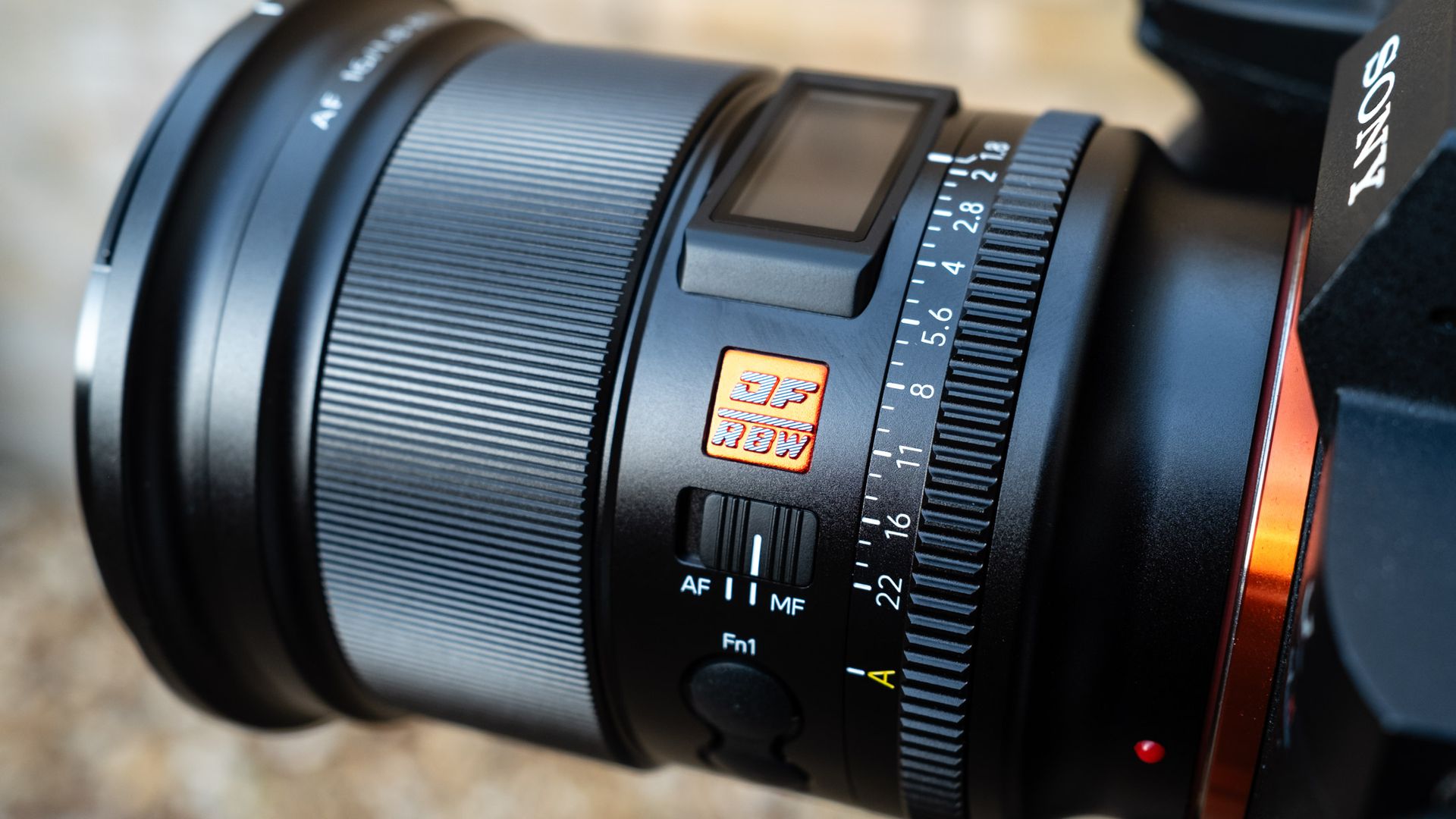
Viltrox AF 16mm f/1.8 FE aperture click switch
The aperture ring can be set to click or clickless operation.James Abbott
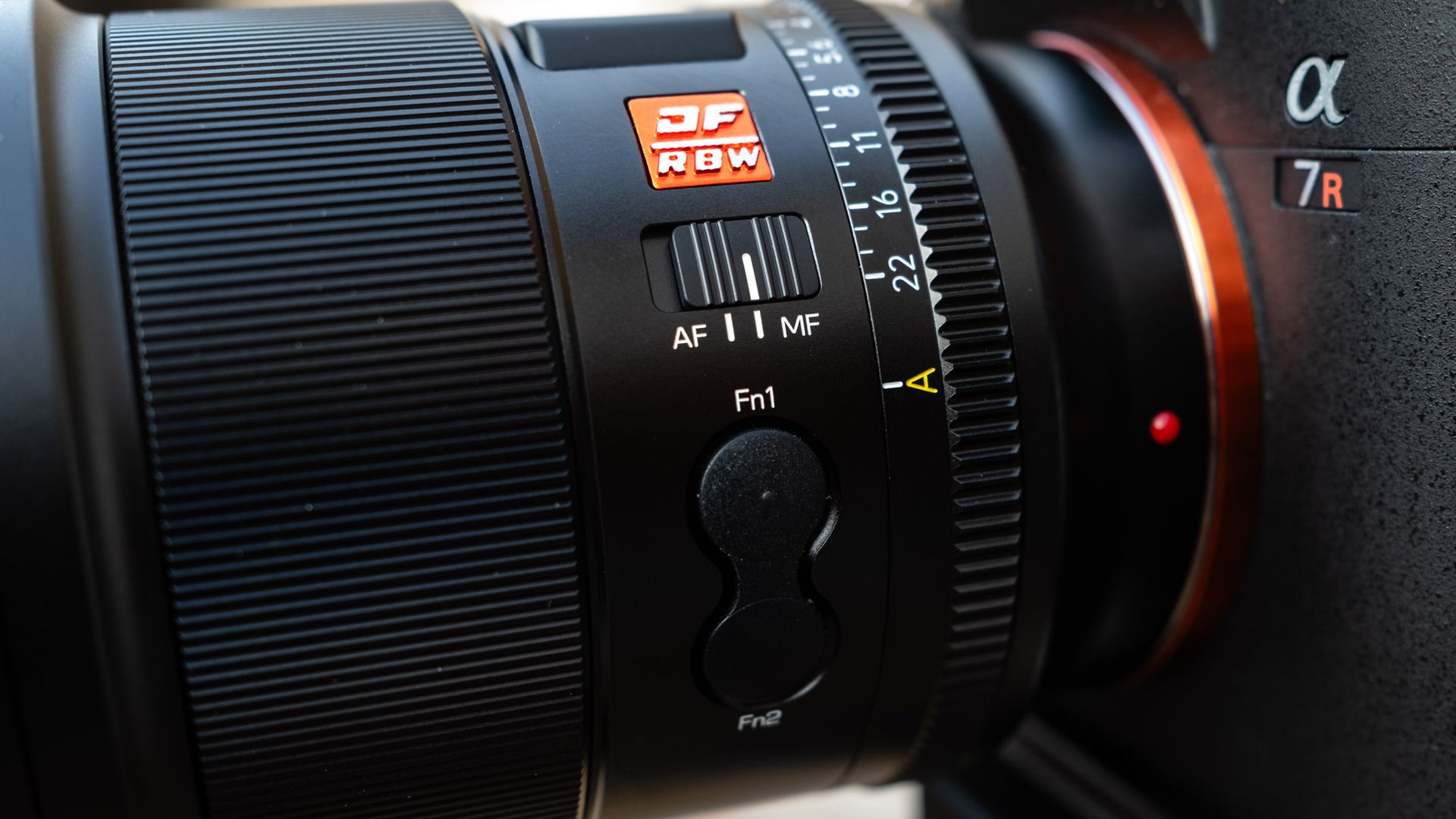
Viltrox AF 16mm f/1.8 FE controls close up
Main controls on the left side of the lens.James Abbott
Viltrox AF 16mm f/1.8 FE close up of the controls
The all-metal body has a premium look and feel.James Abbott

Build quality is impressive thanks to an all-metal body and weather-sealing. This gives the lens a premium look, and it feels robust in the hand. There’s also a useful digital color screen that displays lens information.

When it comes to controls, there are possibly a few more on this lens than you might find on the average prime. There’s a manual focusing ring that’s wide enough for use when wearing gloves, a manual aperture ring that can be set to stepped and stepless operation using a switch on one side of the lens, two customizable Fn buttons and an AF/MF switch.

Viltrox AF 16mm f/1.8 FE: Functionality

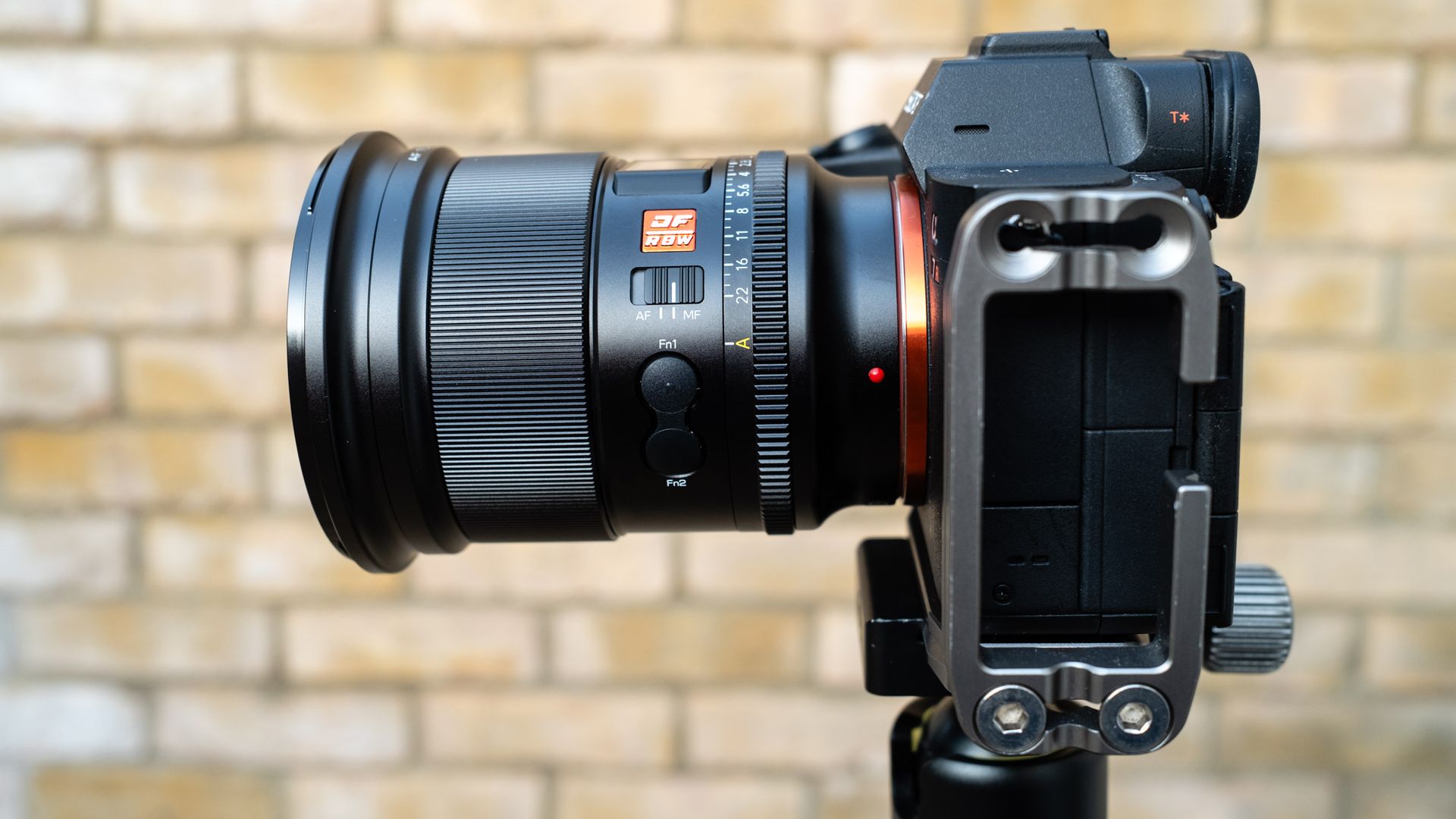
Viltrox AF 16mm f/1.8 FE side view

The Viltrox AF 16mm f/1.8 FE is excellent for astrophotography. (Image credit: James Abbott)
  • Small color digital screen
  • Customizable Fn buttons
  • 105.6-degree field of view

The Viltrox AF 16mm f/1.8 FE is a full-frame lens offering a generous 105.6-degree field of view, allowing you to capture more of the night sky. This lens naturally works with all Sony FE bodies, and if you shoot APS-C, it will give you an equivalent focal length of 24mm. This means if you currently own an APS-C camera but plan to upgrade to full-frame, this lens could comfortably join you on that journey.

As prime lenses go, this one has a few more bells and whistles than most, so there are a few more things to talk about than usual. Focusing is internal, so the front element doesn’t rotate or extend outwards, which is great when using filters.

For astrophotography, manual focus is the only way to go, but this lens also has autofocus for when you’re shooting other subjects. The autofocus isn't the fastest we’ve seen, taking about 0.25 seconds to lock onto subjects when the lens is wide open, or 0.5 seconds when stopped down. This is driven by an SMT stepping motor, which is quiet but audible.

One feature that you don’t see on many lenses is a small color digital screen on the top of the lens. This shows the focus distance, aperture setting and the active Fn control. Is it a gimmick? A bit. Is it useful? Yes. For astrophotography, the screen is definitely useful because it’s illuminated.

As with most Viltrox lenses, there’s also a USB-C port on the lens mount so it can be powered. This allows you to connect the lens to the Viltrox Lens app via Bluetooth to update firmware and customize the Fn buttons and the digital screen’s welcome screen. This makes firmware updates incredibly easy, which is a great feature to have.

Viltrox AF 16mm f/1.8 FE: User reviews

In online reviews, users consistently highlight the lens's value and image quality. Build quality comes up time and time again, thanks to the all-metal build.

Many users report that overall, the lens offers much more than you’d expect for the price and even more than some more expensive lenses.

How we tested the Viltrox AF 16mm f/1.8 FE

The Viltrox AF 16mm f/1.8 FE was tested in combination with the Sony A7R V, which offers an unforgivingly high resolution. The lens was tested at night with a focus on astrophotography, and in daylight to assess sharpness, distortion and general functionality for an all-round approach to testing.

Should you buy the Viltrox AF 16mm f/1.8 FE?

Buy it if:

✅ You’re on a budget: The Viltrox AF 16mm f/1.8 FE is less expensive than alternative lenses offering the same focal length and maximum aperture.

✅ You want a wide-angle prime: Thanks to its wide field of view, you can capture more of the night sky, while the fast maximum aperture is ideal for astrophotography.

Don't buy it if:

❌ You would like flexibility: If you would like the flexibility of a variable focal length, a zoom lens is the only way to go. They are typically slower than primes, though.

❌ You'd like a wider view: This is a lovely wide lens, but you can get wider options as both primes and zooms.

Since there are only a few alternatives to the Viltrox AF 16mm f/1.8 FE, and given that it offers excellent value for money, this is absolutely a lens worth considering if you need a wide-angle prime.

Furthermore, you’ll struggle to find a similar alternative with the same balance of overall build quality and price. Image quality is excellent, even in the corners and edges of the frame when shooting wide open with minimal distortion.

The two customizable Fn buttons and the illuminated color screen that provides useful lens information are extremely helpful when shooting in the dark.

With a price of $464 (£533) and given its build quality, image quality and overall handling, this lens represents excellent value for money. And while it may be a full-frame lens, APS-C users can still enjoy a 24mm equivalent focal length, so it’s a useful lens for astrophotography whichever format you shoot with.

This is a professional-quality lens with a mid-range price tag, and like other Viltrox lenses, you get the lens, a lens hood, front and rear lens caps and a soft lens case in the box.

If this lens isn't for you

The Viltrox AF 35mm f/1.2 LAB FE is a slightly less wide Viltrox lens with a much faster aperture and is part of the company’s flagship LAB series.

The Sony FE 20mm f/1.8 G is a fantastic wide-angle prime offering excellent image quality in a compact and lightweight form factor.

The Sigma 14mm f/1.4 DG DN Art is something of a beast, both in terms of specs and its size. With a 14mm focal length and f/1.4 maximum aperture, it’s perfect for astrophotography.

  •  
❌