❌

Reading view

The human brain may owe a lot of its size to our love of sweets

Our sweets cravings may have set the stage for the human brain to become big and powerful. That’s the finding of a new study.

The brains of our upright-walking ancestors, some 4 million years ago, weighed only around 300 grams (11 ounces). That’s about equal to a medium apple. Today, the human brain averages 1,500 grams (3.3 pounds). That’s about equal to 1.5 liters of water. Much of this brain expansion took place before early humans mastered both fire and cooking. That’s a point that marked when they could start regularly dining on energy-dense starches.

Carbohydrates come in two main classes. Sugars tend to be relatively simple molecules. Starches tend to be bigger and more complex. A new analysis of existing data from human ancestors, as well as chimps, suggests that a large share of their energy probably came from sugary carbs, such as those in fruits and honey.

Simple sugars may have played an overlooked — but important — role in human evolution, researchers now conclude. They describe why in the August 6 Science.

Until now, much of how diet affected human evolution has centered on meat. Around 2.5 million years ago, our early upright-walking ancestors began eating more meat — raw at first, then eventually cooked. Meat is rich in protein and fat. And that appeared to play a big role in fueling our ancestors’ ever-expanding brains.

But Jennie Brand-Miller thought there might be more to the story. A nutrition scientist at the University of Sydney, in Australia, she wondered how sugars might have affected the evolution of our brains.

Ripe cherries hang on a tree.
Fruits were a major part of the early hominid diet and remained so going forward in evolutionary history.swkunst/iStock/Getty Images Plus

A 2017 study had shown that fruit-eating primates had bigger brains than leaf-eating ones. Eating fruit boosts demands on various thought processes, other researchers had suggested two decades earlier. Might this have kickstarted the evolution of big brains in humans?

Explains Brand-Miller, “You need to remember when various species of ripe fruit begin to ripen, then you need to remember where it is in the forest.” And, she adds, “Your memory is associated with a bigger brain.”

Fossil primates and later hominids, such as Homo erectus, showed signs of tooth decay, Brand-Miller notes. This suggests a diet containing soft, sugary foods. (Homo erectus was the first of our ancient cousins to venture outside Africa; that was 2 million years ago).

“All these things kept adding pieces to this lovely tapestry, this puzzle that said fruit-containing sugars must be important [in human evolution],” she says.

Do you have a science question? We can help!

Submit your question here, and we might answer it an upcoming issue of Science News Explores

Still, what about meat?

Brand-Miller is part of a team that has now calculated the dietary needs of chimps, humans and three early species of human ancestors. To do this, the researchers combined data from fossils, teeth, the species’ metabolism and the biology of bodily processes.

Our earliest chimp-like ancestors from around 4 million years ago were largely vegetarians, they found. Fruit likely provided more than two-thirds of their food energy. And it played a big role as hominid brains grew over the next few million years, the data also suggest.

Clever foraging skills would have helped fuel their energy-sapping brains. These would have included hunting, cracking nuts, grinding seeds or extracting bone marrow. Later, once cooking became common, humans could have turned to starches (such as grains, beans and tubers). But a constant need for sugary foods appears to have been a key player in our evolution. And it didn’t disappear after a shift to foods high in proteins and fat, such as meats.

Meat and sugars? “I see them as parallel stories, not one replacing the other,” Brand-Miller now says. “Animal foods were clearly important. They’re very nutrient dense.”

A past focus on meat-eating may have missed some food trends that helped build the human brain, agrees Julie Lee-Thorp. She’s an archaeologist at the University of Oxford in England. She did not take part in the new study.

meat kebabs cook on an open flame
For a long period, evolutionary biologists saw meat as a major energy source that helped fuel the growth and complexity of the human brain. And it did. But a new surprise is that sugary carbs did, too, and they may have even kicked off the brain’s evolutionary growth.Igoravris/iStock/Getty Images Plus

Focusing on meat’s role may reflect a modern bias, she adds. “Meat is a high-status food today,” notes Lee-Thorp. “And that has perhaps been carried over into the way we think about the past.”

But Brian Wood largely dismisses that. The study of human evolution has not been obsessed with meat-eating, he says. A biological anthropologist, Wood works at the University of California, Los Angeles. A diverse range of foods fueled our evolution, he says. And they were made possible by our growing “ability to capture and harvest high-quality, difficult-to-acquire foods.” This included hunting, sure. But, he adds, foraging for fruit, honey, nuts and the underground parts of plants was also part of it.

  •  

How Virus-like ‘Jumping Genes’ Became Our Partners in Evolution

You might imagine that the DNA in your cells has a simple history. Even though it’s been recombined in every generation through sex and gained the occasional mutation, on the whole the genome has been stable and has been passed down reliably from your ancestors. But that’s not the entire story. Nearly half of your genome is a wild drama: mobile, repetitive, disruptive, even viral.

Source

  •  

Songs prep unhatched finches’ brains for a hot world

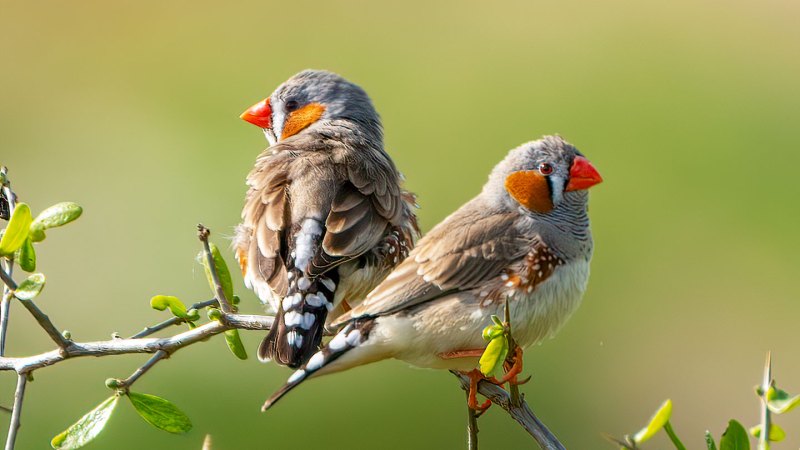
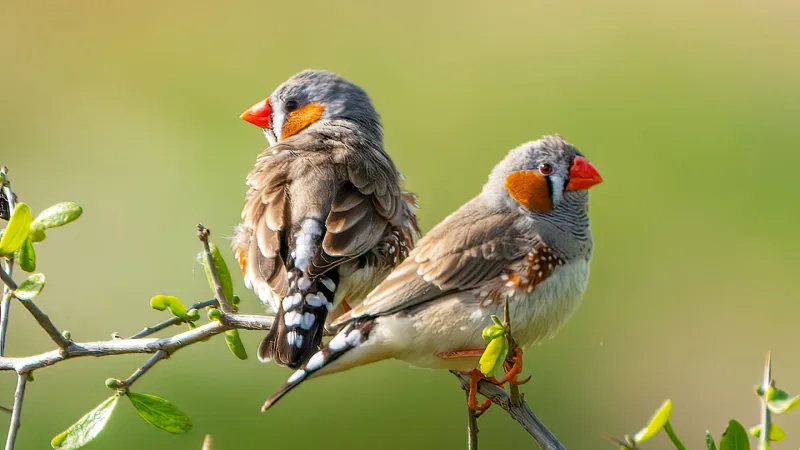
Like many parents, zebra finches sing to their young. But some parental songs seem to prepare the baby birds for hot weather, even before they leave the egg.

Zebra finches live in sun-crisped Australian woodlands. On hot days, adults make a rapid, peeping “heat call.” It kicks off genetic changes in the brains of their unhatched babies. The tune acts like a weather forecast. It prepares them for the broiling conditions on the outside of the eggshell.

Researchers described their new findings June 11 in the Journal of Experimental Biology.

A decade ago, behavioral ecologist Mylene Mariette was part of a team that made a discovery. Exposure to heat calls in the egg, shortly before hatching, changed how chicks of these zebra finches (Taeniopygia guttata) dealt with high temperatures. They grew more slowly. They also preferred warmer places to nest. In all, they seemed better able to handle heat. 

But one mystery remained: How could hearing a simple song trigger all this?

Singin’ for the brain

Mariette, of Deakin University in Waurn Ponds, Australia, teamed up with neuroscientist Julia George. George works at Clemson University in South Carolina. The pair wanted to know if those songs might trigger changes in the brain’s hypothalamus. This region plays a big role in controlling the birds’ metabolism and responses to heat. 

Hear the finch’s heat-induced call

This high-pitched, rapid peeping is the “heat call” of Australian zebra finches. It spurs their unhatched babies’ brains to change how they move blood around. This might reduce the hatchlings’ risk of heat stroke — and lasts the birds’ entire life.

“Some of the consequences of [the call] are permanent. The birds will choose warmer nest sites as adults if they are exposed to heat calls as embryos,” says study author Julia George. “And they will produce more offspring in those warmer environments.”

AUDIO: M. MARIETTE

The researchers raised the eggs of zebra finches at a consistent temperature. Then they separated them into two groups. They exposed about half of these eggs to playbacks of an adult’s heat call. The other half heard a different call for a few days. Afterward, the team removed the embryos from the eggs and euthanized them.

Researchers cut out a small sample of the hypothalamus and extracted some of its RNA. This is a messenger molecule made based on DNA. It carries genetic information to the protein-making parts of the cell. The researchers planned to compare the levels of different RNAs. This should show how certain genes ramp up or down.

The team expected the heat calls would trigger changes in hormone-regulating genes, George recalls. Instead, the songs reduced the activity of genes that control how the brain’s blood vessels squeeze. The researchers now think this helps the chicks brains’ shed heat.

“It’s important that the temperature of the brain is kept cool, even in hot temperatures,” George says. Modifying blood flow there could protect against dangers such as heat stroke.

The calls didn’t change how the hypothalamus works, in general. Instead, only a select set of systems in it seemed to change. These systems are vulnerable to high temperatures. Only about 2 percent of the RNA in the hypothalamus showed this response to the heat calls.

The heat calls could be “like a little weather forecast,” George says, that allows finches to fine-tune their brain’s development. And this might leave them “better suited to the environment right after they hatch,” she adds.

Ready for a warmer world

Other types of yet-to-hatch birds have also shown sound-triggered changes. Yellow-legged gulls warn each other of predators. Those exposed in the egg to these warning calls grew more slowly. After hatching, they also were more likely to crouch when they heard those calls.

Alexandra Cones wonders if there are other genetic and cellular ways for animals to adapt to heat. Cones is an evolutionary behavioral ecologist at Ludwig Maximilian University. It’s in Munich, Germany. She did not take part in the new finch study. But her own research has shown that adult house sparrows can change how their chicks’ metabolisms respond to temperature.

Cones’s team never uncovered exactly how this happens. But, she says, the zebra finch data “forces us to consider a broader range” of possibilities for how such a flexibility evolved.

Zebra finches may not be alone in their brain-bending musical abilities, George concludes. Perhaps there’s a whole playlist of heat-busting birdsongs yet to be discovered.

Do you have a science question? We can help!

Submit your question here, and we might answer it an upcoming issue of Science News Explores

  •  

Here’s how ‘singing’ mice belt out their tiny tunes

Disney’s Cinderella is not the only place you can hear mice “sing.” Some real-world rodents also serenade each other. And now, scientists know how. The mice inflate tiny, balloon-like sacs in their airways. This creates whistling tunes.

Making music this way may be unique in the animal kingdom.

The critters are known as Alston’s singing mice. Found in the forests of Mexico and Central America, they truly live up to their name. Both males and females communicate with trains of high-pitched notes. Remarkably, their songs are more complex than those of any other rodent.

In just a 10-second song, an Alston’s singing mouse belts out around 100 individual breaths and notes. The melody attracts mates and warns rival males to stay away, says Samantha Smith. The song’s speed and length make it far more “extreme” than other rodents’ calls, she adds. Smith is a biologist at the University of Lausanne. That’s in Switzerland.

Smith is part of a team that wanted to know how the vocal systems of Alston’s singing mice evolved to create melodies. They started by dissecting the larynges of deceased animals. This “voice box” is a part of their bodies that helps mice (and us) breathe, swallow and make sound.

Watch one Alston’s singing mouse serenade the sky with its complex song.

The researchers hooked each excised mouse voice box to a tube. Then, they pointed a microphone and camera toward its top. “A [voice box] is basically just a tube with a valve in it that can open and close,” explains Smith. To see how the voice box moved and produced sound, the team blew air through the tube.

Sometimes, the voice box produced sounds that ranged in the mouse’s natural pitch. But this happened only when a pouch on the inside of the voice box was inflated. When the researchers blocked this balloon with bits of wax or small metal balls, the voice box went silent. Cutting the sac had the same effect. The air sac, it seemed, is key to making the songs.

Other rodents have air sacs, but they don’t appear to use them to sing.

Smith and her teammates shared their findings May 6 in Proceedings of the Royal Society B.

A unique musical talent

Raffaela Lesch is impressed by the team’s experiment and its choice of species. She works at the University of Arkansas at Little Rock. As a bioacoustician, she studies how animals use sound to communicate.

“Working with [voice boxes] this small is not an easy task,” she says. But for Lesch, learning more about how rodents produce sound is exciting. They’re “such a diverse group with such fascinating social, behavioral and ecological adaptions,” she says. 

It’s not yet clear how the sac generates its whistle. The sound could come from air vibrating at the sac’s entrance. That would be similar to the way opening a car’s sunroof can make noise as air rushes past the opening.

Do you have a science question? We can help!

Submit your question here, and we might answer it an upcoming issue of Science News Explores

Another possibility is a bit like how flutes and organ pipes work. A sharp cartilage rim at the sac’s entrance may be deflecting air, producing the tone.

Inflatable sacs in airways have evolved multiple times. Primates, birds, reptiles, frogs and other animals have them. But in those cases, air sacs alter or amplify sound produced elsewhere in the respiratory tract. (That’s the system of organs that are involved in breathing.) The songs of the singing mice, on the other hand, are made by the sacs themselves.

“Our study expands our understanding of the ways in which [air sacs] can shape vocal communication,” Smith says. Studying different features of rodent air sacs may help reveal how these songs first evolved — no Disney magic needed.

  •  

Giant school bus–sized octopuses may have once ruled the oceans

The kraken — a giant, tentacled sea monster that dragged ships into the depths — is a creature of Norwegian myth. But millions of years ago, a similar, real-life animal roamed the oceans, a new study finds.

The new analysis of jaw fossils suggests that as dinosaurs ruled the land, whale-sized octopuses ruled the seas. These super-sized cephalopods would have been the largest marine animals of the Late Cretaceous Period. That’s from about 66 million to 100 million years ago.

Researchers reported their findings April 23 in Science.

It’s difficult to study fossil octopuses, notes Yasuhiro Iba. He’s a paleontologist at Hokkaido University. That’s in Sapporo, Japan. With soft bodies, these animals tend to break down before becoming fossils. Very few hard parts remain to fossilize. Fortunately, both ancient and modern-day octopuses have a hard, beak-like jaw. This structure is made of chitin (KY-tin). This material is strong enough to survive the animal’s death and fossilize.

The jaws appeared to come from an octopus-like creature. But until now, details of the body size and animal’s role in the ocean ecosystem had been a mystery, Iba says.

A fresh look at old fossils

To find those details, Iba was part of a team that examined 15 fossil jaws. Found in Japan and Canada’s Vancouver Island, they date to near the end of the age of dinosaurs.

Iba’s team took careful measurements. They also compared the mystery jaws to those from other species of octopus and squid. The team also found 12 jaw fossils embedded in rocks in Japan. Some were too fragile to dig out. So they examined them with a technique called digital fossil mining. It records fossils as detailed 3-D digital images.

To make these images, they ground down the rocks layer by layer. Each layer exposed a new bit of the fossils. The researchers then took photographs of each layer. Afterward, the team used these images — with some help from artificial intelligence — to make digital models of the fossils.

Researchers once thought these 27 cephalopods belonged to five extinct species. But as Iba and his colleagues learned more about them, they divided them into just two. There was Nanaimoteuthis jeletzkyi (Nuh-NY-moh-TOOTH-is Jeh-LETZ-skee-eye) and the much larger N. haggarti. The new analyses suggest the behemoths were early finned octopuses.

This group of deep-sea animals has webbing between their arms and flapping fins on the other end of their body. Finned octopuses still exist. One example is the dumbo octopus. The ancient ones were much, much larger.

Going big

Perhaps the largest invertebrate ever known, the giant dinosaur-era octopus lived more than 72 million years ago. This predator dwarfed even the giant marine reptiles, such as plesiosaurs, not to mention today’s largest invertebrate, the giant squid.

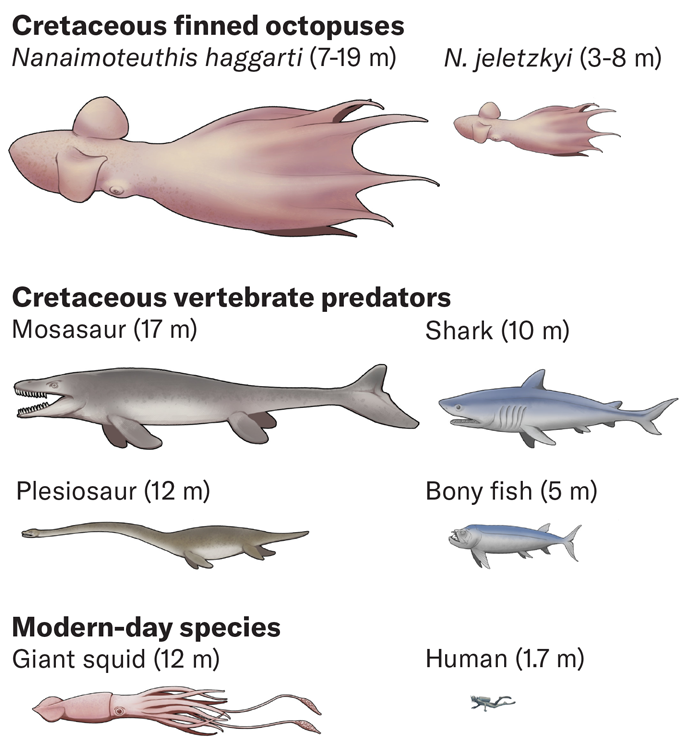
A chart compares the size of the newly described ancient octopuses to other Cretaceous predators, including the mosasaur and plesiosaur, and modern-day giant squid and humans. The biggest octopus dwarfs all but the mosasaur.
Hokkaido University

The largest lower jaw from an N. haggarti was big enough to hold a grapefruit. It also was about 50 percent bigger than that of the modern giant squid. At 12 meters (39 feet) long, that squid is one of the largest cephalopods alive today.

Iba estimates that N. haggarti could have spanned seven to 19 meters (23 to 63 feet) from its head to the tips of its arms. That’s between the length of an ambulance and a school bus.

The animal “may have been among the largest invertebrates in Earth’s history,” Iba now concludes.

No bones about it

N. haggarti appears to have been bigger than even the largest ocean predators of its time. These would have included huge reptiles, such as mosasaurs and long-necked plesiosaurs.

Clues in the fossil jaws suggest the ancient giant octopuses competed with those top predators for a spot in the food chain. The researchers found wear and damage to the animals’ jaws. These scrapes and scuffs suggest the octopuses had been powerful predators. Biting on shells and bones likely roughed up their jaws.

That discovery seems to shed new light on ancient marine ecosystems. It suggests that a wider range of predators roamed the ancient seas than once thought.

“For a long time, the top of the marine food web has been thought to be dominated by large vertebrates,” Iba says. By mosasaurs and plesiosaurs, for example. “Our study shows that giant invertebrates — octopuses — also occupied that role in the Cretaceous,” he says.

It’s possible that Nanaimoteuthis was a bit smaller, notes Christian Klug. He’s a paleontologist at the University of Zurich, in Switzerland. The fossil remains are incomplete, he notes. Iba’s team used only the jaw fossils as it estimated total-body length.

Still, he says, “there is no doubt that these animals ranged among the top predators.” Future findings, he adds, may help pinpoint their roles in those ancient seas.

Paleontologist Adiël Klompmaker works at the University of Alabama in Tuscaloosa. He hopes some giant octopus fossils will turn up with well-preserved stomach contents. “That would tell us what they ate,” he says. Were they hunting shelled invertebrates, such as large ammonites? “Or did they also go after large vertebrates?”

Only time and more work by paleontologists will reveal such “kraken” secrets.

  •  

The dawn of animal evolution saw a bizarre array of sea creatures

Animals may have had a rich variety of complex body types far earlier than scientists had recently thought.

A crucial moment in the history of life on Earth was the Cambrian explosion. Starting some 539 million years ago, it marks when animals very quickly became much more diverse. How this “explosion” in diversity happened has been a mystery. But a trove of newfound fossils points to an answer.

Animals seem to have begun evolving an array of strange body types even before the famed explosion. Researchers described them April 2 in Science.

“This paper is absolutely fascinating,” says Emily Mitchell. “It provides vital insights into [pre-Cambrian] life.” Mitchell is a paleontologist who did not take part in the research. She works at the University of Cambridge in England.  

The time just before the Cambrian explosion is known as the late Ediacaran (Ee-dee-OCK-ur-ən) Period. It lasted from about 575 million to 539 million years ago. The earliest fossils that were clearly animals date to this time. But until now, they haven’t offered many details about the bodies of critters who lived back then.

What’s more, many animals seen in the Cambrian Period haven’t been found in the Ediacaran Period. This led researchers to suspect the Cambrian explosion started with very few species.

Newfound fossils unearthed in southwestern China now challenge that idea. They show that more than 539 million years ago, Earth’s oceans teemed with a zoo of weird creatures.

Soft, clarinet-shaped animals anchored themselves to the seafloor. They swayed alongside creatures that looked like worms or baskets. Those were just a few of the complex species thriving in pre-Cambrian seas.

Strange sea creatures

Paleontologist Gaorong Li led the new research. It all started in 2022. He and others were collecting fossils near Yuxi, China. Their team was on the hunt for remnants of Ediacaran algae. But that hunt turned up something odd: fossil fragments of species they couldn’t identify.

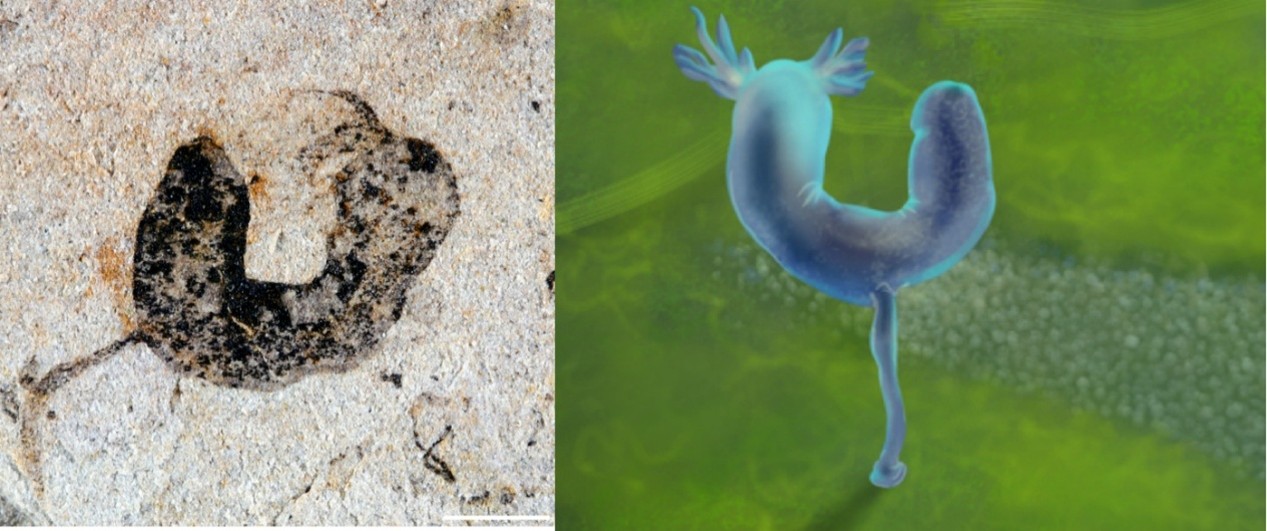
In 2023, the team discovered another surprise. They turned up fossils of bizarre, cylindrical animals several centimeters (inches) long. At one end, the critters had flat pads that could have gripped the ocean floor. At the other end were flag-shaped tentacles that appeared to extend from their mouths.

A fossil image on the left and illustration on the right of the fossilized creature on the right.
This early deuterostome (fossil at left, artist’s reconstruction at right) is related to animals like vertebrates and sea stars. It appears to have appendages on one end that may have been used in feeding. It’s also new, very early fossil evidence of animals with bilateral symmetry in the Ediacaran Period.Gaorong Li & Xiaodong Wang

Finding these “bugle worms” was a turning point, Li says. Back then, he worked at Yunnan University in Kunming, China. In 2024, his group joined forces with researchers at the University of Oxford in England. Together, they gathered roughly 700 late Ediacaran fossils.

They compared this haul to other Ediacaran fossils. They also compared the new fossils to those from the Cambrian Period.

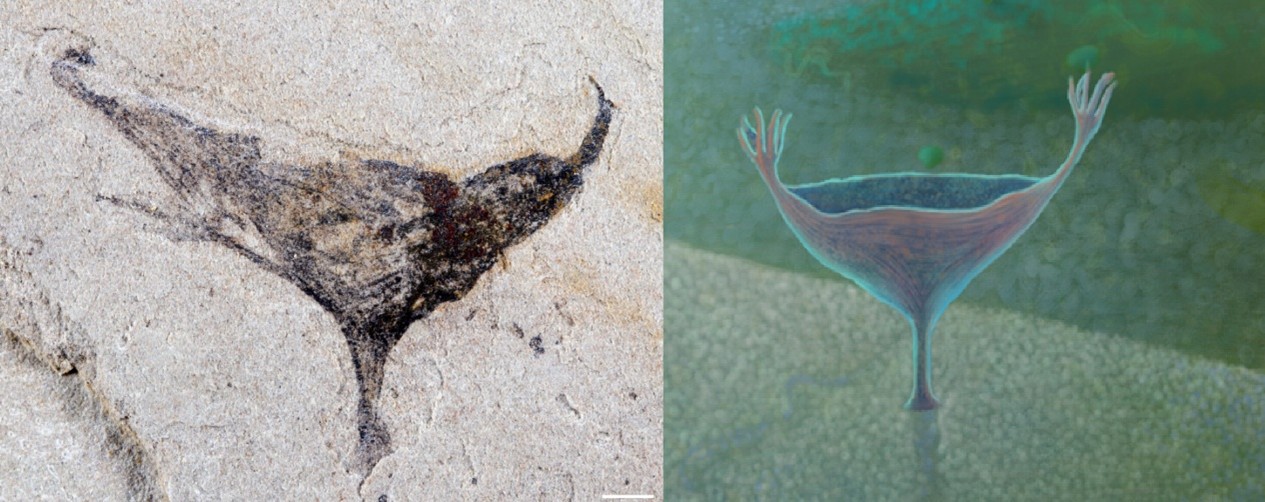
Some of the new fossils looked like Haootia — an animal that lived some 560 million years ago. Haootia and these other fossils resembled martini glasses with tentacles on the rims. Like modern jellyfish, they had body parts that spread out from a central point. This is known as having radial symmetry.

A fossil image on the left and illustration on the right of the fossilized creature on the right.
The Haootia-like animal (fossil at left, artist’s illustration at right) may have been a relative of animals such as corals, anemones and jellies.Gaorong Li & Xiaodong Wang

Bilateral bodies

The freshly collected fossils included more eyebrow-raising finds. Some had bilateral symmetry. That is, they had similar features on the right and left sides of their bodies — as humans do.

It’s rare to find such early fossils with left-right symmetry. Until now, only four species from the Ediacaran Period had shown this feature. Li and his team found more than 180 bugle worms and other fossils with this type of symmetry. Some looked like sausages on skewers with feathery bits around their mouth ends.

The sheer number of fossils with bilateral symmetry that Li’s group found is striking, says Emmy Smith. She’s a paleontologist at Johns Hopkins University in Baltimore, Md. The diversity among these fossils amazed her.

Many had special structures for feeding, Smith notes. Clearly, the animals were quite physically complex. “That strengthens the view that [animals] were already diversifying before the Cambrian,” she says.

The Cambrian explosion, it seems, didn’t come out of nowhere, Li says. Instead, animal life had been getting more complex for millions of years before that.

Do you have a science question? We can help!

Submit your question here, and we might answer it an upcoming issue of Science News Explores

  •  

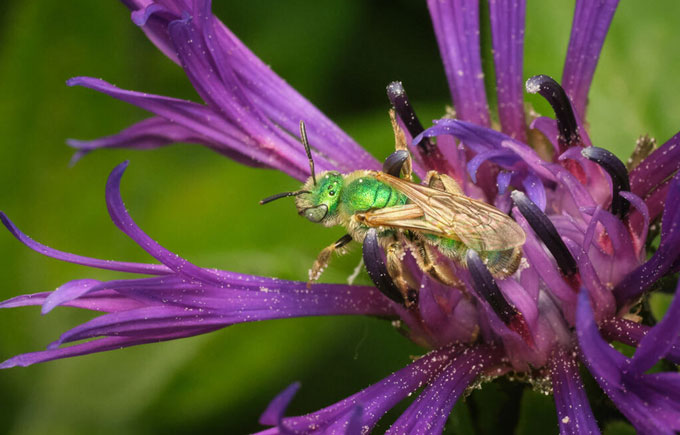
Like living mood rings, these bees change color when it turns humid

When the weather gets muggy, iridescent bees shift their metallic hue, a new study finds.

The insects are a rich blue-green when the humidity is low. But as moisture levels in the air rise, their color changes: It turns a coppery green.

Many bees have a shimmery exoskeleton. So this reversible mood-ring–like effect might be quite common, scientists now say. The day-to-day color of other bees and insects might similarly change with humidity.

Jorge De La Cruz is a college student at the University of California, Santa Barbara. There, he’s training as an evolutionary biologist. He first noticed the color-change effect while preparing bee specimens for preservation and study. This was at the Cheadle Center for Biodiversity and Ecological Restoration.

Museum scientists often place insect specimens in a moist chamber. It makes them more flexible for mounting and imaging. And under moist conditions, some bees appeared to starkly shift their color. This caught De La Cruz’s attention.

“It can be a bit alarming when you’re not expecting it,” says Madeleine Ostwald. This ecologist works at Queen Mary University of London in England.

De La Cruz and Ostwald teamed up with two other researchers to look into this further. They shared what they learned April 22 in Biology Letters.

An iridescent green bee is shown perched on a purple flower
This sweat bee was photographed in Seattle, Wash. Its exoskeleton changes color with the humidity. Other iridescent insects may pull a similar color-change trick.Mike Davidson/iNaturalist

Humidity changes hue

The team studied two dozen museum bee specimens. All were fine-striped sweat bees (Agapostemon subtilior). The bees were exposed to high and low humidity for 55 hours each. After each exposure, the team took photos.

The researchers also reviewed more than 1,000 photos of living sweat bees. These came from the citizen-science app iNaturalist. Here, too, they noted the humidity present when an image had been taken. 

In dry conditions (less than 10 percent humidity), the bees were blue-green. But at 95 percent humidity, they turned a light, coppery green.

Humidity may cause layers in the bees’ exoskeletons to swell. That may change how those layers reflect light, creating an iridescence. That layering appears to scatter light at different wavelengths, creating colors. If the layers swelled, the space between them would increase. The extra space would reflect longer, redder light.

“Because we saw redder bees in more humid conditions, this fits with that [scientific explanation],” Ostwald says.

Future work with high-powered microscopes might confirm this. Lots of insects produce color with tiny structures rather than pigments, Ostwald says. So, the phenomenon might be widespread.

Color can be really changeable as something responds to the environment, she says — and “in ways we didn’t expect.” It’s important to study the color of the living organism in its natural environment to know its true hue.

  •  
❌