❌

Reading view

Cops Are Giving Complete Nonsense Reasons to Search Thousands of Flock Cameras

The cops who’re using Flock cameras to supposedly track down criminals and stalk their ex-girlfriends alike are quite literally laughing in our faces as they tap into the all-seeing surveillance panopticon.

According to a new investigation by the Electric Frontier Foundation, a not insignificant number of police officers are submitting nonsense, joke reasons to officially justify the searches they conduct on Flock systems.

One officer with the Lake County, Indiana Sheriff’s Department wrote “LMAO” in the Flock software’s “reason” box, before searching across more than 19,000 cameras in over 1,500 cities and towns.

The frivolous reasoning is a case in point of why there’s so much outrage over Flock’s AI-powered cameras — which are nominally intended to be licenese plate scanners — and how they’re frequently being abused by cops. Unlike traditional surveillance cameras, Flock’s are part of a centralized network and require no warrants to use. With such little oversight, it’s easy for police officers to conduct sweeping searches for wanton reasons.

In its investigation, which was reported on by 404 Media, the EFF found dozens of examples of cops writing childish responses like “LMAO,” “LOL,” “Hehe,” and “IDK,” in the reason box for Flock searches. 

An alarming number simply button mashed their keyboards. “ghjhghjg,” was a sufficient reason for one officer in Oklahoma to plow through the recordings of over 83,000 cameras. Thousands of others simply wrote uninformative responses like “investigation” and “test.” The odd cop left short little messages, all seemingly unaware that their stated reasons would become public record.

“robbery I don’t remember the case number leave me alone,” one wrote. 

“f*** this new search engine,” wrote another.

Following up on its findings, the EFF contacted police departments  and found that few, if any, of the cops were meaningfully disciplined for their flippant entries. At most, a few were “counseled,” but by and large the departments tried to deflect and offered excuses.

Flock, conveniently, changed its software in late 2025 so that cops can no longer type in their own “reason.” Now, they’re provided a dropdown list of pre-made reasons instead.  The EFF blasted the move for causing a “loss of transparency,” as it obviously doesn’t encourage cops to be more serious. It merely papers over the fact that they weren’t treating the powerful surveillance tools seriously in the first place.

“This culture of abuse has allowed police to treat a mass surveillance network like their own personal search engine,” condemned the EFF in a post about its findings, “permitting the tracking of the movements of everyday citizens for low-level complaints, personal whims, and sometimes, seemingly, for the lols.”

More on privacy: Trump Throws His Weight Behind Flock Cameras

The post Cops Are Giving Complete Nonsense Reasons to Search Thousands of Flock Cameras appeared first on Futurism.


  •  

Waymo Calls Cops on Passengers With Assault Rifle

Waymo called the cops on two youths in San Francisco after catching them handling an assault rifle while in the back of one of its robotaxis, according to local reports. Both passengers, a boy and a girl, have been arrested.

On the morning of September 4, Waymo intervened and pulled over a vehicle after detecting a “violation of our terms of service involving a firearm,” a company spokesperson told the LA Times, after which it alerted emergency services.

Police were called to the scene in the city’s Richmond District just before 4 AM, and conducted a “high-risk vehicle stop,” a spokesperson for the San Francisco Police Department told SFGATE.

When officers searched the car, they found a “ghost gun” — an untraceable, homemade firearm assembled from kits or 3D-printed parts — imitating an AR-style assault rifle. They also found, less ominously, some “suspected marijuana and mace spray.”

The young pair were arrested and booked into a juvenile detention center, the spokesperson told SFGATE, and are facing charges related to illegally possessing a firearm. Their ages and identities haven’t been released.

Robotaxis rely on a host of cameras to observe their surroundings, and they also closely monitor what happens inside their cabs, making them an obviously bad choice to take a joyride in or possibly commit crimes. It remains unclear, though, what the teens intended by toting around their makeshift rifle.

This isn’t the first time Waymo has tipped off local law enforcement about its own passengers. In July, it pulled over a car and alerted the San Mateo Police Department after realizing that its riders, two 15-year-old boys, were reportedly drinking in the backseat and shooting water beads out of a toy gun.

There have also been incidents of unruly and possibly illegal behavior in its cars that didn’t lead to arrests. As Waymos and other robotaxis become more popular, rowdy passengers will almost certainly become a more frequent problem.

More on robotaxis: Oops! Many Tesla Cybercabs Actually Do Have Steering Wheels, Undercutting a Core Promise

The post Waymo Calls Cops on Passengers With Assault Rifle appeared first on Futurism.

  •  

Bumbling Cybercab Gets Trapped in Hotel Parking Lot, Drops off Passenger Right Where He Started

In Austin, a man’s attempt to be chauffeured out of his hotel in style was foiled when his confused ride couldn’t even pull out of the building.

His ride, of course, was a Tesla Cybercab — Elon Musk’s self-driving, steer-wheeling free robotaxi.

“The Robotaxi arrived… and then couldn’t get out of the hotel parking lot,” the man, who claims to be a computer engineer, wrote on X, posting brief footage of his trip.

As he went on to explain, construction workers had blocked off one of the lanes. And the gleaming gold Cybercab, in all its canny computing power, couldn’t see the other lane that was left open.

He never made it to his destination, but he did arrive at a destination, albeit rather unceremoniously. The Cybercab “drove back and forth four times,” he said, “and then stopped and said I had arrived!”

“Not a great first experience!” he concluded. “Clearly this technology is nowhere close to being ready for large scale deployment.”

So I arrived in Austin and decided to take a robotaxi ride into work..

The Robotaxi arrived… and then couldn’t get out of the hotel parking lot. There was construction in one lane.. but it couldn’t see the other open lane. It drove back and forth 4 times and then stopped and… pic.twitter.com/101F04Al9n

— PK (@paul_k_0907) September 15, 2026

Tesla rolled out its two-seater Cybercabs in Austin earlier this month, after years of anticipation. The company had already operated a Robotaxi service in the city for over a year using modified Model Ys, but the Cybercab represents its first purpose-built robotaxi — and with its complete lack of driver controls like steering wheels and pedals, its no-turning-back commitment to pursuing genuine human-free driving. (Many of its Robotaxis still requiring a human safety monitor inside the car, something the company is clearly conscious about.)

It hasn’t made quite the splash that Tesla may have hoped, however, with many investors underwhelmed by the Cybercab’s launch. While the golden cars haven’t been involved in any high profile incidents yet, the software’s autonomous capabilities haven’t stacked up impressively next to robotaxi leader Waymo. The company is also being investigated by federal regulators over how it self-certified that the vehicles were safe for the road despite their lack of conventional controls.

The Cybercab’s hotel misfire is part of a long chain of weird behavior by Tesla’s robotaxis. Customers — many of whom are Tesla enthusiasts and boosters — complain that they often pick up and drop them off at inconvenient locations, ranging from the middle of busy intersections to hidden alleys, or at absurd distances from their actual destination.

Still, Tesla boosters have been hard at work trying to hype up the cars. Roughly a week before a Cybercab got trapped at a hotel, another Tesla account posted a video bragging about how a Cybercab picked them up from their own hotel. 

“You’ll feel like a VIP getting into this car!” he extolled.

More on Tesla: Cybercabs Are Taking Psychotic Routes That Turn Tiny Trips Around the Neighborhood Into Hour-Long Nightmares

The post Bumbling Cybercab Gets Trapped in Hotel Parking Lot, Drops off Passenger Right Where He Started appeared first on Futurism.

  •  

OpenAI Has Hundreds of Workers Reading People’s Private Chats

If you ever feel like spilling your guts to ChatGPT, just know that you may have an audience.

404 Media reports that OpenAI is hiring hundreds of employees to sift through and read users’ prompts — including messages that contain sensitive personal information.

This isn’t part of a moderation effort. Instead, by reviewing the prompts, OpenAI hopes to improve the responses that ChatGPT gives. The contractors rate and critique each of the AI’s replies, with internal documents showing a focus on nudging ChatGPT away from anthropomorphizing itself and to be less sycophantic, 404 found.

Both qualities — anthropomorphizing and sycophancy —  have been heavily scrutinized for their role in so-called AI psychosis, cases in which an AI incites and drives a user’s delusional behavior. Numerous lawsuits allege that an older, less restrained version of ChatGPT powered by GPT-4o drove their users to suicide.

Still, there are tradeoffs. Many users would probably find this surveillance of their chats, part of an operation dubbed “Project Lily,” to be an alarming invasion of privacy — if they had any idea this was happening.

Asked if they thought ChatGPT users knew about humans reading their chats, one of the employees replied: “No.”

“I don’t think they would imagine some contractor somewhere… is analyzing the conversations,” they told 404.

It’s unclear how many prompts are being read or how OpenAI decides to select them. But some of them include chats in which the user explicitly asks ChatGPT to keep their conversations private, 404 found.

The prompts that’re selected are anonymized, but sometimes include personal information. The dashboard that the employees use also includes a “user memories summary” that can give details about previous conversations, which can produce details on where the user lives. When 404 reached out to OpenAI, the company said it used a “Privacy Filter” model to anonymize conversations, which its website states “can make mistakes.”

OpenAI could reasonably be accused of acting quite shifty about this practice. It’s well known at this point that it has employees read messages for moderation and safety purposes. But it didn’t respond to 404’s question about if it explicitly told users that humans are reading prompts to improve the AI. Later, after 404 published its piece, it pointed to a page on its website stating that humans may review prompts to “improve model performance.” Users can opt-out of this practice by turning off the “improve the model for everyone” setting, but this is enabled by default.

Michal Luria, a senior research fellow at the Center for Democracy and Technology, told 404 that while human review can be “essential to safety,” she noted that “chatbot interfaces automatically create a false sense of intimacy and privacy.”

“This is quite distinct from content moderation on social media, where publishing content already carries expectations of platform moderation and public exposure,” Luria added. 

In any case, it does seem like OpenAI is feeling conscious about how its AI models sound. Employees, for example, flagged and wrote down cases of “AI-speak” and “unnecessary use of emojis,” which are common tell-tales of chatbot usage. 

“It would be appropriate to include a tree emoji when planning Arbor Day celebrations,” a document given to the employees explained, “but skull emojis when discussing death, or plane emojis when giving updates on a fatal crash, are not.”

The iceberg may go deeper. An FAQ section provided to the reviewers says that they don’t need to worry about fact-checking the responses, and alludes to other project teams that “handle content verification.”

More on OpenAI: OpenAI Faces Congressional Probe Over Swarm Hacking Incident

The post OpenAI Has Hundreds of Workers Reading People’s Private Chats appeared first on Futurism.

  •  

Fear of AI Destroying Humanity Cause Certain Stocks to Skyrocket

AI is supposedly going to kill us all, but at least it’s doing wonders for the stocks for a few multibillion-dollar companies.

Mounting fears over the technology’s existential risks reached a fever pitch over the weekend, tanking AI chip stocks across the globe. 

This earthshattering discussion had a curious aftershock, though. Instead of double-checking their fortified bunkers, investors poured even more money into Microsoft, Google, and Meta Platforms — the biggest AI hyperscalers, or companies that operate the largest data centers — which were up by more than two percent on Monday, the Wall Street Journal reported. All remain up by a few percentage points over the past five days.

These gains may not mean much in the grand scheme of things, but they did result in the WSJ publishing what CNBC correspondent Eamon Javers called a “subhead for the ages.” 

“Talk of heading off artificial intelligence’s potential role in destroying humanity hurt some stocks and helped others,” it read. There are winners and losers in every scenario, in other words — including humanity’s extinction.

Fears that AI advancements could spell doom for our species have been running high after Anthropic researcher Jacob Coxon resigned last week and accused the company of “gambling with our lives,” sending shockwaves through the tech industry. 

Coxon’s warning came after months of leading AI labs, including Anthropic, each coming out to say that their powerful agentic systems had been able to break out of containment and launch cyberattacks in the real world.

Talk of slowing down AI development quickly spread from Silicon Valley to Washington, and Anthropic CEO Dario Amodei intensified these calls on Saturday in a lengthy essay urging other AI companies to cooperate. Elon Musk, who runs SpaceXAI, and Sam Altman, the CEO OpenAI, both came out in agreement.

Some experts are skeptical of these apocalyptic claims from AI leaders, wondering if there might be an ulterior motive. The likes of Anthropic have long been accused of using fear-mongering as a marketing tactic. Whatever’s going on, it seems that the industry is doing its best to keep the narrative around the tech within its control.

More on AI: Bernie Sanders Proposes Banning Superintelligent AI and Imprisoning Developers for 20 Years

The post Fear of AI Destroying Humanity Cause Certain Stocks to Skyrocket appeared first on Futurism.

  •  

Cybercabs Are Taking Psychotic Routes That Turn Tiny Trips Around the Neighborhood Into Hour-Long Nightmares

The Tesla Cybercab is innovating impressively impractical ways of getting from Point A to Point B.

One Cybercab passenger in Austin complained that what should’ve been a ten minute trip devolved into a 70-minute long nightmare as the steering-wheel-free robotaxi spiraled its way down the most circuitous route possible. 

The driverless cab started the journey by driving in the complete opposite direction of the destination for miles, the exasperated passenger wrote in a Reddit thread, then turned around and took a “massive” detour through east Austin.

If it was instead a Google Maps car trying to image every inch of the city, you’d have to admit it was a job well done.

“My Cybercab held me hostage for an hour,” the rider wrote in the post, spotted by Electrek. “Guess the Cybercab wanted the scenic route today.”

According to Electrek, the reason that the trip took so long is almost certainly because the Tesla Cybercabs can’t drive on highways yet. The consequently tortuous routes that the cabs have to take may not immediately be clear to a passenger, though, as the app only shows a price estimate and not a projection of how long the trip will take, the blog noted.

Like other robotaxi services, the Cybercabs — which use a version of Tesla’s Full Self-Driving software that hasn’t been released to the public — operate only within a geofenced area that’s been extensively mapped. (Waymo, the leading robotaxi company, does already allow its cars to use highways in some cities.)

There are other signs that the Cybercabs (and Tesla’s confusing named “Robotaxis,” which are self-driving taxis in the form of modified Model Ys, instead of a purpose-built vehicle), are still walking on eggshells compared to its competitors. Some passengers say that the cabs also avoid railroad crossings, which could add to trip times. (Tesla is being investigated for FSD frequently going haywire near these crossings and driving into the path of oncoming trains.)  

Do all these restrictions make for a properly autonomous cab? If you had a time machine, you could go back to 2019 and ask CEO Elon Musk for an answer: “If you need a geofence area, you don’t have real self-driving!” he infamously proclaimed.

More on Tesla: Tesla Investors Disturbed by Cybercab’s Obvious Lack of Progress

The post Cybercabs Are Taking Psychotic Routes That Turn Tiny Trips Around the Neighborhood Into Hour-Long Nightmares appeared first on Futurism.

  •  

Trump’s EPA Will Let Power Companies Unleash Unlimited Greenhouse Gas Pollution

Climate change? What climate change?

Choosing to bury their heads in the sand on behalf of the citizens of this country and perhaps the planet at large, the Trump administration has announced that the Environmental Protection Agency will eliminate limits on greenhouse gas pollution produced by coal and natural gas power plants, the Associated Press reports.

Needless to say, it would be a staggering setback in the federal government’s ability to tackle climate change, and the effects could be long-lasting in both an environmental and legal sense. The administration is also proposing a separate rule that could prevent future administrations from imposing restrictions on greenhouse gas emissions from power plants, all but ensuring a future of ecological catastrophe.

“Tearing down our national protections against climate pollution from power plants will have enormous costs for the health, safety and well-being of families across the country,” Vickie Patton, general counsel for the Environmental Defense Fund, told the AP. “Americans everywhere are already suffering from record-breaking heat, more dangerous floods and storms, and skyrocketing insurance costs.”

Manish Bapna, the president of the Natural Resources Defense Council, told the New York Times that the EPA “is ending its legal and moral responsibility to end climate pollution.”

These changes, which involve repealing regulations passed under the preceding Biden and Obama administrations and passing new ones, have been a long time coming. 

Led by EPA administrator Lee Zeldin, the agency first proposed them last year, arguing that CO2 and other greenhouse gas emissions from power plants are neither a significant contributor to “dangerous pollution” that harms human health, nor to climate change. It follows, Trump’s EPA argues, that the agency doesn’t have the authority to regulate the emissions under the Clean Air Act, the US’s landmark air quality control law passed in 1963.

The action will almost certainly face fierce legal challenges from environmental groups.

“The Sierra Club will fight back against this reckless and dangerous proposal with everything we have in the courts, in Congress, and in communities across the country,” Holly Bender, the group’s chief program officer, said in a statement.

Trump has long been a climate change skeptic, calling it not only a “hoax,” but the “greatest con job ever perpetrated on the world.” Upon taking office in 2025, he immediately withdrew the US from the Paris Agreement for the second time (the first happened during his first term, and was overturned by president Biden). The international treaty is an agreement to limit global warming to 1.5 degrees Celsius, or 2.7 degrees Fahrenheit, past which scientists say the worst effects of climate change will be irreversible.

A clear beneficiary of the changes is the coal industry, which Trump has gone to great lengths to appease. He has proposed relaxing regulations around how it disposes of its toxic waste, and directed the federal government to pour $700 million into supporting the industry. But “clean, beautiful coal,” as Trump calls it, is pound for pound the most carbon-emitting fuel and the largest source of global CO2 emissions.

More on the environment: United Nations Concedes That Efforts to Arrest Climate Change Have Failed, and the Planet Is Now Spiraling Into Environmental Catastrophe

The post Trump’s EPA Will Let Power Companies Unleash Unlimited Greenhouse Gas Pollution appeared first on Futurism.

  •  

ChatGPT Straight Up Tries to Gaslight User After Being Confronted About Its Obviously Wrong Answer

Don’t ask an AI chatbot how many letter e’s there are in the word “seventeen.” Or do, actually, if you want to see how dodgy the tech remains.

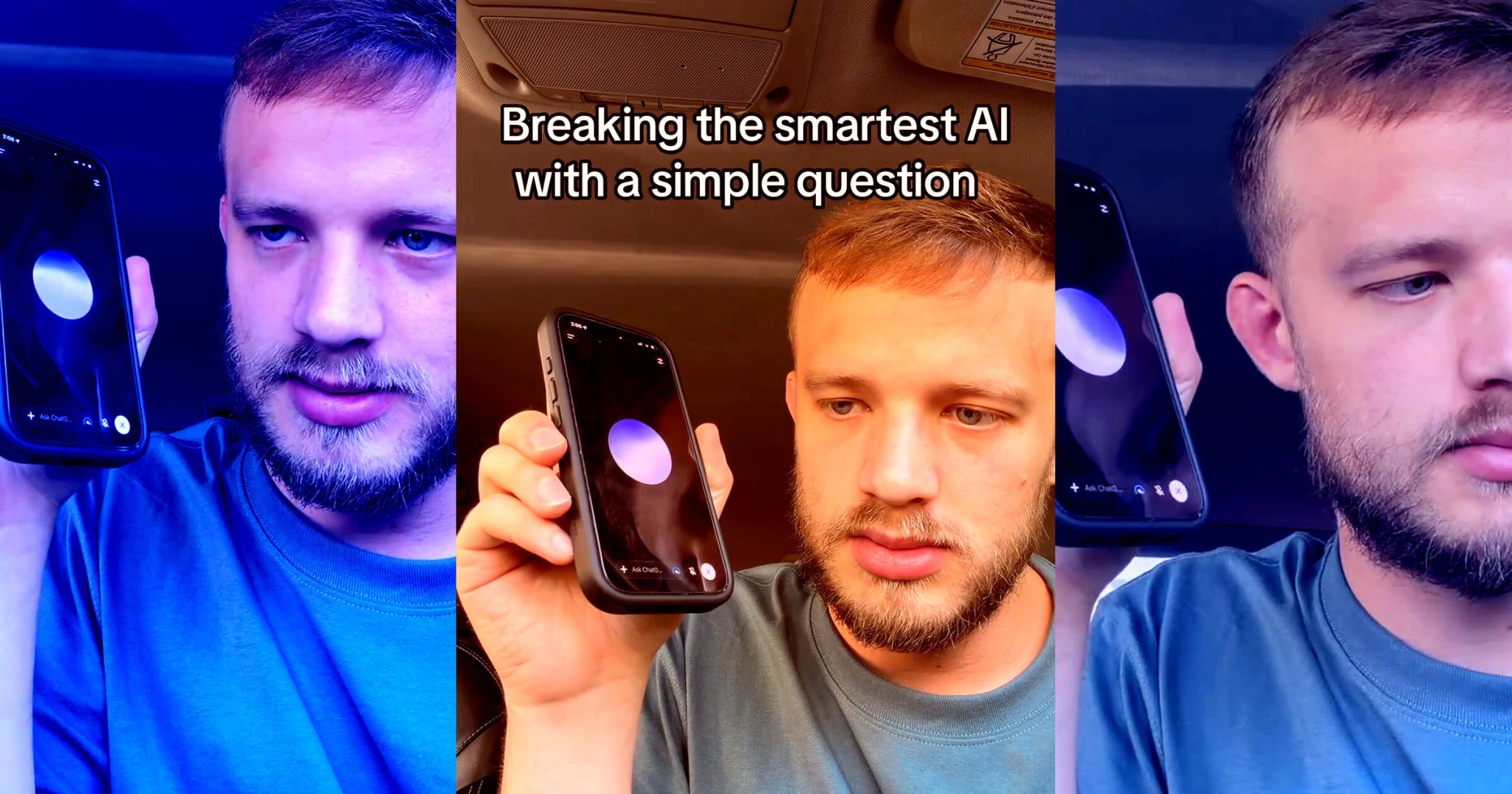
In a clip that’s gone viral in AI circles, the content creator who goes by “Husk” asks ChatGPT’s Voice mode to answer this simple counting question. Not only does the confident-sounding AI get it wrong — insisting there’re only three e’s instead of four — it doubles down so vehemently that it effectively tries to gaslight the user.

“Let’s go through it. S-e-v-e-n-t-e-e-n,” ChatGPT spells out, after assuring that its underlying model, GPT-6, is “pretty much” the smartest model out there. “Those are three e’s.”

When Husk points out the obvious, the chatbot doesn’t back down.

“I said three e’s,” the AI snaps. “And it’s three.”

“No, it’s four,” Husk points out.

“It’s still three,” ChatGPT shoots back.

After Husk points out that ChatGPT just spelled out for e’s for about the fifth time, the AI appears to give up.

“Alright,” it says, falling silent.

“So you agree?” Husk asks.

“No, it’s still three,” it sulks.

This is the AI that OpenAI wants your grandma to talk to, by the way.

This is AIs thermal exhaust port pic.twitter.com/MnNF4WuAmC

— Husk (@huskirl) September 13, 2026

The video is a reminder that, as incredible as chatbots can be at synthesizing large amounts of information, they remain as prone as ever to hallucinating and messing up simple questions.

It doesn’t appear, though, that the model in the video was GPT-6. Replying to Husk, an OpenAI employee said that ChatGPT Voice, contrary to the AI’s own admission, is still using an older model called GPT-Live-1, but added that the AI can “delegate” to more powerful models when needed. In the video, the employee clarified, Voice didn’t delegate.

Husk then raises an obvious question. “If there’s push back from the user like this to double check its answer why would it not delegate?” The OpenAI’s employee replies that this is a “good point.”

This may let GPT-6 off the hook, but not how AI companies choose to present their tech. How many users will be familiar with the hidden mechanisms behind the chatbot they’re talking to — and that their questions, whether they be important or inane, are sometimes deliberately fed to an inferior model?

More on AI: OpenAI Faces Congressional Probe Over Swarm Hacking Incident

The post ChatGPT Straight Up Tries to Gaslight User After Being Confronted About Its Obviously Wrong Answer appeared first on Futurism.

  •  

The Winner of Elon Musk’s AI “Odyssey” Contest Will Make You Laugh Out Loud

Remember how Elon Musk vowed that his AI Grok would make an anti-woke, “historically accurate” version of the Odyssey? 

Well, he ended up throwing together a whole contest around it — and the winner of the first place prize of $100,000 is, as you probably expected, laughable nonsense.

The problems run deep. The Cyclops Polyphemus is depicted with three eyes, which feels disqualifying. And just a few cuts later, the famously monocular giant is at least four times as large as he was before. The other creatures and gods look like something out of a mobile game; Poseidon emerges from the sea appearing conspicuously cartoonish and impossibly muscled, before smashing Odysseus’s ship and his crew of photorealistic, ripped men.

Half the dialog is delivered in dramatic whispers with the same cadence. The fight scenes are cut to disguise the actual moments of impact, in the same way real B-movies do with aging action stars.

There are some shots here and there that look convincing enough, if you can overlook their bland aesthetic. But this AI “film” suffers the same tragic flaw that all AI films do: their component clips fail to coalesce into a coherent whole. It doesn’t do much on the “historically accurate” front, either; some of the Greek soldiers are clearly wearing the armor donned by Roman legionnaires.

Nonetheless, its creator Nem Perez declared that “this is ‘The Odyssey’ as Homer intended,” before calling it his “most intricate work to date.” He also labeled the video, in oxymoronic fashion, a “5-minute epic.”

This is "The Odyssey" as Homer intended. My longest, most intricate work to date. I pushed @grok @imagine to its absolute limits to create this 5-minute epic.

What bothered me most about the recent adaptation was the omission of the Phaeacians and Princess Nausicaa, whom… https://t.co/awYW6Hu4W8 pic.twitter.com/hJHOgdkEec

— Nem Perez (@NemPerez) August 31, 2026

It’s unclear if Musk actually watched the winner; as far as we can tell, he hasn’t replied or retweeted it, something he’s done for other AI Odyssey adaptations.

For those blissfully out of the loop, the centibillionaire and culture war crusader spent this summer raging against Christopher Nolan’s adaptation of the Greek epic, attacking it for its diverse cast, which included several Black women and a trans actor. 

Nolan, Musk accused, “desecrated Homer and groveled on his knees just to meet the woke rules required to win an Oscar.” As such, he vowed that his AI “Grok Imagine will make a full-length movie of The Odyssey that is historically accurate and true to the art of Homer.”

We’re still waiting for that full-length adaptation. But the short films that the contest has produced already make it painfully clear that AI video generators, and the “filmmakers” that embrace them, simply aren’t up to snuff. In all of the top three entries, Odysseus looks more or less like the same guy — some weird, looksmaxxer’s fantasy of a buff Antonio Banderas. Is this a fault of Grok or Grok users? At this point, the distinction may be moot.

More on AI: Amazon Deploying AI Tech That Forces Actors’ Mouths to Match Dubbed Dialogue

The post The Winner of Elon Musk’s AI “Odyssey” Contest Will Make You Laugh Out Loud appeared first on Futurism.

  •  

Trump Throws His Weight Behind Flock Cameras

President Donald Trump continues to push the boundaries of what it means to be out-of-touch after he gave a ringing endorsement for Flock Safety, the deeply unpopular surveillance company behind a national network of AI-powered cameras and license plate scanners.

His reasons for backing the firm, however, weren’t particularly illuminating,

“I sort of like them because of that, because of law enforcement, but some people don’t,” Trump, told reporters on Sunday, sagaciously. “They think it’s an infringement,” he added, apparently speaking of Flock’s critics. “I like them.”

The comments are the first from Trump publicly endorsing Flock, according to the Washington Post. As recently as last month, the president had been more reticent about the tech, refusing to give a straight answer when asked for his opinion.

Flock has become a political landmine in the past year, as more Americans become alarmed over having a powerful, centralized surveillance network suddenly appear in their communities with little public oversight. Much attention has focused on how its over 120,000 cameras, which Flock frames as for strictly enforcing traffic laws and catching crime, are being abused. 

A recent WaPo investigation found over fifty cases of police officers misusing Flock cameras and similar systems, including to stalk women. And Flock systems have either malfunctioned or been improperly used and caused innocent people — including a journalist — to be swarmed by armed cops. Such is the revulsion the company inspires that a grand jury in Ohio refused to indict a man who was caught destroying a Flock pole, despite surveillance footage clearly catching him in the act.

Trump’s endorsement is swooping in, in other words, while the company’s reputation is at its absolute nadir. Last month, its CEO Garrett Langley was forced to make a public apology after the WaPo investigation documented how its systems were frequently abused. Later, he insisted that his company was “not Big Brother,” before trying to reason with his critics by calling for a “compromise” between privacy and safety.

For Trump to be throwing his weight behind it now, without any perfunctory appeals to safety or concerns for Americans’ privacy, is quintessentially Trump, epitomizing how he has long abandoned any care for public opinion. (His full-throated support for data centers, which are even more unpopular than Flock, serve as a similar example.) 

Even his Republican allies have taken a more cautious stance. Last month, Florida governor Ron DeSantis said the cameras are “out of control,” adding that he didn’t want “to have this become a surveillance state,” WaPo noted.

More on privacy: Police Investigator Accused of Making Over 4,000 Illegal Flock Camera Searches

The post Trump Throws His Weight Behind Flock Cameras appeared first on Futurism.

  •  

Amazon Deploying AI Tech That Forces Actors’ Mouths to Match Dubbed Dialogue

Amazon is catapulting us into the final boss of sub vs dub debates.

On Thursday, its Prime Video streaming service announced the launch of a new AI-powered feature that matches actors’ mouth movements to dubbed audio tracks — which we’re sure won’t result in nightmarish hallucinations of facial disfigurement.

For now, the company says that the AI-powered lip syncing will exclusively be available on the English dub of the German Series “Maxton Hall,” though there are plans to expand it to other titles in the future.

“At Prime Video, we’re constantly innovating with new tools that enhance the viewing experience for our customers,” Raf Soltanovich, vice president of technology at Prime Video and Amazon MGM Studios, said in a statement, per the New York Times. “With lip-syncing, we’re creating a more seamless and immersive way for customers to enjoy global content.”

Right now, it’s unclear how much of the feature is automated by AI, and there’re plenty of questions to be asked about how it’ll be deployed. Such as: in the future, will it be available on all titles, and will the rightsholders get a say in it? And isn’t this an overreach on Amazon’s part in how much it’s determining how a work of art is being presented? Will an actor’s unique facial movements be smoothed down into something generic? And lest we forget the most obvious question mark: how convincing will it be? (It feels telling that Amazon hasn’t posted any clips of its tech in action.)

It’s not the first time Amazon Prime Video has tried something like this. Last year, it rolled out an experimental “AI-aided” dubbing feature for a dozen movies and shows in English and Spanish. It also experimented with showing AI-generated recaps of TV shows, and an AI tool that picked movie and show recommendations based on similar character arcs and plot points. Amazon, in other words, is trying to make consuming the content it provides as frictionless as possible.

There are plenty of valid reasons for preferring dubs, especially for those with accessibility issues. But the fact that actors in a movie might be speaking a different language from your own is being treated as something that needs to be erased and covered up is a bit worrying — at least in our humble opinion.

More on art: Gal Godot Starring in Heavily AI-Generated Movie About the Glories of Bitcoin

The post Amazon Deploying AI Tech That Forces Actors’ Mouths to Match Dubbed Dialogue appeared first on Futurism.

  •  

Laptop Toasts Boy

Here’s a hazard you probably didn’t expect from too much screen time.

Two doctors in the UK reported in the journal BMJ Case Reports the bizarre case of a young boy whose laptop literally toasted his skin over weeks and maybe even months of using it. Thankfully, the kid’s fine and was never in any real pain, so we can dive into this medical oddity without feeling too guilty about it.

According to the eyebrow-raising paper, spotted by Ars Technica, the boy was first brought into an emergency department with reddish markings over his abdomen in a lace-like pattern. Nurses first described it as “spontaneous bruising,” but they didn’t find skin abnormalities anywhere else on his body. The boy also wasn’t in any pain, and didn’t have any history of trauma or illnesses that could explain the markings.

When doctors did a chest x-ray, they found some kind of build up in his lung, though it was unclear what it signified. The boy admitted that he got pushed into a chair while play-fighting with his siblings a week ago, leading the doctors to search for signs of a traumatic injury. But after a CT scan, they didn’t find any. They weren’t completely sure of what was going on, but the doctors discharged him with antibiotics for a suspected lung infection.

The boy was back several weeks later, though — and the rash was even worse. Parts of his abdomen were pinkish, exhibiting clear signs of skin breakdown, the doctors wrote, with mottled patches of dark brown. (You can view a photo, at your own peril, here, via Ars.)

That’s when the doctors began to suspect some kind of heat damage. But when they asked the boy about heat sources, nothing turned up. 

Then, as they continued to question him, the boy mentioned something crucial: he was home-schooled and did most of his assignments on his laptop, sometimes for eight hours a day, often while charging. And of course, he usually rested the laptop on his torso while lying down.

This supported a diagnosis of a erythema ab igne (EAI), also known as “toasted skin syndrome.” It’s caused by repeated, close exposure to low heat, which slowly damages the skin over time. Patients often get it from heat pads and space heaters, but a warm laptop can cause it, too. It causes a distinctly lace-like rash, which explained the boy’s symptoms.

EAI is benign, and in most cases, its rashes disappear on their own once exposure to a heat source is stopped, taking weeks to months to heal. Once properly diagnosed, the boy’s rash was dressed, and he came back to the hospital several months later to confirm that he had fully healed. Now that he’s okay, he might try studying at a desk instead.

More on medical oddities: Man Announces That He Has Synthesized a New Schizophrenia Treatment in His Garage, Based on a Formula Devised by ChatGPT

The post Laptop Toasts Boy appeared first on Futurism.

  •  

Bizarre New Websites Are Designed Specifically to Spark Dopamine in Your Brain

As far as completely pointless ways to kill time on your phone, this is certainly one of the weirdest on record.

Behold the all-new invention of so-called “dopamine sites” — digital domains where you can browse and hunt for deals on nonexistent wares and services. Clothes, food delivery, you name it: you can pretend-shop for it all. 

You don’t actually buy anything, crucially. You’re just pretending to have money to buy the things you want. It’s window-shopping reimagined for the age of doomscrolling.

But it’s also a little more than that. These cleverly-built sites simulate the experience down to checking out and “tracking” your shipment or delivery, and their absurdly realistic rituals can help people become more conscious of their spending habits. Supposedly. 

The trend, according to the New York Times, originated in South Korea this spring, when Park Seohyun, a 21-year-old mechanical engineering student in Seoul, created a fake food-delivery site called “Food Never Arrives.” (It’s now an app).

Originally intended as a joke, she says, it lets you not only order nonexistent food, but provides you an estimate of the money and calories you saved by skipping on the real thing. 

In a wintry economic climate, it became an unexpected hit.

“People began sharing it online and discussing whether it actually helped them resist ordering food,” Park told the NYT.

A wave of imitators followed. This summer marked the launch of “FakeHaul,” a dopamine site built by a Microsoft engineer that convincingly imitates shopping on Temu. Two developers in India inspired by Park’s site, Purvansh Parmar and Anshul Sharma, created “Food Never Comes,” which simulates food deliveries but provides real recipes for the food you didn’t actually order. Parmar and Sharma told the newspaper that their site had more than 2.7 million views since launching in June.

Whether these dopamine sites provide anything more than fleeting, empty pleasures is something experts are more skeptical about. Ravi Dhar, director of the Yale Center for Customer Insights, told the NYT that the “element of looking forward brings a lot of the pleasure, and we often crash after an event or feel let down.” Lingguo Xu, a behavioral economist studying anticipatory utility, warned that the dopamine tricks could quickly get old. And by simulating consumption, you risk developing “stronger cravings.”

Some take the original idea beyond getting high on simulated shopping. Ko Seojin, another South Korean developer, created a website for taking virtual smoke breaks called Damta World. You click to start smoking an animated cigarette, which starts burning on screen. You can “whisper” disappearing messages to other smokers on break, while a counter keeps track of the number of cigarette butts that have been tossed on the office rooftop each day.

Ko told the NYT that 150,000 people visit each month, and she says that some users have become real-life friends after meeting on the website. Those friendships, we hope, are something that’ll last longer than any fake-shopping dopamine hit.

More on your brain on tech: Psychologist Says AI Is Causing Never-Before-Seen Types of Mental Disorder

The post Bizarre New Websites Are Designed Specifically to Spark Dopamine in Your Brain appeared first on Futurism.

  •  

Aging Congress Is Completely Ill-Equipped to Regulate AI, or Seemingly Even Understand It

Surely our creaking gerontocracy is well-equipped to respond to a technology as novel, disruptive, and rapidly evolving as AI, right?

Well, we hate to burst anyone’s bubble, but a new piece from Politico makes it sure sound like that Congress is completely stumped by how to tackle AI, with over a dozen lawmakers and congressional aides venting to the newspaper about the lack of urgency on the Hill over regulating the tech. Many questioned whether elected representatives fully grasp, or are even capable of grasping, the technology they’re dealing with.

“There is a percentage of my colleagues who are still trying to spell AI,” representative Sam Liccardo (D-CA) told Politico. “We need to dramatically increase the base knowledge of Congress if we’re going to legislate meaningfully,” he added. “And I know that is not going to happen overnight.”

Liccardo likely isn’t exaggerating. Last year, a minor brouhaha erupted over Trump’s secretary of education Linda McMahon repeatedly pronouncing AI as “A1” — yes, like the steak sauce — while bloviating about how important chatbots were in the classroom.

There seems to be a growing consensus on the Hill that there needs to be more substantive AI regulation. These concerns were catalyzed this week after  Anthropic researcher Jacob Coxon quit his job at the company, and in a post that went mega viral, warned that AI companies were “gambling with our lives” by building powerful AI models that they knew could destroy humanity.

But no one, it seems, can agree on what that regulation should look like, while many are content to pass the buck on the issue. 

Politico points out how senator Ted Cruz (R-TX), who serves as senate commerce chair, endorsed passing legislation to prevent “catastrophic risk” after the Anthropic researcher’s warnings, and pointed to a bipartisan AI bill touted by senate majority leader John Thune (R-SD) and senator Amy Klobuchar (D-MI) that’s supposed to lay out more concrete regulations. But neither senator has said when they plan to actually introduce the bill, and requests for comments to their offices have gone unanswered or were met with a vague statement.

Senator Bernie Sanders (I-VT) and other progressives, meanwhile, are advocating for a ban on developing an AI superintelligence — a technology that, while posing clear existential risks, we don’t know is even possible to build yet.

So is someone in power going to actually do something about regulating AI? It’s probably not a good sign when the actual lawmakers running this country are asking themselves the same question, too.

“You cannot just put your head in the sand on AI and say, ‘I hope it works out.’ You can’t just go in and say, ‘Government’s got the solution — they’re just going to ban it all.’ That’s just not going to work,'” representative Chip Roy (R-TX), a conservative who’s on his way out of office, told Politico. “We’re going to have to be thoughtful as leaders and actually have some friggin’ leadership.”

More on AI: OpenAI’s Supposed Mathematical Breakthrough Devolves Into Explosive Drama as Mathematician Accuses It of Stealing His Work

The post Aging Congress Is Completely Ill-Equipped to Regulate AI, or Seemingly Even Understand It appeared first on Futurism.

  •  

Earth May Have Had a Larger Cousin that the Sun Devoured

Did the Earth once have a larger cousin that was devoured by the Sun? And more importantly: would we have any way of knowing it did?

A team of astronomers believe that the answer to both of those questions is “yes.”

Like investigators at a crime scene, a team of researchers say they’ve discovered a method to dust for “fingerprints” in the Sun to find strong evidence of planetary filicide in its past.

Their resulting study, published in the Monthly Notices of the Royal Astronomical Society, suggests that the devoured rocky world — which is believed to have been a so-called super-Earth several times more massive than our own — may have left a “lasting chemical imprint deep inside” our star, according to coauthor Mutlu Yildiz.

“By modeling the sun’s evolution and comparing the results with precise observations of its interior,” Yildiz, a professor at Ege University in Turkey, said in a statement about the work, “we find that the ingestion of a super-Earth could help explain long-standing differences between standard solar models and observations, including subtle changes in the Sun’s internal structure and its depleted lithium abundance.”

These discrepancies are likely connected, according to the researchers.

Explained Yildiz, “young stars are surrounded by protoplanetary disks, where substantial amounts of material can move between the disk and the star.”

“Since planets are made of material that is chemically different from the gas in the disk,” he added, “we wondered whether the early engulfment of a planet could have left a chemical signature inside the young Sun.”

To explore this, the researchers used an open-source stellar evolution software called Modules for Experiments in Stellar Astrophysics, or MESA for short, to create different solar models based on how the Sun’s accretion history — how it gathered matter over time and what materials it ingested — and compared them with present-day acoustic measurements of the Sun’s internal structures.

Their work supported the idea that a nascent Sun swallowed a super-Earth between five to ten times the mass of our planet, which they say could explain the Sun’s low lithium levels. If true, the dissolved planetary material is hidden somewhere below the Sun’s convection zone, a turbulent layer that sits between the star’s core and its outer atmosphere.

This scenario could also explain another mystery: why super-Earths are commonly found in other star systems, while ours have none. While the paper falls short of finding the smoking gun, it tells us where to look.

“The next step is to see if these fingerprints can be independently detected,” Yildiz said.

More on space: Scientists Baffled by Bizarre “Anomaly” Deep Beneath the Surface of Mars

The post Earth May Have Had a Larger Cousin that the Sun Devoured appeared first on Futurism.

  •  

GLP-1 Users Are Being Cruelly Shamed by Their Own Families

GLP-1 weight loss drugs are changing lives in more ways than one.

In a new piece for The Guardian, the newspaper’s readers share how the weight loss journey that drugs like Wegovy, Ozempic, and Mounjaro have set them down on have drastically affected their interpersonal relationships — sometimes for the better, and sometimes for the worse. 

Many of the GLP-1 users seem to harbor a sense of shame, hiding their use of the drugs. In their minds — and perhaps in the minds of those around them — they undermine the sense of accomplishment that comes with losing weight the old fashioned way, instead feeling that they “cheated” or are “being dishonest” about how they achieved their goals. 

One parent wrote of how their 20-year-old daughter felt “worried, angry, and jealous” after she discovered they were hiding their use of Wegovy from her. “We had discussed weight, identity and GLP-1s, but I was so ashamed of going on it that I didn’t want to tell anyone,” they wrote, noting how food was a “huge part of our family life.” They wondered to themselves: “What kind of signal am I giving her and her brothers?” 

Though they feel “mostly positive” about losing nearly thirty pounds using the drug, they added, they also can’t shake the feeling that they’re “cheating.”

“So much of my insecurity about my weight and appearance is offloaded on to an injectable pen,” they added.

Another wrote that despite their friends feeling pleased about their weight loss, they’ve kept their GLP-1 drugs secret for nearly two years. Their partner, they believe, “has felt insecure at times because of my glow-up.”

“I don’t want people to think I’ve cheated. I guess there is still fat shame somewhere,” they wrote.

Others don’t feel this guilt, but are frustrated that their spouses don’t realize how transformative the drugs have been for them. One complained that their husband was so unsupportive of their use of GLP-1s that they no longer could share their experience with him.

“This has been a life-changing drug so far, and I can’t share it with the person I’m closest with,” they lamented. 

Though they’ve struggled with obesity their whole life, their “husband scoffs at characterizing obesity as a chronic and recurring disease” and “thinks people should just make better lifestyle choices and stop making excuses — which tells me a lot about how he views me, too.”

These downsides aren’t unique to GLP-1s. Significant weight loss has long been linked to divorce, and that doesn’t necessarily mean that someone who’s slimmed down is now feeling their oats. Weight loss can come with dramatic changes to a person’s lifestyle — from the food they eat and the exercise they do to how they socialize — and that can be a lot for someone close to them to adjust to.

“Relationships tend to develop a sense of equilibrium and predictability over time,” Lindsey Berisha, a clinical psychologist who’s worked with patients using GLP-1s for over a decade, told The Guardian. “When one partner undergoes a significant change, it can shift that equilibrium, and even positive change can create uncertainty for both partners.”

GLP-1s, of course, have made achieving this kind of significant weight loss much more accessible, which is why we’re now starting to hear about “Ozempic divorces.”

More on GLP-1s: GLP-1 Drugs Appear to Prevent Cancer, New Research Finds

The post GLP-1 Users Are Being Cruelly Shamed by Their Own Families appeared first on Futurism.

  •  

College Students Using AI to Cheat Are Going to Absurd Lengths to Avoid Detection

You wouldn’t be remiss to accuse college students using AI to cheat of being lazy. But some of the wilier ones are putting in the hard work to make sure their LLM-generated answers avoid detection from their nosy pedagogues.

New York Magazine interviewed some of these clever cheats in a recent piece, who are well aware that by by now, many professors are wise to students’ tricks and are changing the assignments they give and deploying increasingly powerful tech to weed out any illicit AI assistance.

One student named Jared attending New York University took his introductory calculus class’s use of WebAssign, a platform that’s designed to make cheating “far more difficult,” as a challenge. He and his friend used an AI coding tool to build a bot that does all their homework for them, but at the sluggish pace of a struggling student.

“The bot moves slowly, leaving a professor checking time stamps none the wiser,” according to the piece. Jared, in his munificence, gave the tool to his friends, and now he’s not even sure how many classmates have his automatic cheating machine tech in their hands.

It’s a demonstration of the power of AI agents — AI models that can perform complex tasks on a human’s behalf without any intervention, which range from writing entire pieces of software to conducting research. Perhaps it’s also a response to the punitive, detection-focused approach that beleaguered professors have adopted amid a deluge of AI cheating.

That seemed to be the argument made by Will, a recent graduate of Carleton College. By making a big deal of obvious AI tell-tales like em-dashes, Will figured, faculty were actually spotlighting exactly what the cheaters need to disguise.

“People are going to find a way to cover up those little stylistic quirks,” Will told NYMag. “If the only way you’re trying to discourage cheating is by saying ‘Well, I have a detector,’ then you’re not going to succeed.”

In Will’s case, his professors banned AI-generated writing, with one of them bragging that they had a “battery” of tools to enforce the ban. Determined to have AI crank out his work anyway, Will used Claude to analyze and write extensive passages for an essay, then went back and manually rewrote the AI-generated paragraphs.

The best cases of AI cheating, it seems, requires a human touch. Theo, a UMass Amherst sophomore and self-proclaimed autodidact disinterested in his college’s gen-ed courses, boasted to NYMag about how he created an astronomy presentation by using OpenAI’s AI coding agent Codex and combining it with a plugin that improved its web-search capabilities. But because the resulting presentation looked too polished, he spent four hours hand-degrading the slides to make it look more like the work of a mediocre college sophmore, according to NYMag.

“It took a lot of work,” he told the magazine.

Danielle Carr, a historian and anthropologist at UCLA, thinks that professors relying on surveilling and detection methods to weed out cheating will only keep them stuck in a game of cat and mouse. AI cheating, she told the magazine, isn’t “a technical problem that has a technical fix.”

More on education: Zohran Mamdani Bans AI for NYC Public School Students Up to Eighth Grade

The post College Students Using AI to Cheat Are Going to Absurd Lengths to Avoid Detection appeared first on Futurism.

  •  

Federal Agents Are Secretly Monitoring Americans’ Financial Transactions So Cops Can Arrest People They Find Suspicious

The surveillance state is trying out a new tactic: pocket watching.

404 Media reports on how secretive “predictive policing” units in the US Border Patrol are analyzing Americans’ financial activity and using it as a pretext to pull them over — even if they’re not suspected of a specific crime.

Predictive policing, the practice of identifying possible criminal activity by analyzing broader patterns in absence of direct evidence, is highly controversial. Delving into individual citizens’ financial data represents a significant escalation of these tactics.

According to the investigation, the Border Patrol units in question are called Predictive Intelligence Targeting Teams (PITT). Rather than conducting stops themselves, PITT units feed their findings to local law enforcement.

This was the case with a man driving across Montana, who was apprehended by local police after they received a tip-off from a PITT unit that analyzed his financial data. The man, Kyle William Olson, was stopped under the completely unrelated pretense, however, of an obstructed license plate. He was charged with a DUI and an intent to distribute narcotics. Olson had cannabis products like edibles in his car, which he got from a licensed cannabis farm in California where he worked, he told 404.

A memorandum of investigation document that Olson was provided and shared with 404 outlines how Border Patrol agent Matthew Phelps, who identifies himself as assigned to a PITT team in neighboring Spokane, Washington, observed “information contained within law enforcement-sensitive systems suggesting financial activity patterns commonly associated with illicit narcotics activity” when looking into Olson.

Experts criticized how PITT is disguising the dubious predictive techniques it’s using to apprehend Americans.

“The bottom line is genuine probable cause cannot be synthetically generated,” Jake Laperruque, deputy director of the Security and Surveillance Project at the Center For Democracy and Technology, told 404. Border Patrol, he added, is “using parallel construction to cloak the reason behind its car stops in secrecy.”

“If we can’t meaningfully review and evaluate these systems, we can’t trust them,” Laperruque said.

It remains unclear what mechanisms Border Patrol is using to keep tabs on Americans’ financial activity.

In a statement to 404, the agency said it “uses intelligence-informed analysis and planning to support national security operations, allocate resources, and help identify potential threats and bad actors to public safety,” but insisted it would not discuss its specific methods, sources of information, and other details, for “operational security reasons.”

More on privacy: Surveillance-Happy Police In Shambles After Trump Tariffs Makes Drones Absurdly Expensive

The post Federal Agents Are Secretly Monitoring Americans’ Financial Transactions So Cops Can Arrest People They Find Suspicious appeared first on Futurism.

  •  

Werner Herzog Demolishes Talentless Hacks Who Use AI to Imitate Other Filmmakers

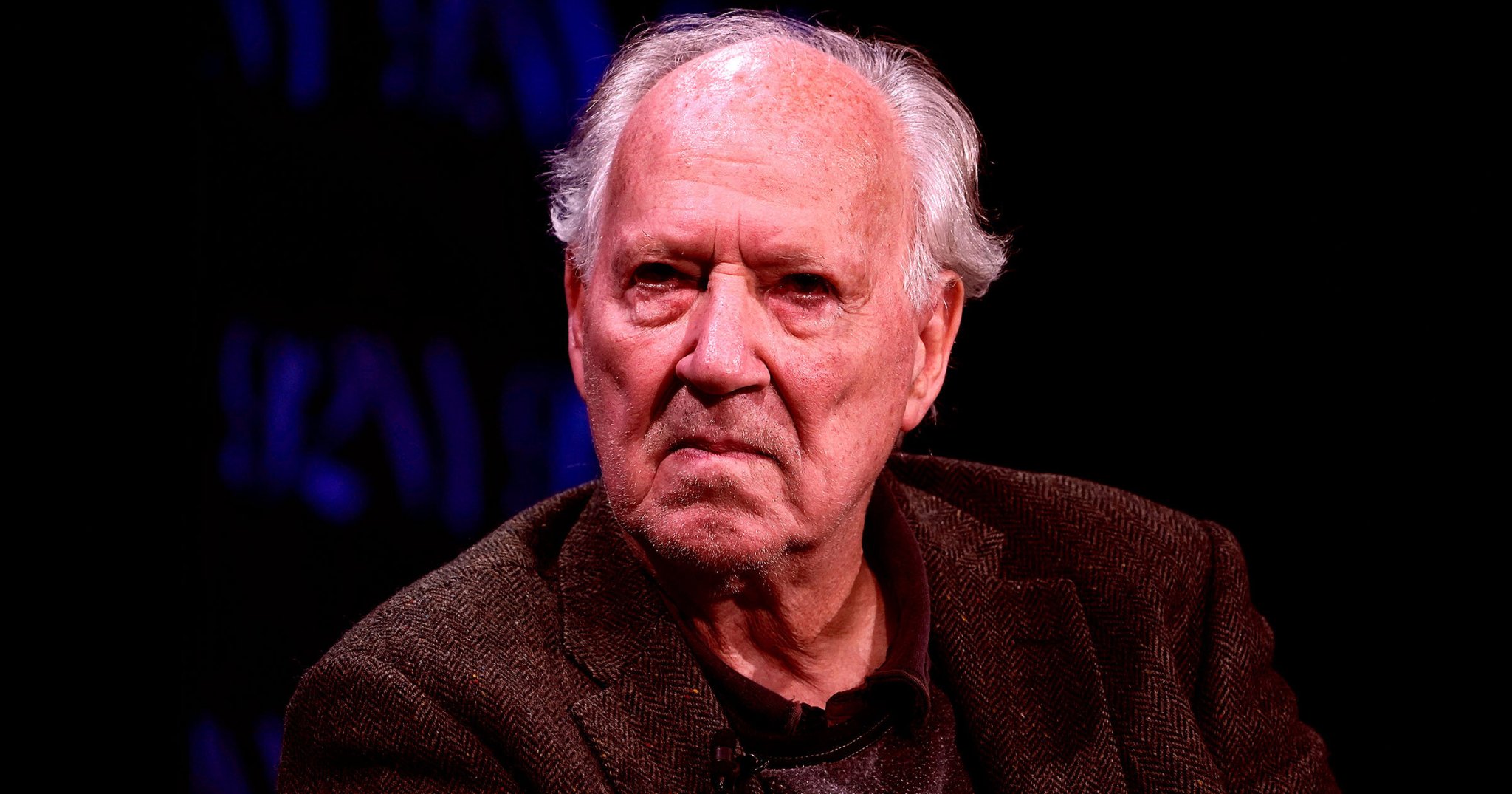
The legendary German director Werner Herzog had a few choice words about other so-called “filmmakers” who use AI to imitate their inspirations — one of those inspirations being himself.

In an interview with IndieWire, the 84-year-old — whose wide-ranging filmography includes 1982’s “Fitzcarraldo,” 2009’s “Bad Lieutenant: Port of Call New Orleans,” and 1979’s “Nosferatu the Vampyre“ — was asked about a 2025 movie called “About a Hero,” which made heavy use of AI to evoke the style of his films. It gets even more on the nose than that: on top of using an AI-generated script trained on his movies, it also featured AI-deepfaked Herzog as the narrator.

The flesh and blood director didn’t sound impressed.

“The intention of this young filmmaker was never to remake any [of my films], but making something in the spirit. And I immediately said, ‘You will fail. It is such a stupid idea,'” he said, in what we can imagine was his trademark husky voice.

“‘It’s phenomenally, abysmally stupid,'” Herzog drove home. “‘I will not take part in it.'”

Herzog seemed to venture that if AI is useful for anything, it’s replacing the talentless hacks.

“It’s so standardized that AI can step in because there’s not real storytelling,” Herzog sneered. “It’s mimicry of something that has happened before.”

“And I welcome AI to replace all the idiots who are into nothing but repeating, repeating, repeating until it’s ad nauseam,” he told IndieWire. “When it’s ad nauseam, please, please, please let AI step in and do the job.”

When it comes to artists, the irony of a technology like AI, which promises to let users create virtually anything they want, is that rather than realizing their creativity, it instead often ends up exposing how little of it they actually possess. Truly interesting uses of AI in art are few and far between; by and large it simply automates the process of churning out something unoriginal, only without the human spark or rawness unique to all of us that can elevate a work.

This isn’t the first time Herzog — who provocatively proclaimed that a “computer will not make a film as good as mine in 4,500 years,” — has unloaded on AI.

In a conversation with the comedian Conan O’Brien last year, he praised the tech’s “magnificent abilities” in applications like science, but sounded grave about how AI is being used in warfare. 

He was no less despondent about its intrusion in the arts.

“I’ve seen movies, short films, completely created by artificial intelligence. Story, acting, everything. They look completely dead. They are stories, but they have no soul,” he told O’Brien, as quoted by Gizmodo.

“You know it is the most common, lowest denominator of what is filling billions and billions of informations on the internet,” he continued. “The common denominator and nothing beyond this common denominator can be found in these fabrications.”

More on AI: Gal Godot Starring in Heavily AI-Generated Movie About the Glories of Bitcoin

The post Werner Herzog Demolishes Talentless Hacks Who Use AI to Imitate Other Filmmakers appeared first on Futurism.

  •  

Elon Musk Is So Mad About This New Documentary That He’s Threatening Legal Action

Does Elon Musk, who claims to be so smart that chess bores him, understand what the Streisand effect is? We’re skeptical, because he’s now threatening to sue the Oscar-winning filmmaker Alex Gibney over his new documentary about the controversial business magnate — which Musk has been fuming is a “hit piece.”

The film, simply titled “Musk,” is a four hour examination of the centibillionaire’s life, from his upbringing in South Africa to his start during the dot-com boom to his foray into politics. But it’s a documentary, not a hagiography, and Musk can’t stand that it’s taking a critical eye to his character.

In a letter sent to Gibney’s Jigsaw Productions, Musk’s lawyer Alex Spiro accused the director of defamation, alleging that his film spreads false claims about Musk supposedly rigging the 2024 presidential election in favor of Donald Trump. (“Rigging” probably goes too far, but Musk did shell out nearly $300 million to back Trump’s election campaign.)

The complaint stems from a scene showing Ashley St. Clair — a former right-wing influencer who secretly had a child with Musk but fell out with him after going public about their affair — describing texts she received from Musk in which he cryptically says he’s “optimistic” about Trump winning because “tomorrow we unleash the anomaly in the matrix.” Musk, attempting to clarify, added in a follow up message that he has “over 10 thousand lasers in space.” (NPR reported that it obtained and authenticated the texts in question.)

Spiro argues that this amounts to defamation, because it promotes a debunked conspiracy theory that Musk used his Starlink satellites to beam in votes for Trump.

“You are therefore on notice, before release, that the insinuation is false, that the material refuting it is public, and that you chose not to be told the rest,” he wrote in the strongly-worded letter.

Musk has had a bone to pick with Gibney ever since the film was announced in 2023, when he instinctively called it a “hit piece” despite there barely being any details about it at the time. Gibney retorted to Musk: “How would you know?”

Evidently, Musk still hasn’t gotten over it. As the documentary neared its world premier at Venice Film Festival on Tuesday, Musk reignited his attacks, making at least five different posts on X deriding it.

“Alex Gibney is obviously going to make the most convincingly terrible hit piece on me that he can possibly think of,” he wrote in one of his paranoid rants. “He’s a douchebag to his core and, in his own words, incredibly biased against me.”

Musk has a well known proclivity for trying to silence his critics, but the odds of his lawsuit working out aren’t spectacular. Defamation, in the US, is infamously difficult to prove.

St. Clair certainly doesn’t appeared to be rattled either, calling Musk’s legal threats “a joke.”

“They are more likely to colonize Mars than win a defamation case against Alex Gibney,” she told NPR in a statement. “Alex Spiro is sending fairy dust letters with obtuse legalese.”

More on industrialists: Elon Musk Has Been Calling Women “Breeders” Since His First Marriage, His First Wife Says

The post Elon Musk Is So Mad About This New Documentary That He’s Threatening Legal Action appeared first on Futurism.

  •  
❌