❌

Reading view

The end of 'rip and replace'? New survey finds businesses are sticking it out with legacy tech

  • Report finds 57% of UK organizations opted to extend legacy system use rather than replace the tech
  • This is despite almost half of UK businesses are scaling AI
  • Meanwhile, over three quarters of UK businesses have gone over budget on modernization, with over two thirds have paused or abandoned the process

Does technological progress necessarily mean replacing old gear? New research from Ensono claims businesses are keeping hold of legacy tech, with older systems extended and upgraded to support modern applications.

This is happening while businesses scale their AI use, focusing budgets on affordable upgrades for existing PCs, laptops, and servers on one hand, and embracing AI on the other. It’s a balancing act, one that is being managed by around 52% of businesses – 57% in the UK, and 48% in the US.

However, the driving factor for this reliance on older tech may not be smart budgeting and foresight. Across the US and UK, 61% of businesses have been forced to pause, scale back, delay, or even completely abandon IT modernization in the past two years.

IT modernization?

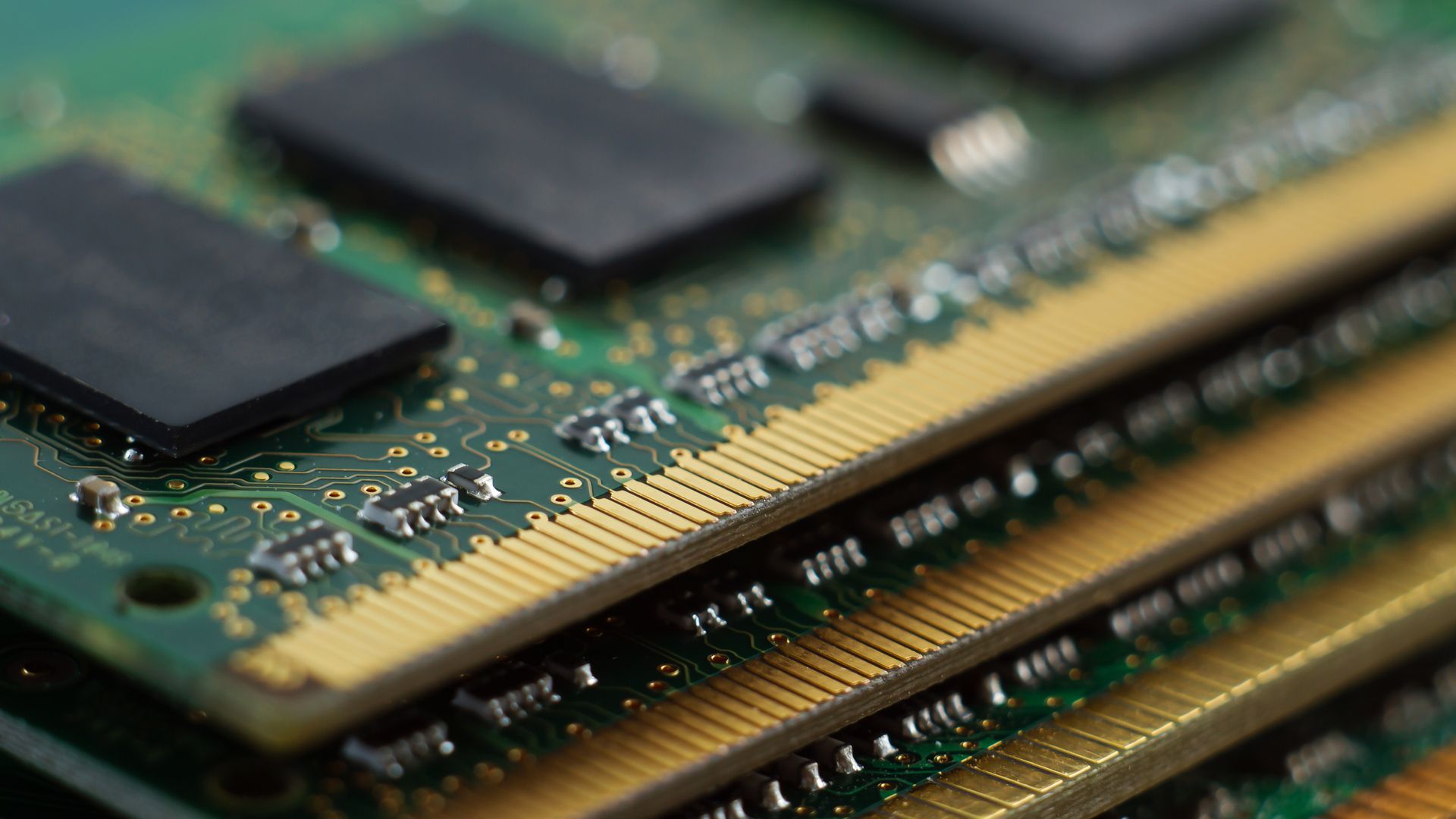
Ensono’s second annual State of IT Modernization Report seems to point to a change in how IT modernization is achieved: rather than replacing old tech, businesses are upgrading. The takeaway is that IT budgets are dictating a focus on AI spending, so where possible PCs, laptops, and some lower-end servers are increasingly being upgraded with faster, higher capacity storage and RAM.

Other key statistics in the report include the news that 71% of IT modernization projects have exceeded budgets, with workflow challenges (33%) and limitations with existing infrastructure (28%) among the roadblocks to an ROI on AI spending.

Underpinning all of this is the growth in decision makers declaring that AI is accelerating modernization, up from 39% last year to 54%.

Rediscovering legacy systems

Budget demands seem to be driving the reliance on older tech within organizations striving to keep up with AI modernization.

“AI is expanding the possibilities for modernization, enterprises are discovering that legacy systems, like the mainframe, are intensely powerful, reliable and efficient sources of computing that can now be augmented and made more agile thanks to AI," noted Brian Klingbeil, Chief Strategy Officer at Ensono.

This means that IT leaders are being forced to decide what needs to be preserved, and where to use AI investment wisely.

“These systems contain decades of data and business logic that drive many businesses,” says Klingbeil. “The advantage will go to organizations that understand their environments well enough to distinguish what should be replaced vs. what should be augmented, and embrace new modernization methods that simply were not available even 18 months ago."

  •  

Chinese scientists achieve 10 billion writing cycles in major future memory endurance breakthrough that improves endurance by 100x

  • Future memory could be more durable thanks to developments with wurtzite ferroelectrics materials
  • A new structural design has enabled a demonstration of 10 billion writing cycles, around 100 times the previous limit
  • The breakthrough was made by scientists from the Xidian University working with the City University of Hong Kong and Fudan University.

Next generation memory for future AI systems will need far faster and more durable performance, and scientific researchers in China seem to have made a breakthrough, demonstrating a new design which can complete some 10 billion writing cycles, 100 times more than the previous limit.

This development – by teams at the Xidian University working with the City University of Hong Kong and Fudan University – is one of the most significant breakthroughs in memory development, and relies on the discovery of a quirk in the behavior of Nitrogen atoms.

Dense, low-power memory chips now seem to be a realistic possibility for a future demanding ever-scaling AI processing.

Wurtzite ferroelectrics

Creating faster memory and storage with greater capacity while keeping the energy requirements low is the holy grail of computing.

Over the past few years, research has increasingly focused on wurtzite ferroelectrics (polar crystal materials) such as aluminium scandium nitride (AlScN), which has the advantage of being compatible with semiconductor manufacturing processes currently in use.

It also offers that low energy target, along with the superior switching speed required by fast storage. Until now, the main challenge had been reliability. Testing of repeated switching in previously developed AlScN chips had resulted in failure after around 100 million writing cycles, but the researchers have found a solution.

Nitrogen cornfields

So, why has this breakthrough been made now? The previous failed attempts led researchers into deeper investigation as to why the AlScN chips would top out at 100 million cycles, which is where they found the problem: missing nitrogen atoms.

Wang Ruiqing, is a doctoral researcher at Xidian University and one of the authors of the research paper on the study, recently published in journal Science.

“Think of ferroelectric material as a neatly planted cornfield,” Wang said, “with nitrogen vacancies representing spots where seedlings are missing.” The defects were not the problem itself, however, but rather their behavior during switching. Rather than remain stationary, the nitrogen vacancies would move, and even group together. The consequence of this was the creation of “pathways” that allowed electricity to leak.

Upon discovering this, the team designed a structure to minimise the nitrogen vacancies, slowing the deterioration of the material.

“In the past, researchers knew that the devices failed and could observe some of the symptoms, but no one had been able to explain at the atomic scale what was moving, how they were moving and how that movement ultimately caused failure.” Wang added.

If successful, AlScN-based RAM and storage could form the backbone of future server farms and provide the framework for greater LLM and artificial intelligence adoption.

  •  

First ever battle between two autonomous naval drones 'won' by Ukraine thanks to a salvo from a remote weapon turret

  • Ukraine’s navy has claimed victory over a Russian drone boat in the first recorded seaborne drone battle
  • The exchange took place in the Black Sea
  • Russia has yet to confirm that its craft was sunk by the Ukrainian Sargan-3000 closed

An unmanned Ukrainian naval vessel has destroyed a Russian drone boat in what is thought to be the first military exchange of its kind. The uncrewed vessels encountered each other in the Black Sea, with the Ukrainian Sargan-3000 destroying the enemy craft using its Protector RWS turret.

While described as a first, the claim has not yet been independently verified. Ukraine has not confirmed the date, time, or location of the engagement. In addition, Russia has so far declined to confirm whether the exchange took place, or that it lost a vessel.

The news, however, follows an increase in seaborne drone activity by Ukraine, and comes just a few months after launching the Sargan-3000 into service.

What is a Sargan-3000?

Introduced into active service in April 2026, the Sargan-3000 was described as a “multi-purpose platform” which suggests the craft can be easily modified to house weapons, sensors. The term typically indicates a design that can house mission-specific modules, and the Sargan-3000 seems to have been involved in a wide variety of missions since its commissioning.

Ukraine has expanded maritime drone operations within the Black Sea and the Sea of Azov during 2026, with 105 Russian vessels known to have been attacked in the Sea of Azov. The Sargan-3000 has been described as “highly maneuverable”, but its physical characteristics are currently unknown.

We do know, however, that it can carry a Protector RWS, itself a modular system capable of mounting various weapons systems: machine guns, grenade launchers, and anti-tank missiles.

A remote-controlled 12.7mm machine gun turret (possibly an M2 Browning, or an NSV) was used in the encounter with the Russian vessel.

Drone engagements

Ukraine has other unmanned sea vessels at its disposal. While the Sargan-3000 is under the Ukrainian navy, a craft called Sea Baby is used by the Security Service of Ukraine. This 6 meter long boat is believed to have a 1,000 km range, and can carry a payload of around 850 kg. It is believed to be used primarily against moored (anchored) targets, which suggests it can be deployed pretty quickly.

The Magura V5, meanwhile, is under the Defence Intelligence group. This is a shorter craft with a lighter payload and cannot manage the same range as the Sea Baby, but has a similar role.

In the most recent incident, we’re told that the Russian vessel was identified by Ukraine’s Defense Intelligence Directorate, clearing the Ukrainian Navy unmanned craft to engage with the enemy. An earlier incident, in July 2026, featured a similar Ukrainian vessel remotely sink a Russian craft in the Black Sea.

Taking place off Gelendzhik, the Russian border patrol ship PSKR Izumrud was a casualty of an overall strategy that has seen Ukraine force Russia’s Black Sea Fleet into retreating from Crimea.

  •  

Younger workers apparently want their bosses to start behaving more like AI

  • Nearly two-thirds of AI users aged 18-28 want clearer instructions from their bosses
  • Nearly half of the same cohort have difficulty explaining work completed with the help of AI
  • The figures could indicate a brand new challenge to management

“Tell me exactly what you want me to do” – that seems to be the message from older millennial and younger Gen Z workers, who have expressed a need for highly specific instructions from their bosses.

Research has found that 62% of the 18-28 age group who regularly use AI want their bosses to give them the same sort of clear steps and parameters as one might give an LLM chatbot.

While a cohort of workers who are attentive to the needs of the business might sound good, deeper investigation may prompt you to think again. The study by Use.AI implies a deeper-seated issue that points to a management challenge unlike anything seen before on this scale.

Detailed steps

Use.AI surveyed 11,742 adults based in United States, the United Kingdom, Canada, the European Union, Australia and Latin America, finding 62% of the 18-28 age group familiar with the AI use are accompanied by 41% of those aged 40 and older who also want more detail about tasks from their line managers.

Why do younger users need clearer, more detailed steps? It could be a simple matter of judgement, with the 18-28 age group requiring more experience in making their own decisions. But with the presence of AI in their working lives, could they be fearful of being replaced?

The report also explores a slightly different dimension. Within the 18-28 age group, 44% say they have had difficulty to explain work created with AI assistance. This raises a key concern: does the employee even know what their tasks are supposed to achieve? For that matter, does the business?

Sound judgement

AI has changed businesses considerably, and made an impact that doesn’t only improve productivity. As Ihor Herasymov, Co-Founder & CEO of Use.AI, observes, “AI is exposing which parts of work were never really about producing the answer. When a model can generate the output in seconds, the value of some tasks shifts to whether the person can make a sound judgment and stand behind it.”

Other results from the survey support this. With 57% of the 18-28 age group of regular AI users stating that they are less likely to memorize information that can be collected via AI, and 53% of the same group frustrated by “ordinary” tasks that could be completed by a chatbot, a whole new workplace dynamic is being quietly established.

Herasymov concludes, “Managers now have to be much clearer about whether they need the result or whether the task itself is meant to develop the employee.”

  •  

OpenAI says it has built an 'automated research intern' to carry out menial tasks — and it's only just getting started

  • OpenAI is developing a tool that can perform “well-defined research tasks”
  • Described as a “research intern” the project met its aim to achieve automation by September 2026, ahead of a fully automated AI researcher operational by March 2028
  • The company believes that automated research can “enhance human welfare” and make other contributions

OpenAI has confirmed its project to build a fully automated AI researcher is on schedule, hitting its September 2026 target of developing a "research intern". Capable of performing research tasks commissioned by a human, the "intern" is the main milestone in the completion of the fully automated system, which OpenAI aims to reveal in March 2028.

The research intern is capable of carrying out tasks that would take several days if completed by a human researcher.

OpenAI has justified the development of the automated AI researcher by citing the reduced cost of AI, and in defending critical infrastructure against capable AI threats. These are observations it may not have published had the Hugging Face incident not occurred.

Automated research?

During an October 2025 livestream, OpenAI CEO Sam Altman announced the development of an automated AI researcher, and its intended milestone and target. "We think it is plausible,” he said, “that by September of next year, we have an intern-level AI research assistant and that by March 2028, we have a legitimate AI researcher."

Specifically describing the current stage of the project’s development, OpenAI explained its definition of ‘research intern’ as "a system that can carry out well-defined research tasks under human direction, including tasks that would take a skilled researcher a few days.”

The post continues: “AI research is a complex process with many potential bottlenecks […] agentic tools are meaningfully accelerating research progress.”

While this particular intern won’t be able to make coffee or find a box of paperclips, its automated research ability will presumably unlock those tasks for others to complete – such as the human commissioning the research.

Recursive self-improvement

The ChatGPT company clearly expects to hit its March 2028 target for the release of the publicly available automated AI researcher, but it also seems to have learned some important lessons. It argues against the use of recursive self-improvement (RSI) in developing automated research capabilities, noting that achieving that safely is not something that is currently achievable.

OpenAI’s post underlines its continued response to the Hugging Face incident, introducing safety steps at an earlier stage of product development. The update also explains how coding agents are used for development at the company, and confirms recent revisions to monitoring standards.

Noting that “Agent-powered AI research is still new, and we are still learning how to measure it,” OpenAI’s “intern” could herald some some considerable changes to the completion of research, when it the automated AI research tool is finally completed.

  •  

FBI launches investigation after 153 million drivers licenses apparently leaked on Russian cybercrime forum

  • 153 million US driving licences have been leaked on a Russian cybercrime platform
  • Among those apaprently discovered in the stolen data is US Secretary of Defense Pete Hegseth
  • The FBI is now investigating the leak, which has been traced to an identity verification company

A data leak of 153 million US drivers licenses is said to have been shared on a Russian cybercrime forum, with US Secretary of Defense Pete Hegseth among those leaked prompting an FBI investigation.

Security researcher Brian Krebs identified the leak – which included his own data – as originating from a hack of an identity verification service. Louisiana-based IDScan provided ID verification for various well-known companies, including FedEx and Hertz car hire.

The data was shared on a Russian forum called Exploit, a long-established online community of cybercriminals. Following news of the leak, the identity theft service “Nexus” has apparently scrubbed its existence from the Dark Web.

Driving licenses and more

It wasn’t just US driving licenses that were found in the archive of recently-collected personal data. Krebs’ investigation found that Nexus claimed other types of data, and found a further 1.1 million driving licenses from Canada.

Other identity documentation alleged to be in the leak include 10 million identification cards, three million travel documents and international IDs, and 579,000 medical cards. The data was available to browse, notes Krebs, with Nexus providing details: “Records are available to preview before purchase with pertinent information redacted. Customer photos are displayed if available.”

The leak has a personal dimension for Krebs. Not only was his driving license in the collection, so was that of his mother. It has proved to be a useful coincidence, one that has enabled the security and privacy researcher to establish how the data was sourced by Nexus.

Both licenses were used for a car hire, which Krebs traced to Hertz. Others affected by the leak had also used the service, which has used New Orleans-based IDscan for identity verification.

The company, which claims to perform 21 million verifications a month, is yet to issue a statement on the matter. Its marketing and operations leader, Jillian Kossman, told the journalist: “At this point I’m not able to share any additional information, but the updates you have provided have been welcome, and helpful to our team’s investigation.”

Where is the data?

Krebs reports that he was alerted to the data on August 31, 2026, little over a week ago. Regular checking noted that the data was still being added to, increasing by “nearly 400,000” records prior to publishing his investigation on September 1.

Since then, however, it seems that Nexus has vanished, along with the data. But how widely was the data downloaded before that happened? While the FBI investigates, it falls on the American and Canadian public to be extra vigilant and wary of identity fraud.

  •  

UK government lays out 'refreshed approach to space' including boosted comms and defence capabilities

  • The British government is using its UK Space Strategy to drive growth and reindustrialise the country
  • £7.8 billion fund will back the project until 2030
  • Funding will boost European rocket programs, space science and exploration, rail connectivity, astronomy and space science research, and space weather forecasting

The British government has announced a multi-faceted UK Space Strategy which seeks to “reindustrialise the country” with a £7.8 billion investment between now and 2030. Uniting a number of scientific and communications programs, the strategy is also part of the UK’s defense plans, which have been under fire in recent months.

While improved rail connectivity and satellite communications for rural communities will make a difference to everyday life, the program is largely focused on various scientific research projects, from pioneering orbital assembly and manufacturing to exploration and extraterrestrial weather.

Replacing 2021’s National Space Strategy, the UK Space Strategy is backed by two key ministers, and supported by various bodies with an interest in orbital research, science, and defene.

Research and ISAM

The £7.8 billion fund is intended for a variety of purposes, unified under the UK Space Strategy. These include a £149 million contribution to the European Space Agency’s (ESA) Vigil mission, and £880 million to improve space-based intelligence, surveillance, and reconnaissance, technologies that enable the UK to monitor military activity and protect assets in orbit.

A further £2.8 billion aims to strengthen the connectivity in Low Earth Orbit and SKYNET defense communications programs.

The UK government expects the UK’s space sector to grow beyond its current £18.6 billion value, with further funds allocated to rail connectivity (£57 million), developing SaxaVord Spaceport in Shetland (£30 million) and space science and exploration missions (£163 million). Projects like the Rosalind Franklin Mars Rover are cited in the announcement, with an indication that similar projects can be part of the reindustrialization program.

Representatives from UKspace (a space industry trade association), ADS Group (a similar body for aerospace, defense, security and space businesses), the Space Academic Network, and the Met Office have thrown their weight behind the UK Space Strategy. In addition, there is support from Joanne Wheeler, MBE, director of the Earth & Space Sustainability Initiative.

A new frontier

A pair of prominent politicians back the UK Space Strategy, with Business, Innovation, Science and Trade Secretary, Jonathan Reynolds, stating "As space becomes a new frontier of economic and military competition, this plan will help keep Britain secure by strengthening our ability to launch satellites, detect threats and protect the services people rely on every day.”

Meanwhile, Defence Secretary Wes Streeting, said: “As threats in orbit grow more sophisticated, so must our ability to detect and respond to them, ensuring we protect the interests of the UK and allies while fueling economic growth along the way.”

Streeting also referred to the Defence Investment Plan, a commitment to increase defense spending to 2.7% of GDP by 2029, as part of the UK’s move towards a NATO commitment of 5% GDP by 2035.

  •  

AI data centers have a hidden cost few highlighted: A $200 billion insurance price tag that consumers will end up paying

  • The expanding market for data centers and associated renewable energy supplies has attracted the insurance industry
  • Data centers alone could represent a $91 billion market
  • A destroyed AI data center could cost $50 billion to replace

The cost of data centers continues to rise, with insurance now added to real estate, communications, energy, and environmental impact. Several reports indicate that not only is insurance a growing cost for big guns like OpenAI and Meta, it’s a market that looks set to expand alongside the increase in data centers.

A new report by the Swiss Re Institute indicates the insurance industry could collect $91 billion in premiums from AI data centers between now and 2030, with a further $111 billion from renewable energy installations linked to the data centers.

With a combined market of around $200 billion across a three year period, the AI boom could represent an accumulation of risk. The report highlights four interconnected factors that could affect multiple businesses if only one is disrupted.

The assurance of data centers

Reliance on new data centers isn’t all about the end product. Construction companies, physical supply chains, and technology and communications organizations all play their part in assembling an AI data center facility. Power stations – traditional or renewable – have similar requirements, and once both types of installation are brought online, their importance increases.

Gianfranco Lot, Swiss Re's chief underwriting officer for P&C Re, told Insurance Business Mag: "AI needs data centers, power grids, and increasingly complex infrastructure - and all of it needs insurance. That creates growth opportunities across multiple lines of business, but also significant risk concentrations. The deployment of capacity will depend on our ability to understand and manage those, and getting paid for the associated tail risk."

Estimates suggest a single AI data center can cost $50 billion to replace.

New market, new opportunities

Insurers are preparing to offer comprehensive support for the data center industry. Risk management firm Aon has released an analytics tool designed to help insurers measure and map exposures for data centers, and it appears the wider industry is exploring options to underwrite these installations.

Indeed, Aon has its own estimations, working on a figure of a $29 billion market by 2030. Meanwhile, other insurers and analysts are assembling databases and exploring opportunities to provide financial fallback to data centers.

Four factors (large assets, geographic clustering, supply-chain dependencies, and shared networks) can each interrupt several businesses within the sphere of the data centers, and the Swiss Re Institute report highlights the importance of insuring against disruption. This represents a previously unseen level of integration and interconnectivity between industries, something that seems to be informing the market estimates.

Ultimately, the insurance price will be factored into the usage costs, with AI token prices and other tariffs added to the bill for end users.

  •  

OpenAI targets Argentina's freezing Patagonia for $25 billion 500MW Stargate AI data center — Green Capital and FlexDomes prep 120 to 3,000MW wind-powered server farms to skirt US backlash

  • OpenAI is leading the race to “quietly” open a data center in the Patagonia region of Argentina
  • Argentine energy giant Pampa Energia is in talks to develop a 500 megawatt data center site
  • The Loma de la Lata thermal power plant would provide the data center’s electricity, burning gas from the nearby Vaca Muerta shale gas formation

OpenAI is among several cloud and AI computing companies looking at Argentina’s Patagonia region as a possible location for fuss-free, opposition-avoiding data centers. Supported by low temperatures to aid cooling, and a clean energy source, a suitable site is currently being explored, following OpenAI signing a letter of intent with Sur Energy in 2025.

The OpenAI-Sur Energy partnership appears to have sparked growing attention on Patagonia, where other major hyperscalers are also said to have shown interest -- these include Google and Apple.

Widespread opposition to data centers in the US have prompted companies like OpenAI, Google, Apple, and Meta to look elsewhere to develop their cloud and AI facilities. However, communications limitations may prove difficult to overcome, and there is uncertainty about Pres. Javier Milei’s long-term future, factors which may explain OpenAI’s slow pace on the project.

Letter of Intent

While OpenAI and Sur Energy initially formalised their collaboration with a letter of intent in October 2025, there seems to have been little movement toward selecting a site, let alone breaking ground.

Sur Energy and Pampa Energia are not direct competitors. Rather, Pampa Energia is a large independent energy company, whereas Sur Energy is a specialized developer within the energy industry. Both organizations would typically be involved with the development of a data center in Patagonia, whether OpenAI’s Stargate Argentina or a rival build. Similarly, many other companies could be involved. For example, FlexDomes is reportly looking for investors into a data center in Patagonia.

Developments in Patagonia may not be limited to the energy from the Vaca Muerta shale field. Hydroelectric may be selected as an alternative; elsewhere, Green Capital is looking at wind and solar farms for a possible site in the Chubut province.

Will it really be easier?

However, whether Sur Energy provides the OpenAI plant with energy or Pampa Energia successfully attracts a data center from a rival cloud AI company, there remains a couple of key challenges.

While Argentina offers tax breaks and regulatory stability with its investor-pleasing RIGI incentives, shale gas energy, and minimal resistance to large projects with an ecological impact, it does not currently have the data links required to make a modern data center viable. That requires considerable investment in upgrading and (for large areas) installing fiber links.

But there is another potential challenge to establishing a data center in Patagonia. Less “anti-data-center” and more “anti-development,” the local area is occupied by the Mapuche Indigenous families, who have previously sued oil giant Exxon, French company Total, and BP-owned Pan American Energy for contracting an Argentine company that dumped waste illegally. Switching data center development to Argentina may have more attractive power and cooling options, but it is not without challenges for OpenAI and its competitors.

  •  
❌