
❌

Reading view

How beavers can help create fire breaks as part of a drought preparation plan
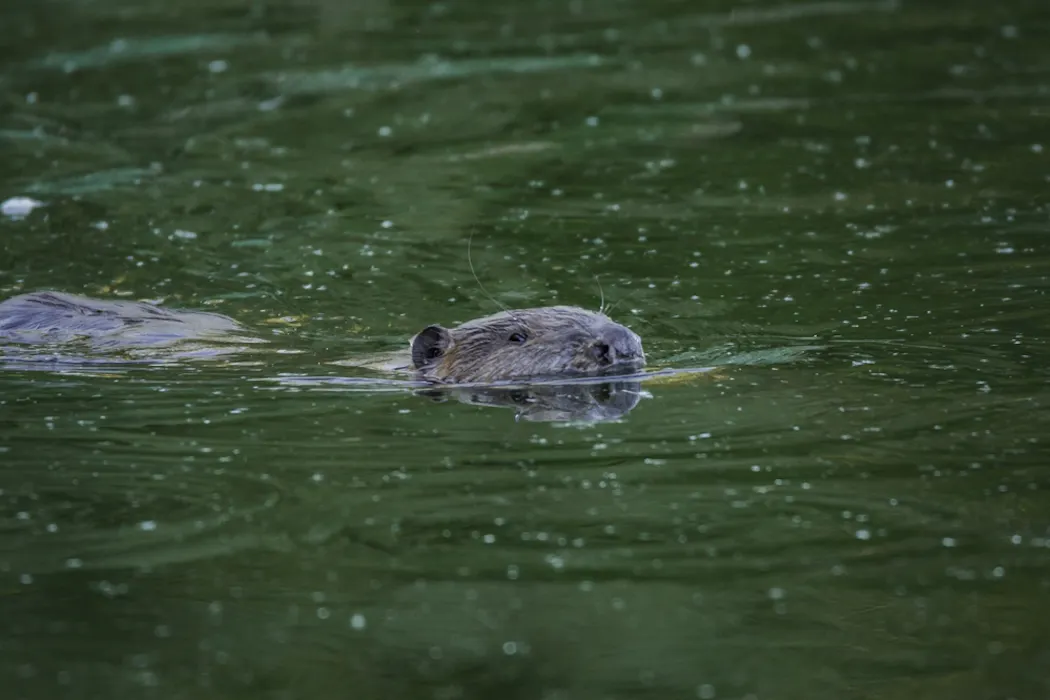
somov ivan/Shutterstock

Most of the countryside around the Holnicote estate in Somerset has been dry and dusty for most of the summer. But one corner remains conspicuously green.

Here in south-west England, an animal that was made extinct in Britain in the 16th century, mostly because of hunting, is making a comeback. Reintroduced just six years ago, beavers have helped turn a small watercourse on the estate into a wet meadow – a true oasis amid the parched landscape.

It is an Instagram-worthy example of why reintroducing beavers to more of Britain could help us prepare for the next drought. It shows how they reshape rivers and the surrounding land to hold water in the landscape for longer, rather than allowing it to drain away rapidly.

Beavers are often called ecosystem engineers. They fell small trees, build dams and dig channels. Water backs up behind their dams, spills across the valley bottom and soaks into the surrounding soil. Sediment and woody debris accumulate, while wetland plants establish themselves.

The result can be a mosaic of ponds, channels, marshes and wet woodland. During dry weather, this stored water can keep soil and vegetation wetter for longer.

This effect was highlighted in a 2008 Canadian study that examined aerial photographs of Elk Island National Park in Alberta over 54 years. Beavers had disappeared from that landscape in the 19th century, but returned in 1954.

The number of active beaver lodges, where beavers live and raise their young, was found to explain more than 80% of the variation in the area of open water. During 2002, the driest year studied, wetlands with beavers on them contained nine times more open water than those without them.

This does not mean releasing beavers in Britain will reproduce the Canadian numbers. It is a different beaver species in a different landscape, and the effects of any beaver colony depend on the shape, soils and land use of its catchment. But British research points in the same direction.


Read more: Over 75% of UK wetlands have been destroyed – restoring them would help prevent wildfires


Researchers studying a beaver enclosure on an intensively managed grassland in Devon in 2011 found that 13 dams stored around 1 million litres of additional water. The dam structures built by the beavers held back the stream to create a series of ponds. Because such dams are leaky, this water was released gradually, slowing storm flows while maintaining water downstream during dry periods.

More recent work across four wild beaver territories in Devon estimated that their wetlands held more than 24 million litres of water.

Why we need wet land

Holding more water in a landscape has another increasingly important benefit: it helps vegetation stay green. Healthy, damp vegetation is harder to burn, so beaver wetlands may provide refuges for wildlife and help interrupt a fire’s progress.

A 2020 study of five wildfires in the western US found that streamside vegetation in beaver-dammed areas was three times less affected than comparable areas without beavers.

Again, this does not prove that beavers will always stop British wildfires. Our landscapes, vegetation and fires differ from those of the western US. A wet strip beside a stream is no substitute for proper wildfire prevention and response. But creating wetter, greener corridors through a drying landscape is a useful extra layer of protection.

Beavers are not suitable for every watercourse. Their engineering can flood farmland, block culverts and damage trees. So, reintroductions need proper assessment, long-term management and support for affected landowners. England now requires a licence and a management plan for any beaver releases into the wild.

A ‘welly belt’ of wetlands?

We also shouldn’t expect beavers to repair the whole landscape. There’s other work to do, including restoring peatlands, ponds and marshes, reconnecting rivers with their floodplains, and re-establishing vegetated buffer strips along watercourses.

The UK could establish a “welly belt”: a connected network of wetland areas where needing waterproof boots is recognised as a useful feature, rather than an engineering fault to be drained away. Beaver-made wetlands could form an important part of that network, if managed correctly.

The need for careful management has recently been highlighted in Norfolk, where two wild beavers that mysteriously appeared on the River Wensum have produced the county’s first kits for more than 500 years.

Some suspect an illegal release, sometimes called “beaver bombing”. But tempting as it may sound to revive the US’s wonderfully eccentric 1948 experiment, which used surplus wartime parachutes to relocate troublesome beavers into remote parts of Idaho, Britain needs planned releases – not airborne rodents.

We do need far more beavers, though, in the right places. They will not end drought or wildfires. But they can help put water back into a landscape we have spent centuries draining – and keep it there until we need it.

The Conversation

Christian Dunn does not work for, consult, own shares in or receive funding from any company or organisation that would benefit from this article, and has disclosed no relevant affiliations beyond their academic appointment.

  •  

Human ‘safety drivers’ in Uber robotaxis could lose skills if all they do is observe

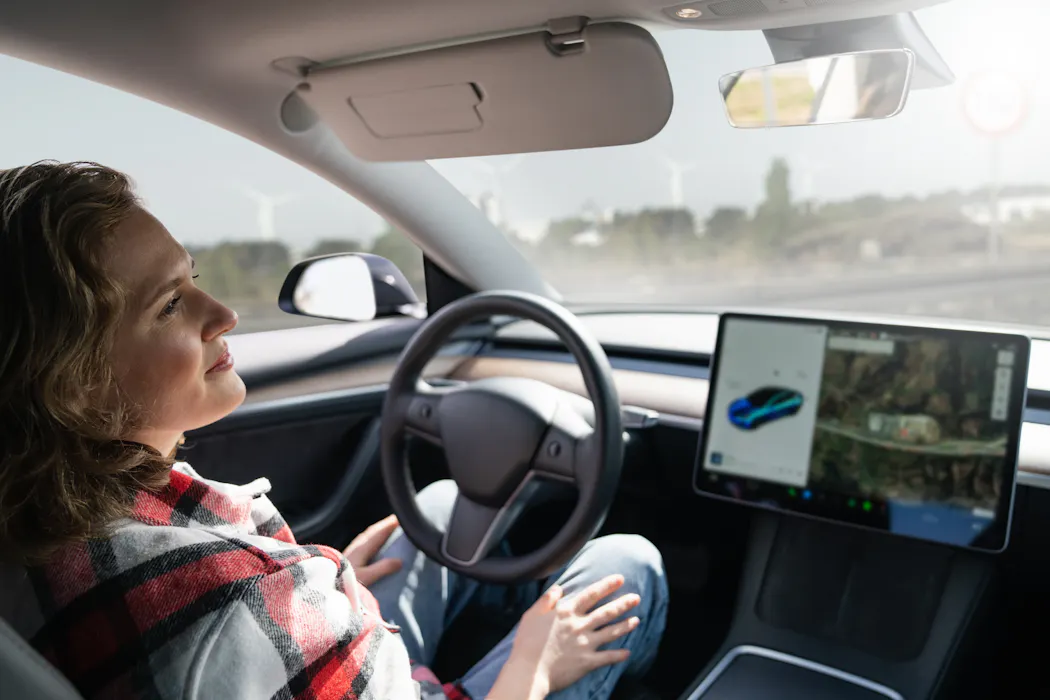
A safety driver may become less of an operator and more of a critical supervisor. Scharfsinn / Shutterstock

Imagine getting into a London taxi. Someone is sitting in the driver’s seat, but the car is driving itself. If the autonomous system gets into difficulty, they must recognise what is happening, decide whether to intervene and, within seconds, potentially take control.

This is no longer hypothetical. Uber and the British autonomous driving company, Wayve, have been granted licences to operate self-driving taxis in London with human safety drivers seated inside, with more than 100,000 people having joined a waiting list for the service. Uber launched its service, with 15 autonomous vehicles, on September 3.

Much of the debate thus far has focused on whether robotaxis will eventually replace human drivers. But there is another important question: what happens to human skill when our job changes from doing something to watching a machine do it?

Driving involves reading the road, anticipating others’ behaviour, judging risk and responding to unexpected situations. Autonomous vehicles transfer much of this work to software, but humans don’t necessarily become unskilled; their expertise changes.

They become less of an operator and more of a critical supervisor. There is, however, a problem with this arrangement, one that was identified long before today’s enthusiasm for AI.

In 1983, Lisanne Bainbridge published an influential paper, Ironies of Automation, noting that automation tends to leave humans with the tasks machines find most difficult, namely, monitoring complex systems and dealing with unusual situations.

The irony is that automating routine work can leave people with fewer opportunities to practise the skills they need when something goes wrong. Applied to robotaxis, this paradox is striking: the better the autonomous system becomes at driving, the less its human supervisor needs to drive.

However, the less that person drives, the fewer opportunities they have to practise the skills they may suddenly need when the system encounters something it cannot handle.

Meaningful oversight

There are signs of a similar problem elsewhere. For example, a 2025 study of clinicians using AI-assisted colonoscopy found that after routinely working with AI, their ability to detect precancerous growths when working without the technology declined, falling from 28.4% before regular exposure to AI to 22.4% afterwards.

This does not mean that AI makes doctors worse, nor that autonomous vehicles will inevitably make people poor drivers. The significant distinction is between the performance of the human-machine system and the capabilities retained by the human within it.

Self-driving car
A number of cities around the world have seen trials of self-driving cars. Caito / Shutterstock

A system can improve while the human supervisor becomes less practised. We hear about keeping a “human in the loop” in medicine, education, law and workplaces increasingly reliant on machine-generated analysis. However, having a human present is not the same thing as having meaningful human oversight.

For that, the person needs enough expertise to recognise when the machine is wrong, enough confidence to challenge, and enough authority to intervene.

A temporary job?

Robotaxis already operate in the US, China and the Middle East, sometimes without a supervisor. This raises an uncomfortable question about London’s safety drivers: do they represent a new kind of skilled occupation (expertise in supervising autonomous systems) or are they temporary workers, required until the technology is considered reliable enough to work alone?

There may, in other words, be two kinds of displacement happening. Eventually, the taxi driver may be displaced by the machine, but before that happens, driving itself becomes displaced by supervising. And that transformation is likely to reach far beyond transport.

The government had anticipated commercial trials beginning this year, but regulatory and technical hurdles have delayed the rollout. Transport for London has not published the guidance operators will need and no vehicles have thus far completed the approval process required for fully driverless passenger services.

The delay has been welcomed by some campaigners who have raised concerns ranging from employment and road safety, to privacy and the environmental costs associated with data intensive technologies. However, the postponement should not be read as evidence that autonomous vehicles have failed or that they are inherently unsafe.

Indeed, it highlights something more fascinating – that technological capability, regulation and social preparedness do not necessarily develop at the same speed.

Before fully autonomous vehicles can become ordinary features of London’s streets, regulators must confront questions that are partly technical but also ethical; such as, who supervises an autonomous system? Who is responsible when something goes wrong?

And at what point are we prepared to decide that the human supervisor is no longer needed? London’s delayed experiment is therefore testing a relationship with technology that is becoming increasingly familiar: machines performing while humans watch, judge and remain responsible.

As such, the challenge is no longer about keeping a “human in the loop”, but ensuring that when we do, humans retain the skills, judgment and agency that make their presence meaningful.

The Conversation

Gareth Evans-Jones does not work for, consult, own shares in or receive funding from any company or organisation that would benefit from this article, and has disclosed no relevant affiliations beyond their academic appointment.

  •  

Why snake venom may have evolved to catch dinner, not for defence

In the animal kingdom, any hunt for a meal or encounter with a predator is a matter of life and death. To survive both, animals have evolved a multitude of weapons, of which venoms may be one of the most widespread and effective.

But building a chemical weapon presents an evolutionary dilemma. Should venom be optimised to disarm prey, or to cause rapid pain to deter predators? Our new study suggests that in snakes, a meal comes before self-defence.

Venoms are complex chemical cocktails. Their composition is shaped fundamentally by their intended purpose. Predatory venoms disrupt multiple tissues and organs at once to immobilise prey. On the other hand, defensive venoms have only one job: to cause rapid, intense pain to deter predators. Think of a bee sting, for example.

These differences create a conundrum. What if an animal wants to use its venom for both predation and defence? This is not a trivial question, because the storage capacity of venom glands is limited, and producing venoms is thought to carry an energetic cost. That opens the door to an evolutionary trade-off: investing resources into one function might leave less for the other.

Venomous snakes are probably the best-studied venomous organisms, and for a good reason. Unfortunately, snakebite remains a huge medical issue, especially in tropical countries. More than 100,000 people die yearly and more than 400,000 people suffer lifelong injuries as a consequence of snakebite.

In theory, antivenoms could prevent many of those deaths, but there is another problem. Snake venoms are extremely variable, not just between species but also between different populations of the same species. This means that antivenoms developed for one region can fail to work in another. Understanding what drives this immense venom variation is the first step towards more effective treatments.

Snakes use their venoms both for hunting and self-defence. We have good evidence that diet is the central factor shaping venom composition in many snakes. In contrast, defence against predators has rarely been studied as an important evolutionary driver, and never in comparison with diet.

Based on the results of a previous study, we suspected that species that hunt easy, low-risk prey such as insects might not need a highly lethal predatory venom, freeing up resources to invest in more defensive, pain-inducing compounds instead.

To test this idea, we looked at a group of venomous snakes called meadow vipers (Vipera ursinii and relatives). These curious little snakes live in the lowland steppes and alpine meadows of Eurasia. Their diet is unusual among vipers, as they eat mostly or almost entirely grasshoppers, crickets and locusts.

On the other hand, they also regularly fall prey to predators like birds of prey, badgers and foxes. It’s exactly the kind of pressure that might favour a defensive venom.

For our study, we travelled to where their populations can be found across Europe to obtain venom by “milking” them. It’s a process that causes no harm to the snakes, and they were released back to their habitats afterwards. We also collected venom from other European vipers like the adder (V. berus), asp viper (V. aspis) and nose-horned viper (V. ammodytes), which mostly feed on more dangerous prey, like rodents.

If our trade-off theory held, we would expect these venoms to be more predatory and less pain-inducing than those of meadow vipers.

Putting venom to the test

To measure pain, we tested the venoms on cultures of specialised sensory neuron cells. These are cells responsible for detecting harmful stimuli in the body. If such a cell is activated to produce pain, calcium ions flow into the cell. So, to track whether venom triggered these cells, we treated them with a fluorescent dye that reacts to calcium and measured the emitted fluorescence.

To our surprise, regardless of diet, none of the tested venoms activated these cells, not even that of the insect-feeding meadow vipers. So, it appears that European viper venoms, like in most snakes, probably evolved to overcome prey rather than to fend off predators.

All this does does not mean that viper bites don’t hurt. They do. But it seems that the pain is mostly caused as a side effect of other venom actions, such as inflammation, tissue degradation or muscle spasms.

There are however exceptions elsewhere in the snake world. Some toxins found in lanceheads and coral snakes do directly stimulate pain receptors. However, such toxins have been documented in only a handful of species and their ecological function remains enigmatic.

That means the story of snake venom is far from complete. Rather than revealing a universal rule, our findings suggest that, at least in European vipers, the evolutionary pressure to catch prey has outweighed the need to deter predators. Understanding where that pattern holds – and where it doesn’t – could help explain why snake venoms vary so dramatically, an essential step towards developing better treatments for snakebite around the world.

The Conversation

Bálint Üveges received funding from the Leverhulme Trust, the Bangor Fund / Cronfa Bangor, Bangor University and the Taith research mobility programme of the Welsh Government. He currently receives funding from the National Research, Development and Innovation Office of Hungary.

Wolfgang Wüster receives funding from the Leverhulme Trust, Natural Resources Wales, Natural England and the Amphibian and reptile Conservation Trust

  •  
❌