BRUSSELS (AP) — A scorching summer that dried up rivers and killed tens of thousands across the European Union from Portugal to Hungary has shown that the bloc needs to develop new tools to meet a worsening climate, European Commission President Ursula von der Leyen said Wednesday. She said that this instability led her to propose a new European Heatwave Plan as well as a future European firefighting fleet of airplanes. Currently, the EU operates a small fleet itself but coordinates a network of aircraft, water trucks and volunteers that move across the 27-nation bloc as fires ignite. “This summer was the summer of truth. Almost no part of our continent was spared,” said the EU executive during her annual State of the European Union address in Strasbourg. “Key rivers like the Danube, the Rhine or La Garonne are disappearing before our eyes. More than 35,000 additional deaths during the heat waves. Care homes and hospitals dangerously overheated.” The extreme heat, which hit Europe exceptionally hard and early this year appears to have led to a much higher spike in deaths than expected. Where Von der Leyen’s figure of 35,000 comes from is unclear, but it is triple the estimates of “excessive deaths” by monitoring groups in July. Fires in France and Spain drove hundreds of thousands of people to flee their homes, shut down nuclear reactors in Hungary and France, ignited century-old munitions on Belgium’s border with Germany and revealed previously lost ships sunk on riverbeds like a tugboat in Serbia. The heat and humidity that broke…This article was originally published on Mongabay
SAO PAULO (AP) — Renowned Indigenous Chief Raoni Metuktire is receiving palliative care at home in the Brazilian heartland after being diagnosed with cancer at age 94, his institute said Monday. The Raoni Institute said the cancer diagnosis in the chief’s digestive system was confirmed after he was hospitalized in Sao Paulo in June due to a severe intestinal obstruction. He underwent surgery then and returned to the region of the city of Peixoto de Azevedo, in Brazil’s Mato Grosso state. “At this moment, our priority is ensuring that Chief Raoni is well cared for, comfortable, and close to his family and his people. We wish to share this information transparently, but we also ask for respect regarding his privacy, his need for rest, and his family’s decisions,” the institute said in a statement. Raoni, one of the most renowned advocates for the protection of the Amazon rainforest and for Indigenous rights, traveled the world for decades to raise awareness about environmental preservation. Doctors opted for palliative care given Raoni’s advanced age, overall clinical condition, and the high risks associated with aggressive oncological treatments, the institute said. “Palliative care does not mean an absence of treatment. The goal is to control pain and other symptoms, prevent complications, and ensure nutrition, hydration, medical supervision, nursing care, physical therapy, and the best possible quality of life,” it added. Raoni is currently resting at home, surrounded by his family, community, and specialized health teams. The care plan also incorporates intercultural and spiritual support,…This article was originally published on Mongabay
WASHINGTON (AP) — The Environmental Protection Agency is repealing rules that limit planet-warming greenhouse gas emissions from power plants fueled by coal and natural gas, an action the agency said would remove more than $300 billion in costs for the industry and help “unleash” American energy. The rule change, first proposed last year, represents a fundamental shift from efforts by Democratic Presidents Joe Biden and Barack Obama to address climate change and clean up industrial pollution. EPA officials said the change would allow utilities to make the best decisions for their ratepayers rather than be forced to close aging or inefficient plants. By Mathey Daly, Associated Press Banner image: A barge on the Ohio River moves past the Mountaineer Power Plant, a coal-fired power plant near New Haven, W.Va., March 13, 2026. Image courtesy of Carolyn Kaster, Associated PressThis article was originally published on Mongabay
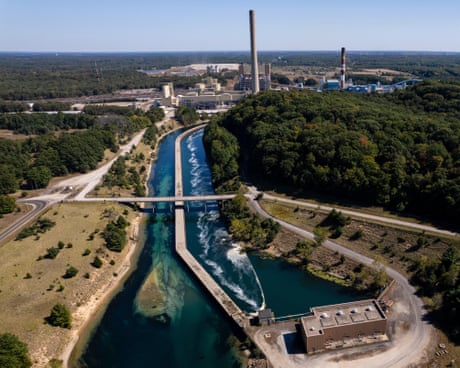
WASHINGTON (AP) — In a defeat for the Trump administration, a federal court on Friday ruled that the Energy Department exceeded its authority when it forced a Michigan coal-fired power to stay open past its scheduled retirement date last year. Energy Secretary Chris Wright had said the 64-year-old J.H. Campbell plant was needed to ensure reliable electricity in the region and used emergency powers to keep it operating. Environmental groups and three states — Michigan, Illinois and Minnesota — went to court to try to overturn orders keeping the plant online. The U.S. Court of Appeals for the District of Columbia Circuit sided with the states and the groups, saying there was no real emergency under the law. The section of the Federal Power Act that allows emergency orders “is essentially a narrow, last-resort backstop,” Appeals Court Judge Cornelia Pillard wrote for a unanimous three-judge panel. By reversing the Campbell plant’s “long and carefully planned retirement … the results are disruptive,” Pillard wrote. There was “no ‘emergency’ within the meaning” of the statute, she added. The Michigan case is one several legal disputes that have emerged across the country as the Trump administration uses emergency powers to force a half-dozen coal-fired plants from closing. The orders are raising ratepayer bills, critics say, and adding air and water pollution that could otherwise have been avoided. Keeping the Michigan plant open cost at least $135 million in 2025 alone, officials said. Ted Kelly, U.S. clean energy director at the Environmental Defense Fund, said the court ruling rejected…This article was originally published on Mongabay
Michigan case is one of several legal disputes as Trump administration uses emergency powers to force a half-dozen coal-fired plants from closing
In a defeat for the Trump administration, a federal court on Friday ruled that the energy department exceeded its authority when it forced a Michigan coal-fired power plant to stay open past its scheduled retirement date last year.
The energy secretary, Chris Wright, had said the 64-year-old JH Campbell Generating plant was needed to ensure reliable electricity in the region, and he used emergency powers to keep it operating. Environmental groups and three states – Michigan, Illinois and Minnesota – went to court to try to overturn orders keeping the plant online.
MEMPAWAH, Indonesia (AP) — A Japanese military transport ship docked on the island of Borneo on Thursday as part of a disaster relief mission to help fight wildfires in Indonesia that are causing a toxic haze impacting people’s health in other countries. Japan deployed 300 crew members, landing ship JS Kunisaki and three CH-47 helicopters, which arrived in Kalimantan on the island of Borneo. The mission in Indonesia marked the first known overseas firefighting operation carried out by the Japan Self-Defense Forces, or JSDF. “To this end, we will learn from the Indonesian military’s operational experience and work in coordination and cooperation with them, striving to ensure that the Indonesian people can lead stable lives as soon as possible,” Col. Syunji Nakahara, the commander of the disaster relief activities, said at a port in Mempawah district. Japan and Indonesia have been also increasingly strengthening their military cooperation ties, with the two sides discussing the Japanese sale of its used destroyers. Indonesia has been plagued by forest and land fires for decades, but an intensifying El Niño pattern this year and a prolonged dry season worsened the impact of the fires. Toxic haze and smoke have caused a health crisis in neighboring countries. The smoke has drifted as far as the Philippines, more than 800 kilometers (500 miles) away, and breached Malaysia’s emergency-level threshold for air pollution, forcing authorities to declare an emergency last week in a town in Sarawak state on Borneo. The air pollution has also affected several areas on the island of Sumatra, forcing…This article was originally published on Mongabay
BELHAVEN, N.C. (AP) — Scientists and investors are restoring a 23-square-mile tract of peatland in North Carolina to help curb climate-warming emissions and restore native habitat. Ditches have drained water from thousands of years of accumulated peat, leaving the site vulnerable to drought and wildfire and unleashing huge volumes of carbon dioxide. One-third of global carbon is stored in saturated peatlands, more than all forests combined. But that reverses when peatlands are damaged. Pantheon Regeneration plans to restore the water table to curb emissions, then sell carbon credits to help fund its goal of preserving a million acres of peatland from Virginia to Florida. A planter, right, works in a field adjacent to a peatland forest Tuesday, May 5, 2026, in Belhaven, N.C. Image courtesy of Joshua A. Bickel, Associated Press By Tammy Webber and Joshua Bickel, Associated Press Banner image: Neal Flanagan, right, a research scientist at Duke University, uses a tool to take a soil sample from a peatland as Curt Richardson, an ecology professor at Duke, observes Wednesday, May 6, 2026, in Belhaven, N.C. Image courtesy of Joshua A. Bickel, Associated PressThis article was originally published on Mongabay
NAIROBI, Kenya (AP) — Carbon credit financing is helping to drive Africa’s clean cooking transition by making cleaner stoves affordable for millions of low-income households. As governments introduce new policies, securing $900 million in fresh financing commitments, companies such as Kenya’s BURN are using carbon credits to subsidize electric and efficient biomass cookstoves across the continent. As such devices replace charcoal stoves and open fires, supporters say the approach could accelerate access to clean cooking, help to reduce deforestation and cut hazardous household air pollution. Still, its long-term success depends on sustained demand for high-integrity carbon credits. By Allan Olingo, Associated Press Banner image: Mary Kavutha prepares breakfast using a fuel-efficient cookstove made by BURN in Kiambu, Kenya, on July 31, 2026. Image courtesy of Allan Olingo, Associated Press.This article was originally published on Mongabay
PRAGUE (AP) — Keepers at Prague Zoo used tons of ice on Thursday to give its animals some much-needed relief as yet another heat wave hit Europe. Polar bears Aleut and Gregor wasted no time and were rolling in the beds of ice cubes after entering their outside enclosure. The twins looked to have fun with the ice treat that was meant to keep them cool amid the extreme temperatures forecast to soar to 38 degrees Celsius (100.4 degrees Fahrenheit) later in the day. “The bears cool off with it and at the same time it’s an enrichment of their life in the zoo,” said zoo spokesperson Filip Mašek. The zoo began providing ice to some of the animals two years ago in response to climate change and the increasing number of days with extreme temperatures. The polar bears, who were born in Nuremberg, Germany, 16 years ago and have adapted to the European climate, were the ones who enjoyed it the most. This year, the plan was to order ice for the animals in July and August, which are traditionally the hottest months. But the first heat wave struck early and the Czech Republic experienced its hottest day ever with 41.9 C (107.4 F) on June 28. “The weather keeps surprising us,” Mašek said. He said the ice will be ready sooner next year. “We’ve been taught a lesson.” Other animals that have benefited from the provision of ice to keep cool in previous years include otters, elephants and parrots. Some animals in the zoo are used to heat,…This article was originally published on Mongabay
NEW YORK (AP) — A first-of-its-kind U.S. study suggests invasive mold infections may be an underappreciated — and potentially deadly — threat. The researchers detected about 450 cases in Atlanta-area hospitals over five years. About a third of the patients died in the hospital. The findings, published this week by the U.S. Centers for Disease Control and Prevention, come from an attempt to better gauge how common these kinds of illnesses are. The government does not require doctors to report the illnesses. “It’s kind of the first time we’ve had an estimate like this,” said the CDC’s Dr. Jeremy Gold, the study’s senior author. And it’s important to understand it now, because the problem may grow in the future, he added. Mold exposure is a recurring problem in the wake of hurricanes, floods and other natural disasters influenced by climate change, researchers have found. “I agree that the frequency of fungal infections will likely increase with climate change,” said Dr. Jeffrey Jenks, an infectious disease researcher at Duke University. Meanwhile, there’s a growing population of older people who are more susceptible to such illnesses, Gold said. Invasive mold diseases are rare infections caused by certain species. Most people who get infected inhale mold spores, but they can also enter the body through cuts or wounds or from contaminated medical equipment. The spores don’t cause health problems for most people, but they can be life-threatening to some, including the elderly, cancer patients and others with weakened immune systems. Previously, CDC researchers estimated more than 15,000…This article was originally published on Mongabay
GUWAHATI, India (AP) — Flooding in India’s northeastern Assam state has killed at least 50 people and displaced 700,000 after days of heavy monsoon rain that overflowed the Brahmaputra River, officials said Friday. The river, one of Asia’s largest that originates in China’s Tibet region and flows about 900 kilometers (560 miles) through Assam, flooded villages, swept away homes and forced nearly 300,000 people into government-run relief camps, officials said. Authorities provided food and relief supplies to flood victims including airdrops from helicopters, Assam Chief Minister Himanta Biswa Sarma said. Nearly 900 villages were submerged and more than 7,000 homes were without electricity, he said. Police, disaster response teams and local volunteers were working to rescue stranded residents and deliver essential supplies to flood-hit communities, officials said. Jatin Gogoi, a 52-year-old farmer from Nazira, said the rising waters swept away his bamboo-walled home and destroyed his livelihood. “I lost all my cattle. My five-member family and I have nowhere to go, so we are taking shelter in a relative’s home,” he said over the phone. Flooding on Thursday evening disrupted parts of Guwahati, Assam’s capital with about 2 million residents, as submerged roads left commuters stranded for hours. “I had to stay overnight at my office. The roads were filled with water, some waist deep,” said Sudip Mazumdar, a journalist in Guwahati. Experts say human-caused climate change is intensifying South Asia’s monsoons, which traditionally run from June to September and again from October to December. The rains, once predictable, now arrive in…This article was originally published on Mongabay
PARIS (AP) — About 20,000 people were evacuated from towns and vacation resorts along the French Atlantic coast Thursday as the latest in a series of wildfires raged and hundreds of firefighters were dispatched to tackle it. Local authorities said the fire in a forest near the town of Lège-Cap Ferret, southwest of Bordeaux, spread over more than 31 square kilometers (12 square miles), though no injuries have been reported. The prefect, or head of the surrounding Gironde region, Sophie Brocas, said some 700 firefighters have been deployed, including forces sent from the Paris region. The fire came within 300 meters (980 feet) of the first homes in Lège, and water bombers were being used. Later in the day, the prefect’s office said the wildfire had not yet been brought under control but remained contained to the north of Lège. More than 10,000 people, including tourists staying at holiday camps and campgrounds, were moved to safety overnight, along with more than 1,000 residents living in residential areas along the forest edge. Authorities later evacuated the village of Claouey, including residents staying at several campsites, as a precautionary measure. Brocas said the evacuation involved 8,800 people. Several municipalities have opened reception and respite centers for evacuees, the prefecture said. Southern Europe has seen multiple large fires this summer. Scientists warn that climate change is exacerbating the frequency and intensity of heat and dryness, making the region more vulnerable to wildfires. Following a succession of heat waves that started even before the summer, wildfires…This article was originally published on Mongabay
Heavy smoke from several large wildfires blazing in Canada and Minnesota is expected to engulf large swaths of the Midwest and Northeast U.S. this week, exposing millions of people to dangerous air pollution. Minnesota officials issued an air quality alert from Tuesday through Friday for areas including the Twin Cities metro area, Alexandria and Two Harbors, with very heavy smoke expected across the state’s northeastern corner as large wildfires spread. Air quality levels in Two Harbors, the Tribal Nation of Grand Portage and other regions in northeast Minnesota were expected to reach hazardous levels, making it unsafe for everyone. Dan Westervelt, associate professor at Columbia University’s Climate School, said severe drought conditions combined with heat in Canada and the U.S. have created “a perfect storm for really dry conditions to provide a lot of fuel for these wildfires to burn.” Research shows warming temperatures from burning coal, oil and gas are making fires more frequent and intense. People should stay indoors as much as possible to avoid the extreme heat, especially as smoke moves in, said Tyler Hasenstein, meteorologist with the National Weather Service in Chanhassen, Minnesota. “Those two things coinciding with each other is not good from a health perspective,” he said. Officials in Michigan and Wisconsin warned residents Tuesday about air quality issues that could last for days. High levels of fine particulate matter in the air from wildfire smoke may be unhealthy for sensitive groups, such as children and people with heart or lung conditions. In parts of Maine, residents were reporting a…This article was originally published on Mongabay
President Donald Trump is sharply reducing the size of two national monuments in Utah. The move to shrink Bears Ears and Grand Staircase-Escalante national monuments by about 90% unravels protections established by former presidents for areas with unique archaeological and historical features. It comes as Republicans under Trump have sought to drastically reshape the management of vast taxpayer-owned lands concentrated in Western states. Republicans have moved to expand oil and gas drilling, ramp up logging and remove habitat protections for imperiled species. The altered monuments had been designated under the Antiquities Act, a 1906 law meant to preserve important sites. Democrats and conservationists warn of the disposal of treasured landscapes for commercial gain. By Matthew Brown and Savannah Peters, Associated Press Banner image: A hiker watches a waterfall at Lower Calf Creek Falls at Grand Staircase Escalante National Monument, July 12, 2023, in Escalante, Utah. Image by Ross D. Franklin via Associated Press. This article was originally published on Mongabay
PARIS (AP) — France gritted its teeth Monday for a week of record-busting temperatures, sweltering under a grueling heat wave that combines daytime highs above 40 degrees Celsius (104 degrees Fahrenheit) and sleep-robbing sweaty nights. The national weather service, Méteo France, said that most of the country — the largest in the European Union and second most populated — is entering what is described as a “plateau” of unrelenting heat-wave conditions that isn’t forecast to start easing before Friday at the earliest. Multiple towns in western and central France, including the major port of Saint-Nazaire on the Atlantic seaboard, with an overnight low of 23.2 C (73.8 F), experienced their hottest night ever Sunday to Monday, Méteo France said. Paris baked through its hottest night for a month of June, not getting below 24.2 C (75.5 F) — a half-degree hotter than the previous record from 2017. The weather service warned of even hotter nights. “This will continue through the end of the week, with heat levels never before recorded across more than three-quarters of the country on Wednesday and Thursday.” In a country without widespread air-conditioning, people, businesses and services tried to adapt as best they could. Hundreds of schools were closed on Monday and many hundreds more were canceling some classes, the education minister said. Broadcasts on the Paris transport network urged commuters to hydrate. Medical specialists took to the airwaves to warn of the potentially deadly cocktail of drinking alcohol in extreme heat. Authorities cracked down on alcohol consumption in public. Multiple…This article was originally published on Mongabay
SPOKANE, Wash. (AP) — High winds drove a wildfire into an eastern Washington neighborhood, forcing the evacuation of about 1,500 people and destroying some homes, fire officials said Wednesday. It’s unclear how many homes were lost in Spokane. Fire officials were working Wednesday to determine the number and the full extent of the damage, said Matthew Vinci, fire chief for Spokane County Fire District 9. He confirmed Tuesday that some homes were engulfed in flames. The evacuation order for the 1,500 residents remained in effect Wednesday, said Chandra Fox, deputy director for Spokane County Emergency Management. “Our concern is for increased winds Wednesday afternoon,” Fox said. The blaze started just after noon on Tuesday and quickly moved up a hill, said fire district spokesman Robert Gray. Winds then shifted, sending flames into a neighborhood, Gray said. Fire crews from Washington state and Idaho attacked the fire from the ground and air, but it quickly grew to 225 acres (.35 square miles). It was 10% contained Wednesday morning, according to the National Interagency Fire Center. More than 32,000 fires have burned more than 3,900 square miles (10,100 square kilometers) so far this year in the United States, according to the fire center, which coordinates the mobilization of large-scale firefighting efforts. That’s significantly higher than the 10-year average of just under 24,000 fires burning about 2,200 square miles (5,700 square kilometers) by early June, according to the fire center, even though fire activity has been relatively light in recent weeks. Weather and…This article was originally published on Mongabay
MIAMI (AP) — A cluster of storms along the Gulf Coast could become the first named tropical storm of the 2026 Atlantic hurricane season, the National Hurricane Center said. The storms threatened to bring heavy downpours that could lead to dangerous floods across southern states including Texas and Louisiana. The system was centered Tuesday afternoon about 55 miles (85 kilometers) south-southwest of Corpus Christi, Texas, according to a hurricane center advisory. National Hurricane Center director Michael Brennan said meteorologists are expecting the system to strengthen, possibly into a tropical storm by early Wednesday. But coastal areas could experience tropical storm conditions this week, even if the system doesn’t officially get a name, Brennan said. “The main hazard with these types of systems is largely the flooding from the heavy rainfall,” Brennan said. “And we could see potentially life-threatening flash and urban flooding across the Texas coast eastward into central Mississippi through Thursday. Prolonged rainfall may extend the flood threat into the weekend.” Tornadoes were possible from the upper Texas coast across southern Louisiana, Mississippi, Alabama and the Florida Panhandle, forecasters said. The storm’s maximum sustained winds were around 30 mph (45 kph) Tuesday, just shy of the 39 mph (63 kph) needed to be named a tropical storm. The system had a 70% chance of forming into a tropical cyclone over the next two days, the hurricane center said. Houston, where a World Cup match between Portugal and the Democratic Republic of the Congo is scheduled for Wednesday, has been under a flood warning since…This article was originally published on Mongabay

 Login




 This could prevent thousands of hospitalizations.
 "We hope that this trend will continue.”
 "The highlight of my career.”


