In late August, the U.S. announced a historic oil deal that gives it access to more than 65 billion barrels of proven reserves in Venezuela, with investment of up to $100 billion in new oil infrastructure across the country. The deal has been billed as a way to secure “energy dominance” for the U.S. while driving Venezuela’s economic recovery. But observers say they’re concerned about the climate impact of fossil fuels, the deal’s lack of transparency, potential oil spills and other environmental risks. “Economic recovery cannot come at the expense of human rights relating to the environment,” said a Sept. 9 joint statement from the Venezuelan Program for Education-Action on Human Rights (Provea) and Clima21, an environmental NGO. “No economic interest takes precedence over the constitutional and internationally recognized right to a healthy, safe and sustainable environment.” The deal is structured through private company North American Blue Energy Partners (NABEP), the second-largest Venezuelan oil producer, which has “100-year concessions for 17 oil fields,” according to the U.S. government. The U.S. has a “35% equity stake” in the company and can purchase 20% of its production, with a right of first refusal for the remaining 80% throughout the 25-year agreement. It’s part of an attempt by the U.S. to increase involvement in Venezuela following a January military operation to remove President Nicolás Maduro, who has been accused of narco-terrorism and cocaine trafficking. Throughout 2026, U.S. officials have visited Venezuela to discuss investment in the country’s natural resources, most notably oil and gas. Venezuela has one…This article was originally published on Mongabay
U.S. Secretary of the Interior Doug Burgum traveled to Venezuela in March with over a dozen mining company executives, holding a meeting in Caracas with local officials to discuss creating a “legitimate mining sector” and removing the criminal groups that currently operate at many mine sites. The economic potential of Venezuela’s mining sector, he said, could be worth billions. Burgum’s trip came just a few months after a U.S. military operation removed then-President Nicolás Maduro and transported him to a detention center in the U.S. state of New York. Since then, officials have heralded a new era for Venezuela, and tried to make the mining sector more attractive to foreign investment: Passing mining reform laws, taking down leaders of criminal groups involved in mining, and raiding illegal mining sites. The U.S. is also considering an executive order aimed at improving access to critical minerals, Reuters reported. Yet at the same time, observers say the illegal mining crisis is getting worse, not better. Illegal mining has expanded this year, in some cases in protected areas, and criminal groups involved in mining have tightened their hold in many parts of the country, according to sources contacted by Mongabay. “[Since Maduro’s capture], nothing has changed in the criminal and legal ecosystem,” Cristina Burelli, founder of SOSOrinoco, an advocacy group studying the social and environmental impacts of mining in Venezuela, told Mongabay. “If anything, we have seen an increase in certain areas.” Vendors weigh and trade gold at gold-buying shops in El Callao, Venezuela.…This article was originally published on Mongabay
PUERTO CAIMITO, Panama — It’s a late April morning and the Tabor, an industrial fishing boat, is sailing around Chepillo Island in Panama Bay. Under the eyes of the crew, Yehudi Rodríguez, a marine biologist specializing in sharks, and sailor Joel Cordoba free a large black devil ray from a purse seine net and launch it back into the water. As they work with the biologist, the sailors, around a dozen of them, joke among themselves. Tabor is part of the Promarina S.A. fleet, a Panamanian company that produces fish oil and fish meal, authorized to catch only small open-ocean fish, or pelagics, such as sardines and herrings. Every two weeks, Rodríguez, a professor of biology at the University of Panama and director of the Shark Defenders NGO, analyzes bycatch — marine species not targeted but accidentally caught by fishers — freeing sharks, rays, and other animals entangled in the purse seine nets of Promarina vessels. “It’s an emotion to see a huge Mobula for the first time and liberate it in the ocean,” Rodríguez, 49, tells Mongabay after freeing the devil ray, which weighed an estimated 100 kilograms (220 pounds). Just a few hours later, Hermes, 18, the youngest sailor on the crew and nicknamed Mbappé after the French football star, helps Rodríguez liberate another ray, both taking care to avoid being hit by the animal’s venomous barb. Before returning an animal into the water, Rodríguez follows a short protocol: she records the coordinates of the bycatch location, identifies…This article was originally published on Mongabay
Since China banned the import of plastic waste in 2018, plastic pollution has been having a growing impact on the people and ecosystems of Latin America. As the region imports an increasing amount of the world’s used and discarded plastic, new research shows that waste infrastructure in many countries is already buckling under the strain of dealing with domestic trash. As a result, much of the imported plastic is leaking out into the environment, with experts and the U.N. warning of major consequences for human health. A study published in April found that seven countries in the region — the Dominican Republic, Guatemala, Honduras, Mexico, Nicaragua, Panama, and Paraguay — have become plastic pollution hotspots, or PPHs, where high imports of low-quality plastics meet high rates of mismanaged waste. Global plastic waste generation reached 353 million metric tons in 2019 alone, of which 72% ended up being landfilled or dumped and just 9% was recycled, according to an OECD report. Much of the world’s plastic waste was previously destined for China, but in 2018 the country banned those imports. While Malaysia and Thailand took up much of the slack, Latin America also started importing more plastic waste, although the region has historically been an importer of difficult-to-recycle plastics. “Certain countries in Latin America have started importing more waste but they haven’t actually got the capacity to deal with [it],” Veronica Herrera, lead author of April study and an associate professor at the Luskin School of Public Affairs at the University…This article was originally published on Mongabay
When Elsa Quiroz saw the spotted body of a jaguar appear on her son’s computer screen, she couldn’t believe her eyes. “I’d only seen them in books,” she said. In late 2025, a camera captured the animal crossing a semi-abandoned path in Puerto Lara, a an Indigenous Wounaan village north of Panama’s Darien forest, close to the Pan-American Highway, an area known for its rich biodiversity. The community was aware of how many birds lived around them, but not of the jaguars. Samuel Cheucarama, Quiroz’s son, reviews each photo taken by the two cameras installed in Puerto Lara every two weeks. He was as astonished as his mom when he first saw the extent of the biodiversity concealed within Puerto Lara’s forest, which covers an area less than twice the size of New York City’s Central Park. He reels off the list: agoutis, spotted rabbits, turkeys, margays, white-headed monkeys, among others, all found within this wilderness of just 600 hectares, or less than 1,500 acres. Cheucarama’s work is a small part of a wider project promoting nature-based economic alternatives in four communities managing a combined 18,000 hectares (about 44,500 acres) of tropical forest in eastern Panama. Although the Panamanian government has made efforts to reduce deforestation in Darién National Park, deforestation from illegal logging and agricultural expansion has increasingly been putting communities under pressure, with little to no support from local and national authorities. As a result, communities have been exploring alternatives to make their conservation efforts economically viable. In…This article was originally published on Mongabay
A legal complaint in Costa Rica has alleged that a banana plantation destroyed parts of a protected wetland in Bananito Sur, located in the Valle La Estrella district in the central province of Limón. Workers on the La Paz banana plantation, owned by Standard Fruit Company de Costa Rica, a subsidiary of Dole, cut down and burned vegetation inside an area listed on the country’s National Wetlands Registry, according to several complaints and a June 23 Supreme Court filing. In addition to environmental impacts, the dispute has raised questions about government transparency, with several agencies allegedly failing to provide information about what was happening in the area. “The government has to draw a line and say enough is enough, and stop the company. It hasn’t done that,” Marco Levy Virgo, president of the Association for the Development of Ecology, an environmental advocacy group, told Mongabay. Alleged destruction from the plantation. Image by Marco Levy Virgo. Banana plantations often require extensive pesticide use, as well as complex drainage systems with channels that transport water away from crops. Levy said he noticed damage related to that work at the start of the year. He submitted formal requests for information and technical data to the authorities, including the Ministry of Environment and Energy (MINAE). In April, MINAE’s Caribbean Hydrological Unit, responsible for managing the country’s largest watersheds, published two reports describing an agricultural drainage channel passing through the wetland from the plantation, with cutting and burning running parallel to it. The cleared area measured between…This article was originally published on Mongabay
Record wildfires devastated South America in 2024, raging out of control in biomes where fire is a natural part of the ecosystem, but also entering rainforests that had never burned before. Driven by expanding industrial agriculture, an El Niño episode, and droughts worsened by global climate change, the thick smoke from the wildfires grounded flights, shuttered schools, and caused lasting health problems. After favorable weather led to a reprieve from the most destructive fires worldwide last year, fire experts expect major wildfires to return to South America in 2026 and 2027. With fire season beginning in the continent, park rangers and firefighters hope that a trio of satellites launched in early July will provide more precise, rapidly updated data to wildland firefighters worldwide. The first three operational satellites from Earth Fire Alliance are meant to help improve global fire detection by providing frequent high-resolution wildfire data. These are part of the nonprofit’s FireSat program, which aims to deploy about 50 low-orbit satellites by 2030. The satellites are still being tested and calibrated, but in a few months, a first cohort of early adopters will gain access to the data. Once fully operational, the system could help fire agencies reduce emissions from wildfires worldwide by 5-10% yearly, according to Paul Bodnar, director of clean industry and special projects at the Bezos Earth Fund, which provided a $26 million grant to the program. The new satellites launch as the world enters an El Niño climate pattern that will likely mean drought and…This article was originally published on Mongabay
Sawfish, a group of large marine rays, derive their name from a striking appendage: Their long, saw-like snout lined with teeth-like scales. Nature intended these fish to use their snout, also called a rostrum, to send out electric signals that shock unsuspecting prey, slice it like a sword to impale it, and devour the catch. Humans, on the other hand, use these sharp teeth as cockfighting spurs — a spiky object strapped to a game cock’s legs so it can deliver lethal blows to its opponent and win the fight. For centuries, practitioners of the sport in Latin America have carved sawfish (fam.Pristidae) teeth into spurs. But in the 2000s, as sawfish became overfished for their fins, many cockfighting associations in the region officially banned using their teeth as spurs. In 2007, all sawfish species were added to CITES, the global wildlife trade agreement, and their commercial international trade was banned. A sawfish’s rostrum is lined with sharp teeth-like scales, which are carved into cockfighting spursCredits: Vassil – CC0. A recent study, published in the journal Conservation Letters, found that international commerce in sawfish rostra and teeth continues in Latin America despite bans. Talking to cockfighting practitioners and association representatives, the researchers found most rostral teeth entering the trade came from Peru, Brazil, Ecuador, Central America and Colombia. Peru topped the list as a destination. They call for stricter law enforcement and coordination in these countries, and urge CITES to take action to curb the “hidden” trade. Although the peak…This article was originally published on Mongabay
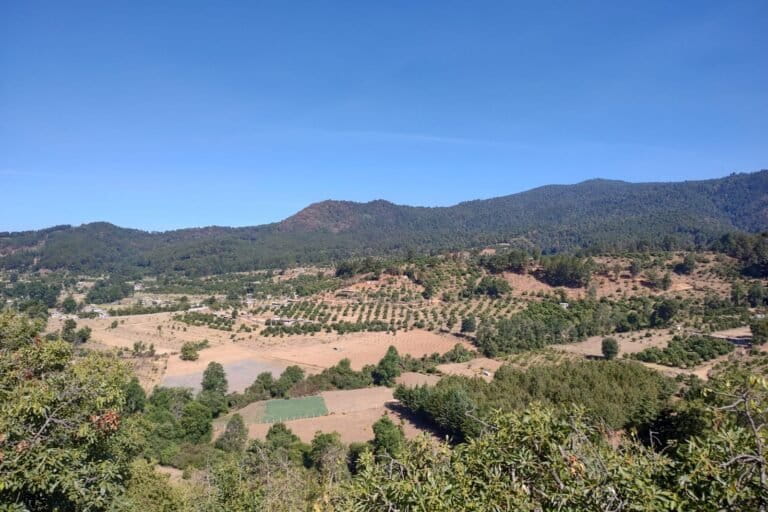
MEXICO CITY — In the heart of Mexico’s southwestern state of Michoacán, Juan Madrigal spends his free time organizing to protect the city of Uruapan’s urban ecological park, a 50-hectare (124-acre) plot of land at the edge of the Río Santa Bárbara. A state-protected area since 1995, the park’s marshlands help to purify the surrounding Cupatitzio watershed, where nine natural springs provide drinking water to approximately half a million people. According to Madrigal, the park, a habitat of the ruddy-capped nightingale-thrush (Catharus frantzii), the endangered Michoacán pocket gopher (Zygogeomys trichopus) and the endemic Pátzcuaro frog (Lithobates dunni), is a victim of neglect. “The authorities have never paid any attention to it, and it’s us citizens who’ve been speaking out,” Madrigal, who in 1993 founded Ecocentro del Río Cupatitzio, a nonprofit educational center, tells Mongabay by phone. The movement to protect the park gained momentum after it involved the ranchers that grow fruit and corn downstream, Madrigal says. “They realized the importance of us supporting each other in defending the vital sources of life,” he says. “Without trees, there is no water.” For a certain type of tree, however, the inverse occurs: Without water, there are no avocados. Defending native forests, urban or otherwise, is a small but important fight in Michoacán, where avocado orchards have replaced nearly 700,000 hectares (1.7 million acres) of tree cover, an area almost three times the size of Cape Town, between 1993 and 2023. Michoacán is the top avocado exporter in Mexico and the only…This article was originally published on Mongabay
“What motivates us most is being able to say, ‘I take care of the environment, I don’t cut down trees, and my coffee will be valued more highly,’” said Victoria Alverca Peña, a farmer for 25 years and co-founder of APECAP, a small coffee and cacao producers’ association in Zamora Chinchipe, a province in the Ecuadorian Amazon. “I’ll be able to sell it under better conditions, and my work will be much more valued. “In our farms, besides coffee, you’ll find cacao, timber trees, fruit trees and even short-cycle crops,” she added. “When the coffee plants are still young, we can grow crops like corn, cassava or plantains. This helps us a lot with food security.” At the end of this year, the European Union Deforestation Regulation (EUDR) is set to go into force, prohibiting products linked to deforestation from entering the EU market. Coffee is among the target commodities, and here in southern Ecuador, a group of coffee growers has been ahead of the curve in preparing for the EUDR implementation. Since 2019, nearly 400 farmers here have adopted a model that combines forest conservation, traceability, and geospatial monitoring as part of the Deforestation-Free Coffee Initiative, at work in 23 areas across the region. Between 2019-2021, the project developed Ecuador’s first deforestation-free coffee production model. The effort relies on a national protocol developed by the Ecuadorian government and the United Nations Development Programme (UNDP), which uses satellite imagery, traceability systems, and independent verification to track where coffee is grown…This article was originally published on Mongabay
Colombia’s first round of presidential elections on May 31 saw right-wing candidate Abelardo de la Espriella take the top spot with 43.7% of the vote, followed by left-wing candidate Iván Cepeda, with 40.9%. The future of the Colombian Amazon, the fossil fuel phaseout commitments made by current President Gustavo Petro and the rights of Indigenous peoples and other traditional communities are all at stake during the runoff on June 21. Colombia has committed to reducing greenhouse gas emissions by 51% by 2030 and has a legally binding net-zero target for 2050. Analysts at the Organization for Economic Co-operation and Development (OECD) say Petro’s government made some progress, but deep reductions in emissions are critical, in particular from deforestation and agriculture, as well as reforms to phase out fossil fuel subsidies. As a result, who Colombia elects next will have major implications for the country’s climate ambitions. When Petro took office in 2022, he made the fossil fuel phaseout and environmental protection central features of his government’s agenda. He promised to become a leader in the defense of life, which involved transforming the country’s relationship with nature and “Total Peace” (Paz Total) — his administration’s flagship peace policy aimed to end Colombia’s decades-long armed conflict. Petro opposed new oil and gas exploration contracts and has been vocal about environmental justice and the energy transition at the international level, including at the United Nations General Assembly, the World Economic Forum in Davos and the United Nations Climate Change Conferences (COPs). In April,…This article was originally published on Mongabay
A mine that has been operating for decades in the Peruvian Andes continues to contaminate the soil, water and air for thousands of people living nearby, according to a lawsuit filed last month. The contamination has displaced farming and livestock, the lawsuit said, while causing cognitive issues in children, among other public health concerns. Companies working at the Cerro de Pasco mine, located in Peru’s central highlands, need to be held responsible for the pollution and public health issues that have affected more than 100,000 people, according to Cerro de Pasco Mayor Julio Rupay Malpartida and public prosecutor Darwin Alejandro Ramón Yalico, who filed the injunction petition on behalf of the municipality. “[The] environmental contamination is on such a scale that it’s present in every corner of the city,” the lawsuit said, “a consequence of the accumulation of heavy metals and toxic substances.” The area has been home to mining activity since at least the 16th century, when the Spanish discovered silver deposits during colonization. More recently, the private company Volcan Compañía Minera took over the mines in 2000 and has overseen underground and open pit operations to extract silver, copper, zinc and lead, among other metals. The lawsuit also lists Volcan subsidiaries Óxidos de Pasco, Empresa Administradora Cerro and Empresa Minera Paragsha as defendants. The Cerro de Pasco mine from above. Image courtesy of SkyTruth/Flickr. CC BY-NC-SA 2.0 Some of the operation is located in the center of the city, with a population of more than 74,000. As a result, particulate…This article was originally published on Mongabay
LIMÓN DE CHAGRES, Panama — In Panama’s Rio Indio Basin, a $1.5 billion reservoir project aims to meet water demand for the next 50 years. But the project would displace dozens of farming communities, sparking widespread opposition to the reservoir’s construction. “We will give our lives to save Rio Indio! I came from Limón de Chagres, the first community that could be flooded to make space for the dam,” shouts Maricel Sanchéz at the microphone from a stage during a May 1 march in Panama City. “Today, I’m so proud to see how united we are in our resistance.” Sanchéz, 25, is the spokesperson for the Rio Indio farmers’ assembly, which is part of Coordinadora Campesina por la Vida (Peasant Coordinator for Life), a grassroots social and community organization of farmers, Indigenous communities and civic groups in Panama. During the march, she spoke out about their mobilization against the Río Indio reservoir: a $1.5 billion project by the Panama Canal Authority (ACP), Panama’s government agency responsible for managing the canal. Rio Indio is a 98-kilometer (about 61-mile) river in central Panama, flowing through the Costa Abajo area (home to 231 farming communities) to the Caribbean Sea. Here, the ACP plans to create a reservoir to provide water to nearby Gatun Lake (the northern entrance of the Panama Canal in the Atlantic Ocean) to meet water demand for the next 50 years for human consumption and for canal operations, especially during droughts. The construction is expected to begin in 2027 and…This article was originally published on Mongabay
In the mountain villages of Guatemala’s Western Highlands, farmers are combining ancient Maya knowledge with modern sustainable farming techniques to protect their crops from pests and disease. Smallholders are creating homemade biopesticides using plants with strong smells and flavors to deter pests on their family plots. This is helping to cut back on the use of increasingly expensive agrochemicals, many of which have been labeled as dangerous to human health and linked to soil degradation. About 60 Guatemalan communities in the Western Highland departments of Sololá and Huehuetenango, as well as Chiquimula in the east, are working to revive these traditional techniques with support from the international development organization World Neighbors. Their focus is to restore and strengthen traditional knowledge, combining it with agroecological practices that help families produce surplus food they can sell to boost household incomes. “Traditional farming techniques are becoming popular because they are simple practices to apply, use local resources, and have proven to be effective,” Dayani Roche, a program associate at World Neighbors, told Mongabay via email. Rather than a single ancient recipe, farmers are using “a living combination of ancestral knowledge, local experimentation and more recent agroecological practices,” he said, which are “safer for families, soil, water and biodiversity than many chemical alternatives.” The Maya civilization, which once stretched across modern-day Central America, had a rich history of farming dating back to 2000 B.C.E. Its most celebrated agriculture system is the milpa, a form of intercropping that involves a mix of maize, beans and…This article was originally published on Mongabay
Indigenous Peoples in Voluntary Isolation and Initial Contact (PIACI) in the Yavarí-Tapiche Territorial Corridor, one of the largest contiguous, intact forests in the Amazon and home to the world’s highest concentrations of PIACI, are under threat by extractive and large-scale industrial activities, which pose an existential threat to its inhabitants and the ecosystems they depend on. This is according to a new report co-authored by Earth Insight, the Regional Organization of Indigenous Peoples of the East (ORPIO), the Coordination of the Indigenous Organizations of the Brazilian Amazon (COIAB) and the Interethnic Association for the Development of the Peruvian Rainforest (AIDESEP). The report finds that oil and gas blocks overlap with 10% of the 16-million-hectare (39.5-million-acre) corridor, including almost 1.7 million hectares (4.2 million acres) of intact tropical moist forest, 907,000 hectares (2.2 million acres) of Key Biodiversity Areas and 713,000 hectares (1.8 million acres) of protected areas. “Pressure from hydrocarbons is increasing on the Peruvian side of the Yavarí Tapiche corridor,” Edith Espejo, senior program manager at Earth Insight and author of the report, told Mongabay over WhatsApp messages. “Our report serves as a warning for the irreversible harm that could take place if these oil blocks move into this corridor. Mining concessions within and on the peripheries of the corridor also pose a threat of encroachment and contamination of waterways.” A critical corridor for ecosystems and Indigenous communities The Yavarí-Tapiche Corridor covers Brazil’s western border states of Amazonas and Acre and Peru’s Loreto and Ucayali departments in the Amazon…This article was originally published on Mongabay

 Login