
❌

Reading view

AirPods 5 bring stronger open-ear noise cancellation and smarter listening features

AirPods 5 bring Active Noise Cancellation to Apple’s most affordable current AirPods while pushing the open-ear design closer to capabilities previously associated with more expensive models. The new generation starts at $129 and uses redesigned acoustics and computational audio to remove up to 50% more external noise than AirPods 4 with Active Noise Cancellation.

Apple is also splitting the range into two versions. The standard $129 AirPods 5 include ANC and USB-C charging, while a $149 model adds a Wireless Charging Case, longer battery life, a case speaker for Find My, and volume adjustment directly from the stems.

Both models are available for preorder ahead of their September 18 release in the U.S. and more than 65 other countries and regions.

The changes make the distinction between Apple’s entry-level AirPods and its more advanced headphones less dependent on headline software features. Adaptive Audio, Transparency, Conversation Awareness, Personalized Spatial Audio, Live Translation, and Siri AI are all part of the AirPods 5 experience.

A person wearing a green and white sweater and wireless AirPods 5 sits at a table, focused on something in front of them, with an older man sitting nearby in a sunlit room with green window frames and indoor plants. The noise cancellation of their Apple earbuds allows them to concentrate fully despite the gentle hum of activity around them.
Image Credit: Apple Inc.

AirPods 5 push open-ear ANC further

Active Noise Cancellation is particularly difficult to implement in an open-ear earbud because there is no silicone tip forming a physical seal inside the ear canal.

Apple has approached that limitation with a new multiport acoustic architecture, revised computational audio algorithms, and the H2 headphone chip. The company says AirPods 5 can cancel up to 50% more noise than AirPods 4 with ANC.

That improvement does not turn the design into an AirPods Pro-style sealed earbud. AirPods 5 remain open-ear headphones, retaining the fit preferred by people who dislike the pressure or isolation associated with in-ear tips.

The acoustic system has also been redesigned around a wider variety of ear shapes. Next-generation Adaptive EQ continuously adjusts sound based on how each earbud sits, while Apple says the revised architecture produces richer and more detailed playback.

Transparency mode has been updated to reproduce voices and environmental sounds more naturally. Adaptive Audio can move between Transparency and noise cancellation according to surrounding conditions, while Conversation Awareness automatically reduces media volume when the wearer begins speaking to someone nearby.

Personalized Spatial Audio with dynamic head tracking remains supported for compatible music, movies, and other content.

AirPods 5 are rated IP57 for dust, sweat, and water resistance, making them better suited to workouts and changing weather conditions, although they are not waterproof.

Two AirPods 5 models create a meaningful $20 decision

Apple’s pricing makes the $149 Wireless Charging Case version more than a different charging option.

Standard AirPods 5 provide up to four hours of listening on one charge with ANC enabled and up to 20 hours when the USB-C case is included.

AirPods 5 with Wireless Charging Case increase those figures to five hours from the earbuds and up to 22 hours with the case while ANC is active.

The upgraded case can charge through USB-C, an Apple Watch charger, or a Qi-certified wireless charger. It also contains a speaker that can assist with locating the case through Find My.

The more expensive model introduces another difference directly on the earbuds. Users can swipe up or down on a stem to adjust volume, bringing a control familiar from AirPods Pro to Apple’s open-ear form factor.

That leaves buyers with a relatively straightforward tradeoff. The $129 version provides the central audio experience, including ANC, without requiring a step up for the main listening features. Spending another $20 adds more convenient charging, slightly longer battery life, Find My assistance from the case speaker, and physical volume adjustment.

Placing either AirPods 5 model in its charging case for five minutes provides about one additional hour of listening.

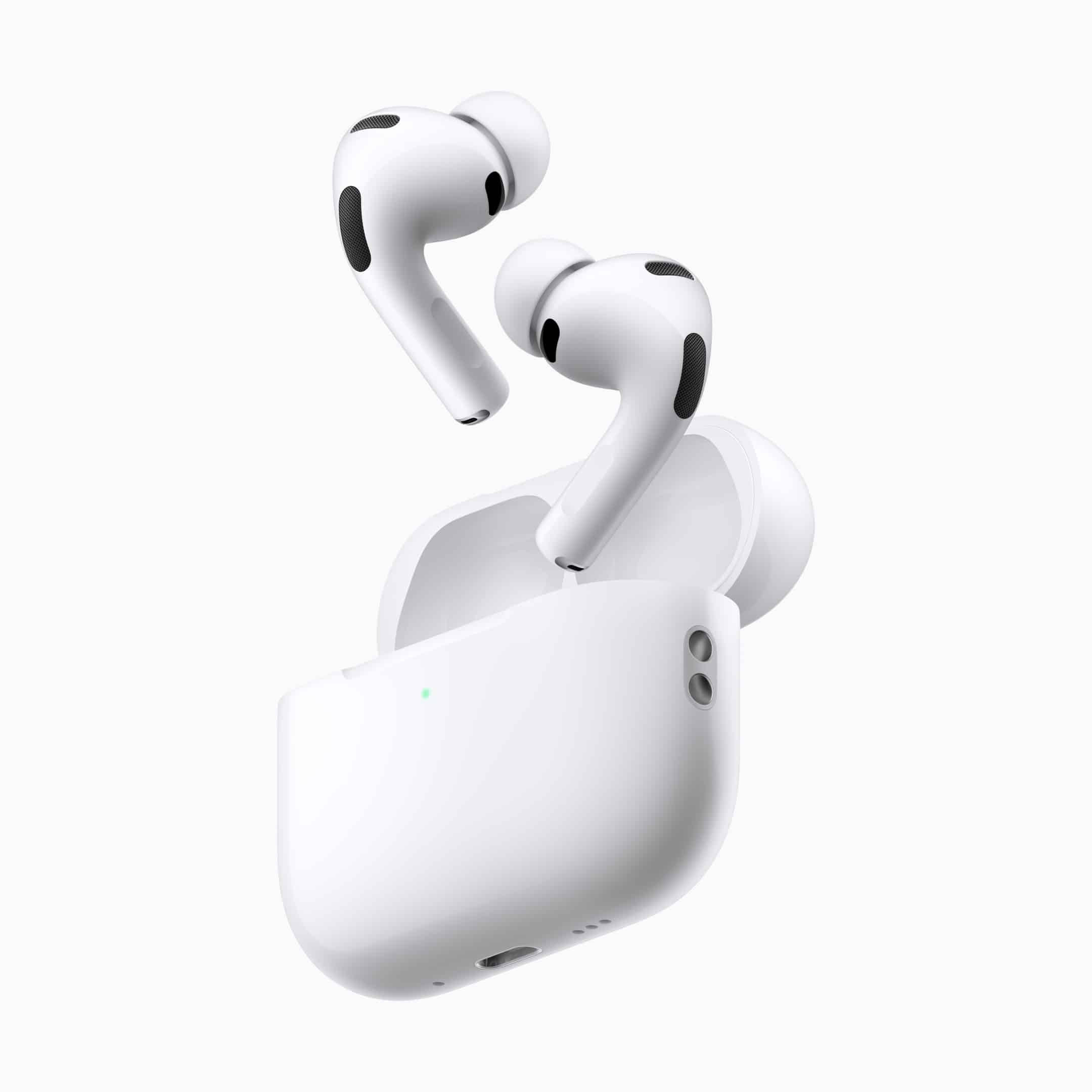
Two white Apple earbuds, resembling the latest AirPods 5, are shown on a plain light background, displaying their sleek, curved design and black speaker grilles. The earbud on the right has an “R” marking, indicating it is for the right ear. These earbuds feature open-ear noise cancellation for an immersive listening experience.
Image Credit: Apple Inc.

Siri AI and Live Translation extend the earbuds beyond music

AirPods 5 arrive as Apple makes voice interaction a larger part of the AirPods experience.

When paired with a compatible iPhone, Siri AI can be accessed hands-free. The assistant can work with personal context from information such as messages, emails, and photos, respond to open-ended questions, and perform supported actions in apps.

Head gestures remain part of the experience. Users can nod to accept certain Siri prompts or shake their head to decline them, allowing calls and notifications to be handled without speaking or touching the earbuds.

Live Translation provides another use for the microphones and ANC system.

After compatible languages are downloaded and the feature is configured through Apple’s Translate app, a user can hear another person’s speech translated through AirPods. Translation can be started through Siri, the iPhone Action button, the Translate app, or by pressing and holding both AirPods stems simultaneously.

When two people are each using compatible AirPods and supported iPhones, both participants can hear translated versions of the conversation in their chosen languages.

Live Translation requires an Apple Intelligence-enabled iPhone 15 Pro or later, compatible AirPods, current software, and the latest AirPods firmware, with availability varying by language and region. Apple also notes that generated translations can contain errors, making verification appropriate when accuracy is especially significant.

AirPods 5 narrow the gap within the lineup

The fifth-generation model represents a different kind of upgrade from simply adding another listening mode.

ANC is now standard across both AirPods 5 configurations, instead of requiring buyers to choose a separate ANC version as they did with AirPods 4. Apple has then moved the pricing distinction toward charging, battery endurance, Find My hardware, and physical controls.

The earbuds continue to use Bluetooth 5.3 and the H2 chip, with dual beamforming microphones, an inward-facing microphone, optical in-ear detection, motion and speech accelerometers, and force sensors built into the stems.

Each earbud weighs 4.3 grams, preserving the lightweight character of the open-ear line despite the additional capabilities.

The new acoustic architecture may be the more consequential change over time. Open-ear earbuds cannot rely on a tight seal to block surrounding sound, so gains in ANC depend heavily on microphone placement, acoustic design, fit, and real-time processing. Apple’s claim of up to 50% more noise removal over the previous generation represents a substantial step for that format rather than simply matching the behavior of sealed earbuds.

AirPods 5 start at $129, while AirPods 5 with Wireless Charging Case cost $149. Both reach stores on September 18, giving the open-ear AirPods line a standard feature set that now includes noise cancellation without pushing buyers to a higher-priced model to get it.

A white wireless earbud charging case, designed for Apple earbuds, is shown with a round magnetic charging cable positioned nearby, ready to connect. The background is plain and light-colored, emphasizing the sleek look and advanced features such as noise cancellation.
Image Credit: Apple Inc.

The post AirPods 5 bring stronger open-ear noise cancellation and smarter listening features appeared first on AppleMagazine.
  •  

Varta Crisis Deepens After Apple Battery Defection

The Varta crisis has entered another severe phase after the German battery manufacturer lost the customer responsible for nearly all production at its specialized factory in Nördlingen.

Varta has not publicly identified that customer, but reports from German media and industry sources point to Apple. The iPhone maker is reportedly moving battery orders for a future AirPods generation to a lower-cost supplier in China.

The decision will lead Varta to stop producing rechargeable button cells in Nördlingen during fall 2026. Approximately 350 jobs will be eliminated across the factory and the company headquarters in nearby Ellwangen.

Describing the development as a complete corporate collapse would go too far. Varta continues operating other battery businesses and recently completed an extensive financial restructuring backed by Porsche. The loss of Apple, however, has destroyed the economic foundation of a production site created around one highly influential customer.

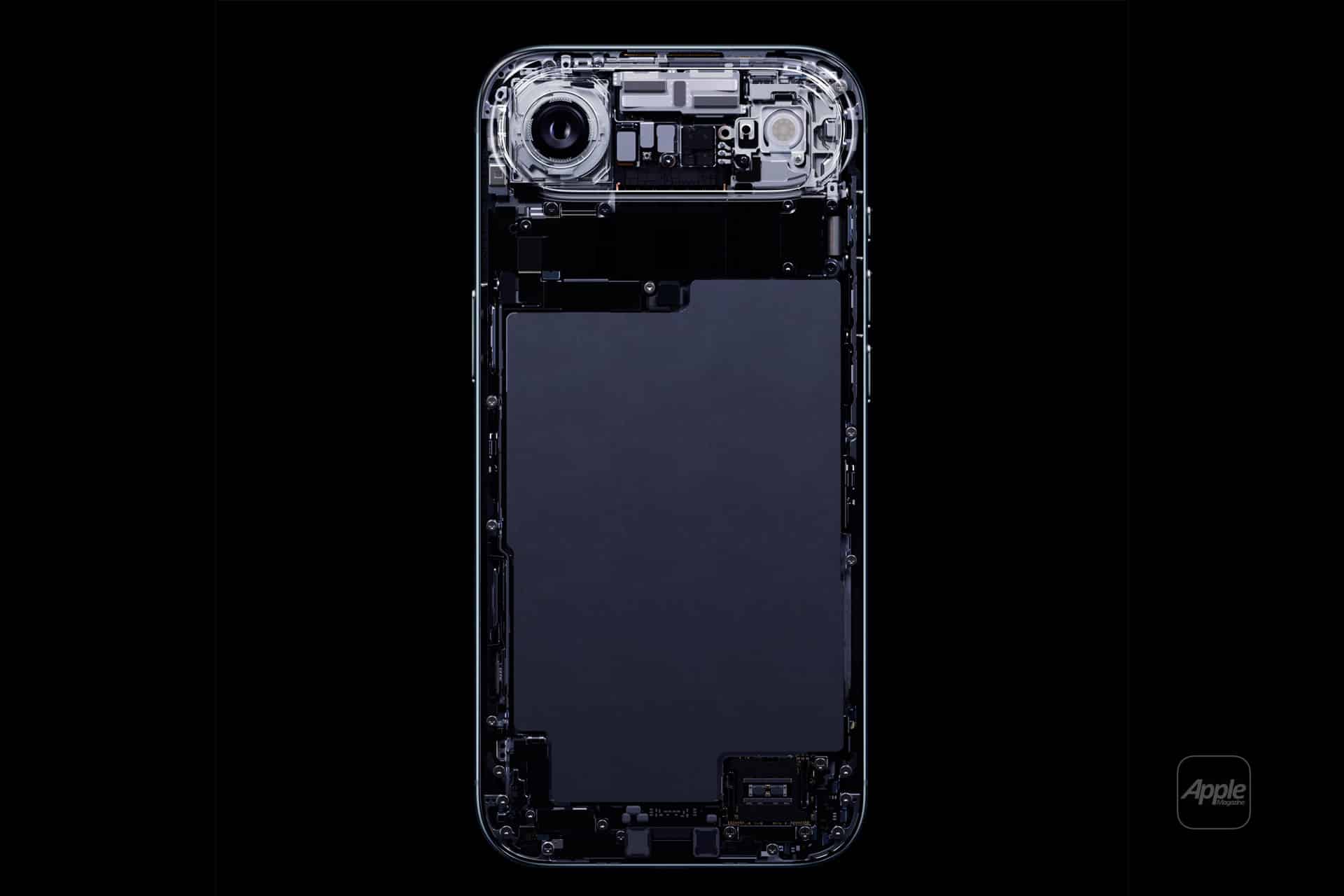
A smartphone with a transparent back, revealing internal components like the battery, camera, and circuitry—crafted with Apple 3D printing—displayed on a black background with a small Apple logo in the lower right corner.

Varta Crisis Exposes Dependence on Apple

The Varta crisis illustrates how a large technology customer can transform a supplier and then leave it with capacity that cannot easily be reassigned.

Varta became an important producer of CoinPower lithium-ion cells, small rechargeable batteries designed for wireless earbuds and other compact devices. Teardowns of AirPods Pro models identified Varta cells inside the earbuds, although Apple does not publicly discuss most component suppliers by product.

Demand from premium wireless headphones helped Varta expand rapidly. In 2020, its Microbatteries and Solutions division generated approximately €508 million in revenue, representing growth of 49% from the previous year.

The company invested heavily in production as wireless earbuds became a mass-market category. Apple demand provided the volume needed to justify specialized lines, equipment and hiring in Germany.

That dependence became dangerous when AirPods production weakened and Apple began adding other battery suppliers. A factory developed for unusually large orders could not operate efficiently once those orders declined.

The customer now leaving Nördlingen had previously accounted for nearly the entire capacity of the site. Varta says it has gained other customers, but their combined demand is not sufficient to keep the specialized factory running.

The plant is therefore closing not because rechargeable button cells have disappeared, but because replacing one customer of Apple scale requires far more than several smaller contracts.

Price Reportedly Decided the AirPods Order

German reports indicate that price was the decisive factor behind the supplier change.

Varta battery quality was reportedly equal to or better than the competing product. The German manufacturer could not, however, match the cost offered for the next generation of cells from China.

Battery production in Germany faces higher labor, energy and operating expenses than many Asian manufacturing centers. Chinese suppliers also benefit from extensive domestic electronics supply chains, access to materials and production volumes spread across numerous customers.

Apple has enormous leverage when negotiating component contracts. AirPods ship in sufficient quantities for a small difference in the cost of each battery to produce substantial savings across an entire product cycle.

The company regularly qualifies multiple suppliers for components when technical requirements and available capacity permit. Competition can reduce prices, protect production against interruptions and prevent one manufacturer from gaining excessive influence over the supply chain.

For Varta, that process brought the opposite effect. The supplier expanded to serve Apple and then faced declining utilization as the customer divided orders among additional manufacturers.

The latest move appears more final. Varta expects the contract to expire at the end of October, removing the volume that kept Nördlingen economically viable.

A pair of white AirPods Pro 3 wireless earbuds with black accents are shown above an open white charging case, all set against a plain white background—perfect for seamless audio and features like live language translation from Apple.
Image Credit: Apple Inc.

Apple Supplier Strategy Is Not Simply About China

The reported decision does not mean Apple is moving its complete production network toward China.

Apple has spent several years expanding device assembly and component production in India, Vietnam and other countries. AirPods manufacturing has grown in India, while Macs, iPads and wearables are assembled across a wider group of Asian locations.

The Varta case concerns a particular component for which a Chinese supplier reportedly offered a more competitive price. It shows that diversification away from one country can coexist with cost-driven sourcing from that same country.

Apple may reduce its dependence on Chinese final assembly while continuing to purchase Chinese batteries, displays, enclosures or electronic components when suppliers provide the required scale and pricing.

That balance creates a difficult environment for European manufacturers. Political interest in domestic technology production does not guarantee that major customers will accept higher component prices.

Premium engineering can protect a contract when it produces a measurable advantage in battery capacity, safety, dimensions or lifespan. Once competing suppliers reach comparable performance, procurement decisions become increasingly sensitive to cost.

The Varta crisis suggests that manufacturing location and supplier history carried less weight than the economics of the next AirPods battery.

Varta Was Already Fighting Financial Failure

Apple did not create every problem affecting Varta.

The company entered the current dispute after years of debt, costly investments, volatile customer orders, supply-chain problems and weaker demand in parts of its energy-storage business. A cyberattack in early 2024 also disrupted production and delayed financial reporting.

Varta warned that its earlier restructuring plan might fail after Apple reduced AirPods production. By mid-2024, the company had reached a point where it could no longer service its debt without another intervention.

A pre-insolvency restructuring reduced financial liabilities from approximately €485 million to €200 million. Porsche and majority shareholder Michael Tojner agreed to provide new capital, while creditors supplied additional financing.

Existing shareholders lost their investment as Varta was removed from the stock market. The process preserved the operating company but demonstrated how little financial room remained for another major disruption.

Varta reported a loss of €64.5 million for 2024. Although that was an improvement from the previous year, the business remained dependent on successful restructuring and stronger performance from its surviving divisions.

The Apple contract loss therefore did not independently bring down a healthy battery group. It struck a manufacturer that had already narrowly avoided insolvency.

Aerial view of a large industrial complex—possibly one of the key Apple suppliers—surrounded by trees, parking lots with cars, and several buildings. There are roads and green fields nearby, with a small round building in the lower right corner, perhaps connected to the facility's production or storage of CoinPower cells amid the recent Varta crisis.
Image Credit: Wikipedia

Porsche Cannot Protect Every Varta Business

Porsche participation gives Varta a future in automotive batteries, but it does not rescue the Nördlingen button-cell operation.

The automaker invested in the restructuring and took control of the V4Drive business, which develops high-performance cylindrical lithium-ion cells for hybrid and performance vehicles. Porsche gains greater access to battery technology while helping retain part of that expertise in Germany.

Varta also continues producing household batteries and energy-storage systems. Those businesses serve different customers and do not depend on the machinery used for tiny CoinPower cells.

Employees affected by the Nördlingen closure may be offered positions at other locations, although Varta has not indicated how many can realistically be transferred. The company and its works council are negotiating measures for the workers whose roles will disappear.

The shutdown leaves a modern production unit without enough demand only a few years after wireless earbuds were presented as one of Varta most promising growth markets.

Its remaining automotive operation now has the security of a strategic customer with a direct ownership interest. The microbattery division learned the cost of building a factory around a customer that never made the same commitment.

The post Varta Crisis Deepens After Apple Battery Defection appeared first on AppleMagazine.

  •  
❌