❌

Reading view

Meta to create a new class of shares to fund AI push

Vector illustration of the Meta logo.

Meta says it's issuing a new class of shares to fund its AI initiatives. As part of its third-quarter earnings report released on Wednesday, the company says the non-voting stock will also go toward potential acquisitions and employee compensation, with trading beginning in 2027.

"The scale of investment required to compete, sustain growth, expand infrastructure, and pursue new strategic initiatives amidst the AI transformation taking place in the industry is significant," Meta says in the press release. Susan Li, Meta's chief financial officer, added during an earnings call that the new class of shares will "expand our funding tools and gi …

Read the full story at The Verge.

  •  

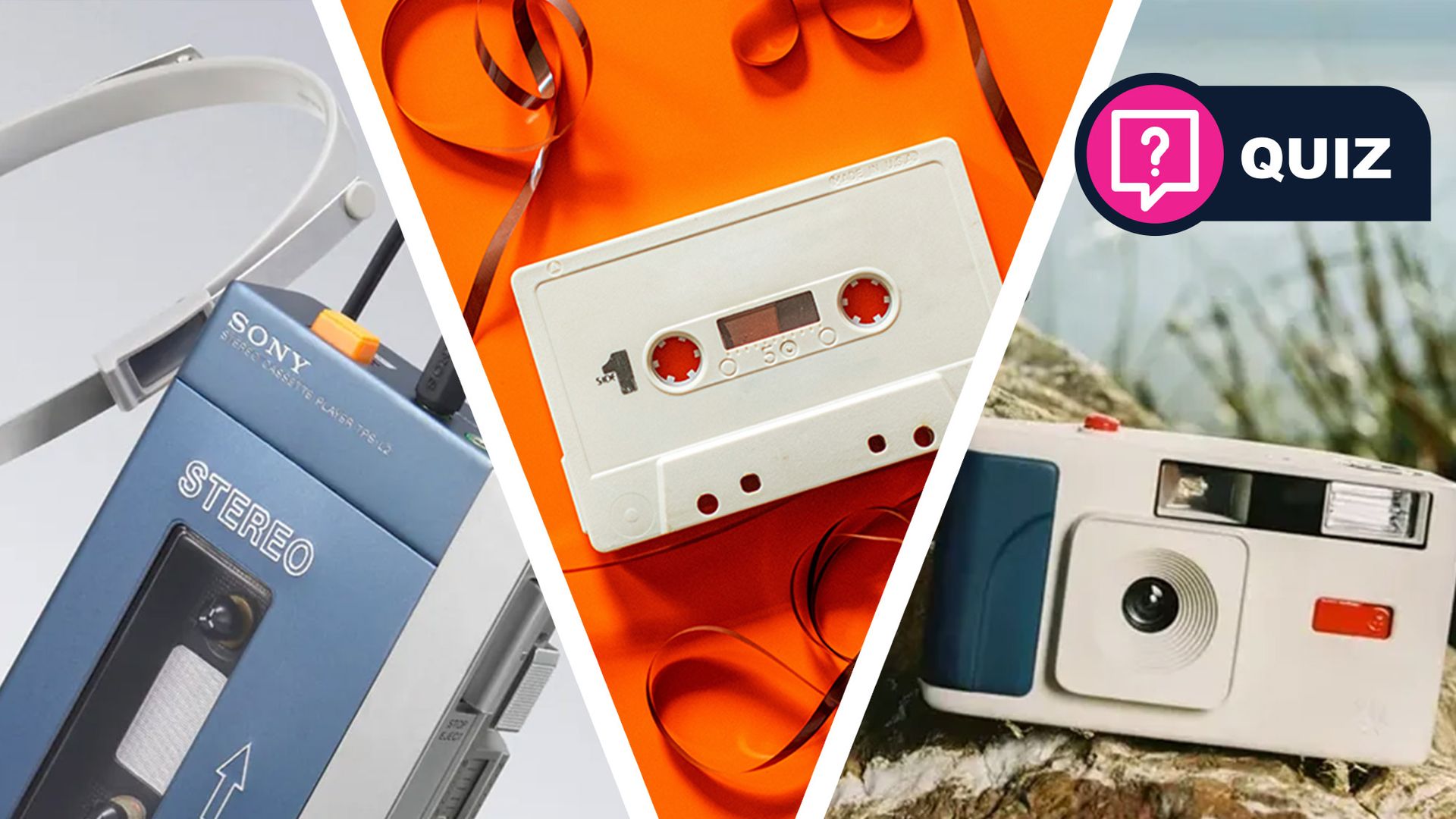
Before you bid on vintage gadgets, find out how much retro tech you can really handle with this quiz

There’s something really appealing about retro tech but it’s hard to put your finger on exactly what it is. Or maybe that’s it. You can press the chunky buttons, place a record on a turntable, hold your favorite media in your hands and feel the satisfying click of a flip phone snapping shut.

For others, the appeal might be the colorful designs that seemed to have so much more personality than the shiny black rectangles we all own now. Or maybe it's actually owning media rather than feeling like you’re constantly renting it. Whatever the reason, it’s clear plenty of people love retro tech.

However, it’s easy to romanticize a return to older tech, like the idea of listening to a Walkman on the train, taking blurry photos with an old camera or spending a lazy afternoon playing a Game Boy. But how much of the actual experience are you prepared to put up with?

Because using that Walkman also means carrying round tapes, replacing batteries and rewinding songs. The camera might need an obscure memory card and a cable you haven't seen since 2004. And your beautiful old flip phone probably isn't going to help when you're lost and need Google Maps.

I'm personally all for bringing a little retro tech back into our lives. I've got some myself. But there's a big difference between wanting the aesthetic and being willing to embrace the inconvenience.

Although, for some people, the inconvenience is also part of the experience. At a time when everything is quick, easy and frictionless it can be nice to feel like things are slower and require a little more effort.

So, before you start bidding on vintage gadgets on eBay, take our quiz to find out how much retro tech you can realistically handle. We'll test your patience, willingness to tinker and tolerance for doing things the old-fashioned way, then recommend some retro gadgets to match. Because I strongly suspect many of us might miss the way tech used to look and feel but we maybe don’t miss the way it used to work quite as much.

  •  

New York’s first microdrama film festival searches for its audience

Actors Taye Diggs, Autumn Federici, Gary Entin, Troy Brookins, Edmund Entin and Eric Guilmette standing on a red carpet together.
Actors Taye Diggs, Autumn Federici, Gary Entin, Troy Brookins, Edmund Entin and Eric Guilmette attend the world premiere of Microhouse Films and Lifetime's Reunion Island during the ALZA Festival. | Getty Images for Lifetime.

It remains to be seen if people really want to watch vertical content on horizontal TV screens, but many filmmakers and creators were confident that their latest projects would play well at Alza - New York City's first microdrama film festival. Founded by former Tribeca Festival chief operating officer Pete Torres, Alza, which took place October 16th through 18th, was billed as a showcase for the "the creativity, innovation, and growing cultural impact of stories made for the vertical screen." The festival featured a selection of microdrama and film premieres as well as industry-focused panels with executives who all seemed to genuinely beli …

Read the full story at The Verge.

  •  

Meta says it would’ve made over $22 billion if it didn’t have to pay a child safety settlement

Photo illustration of a gavel about to hit the Meta logo.

Meta had to shell out $9.89 billion to pay for a chunk of the child safety settlement it reached with US attorneys general. That's according to the company's third-quarter earnings report released on Wednesday, which says Meta's income from operations would have been $22.89 billion without the settlement.

In August, Meta agreed to pay $17.1 billion to settle a massive nationwide lawsuit that claimed the company harmed children by making its social media platforms "addictive" by design. It will also only pay $5.3 billion of this amount if YouTube and TikTok implement stricter settings and safeguards for kids, which Meta also agreed to as par …

Read the full story at The Verge.

  •  

PHP: The three letters that shut down sites all over the internet today

A number of cursors point toward an unhappy face on a laptop

Two bugs found with AI are behind major issues today for 4chan, DeviantArt, Wikipedia, and the blog where the bar around the corner posts pictures of people's dogs. The "critical vulnerabilities" were discovered in the PHP programming language, which underpins much of the internet, including any site built on WordPress. But it's far bigger than that. Some Dutch and Finnish government agencies took their sites down as a precaution. The NSA Cybersecurity account on X recommended that organizations take their systems offline if "an immediate update is not feasible," as did the UK's National Cyber Security Center. Even Pokémon Home and Pokémon C …

Read the full story at The Verge.

  •  

Flying Roadsters can’t lift Tesla’s flat Q3 revenues

Elon Musk against a purple background of Tesla logos.

As the smoke clears from its outrageous Roadster demo, Tesla reported Q3 earnings on Wednesday - and the cold reality is that revenue has flatlined.

Tesla said it earned $1.7 billion in net income on $28.0 billion in revenue in the quarter that ended in September 2026. Revenues were flat, while profits dropped 4 percent compared to the third quarter of 2025, when the company earned $1.4 billion in net income on $28.1 billion in revenue. Tesla's revenue came in above Wall Street expectations of $27.9 billion, according to data compiled by LSEG. Tesla's own company-compiled expectations predicted Q3 revenues of $28.3 billion.

The earnings …

Read the full story at The Verge.

  •  

Bose acquires Skullcandy to help it reach a wider audience

A pile of Skullcandy headphones sitting on a mixing board in a studio.

Bose announced today it has acquired Skullcandy. Although the two companies are competitors in the consumer audio space, Skullcandy recently partnered with its new owner to bring several of Bose's audio technologies - including its head-tracking spatial audio and excellent active noise cancellation (ANC) - to products like the Skullcandy Crusher 1080 ANC headphones and Method 360 ANC earbuds.

Specific details about the deal weren't shared, but according to a news release, Bose plans to keep Skullcandy a separate brand that will become part of its premium consumer audio business. Skullcandy will remain based in Park City, Utah, where it was …

Read the full story at The Verge.

  •  

Airbnb bans making guests do dishes and take out the trash

An image showing the Airbnb logo

Checking out of your next Airbnb might be less of a hassle now that the company is banning hosts from including time-consuming chores in their house rules. Airbnb's updated house rules policy, which starts with reservations booked on or after November 20th, says hosts can't ask guests to "complete tasks that require significant effort or time, or would typically be performed by a cleaner." According to Airbnb, that includes:

  • Dishes: Guests shouldn't be asked to wash and put away dishes, but you can ask them to put used dishes in the sink.
  • Laundry: Guests shouldn't be asked to remove sheets from the bed or start a load of laundry, but yo …

Read the full story at The Verge.

  •  

Walmart is inviting AI agents to shop for you

Walmart will soon let AI agents shop on its website for you. Next month, the retail giant will allow you to use an AI agent on the site, with systems in place to let you approve and review purchases and set spending limits.

The embrace of AI agents stands in stark contrast to Amazon, which blocked Perplexity's shopping agent and Meta's Muse AI assistant. But Walmart is opening its doors to AI shoppers - as long as they follow the retailer's rules. It has outlined a set of terms for agents, saying that "agents must not take actions beyond what the shopper intends" and cannot change a customer's payment method. Agents also can only access inf …

Read the full story at The Verge.

  •  

Meta ordered to pay $25 billion in penalties over the Cambridge Analytica scandal

Photo of Mark Zuckerberg in front of background of Meta logo.
Mark Zuckerberg. | Image: Cath Virginia / The Verge, Getty Images

The Cambridge Analytica scandal has come back to haunt Meta after a New Mexico judge ordered it to pay $25 billion in penalties for more than 43 million violations of the state's unfair practices law. The ruling marks the biggest legal hit Meta has taken this year, even as it's faced several other losses or settlements.

A New Mexico jury ruled in September that Meta misled consumers over how it protected their data and prevented misinformation and hate speech on its platforms. The case stemmed from a 2021 complaint in the wake of the revelations a few years earlier that UK political consultancy Cambridge Analytica harvested data from millio …

Read the full story at The Verge.

  •  

Does opting out of smart TV tracking work? Research finds “suspicious” traffic.

Smart TVs running operating systems from Samsung, Vizio, and Roku continue sending data to automatic content recognition (ACR) endpoints after users opt out of tracking in the devices’ settings, according to research published on Monday. The paper from Northeastern University researchers points to potential privacy violations from some of the biggest TV brands.

ACR captures video screenshots or audio clips from smart TVs and sends the data to remote servers, where it's used for things like measuring content viewership and serving targeted ads.

The paper, "Watching the Watchers: Privacy Analysis of US Smart TV Automatic Content Recognition," examined eight smart TV OSes across 12 smart TVs from 10 manufacturers (Amazon, Hisense, LG, Roku, Samsung, Sony, Supersonic, TCL, Vizio, and Westinghouse) to examine when smart TVs use ACR and how effective opting out of user tracking is.

Read full article

Comments

© https://www.gettyimages.com/detail/photo/modern-living-room-with-smart-tv-and-remote-control-royalty-free-image/2226225055

  •  

Qualcomm to cut jobs globally in "performance-based" layoffs, as company pivots to AI data center and edge computing markets

Qualcomm has told employees it will cut jobs worldwide after its annual performance reviews, and it expects to begin informing affected employees in November. According to a Reuters report, CEO Cristiano Amon framed the move as a “performance-focused reduction” intended to build a “stronger performance culture,” stating that the company will consider organizational needs, business priorities, and employees’ skills and expertise when determining affected positions.

“The reduction will address employees who have consistently fallen short of expectations,” said Amon. The memo did not specify which departments would be affected or how many jobs would be cut. The company had roughly 52,000 employees at the end of its 2025 fiscal year, typically in late September.

Qualcomm, one of the world’s largest smartphone chip manufacturers with customers including Apple, Xiaomi, and Samsung, has been hit by an industry-wide decline in consumer electronics sales as rising memory costs reduce demand. Its shares have risen just 1.5% in 2026, compared to gains of almost 60% for the Philadelphia Semiconductor Index.

As a result, Qualcomm is strategically pivoting to AI infrastructure and edge computing, following a broadening trend across the semiconductor industry. The company unveiled its AI200 and AI250 AI inference accelerators in October 2025. After its latest earnings report projected lower quarterly profits than initially estimated, the company said that growth in its data center business would offset any lost revenue by fiscal year 2027.

Qualcomm’s layoff decision comes as it tries to position itself for future growth. While mobile chips remain its core business, its best future opportunities might lie in data center silicon, automotive platforms, personal computing, and edge computing, and all those fields require specialized engineering talent. A performance-based reduction could let the company retain its most valuable employees in those fields while cutting duplicated roles, lower-performing teams, and positions that no longer fit its strategy.

"As we have expanded the business, so have the competencies ⁠and skills ​we require," Amon wrote. "We must have the right ​people in the right roles so they can perform at their best and the company can continue ​to succeed." The move comes on the back of Q3 2026 financial results that included a 4% year-on-year decline in revenue and 25% lower net income. The core handset business recorded a 20% decline in revenue on the year, too. The company reportedly recorded $97 million in severance-related restructuring charges in the first nine months of its fiscal year.

Qualcomm’s move is part of a larger industry transition, largely driven by AI. After several years of aggressive hiring, many tech companies are now trimming their workforce to fund AI ambitions. Meta announced plans to cut 8,000 jobs to fund AI infrastructure. Even as companies are cutting jobs that don’t fit their AI roadmap, they're fiercely competing for process engineers, chip designers, and AI software developers. McKinsey and the SEMI Foundation estimate that the United States could face a shortage of up to 157,000 semiconductor workers by 2030, while 73% of chip companies report difficulty filling engineering roles.

  •  

Podcast: Exclusive – Nokia, Nvidia advance AI-RAN at GTC

With Nvidia’s GTC Berlin event in full swing, the company’s telecoms boss Ronnie Vasishta and Nokia chief technology and AI officer Pallavi Mahajan sit down with the Mobile World Live Podcast in an exclusive interview to reveal the next stage of the pair’s AI-RAN journey, as they team up with European heavyweights to turn networks into distributed intelligence platforms.

Listen on Spotify
Listen on Apple

00:00 — AI-RAN explained
7:20 — Operator trials
11:00 — Beyond edge hype
15:05 — AI-RAN economics
17:45 — Sovereign AI
21:10 — Commercialisation and 6G

The post Podcast: Exclusive – Nokia, Nvidia advance AI-RAN at GTC appeared first on Mobile World Live.

  •  

Toshiba launches quantum security platform

Toshiba addressed what it believes is complexity in deploying quantum-safe networks with the release of a platform it stated can lower the need for specific fibre connectivity and equipment.

The Japanese company is targeting the platform at network operators, enterprises, public-sector groups and companies running data centres. It is pitching the set-up as offering more than a bump to security, highlighting potential competitive advantages and revenue opportunities.

Toshiba echoed concerns expressed by many over the potential dangers of quantum computing, noting some nefarious types are already harvesting data to be decrypted when compatible machines come online.

It stated governments, “regulators and standards bodies” are already pressing for action to address potential threats.

The sales pitch for Toshiba’s platform centres on the simplicity of deployment. It states organisations “do not need to rebuild their networks” to use the set-up, which “integrates with existing network infrastructures” and can be run through “a single dedicated connection to large metro, hub-and-spoke, ring, mesh and long-distance networks”.

Andrew Shields, VP of Toshiba Europe and head of its Quantum Technology Division, said the platform should prove cost-effective in deployments “across large-scale networks”.

Toshiba equipped the platform with post-quantum cryptography, quantum key distribution and random number generation, technologies widely regarded as being suitably robust to secure the future computing systems.

Hiroshi Tsukino, VP of Toshiba’s ICT Solutions Division, said the move to quantum-safe technologies is “the largest cryptographic transformation in history” and urged organisations to begin preparing today.

The post Toshiba launches quantum security platform appeared first on Mobile World Live.

  •  

Logitech Mobi Fold: o rato de viagem que dobra, mas não substitui o de sempre

O novo Mobi Fold da Logitech impressiona no transporte e na forma como assenta na mão, mas o scroll tátil e as dúvidas sobre a dobradiça impedem-no de ser "O rato portátil" perfeito.

The post Logitech Mobi Fold: o rato de viagem que dobra, mas não substitui o de sempre appeared first on Tek Notícias.

  •  
❌