❌

Reading view

Space Force Chief Admits the US Is Actively Utilizing Orbital Weapons

Since the debut of Garrett P Serviss’ 1898 novel “Edison’s Conquest of Mars,” space-based warfare was relegated to the imagination — but no longer.

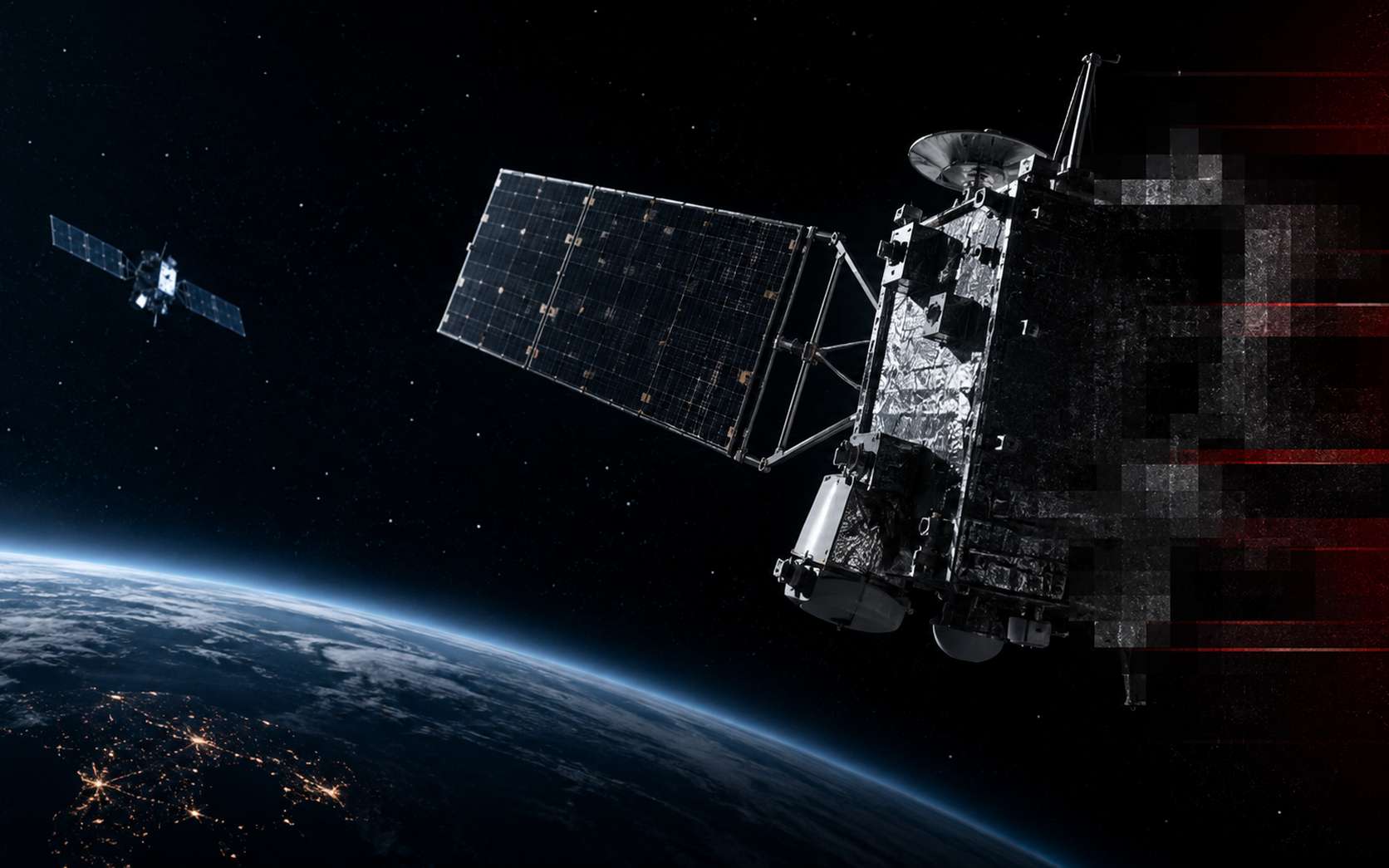
In an address on the “State of the Space Force” on Tuesday, reported by Space.com, chief of space operations for the US Space Force General Douglas Schiess informed the public that the Pentagon has definitively deployed active space-based weapons platforms.

“Let me be crystal clear: today, Guardians operate on-orbit weapons that can defend the joint force against space-enabled attacks,” Schiess said. “Space is both a battlefield and the backbone of our joint force.”

Schiess stopped short of providing any details about the weapons, instead sharing a war story of one Space Force operator named “Specialist Gray.”

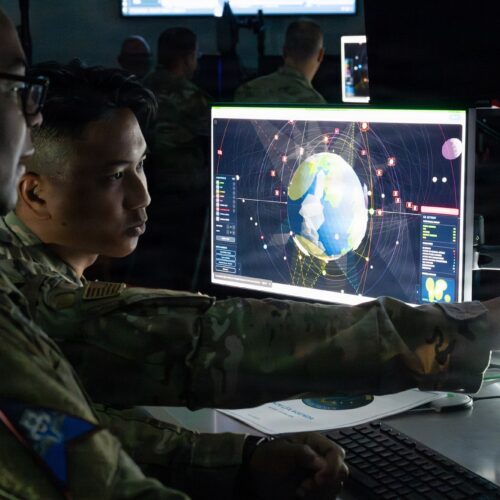
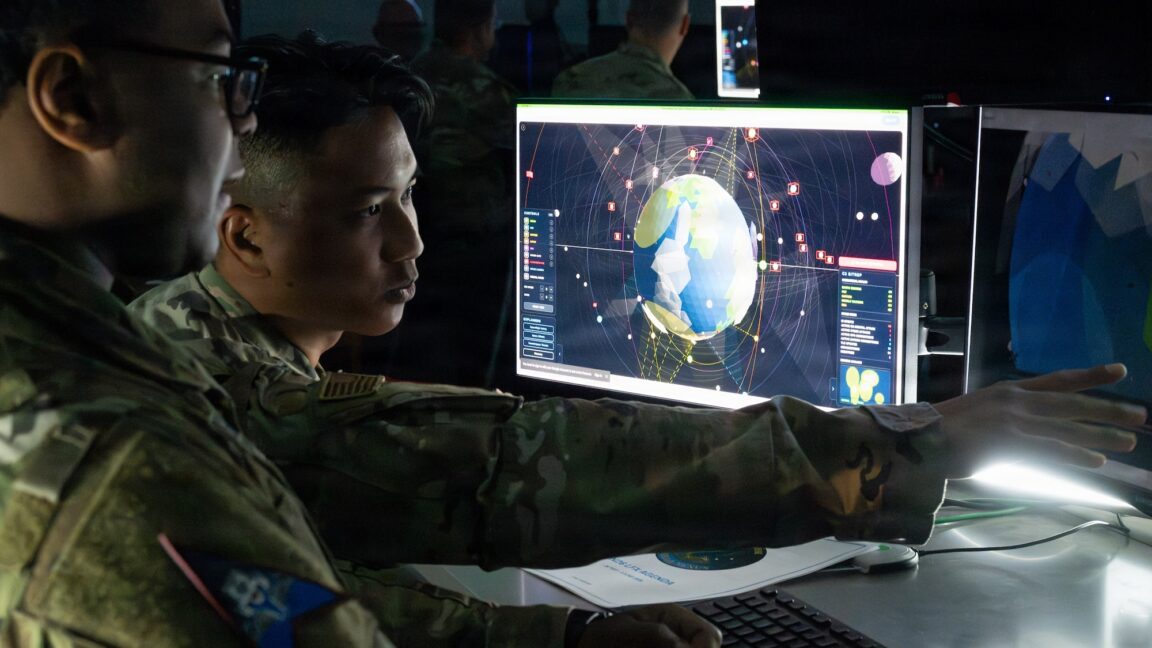
“Even as alarm red sirens were blaring and incoming missiles targeted her site, she courageously held the line, protecting forces, denying adversary capability, and delivering space effects until her commander had to literally pull her from the console to safety,” Schiess recounted with a dramatic flair. “She locked onto the target, optimized her weapon system and waged electromagnetic warfare against a determined adversary.”

As Space.com notes, those descriptive elements may point to a kind of non-physical platform, like a signal jammer or a microwave emitter, though it’s anyone’s guess what weapon “Specialist Gray” was supposed to be operating.

The news came just ahead of the Space Force’s request for over $71 billion in additional funding for 2027, adding to the over $100 billion it’s already been allocated, independent journalist Ken Klippenstein reported.

Evidently, the orbital-weapons announcement was meant to give that absurd request some extra oomph — which, if granted, it would represent the single highest one-year budget adjustment received by any US military branch since 1952.

More on space: NASA’s Powerful New Space Telescope, Just Cleared for Launch, Was Developed by an Intelligence Agency to “Spy on America’s Adversaries”

The post Space Force Chief Admits the US Is Actively Utilizing Orbital Weapons appeared first on Futurism.

  •  

Les États-Unis ont des armes dans l'espace : ce qu'on peut déduire de ce que Washington refuse de dire

C’est un coup de tonnerre dans le silence de l’espace. Les États-Unis viennent d’affirmer qu’ils disposent d’armes en orbite. Une annonce qui fait immédiatement réagir la Russie et la Chine. Mais de quoi s’agit-il et pourquoi cette annonce marque l’entrée dans une nouvelle ère.

  •  

U.S. Has Deployed Weapons in Space, Air Force Secretary Says

Troy E. Meink’s comments were the first public acknowledgment of American weapons in orbit. The Pentagon has been preparing for potential conflict in space with Russia or China.
  •  

For the first time, the US military confirms it has deployed weapons in orbit

Air Force Secretary Troy Meink made the first public declaration Monday that the United States has placed "space control weapons" in orbit, an announcement that will surely reverberate in the power centers of Beijing and Moscow.

Space Force officials have previously expressed their interest in acquiring space-based weapons, and Pentagon leaders have become more open to discussing space warfare in recent years. Therefore, Meink's announcement Monday at the Air and Space Forces Association's annual Air, Space & Cyber Conference near Washington, DC, was not entirely unexpected.

“Today, we continue to ensure we remain ready to meet the challenges of evolving threats, wherever they exist. This is why the United States now has on-orbit space control weapons capable of defending the joint force against hostile adversary action,” Meink said in prepared remarks.

Read full article

Comments

© US Space Force/David Dozoretz

  •  

A New Cold War Is Unfolding in Orbit as China Advances Satellite Surveillance

Chinese scientists at the Beijing Institute of Technology have run satellite proximity simulations to extend potentially hostile observation of U.S. space assets in Geostationary Earth Orbit (GEO), seemingly inching both countries closer to a potential war in space.

Although the new simulations focus on orbital adjustments to extend observation times and increase proximity to U.S. satellites, including critical missile warning and other space defense-oriented systems, Chinese scientists also plan to integrate reinforcement learning methods into future space assets to give satellites even more independence from human operators.

Study Includes Accusations of Cold War in Space Activities

In the 20th century, the concept of war in space remained mostly in the realm of science fiction, as depicted in popular films like Star Wars. Today, advances in space access, orbital maneuvering technologies, and weapons systems have made the possibility of a future conflict in space a very real security concern, and several nations engage in espionage using reconnaissance spacecraft to obtain information on valuable defense targets in Earth’s orbit.

According to the authors of the new study, “acquiring multi-aspect payload information of non-cooperative targets to infer their functions and mission statuses is of great significance for space security assessment.”

The study authors highlight a series of relative motion configurations that modern spy satellites employ, including fly-around, hovering, and drifting flight. They also point to real-world “adversarial” U.S missions they suggest were designed to gather intelligence on their GEO defense assets.

“Since 2014, the US GSSAP (United States Geosynchronous Space Situational Awareness Program) satellite has carried out hundreds of maneuvers and has conducted close observation operations on dozens of normally working satellites near GEO orbit,” the Beijing University of Technology scientists write.

The study authors also include a specific July 2021 accusation, where they charge that “the U.S. satellite ‘USA-271’ deliberately approached the operational ‘Practice 20’ satellite in geostationary orbit and flew in close proximity.”

In an email to The Debrief, a U.S. Space Command Spokesperson did not address the specific incident or the accusations of “dozens” of similar operations, but offered some insight into the agency’s thinking.

“USSPACECOM, working with allies and partners, plans, executes, and integrates military spacepower into multi-domain global operations in order to deter aggression, defend national interests, and when necessary, defeat threats,” the spokesperson told The Debrief, adding that “we have nothing additional to add in response to the article.”

Getting Closer to Adversarial Satellites and Extending Observation Time

In a step toward potential dogfights between satellites, the Chinese scientists looked at several challenges faced by current spy satellites.

For example, they explain, since most spacecraft observation cameras are mounted in a fixed position, “frequent large-angle attitude maneuvers are time-consuming and consume substantial fuel.” The researcher also noted that several different angles and approaches could yield different categories of intelligence data.

However, changing angles and orbital planes requires fuel, an extremely limited resource in GEO. Therefore, the researcher accounting for all the variables required to gather intelligence on adversarial spacecraft as efficiently as possible “has become a key bottleneck in enhancing space situational awareness capabilities.”

To find an optimized solution, the team designed what they called a “waypoint trajectory planning scheme” and a “multi-impulse maneuver strategy” using a common game-theory tool called “minimum integral squared control” theory. Unlike previous research aimed at extending spy satellite observation time and fuel efficiency, the Chinese scientists said their use of sequential coalition game theory “is introduced for the first time into the multi-model combined observation problem.”

Next, the researchers designed a “game tree.” A press release said this approach lets the spacecraft select the “optimal combination of initial motion points and close-range operation models at each stage under minimum fuel constraints, thereby generating an optimal observation strategy sequence.”

Finally, the researchers ran simulations to see whether their approach improved sensor observation times and field of view while reducing fuel use.

Successful Simulations and Future Reinforcement Learning Plans

As hoped, the Beijing University of Technology team said their simulations supported the theories. Specifically, the study authors said the simulations showed that their spacecraft efficiency algorithm “can successfully generate a multi-model combined observation strategy sequence under minimum fuel constraints.”

“The effective observation time increases with larger observation distances and field-of-view angles, and reducing the model configuration size also contributes to improved observation performance,” they explained. The study authors also said that the simulation results “demonstrate that the algorithm can successfully generate the optimal combined observation sequence under minimum fuel constraints.”

When discussing next steps, the Chinese scientists said they will explore optimal initial points to further improve maneuver efficiency. They also plan to explore a “reinforcement learning method,” suggesting future spacecraft could learn and adapt to evolving conditions to further enhance their cold war in space information-gathering capabilities.

Study’s War in Space Implications “Extends Beyond any Single Algorithm”

To understand the potential implications of the Chinese study, including its impacts on a potential future war in space, The Debrief reached out to former U.S. Air Force officer Shelli Brunswick, CEO and Founder, SB Global LLC.

According to the author and futurist, the Chinese team’s research matters not just because it proves China has deployed a “new operational surveillance capability.” Instead, Brunswick said that the work is significant because it “illustrates how sophisticated coordination and optimization could make spacecraft observation more efficient, persistent, and strategically useful.”

The Blue Marble Space Visiting Scholar also told The Debrief that the work “should not be interpreted as demonstrating a complete pursuit-and-evasion capability against a spacecraft that is actively responding,” since the work assumes a stationary target without maneuvering capabilities. Still, Brunswick noted, the Chinese framework “shows how game-theoretic planning could help an observing satellite gather information from multiple angles while managing limited resources.”

When discussing the potential implications for the broader U.S.-China space-security competition, including how such enhanced spacecraft could lead to more activities that could be construed as hostile, the space strategist said this area of research “extends beyond any single algorithm.”

“As rendezvous and proximity operations become more sophisticated, the line between inspection, space situational awareness, intelligence gathering, and potentially threatening behavior becomes increasingly difficult to interpret,” she explained.

When suggesting what potential strategic responses the U.S. and its allies might employ in the emerging cold war in space, Brunswick told The Debrief that they should include “more resilient architectures, improved space-domain awareness, clearer expectations for close approaches, stronger communication mechanisms, and deeper coordination with commercial and international partners.”

“The challenge is not simply detecting another spacecraft—it is understanding capability and intent early enough to respond responsibly and effectively,” Brunswick explained.

The study “Spacecraft Proximity Operation Model-Based Sequential Coalitional Observation Game Strategy Design” was published in Space: Science & Technology. 

Christopher Plain has spent the last six years as Associate News Editor and Head Science Reporter at The Debrief. Follow and connect with him on X, learn about his novels at plainfiction.com, or email him at christopher@thedebrief.org.

  •  

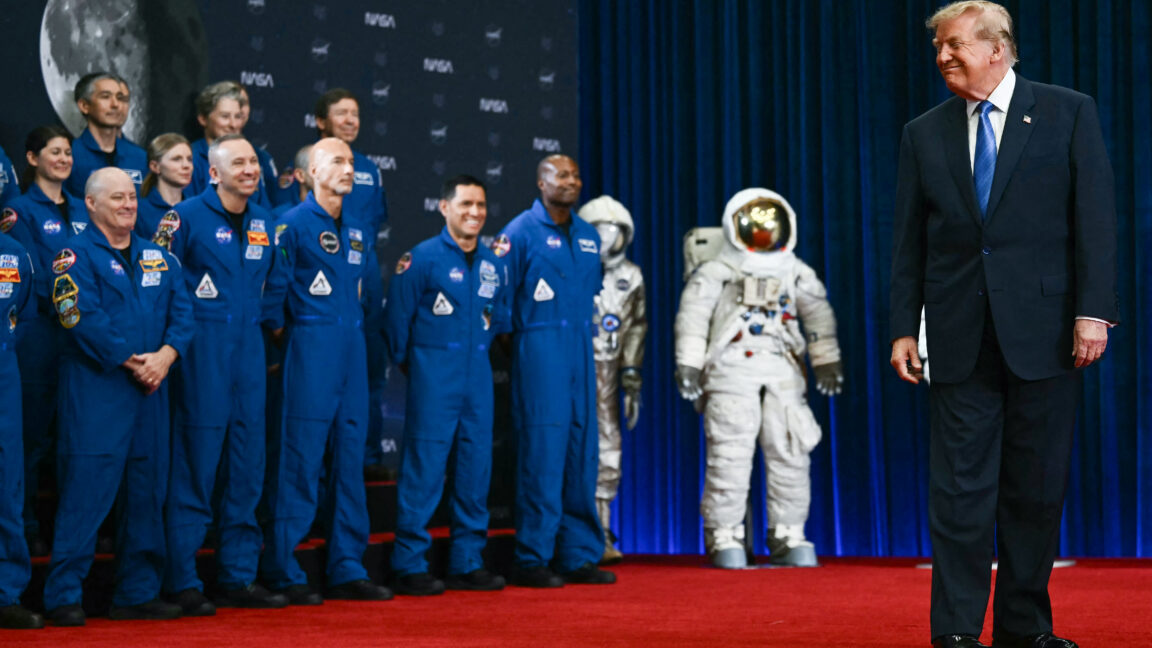
Here's what we know about the "space academy" Trump just announced

During a visit to Johnson Space Center, President Trump on Friday signed an executive order to establish a new commission with the purpose of creating the first national space academy.

"It's clear that we will need to educate and train an entire generation of skilled service members, engineers, and civil operators, and everything else to do what we have to do," Trump said. "I will sign an executive order to begin the process of creating a new national academy. It's called the US Space Academy. That's a big deal."

The proposed United States Space Academy would fall under the jurisdiction of NASA, and according to US space officials, is not intended be a traditional service academy in the sense that it educates and trains officers for the armed services, such as the Air Force Academy.

Read full article

Comments

© Kent NISHIMURA / AFP via Getty Images

  •  

Rocket Lab Unveils ‘GHOST,’ a Game-Changing New Portable Launch System That Can Carry Payloads to Orbit from Anywhere on Earth

Private space launch services company Rocket Lab has unveiled its GHOST (Global Hypersonic & Orbital Spaceport Technology) self-contained mobile launch system, capable of placing payloads in orbit or enabling suborbital launches from virtually anywhere on Earth.

Designed to accommodate the company’s Electron and HASTE rockets, the company said GHOST’s “launch-anywhere, launch-anytime” capability can support multi-launch flight campaigns for commercial applications. Rocket Lab said the system’s versatility also offers benefits for “critical” national security missions.

GHOST Private Space Launch System Fits Into Standard Shipping Containers

In science fiction, rockets can launch spacecraft from just about anywhere. However, until recently, most launches have occurred at dedicated, government-owned and operated facilities. Even the relatively recent proliferation of private launch services companies promising cheaper, faster alternatives hasn’t reduced the need for a launch facility specially designed to send rockets into orbit.

Now, Rocket Lab says the company has created an all-in-one launch solution called GHOST that can accommodate rocket launches from seemingly anywhere.

For example, when announcing the formal unveiling of GHOST, the company said the entire system can be packaged in standard shipping containers. This includes all the hardware to launch complete rockets and the ground support infrastructure needed to complete single-launch missions or multi-launch campaigns.

Perhaps most critically, the system can be shipped to any destination for customized launch services worldwide. If the already scheduled real-world inaugural launches prove the claims, that launch-location versatility could give Rocket Lab a technological edge over its private space launch competitors.

Two New Alaska Launch Pads Will Provide the System its First Real-World Test

When unveiling GHOST, Rocket Lab also announced its first launch site. Dubbed Rocket Lab Complex 4, GHOST’s new home will be at the Pacific Spaceport Complex at Kodiak, Alaska. The company said this inaugural site will include two distinct launch pads for “high-frequency launch campaigns.”

The new site will join the already operational Launch Complex 1 in New Zealand and Launch Complexes 2 and 3 in Virginia. The company said that taken together, Rocket Lab now controls six total launch pads “across two hemispheres.” Along with its reported mobility, the company emphasized GHOST’s ability to accommodate both Electron and HASTE.

“GHOST delivers a dual-launch capability across new locations, allowing Rocket Lab to expand the mission profiles of both vehicles and meet increasing international demand for orbital and suborbital sovereign launch capability,” the company explained.

Rocket Lab also said that the mobile launch platform is “purpose-built to support responsive launch needs and time-critical national security missions, enabling rapid site activation and simultaneous launch possibilities.”

The company expects to conduct its first GHOST-supported launch from Launch Complex 4 in 2027, including launches announced in July for the U.S. Space Force.

“The size and scale of this contract reflects the Space Force’s confidence in our ability to meet their urgent national security demands with speed, responsiveness, and scale, and we’re proud to provide the high-frequency launch capacity required to keep the U.S. ahead of global threats,” company CEO Sir Peter Beck said at the time of the announcement.

“Leading the Field in Small Launch for Missile Defense and National Security”

After noting that Rocket Lab has been “leading the field in small launch for missile defense and national security for years,” Sir Beck heralded GHOST’s seemingly sci-fi-sounding ability to launch a rocket into space from virtually anywhere in the world as another example of the launch service reliability and repeatability.

“Creating GHOST is about packaging that up into a deployable system that can serve the world’s most important programs from wherever those missions need,” Sir Beck said. “Whether it’s for missile defense and deterrence, or opening up more trajectories, orbital missions, and sovereign launch capabilities in allied nations, GHOST is the answer to launching anywhere, anytime, and without compromise.”

Christopher Plain is a Science Fiction and Fantasy novelist and has spent the last six years as Associate News Editor and Head Science Writer at The Debrief. Follow and connect with him on X, learn about his books at plainfiction.com, or email him at christopher@thedebrief.org.

  •  

Inside the effort to show Congress what war in space looks like

The Space Force Association’s National Spacepower Center is building an unclassified environment for demonstrating threats to satellites and their consequences on Earth

The post Inside the effort to show Congress what war in space looks like appeared first on SpaceNews.

  •  

Space Force-backed mission does its best impression of Top Gun in orbit

An ongoing military exercise happening hundreds of miles above Earth has—for the first time in an unclassified setting—demonstrated how future satellites might evade and pursue one another in a future conflict.

That was the announcement Wednesday from True Anomaly, one of the companies involved in the exercise. True Anomaly's Jackal satellite, also known as Panther, played the cat-and-mouse game with another spacecraft named Puma, based on Rocket Lab's Pioneer satellite platform.

"This is what we've really been building towards for the past four years," said Even Rogers, True Anomaly's co-founder and CEO.

Read full article

Comments

© Rocket Lab

  •  
❌