Reading view
IRB Barcelona Leads MD4SB Project to Advance Dynamic Representation in Structural Biology
In the ever-evolving landscape of biomedical research, the advent of molecular dynamics simulations has heralded a new era of insight into the dynamic behavior of biological macromolecules. Yet, despite the immense volumes of data generated by these simulations, much remains untapped due to the lack of adequate infrastructure for storage, sharing, and reuse. Addressing this critical gap, the MD4SB (Molecular Dynamics for Structure-based Biology) project emerges as a visionary initiative poised to revolutionize how molecular dynamics data is integrated, managed, and exploited across Europe.
Set to launch in September 2026, MD4SB is a collaborative endeavor funded with €10 million under the Horizon Europe program and coordinated by the Institute for Research in Biomedicine (IRB Barcelona). The project unites 25 partners spanning eight countries, encompassing academic institutions, European research infrastructures, supercomputing centers, as well as biotech and pharmaceutical companies. By doing so, it offers a multidisciplinary approach aimed at transforming fragmented computational efforts into a coherent, accessible, and reusable resource for the scientific community.
At the core of MD4SB is the establishment of an innovative infrastructure designed to dynamically describe biological macromolecules through molecular dynamics data. Unlike traditional structural biology methods that primarily capture static snapshots of molecules, molecular dynamics simulations reveal the conformational flexibility and temporal evolution of proteins and nucleic acids. This dynamic information is crucial for fully understanding molecular function, interaction mechanisms, and especially drug binding processes, thus providing a more nuanced picture for drug discovery initiatives.
MD4SB builds on the foundations laid by the Molecular Dynamics Data Bank (MDDB), which pioneered a distributed platform adhering to the FAIR principles—making data Findable, Accessible, Interoperable, and Reusable. The project advances this concept by integrating molecular dynamics data within three major European Research Infrastructures: Instruct-ERIC, which specializes in structural biology; ELIXIR, focused on life sciences data management; and EU-OPENSCREEN ERIC, a chemical biology and compound screening infrastructure. This integration ensures that molecular dynamics data becomes a shared asset rather than an isolated entity confined to individual laboratories.
Leveraging the capabilities of Europe’s largest supercomputing centers—specifically the Barcelona Supercomputing Center (BSC-CNS), CINECA in Italy, and the Jülich Supercomputing Centre (JSC)—MD4SB provides the computational muscle necessary for processing, storing, and analyzing massive datasets. These centers, combined with emerging AI Factories, will enable cutting-edge analysis pipelines that augment traditional molecular dynamics approaches with artificial intelligence, thus enhancing the extraction of biologically meaningful patterns from complex simulations.
One of the landmark objectives of MD4SB is to catalyze early drug discovery by enabling scientists to visualize the dynamic movements of proteins and other biomolecules that are often invisible in static crystal structures. Molecular dynamics simulations can reveal transient binding pockets and allosteric sites, which are pivotal for designing new therapeutic compounds with higher specificity and efficacy. By facilitating access to these insights within existing infrastructures, MD4SB aims to speed up the identification of drug candidates and reduce costly experimental failures.
Industry engagement lies at the heart of MD4SB’s strategy. Leading pharmaceutical companies such as Almirall and Sanofi are involved as associate partners, providing critical feedback to ensure that the developed platform not only serves academic research but also aligns with industrial requirements. The involvement of Nostrum Biodiscovery—a biotech spin-off from IRB Barcelona and BSC-CNS—further exemplifies the project’s commitment to bridging the gap between fundamental research and commercial application by easing the transition of innovations into practical tools.
Dr. Modesto Orozco, coordinator of MD4SB and head of the Molecular Modelling and Bioinformatics laboratory at IRB Barcelona, highlights the transformative potential of this initiative: “For the first time on a European scale, MD4SB will merge structural biology, molecular dynamics, artificial intelligence, and drug discovery into a seamless ecosystem. Our vision is to democratize molecular dynamics, making it a common capability accessible to researchers across disciplines.”
The strategic approach of MD4SB entails the seamless coupling of three complementary research infrastructures, encompassing the full spectrum of biomedical research phases: from structural protein characterization, data stewardship and interoperability, to chemical biology screening for therapeutic potentials. This holistic integration enables unprecedented collaborative workflows, where data generated in one context can be analyzed, reanalyzed, and repurposed across diverse scientific domains.
Central to the success of MD4SB will be its adherence to data standards and protocols that guarantee FAIR compliance, ensuring that the vast repositories of molecular dynamics simulations remain discoverable and usable well beyond the lifespan of individual projects. This commitment is indispensable in preventing the loss of valuable computational endeavors, promoting reproducibility, and fostering innovation driven by shared resources.
By significantly expanding the accessibility and applications of molecular dynamics data, MD4SB promises to address a longstanding bottleneck in the life sciences: the disconnect between data generation and data reuse. The project envisions a future where high-quality, large-scale molecular simulations are no longer restricted to elite research groups but are a universally available asset, fueling discoveries in biology, chemistry, and medicine.
The timeline for MD4SB spans four years, during which it will not only develop and deploy the integration platform but also benchmark its utility through real-world case studies involving both academic and industry partners. Through this collaborative validation process, the project expects to establish best practices, refine analytical tools, and build a sustainable infrastructure that institutionalizes molecular dynamics as a pillar of modern biomedical research.
In conclusion, MD4SB heralds a transformative chapter for the European research ecosystem by converging molecular dynamics with cutting-edge computational resources and artificial intelligence within a unified framework. Its success will empower scientists to decode the dynamic complexity of biological molecules at an unprecedented scale, accelerating drug discovery pipelines and fostering interdisciplinary collaboration in the era of data-driven bioscience.
Subject of Research: Molecular dynamics integration and infrastructure for structure-based biology, drug discovery, and biomedical research.
Article Title: MD4SB: Revolutionizing Molecular Dynamics Data Sharing and Integration Across Europe
News Publication Date: June 17, 2026
Web References:
- MD4SB project official website (to be launched)
- Horizon Europe funding portal
- IRB Barcelona: https://www.irbbarcelona.org/
Image Credits: IRB Barcelona
Keywords: Molecular dynamics, Structural biology, Supercomputing, Artificial intelligence, Drug discovery, Data infrastructure, FAIR data, Biomedical research, European Research Infrastructures, Computational biology

Enhanced Mobility Insights: Key Takeaways from the MOVEO General Assembly
In a significant milestone for the advancement of intelligent transport systems, representatives from fifteen partner institutions converged in the Swiss city of Winterthur for the General Assembly of the MOVEO project. Spanning two days in early June and hosted collaboratively by the Zurich University of Applied Sciences (ZHAW) alongside the City of Winterthur, this high-level meeting marked a pivotal moment to assess the multifaceted progress achieved in this ambitious European Union-backed initiative. The assembly provided a platform for experts specializing in transport infrastructure, digitalization, and inclusivity to engage in comprehensive dialogues surrounding the integration of cutting-edge technologies across diverse transport environments.
MOVEO stands at the intersection of innovation and real-world application, targeting critical challenges faced by modern transport systems. Over the course of the assembly, attendees delved deeply into advancements across the project’s core technical domains. One focal area involved the enhancement of inspection and monitoring systems designed to surveil transport infrastructure dynamically and track traffic flows in real time. By deploying sophisticated sensors and analytic devices, the project aims to generate actionable data streams that can preemptively identify structural stresses or anomalies, ultimately elevating maintenance efficiency and passenger safety.
Another crucial theme that permeated discussions was the development of intelligent door-to-door mobility solutions catering to both passenger transit and goods logistics. These smart mobility frameworks integrate multimodal transport options, leveraging data-driven route optimization and seamless transfer protocols to facilitate efficient, sustainable travel. The capacity of such systems to adapt dynamically to user needs and traffic conditions represents a paradigm shift from traditional static schedules to responsive, user-centric mobility networks.
In tandem with technological innovation, a significant portion of the dialogue addressed the pursuit of inclusivity and accessibility within transport services and infrastructure. Realizing transport environments that accommodate the full spectrum of user abilities demands rigorous design principles and thoughtful integration of assistive technologies. MOVEO’s commitment to these objectives manifests in both hardware adaptations and software interfaces, ensuring equitable access and enhancing user experience for disabled individuals, elderly passengers, and other traditionally underserved demographics.
Central to MOVEO’s methodology is the concept of a ‘digital twin’—a sophisticated virtual replica of physical assets and operational scenarios. This digital twin platform supports the project’s demonstration sites by enabling detailed simulation, predictive modeling, and real-time monitoring in a highly scalable and flexible manner. The ability to virtually recreate and experiment within these models accelerates technology validation cycles and informs better decision-making, reducing costs and mitigating risks associated with physical trial-and-error processes.
Highlighting the project’s real-world applicability, the partners provided updates on progress across five geographically and climatically diverse demonstration sites. Two are situated in eastern Switzerland, reflecting alpine and temperate conditions, while the others span the historic landscape of Ravenna, Italy; the complex hydrological system of France’s Seine basin; and the strategic maritime hub of Klaipėda port in Lithuania. Each site serves as a living laboratory where varying infrastructure types and life cycle stages are addressed, allowing the consortium to benchmark technologies against multifaceted operational contexts.
During the assembly, a notable field visit to the Leonie-Moser bridge in Winterthur offered tangible insight into the ongoing integration of MOVEO innovations. This upcoming bridge, slated for completion in September 2026, will link the districts of Oberwinterthur and Grüze, facilitating pedestrian and bus transit. Importantly, it forms a key node for sensor installations dedicated to monitoring passenger flows, particularly as commuters transfer between train and bus services. The instrumentation strategy exemplifies how real-time data acquisition enables nuanced understanding of multimodal transport interactions on critical infrastructure.
José Solís Hernández, project coordinator and an expert engineer from Spain’s CEMOSA, underscored the rapid progress being made in technological implementations. Reflecting on the trajectory thus far, Hernández emphasized the consortium’s focus on concluding key installation phases by the upcoming October deadline. This timeline aligns with preparatory activities for the next formal project review, during which minimum viable products (MVPs) must be finalized, demonstrating functional readiness and alignment with strategic objectives.
MOVEO’s expansive consortium harnesses expertise from nine European nations, uniting a comprehensive value chain that spans the entirety of transport and digitalization disciplines. The collective includes specialists in critical areas such as structural inspection, advanced monitoring techniques, logistics optimization, user mobility dynamics, and social inclusiveness. Engaging end-users alongside transport infrastructure managers ensures that developed solutions remain relevant, practical, and attuned to operational realities.
The innovative research underpinning MOVEO crystallizes around five core pillars. Firstly, infrastructure assessment and redesign leverages analytical tools to evaluate existing assets, proposing modifications that enhance resilience and adaptability. Secondly, inspection and monitoring integrate sensor networks and diagnostic technologies to maintain operational integrity. The third pillar, digitalized mobility, focuses on user-centered, data-driven solutions that redefine transit experiences. Smart logistics form the fourth pillar, addressing the efficient movement of goods with a sustainability lens. Finally, inclusiveness and accessibility aim to democratize mobility services, ensuring no user is left behind regardless of physical or cognitive barriers.
Backed by nearly five million euros in funding through the European Union’s Horizon Europe framework, MOVEO is positioned for a 42-month research phase culminating in October 2028. This substantial financial support reflects the high strategic importance assigned to the project, especially amidst rising pressures to modernize transport infrastructure in alignment with environmental, economic, and social objectives. The collaborative approach fosters cross-border innovation, ensuring outcomes deliver broad-reaching impacts for European mobility systems and beyond.
Ultimately, MOVEO exemplifies how integrative, interdisciplinary research can be effectively mobilized to tackle the complexities of future transport demand. By bridging digital technology with physical infrastructure and emphasizing user inclusivity, the project charts a course toward a smarter, safer, and more sustainable mobility ecosystem. As installations near completion and the demonstrator sites become fully operational, MOVEO’s innovations promise to inform policy, guide industry practices, and elevate standards across the entire European transportation landscape.
Subject of Research: Transport infrastructure monitoring, digitalized mobility, and inclusive transport solutions in Europe.
Article Title: (Not provided)
News Publication Date: (Not provided)
Web References: https://mediasvc.eurekalert.org/Api/v1/Multimedia/27a1c0f0-d8a7-487e-97b3-ebce96f60ef7/Rendition/low-res/Content/Public
References: (Not provided)
Image Credits: European Science Communication Institute gGmbH
Keywords: MOVEO project, transport infrastructure, digital twin, sensor monitoring, multimodal mobility, smart logistics, transport inclusiveness, European Union Horizon Europe, infrastructure assessment, pedestrian flow monitoring
Insurance Shortfalls Challenge Expansion of Net-Zero Hydrogen Technologies
The global shift toward net-zero emissions has thrust hydrogen into the spotlight as a promising energy vector capable of decarbonizing sectors traditionally reliant on fossil fuels. Yet, as hydrogen technologies surge from concept to commercial reality, a critical question has emerged: can the insurance industry keep pace with the novel risks intrinsic to these systems? A compelling new article published in Engineering unveils the stark challenge facing insurers and innovators alike. It argues that the nascent nature of hydrogen processes and infrastructures presents a complex risk landscape that current insurance frameworks are ill-equipped to navigate, potentially impeding large-scale deployment needed to meet climate goals.
Central to the discourse is the intricate, multifaceted nature of hydrogen technologies, encompassing production, storage, transport, and utilization systems. Unlike mature renewable technologies such as wind and solar, hydrogen operations are fraught with unique hazards—including extreme flammability, material embrittlement due to hydrogen exposure, and elusive leakage risks—that conventional insurance models have yet to thoroughly address. This gap in risk assessment and management means that financial security mechanisms crucial for investment confidence remain underdeveloped, posing a significant barrier to scalable hydrogen adoption.
The article elucidates that hydrogen’s promise as a clean energy carrier depends not only on decarbonized production but also on scaling the entire value chain rapidly and reliably. However, these pioneering engineering systems entail a gamut of evolving operational risks. These span from property damages and equipment failures to worker safety concerns heightened by hydrogen’s explosive potential. Cybersecurity risks also arise given the increasing digitalization of energy assets, while governance challenges manifest through liability exposures of company directors as projects push technical boundaries. Furthermore, these uncertainties extend into supply chain fragility and performance shortfalls during system ramp-up phases, compounding insurers’ difficulties in crafting comprehensive coverage.
Drawing a parallel to renewable energy insurance markets, the authors observe how wind and solar have benefited from years of data accumulation, modeling refinement, and standardization efforts that underpin sophisticated insurance offerings. This data-driven maturation enables parametric insurance and warranties that safeguard against specific performance metrics and supply chain disruptions. Yet, hydrogen insurance remains embryonic, characterized by cautious underwriting and limited products chiefly targeted at niche applications rather than broad industrial deployment. This immaturity translates to cost premiums and coverage limitations that stall financing and project momentum.
To transcend these hurdles, the article emphasizes the critical need for structured data collection and robust risk characterization specific to hydrogen processes. Without granular operational insights and validated risk models, insurers default to conservative stances that restrict underwriting appetite. The authors champion innovative insurance instruments, notably parametric policies calibrated to predefined risk triggers, and performance warranties that hedge against technology underperformance. These solutions can lower uncertainty for investors and catalyze capital flow, but their success hinges on collaborative data-sharing and transparent risk communication between all stakeholders.
Importantly, the narrative draws attention to a strategic opportunity for insurers. Engagement with hydrogen not only mitigates climate-related portfolio risks but also opens access to a burgeoning industrial market driven by global net-zero ambitions. Nonetheless, disconnects persist between technology developers’ needs and insurers’ capabilities, underscoring the urgency for proactive, multi-stakeholder dialogue. Fostering early-stage collaboration among engineers, academia, private sector, and insurance providers is pivotal to co-design risk assessment methodologies, standardize certification regimes, and ultimately align insurance solutions with engineering innovation trails.
Academia is positioned as a critical catalyst in this ecosystem. Researchers can bridge the gap by aggregating operational data, refining risk models via simulations and real-world studies, and facilitating standardization efforts that underpin insurer confidence. Such integrative efforts advance both scientific understanding and commercial viability. Aligning insurance mechanisms with engineering innovation timelines ensures risk management is embedded from technology readiness level milestones onward, thus streamlining the pathway from pilot projects to full-scale industrial rollouts.
The article also highlights the financial repercussions of currently inadequate insurance coverage. High premiums and coverage gaps retard investment flows and engender hesitancy among financiers wary of unquantified risks. As hydrogen projects are capital-intensive with long development horizons, risk mitigation via comprehensive insurance is non-negotiable for unlocking broader investor appetite. Hence, the advancement of hydrogen insurance products is not merely a financial instrument but a keystone for sustainable market adoption and technological acceleration.
Furthermore, the article delves into technical challenges such as hydrogen’s propensity to induce embrittlement in metals, which degrades structural integrity over time and raises maintenance costs. Insurance models must incorporate such materials science insights to accurately price and cover long-term durability risks. Leakage detection and mitigation technologies also play a vital role in controlling operational hazards, with insurance frameworks incentivizing advancements in sensor deployment and safety protocols. These technological synergies between engineering and insurance amplify resilience and facilitate risk reduction.
In conclusion, the article contends that unlocking hydrogen’s potential as a linchpin of a net-zero future demands a paradigm shift in insurance thinking coupled with systemic collaboration. By gathering rigorous data, designing bespoke risk instruments, and fostering cross-sector partnerships, the insurance market can evolve to support hydrogen innovation robustly. This evolution will serve as the linchpin of investor confidence, enabling swift scale-up while safeguarding public and environmental safety. Without such advancements, the hydrogen economy risks stalling, imperiling global decarbonization trajectories.
The implications extend beyond risk transfer to the very architecture of hydrogen energy systems. Insurance integration informs engineering decisions, safety standards, and policy frameworks, creating a virtuous cycle that harmonizes technical innovation with financial viability. The authors’ clarion call is clear: accelerating the hydrogen transition mandates bridging the gap between emergent technology risks and insurance market readiness. Achieving this nexus will be transformative—not only for hydrogen but for the broader energy transition imperative writ large.
Subject of Research: Insurance frameworks and risk management for new hydrogen technologies and adapted hydrogen processes.
Article Title: Insurance for New and Adapted Hydrogen Processes
News Publication Date: 15-Apr-2026
Web References:
https://doi.org/10.1016/j.eng.2025.11.018
https://www.sciencedirect.com/journal/engineering
Image Credits: Elisabeth Shrimpton, Nazmiye Balta-Ozkan
Keywords: Hydrogen, Net-Zero Energy Transition, Insurance, Risk Management, Engineering Innovation, Parametric Insurance, Performance Warranty, Material Embrittlement, Hydrogen Safety, Technology Readiness, Energy Decarbonization, Financial Instruments
NASA’s Chandra Discovers Possible Supernova Remnant in Galactic Center

Using data from NASA’s Chandra X-ray Observatory, astronomers may have found a supernova remnant in an intriguing neighborhood in the middle of our galaxy. A paper describing these new findings published in The Astrophysical Journal.
Supernova remnants are the expanding remains of exploded stars and provide elements – like iron, oxygen, and silicon – that are critical for the formation of planets and for life as we know it to form and flourish.
This new supernova remnant, if confirmed, would be one of the closest ever discovered to the supermassive black hole at the central region of the Milky Way galaxy, an exotic region crammed with massive stars, long threads of magnetic fields and dense clouds of gas orbiting rapidly around the Galactic Center.

A new composite image of this region contains X-rays from Chandra and ESA’s (European Space Agency’s) XMM-Newton mission (shown in blue) as well as radio data from the MeerKAT telescope (shown in red) in South Africa. These have been combined with an optical image from the Pan-STARRS telescopes in Hawaii (red, green, and blue). The plane of the galaxy runs horizontally from left to right in the image, and the central black hole is off to the left of the image.
The evidence for the new supernova remnant, located about 26,000 light-years from Earth, comes from X-ray data from Chandra and XMM-Newton. The X-ray data reveals a “blob” of X-ray emission that may come from the remains of a massive star that self-destructed as a supernova, buried within the larger cloud of expanding gas.
The location of this suspected supernova remnant in the image is labeled with a circle.
It is in a bubble of gas that has had electrons stripped away from hydrogen – called an “H II region” – surrounding a massive, young star. This bubble is a bright source of radio emission called Sagittarius C.
If this is indeed a supernova remnant, then it is expanding at about two million miles per hour and is at least about 1,700 years old. Previously, observations with NASA’s now-retired SOFIA (Stratospheric Observatory for Infrared Astronomy) mission had shown evidence for an expanding shell of gas surrounding Sagittarius C. This gave astronomers a hint that a stellar explosion had occurred in the same spot.
The long filaments seen in the radio image are caused by energetic particles travelling along magnetic fields that are mostly directed perpendicular to the plane of the galaxy.
The nuclear fusion engines of stars create elements from hydrogen and helium that were abundant at the beginning of the universe. When stars explode at the end of their lives as supernovae, they send these newly synthesized elements into interstellar space and provide material for the next generation of stars and planets.
The team of astronomers searched the X-ray data for signs of increased amounts of key elements in the remnant, which would have been caused by the stellar explosion blasting them into space. While they did not see an enhancement, this could imply that the stellar debris has already mixed with the surrounding gas.
An alternative explanation for the X-ray blob is that the hot gas comes from a collection of massive stars in the region. The authors of the recent study don’t think this explanation is likely, because the X-ray emission from the blob is more than ten times brighter than the X-ray emission of large, known stellar clusters with bright, massive stars.
An additional image shows data from NASA’s James Webb Space Telescope added to the X-ray and radio data. The light blue color represents infrared light from gas in the H II region, and the darker blue depicts X-rays from the supernova remnant candidate, on the right side of the image. X-rays near the center of the image are associated with the H II region, possibly caused by material blown away by massive stars that has heated gas to millions of degrees, producing X-rays.
The study’s authors are Zhenlin Zhu and Mark Morris of the University of California, Los Angeles; Gabriele Ponti of Italy’s National Institute for Astrophysics; and Ping Zhou of Nanjing University in China.
NASA’s Marshall Space Flight Center in Huntsville, Alabama, manages the Chandra program. The Smithsonian Astrophysical Observatory’s Chandra X-ray Center controls science operations from Cambridge, Massachusetts, and flight operations from Burlington, Massachusetts.
Visual Description
This release features a composite image of colorful, overlapping clouds, which suggests to astronomers that a supernova remnant may be buried in gas near the center of our Milky Way galaxy.
Set against a backdrop packed with distant stars and other specks of light are two distinct, overlapping clouds. The larger, visually dominant cloud, is red and multifaceted. It has an irregular shape, and features patches of different textures, including pockets that resemble wispy smoke, tangles of faint red veins, and clear streaking lines. This large cloud of expanding gas represents radio data from the MeerKAT telescope in South Africa.
Overlapping with that red cloud is a cloudy blue blob representing X-ray data from NASA’s Chandra X-ray Observatory and ESA’s XMM-Newton. Astronomers suggest that this blue blob of X-ray emissions is the remains of a massive star destroyed by a supernova.
Read more from NASA’s Chandra X-ray Observatory
To learn more about NASA’s Chandra mission, visit:
https://science.nasa.gov/chandra
News Media Contact
Megan Watzke
Chandra X-ray Center
Cambridge, Mass.
617-496-7998
mwatzke@cfa.harvard.edu
Joel Wallace
Marshall Space Flight Center, Huntsville, Alabama
256-544-0034
joel.w.wallace@nasa.gov
About the Author
Lee Mohon
Details
Explore More
Discover More Topics From NASA
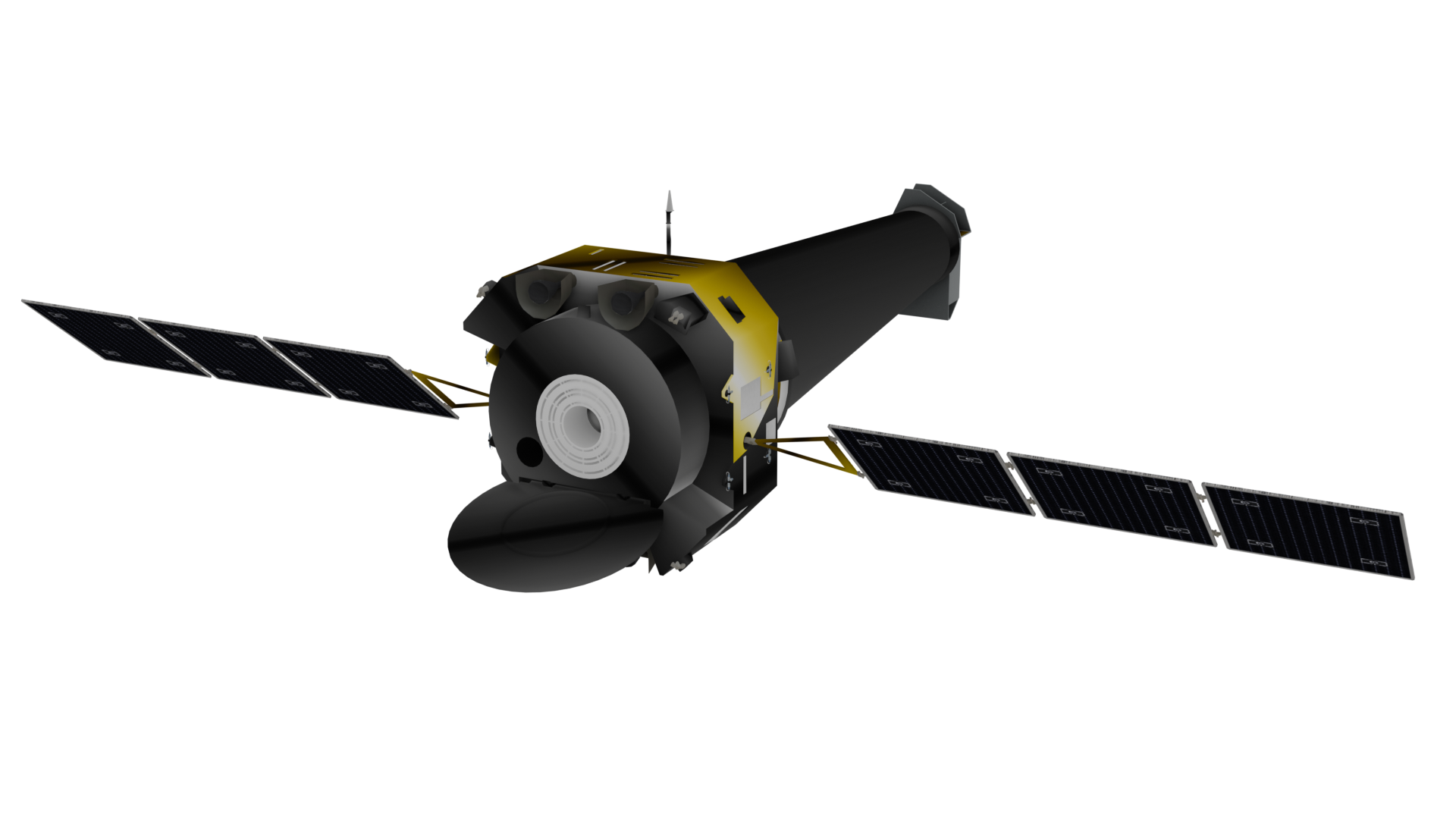
Chandra X-ray Observatory

IXPE
The Imaging X-ray Polarimetry Explorer (IXPE) is NASA’s first mission to study the polarization of X-rays.

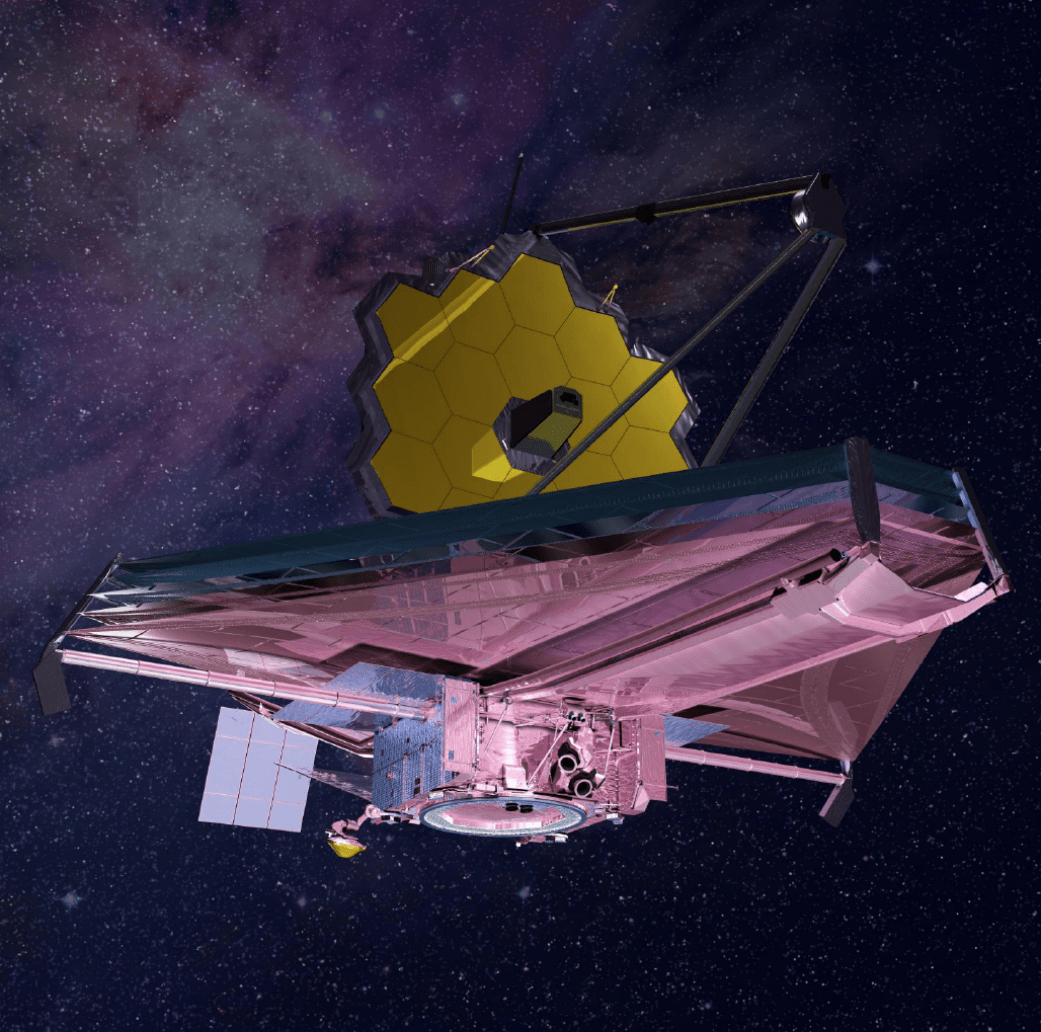
James Webb Space Telescope
Webb is the premier observatory of the next decade, serving thousands of astronomers worldwide. It studies every phase in the…

Hubble Space Telescope
Since its 1990 launch, the Hubble Space Telescope has changed our fundamental understanding of the universe.

The post NASA’s Chandra Discovers Possible Supernova Remnant in Galactic Center appeared first on NASA Science.
NASA’s Chandra Discovers Possible Supernova Remnant in Galactic Center

Using data from NASA’s Chandra X-ray Observatory, astronomers may have found a supernova remnant in an intriguing neighborhood in the middle of our galaxy. A paper describing these new findings published in The Astrophysical Journal.
Supernova remnants are the expanding remains of exploded stars and provide elements – like iron, oxygen, and silicon – that are critical for the formation of planets and for life as we know it to form and flourish.
This new supernova remnant, if confirmed, would be one of the closest ever discovered to the supermassive black hole at the central region of the Milky Way galaxy, an exotic region crammed with massive stars, long threads of magnetic fields and dense clouds of gas orbiting rapidly around the Galactic Center.

A new composite image of this region contains X-rays from Chandra and ESA’s (European Space Agency’s) XMM-Newton mission (shown in blue) as well as radio data from the MeerKAT telescope (shown in red) in South Africa. These have been combined with an optical image from the Pan-STARRS telescopes in Hawaii (red, green, and blue). The plane of the galaxy runs horizontally from left to right in the image, and the central black hole is off to the left of the image.
The evidence for the new supernova remnant, located about 26,000 light-years from Earth, comes from X-ray data from Chandra and XMM-Newton. The X-ray data reveals a “blob” of X-ray emission that may come from the remains of a massive star that self-destructed as a supernova, buried within the larger cloud of expanding gas.
The location of this suspected supernova remnant in the image is labeled with a circle.
It is in a bubble of gas that has had electrons stripped away from hydrogen – called an “H II region” – surrounding a massive, young star. This bubble is a bright source of radio emission called Sagittarius C.
If this is indeed a supernova remnant, then it is expanding at about two million miles per hour and is at least about 1,700 years old. Previously, observations with NASA’s now-retired SOFIA (Stratospheric Observatory for Infrared Astronomy) mission had shown evidence for an expanding shell of gas surrounding Sagittarius C. This gave astronomers a hint that a stellar explosion had occurred in the same spot.
The long filaments seen in the radio image are caused by energetic particles travelling along magnetic fields that are mostly directed perpendicular to the plane of the galaxy.
The nuclear fusion engines of stars create elements from hydrogen and helium that were abundant at the beginning of the universe. When stars explode at the end of their lives as supernovae, they send these newly synthesized elements into interstellar space and provide material for the next generation of stars and planets.
The team of astronomers searched the X-ray data for signs of increased amounts of key elements in the remnant, which would have been caused by the stellar explosion blasting them into space. While they did not see an enhancement, this could imply that the stellar debris has already mixed with the surrounding gas.
An alternative explanation for the X-ray blob is that the hot gas comes from a collection of massive stars in the region. The authors of the recent study don’t think this explanation is likely, because the X-ray emission from the blob is more than ten times brighter than the X-ray emission of large, known stellar clusters with bright, massive stars.
An additional image shows data from NASA’s James Webb Space Telescope added to the X-ray and radio data. The light blue color represents infrared light from gas in the H II region, and the darker blue depicts X-rays from the supernova remnant candidate, on the right side of the image. X-rays near the center of the image are associated with the H II region, possibly caused by material blown away by massive stars that has heated gas to millions of degrees, producing X-rays.
The study’s authors are Zhenlin Zhu and Mark Morris of the University of California, Los Angeles; Gabriele Ponti of Italy’s National Institute for Astrophysics; and Ping Zhou of Nanjing University in China.
NASA’s Marshall Space Flight Center in Huntsville, Alabama, manages the Chandra program. The Smithsonian Astrophysical Observatory’s Chandra X-ray Center controls science operations from Cambridge, Massachusetts, and flight operations from Burlington, Massachusetts.
Visual Description
This release features a composite image of colorful, overlapping clouds, which suggests to astronomers that a supernova remnant may be buried in gas near the center of our Milky Way galaxy.
Set against a backdrop packed with distant stars and other specks of light are two distinct, overlapping clouds. The larger, visually dominant cloud, is red and multifaceted. It has an irregular shape, and features patches of different textures, including pockets that resemble wispy smoke, tangles of faint red veins, and clear streaking lines. This large cloud of expanding gas represents radio data from the MeerKAT telescope in South Africa.
Overlapping with that red cloud is a cloudy blue blob representing X-ray data from NASA’s Chandra X-ray Observatory and ESA’s XMM-Newton. Astronomers suggest that this blue blob of X-ray emissions is the remains of a massive star destroyed by a supernova.
Read more from NASA’s Chandra X-ray Observatory
To learn more about NASA’s Chandra mission, visit:
https://science.nasa.gov/chandra
News Media Contact
Megan Watzke
Chandra X-ray Center
Cambridge, Mass.
617-496-7998
mwatzke@cfa.harvard.edu
Joel Wallace
Marshall Space Flight Center, Huntsville, Alabama
256-544-0034
joel.w.wallace@nasa.gov
About the Author
Lee Mohon
Details
Explore More
Discover More Topics From NASA
Chandra X-ray Observatory

IXPE
The Imaging X-ray Polarimetry Explorer (IXPE) is NASA’s first mission to study the polarization of X-rays.

James Webb Space Telescope
Webb is the premier observatory of the next decade, serving thousands of astronomers worldwide. It studies every phase in the…

Hubble Space Telescope
Since its 1990 launch, the Hubble Space Telescope has changed our fundamental understanding of the universe.