❌

Reading view

AI Reads Tea Leaves’ Light Signatures to Measure Frost Damage

Frost is one of the most punishing adversaries of tea cultivation. A single cold snap can scorch tender leaves, derail an entire season’s harvest, and degrade the delicate chemistry that gives tea its value. For growers and breeders, however, judging how badly a field has been damaged has long been a stubbornly subjective exercise: visual ratings lump continuous injury into crude categories, and laboratory assays destroy the very tissue they measure. A new study published in Plant Methods by Zhengtong He of Shihezi University, Zhiwei Chen of the Tea Research Institute of Shandong Academy of Agricultural Sciences, and colleagues offers a way out, pairing hyperspectral imaging with a purpose-built deep learning model to read frost damage directly from the way leaves reflect light.

The core problem the team confronted is that frost injury is not a binary event but a continuum. Leaves exposed to sub-zero temperatures suffer a cascade of overlapping stresses: photosynthetic pigments degrade, the machinery of photosynthesis falters, and cell membranes and walls break down. Any single measurement captures only a sliver of that cascade. To capture the whole picture, the researchers collected hyperspectral data together with eight key physicochemical indicators from tea plants growing across natural frost damage gradients in the field, rather than in the artificial conditions of a growth chamber. From these multidimensional physiological responses they constructed a composite measure, the tea cold stress response index, or TCSRI, which expresses frost damage severity as a continuous value instead of a coarse visual class.

Building TCSRI is a meaningful advance in itself. Traditional frost assessment often relies on ordinal scales, where an observer assigns a score of mild, moderate, or severe. Such scales throw away information and make it difficult to track recovery or compare cultivars with fine precision. By integrating several physiological dimensions into one index, the team created a target variable that reflects the plant’s actual internal state. The challenge then became predicting that index, and the individual chemical indicators behind it, from spectral data alone, without touching or destroying a single leaf.

Hyperspectral sensing is well suited to this task in principle. Across hundreds of narrow wavelength bands, plant leaves encode a wealth of information: chlorophyll absorption in the visible range, water and structural features in the near infrared. But the data are high-dimensional, with far more spectral channels than samples, a regime that invites overfitting, especially in field studies where collecting ground-truth measurements is laborious. Conventional chemometric approaches, from partial least squares regression to standard machine learning pipelines, often struggle to separate genuine physiological signals from noise, sensor drift, and the confounding effects of leaf surface properties and illumination variation.

The researchers’ answer is a model they call STAMPformer, short for spectral-prior-guided multi-view attention pooling. Its architecture reflects a deliberate design philosophy: rather than letting a neural network rediscover everything from scratch, the model is steered by what spectroscopists already know about how plants respond to stress. At its front end, a parameter-free attention convolution extraction module jointly models both the raw reflectance spectra and their first-order derivatives. Derivative spectra are a classic spectral prior: they accentuate subtle local features such as absorption peaks and shoulders that are easily drowned out in raw reflectance, while suppressing broad baseline drift and noise. By processing both views together, the module sharpens the local spectral signatures that carry physiological meaning.

On top of this extraction stage sits the second innovation, a multi-view attention pooling module. Deep networks processing spectral sequences produce long streams of features, but not all wavelengths matter equally for a given prediction. The pooling module adaptively aggregates sequence features drawn from different feature subspaces, learning to amplify the responses that are most diagnostic of cold stress and to down-weight the rest. This attention mechanism acts like a learned spotlight, and because it operates across multiple subspaces, it can capture complementary patterns that a single attention head might miss. The result is a compact representation tailored to the prediction task at hand, whether that is estimating a specific chemical indicator or the composite TCSRI.

The performance numbers are striking. Across all nine prediction tasks, spanning the eight physicochemical indicators and the TCSRI itself, STAMPformer achieved coefficients of determination above 0.87 and ratios of performance to deviation above 2.80, thresholds generally regarded as indicating reliable quantitative prediction. In other words, from a leaf’s reflectance fingerprint alone, the model could reconstruct the plant’s internal frost-stress state with an accuracy that approaches laboratory measurement, while remaining entirely non-destructive. The team did not stop at headline metrics. Ablation experiments systematically removed each proposed module to confirm that both the attention convolution extraction and the multi-view pooling contributed measurably to the gains, and paired statistical tests across multiple random seeds ensured the improvements were not artifacts of a lucky initialization.

Interpretability was a further priority, and here the study delivers something rarer than raw accuracy. Applying SHAP analysis, a technique that attributes each prediction to the contributions of individual input features, the researchers identified the wavelengths the model relied on most heavily. These key spectral regions correspond to physiologically meaningful processes: pigment degradation, photosynthetic impairment, and the disruption of cellular structure. That alignment between machine attention and plant biology matters on two fronts. It gives spectroscopists confidence that the model has learned genuine stress signatures rather than spurious correlations, and it hands plant physiologists a data-driven map of which parts of the spectrum track which facets of cold injury, potentially guiding future sensor design and breeding assays.

Crucially, the model also proved itself on data it had never seen. Independent external validation, using samples not involved in training, demonstrated that STAMPformer’s predictive ability generalizes beyond its original dataset, addressing one of the most common failure modes of machine learning in agricultural sensing. For a field where models are often tuned and tested on the same plots, this external check is an important credibility marker, suggesting the framework could be deployed across different farms, seasons, and frost events rather than remaining a laboratory curiosity.

The practical implications reach well beyond tea. An accurate, non-destructive, continuous measure of cold damage opens the door to rapid post-frost field surveys, letting growers quantify losses within hours instead of waiting for symptoms to develop or sending samples to a lab. For breeders screening for cold-tolerant germplasm, a spectral readout of TCSRI could accelerate the evaluation of hundreds of candidate lines without destructive sampling. And in the emerging vision of the smart tea garden, where drones and handheld spectrometers roam the rows, a model like STAMPformer could feed real-time frost maps into irrigation, shading, and recovery-management decisions. The authors frame their work as supporting frost monitoring, cold-tolerant germplasm evaluation, and intelligent garden management, and the architecture’s reliance on general spectral priors rather than tea-specific tricks suggests the approach could be adapted to other crops facing abiotic stress. As climate variability makes late-season frosts increasingly erratic, tools that turn light reflected from a leaf into a precise physiological diagnosis may become as essential to the tea garden as the thermometer.

Subject of Research: Hyperspectral deep learning prediction of continuous frost damage severity in tea plants

Article Title: STAMPformer: spectral-prior-guided multi-view attention learning for hyperspectral prediction of continuous frost damage severity in field-grown tea plants

Article References: He, Z., Chen, Z., Ding, Z., Wang, Z., Zhang, F., Zhao, Y., & Dong, C. (2026). STAMPformer: spectral-prior-guided multi-view attention learning for hyperspectral prediction of continuous frost damage severity in field-grown tea plants. Plant Methods. https://doi.org/10.1186/s13007-026-01597-4

Image Credits: AI Generated

DOI: 10.1186/s13007-026-01597-4

Keywords: tea plant, frost damage, hyperspectral imaging, deep learning, attention mechanism, cold stress index, non-destructive prediction, SHAP analysis, precision agriculture, spectral priors, plant physiology, smart farming

  •  

How Electric Fish Tune Out Their Own Signals

Imagine trying to listen for a whisper while making a loud noise yourself. An African elephantnose fish faces a similar problem underwater. It sends out small electric pulses to explore its surroundings, but those pulses could drown out the faint signals it needs to detect food and other fish. The fish has sensors in its […]

The post How Electric Fish Tune Out Their Own Signals appeared first on Knowridge Science Report.

  •  

This Newly Discovered Flower Looks Like a Tiny Demon

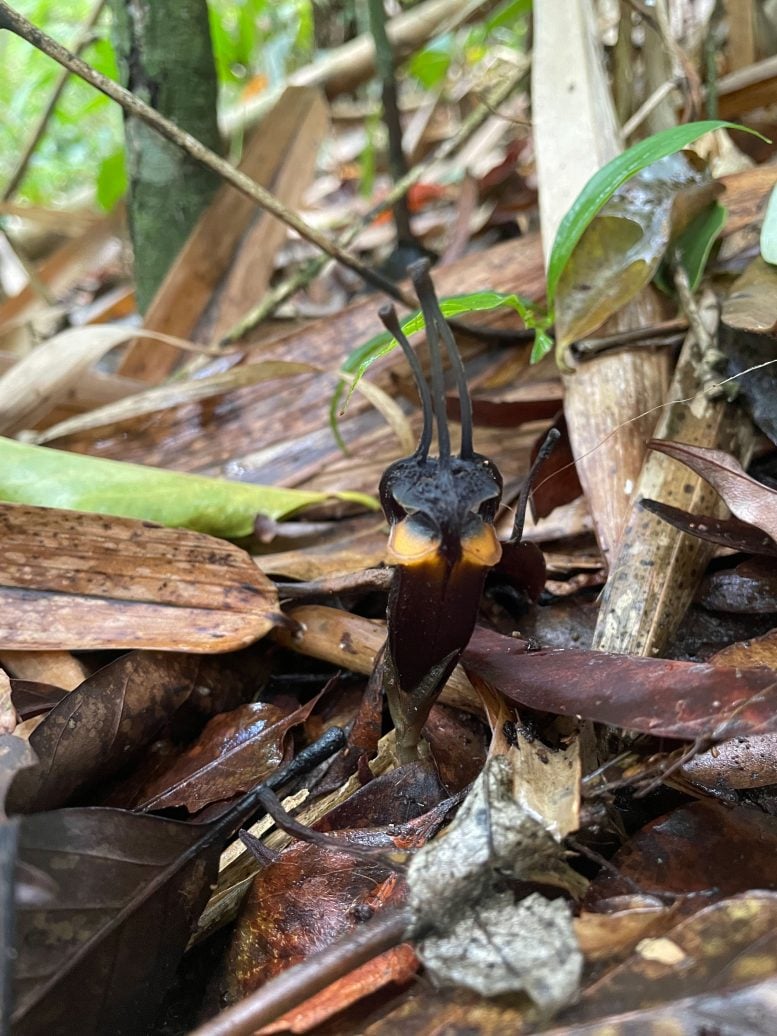
Thismia Daemona Among Leaf LitterResearchers have identified a new plant species in western Thailand whose unusual appearance inspired the dramatic name Thismia daemona, or the “devil flower.” A nearly black flower with horn-like projections and flashes of reddish orange has been discovered beneath leaf litter in a mountain forest in western Thailand. The plant cannot photosynthesize, spends most of [...]
  •  

Trump's forced coal plant extensions thrown out by judge

The use of coal to generate electricity on the US grid has been plunging for nearly two decades, and the first Trump administration was unable to affect the trend. So his second administration has attempted more aggressive interventions to prop up coal use. One of its most direct means of doing so is to order coal plants that were scheduled to close to remain open, even if there is no need for them.

The administration's justification for these orders is a statute that allows the Department of Energy (DOE) to declare an emergency in the case of wartime or a sudden shortfall in generation. A number of parties, including states where coal plants have been slated to close, have challenged this declaration. And on Friday, in the first of these cases to make its way through the courts, the declaration was judged to be contrary to the statute. While this only affects a single coal plant in Michigan, the reasoning of the decision will apply to every coal plant closure that has been blocked by the DOE.

No emergency

The decision was issued by a unanimous three-judge panel from the DC Circuit's Court of Appeals. It focuses on the J.H. Campbell Generating Plant, which was scheduled to close last year but has been kept open by a total of five emergency declarations by the DOE, each limited to 90 days by the Federal Power Act. At issue was section 202(c) of that Act, which allows the DOE to declare emergencies when the US is at war or when “an emergency exists by reason of a sudden increase in the demand for electric energy, or a shortage of electric energy.”

Read full article

Comments

© UCG

  •  

Scientists Discover the Earliest Evidence of Drug Use in Really Old Teeth

A hunter-gatherer who lived in Indonesia as early as 25,000 years ago may have regularly sucked on betel nuts to release their psychoactive properties.
  •  

MacVoices #26251: Foreshadowing Tech – When Science Fiction Becomes Communication Reality (2)

The discussion of communication communication technologies continues as the panel of Chuck Joiner, Jeff Gamet, and Marty Jencius make the jump  from telegraphs and long-distance calls to texting, smartwatches, satellite connectivity, and possible implanted devices. How science fiction anticipated so many of today’s modern communications questions such as convenience, safety, privacy, tracking, and social change wrap […]

💾

  •  

An Unexpected Carnivorous Plant Has Been Discovered Growing in China’s Mountain Forests

Botanists are still proving Charles Darwin right with their recent identification of a new carnivorous plant growing in China’s mountainous forests.

Saxifraga candelabrum is a small, yellow flower with a taste for flesh that may one day help protect endangered crops, and researchers have revealed their detailed analysis of the carnivorous plant, conducted both in the field and the laboratory, in a recent paper published in Nature Communications.

The carnivorous plant attracts, traps, and finally digests prey, typically consisting of fruit flies and other small insects, breaking them down with a caustic enzyme that it produces.

Charles Darwin and Carnivorous Plants

Although it was philosopher Herbert Spencer who actually coined the phrase “survival of the fittest,” it was Charles Darwin who developed the concept behind it in his work on natural selection. With an eye towards survival in a harsh natural world, Darwin suggested in 1875 that some plants in the genus Saxifraga may be more than just beautiful flowers—they may also be very patient hunters.

Darwin’s suspicion centered on Saxifraga species other than S. candelabrum, the plant examined in the new study. However, the basis for his hypothesis holds true: the father of evolutionary biology focused on the microscopic hairs covering the plants’ surfaces, a feature shared by both the species he studied and the newly confirmed carnivorous plant.

Darwin suggested these hairs acted as a trap, capturing insects drawn to the flowers and holding them in place as the plants slowly absorbed nutrients from them. He was right.

A New Take on Carnivorous Plants

Most carnivorous plants rely on highly specialized structures to capture prey. The iconic clamping leaves of Dionaea muscipula, better known as the Venus flytrap, are one example. Another is Low’s pitcher plant, which lures insects into its pitcher-shaped trap before digesting them.

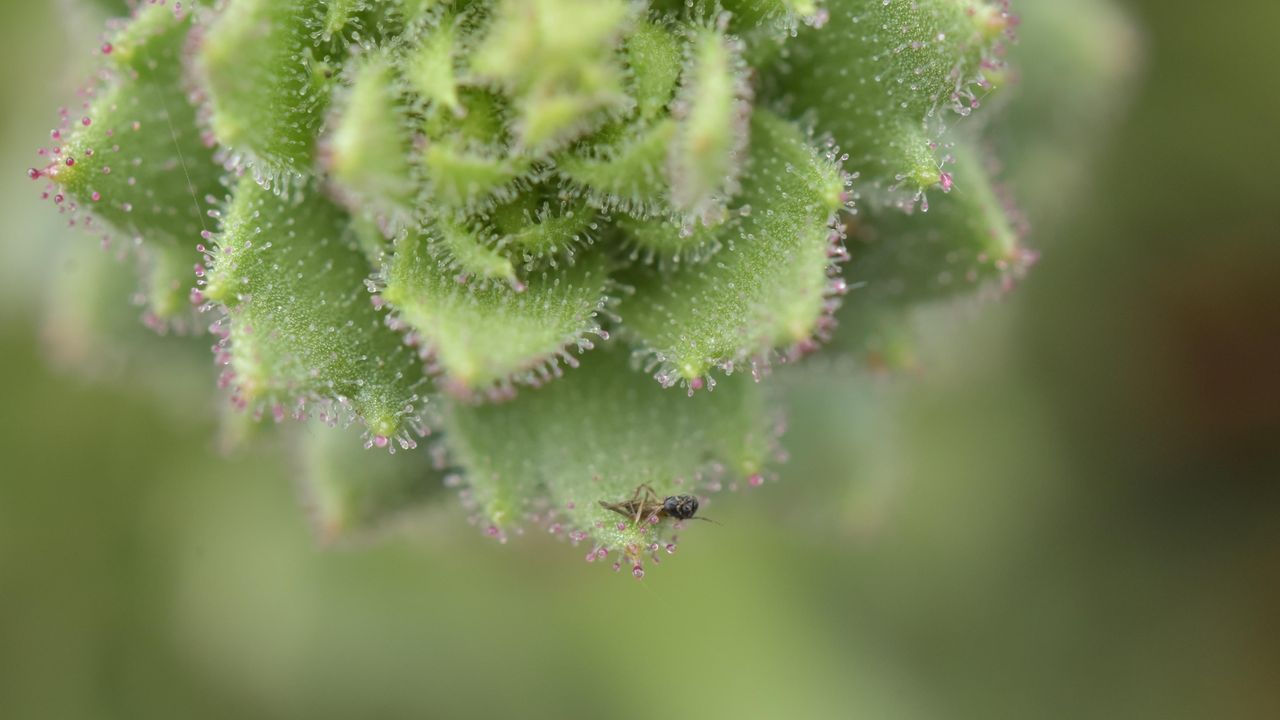
S. candelabrum, however, employs a far subtler strategy. Rather than relying on elaborate trapping structures, it uses innocuous-looking hairs covering its flowers and stems. Once insects land on them, they discover the bristles are exceptionally sticky, trapping them until the plant can digest them.

“The discovery of Saxifraga candelabrum reminds us that many inconspicuous carnivorous plants, or plants with partial carnivorous traits, may still exist in nature,” said lead author Hang Sun, a botanist at the Kunming Institute of Botany at the Chinese Academy of Sciences.

Investigating a Hidden Hunter

The team’s research involved a great deal of fieldwork, observing S. candelabrum consuming insects in the mountain forests of China. However, it was their detailed genetic analysis in the lab that later showed how similar the plant was to other carnivorous species, despite its unusually benign appearance.

As part of their laboratory experiments, the researchers fed the plants fruit flies while closely monitoring their behavior. These observations allowed the team to identify digestive enzymes secreted by the plant to break down nitrogen-rich nutrients from its prey.

Identifying a new carnivorous plant species is an uncommon achievement for botanists, with the last such discovery occurring only five years ago. Even more remarkable is that the finding so closely aligns with Charles Darwin’s century-old prediction.

The researchers say the discovery is more than a botanical curiosity. A better understanding of how carnivorous plants digest insects could eventually aid the development of natural pesticides and other agricultural tools, potentially transforming these tiny predators into allies for protecting the world’s food supply.

The paper, “Identification of Carnivory in the Flowering Plant Saxifraga Via Multidisciplinary Evidence,” appeared in Nature Communications on August 4, 2026.

Ryan Whalen covers science and technology for The Debrief. He holds an MA in History and a Master of Library and Information Science with a certificate in Data Science. He can be contacted at ryan@thedebrief.org.

  •  

'Darwin’s hypothesis provided an important inspiration': Scientists bolster 150-year-old Darwinian theory with a carnivorous plant in China

Scientists have confirmed that a flowering plant native to the mountains in southwest China is carnivorous, supporting a prediction made by Charles Darwin more than 150 years ago.

The species, Saxifraga candelabrum, grows at elevations above 8,200 feet (2,500 meters) in the Hengduan Mountains, which connect the southeast portions of the Tibetan Plateau to the Yunnan-Guizhou Plateau.

The plant has stems and branches covered in sticky hairs that can trap small insects, predominantly nonbiting midges. However, scientists were unsure if these insects were being ingested by the plant. In a new study, researchers showed that S. candelabrum can digest and absorb nutrients from insects after capturing them, proving that the plant is carnivorous. The scientists published their findings Tuesday (Aug. 4) in the journal Nature Communications.

This is the first demonstrated case of carnivory in the saxifrage plant group, said study co-author Douglas Soltis, a distinguished professor of biology at the Florida Museum of Natural History.

Other carnivorous plants typically grow in moist, boggy soils, but S. candelabrum is found in dry alpine areas, Soltis told Live Science in an email. "These are all nitrate poor soils — that's why this carnivorous habit has evolved a number of times" to supplement the plants in vital nutrients, he said.

In 1875, Darwin theorized that two species closely related to S. candelabrum that also have sticky hairs — S. rotundifolia and S. umbrosa — may be carnivorous, based on their ability to catch insects. But the 19th-century naturalist couldn't show that the plants digested their prey or reused the nutrients in insect tissues — two conditions that are key to confirming carnivory in plants. Without these conditions, a species is considered simply "protocarnivorous," meaning it catches and kills insects or other small animals but doesn't digest or absorb them, according to the study.

"Although untested at the time, Darwin’s hypothesis provided an important inspiration for our study," study co-author Hang Sun, a researcher in the Chinese Academy of Sciences' Kunming Institute of Botany, told Live Science in an email.

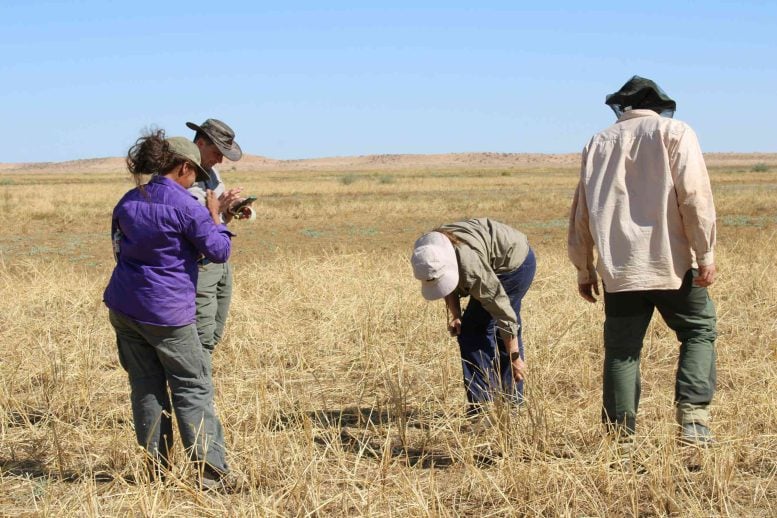
The researchers conducted field observations and herbarium surveys of S. candelabrum, which revealed that mature plants with more numerous and longer branches had an average of 71 trapped insects on them. In the herbarium surveys, the team found that 43 out of 45 specimens had caught insects, suggesting that insect-trapping is a widespread phenomenon in this species.

Next, the study's authors showed that S. candelabrum possesses phosphatase, a digestive enzyme commonly found in carnivorous plants. They did this by labeling the phosphatase enzymes with fluorescent molecules to visualize them under a specialized microscope, a technique known as fluorescence tagging.

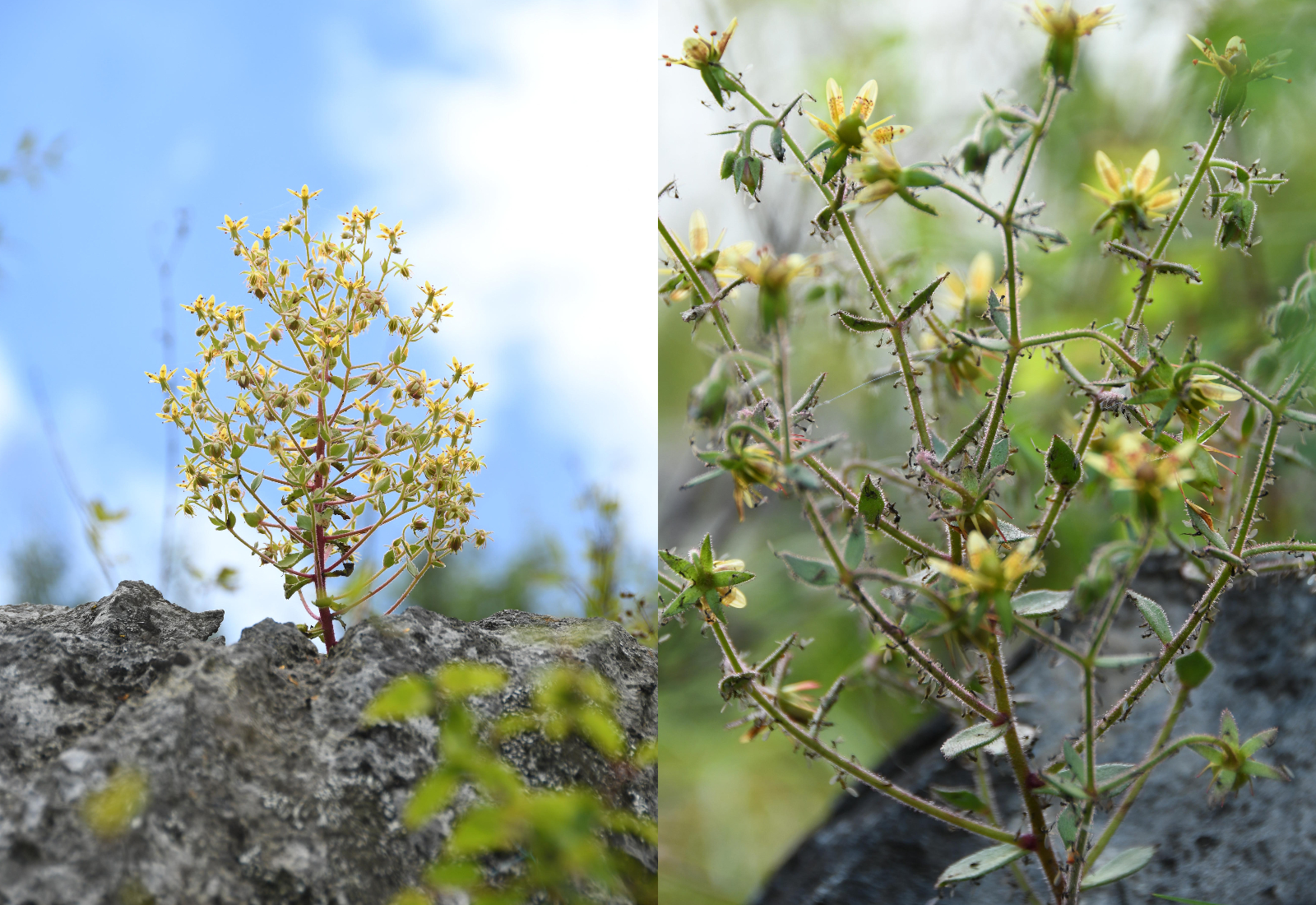
Two pictures of a carnivorous flowering plant in China with insects stuck on its branches and stem.

S. candelabrum secretes a viscous substance that coats its hairs, meaning insects get stuck on the stem and branches if they fly too close. (Image credit: Xin-Jian Zhang)

To determine if S. candelabrum digests and absorbs nutrients from insects, the researchers labeled fruit flies with a stable form of nitrogen before feeding them to the plants. This led to a marked rise in stable nitrogen in S. candelabrum and in a different, known carnivorous species, which the team used as a control group. By contrast, a non-carnivorous plant that formed a second control group did not show an increase in stable nitrogen, indicating that S. candelabrum is carnivorous.

Finally, the researchers performed a genetic analysis, which revealed that S. candelabrum has genes in common with known carnivorous plants that are linked to prey attraction, digestion and nutrient absorption. Together, the results showed that S. candelabrum evolved carnivorous traits to cope with its nutrient-poor environment, adapting its hairs — which were initially used for herbivore defense — into insect traps, according to the study.

Larger insects, which S. candelabrum requires for pollination, rarely get stuck to the hairs, the researchers noted in the study, suggesting that the species has perfectly balanced its needs through evolution.

Other Saxifraga species and plants belonging to the same lineage could turn out to be carnivorous, too.

"Many members of the Saxifragaceae, which includes genera other than Saxifraga, have sticky glandular hairs and are often covered with insects," Soltis said. "I would not be surprised if other members of the family are also carnivorous — as Darwin predicted."

The study broadens the scope of carnivorous plant research, Sun said. "Carnivory may therefore be far more widespread among flowering plants than previously recognized," he said.

Charles Darwin quiz: Test your knowledge on the 'father of evolution'

  •  

Aspen trees provide a natural buffer against wildfires, even as fire season intensifies, study shows

Aspen trees could provide a natural buffer against wildfires, as new research shows that areas of forest where these trees dominate burn less intensely than those made of conifers.

The findings suggest that planting more of the right kinds of trees, such as trembling aspen (Populus tremuloides, also known as quaking aspen), could be an effective strategy for protecting communities as devastating wildfires become more common and intense in a warming world, researchers reported June 15 in the journal Forest Ecology and Management.

Individual aspen trees burn easily because of their thin bark, but large "stands" ‪—‬ contiguous communities of trees that are uniform in species, age and structure ‪—‬ of them are more resistant to fire than stands of conifers and can act like a firebreak.

The reasons for aspen stands' resilience are not certain. However, researchers think it likely stems from a combination of factors, including the high moisture content in the aspens' leaves and the undergrowth, the trees' lack of highly flammable resin, and the leaves' height, which makes it harder for fire to spread to the canopy and leap from tree to tree.

Flavie Pelletier, who conducted the research as part of her doctorate at McGill University in Montreal, wanted to see whether aspen stands have been able to maintain their fire-resistant properties as climate change makes fire seasons more intense and destructive.

She combined new maps of dominant tree species in forests across Canada with satellite maps of wildfires from three recent years, including 2023, which was the country's most destructive wildfire season ever recorded. She noted which tree species tended to be inside the fire zone and which were more common at the edges. She found that aspen trees were more than twice as common at the perimeters of fires than inside them, while conifers like spruce and pine were equally present in both locations.

Having more aspen trees in a particular area also decreased the amount of forest that burned each day during a fire, so it also appears to help slow the spread of the fire. Notably, the trees still resisted fire spread even in the spring, before their leaves had fully sprouted.

"This is proof that aspen has an impact on fire perimeter formation and can slow fire progression," she told Live Science.

Anthony Taylor, a forest management specialist at the University of New Brunswick, said the study, with its use of large datasets on real fires, does a good job of analyzing and quantifying a phenomenon that Indigenous peoples and foresters have understood for a long time.

"The idea that deciduous trees burn less has been known for millennia, but knowing something through experience is different than testing it," he told Live Science.

A grove of golden aspen trees surrounding a house.

Aspen trees in Vail Colorado. (Image credit: Getty Images)

Changing practices

The research supports the idea that planting aspen or other deciduous trees around vulnerable communities can help protect them from fires. Taylor said this buffer strategy is being considered or implemented in many areas.

A single line of trees will not do the trick. The stands must be deep enough to stop the flames from blowing over the top — probably 300 to 1,000 feet (100 to 300 meters), Taylor said.

Aspens can also play a role in fire control at larger scales. Pelletier first became interested in this topic when she learned that forestry companies often spray the forests they manage with the herbicide glyphosate to kill deciduous trees like aspen so they can grow monocultures of more economically valuable conifers, leaving those forests at much higher risk of fires. She hopes her work will help convince the companies and regulators to change their practices.

"There needs to be less of a war on aspen in commercial forests," she said. In the long term, it would actually benefit the companies, because it would reduce the risk of losing large numbers of trees to fire, even if it slightly reduces the value of the forest in the short term.

Taylor agrees that in places like New Brunswick, a province with a large forestry sector, officials should be promoting more mixed and hardwood forests, and less of the softwood monocultures that the forestry industry relies on.

"That would go a long way to making our landscape more resilient to wildfire," he said. "And that's what would have been here anyway, before we started converting the forests to a more industrial forest."

  •  

Scientists Discover an Odd Genetic Trait in an Ancient Aboriginal Food Plant

A Large Field of Channel MilletA native Australian millet may carry the genetic fingerprints of thousands of years of Aboriginal harvesting, storage, and plant management. Seen from the air, Channel Country resembles a vibrant and vast tapestry, with a network of waterways crisscrossing the land. Spread across more than 280,000 square kilometers in outback Australia, it is one of the [...]
  •  

A geometric pattern lurks in Chinese money plant leaves

A common houseplant hides a splendid geometric pattern.

This design, called a Voronoi diagram, appears on the leaves of the Chinese money plant. The layout may arise as waves of a plant hormone spread across a leaf during its development. A similar process may shape the vein patterns in leaves of other plants, too.

Researchers shared these findings May 12 in Nature Communications.

This is a “beautiful” showcase of how plant veins develop to move water across leaves most efficiently, says Lawren Sack. He did not take part in the research. But he does study plant biology at the University of California, Los Angeles. Veins of leaves “have so much to tell us” about how to get resources where they need to go, he says.

Lurking in leaves

Leaves of the Chinese money plant (Pilea peperomioides) are speckled with pores. Called hydathodes, these pores release water. Each one is fenced in by veins to form a mosaic.

While in high school, Elijah Blum discovered a curious pattern in those leaf veins. He noticed it while plant-sitting for his sister. At the time, Blum was an intern at Cold Spring Harbor Laboratory in New York. (He’s now in college at New York University.) He shared what he’d found with his internship supervisor, computer scientist Saket Navlakha.

“He showed the plant to me, and he said, ‘Look, the veins look kind of interesting here,’” Navlakha says. “We sort of held it up to the light — and we saw that … Voronoi diagram.”

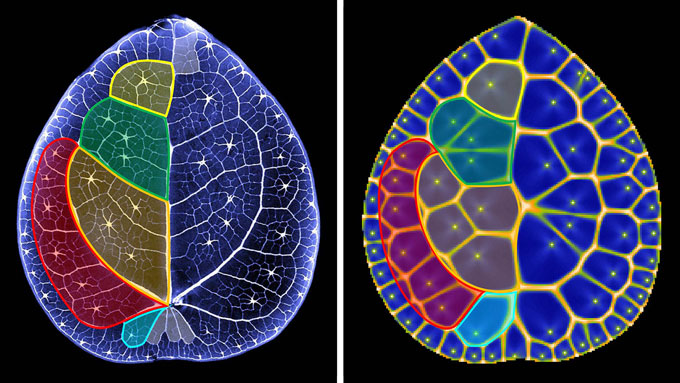
Side-by-side images compare a Chinese money plant leaf with a computer simulation, showing similar colored regions outlined by veinlike networks.
The layout of veins and pores on a Chinese money plant leaf (left, in false color) closely matches a computer model of a Voronoi diagram (right). Scientists made the computer model using the leaf’s pore positions as an array of dots. Colors show the regions on the actual leaf that correspond to regions in the computer model.Navlakha lab/CSHL

In a Voronoi diagram, a surface is split up into zones. Each zone contains a designated point. And every spot within a zone must be closer to that zone’s point than any other.

Urban planners use the same idea to decide which fire department a house should be assigned to. This helps each house in a city or town be closer to the fire station in its zone than any other station.

Patterns that look similar to Voronoi diagrams appear elsewhere in nature. The tiles on giraffe fur look like this type of design. So do the scales of dragonfly wings. But in a true Voronoi diagram, the mosaic must form around a set of points. In the Chinese money plant, the water-oozing pores serve as those points.

Making the mosaic

Blum and the others were curious how this pattern might develop.

Similar leaf veins are thought to form through canalization. In this process, a hormone involved in plant development — auxin — branches out across leaves. As it does, it creates a treelike network of channels that become veins.

But that wouldn’t produce a Voronoi diagram around a leaf’s pores, the team found. Computer models instead showed that as Pilea leaves develop, waves of auxin spread out from each pore. Those waves collide to form ridges. Eventually, they become a leaf’s major veins.

More research is needed to find out why Pilea leaves follow this pattern, says team member CiCi Zheng. She studies the math of living things at the Allen Institute in Seattle, Wash.

The Voronoi diagram layout might be useful for plants, she says. This pattern keeps a leaf’s major veins — which transport water — as far as possible from its water-leaking pores. “You might want to place the veins not directly close to any of those locations where water evaporates super-fast,” Zheng says.

Sack at UCLA is excited about what new tech this finding might inspire. Past studies of leaf veins, he says, have helped engineers reimagine how to distribute resources such as water and energy. Such insights have improved solar panels, electronic circuits and irrigation systems.

“The more we know about leaf veins,” Sack says, “the more we can build functional and beautiful systems around us.”

Do you have a science question? We can help!

Submit your question here, and we might answer it an upcoming issue of Science News Explores

  •  

Science word of the day: Pando

Science word of the day: Pando

Pronunciation: PAN'-doh

What it means: In Latin, "Pando" means "I spread." And boy, does it. Pando is a clonal stand of aspen trees in Utah that weighs about 13 million pounds (6 million kilograms), making it the world's heaviest living organism ever found. Its 40,000 trees cover 106 acres (43 hectares) in Fishlake National Forest, and they're all connected by a single, sprawling root system. Some DNA analysis suggests that this many-fingered megatree is tens of thousands of years old.

How to use it in a sentence: When you walk through Pando, what seems like a normal stroll through an aspen grove is actually a trip through a single, ancient living being.

Can you crack our science word of the day puzzle, Chain Word?

  •  

Eye Implant That Restores Vision to the Blind Cleared for Sale

An eye implant that can help blind people see again is poised to hit the market — in Europe, at least.

On Wednesday, the US-based Science Corporation announced that it had received approval from the European Union to treat patients with its vision-restoring bionic eye device, called Prima, in a huge step towards the commercialization of the technology.

“We have a cochlear implant for vision now,” CEO Max Hodak told Stat News.

Science Corp’s device is designed to treat advanced macular degeneration, a condition in the eye which causes central vision loss. It’s the leading cause of vision loss in older adults, with severe forms of it accounting for nearly 90 percent of legal blindness in the US, according to one estimate.

To restore vision, the Prima device uses a wireless chip that’s surgically implanted under the retina. This connects with a pair of camera-equipped glasses, which transmits video in the form of near-infrared light that the chip turns into electrical signals interpreted by the brain.

Science Corp first published the results of a preliminary clinical trial in late 2024, showing that patients who used the device were able to recognize faces again, and even read books.

“One of our patients in France finished a 300-page novel a little while ago, and sent us the book,” Hodak recently told TechCrunch. “We have a sketch on the wall [that] one of our patients drew of the Sydney Opera House. There are videos of patients playing crossword puzzles and filling in Sudoku.”

But Hodak — who cofounded Neuralink with Elon Musk before leaving to start Science Corp — was candid that his tech still has a lot of room for improvement.

“This is an early version. It’s kind of like looking through a straw in the centre of their vision,” he told the Financial Times, saying it was “powerful proof” that the company was on the right track.

“We see in the future how to get to colour pretty close to native acuity,” he added.

Each Prima device is expected to cost hundreds of thousands of dollars, but Science Corp says it’s working with healthcare providers to cover some of the cost, per TechCrunch. It’s most likely to first start treating patients in Germany, where it conducted its clinical trials.

It’s not the only company making moves in this space. Neuralink is also working on a vision implant called Blindsight, but it hasn’t begun human trials yet.

More on health: Trump Is Having a Major Problem With Diarrhea

The post Eye Implant That Restores Vision to the Blind Cleared for Sale appeared first on Futurism.

  •  

This clever parakeet helped design its own perch

Most products made for pets are designed entirely by humans. But what if animals could help design the things they use? A new project suggests they can. Researchers worked with a pet parakeet named Shiso to create a wearable perch based on the bird’s own preferences, turning the design process into a true collaboration between […]

The post This clever parakeet helped design its own perch appeared first on Knowridge Science Report.

  •  
❌