Login

What happens when you try to chop a photon in half?
A photon is a single particle of light, and under normal circumstances, it can't be divided. But a photon is also not a particle, in the sense that it does not have a specific location. Instead, it is an extended object.
So if a photon is only partway through the process of reflecting from a perfect mirror and you yank the mirror away, what happens? The answer, from a trio of Norwegian physicists, turns out (arxiv.org link) to be more complex than I expected.
A photon divided?
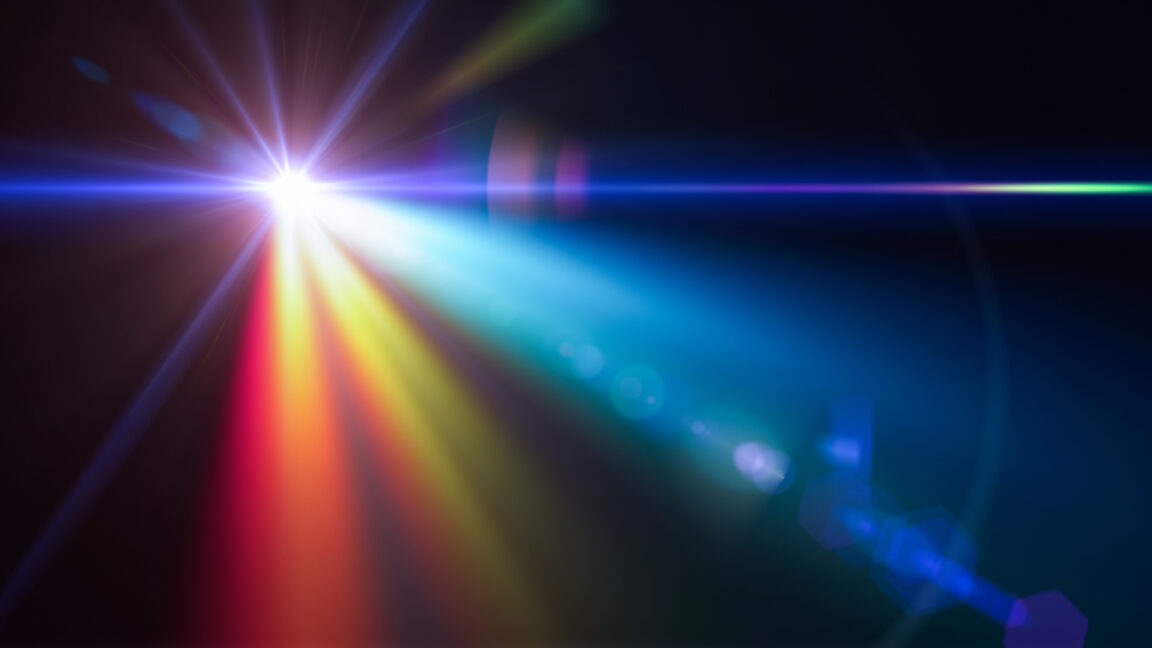
Let’s first talk briefly about dividing and combining photons. If this were a common experience in our lives, then shining a single color of light through a piece of glass or reflecting it from a surface might cause photons to divide or combine. This would lead to an amazing array of colors: Our universe would be the most fantastic and legal LSD trip you could imagine. But this doesn't generally happen, hence LSD.

© DrPixel