❌

Reading view

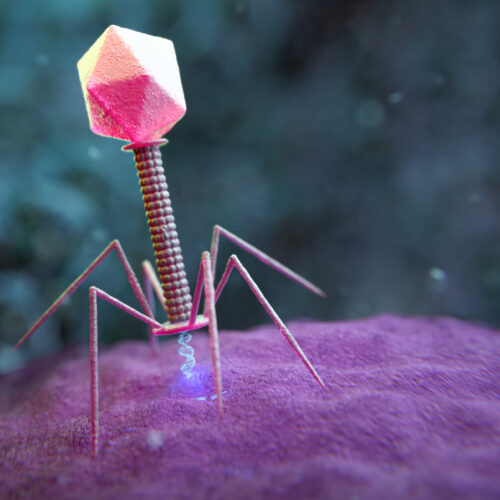
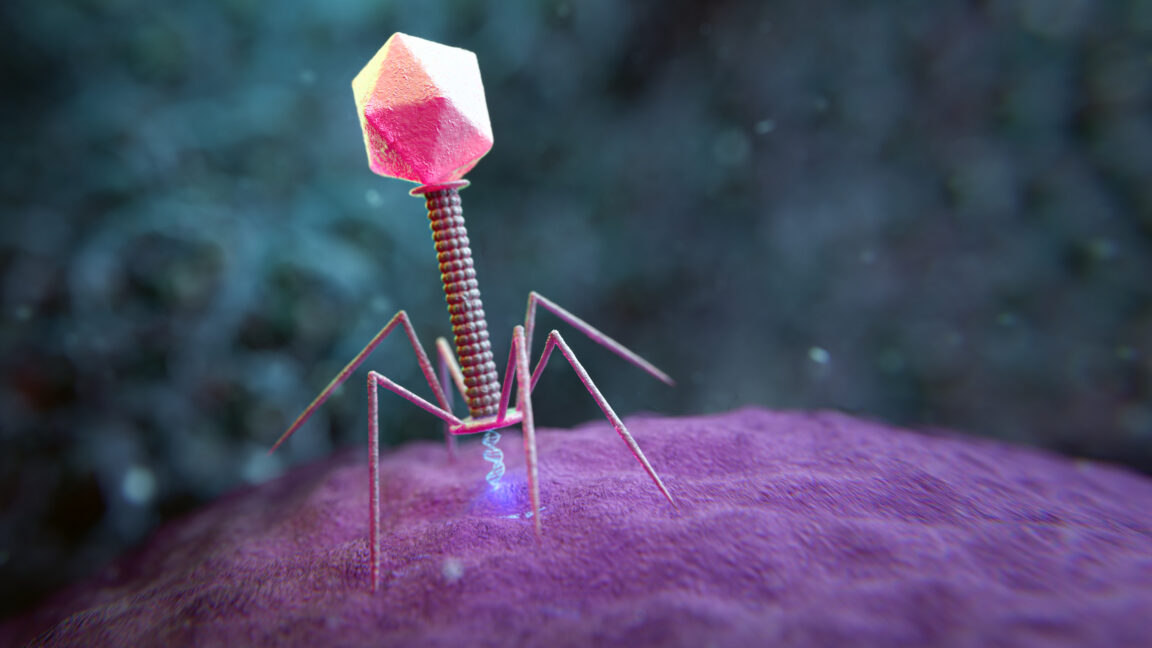
Large genome models used to design new viruses

A lot of the AI work in biology has been focused on designing proteins. That's partly because proteins do most of the business of life, catalyzing the interesting chemistry and structuring cells. So, figuring out how to make a new protein can mean directly tinkering with biochemistry, providing new and potentially useful functions.

Since the genetic code provides a layer of abstraction between DNA and proteins, it wasn't obvious what a model trained on DNA could do. Yet people went ahead and made a large genome model, and it turned out to be able to output DNA sequences that could encode functional proteins in bacteria and mimic the gene structures found in complex cells. Now, those same models have been used to output the genomes of viruses that infect bacteria.

This isn't science fiction—all the viruses the models created are closely related to an existing virus. But they do have some distinct features that would be challenging to evolve. And the researchers who did the work, based at Stanford University, suggest we may want to start thinking now about preparing for the potential that someone could develop a related AI that can design a virus that targets vertebrates.
Read full article

Comments

© THOM LEACH / SCIENCE PHOTO LIBRARY

  •  

Enfin une réponse sur le piment : bon pour la santé ou dangereux lorsqu’on en mange trop ?

Le piment est-il un allié santé ou un ennemi silencieux ? Une vaste étude révèle que les plus gros consommateurs présentent un risque non négligeable de cancer gastro-intestinal, avec une association particulièrement forte pour un cancer grave. Pourtant, d’autres études prêtent à cette épice des...

  •  

Cancer colorectal : des virus cachés dans nos bactéries pourraient changer la donne

Depuis des années, les scientifiques soupçonnent certaines bactéries intestinales de favoriser le cancer colorectal. Mais une nouvelle étude révèle qu’elles pourraient elles-mêmes être manipulées par un acteur jusqu’ici passé sous les radars : un virus caché dans leur ADN. Une découverte qui...

  •  

Brûlures d’estomac : des chercheurs explorent une piste inattendue pour protéger l’œsophage

Un reflux gastro-œsophagien mal contrôlé peut, à long terme, favoriser l’apparition d’un cancer de l’œsophage. Mais des chercheurs américains viennent de mettre en lumière une approche aussi surprenante que prometteuse : l’utilisation de probiotiques pour limiter l’inflammation, réparer les...

  •  

Pigeons May Sense Earth’s Magnetic Field Using Superparamagnetic Immune Cells in Their Livers

Lisowski et al. used physical, morphological, functional, and genomic assays to identify the presence of superparamagnetic macrophages in the liver of homing pigeons (Columba livia domestica). Image credit: Spanishguitar101 / CC BY-SA 4.0.

Scientists have identified supermagnetic macrophages in the livers of homing pigeons (Columba livia domestica) that appear essential for navigation when the Sun is not visible, pointing to an entirely new mechanism for animal magnetoreception.

The post Pigeons May Sense Earth’s Magnetic Field Using Superparamagnetic Immune Cells in Their Livers appeared first on Sci.News: Breaking Science News.

  •  
❌