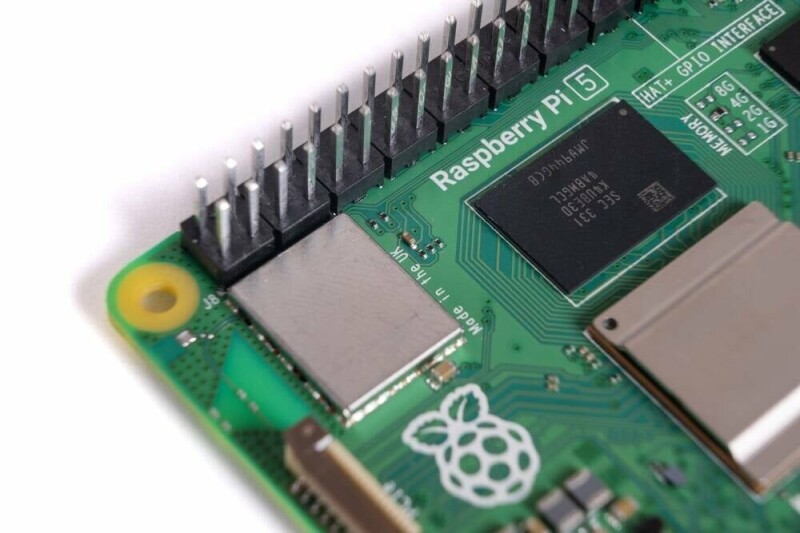
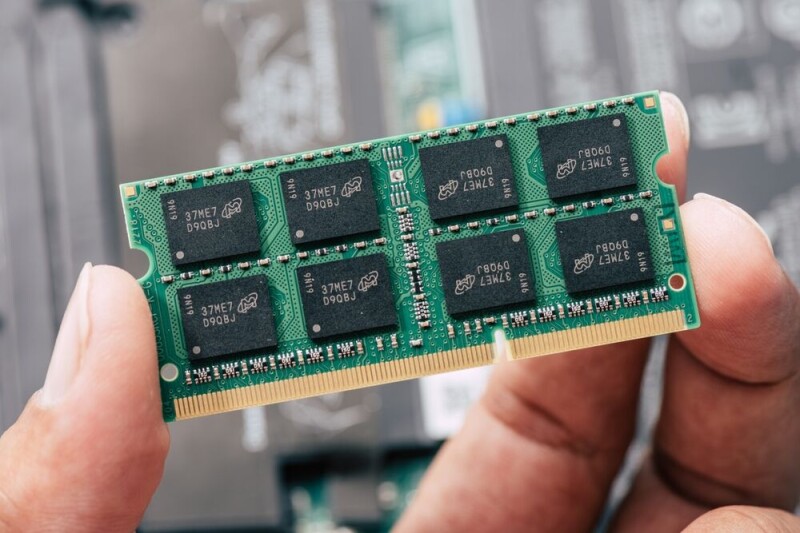
Raspberry Pi has raised prices for the 2 GB Pi 4 and Pi 5, citing rapidly rising memory costs. Both models now cost $12.50 more, taking the 2 GB Pi 4 to $67.50 and the equivalent Pi 5 to $77.50. Readers with long memories may recall the $35 Pi 4. Its price "temporarily" rose to $45 during the pandemic and has since climbed further. The board maker reported a 90 percent increase in first-half revenue to $256.9 million, while gross profit rose 79 percent to $59.4 million. Gross profit per board increased 53 percent to $12.20, helped by price rises and stocks of memory bought at lower prices in 2025. Raspberry Pi says that inventory advantage has largely been exhausted. Its advice to customers facing higher prices is to consider older models, such as the Pi 3B, 3A+, or 3B+, and check how much RAM their projects actually need. Price rises have become a way of life for Pi customers. In April 2026, much of the Pi 4 and Pi 5 range saw substantial price increases. A 16 GB Pi 5, for example, currently costs $305 at PiShop – a far cry from its $120 launch price in January 2025, when we wondered whether even that was a bit steep for a Pi. The 2 GB Pi 4 and Pi 5 escaped April's increases, but that reprieve has ended. Prices for other products remain unchanged, including the 1 GB Pi 4 and Pi 5 and the 2 GB Compute Module 4 and 5. The latest round of increases comes as enthusiasts and vendors alike ponder ways to upgrade the memory soldered to the boards. Raspberry Pi engineer Phil Elwell took to the firm's support forums earlier this year to state that newer firmware locked the devices to their original RAM capacity. Pi boss Eben Upton said: "The price of memory will eventually subside, and we look forward to reversing our own price increases when it does." Customers may be waiting a while. Micron CEO Sanjay Mehrotra warned earlier this week that RAM shortages would persist into 2028 and possibly beyond. He added: "We do not have line of sight to when supply and demand will return to balance." ®
Autonomous.ai, an eleven-year-old manufacturer of techno-toys, high-end workstations, and office furniture, has released a small machine called Intern 2 for running AI agents like Hermes or OpenClaw. The company's first Intern device shipped in March, around the time OpenClaw became popular. "People use them for various tasks in a creative way," said Dee Tran, head of AI hardware. "The most common use cases are repetitive cronjobs, loops, and scheduled tasks." Priced at $299, the 4.7-inch pyramid-shaped machine looks more ornamental than computational. We're not sure exactly what's inside because the company's product listing says it includes an OrangePi board, but its press release says it can also include a Raspberry Pi 4 or 5. Autonomous.ai has not responded to several requests for clarification. We'll update the story if they respond. What we do know is that the company sells the devices preconfigured with Hermes or OpenClaw, or will install an agent of your choice for an extra $50. There's also a mic, a speaker, and support for USB-C, Wi-Fi 5, and Bluetooth 5 - all sitting under an illuminated capstone. The device doesn't run a local model. Instead, it accesses cloud-based inference and comes with an allowance of ten million tokens per day from Autonomous' own gateway. "We have an internal router that fuses different models and decides in real time which model to use for each task," explained Tran. That service means Tran sees the device as a less scary way to run an AI agent than using local models. "Buying a second Mac just for background tasks is overkill, but letting an AI agent loose on your main laptop feels pretty sketchy," he told The Register. It's also possible to point Intern 2 at a local model on separate hardware running an OpenAI-compatible server. The operating system (Autonomous-os) is open source under Apache 2.0, except for the hardware abstraction layer (HAL) under GPL-3.0, so further modification is possible. If you want to run local models at speed, Autonomous.ai has you covered. The company also sells computers packing high-end GeForce GPUs at prices that range from $26,100 to $93,900. Having dedicated hardware to run AI resolves some of the issues around enabling agents to operate without supervision. So if you wanted to entrust an AI agent to deal with email, scheduling, GitHub interaction, social media post automation, research, or some similarly hands-off task, Intern 2 could mean you can do so with less concern about unrequested file deletion. Whether anyone wants to receive your agent's automated messages is another issue worth considering. "For now, I don't think auto-sending (slop haha) emails works," Tran said. "But we've seen AI improve so much in many different areas. I barely write code any more. AI writes all of my code and code is a really complex form of language. AI even designs our products now." Maybe one day AI will buy them too. ®
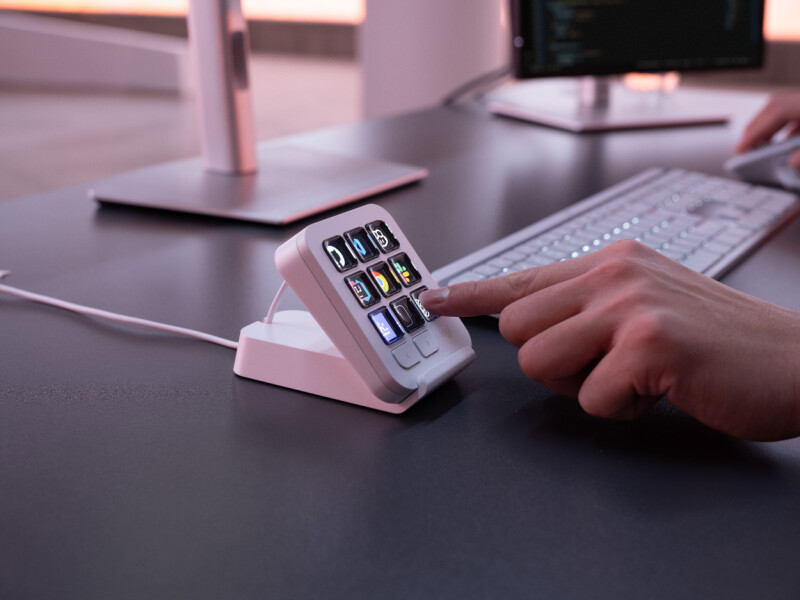
Logitech has released the MX Keypad, a developer-focused keypad derived from its MX Creative Console, and something that triggers a distinct sense of déjà vu. Do you remember Stack Overflow's "The Key" Joke? Three keys to copy and paste code from the developer's former best friend (until AI tools began to eat its lunch). Logitech took the keypad from its MX Creative Console product and made something similar to Stack Overflow's joke-that-became-a-thing, though considerably more extensible. The company sent us one to look at, and it's an interesting, if perhaps slightly expensive, bit of kit. At its heart, the MX Keypad is a set of nine keys that can trigger commands. Out of the box, it all looks a bit bland – there are monochrome images on the keys for playback, volume, screenshot taking, and even something to bring up an emoji panel when attached to a Windows device. However, things get a good deal more colorful and interesting when the device is connected to the Logi Options+ application. Then the device moves from being a curiosity to something that threatens to be indispensable, depending on your workflow. Using Word to knock out some writing? The MX Keypad will show a bunch of commonly used commands, or you can customize it to suit your workflow. How about Visual Studio Code? It's the same again – the keys light up with some default commands that you can easily make your own. According to Logitech, the device is a "Multi-App AI Control Center for Developers" and was developed in conjunction with keyboard jockeys. We'd call it a surprisingly useful bit of kit which has rapidly become part of our workflow, both for productivity and when diving into VS Code for some source wrangling. There are, of course, downsides. Although the price is relatively competitive, it is a little on the high side for what is ultimately a smart macro keypad. It also requires a USB-C connection, which we can understand given the power needs of those bright, backlit, color LCDs, but it would have been nice if Logitech could have come up with something that didn't need a cable. And, of course, you need Logitech's software to get the best out of it. In the box is the keypad itself, a USB-C cable, and a stand. We preferred to position it on the desk next to the keyboard for ease of access – the device has a slightly angled base, so it works well in that placement, but the inclusion of a stand is a nice touch. There's also an SDK if engineers (or their agents) wish to get their hands dirty, and a marketplace where plugins for the likes of Claude Code and OpenAI Codex can be found. According to Logitech, these give developers "real-time agent status tracking and CLI control right on the physical keys." Assuming you can make it work. We found the Logi Options+ software a little unintuitive and recommend some perseverance to get the best out of it, along with a little caution, since the built-in designer can create some deeply wince-inducing key designs. Ultimately, the MX Keypad represents some excellent repurposing by Logitech. The original MX Creative Console was useful for creative types, but its jog wheel was arguably of little use to developers. The touch panel, with its customizable keys, is a much more practical proposition; by selling it on its own, Logitech has cut the price to £89.99 ($99.99). It comes in light or dark gray and has a pleasingly quality feel. Having to plug it in is annoying, given the wireless nature of many other peripherals, and you do need to get to grips with the Logitech Options+ application to get the best out of it, but once it forms part of your workflow, it becomes a hard habit to break. ®
Nitter and XCancel, a pair of social media services which let you view posts on X without an X account, are down again after the latest round of legal wrangling. While the XCancel site now displays the message "Unfortunately, due to a new development in the ongoing legal proceedings, we are required to suspend this service again until further notice," Nitter's site is offline, and the code repository was archived on September 11, 2026. Things were not looking good in August for the services, which allowed a user to view posts on X (formerly Twitter) without an account or having to endure adverts and accept trackers. X's lawyers fired off a cease-and-desist letter, and the services acquiesced, going offline while the implications were digested. A few weeks later, the services were back up and running. At the time, zedeus, Nitter's maintainer, wrote, "an announcement will be made within a week, once we're able to reveal more information." Alas, that "more information" appears to be another cessation. XCancel wrote simply, "We can't share more details," and added a link to X for users keen for content. It is difficult to say for sure if and when the services might be back, or if users have headed elsewhere for their microblogging fix. Users not wishing to sign up for an X account have plenty of alternatives – Mastodon and Bluesky, for example. X has considerable form when it comes to rolling out the lawyers to fend off perceived threats or alleged abuses of its services, and is perfectly within its rights to do so. In the case of Nitter (and XCancel, which uses the project), the concern likely centered on how posts were viewed without an account, JavaScript, or ads. X also attempted to defend the Twitter and blue bird trademark and branding in a spat with tweet.app. It kept hold of Twitter (despite ditching the name after Musk's takeover), but tweet.app snapped up the word 'tweet' and the bird imagery. That's for the time being, at least. ®
ON CALL Friday morning is The Register's home for tech support stories, which we showcase in On Call – the weekly column made possible by readers generously sharing their experience of what it takes to fix things for the furious, fatuous, or feebleminded users that infest every workplace. This week, meet a reader we'll Regomize as "Lucia," who was once ordered to report immediately to a company director's office. "All of my files have gone," the director fumed, before insisting this was all the fault of the IT team, who were all inept, incompetent, and unfit for duty. Lucia examined the director's PC and found an empty "Home" folder. "I saw that he had clicked on the 'Up' directory icon to get there," Lucia told On Call. "I casually clicked on the 'Documents' folder and his files magically reappeared." Guess how much gratitude the director showed Lucia. If you guessed zero, congratulations. When Lucia tried to impart a quick lesson in directory navigation, the director was having none of it. "He simply bundled me out of his office, yelling, 'And make sure it doesn't happen again!'" Have your users refused to learn a simple fix? If so, a single click here will speed your story to On Call, so we can share it on a future Friday. ®
Laptop-maker Framework has decided to refund some of its customers who paid high prices for its model 13 Pro laptop due to the soaring cost of RAM. In July, the company told some customers who had ordered its very repairable machines that if they ordered 64GB of RAM, they would get just 32GB. “We recently received a cost update from our LPCAMM2 supplier that goes far beyond anything we had predicted and anything we’re able to absorb without placing our ability to operate at real financial risk,” the company wrote at the time. The company expected the price it paid for LPCAMM2 would go up by a low-to-mid double digit percentage from Q2 to Q3. Instead the price it paid was more than double the cost of its previous shipment. The company said the decision to reduce RAM in some machines “minimizes the impact of this challenge.” On Tuesday, Framework revealed that it has just scored “a limited quantity” of Micron 32GB and 64GB LPCAMM2 memory modules that it was able to acquire “at lower cost.” “While these new costs remain above our original pre-order launch baseline, they are lower than the last cost update that drove our current pricing for new pre-orders,” the company’s post states. Framework is therefore “rolling out price reductions across both already shipped and a subset of currently pending pre-orders.” That decision means customers who bought Framework laptops when it was paying top dollar for memory can get a refund for price difference between July and now. Customers who ordered when memory prices were high, but haven’t yet received a machine, will see the price of their orders fall. They can also edit their orders to acquire more memory at the new, lower price. Framework is not alone in eating the cost of increased memory costs. Storage vendor Everpure (formerly Pure Storage) promised to honor prices it quoted to customers before solid state disk prices soared. HPE recently promised to honor quotes from the day it issues them until it ships hardware, despite the fluctuating cost of memory. Such pledges probably aren’t altruistic, because major memory makers Micron and SK Hynix have offered long-term deals that reduce exposure to big price swings for buyers willing to commit to years of future purchases. Memory-makers’ margins are currently enormous, so if these deals sometimes mean they miss out on maximum profits it’s survivable. If HPE and Everpure have signed such deals, they get better visibility of future costs, and perhaps a little discount for committing to years of purchases. Others are hiking prices. Apple, which made $30 billion of profits in its most recent quarter, yesterday lifted the price of iPhones by $100. ®
It’s been a long time since Apple introduced a truly new product. The world finally got one today in the form of the folding iPhone Duo, and while it's new for Apple, it's not new for the industry. Nonetheless, Apple is once again hoping to validate a mostly moribund market as it did with tablets and smartwatches – folding phones only made up 1.6% of total smartphone sales last year, according to Counterpoint Research. Apple announced the iPhone Duo – did no one check the list of cursed gadget brands? – on Wednesday during new CEO John Ternus’ first crack at an Apple keynote, and it's a foldable iPhone. Given its aspect ratio, it’s probably more apt to call it an iPadphone, though. Ternus criticized the shape of other foldable smartphones, likening them to “just two phones strapped together” rather than a purpose-built foldable device. The Duo is intended to break that mold, though it was a little hard to tell from the event. Folded, the Duo has an oddly square shape that Apple described as being “passport sized,” with a 5.4” screen. When opened, the Duo has a 7.6” screen – not much smaller than the 8.3” screen on the iPad mini, which in turn is just a bit smaller than Huawei’s massive 10.3” tri-fold device. Speaking of screens, anyone who’s had an opportunity to play with a foldable smartphone knows their durability is abysmal. The original Samsung foldables were so soft they could be scored with a fingernail, and while successive models have improved, they still aren’t as hard as regular glass. Apple had plenty of platitudes to deliver about the screen, of course: Its many layers use a “visco-elastic adhesive” to allow components to slide against each other so everything folds more easily, and there’s a titanium plate at the back to keep the durability up, too. But what of its hardness? Not a word. As for the hinge – the bane of every foldable smartphone since the first Galaxy Fold hit shelves in 2019 – Apple claims that “over 100 tiny precision components” and the assistance of AI will ensure it's a tight and reliable fit. It’s worth pointing out, however, that Samsung has released eight generations of Galaxy Fold, and iFixit says the hinge is still its weakness. The Galaxy Fold 8, mind you, is only rated at IP48, meaning it’s not completely dust-tight, while the iPhone Duo claims to be IP68, meaning it’s completely dust-tight, though we’d caution waiting to see what the initial teardowns determine before deciding if that’s accurate. Either way, if you’re going to actually spring for this $1,999 phone you’d better plan to get an Apple Care plan, too. Unnecessary introductions There’s another big sticking point about the iPhone Duo that needs to be addressed, and that’s what it does with iOS. Apple apparently knows that such a wide device is going to make using the iOS dock, and other interface buttons less practical, so it’s decided to move all of them to the right side of the iOS screen. Navigation buttons, app interfaces, and everything one would use to get around is now located on the side to, in Apple’s words, “maximize vertical space for content.” That’s all well and good, but it means developers need to make arrangements for the iPhone Duo. Apple knows this, as it made sure to mention a new API that developers can use to adapt their apps. For what it's worth, a revamped version of Siri launching this fall has also required developers to adapt to its presence on Apple devices. According to the New York Times, that hasn’t been going too well, with many big developers yet to make the necessary changes to enable support for Apple Intelligence and its interface with Siri in their apps. That’s for a feature that extends across Apple’s ecosystem, mind you. The Duo is one single device. The Duo also only has two cameras to the iPhone Pro series’ triple lenses, and takes a step backwards by ditching FaceID for a TouchID button embedded in the side button. Apple tends to have a wait-and-see approach to new technology, joining the game late after the competition has had a chance to flounder around and make bad decisions with early models. It’s not clear whether the Duo will be a prime example of that philosophy in action, or whether it’ll join Apple’s other recent developments, like the Vision Pro, in relative obscurity. Ternus and company at least chose a good name if the product withers: No one remembers Microsoft’s Duo either. ®
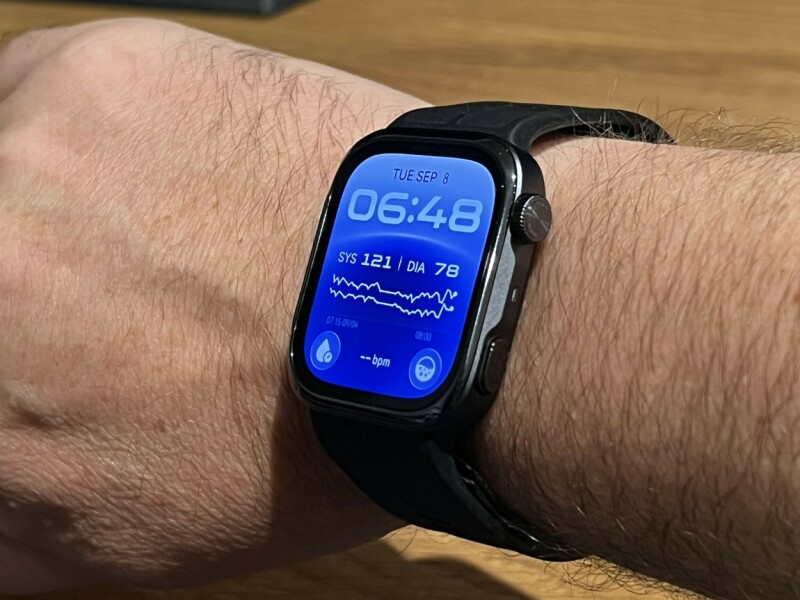
Huawei has released the Watch D3, the third generation of its blood-pressure-measuring wearable, as the company continues plowing a relatively lonely furrow in cuff-based technology. The D3 is an intriguing device for anyone seeking more credible blood pressure readings than many smartwatches claim to provide. Where many brands use optical technology to estimate blood pressure, the D series uses a pump built into the watch and an inflatable airbag inside the strap. The D3 is CE-certified as a medical device under the EU Medical Device Regulation (MDR). This is hardly Huawei's first rodeo: two predecessors have refined the formula and made the device feel less like clinical equipment and more like an ordinary piece of consumer technology. That said, it remains chunky compared with other wearables sold by Huawei and its rivals – the watch body weighs 40 g and is 11.3 mm thick. It's a noticeable improvement over the D2, but still feels like a large device. As it should. It includes a pump, and the removable strap (two sizes come in the box) has a built-in airbag. The Register was given a pair of these watches for a long-term test, and there is a noticeable physical difference between the D2 and D3. Subjectively, it was difficult not to be aware of the D2, but the D3, despite being only a few grams lighter and a few millimeters thinner, is far less obtrusive. Until, of course, it measures your blood pressure, when the tightening strap makes its presence obvious. Although virtually silent, the strap noticeably tightens as the watch measures blood pressure, and the software recommends sitting still, not talking, and placing a hand over your chest while the measurement takes place. The process takes barely a minute and produced plausible, consistent readings during our test. The device supports ambulatory blood pressure monitoring (ABPM), taking readings at intervals over 24 hours to provide a broader picture of how blood pressure changes during the day and night. A gentle nudge from the watch signals it's time to measure, and away it goes. It also supports blood pressure measurements before and after exercise, and can issue reminders following changes in altitude or temperature. Huawei's Health Community feature allows users to share health information and alerts with family members. Other metrics, such as pulse and blood oxygen, are tracked, but blood pressure measurements are the watch's party trick. Other functionality, such as phone notifications (we paired ours with an iPhone, and calls, messages, and other alerts appeared without drama), is present. However, you will need to install the Huawei Health app to use the device, which might cause some users concern about where their health data is going. We spoke to Rico Zhang, Huawei's president for the product line, via a translator during a launch event in Munich about concerns regarding privacy and data protection. He acknowledged the concern, saying Huawei follows all local policies on personal data and user privacy, and noted that the issue is fundamental "if we want to remain a wearable business in Europe in the future." Zhang gave a similar answer on repairability, saying Huawei followed local regulations. In the EU, battery replacement by consumers is not currently a requirement for wearables sold in the region. Probably also a good idea not to launch a Chinese wearable in Europe with a huge wooden metaphor parked outside. In day-to-day usage, the D3 feels like a slightly larger smartwatch, although we'd contend the user interface is slightly busier than, say, an Apple Watch. The screen is bright (a 1.92-inch display with narrower bezels and 3,000-nit peak brightness), and in our usage we got about five days of battery life. Huawei claims up to six days under typical use, although it says battery life falls to about one day with ABPM enabled. Aside from the user interface, which mainly requires learning new muscle memory, the water resistance is also an issue. Huawei told us the device has an IP68 rating but should not be worn in the shower or submerged for swimming. The company also says it is not water-resistant while taking a blood pressure measurement. Those restrictions are understandable given the inflatable mechanism, but still disappointing. Any water that does get on it also needs to be wiped off to avoid interfering with measurement accuracy. The D3 is a useful device for people who want cuff-based blood pressure readings without carrying a separate upper-arm monitor that sounds like a lawnmower. Its certification as a medical device gives it more credibility than many smartwatch-based alternatives, despite the great strides made with optics over the years, and its styling and size make it feel more like a normal wearable than a health device. The downsides are a busy interface outside the health functions and a design that remains chunkier than other wearables, including Huawei's own, despite efforts to slim it down. The Huawei Watch D3 launches in the UK on September 23 at £399.99. It comes in Black, the version we tested, plus Gold and Mocha Gold. ®
The Nitter project will continue "following legal advice," meaning XCancel, a public service built on its open source code, is back online. As of September 7, nitter.net displayed the announcement: "Following legal advice, the Nitter project will continue. This instance and others will be back up and running shortly." XCancel, a public instance built on Nitter, was operational again. Nitter is a free, open source front end for reading posts on X, the platform formerly known as Twitter before it was acquired and rebranded by self-described "free speech absolutist" Elon Musk. It requires no X account and, according to the project's repository, offers "zero ads" with "no JavaScript required." However, using Nitter or an instance based on it, such as XCancel, can feel like a game of Whac-A-Mole, with frequent changes required whenever X restricts another means of accessing its data. In January 2024, maintainer zedeus declared the project dead after X disabled the guest accounts on which it relied. Nitter returned at the start of 2025 using account sessions, although the maintainer warned: "Nitter is officially back, but hosting an instance is nowhere near as easy as it used to be." Then, on August 24, X deployed the lawyers and sent cease-and-desist letters demanding the permanent removal of Nitter instances and the project's repository. The repository was archived, instances went offline, and for a few weeks the lights went out. The project now says it will continue, although the main nitter.net instance has yet to resume normal operation. According to zedeus, "an announcement will be made within a week, once we're able to reveal more information." The Register asked X to comment, but have yet to receive a response. Nitter and similar front ends serve users who do not want an X account or the platform's tracking, while still allowing them to read posts from organizations that remain active there. Users cannot publish through Nitter, only read public posts. What legal advice persuaded Nitter to continue, and whether X plans another move against the project, should become clearer when zedeus publishes the promised announcement. ®
One year into the EU's repairability rules for smartphones and tablets, more than 80 percent of devices still lack the necessary repair information, Right to Repair Europe reports. The campaign group says that mobile devices available in the trading bloc must include a mandatory self-reported repairability score, and the device maker has an obligation to publish information to help users repair their kit. These requirements came into force from June 2025. Yet a review of the European Product Registry for Energy Labelling, where manufacturers are required to list where they publish the required information, found that few have so far fallen in line. Right to Repair says that of 2,334 records for smartphone models brought to market over the last year, only about 18 percent actually list a website where spare parts prices or repair instructions can be found. About half of the records simply have blanks where there should be a URL, while another 19 percent refer to a product page or support page not containing any relevant repair instructions or spare parts listings. Some records even refer customers to Temu or AliExpress for spare parts and repair instructions. Despite this, some of the blatantly non-compliant manufacturers still award themselves top marks for their repair information, resulting in a self-declared class A for repairability. The campaign group also complains that in many instances where spare parts are listed, they are given a ridiculously wide price bracket, such as between €14 and €128 for a replacement battery. But even for products that are technically compliant, the listed weblink still rarely offers a direct path to parts prices. For major brands such as Apple and Samsung, it can take some clicking around before you find what you need, Right to Repair says. The repair score and link to repair information should be provided on the energy efficiency label on products, but - we're told - the latter is missing for a significant number of products offered for sale, both in physical stores and online. Right to Repair Europe quite understandably questions the effectiveness of the EU’s approach, if so many devices are going on sale without complying with the regulations. Clearly, no public authority has taken it upon themselves to check the declared data, as thousands of blank fields seem to have gone unnoticed, it says. It likewise questions the wisdom of allowing manufacturers to mark their own homework on repairability scores, and asks if consumers can really trust them. We asked the European Commission for its reaction to the European Right to Repair campaign’s findings, and will update this article if it replies with comment. “The obligation for publicly available spare parts prices and repair manuals is a great step forward, but it needs to be enforced better,” said Thomas Opsomer, iFixit’s EU policy spokesperson, on behalf of the Right to Repair Europe Coalition. “Since the repairability scores are self-assigned, manufacturers should be required to publish the full documentation underpinning the scores they report, so that anyone can check their homework. It should also be made easier for consumers and repairers to report non-compliance,” he added. Next year, repairability is set to get another boost. EU regulations come into force in February that will mean new mobile devices must have user-replaceable batteries, with some exceptions for products like wearables. ®
ON CALL By the end of the working week it can be tempting to phone it in, but The Register instead works to bring you extra amusement in the form of a new edition of On Call – the reader-contributed column that shares your tech support stories. This week, meet a reader we’ll Regomize as “Orson” who told us they very much enjoyed the recent On Call about the lawyer who didn’t understand italics. “It reminded me of an incident many years ago when I was a Facilities Manager for a major UK food company,” Orson told On Call. “I came in one morning and was summoned by the Company Secretary, who was clearly annoyed because the night before, she tried to send an extremely urgent fax and the fax machine did not work.” For those who don’t remember fax machines, or successfully tried to forget them, they packed a low-res scanner, a nasty printer, and a slow modem into a small appliance. The user interface included a numeric keypad used to enter the phone number of whichever remote fax machine you wanted to send a document to. Faxes were horrible, but faster than the postal service. Email killed faxes in the late 1990s (except in Japan) though manufacturers kept including fax functions in multifunction printers (MFPs) for years. But we digress: Orson decided the way to solve this problem was to start with the wetware. “I asked her to show me what she had done and watched as she placed the document on the in-tray, used the keypad to dial the number, and then hit Enter,” he told On Call. Having gone through those steps, the Company Secretary stared at Orson, her pose clearly communicating a desire for him to swiftly explain why technology had let her down – and why the facilities team had left the fax machine in such a state. “I told her she was trying to use the photocopier,” Orson told On Call. To be fair, the presence of MFPs in many workplaces meant that wasn’t a completely horrible mistake. But as an example of a rather silly tech support moment, it makes for a fine On Call! Does a similar tale lurk in your memory? If so, click here to send your story to On Call. We’d offer to let you fax it in, but The Register doesn’t have a fax machine anymore. ®
There'll be no rest for X's lawyers this weekend after startup Operation Bluebird rolled out the twitter.now social media network this week. The launch came the same week as Nitter was served a cease-and-desist letter, and it's the latest in the saga of Twitter branding that X boss Elon Musk dispensed with when renaming his $44 billion purchase as 'X'. Unlike Nitter, which lets users view X content without an account, twitter.info is a new social media platform and "not affiliated with X Corp." Users must sign up for a paid account and can then post and view posts. "You'll see trust signals on posts," a FAQ on the service's website explains, "and you control your own feed with a simple dial — freedom of speech, not freedom of reach." At present, the service is asking $20 for early access as a founder, and $40 for the "Fighter" tier, which adds a slingshot badge to the user's profile. As for why the service isn't free, like other X alternatives such as Bluesky or Mastodon, the answer is, "To keep bots out and stay independent." The FAQ continues, "A paid door proves there's a real person behind an account, and member funding keeps us answerable to you instead of advertisers." Operation Bluebird filed to claim the Twitter trademark last year, reasoning that since Musk ditched it in favor of X, it was fair game. X disagreed, and snapped back: "Twitter never left and continues to be exclusively owned by X Corp." The case is ongoing, and no judgment has been made. However, the team behind Operation Bluebird is clearly confident enough in the outcome to launch twitter.now and posted, "Twitter is a reclaimed brand." It also notes, "Twitter.now is not an attempt to recreate the old platform." The Register asked X what it makes of it all, but Musk's mouthpiece has yet to respond. In a week in which X lawyers have seen off the likes of XCancel and Nitter, at least for the time being, it will be interesting to see what happens to twitter.now. X's content is not what the service is offering, but the old Twitter branding is certainly in its crosshairs. Your move, X. ®
HP reckons enterprises fretting about the spiraling cost of AI tokens have an obvious alternative: run the models locally and spend the money on a more expensive PC instead. The pitch emerged during HP's third-quarter earnings call on Wednesday, where executives repeatedly pointed to cloud AI costs as one reason customers are buying higher-spec machines that can do more AI work locally. AI PCs are becoming harder to avoid as HP pushes more of its lineup upmarket, but the company insists customers are getting something for the extra cash. "Clearly, the AI PCs are now providing more value than what it was last year," said Ketan Patel, president of HP's Personal Systems business. "Clearly, as the workloads are coming from cloud to the device, it is adding significant value for our customers, especially on token economics, which is a big topic right now, as you start deploying workloads in a customer environment." Patel also pointed to keeping sensitive data closer to where it is generated, reduced dependence on network connectivity, and faster response times as reasons to run AI locally. HP says it is already seeing customers use the machines for employee productivity, engineering and design, customer service, and predictive maintenance. The token issue came up again later in the earnings call, when HP was asked whether enterprises were looking at AI PCs specifically to get models off the internet and avoid cloud charges. "Yes, there are two meaningful conversations which are going on right now," Patel replied. The first, he said, was "this increasing cost of token and how bringing models locally on the edge can help them optimize cost." The second was how enterprises securely govern the growing number of AI agents wandering around their environments. All of this is rather convenient for HP, since AI PCs cost more and, by the company's own admission, are good for its margins. AI PCs made up 46 percent of HP's PC mix during the quarter, and the company expects that to rise to between 60 and 70 percent in fiscal 2027 and more than 70 percent in 2028. Patel said the shift would be "margin accretive," while interim CEO Bruce Broussard noted that AI PCs come at "premium pricing" and give HP opportunities to pile additional services and security products on top, making them "more valuable to the customer and frankly, more valuable to us." The effect is already showing up in HP's numbers. Personal Systems revenue jumped 18 percent year over year to $11.8 billion even though PC volumes fell 16 percent. HP attributed that seemingly improbable combination to higher prices, a richer mix of premium machines and AI PCs, and sales of attached services and peripherals. Those non-hardware businesses now contribute about a third of Personal Systems gross profit. Anyone hoping PC prices have finished climbing may also want to look away. CFO Karen Parkhill said HP has been increasing prices as component costs rise and "expect[s] to continue to increase pricing." Patel added that, depending on how a machine is sold, it can take anywhere from immediately to "a few months" for those increases to reach customers. Still, HP's AI ambitions aren't confined to convincing enterprises they need beefier laptops. The company has also deployed AI to tackle one of computing's more enduring problems: people printing all the rubbish surrounding the thing they actually wanted. It talked up its Precise Print software, which uses AI to remove unnecessary web content before printing, which HP claims can cut paper use by up to 38 percent and ink consumption by as much as 47 percent. After decades spent finding increasingly imaginative ways to sell us printer ink, HP has apparently decided artificial intelligence can help us use less of it. ®

 Login