 Login

SpaceX Targets September 22 for Starship’s First Orbital Flight
Starship Aims for Orbit With Working Cargo Every Starship launched so far has followed a suborbital arc that

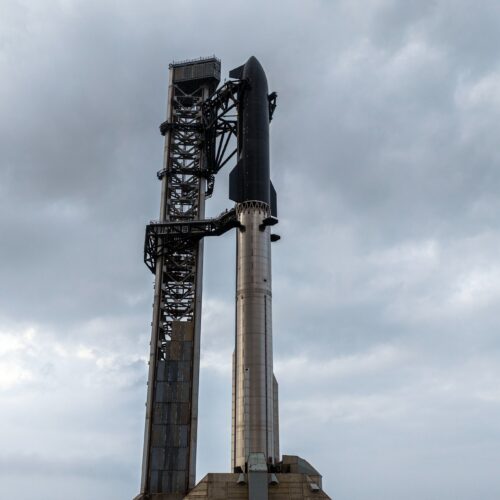
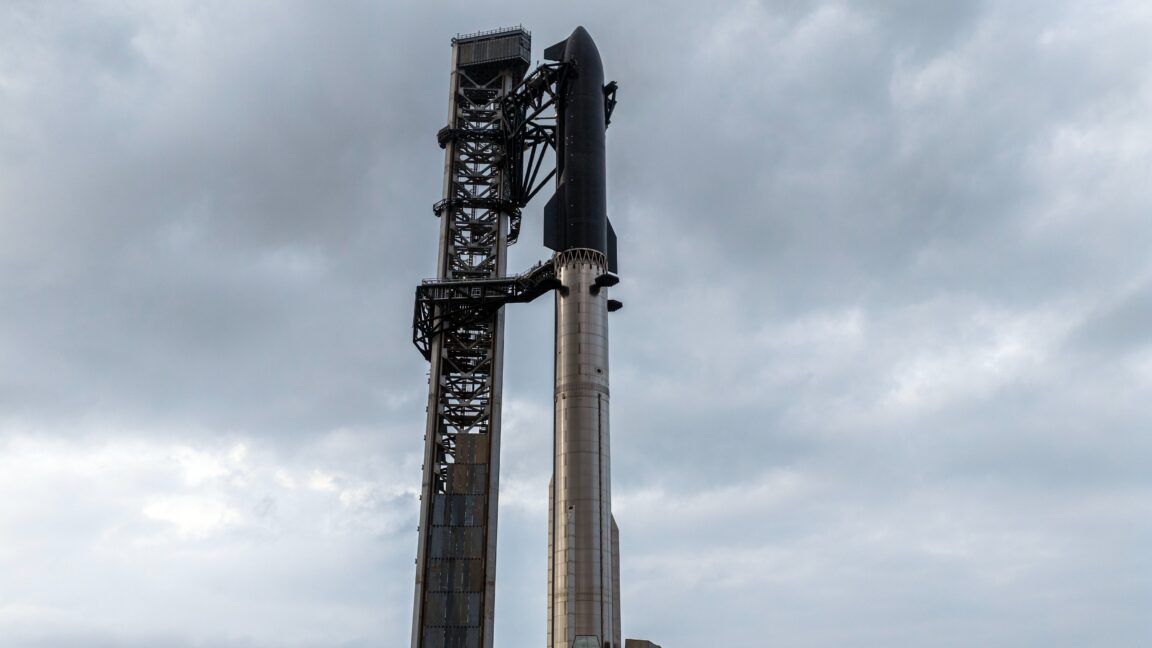
Pending regulatory approval, SpaceX said today it intends to launch its 14th Starship mission as early as September 22. This flight is notable, as it will be the first time that SpaceX attempts to launch the experimental vehicle into orbit.
The company set a target liftoff time of 7:15 am local in Texas (12:15 UTC), with a 75-minute launch window. Sunrise in Brownsville, Texas, is 7:17 am CT, so the launch could make for some striking imagery.
The super heavy lift rocket will be carrying 26 of the larger V3 Starlink satellites into an orbit 275 km above the Earth. In an update on its website, SpaceX said the Starship upper stage will seek to complete six orbits around the Earth before completing its mission after about 10 hours.
© SpaceX
Pending regulatory approval, SpaceX said today it intends to launch its 14th Starship mission as early as September 22. This flight is notable, as it will be the first time that SpaceX attempts to launch the experimental vehicle into orbit.
The company set a target liftoff time of 7:15 am local in Texas (12:15 UTC), with a 75-minute launch window. Sunrise in Brownsville, Texas, is 7:17 am CT, so the launch could make for some striking imagery.
The super heavy lift rocket will be carrying 26 of the larger V3 Starlink satellites into an orbit 275 km above the Earth. In an update on its website, SpaceX said the Starship upper stage will seek to complete six orbits around the Earth before completing its mission after about 10 hours.
© SpaceX
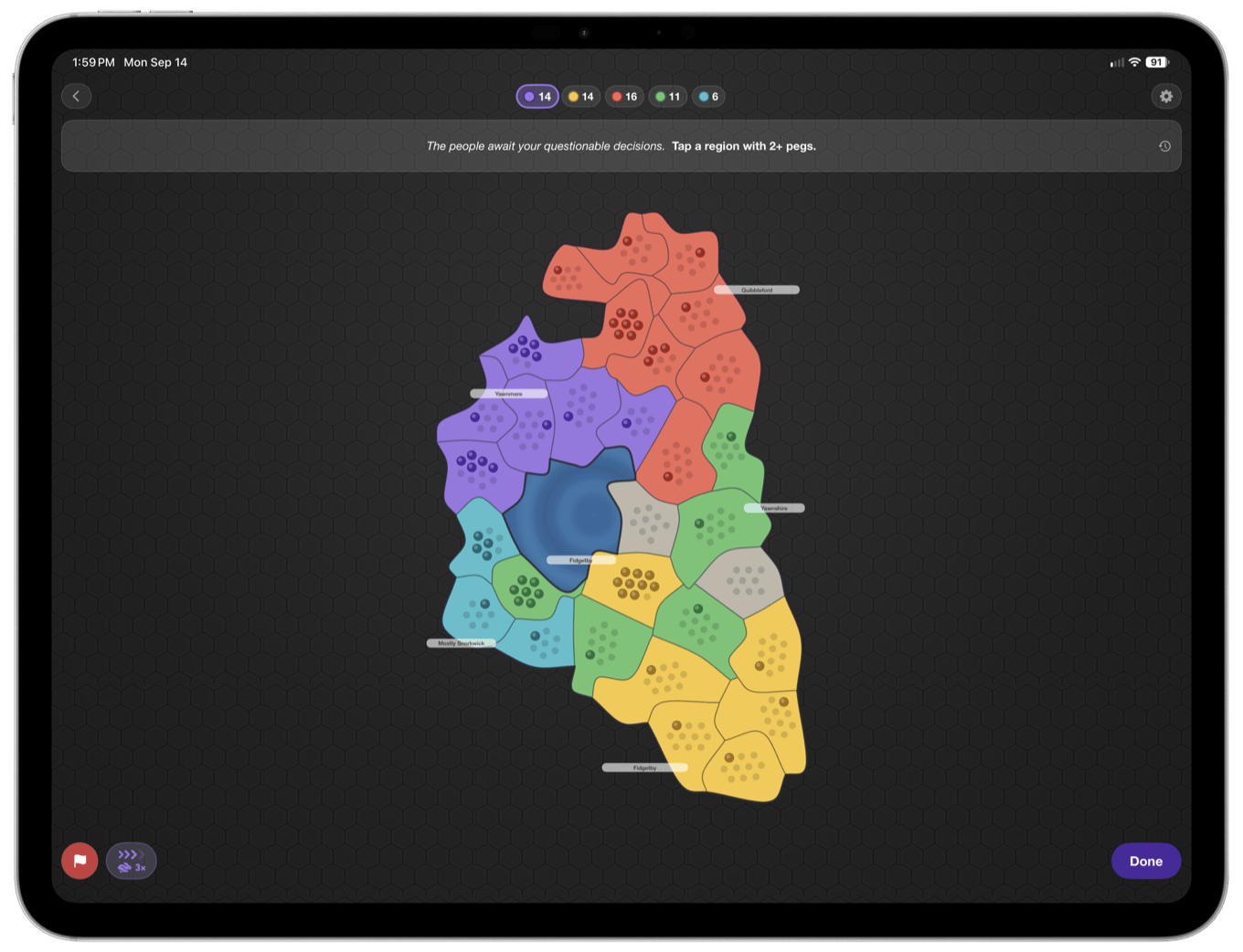
Strategery was always one of our very favorite games in the early days of iOS. And by “we,” I mean large portions of the staff at Macworld, including both myself and Lex Friedman. Lex reviewed the app for Macworld, and we even gave it an award. It was a Hall of Fame iPhone game.
Strategery—named for Will Ferrell’s made-up word during his impression of George W. Bush—was a take on the classic strategy board game Risk. Risk is a clunky game to play, with an awful lot of little plastic pieces and dice rolling. Strategery did away with that, resolving battles with a single tap while replacing the map-inspired board with a series of procedurally generated game terrains. It was really great.
Now the bad news: The classic Strategery game, which hasn’t been updated for nearly a decade, doesn’t work on iOS 27, which (if you hadn’t noticed) came out today. I hate it when beloved software dies. And so does Lex, which is why he sprang into action and began building a game that could be a suitable Strategery replacement. (It was very good! I have played it a bunch over the last few weeks, via TestFlight.)
But then something delightful happened, as Lex recounts:
I loved Strategery. I didn’t feel good about knocking it off. So I reached out to the developers…. I had several delightful video conversations with Sumul and Courtland. And I lucked out: I found two of the nicest developers you could ever hope to meet. They still felt a ton of love for Strategery, they loved how many people still felt warmly about the game — but they didn’t have time to devote to keeping it updated. We worked out a deal for me to take it on.
The result is that Lex’s game inspired by Strategery has become Strategery! Existing Strategery users will just get it as a free update. And new players can buy it for $5.
Lex has added a few new features to Strategery, and with the consultation of the original developers, he’s restored some features he hadn’t even realized that he had missed.
What a happy ending. Strategery would always have a place in App Valhalla, but it’s even better if it remains alive and well. Thanks, Lex.
The Internet’s Dr. Drang on the Live Rewind and Siri Recap features announced this week:
The hoops Apple jumped through to avoid certain words is pretty funny. For example, in the discussion of Live Rewind, we learn that
Audio from the microphone flows into the audio buffer inside the Secure Exclave on the S11 chip.
You think your watch records the audio around you? No no no. The audio flows into the Secure Enclave, and flowing is definitely not recording because it’s a different word.
Notably Apple chose not to use a very common synonym for “flowing” that would be instantly understandable to most, because no doubt it did not like the implications of that word. So I guess it depends on what the meaning of the word “is” is.1
Also worth noting that the Siri Recap feature, unlike Live Rewind, does not even bother to alert people around you that recording—sorry, flowing—is happening, using similar linguistic hopscotch. From Apple’s own privacy document:
There is no audible signal because no raw audio is retained, and there is no way to reconstruct the original audio from a Siri Recap or share raw audio with anyone.
The implication obviously being only raw audio could even be considered a privacy violation. That’s an interesting way of framing it, even though I’m pretty sure there are people who would be upset to know that their conversations are being summarized even if audio is not being retained.
Glenn has already done a thorough and even-handed rundown of this feature, but I think Dr. Drang’s point about the lengths to which Apple has to contort itself to make it seem like this feature is on the up-and-up is, in and of itself, telling.

Welcome to this edition of The Intelligence Brief… This week, SpaceX launched USSF-153, a classified U.S. Space Force mission carrying a mysterious payload into orbit aboard a Falcon 9 rocket, highlighting the growing intersection between commercial spaceflight and U.S. national security operations. In our analysis, we’ll be looking at 1) what we currently know about the highly secretive USSF-153 mission, 2) how details surrounding its flight path may offer clues that classified satellites potentially based on SpaceX’s Starshield platform were aboard, 3) how the mission comes amid growing concerns about an emerging era of military competition and potential conflict in Earth’s orbit, and 4) why the launch represents another milestone for SpaceX as reusable commercial rockets play an increasingly important role in national security space missions.
“SpaceX’s ongoing work with the Department of Defense and other partners demonstrates our ability to provide in-space and on-ground capability at scale.”
If you enjoy the news and perspectives offered by The Debrief, make sure that you aren’t missing our stories by making us one of your “preferred sources” on Google News. You can simply follow this link to add The Debrief to your list of favorites, and you can read more about Google’s preferred sources in our article here.
Earlier today, SpaceX launched a classified mission for the U.S. Space Force, which carried a mysterious payload to orbit on one of the company’s Falcon 9 rockets.
The mission, officially known as USSF-153, lifted off from Vandenberg Space Force Base in California at around 11:37 a.m. EDT on Thursday. Beyond that, little else is known about what, exactly, the classified payload carried aboard the Falcon 9 might have been.
Here’s a look at what we currently know about this morning’s secretive launch, and how it may be related to other recent developments involving the growing use of Earth’s orbit in the advancement of U.S. national security objectives.
According to the company’s website, SpaceX says the USSF-153 mission marks the 27th flight for the first stage SpaceX rocket booster supporting this mission.
The same booster was previously used for the launches of missions that included the Crew-7, CRS-29, PACE, Transporter-10, EarthCARE, NROL-186, Transporter-13, TRACERS, NROL-48, COSMO-SkyMED Second Generation FM3, and 16 Starlink missions, according to an update on the USSF-153 mission page.
“Following stage separation, the first stage will land on the Of Course I Still Love You droneship, which will be stationed in the Pacific Ocean,” the SpaceX update read, noting that it may be possible for sonic booms to be heard in the region around Santa Barbara and surrounding communities, adding that “what residents experience will depend on weather and other conditions.”
The launch was live-streamed by SpaceX, and the moment of takeoff of the classified mission was subsequently added to the company’s official X account. However, few additional details about the exact nature of the mission were revealed, although experts have noted that at least a few details about the rocket’s mission could be discernible from its planned flight path, offering some clues about what USSF-153 might be carrying.
Some outlets have noted the similarity between the current mission’s rocket-stage drop zones and those from past SpaceX Starlink Group 15 missions, which could mean that a group of classified satellites, possibly built using SpaceX’s Starshield satellite platform, may be part of what’s on board.
Serving as the national-security counterpart to the technologies driving SpaceX’s massive Starlink broadband constellation, the program reportedly uses the company’s existing satellite and launch technology to support national security missions. If this is indeed a part of USSF-153’s mission, it would add to the increasingly important role commercial space technologies are playing in U.S. military and intelligence operations.
Last week’s Intelligence Brief newsletter covered recent concerns about potential future conflict in space, which include the use of sophisticated military capabilities in space by the U.S. and foreign adversary nations.
Experts warn that Earth’s orbit might become a critical battlefield in future conflicts, with recent examples of technologies currently being tested for this that include China’s secretive Shenlong spaceplane, as well as the U.S. and its allies demonstrating similar “dogfighting,” rendezvous, and other potentially military operations in orbit.
Additionally, Russia’s longstanding pursuit of anti-satellite weapons adds to the emerging threats that may soon occupy Earth’s orbit. Although it remains unknown whether Thursday’s mission could be related to such capabilities and other technologies aimed at leveraging Earth’s orbit for military purposes, its classified nature does leave this possibility open.
Finally, Thursday’s mission also represents a milestone in SpaceX’s busy 2026 launch schedule, with USSF-153 expected to become the company’s 104th Falcon 9 mission of the year.
Eighty of those launches have been dedicated to expanding the company’s ever-growing Starlink constellation, which now consists of more than 11,000 active satellites in low Earth orbit.
Despite the unusual secrecy surrounding its cargo, the USSF-153 launch showcases the new reusable commercial rocket industry SpaceX has developed, which is now frequently relied on by the U.S. military for carrying national-security hardware into orbit.
That concludes this week’s installment of The Intelligence Brief. You can read past editions of our newsletter at our website, or if you found this installment online, don’t forget to subscribe and get future email editions from us here. Also, if you have a tip or other information you’d like to send along directly to me, you can email me at micah [@] thedebrief [dot] org, or reach me on X: @MicahHanks.

Here are the top stories we’re covering right now…
We’ll all know soon enough, but kudos to Bloomberg’s Mark Gurman for breaking some new details 12 hours before Apple’s event begins:
Its device, called the iPhone Duo, will start at $2,000… The entry-level version will include 256 gigabytes of storage, with Apple offering higher-capacity versions that will take the price all the way up to roughly $3,000…. There will be a magnetic hinge system and support for the Apple Pencil stylus.
The Duo will go on sale as early as October and come in white and dark blue.
iPhone Duo is a good name. Not only does it make sense — two screens! — but it references an old Apple product name, and keeps iPhone Ultra in reserve for future use.
I’ve been wondering about Apple Pencil support on the iPhone for some time now. This product does sort of make sense for it, given the larger canvas of an interior screen.
The starting price seems high in practical terms, but also actually quite aggressive given the current out-of-control state of affairs for tech gadget costs. (Obviously the better configurations will escalate rapidly in price, as is Apple’s tradition.)
Gurman also suggests this device won’t ship as quickly as the new iPhone Pro models—again, not too much of a surprise, as that’s what happened with the iPhone X. And as for the colors, well, dark blue is certainly more interesting than another Space Gray. I do wonder why the Color Czar has decided that black is out as a color, but fashion does what it wants.
Anyway, happy Christmas Eve (and Christmas morning) everyone. See you back here after all is revealed.
Os maiores operadores europeus de telecomunicações estão a discutir a criação de um consórcio para disputar o espectro de satélite que a União Europeia quer reservar para serviços diretos ao telemóvel
The post Operadoras europeias alinham estratégia para levar comunicações por satélite aos telemóveis appeared first on Tek Notícias.
General Motors has been saying for a few years now that it’s going to get rid of CarPlay and Android Auto on its EVs because, well, reasons.
Well, well, well… maybe not. Ian Wright of CarBuzz writes:
The Cadillac configurator is up for several 2027 models, and we spotted that the Lyriq still shows CarPlay and Android Auto being standard. The Lyriq is Cadillac’s first all-electric vehicle and a tech-forward vehicle that we think is becoming one of the best luxury EVs available. So, it piqued our interest that the GM brand was still including the things it was supposed to be phasing out, and we reached out to Cadillac for comment.
“Cadillac is continuing to evolve its infotainment strategy across the EV portfolio, based on customer feedback, while also prioritizing the native, in-vehicle experience,” a Cadillac representative told CarBuzz. And, the language is telling. The plan was to start the phasing out of phone projection with the 2024 Chevrolet Blazer EV, with CEO Mary Barra saying: “We made a decision to prioritize our EV vehicles during this timeframe, and as we go forward, we’ll continue across the portfolio.”
Wright does a good job at spotting the weasel words in the new Cadillac statement. Three years after a bold pronouncement that GM wasn’t interested in listening to its customers and giving them what they wanted, here comes an “evolve[d] infotainment strategy… based on customer feedback.”
Translation: Oh, people actually do want CarPlay, so we probably should let them have it, or they’re not going to want to buy our cars.
This isn’t how this story needed to go, but if GM wants to silently walk back its stupid pronouncement from 2023, it’s still a win for anyone in the market for a new car.
Russia's attempt to replicate SpaceX's Starlink satellite network seems to be moving as slowly as the front lines in eastern Ukraine.
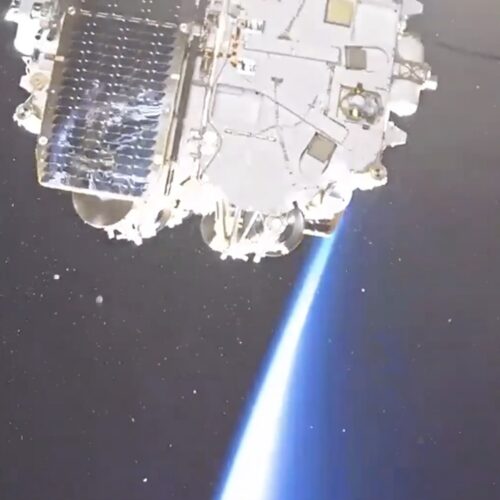
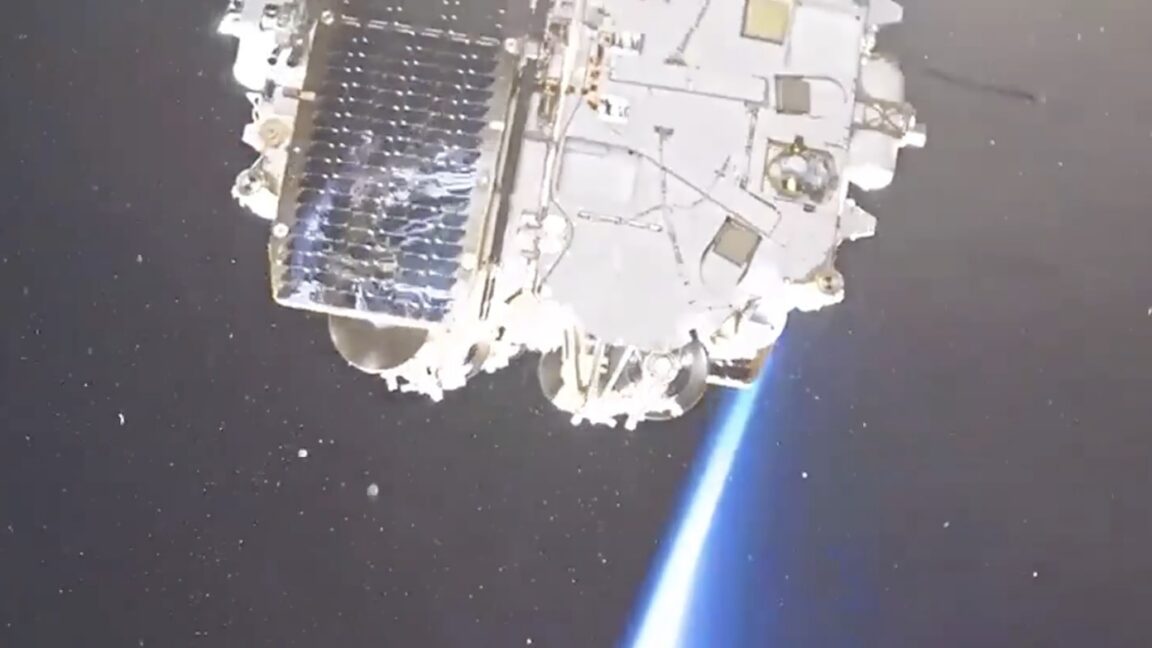
The Rassvet program, often billed as Russia's answer to Starlink, started launching its first operational satellites earlier this year. Two launches, one in March and a second in July, have delivered 32 Rassvet satellites to low-Earth orbit, some 10 percent of the roughly 300 Rassvet spacecraft Russia aims to put into orbit by the end of next year to provide connectivity for military and civilian users. The company in charge of Rassvet, Bureau 1440, wants to deploy 924 satellites by 2035.
But none of the 32 satellites launched so far have reached the 500-mile (800-kilometer) orbit they were designed to operate in. The rockets that launched the first two batches of Rassvets released the satellites much closer to Earth, and the satellites were expected to use their own plasma engines to raise their orbits over the next few months.
© Bureau 1440
Joe Lemire of Sports Business Journal has a detailed story about how MLB came to hire Jason Weingradt, the developer behind the amazing baseball app Mosaic:
By drawing on public application programming interfaces (APIs) from the league and other sources, Weingradt built an app in TestFlight — Apple’s home for products still in beta — and shared his new creation, Mosaic, by posting on Threads and tagging #buildinpublic to solicit early adopter feedback….
That very same day, MLB Executive Vice President Kenny Gersh received a Slack message from colleagues alerting him to Mosaic and asking if the league’s legal team should get involved. While of course not wanting just any developer to profit from baseball’s IP, Gersh appreciated that this was a controlled environment that required an MLB.tv subscription to access premium features, so he replied, “Not ideal, but it’s not a huge problem yet. Maybe we’ll hire.”
They hired. I know there’s a lot of skepticism out there about whether the big organization will just crush the Little App That Could. To me, it says a lot about MLB’s tech brain trust that they embraced Weingradt and that he’s still dropping incredibly impressive new features into the app on a regular basis.
Apple’s overhaul of Siri and its expansion of Apple Intelligence are extensive. Take Control publisher Joe Kissell and I looked at this mountain of changes and opted to research and write an entirely new book, Take Control of Siri AI and Apple Intelligence, to help us get a handle on what’s new and thus pass it along to readers. This title is now available in its 1.0 release, ahead of the version 27 operating systems shipping in September. We also have our books on iOS 27/iPadOS 27 and Golden Gate available in 1.0 versions. All will receive free updates when the production versions ship.
We look at everything related to Siri AI, including the new Siri app and its ability to handle contextually aware conversations, the expansion of Apple Intelligence into new apps, enhancements to accessibility features, and, in particular, Visual Intelligence’s heightened prominence as a camera feature on the iPhone and iPad. We also dive into how Apple’s Private Compute Cloud works and associated privacy issues, particularly around the company’s extension of this on-device processing to Apple-managed hardware at Google Cloud.
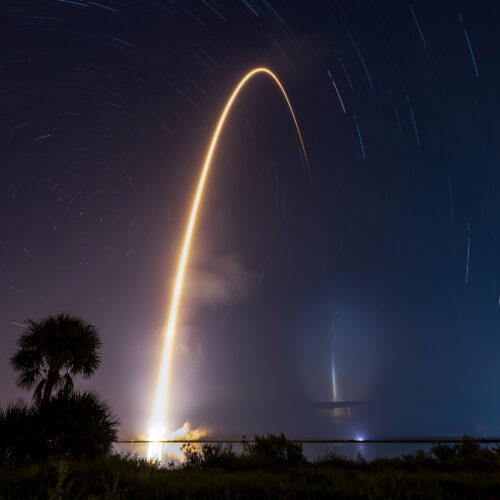
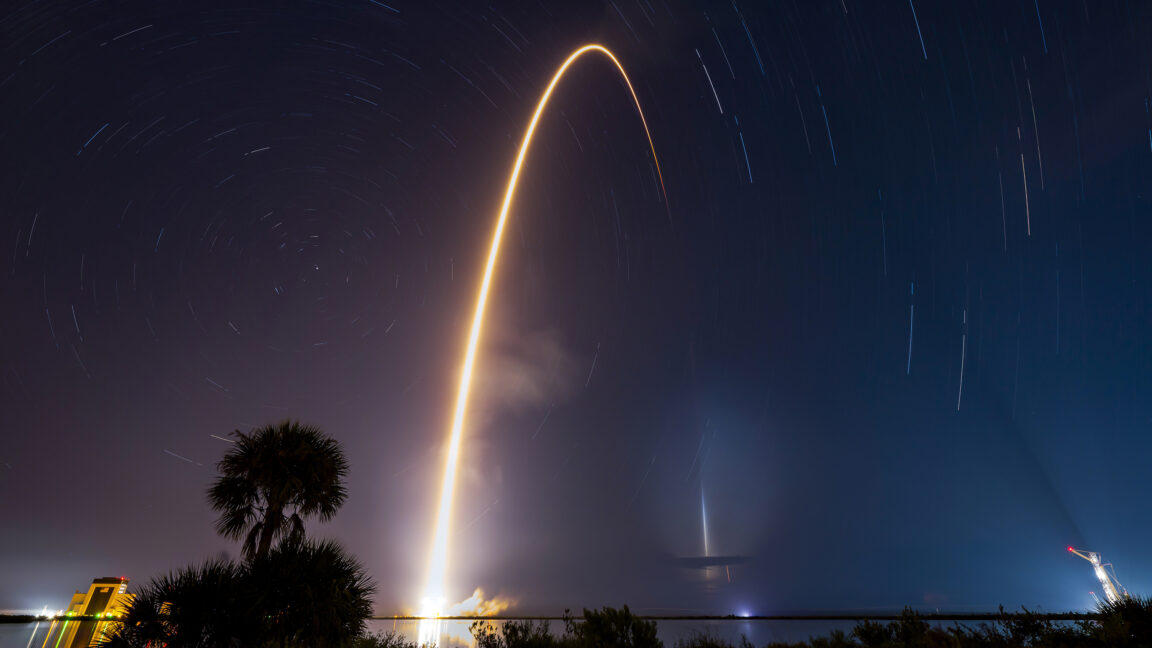
SpaceX made Florida's Space Coast home to the world's busiest spaceport for a decade, but that will change this year. The company is significantly cutting the number of launches from Florida until Starship arrives, a senior SpaceX official confirmed Tuesday.
The Falcon 9 rocket has been SpaceX's workhorse, routinely launching batches of satellites for the company's Starlink network, primarily from launch pads at Cape Canaveral Space Force Station and NASA's Kennedy Space Center in Florida. There were 165 Falcon 9 launches last year—about three flights per week—and about 75 percent of them carried Starlink satellites.
This year is different. SpaceX has launched more missions from its West Coast launch pad at Vandenberg Space Force Base in California since January, and this trend will amplify for the rest of the year.
© SpaceX
Today Relay launched the public and private feeds of my new podcast, Designed in California. If you’re interested in the history of Apple, check it out. The first few episodes in the feed are episodes we previously released in the Upgrade podcast feed; our first all-new episode debuts next week.
If you’re a Kickstarter backer who pledged at a level where you’ll get the special member feeds, check your messages for information about how to redeem that pledge and get access to the special feeds.
And if you didn’t back the Kickstarter, you can now join us via Relay and get access to entire series of the show all at once, ad free. Next week, members will receive the entirety of our series about Apple’s mid-90s Mac OS crisis that led to the company buying NeXT and bringing back Steve Jobs, which led to the creation of Mac OS X. Those episodes will play out over the next six weeks in the main feed, but members will get all seven episodes, five hours and 15 minutes of content, all at once. (Plus the first of our monthly bonus episodes.)
There’s also a YouTube channel, and Spotify users will find that video version available within Spotify as well.
Mobile World Live (MWL) brings you our top three picks of the week as SpaceX CEO Elon Musk outlined Starlink’s global broadband ambitions, Verizon lifted the lid on the network behind the FIFA World Cup 2026 and the World Bank urged developing nations to boost AI adoption.
Musk targets global broadband domination with Starlink
What happened: Musk outlined plans to increase Starlink’s network capacity 100-fold, claiming the satellite broadband business could eventually “deliver a majority of the world’s internet”.
Why it matters: The tech mogul said the goal hinges on the rollout of an expanded V3 satellite constellation capable of delivering around 10 times the performance of current V2 models. To support the plan, the company asked the US Federal Communications Commission (FCC) for approval to deploy up to 100,000 low-Earth-orbit V3 satellites, supplementing the roughly 9,600 V2 satellites already in orbit. Musk argued the additional capacity would allow Starlink to eventually carry a majority of global internet traffic in countries where the service is authorised to operate, while driving a tenfold increase in Starlink revenue even if revenue per bit falls by 90%. Quilty Space founder and CEO Chris Quilty told MWL that the company’s “bold claim” flouts its “prior statements that Starlink was most appropriate for rural user”. While V3 satellites are expected to provide a “10x boost”, he noted “aggregate network capacity is a misleading metric because capacity is geographically distributed while demand is geographically concentrated”. Earlier this week, SpaceX president Gwynne Shotwell claimed that Starlink Mobile could compete directly with operators including AT&T, Verizon and T-Mobile US using upgraded satellites and additional spectrum.
Podcast: Inside Verizon’s World Cup connectivity
What happened: In the latest edition of the MWL podcast, Kavit and Justin sat down with Verizon wireless chief network officer Srini Kalapala, who detailed how the operator delivered connectivity as the official network provider for the FIFA World Cup 2026.
Why it matters: Earlier this month, the operator revealed its network carried almost 500TB of data across all US host stadiums, including 29.2TB during the final between Argentina and Spain. To handle demand, Verizon boosted stadium capacity by three to five times, installed thousands of under-seat antennas, deployed nearly 140 small cells around venues and fan zones, and laid 80,000 miles of fibre to transport broadcast feeds from all World Cup stadiums. In the podcast, Kalapala described the tournament’s “104 games in 39 days across 18 different stadiums in three countries” as “probably one of the largest projects that we worked on.” He explained Verizon had to ensure stadiums comprising 70,000 to 85,000 people could access “good quality mobile connectivity”, while also delivering “the most reliable network” for broadcasters and powering private 5G applications including referee cameras.
World Bank urges lower income nations to grasp AI opportunity
What happened: The World Bank called on developing economies to accelerate AI adoption, arguing low-cost, locally adapted tools could accelerate economic development without requiring frontier models or hefty AI infrastructure investments.
Why it matters: In its World Development Report 2026: The Promise of Artificial Intelligence, the organisation said AI “could allow developing countries to do in a decade what might otherwise take a century”, provided governments address gaps in electricity, internet access, digital skills and institutions. World Bank SVP and chief economist Indermit Gill said AI has “thrown developing economies a lifeline”, but warned countries “must hurry” because the technology is “spreading faster and is more context-specific than earlier general-purpose technologies”. He added many high-impact use cases do not require large models or data centres, instead relying on “small, low-cost AI tools” tailored to local conditions. The report highlighted applications across healthcare, agriculture, tax collection and judicial services, while warning AI could also deepen inequality and weaken public trust without appropriate action. Foresight Communications Consultancy CEO Howaida Nadim argued the World Bank’s framework recognises that “greater opportunity lies in adopting proven tools and adapting them to local languages, data, institutions and development priorities”. She added “the next AI divide” might be “between those that successfully adapt AI to their development needs and those that remain primarily consumers of systems built elsewhere”.
The post The Friday File: Starlink; Verizon; World Bank appeared first on Mobile World Live.
SpaceX CEO Elon Musk (pictured) highlighted an ambitious growth plan for the company’s Starlink broadband service, forecasting a hundredfold increase in total delivered bandwidth driven by its next-generation V3 satellite constellation.
Speaking on SpaceX’s first earnings call as a public company, Musk and president Gwynne Shotwell detailed a long-term strategy to capture a majority of global internet traffic in accessible markets.
To support the push, the operator recently applied to the Federal Communications Commission seeking approval to deploy up to 100,000 low-Earth-orbit satellites for its V3 satellite network, supplementing the approximately 9,600 broadband V2 birds currently in orbit.
SpaceX’s Starlink broadband customers doubled to 12 million year-over-year despite price increases for the service. Starlink ended Q2 with service availability in 167 markets “with some very exciting announcements coming soon,” he said.
Those numbers are the tip of the iceberg, according to Musk.
“This is a big deal,” he said. “It’s kind of hard for people to wrap their minds around this, but it’s not out of the question that at some point, Starlink will deliver a majority of the world’s internet, at least in countries where we’re allowed to operate.”
Musk stated individual Starlink V3 satellites deliver roughly 10 times the performance of V2 models. While V2 hardware typically maxes out between 100Mb/s and 450Mb/s depending on network congestion, the V3 constellation deployment is designed to unlock gigabit-class downlinks for standard end users.
Musk stated a V3 Starlink bird will launch on Starship flight 14, but this time they’ll enter an “operational orbit.” Last month’s Starship flight sent up a batch of V3 satellites as part of a suborbital test.
“The Starlink V3 satellite is about an order of magnitude more capable than the Starlink V2 satellite, which was already a very capable satellite,” he explained. “And we expect to launch about an order of magnitude more Starlink V3 satellites.
Combined with plans to launch 10 times as many V3 birds, the upgraded constellation is projected to increase overall bandwidth capacity by two orders of magnitude. He emphasised that even if revenue per bit decreased by 90%, the expansion will still drive a tenfold increase in Starlink revenue.
“It’s certainly a bold claim and one that contravenes the company’s prior statements that Starlink was most appropriate for rural users,” Quilty Space founder and CEO Chris Quilty told Mobile World Live. “Starlink V3 will provide a 10x boost, reaching 8Pb/s of downlink capacity, but aggregate network capacity is a misleading metric because capacity is geographically distributed while demand is geographically concentrated.”
AI compute capacity
SpaceX ended Q2 with 1.4 gigawatts of compute capacity, up from 1 gigawatt in the prior quarter and 400 megawatts a year ago.
“We expect to end this year with over 2 gigawatts of compute,” Musk stated.
Asked about the outlook for compute capacity, Musk revised his earlier target upward on the call. Rather than the roughly 10 gigawatts previously floated for the end of 2027, he said SpaceX is now aiming for approximately 15 gigawatts of power and cooling capacity online by the end of next year, with a stretch goal of 20 gigawatts.
“We’re actually aiming to far exceed that gigawatt number in terms of power online, power cooling, and electrical equipment,” he explained.
“I don’t think we’re going to achieve 20 gigawatts, but we want to have a series of projects that cumulatively come to 20 gigawatts by the end of next year,” he added. “Our goal is to have far more power, cooling, and electrical equipment than we have GPUs. That’s a logical thing to do given the relative expense of GPUs.”
He said SpaceX is taking the expertise it uses for rockets and satellites and applying it to scaling terrestrial data centres.
“SpaceX as a company is incredibly good at hardware,” Musk said.
Going forward on data centres, Musk said SpaceX has decided “to build exclusively on Nvidia, because we think the Vera Rubin is the best architecture.”
The post Musk targets global broadband domination with Starlink appeared first on Mobile World Live.

Another wave of constellations has staked claims for communications satellites in non-geostationary orbit (NGSO), but what hope do newcomers have alongside the industry’s entrenched, vertically integrated giants? A mix of […]
The post Finding room in Starlink’s shadow appeared first on SpaceNews.
A story by 404 Media’s Joseph Cox, who last month broke the news about a flaw in Apple’s Hide My Email feature, is now back to report that iCloud Private Relay, a feature that is supposed to obfuscate users’ IP addresses, may not be so private:
A series of issues in Apple’s web browser engine — the tech underlying all browsers on iOS — means that Apple’s iCloud Private Relay tool, which is supposed to hide a user’s IP address, in many cases doesn’t actually work. Instead, the issues mean a malicious attacker can set up a website to learn a Private Relay user’s real IP address, or that many websites have also already collected this information incidentally. The issues also impact OnionBrowser, an iOS app for browsing the web through the Tor anonymity network, the researchers who discovered the issues say.
Fascinatingly, this flaw seems to be due to the implementation of passkeys: the authentication happens out of band, in a separate connection, and therefore never runs through Private Relay.
The security researchers who uncovered the issue have put up a site that lets you check if you’re affected; I wasn’t able to test it this morning, as the Wi-Fi network I’m using as of this writing doesn’t support Private Relay at all. (Joke’s on me, I guess!) They’ve also reported the vulnerability to Apple, who did not provide a timeline for fixing it, but allowed them to disclose the issue nonetheless.
Cox points out that along with the Hide My Email bug, this is the second time that a vulnerability has affected Apple’s paid privacy features, since both are part of the iCloud+ subscription. Though Apple did finally patch the Hide My Email flaw late last month, a second flaw is not a great look for a company that prides itself on privacy and security.
