❌

Reading view

iPhone Prices Leak: U.S. Estimates for Ultra, Pro and Pro Max

iPhone prices are drawing attention ahead of Wednesday’s launch, with U.S. estimates placing the iPhone 18 Pro around $1,250 to $1,300, the Pro Max around $1,350 to $1,400, and the foldable Ultra above $2,000. Those expectations build on reports of a new premium price tier for the foldable iPhone, but the figures circulating under Vodafone’s name need closer examination.

Vodafone Egypt has denied that the alleged pricing leak came from its operation. In a September 4 correction, PhoneArena reported the carrier’s response and acknowledged that it could not verify the material.

The American price estimates and the overseas carrier claims come from different sources. Apple has not announced U.S. retail prices for any of these devices.

U.S. iPhone Prices Could Rise Across the Pro Lineup

For American buyers, the most useful figures are the estimates expressed directly in U.S. dollars. Current reporting on the projected Pro prices places the iPhone 18 Pro between $1,249 and $1,299 and the iPhone 18 Pro Max between $1,349 and $1,399.

Those ranges reflect expectations built around TrendForce’s pricing outlook. They are possible starting prices before applicable sales tax, rather than authenticated carrier listings or amounts Apple has approved publicly.

The foldable has a wider potential spread. In its September 3 forecast, TrendForce estimated a starting price between $2,099 and $2,299, with the highest configurations potentially exceeding $3,000.

The firm expects price increases of roughly 10% to 20% for the new models as rising memory costs put pressure on production expenses. It also expects Apple to absorb some of those costs to protect demand.

An increase in component spending does not translate directly into the same increase at checkout. Apple can accept a smaller margin, negotiate elsewhere in the supply chain, or distribute the increase differently across models and storage configurations.

The exact starting capacities will therefore deserve attention alongside the prices. A more expensive entry model that includes additional storage presents a different comparison from an unchanged configuration carrying a higher charge.

A person is holding a red iPhone Ultra (mockup) with dual cameras, partially pulled out of their pocket, as if ready for a special event. The Apple logo is visible, and the background is a blue sky.
Image Credit: AppleMagazine

Australian Ultra Claim Converts to About $2,700

The separate Australian claim would put the entry iPhone Ultra at approximately $2,700 when converted into U.S. dollars. The original amount is AU$3,699 for a purported 256GB model.

As reproduced in Tom’s Guide’s report on the Australian pricing claim, X user @ev_downunder attributed the information to Vodafone Australia.

The same claim lists a 512GB version at roughly $3,000 in converted value, with an original price of AU$4,199. The alleged 1TB model approaches $3,400, corresponding to AU$4,699. These rounded equivalents provide context for the overseas figures; they are not predicted American retail prices.

The post also names September 12 as the preorder date. Neither that date nor the claimed Australian pricing has been authenticated through a public carrier announcement.

The proposed storage structure adds about $360 in converted value at each step, or AU$500 locally. If accurate, that would make storage selection a substantial part of the purchase rather than a minor addition to the headline price.

A buyer planning to record large amounts of video or carry a substantial offline library could quickly move into a more expensive configuration. Comparing an entry Pro with a fully equipped Ultra would then combine two separate premiums: the folding hardware and the extra capacity.

The Egyptian Figures Are Disputed

The alleged Egyptian listing translates to approximately $1,930 for the iPhone 18 Pro, $2,070 for the Pro Max, and a little over $3,000 for the Ultra, using the conversions reported when the claim circulated.

The original figures were EGP 98,000, EGP 105,000, and EGP 155,750, respectively. Vodafone Egypt’s denial means these amounts cannot be presented as prices confirmed or leaked by the carrier.

A recognizable logo and local currency can make a screenshot appear convincing. They do not establish that a company published it, that its contents are authentic, or that the amounts represent final retail pricing.

For U.S. buyers, this material offers no dependable basis for changing an upgrade budget. Its main relevance is explaining where some of the unusually high numbers appearing online originated.

Four iPhones in blue, red, black, and silver are displayed side by side, showcasing their iPhone 18 Pro colors and triple camera setups against a black background with a small Apple logo in the corner.
Image Credit: AppleMagazine

Currency Conversions Can Exaggerate U.S. Expectations

An overseas price converted into dollars answers what that amount of foreign currency is worth. It does not reveal what the same product will cost in an American store.

Tax treatment contributes to the difference. Australian consumer prices generally include GST, while U.S. advertised prices typically exclude sales tax. Regional pricing also reflects currency planning, distribution expenses, and commercial decisions.

Removing tax and applying an exchange rate still would not produce an official American price. Companies set regional prices for a selling period, rather than adjusting them continuously to match daily currency movements.

The same limitation applies when comparing percentage differences with an older phone. Assuming that the Ultra will carry an identical premium over the Pro in Australia, Egypt, and the United States introduces another unverified step.

That is why the direct U.S. estimates deserve priority when considering a purchase here. The international claims can provide additional context, but they should not replace an American price forecast or be mixed into it as supporting confirmation.

The Ultra Premium Creates a Different Buying Decision

If the projected U.S. ranges hold, the foldable could cost roughly $700 to $950 more than the Pro Max at entry level. That is a substantial amount to spend on a different form factor.

The larger internal display would need to earn its place in everyday use. Reading documents, comparing information, reviewing photographs, and working with more content on screen could make the extra space valuable. Someone primarily interested in photography, messaging, and navigation may find fewer reasons to make the jump.

The most expensive device also will not automatically be the best choice in every category. Camera versatility, battery endurance, weight, and comfort can favor different designs. Those comparisons will become more useful once Apple publishes complete specifications.

For a first-generation foldable, repair pricing deserves particular attention. An attractive monthly device payment can look different once accidental-damage protection and display service costs enter the ownership budget.

Carrier Offers Will Need Their Own Comparison

Apple’s September 9 event announcement confirms a presentation at 10 a.m. Pacific Time. Product pricing, availability, and ordering details remain separate from that confirmed schedule.

When American carrier offers appear, the monthly figure should be read together with the requirements attached to it. A promotion may depend on an eligible trade-in, a particular service plan, or credits distributed across an extended agreement.

A household already using the required plan might receive substantial value. Someone moving to a more expensive plan solely to obtain a phone discount could spend more over the full term.

The final comparison should use the same storage capacity and include the upfront payment, service cost, financing charges, and any credits lost by leaving early. A smaller payment on the device line of the bill does not necessarily produce a smaller total bill.

iPhone Ultra are displayed side by side (mockup) in white, gray, and red—a striking representation of the new iPhone Ultra Color lineup. All show the time 9:41 on their screens, with the Apple logo visible on the back. Set against a sleek, silver gradient background featuring an Apple logo at the bottom right, this arrangement evokes a sense of anticipation often seen at a special event.

The post iPhone Prices Leak: U.S. Estimates for Ultra, Pro and Pro Max appeared first on AppleMagazine.

  •  

iPhone 18 Pro production costs set to jump nearly 40% as memory prices soar, forcing Apple to weigh margin cuts

iPhone production

Apple is bracing for a sharp rise in the cost of building its upcoming iPhone 18 Pro models, with bill-of-materials (BOM) expenses for the 256 GB version projected to climb about 38% year-over-year, according to the latest smartphone industry research from TrendForce.

The primary driver is soaring memory prices due to RAMageddon. Memory’s share of total BOM cost for recent 256 GB iPhone Pro models has already jumped from roughly 10% a year ago to about 34% in the third quarter of 2026 and is expected to exceed 40% in the first half of 2027. This marks a major shift: the application processor and display, long the biggest cost components, are being overtaken by memory.

TrendForce estimates the BOM cost of the 256 GB iPhone 18 Pro, due in the third quarter of 2026, will be approximately 38% higher than its 2025 predecessor. If memory prices keep rising, the increase could grow even larger in 2027.

Faced with these higher costs, Apple is expected to absorb part of the increase by accepting lower gross margins rather than fully passing the burden to consumers. The company may follow a strategy similar to recent MacBook launches, softening retail price hikes to protect shipment volumes and market share. Apple could also raise prices on older iPhone models at the same time as the new launch to help offset the memory-driven cost pressure.

The research notes that if even Apple, with its industry-leading profitability, feels this squeeze, Android smartphone makers will face even tighter margins. Many will need to pass on a larger share of the cost increases, leading to steeper retail price rises than those anticipated for the iPhone. Entry-level and mid-range devices, where margins are already thin, will be hit hardest. With memory prices having risen five- to sevenfold since early 2025, some brands may have little choice but to implement substantial price increases or discontinue lines that have fallen into negative gross margins.

As a result, TrendForce expects global smartphone production to remain under downward pressure from the second half of 2026 through 2027 as elevated memory costs continue to weigh on demand.

MacDailyNews Take: RAMageddon won’t last forever — new capacity should ease pressures eventually — but it’s exposing fundamental differences in business models. In a world of rising component costs, customer loyalty isn’t just nice-to-have marketing fluff. It’s a competitive superpower.

Apple isn’t totally immune, but its customers are, by far, the least likely to blink.

See also: Apple customers won’t blink at RAMageddon price increases – but Dell, Lenovo, and Samsung’s will -June 25, 2026


‎
Please help support MacDailyNews — and enjoy subscriber-only articles, comments, chat, and more — by subscribing to our Substack: macdailynews.substack.com. Thank you!

Support MacDailyNews at no extra cost to you by using this link to shop at Amazon.

The post iPhone 18 Pro production costs set to jump nearly 40% as memory prices soar, forcing Apple to weigh margin cuts appeared first on MacDailyNews.

  •  

Apple in China Is Its Greatest Opportunity and Hardest Test

Apple in China occupies a position unlike the company’s presence in any other country. China is simultaneously a major consumer market, a critical manufacturing center, an extensive developer economy and the home of Apple’s most determined hardware competitors.

That combination creates an opportunity few technology companies can ignore. China has hundreds of millions of affluent mobile users, a strong appetite for premium devices and a digital economy built around smartphones.

It also creates unusual complexity. Apple must compete with Huawei, Xiaomi, Oppo and Vivo while satisfying Chinese regulations, navigating tensions between Beijing and Washington and reducing its manufacturing dependence without damaging the supplier network that helped make the iPhone possible.

The latest market figures show why Apple cannot treat China as a business it has already lost. IDC estimated that Apple captured 18.1 percent of Chinese smartphone shipments during the second quarter of 2026, placing it second behind Huawei at 22.6 percent.

Apple’s shipments increased by 24.4 percent from the previous year even as the wider Chinese smartphone market contracted. The recovery demonstrated that Chinese demand for the iPhone remains substantial when product design, storage, performance and pricing align with consumer expectations.

The same figures also show why the position can never be considered secure. Huawei remains ahead, local brands respond quickly and a few percentage points can separate several major vendors.

Apple in China Still Has Room to Grow

China is already one of Apple’s largest markets, but its scale means that even established product categories contain room for expansion.

The country has a large premium smartphone segment, extensive 5G coverage and consumers accustomed to using mobile devices for communication, payments, shopping, entertainment, transport and work.

An iPhone purchase can also lead to AirPods, Apple Watch, iPad, Mac, iCloud storage and paid applications. The commercial opportunity is therefore larger than the initial handset transaction.

Apple’s strongest advantage is its integrated ecosystem. An iPhone can share passwords, photographs, messages and files with a Mac or iPad, while AirPods and Apple Watch extend the experience without requiring separate accounts and setup systems.

That continuity becomes more valuable as households accumulate devices. Replacing one iPhone is relatively easy. Leaving an ecosystem containing several products, purchased applications, cloud storage and shared family services involves greater friction.

Apple also benefits from a premium identity that remains recognizable in China. Local manufacturers now produce sophisticated flagship phones, but the iPhone continues to operate as both a personal computer and a luxury consumer product.

The importance of that status should not be exaggerated. Chinese buyers are technically informed and increasingly willing to support domestic brands. Brand recognition can attract attention, but it does not excuse weak features or an uncompetitive product cycle.

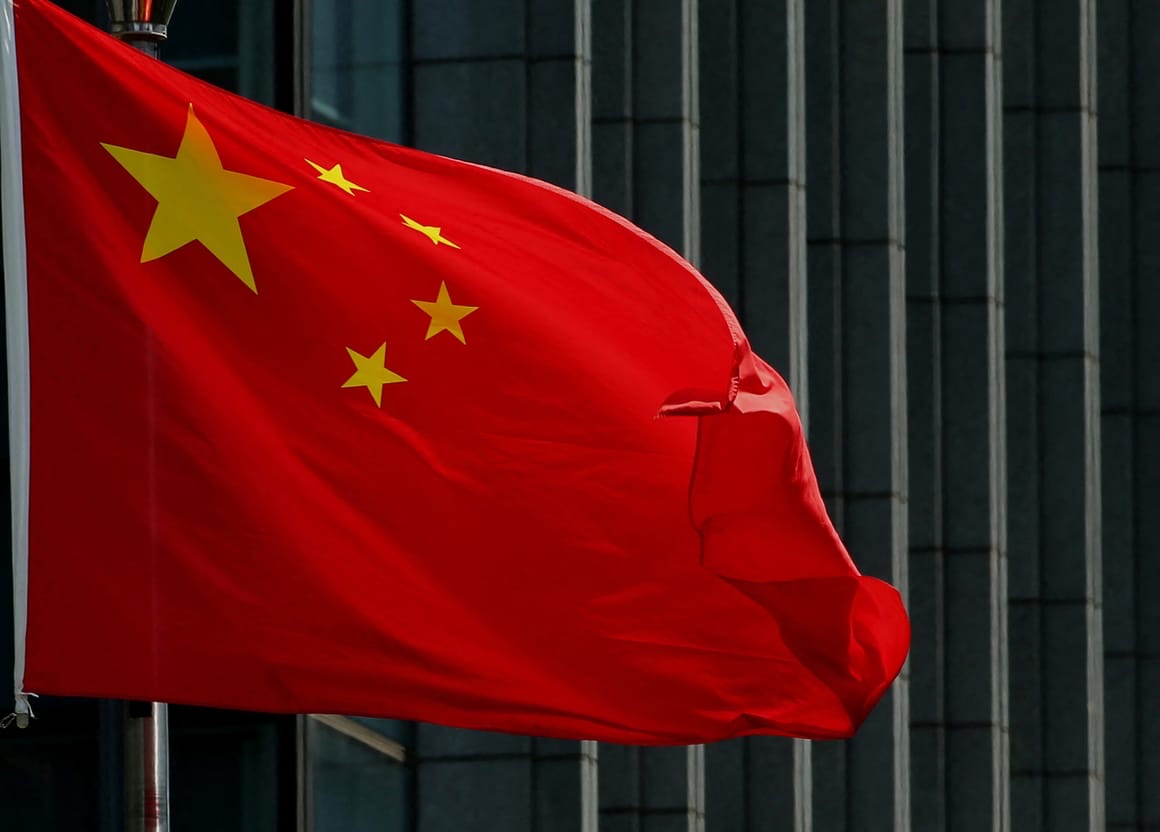
China Flag

Recent iPhone Demand Shows the Opportunity

Apple’s 2026 recovery offers a useful example of how quickly its position can improve.

China’s smartphone shipments fell 4.3 percent during the second quarter as memory and component costs pushed several manufacturers toward higher prices. Apple and Huawei held prices more stable, giving buyers a reason to purchase while competing brands became more expensive.

The iPhone 17 generation also addressed several areas where Apple’s standard models had appeared conservative beside Chinese flagships. Stronger base specifications made the regular iPhone more competitive without requiring every customer to move into the Pro tier.

This matters in a market where consumers compare display technology, camera systems, storage, battery life, charging and AI features closely. Apple cannot depend entirely on iOS loyalty when domestic companies introduce visible hardware improvements at several price levels.

The rebound does not establish a permanent trend. Smartphone demand in China remains affected by economic confidence, upgrade cycles, government incentives and the timing of major shopping festivals.

Apple’s position can also look different according to the research firm and whether a report measures shipments or consumer sales. Quarterly rankings should be treated as evidence of momentum rather than a final judgment on the market.

The important signal is that Chinese consumers have not broadly rejected the iPhone. Demand can return rapidly when the product and price create a convincing upgrade.

Huawei Makes China Apple’s Hardest Market

Huawei gives Apple a competitor with advantages unavailable to most global smartphone manufacturers.

The company combines strong national recognition with advanced cameras, communications technology, custom chips, local services and an expanding HarmonyOS ecosystem. Its return to premium smartphones removed the opening Apple had gained when U.S. restrictions disrupted Huawei’s access to important components.

Huawei can also position its products as part of China’s technological self-reliance. That message carries commercial and political weight beyond a conventional comparison between two phones.

Apple must therefore compete against product quality and national sentiment simultaneously. An iPhone can offer strong performance and still lose a purchase to a domestic flagship viewed as technically capable and strategically important.

Xiaomi, Oppo and Vivo add different pressures. They move quickly across price categories, experiment with folding designs, adopt larger batteries and provide features adapted to local applications and buying habits.

Chinese phone makers also operate inside a retail and software environment they understand directly. They can build relationships with local platforms, carriers and commerce services without translating a global strategy into Chinese requirements.

Apple follows a more centralized product model. That consistency protects the identity of the iPhone, but it can make the company slower to answer features gaining popularity inside one country.

A sleek Apple Store with a minimalist design, featuring a large illuminated Apple logo at the entrance. People casually walk around the spacious interior with wooden tables displaying Apple products and brightly lit walls adorned with images. Significant iPhone discounts in China have driven a sales surge.

Services Depend on Local Rules

Apple in China is not only an iPhone business. The installed device base creates demand for applications, cloud storage, entertainment, subscriptions and digital purchases.

China has an enormous developer community producing games, commerce platforms, social services, education tools and productivity software. The App Store connects those developers with high-value iPhone and iPad customers.

The relationship is commercially important but politically complicated. Apple must operate the mainland App Store according to Chinese law, including rules affecting games, generative AI, communications services and content.

Applications available elsewhere may be absent from the Chinese storefront. Developers may also need licenses or regulatory approval before distributing certain categories of software.

Apple changed commission rates and related policies for the mainland China storefront in March 2026. The company described the adjustments as part of maintaining a strong business opportunity for Chinese developers.

Regulatory and developer pressure has not disappeared. Complaints involving commissions, distribution restrictions and payment policies continue to challenge Apple’s control of the platform.

The company cannot simply copy its response from another region. European rules focus heavily on alternative marketplaces and interoperability, while China combines competition concerns with content regulation, data localization and licensing requirements.

Every concession must therefore be designed for a distinct legal environment without fragmenting iOS into an unmanageable collection of regional systems.

China Is Also Part of the Product

Apple’s relationship with China extends far beyond the devices sold there.

For more than two decades, Apple and its manufacturing partners built a dense network of factories, component suppliers, engineers, logistics operators and toolmakers across the country.

That network does more than provide low-cost labor. It can place specialists from several suppliers near an assembly site, modify production lines quickly and increase output to enormous volumes during a product launch.

China’s infrastructure also supports the less visible stages of manufacturing. Components require precision tooling, testing equipment, chemicals, packaging, subassemblies and experienced quality-control teams before final assembly begins.

Apple has expanded iPhone production in India and moved parts of its Mac, iPad, Apple Watch and AirPods supply chains to countries including Vietnam. It is also increasing semiconductor and component commitments in the United States.

Those investments reduce the danger of relying on one country, but they do not recreate China’s complete manufacturing environment immediately.

A factory in another region may assemble an iPhone while still depending on Chinese machinery, materials, subcomponents or engineering support. Production diversification is therefore a gradual redistribution of individual stages rather than a clean departure.

Apple must reduce concentration risk without weakening the manufacturing system responsible for its product quality, scale and launch schedules.

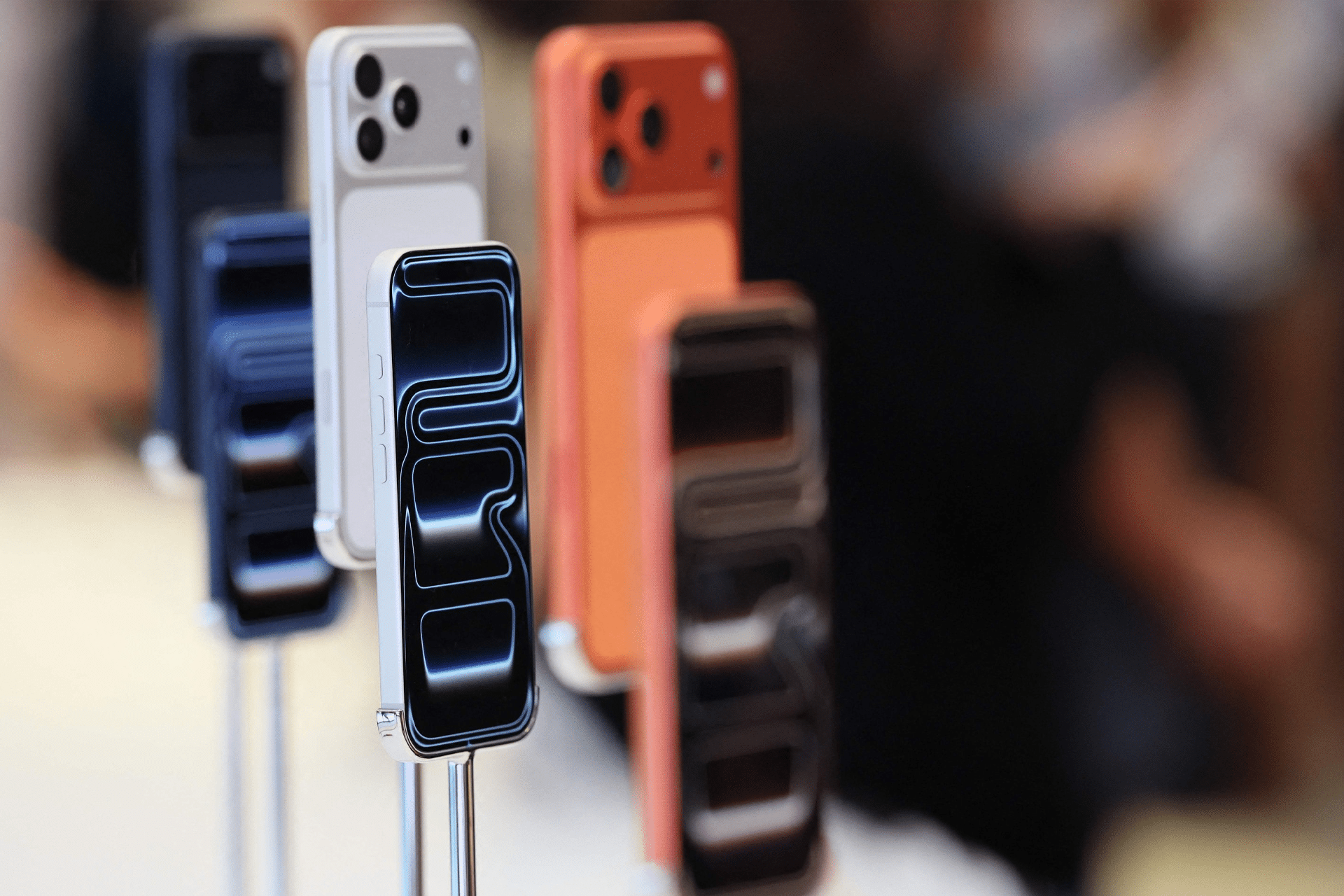
Several new smartphones in various colors are displayed upright on stands, with their screens facing forward. The background is blurred, drawing focus to the phones amid discussions around Apple EU antitrust regulations.
Image Credit: AFP Photo

Trade Tensions Turn Efficiency Into Risk

The same China supply chain that provides Apple with extraordinary efficiency also exposes the company to political decisions outside its control.

Tariffs can raise the cost of devices exported from Chinese factories. Export restrictions can limit access to materials or production equipment, while sanctions may affect suppliers and technology partners.

Chinese government policies can influence the use of foreign devices inside state agencies and companies. U.S. rules can restrict the technologies available to Chinese firms that also participate in Apple’s supplier network.

Apple cannot solve these problems through product design alone. It must maintain relationships with two governments whose technology policies increasingly emphasize security, domestic production and strategic independence.

Moving more assembly to India gives Apple additional flexibility, particularly for iPhones destined for the United States. China nevertheless remains important as a production center and consumer market.

An aggressive withdrawal could damage supplier relationships and local sales. Moving too slowly could leave Apple vulnerable to another trade disruption.

The company is trying to preserve Chinese capabilities while creating enough capacity elsewhere to keep a political dispute from becoming a worldwide product shortage.

Retail Stores Give Apple a Direct Relationship

Apple’s physical stores remain an important advantage in China because they give the company direct contact with customers.

The stores allow buyers to compare models, receive technical support, attend educational sessions and enter the ecosystem without depending entirely on a carrier or reseller.

That experience is particularly valuable for premium products. A customer considering a Mac, Apple Vision Pro or high-end iPhone may need more explanation than someone replacing an inexpensive handset.

Retail locations also communicate long-term commitment. A prominent store represents more than a sales channel; it signals that Apple intends to remain part of the local technology market.

Online commerce is equally important. Chinese consumers are accustomed to large shopping festivals, aggressive promotions and rapid delivery through domestic platforms.

Apple must balance its controlled global pricing with a market where discounts can change quarterly rankings. Too little flexibility makes the iPhone appear expensive, while frequent reductions can train customers to delay purchases and weaken its premium image.

The strongest 2026 performance came partly from avoiding price increases while component costs were forcing rivals to reconsider their pricing. That advantage may disappear when competitors adjust their supply chains or launch another cycle of promotions.

Chinese Consumers Set a Higher Product Standard

China is often discussed as a sales problem for Apple, but it also functions as a demanding test of the iPhone.

Domestic flagship phones compete through larger batteries, rapid charging, advanced camera hardware, folding displays and deep integration with local digital services.

Features considered experimental elsewhere can become established expectations more quickly in China. Apple’s slower adoption cycle may look disciplined in one market and conservative in another.

The company must decide which expectations represent durable improvements and which are temporary specification contests. Copying every local feature would weaken Apple’s focused product strategy, but ignoring major changes creates openings for rivals.

This pressure can benefit Apple globally. Competition in China forces the company to defend the value of its standard iPhone, improve battery efficiency, strengthen cameras and make software features more useful outside English-speaking markets.

The opportunity is therefore not limited to selling more devices. China can reveal where Apple’s global assumptions no longer match the most competitive part of the smartphone industry.

The post Apple in China Is Its Greatest Opportunity and Hardest Test appeared first on AppleMagazine.

  •  
❌