❌

Reading view

PLOS Issues Expression of Concern for Yangtze River Delta Study

The PLOS One editors have issued an expression of concern for a 2024 case study concerning the digital economy, innovation factor allocation and industrial structure transformation in China’s Yangtze River Delta city cluster. The notice, published on October 21, 2026, states that the article was identified as one of a series of submissions for which the journal has concerns about the integrity or reliability of the peer-review process. Readers are advised to interpret the original study with this issue in mind.

The notice does not report a new scientific finding, identify an error in the paper or evaluate the study’s scientific validity. According to the editors, PLOS did not assess the article’s integrity or scientific validity when following up on the matter. The expression of concern therefore records a concern about the circumstances surrounding peer review rather than announcing that the study’s data, methods or conclusions have been disproved. The editors also state that they have no concerns regarding the authors’ conduct during the peer-review process.

The affected article was published in PLOS One in 2024 under the title “Digital economy, innovation factor allocation and industrial structure transformation—A case study of the Yangtze River Delta city cluster in China.” The supplied notice does not provide the study’s findings, population details, analytical methods, model estimates, uncertainty measures or specific mechanisms linking the subjects named in the title. As a result, the notice does not support conclusions about the relationship between digital-economy development, innovation factors and industrial structure in the region, nor does it establish whether any reported association or causal effect is reliable.

For the wider research record, the immediate effect is that the 2024 article is accompanied by an editorial notice questioning the integrity or reliability of its peer-review process. The notice does not provide details about the submissions or explain the specific basis for the journal’s concerns. It also does not announce a correction, replacement analysis or revised conclusion. The central status of the paper’s scientific validity remains unevaluated in the supplied material, while the issue is sufficiently significant for PLOS One to advise readers to consider it when interpreting the study.

Subject of Research: A PLOS One expression of concern concerning peer-review reliability in a Yangtze River Delta regional-economy case study.

Article Title: Expression of Concern: Digital economy, innovation factor allocation and industrial structure transformation—A case study of the Yangtze River Delta city cluster in China

Article References: The PLOS One Editors (2026). Expression of Concern: Digital economy, innovation factor allocation and industrial structure transformation—A case study of the Yangtze River Delta city cluster in China. PLOS One, 21(10), e0360867. https://doi.org/10.1371/journal.pone.0360867

Image Credits: AI Generated

DOI: 10.1371/journal.pone.0360867

Keywords: PLOS One, expression of concern, peer review, research integrity, digital economy, innovation factors, industrial structure, Yangtze River Delta, China, Expression, Concern, Digital

  •  

Puncture-site closure linked to early wound events after vertebroplasty

A retrospective study of 1,307 patients undergoing elective percutaneous vertebroplasty for osteoporotic vertebral compression fractures found that 136, or 10.4%, had a puncture-site wound event within two weeks of surgery. The composite outcome included erythema or swelling, bleeding or exudate, subcutaneous hematoma, and infection. After adjustment for patient and procedural factors, suture closure was associated with more than twice the risk of the composite outcome, while diabetes, mildly elevated international normalized ratio, and multilevel treatment were also associated with higher risk.

The findings come from consecutive patients treated at Ningde Municipal Hospital in China between January 2022 and June 2026. Patients were excluded if they underwent surgery for a new fracture, had uncontrolled coagulation disorders, received concomitant open spinal surgery, required an intraoperative incision at the puncture site, had malignant tumors or abnormal immune status, or lacked key clinical or follow-up information. The analysis therefore describes elective vertebroplasty performed within one hospital system, rather than all fracture patients or all puncture wounds treated after other forms of spine surgery.

Researchers extracted information from electronic medical records, operative and anesthesia records, laboratory reports, dressing-change notes, wound-clinic assessments, and documented telephone follow-up. All puncture sites were covered with waterproof dressings and assessed within two weeks through inpatient observation, clinical review, or telephone follow-up. A wound event was counted only when explicitly documented in the records. Erythema, swelling, bleeding, exudate, hematoma, and infection were combined into one patient-level outcome, counted once even if a patient experienced several types of event, while individual components were also summarized separately.

Closure was not assigned through a randomized comparison. The operating physician selected nonsuture or suture closure according to intraoperative bleeding, exudation, skin condition, wound tension, and routine practice. Sutured wounds were typically closed with one 3-0 Vicryl Rapide stitch. Among the 1,307 patients, 774 received nonsuture closure and 533 received sutures. An early event was recorded in 53 nonsuture cases, or 6.8%, and in 83 sutured cases, or 15.6%. The crude risk ratio for any event was 2.27, with a 95% confidence interval of 1.64 to 3.15 and a P value below 0.001.

After the researchers adjusted for closure method, diabetes, INR above 1.2, age, sex, body mass index, and multilevel treatment, the association with suturing remained. The adjusted risk ratio was 2.24, with a 95% confidence interval of 1.59 to 3.16 and P below 0.001. Diabetes was associated with an adjusted risk ratio of 1.57, with a 95% confidence interval of 1.11 to 2.21 and P equal to 0.010. An INR above 1.2, defined using the hospital laboratory’s upper reference limit, was associated with an adjusted risk ratio of 1.66, with a 95% confidence interval of 1.08 to 2.57 and P equal to 0.022. Multilevel treatment had an adjusted risk ratio of 1.73, with a 95% confidence interval of 1.03 to 2.89 and P equal to 0.038.

The component findings were concentrated in relatively common superficial manifestations rather than infection. Erythema or swelling occurred in 4.1% of patients with nonsuture closure and 10.9% of those with sutures, producing a crude risk ratio of 2.63, with a 95% confidence interval of 1.73 to 3.99. Bleeding or exudate occurred in 2.7% and 5.8% of the respective groups, with a crude risk ratio of 2.14 and a 95% confidence interval of 1.25 to 3.69. Subcutaneous hematoma was uncommon, affecting two nonsuture cases and three sutured cases, and its wide confidence interval included no difference. Infection was documented in one nonsuture case and no sutured cases, too few events to model infection separately.

Age, sex, and body mass index were not independently associated with the composite outcome in the primary adjusted model. Each additional decade of age had an adjusted risk ratio of 1.15, with a 95% confidence interval of 0.94 to 1.41 and P equal to 0.186. Female sex had an adjusted risk ratio of 0.96, with a 95% confidence interval of 0.66 to 1.39 and P equal to 0.829, while each 1 kg/m² increase in body mass index had an adjusted risk ratio of 1.07, with a 95% confidence interval of 0.99 to 1.17 and P equal to 0.091. These estimates mean that the study did not find clear independent associations for those demographic and anthropometric measures, not that they have no relationship to wound events in every clinical setting.

The suture result is particularly notable because the design cannot establish that suturing caused the additional events. The authors excluded several conditions that could make closure decisions unusual, including uncontrolled coagulation disorders, concomitant open surgery, and wounds requiring an intraoperative incision. Even so, surgeons may have selected sutures for locally difficult wounds, bleeding, exudation, poor skin condition, or excessive tension. Those unrecorded features could confound the comparison, while the fact that sutured patients may have had more wound checks or suture-removal visits could also increase the likelihood that mild redness or exudate was noticed and recorded. The finding should therefore be interpreted as an adjusted observational association rather than proof that sutures themselves produce wound inflammation or other complications.

Several other constraints limit what the study can establish. Follow-up was retrospective and varied among inpatient observation, wound-clinic examination, and telephone reporting, so assessment intensity and recording thresholds were not standardized. Very mild redness or transient bleeding may have been missed, and the records did not consistently capture event duration, patient discomfort, additional care, revisits, or hospitalization. The composite endpoint improved capture of local findings but combined conditions with different causes and severities. Only one infection occurred within two weeks, preventing meaningful analysis of surgical-site infection or later infections. The single-center design and the selected elective population also limit generalizability to open spine surgery, malignant disease, immunosuppression, or puncture sites requiring remedial closure.

Overall, the study identifies four factors associated with the short-term local wound status after elective vertebroplasty: suture closure, diabetes, elevated INR, and multilevel treatment. Its practical signal is that early observation may be especially relevant for patients with these characteristics, although the findings do not establish a clinical rule or a preferred closure technique. Because closure was clinician-selected, follow-up was not standardized, and the endpoint combined mild events with rare infection, the results point to priorities for further prospective research rather than definitive guidance. Within those limits, the observed 15.6% event rate after suturing compared with 6.8% after nonsuture closure provides the clearest signal in the cohort, while the observational design makes the mechanism unresolved.

Subject of Research: Factors associated with early puncture-site wound events after percutaneous vertebroplasty for osteoporotic vertebral compression fractures

Article Title: Factors associated with early puncture-site wound events after percutaneous vertebroplasty for osteoporotic vertebral compression fractures: a retrospective cohort study

Article References: He, X., Huang, C., Zheng, B., Wu, X., Huang, C., Lu, S., Huang, Y., Chen, J., Huang, J., & Li, B. (2026). Factors associated with early puncture-site wound events after percutaneous vertebroplasty for osteoporotic vertebral compression fractures: a retrospective cohort study. Frontiers in Medicine, 13, Article 1988843. https://doi.org/10.3389/fmed.2026.1988843

Image Credits: AI Generated

DOI: 10.3389/fmed.2026.1988843

Keywords: Percutaneous vertebroplasty, Osteoporotic fractures, Puncture-site wounds, Suture closure, Diabetes, Coagulation, Multilevel treatment, Retrospective cohort, Postoperative care, Factors, associated, early

  •  

Astronauts on the Moon could shelter from radiation, micrometeoroids and extreme temperatures inside a lava tube, and NASA is sending a suite called GIMLI to scan beneath the Marius Hills Pit to see whether the pit opens into one

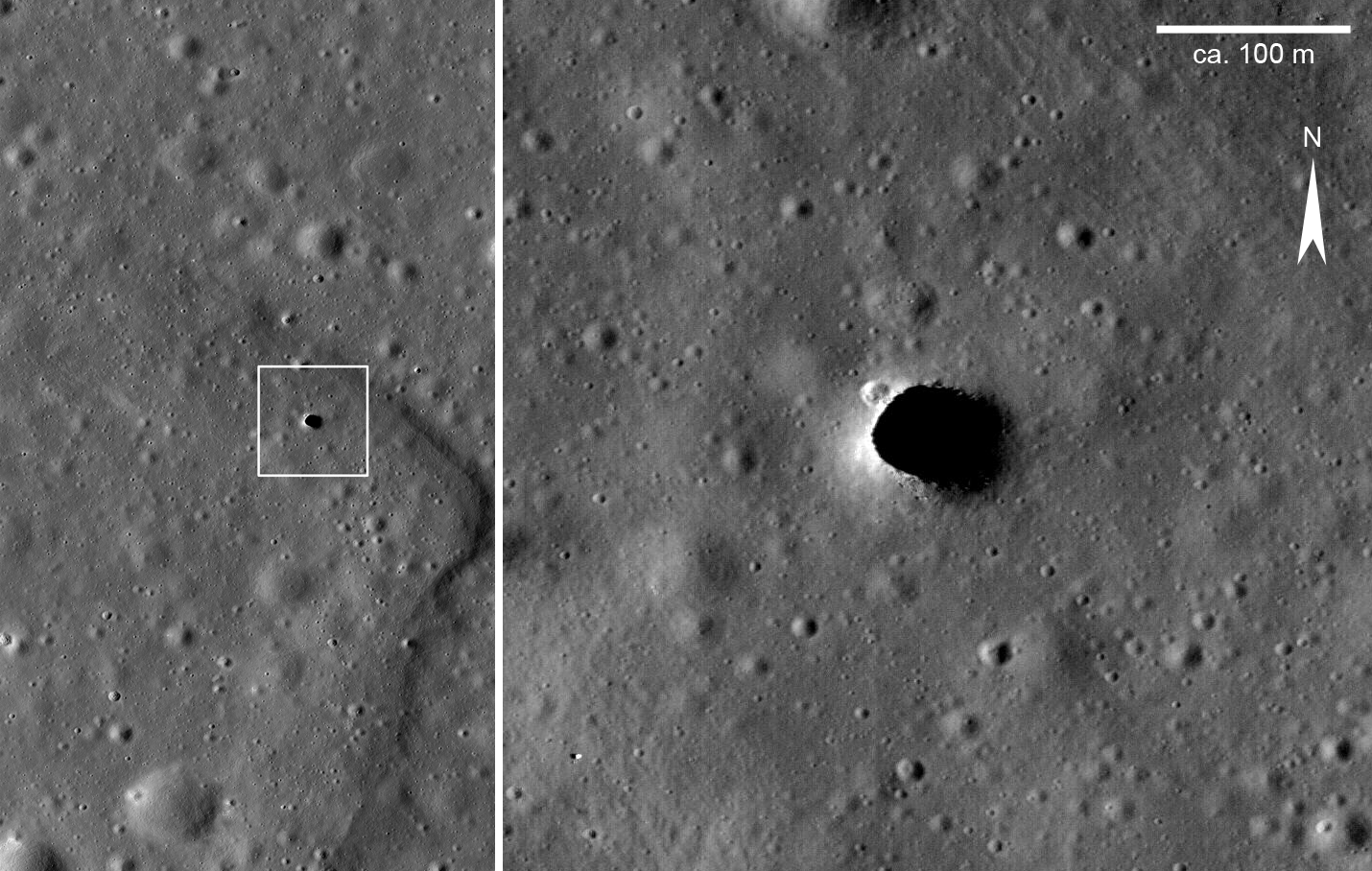
Orbital image of the Marius Hills pit, a dark hole in a lunar rille, with a magnified inset

WASHINGTON, NASA has selected a radar, seismic, gravity and camera suite called GIMLI to be deployed at the Marius Hills Pit and test from the surface whether the pit opens into a lava tube.

The agency named GIMLI on 30 September 2026 as one of three payload suites chosen under its PRISM programme for the Moon Base effort, to fly on a commercial lander under the Commercial Lunar Payload Services scheme. No launch date and no lander vendor have been named. The principal investigator is Nathaniel Putzig of the Planetary Science Institute.

The pit lies in the Marius Hills, an ancient volcanic region. In 2017 a team using the Lunar Radar Sounder on Japan’s Kaguya spacecraft reported echoes near the pit that it interpreted as an intact lava tube, and candidate tube sites line up with mass deficits in gravity maps from the GRAIL spacecraft, the Japanese space agency said. None of that has shown whether the hole leads anywhere.

“Readers should not conclude that the pit is an opening to a lava tube,” Gareth Morgan, GIMLI’s deputy principal investigator at the institute, told Space Daily in an email on 19 October 2026.

High-resolution images from NASA’s Lunar Reconnaissance Orbiter show the pit walls “form an overhang above a subsurface void space that is wider than the diameter of the pit itself”, Morgan said. The size of that void is unknown, and so is whether it is an isolated cavity or part of a larger cave system.

Similar pits exist in volcanic terrain on Earth, Morgan said. “Sometimes they are skylights into lava tubes, but in other cases they are isolated shafts/cavities caused by volcanic-tectonic activity,” he said. “GIMLI has been designed to differentiate between the two scenarios.”

“It has long been speculated that lava tubes, which on Earth are remnants of drained lava flows, exist on the Moon, but this has never been definitively confirmed,” Morgan said. “GIMLI will enable us to address this for the first time.”

“Confirming these void spaces now could shift future habitat planning, offering natural, ready-made shelters that provide crucial thermal stability and shielding from deadly ionizing radiation and micrometeoroid bombardment,” the agency said in its 30 September 2026 release.

GIMLI’s ground-penetrating radar is supplied by the Norwegian Space Agency, according to the institute. Honeybee Robotics, a Blue Origin company, is building the active-source seismic system, the gravimeter and the cameras, and is managing the project.

Each instrument should respond to a tunnel in its own way, Putzig told Space Daily in an email on 19 October 2026. “With the ground-penetrating radar, we would expect a strong reflection from the top of the lava tube back to the antenna, due to the high dielectric contrast between rock and the vacuum within the lava tube,” he said.

“For the active-source seismic, we would expect strong reflected and refracted acoustic waves from the perimeter of the lava tube, but the acoustic waves will not pass through the void space,” Putzig said. “For the gravimeter, we would expect to see a strong, negative gravity anomaly when passing over the lava tube, as it represents a locally reduced mass in what is otherwise dense rock.”

“If we see all of these effects, it will represent very strong evidence that the pit does in fact represent a collapse feature into a much more extensive lava tube,” he said.

Elevator and sealed walls

Published figures for the pit’s depth disagree. NASA’s description of the orbiter’s images puts the pit at about 34 metres deep. The Lunar Reconnaissance Orbiter Camera team gives 40 metres in a 2017 update. Putzig put the drop at about 60 metres.

“There’s a sharp drop of about 60 m between the pit rim and the floor of the pit, so while first explorations could be done by flying or rappelling into the pit, it may become necessary to install an elevator to move people and equipment in and out of a shelter,” Putzig said.

“Creating a shelter would require walling off either end of a portion of the lava tube and pressurizing the interior, but cross-cutting fractures could make it necessary to seal off the tube walls as well to avoid leaks,” he said.

In July 2022 NASA reported that Diviner data from the orbiter and computer modelling showed shaded locations within some lunar pits “always hover around a comfortable 63 F (about 17 C)”. Radiation shielding inside the Marius Hills Pit has not been measured on site.

Morgan said a null result would still be useful. “If we don’t find evidence of a cave system at our Marius Hills landing site, our measurements will still allow us to test alternative hypotheses for lunar pit formation, which in turn will provide new insights into volcanic activity, such as localized volcanic-tectonic processes,” he said.

The pit walls also expose layers of rock. The suite’s camera mast “will be used to inspect these outcrops (from a safe distance) to measure the number, thickness and origin of the layers”, Morgan said, with the results compared against the geophysical surveys to reconstruct the site’s sequence of eruptions.

Sources:

The post Astronauts on the Moon could shelter from radiation, micrometeoroids and extreme temperatures inside a lava tube, and NASA is sending a suite called GIMLI to scan beneath the Marius Hills Pit to see whether the pit opens into one appeared first on Space Daily.

  •  

In 1965 an astronaut smuggled a corned beef sandwich into orbit, and NASA’s chief asked if he should be disciplined

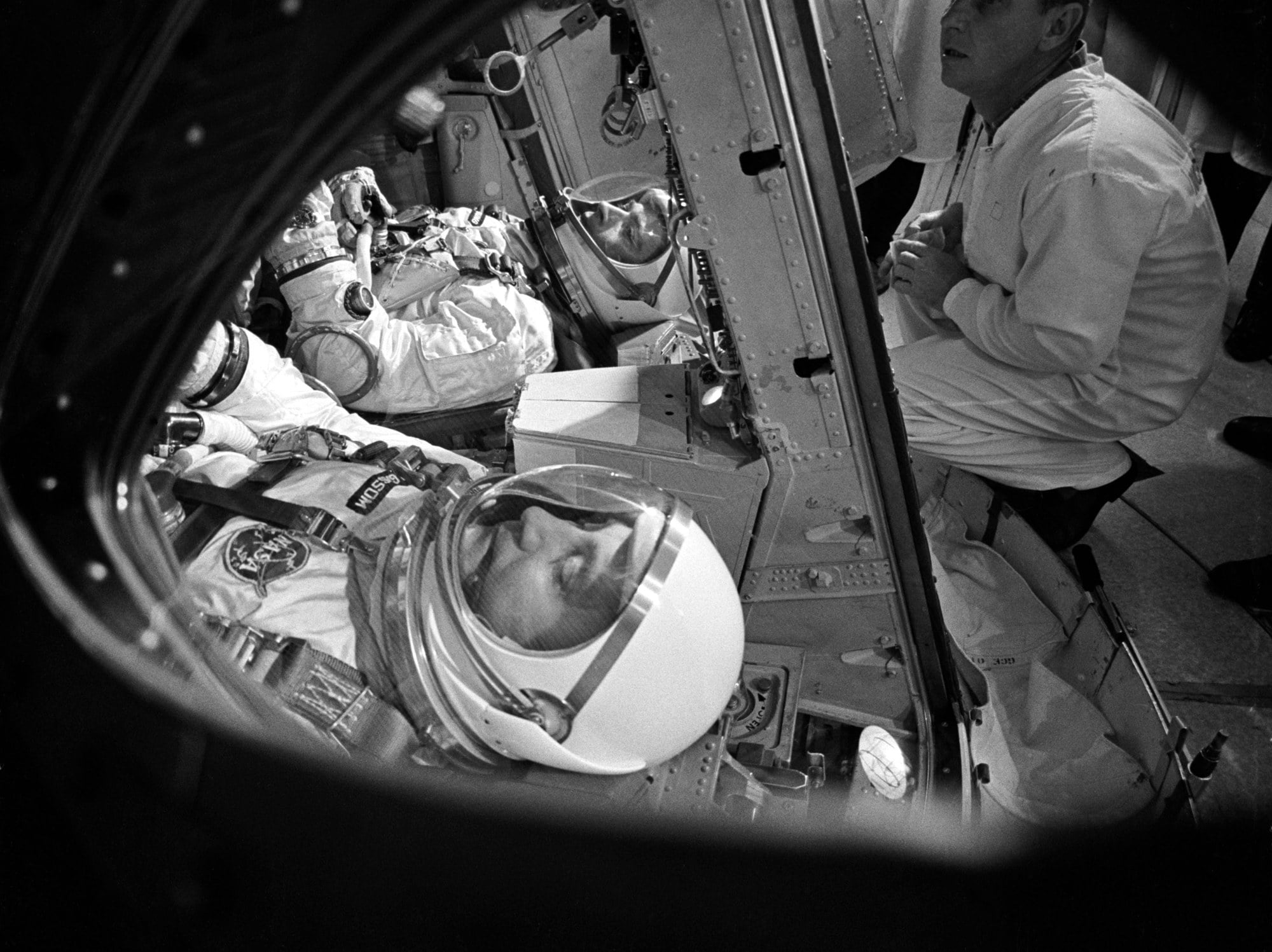
Gus Grissom and John Young in spacesuits and helmets strapped into the Gemini III spacecraft, seen through the open hatch

NASA Administrator James Webb pressed Manned Spacecraft Center director Robert Gilruth for a report on whether John Young should be disciplined for smuggling a corned beef sandwich onto Gemini III, NASA’s History Office says.

Young had fellow astronaut Walter “Wally” Schirra, the backup command pilot, buy the sandwich, then pocketed it in his pressure suit as he headed to the launchpad on March 23, 1965, Jennifer Ross-Nazzal, NASA’s human spaceflight historian, wrote in the History Office essay on March 20, 2025.

Nearly two hours into a flight of almost five hours, Young offered it to commander Gus Grissom, historian James Anderson wrote in a NASA Ames essay published on March 17, 2022. Grissom took a bite, found the rye crumbling, and put the sandwich in his own suit pocket.

The whole exchange lasted less than a minute. Congress raised the matter with NASA leadership at hearings on the agency’s 1966 budget, Ross-Nazzal wrote.

Webb told the committee that “this is the United States of America’s space program and, as a matter of policy, we are not going to permit individuals to superimpose their judgment as to what is going to be taken on these flights.”

He added: “I think it is fine for Dr. Gilruth to take a very strong position with respect to the individuality of these men, but from those of us who have to look at the totality of the matter, this was not an adequate performance by an astronaut.”

Representative George E. Shipley likened the Gemini cabin to a “surgeon’s operating room” and called Young’s antics “foolish”. Crumbs behind an instrument panel could interfere with flight equipment and cost the mission and its crew.

George Mueller, associate administrator for Manned Space Flight, told the committee that NASA did not “approve [of] unauthorized objects such as sandwiches going on board the spacecraft.” He said the agency had “taken steps, obviously, to prevent recurrence of corned beef sandwiches in future flights.”

Mueller also said: “There was no detriment to the experimental program that was carried on, nor was there any detriment to the actual carrying out of the mission because of the ingestion of the sandwich.”

Gilruth defended the crew. Such antics, he told the committee, helped crews “break up the strain” of spaceflight.

Gilruth said he hesitated “to be too strict in the future by laying down a lot of rules for men who have this responsibility and who, in all the flights so far, have done such good jobs.”

Webb read the incident as a sign that Gilruth was too lax with his astronauts, Ross-Nazzal wrote, and pressed him for a report to determine whether Young should be disciplined or at the very least reprimanded. Young never received a formal reprimand.

The sea urchin experiment

Near the approved food box beside Grissom sat a canister of sea urchin eggs, Arbacia punctulata, Anderson wrote. It was NASA’s first fundamental space biology experiment in orbit.

The canister held eight identical chambers. Turning its handle was meant to start fertilization in specific chambers, with a fixative halting cell division at different stages through the flight.

The handle broke when Grissom turned it, and the experiment’s objectives were not achieved. NASA redesigned the canister, substituted frog eggs, and flew it on Gemini VIII and Gemini XII.

By the end of the program, cell division had been shown to occur in microgravity without detrimental effects attributable to lower gravity.

Gemini III had none of the strict diet controls that other Gemini experiments on astronauts often required, so a few bites of the sandwich “would not have disrupted any of the planned experiments,” Anderson wrote.

Young hatched the idea during training, when Grissom grew “bored” with the dehydrated food, Ross-Nazzal wrote. Bringing a sandwich “seemed like a fun idea at the time” to Young.

One goal of the flight was to test NASA’s food packaging and its waste disposal procedures. Young called the chicken bites “barely edible” in his post-flight debriefing.

On the air-to-ground recordings, Grissom asked, “Where did that come from?” Young said: “I brought it with me.” He added: “Let’s see how it tastes.” Then: “Smells, doesn’t it?”

Two days after the flight, reporter Bill Hines asked at the postflight press conference what became of the sandwich. “How did you find out about that?” Young said, then laughed and said Grissom “ate the sandwich.”

Starting with Gemini IV, crews had to submit a list of items they planned to carry. Sandwiches were prohibited, along with bulky, heavy or metal objects that could affect spacecraft equipment.

The incident did not harm Young’s career. He became the first astronaut to fly to space six times, on two Gemini, two Apollo and two space shuttle missions. He also served as chief of the Astronaut Office for 13 years.

Sources:

The post In 1965 an astronaut smuggled a corned beef sandwich into orbit, and NASA’s chief asked if he should be disciplined appeared first on Space Daily.

  •  

A buried crater under the town of Ames, Oklahoma, that produces oil and gas was dated to the wrong era by about 100 million years, and its new age of about 370 million years puts it close to a mass extinction that wiped out much of the sea’s life

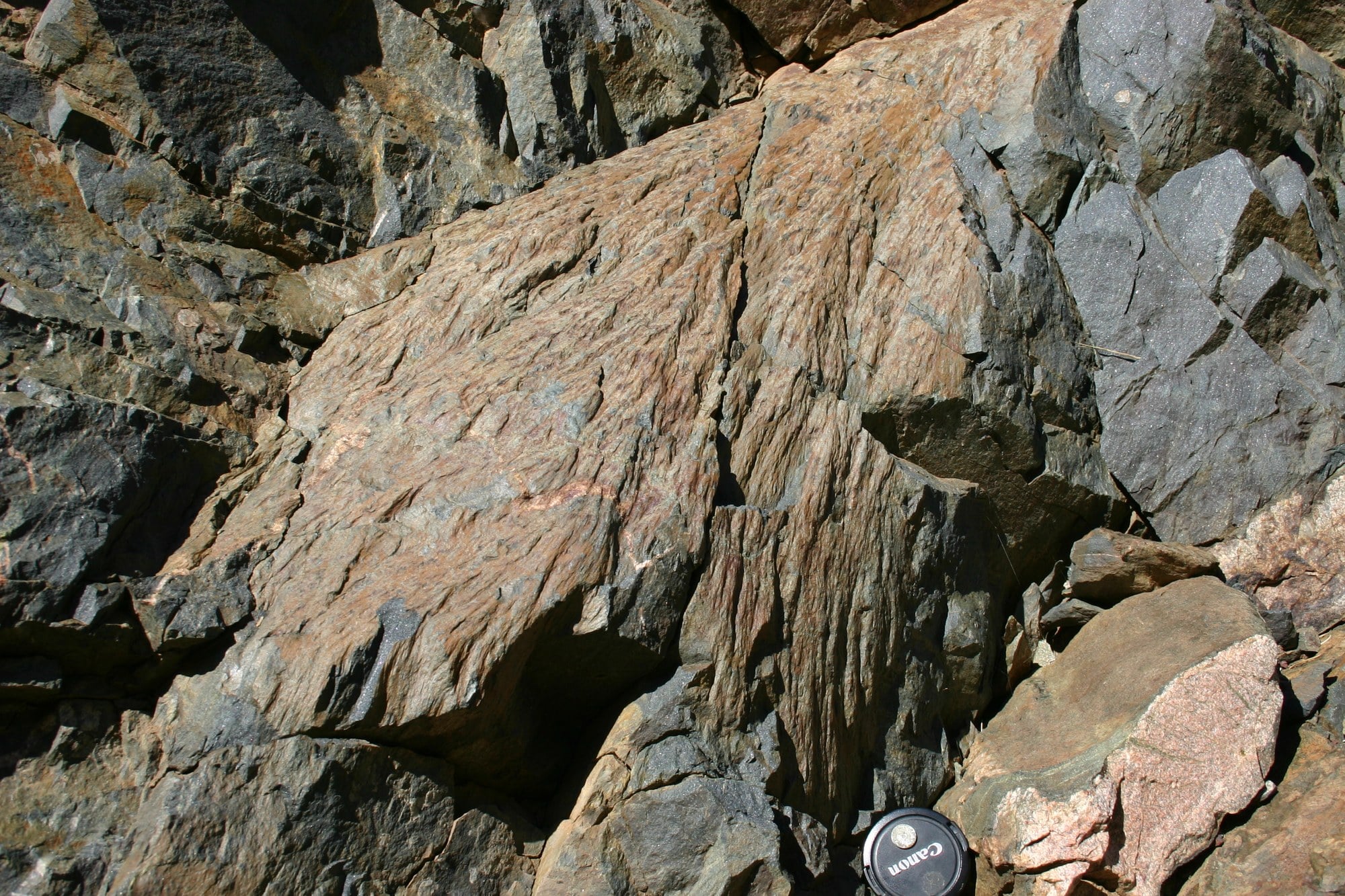
Rock face with ridged, cone-shaped shatter cone fractures in the Santa Fe impact structure, New Mexico

Austin, Texas: A meteorite impact buried under the town of Ames, Oklahoma, struck about 370 million years ago, nearly 100 million years later than previously believed, University of Texas at Austin researchers have found.

The study, published in July 2026 in Meteoritics & Planetary Science as an open access paper, dated zircon crystals from granite struck by the impact. Zircon is a mineral that forms small crystals and is used in uranium-lead dating.

The earlier age of 467 million years placed the impact in the Ordovician period. It was grouped with a series of North American impacts centred around 467.5 million years ago, called the Ordovician Meteor Event, according to a University of Texas press release.

The new date puts Ames in the Late Devonian, close to the Frasnian-Famennian mass extinction about 372 million years ago. The release says that event led to the extinction of a huge percentage of marine life on Earth.

Whether the impact and the extinction are connected remains an open question.

“Our results establish a new hypothesis that the Ames impact is linked to the Late Devonian mass extinction, but they do not demonstrate the causal relationship,” Elizabeth Catlos, lead author and associate professor in the Department of Earth and Planetary Sciences at UT’s Jackson School of Geosciences, said in an email.

“Establishing this connection requires additional evidence, such as finding impact-related material in Late Devonian sedimentary rocks, identifying other impact structures of this age and understanding their environmental consequences,” she said.

Catlos said she had “a high degree of confidence in the age”. It came from two independent radiometric dating approaches, laser ablation and ion-beam methods, applied to zircon grains taken directly from the impacted granite, she said.

For an impact structure, the strongest age constraint comes from dating minerals in the impacted material directly and showing that they record the impact, she said. That is what the team did.

“No matter what technique we used, it was coming back to this younger signal,” Catlos said in the university’s press release. The release says the result means Ames could not have been part of the Ordovician Meteor Event.

Doubts over the fossil date

The old date was biochronological, meaning it came from fossils. Researchers had found teeth of conodonts, eel-like creatures that lived during the Ordovician, in rock from the site. The teeth were probably already millions of years old when the asteroid struck and got jumbled in the impact, Catlos said in the release.

Catlos said in an email that she does not question the identification of the Ordovician conodonts. “The issue is whether they remain in their original stratigraphic position and can therefore reliably date the impact itself,” she said.

The conodont evidence came from a conference abstract and a PhD dissertation, Catlos said. Those sources did not go through the same formal peer review as a journal paper, but they gave the historical basis for assigning an Ordovician age to the structure.

To show the zircons recorded the impact, the team worked with NASA to image the crystals using cathodoluminescence and electron backscatter diffraction, two imaging methods. A zircon hit by an impact recrystallises in a specific way that these methods reveal, the release says.

Danny Stockli, dean of the Jackson School and a co-author, said in the release that uranium-lead dating of zircon is the most accurate way to tell when such events occurred. Microstructures in zircon can also record the shock pressures of impacts, he said.

He said he would like to see the same done for more impact sites across the continent to build a more accurate timeline of these events.

Catlos said in the release that a more accurate timeline for mass extinctions and other big moments in Earth’s history is needed to understand how the planet works. The question is whether such extinctions were driven by an extraterrestrial force or an interior one such as a series of massive volcanic eruptions, she said.

In her email, Catlos said the findings allow researchers to investigate a possible connection that had not been considered before.

The work was begun by Andrew Parisi, a Jackson School graduate student who collected the Ames rock core from the Oklahoma Geological Survey, extracted the zircons and helped date them. He graduated in 2018 and has since died, as has co-author Michael Brookfield. Sean Gulick and Mark Cloos of the Jackson School also contributed.

The Ames impact structure is a major oil and gas producer, the release says. The crater is more than eight miles wide and lies about 20 miles southwest of Enid under 9,000 feet of sediment, according to the American Oil & Gas Historical Society.

It went unrecognised until 1991, when Continental Resources found an oilfield there. Many geologists had believed impact craters were unlikely places for petroleum, the society says.

Sources:

The post A buried crater under the town of Ames, Oklahoma, that produces oil and gas was dated to the wrong era by about 100 million years, and its new age of about 370 million years puts it close to a mass extinction that wiped out much of the sea’s life appeared first on Space Daily.

  •  

A Dutch schoolteacher clicking through galaxy images on a volunteer website in 2007 flagged a green smudge she couldn’t identify and asked what it was. It turned out to be a cloud of gas lit by a quasar that had already switched off, and astronomers named the object after her.

In August 2007, a 25-year-old primary school teacher in the Netherlands called Hanny van Arkel was working her way through the online classification queue of a citizen science project called Galaxy Zoo, which had been asking members of the public to look at individual galaxy images from the Sloan Digital Sky Survey and sort them into categories like spiral or elliptical. She had signed up because Brian May, the guitarist from Queen, had mentioned Galaxy Zoo on his personal website, and she was a fan. On one of the images she was classifying, sitting a little way off from the target galaxy, there was a small bright blue-green smudge that didn’t match anything on the sorting list she had been given. It wasn’t a spiral, it wasn’t an elliptical, and it didn’t look like the kind of image artefact she had been told to ignore. She emailed one of the astronomers running Galaxy Zoo, Chris Lintott at Oxford, to ask what she was looking at. Neither Lintott nor any of his colleagues immediately knew.

What Galaxy Zoo was for

Galaxy Zoo had gone live in July 2007, and the reason it existed was that automated computer algorithms of the time still couldn’t reliably classify galaxy shape from a photograph. Human eyes could, and the Sloan Digital Sky Survey had produced far more galaxy images than professional astronomers could work through themselves. The project put roughly 900,000 galaxy images online, invited anyone in the world to help sort them, and by the time it had reached full operation it had drawn something like 100,000 volunteers doing exactly that. Van Arkel was one of them. What the project’s designers had expected was mainly the sorting output itself, a very large, very reliable catalogue of galaxy morphology. What they had not fully anticipated was that some of the volunteers, looking at those images with fresh eyes, would spot things that hadn’t been catalogued at all. Van Arkel’s blue-green smudge was one of the first, and turned out to be one of the strangest.

What was actually there

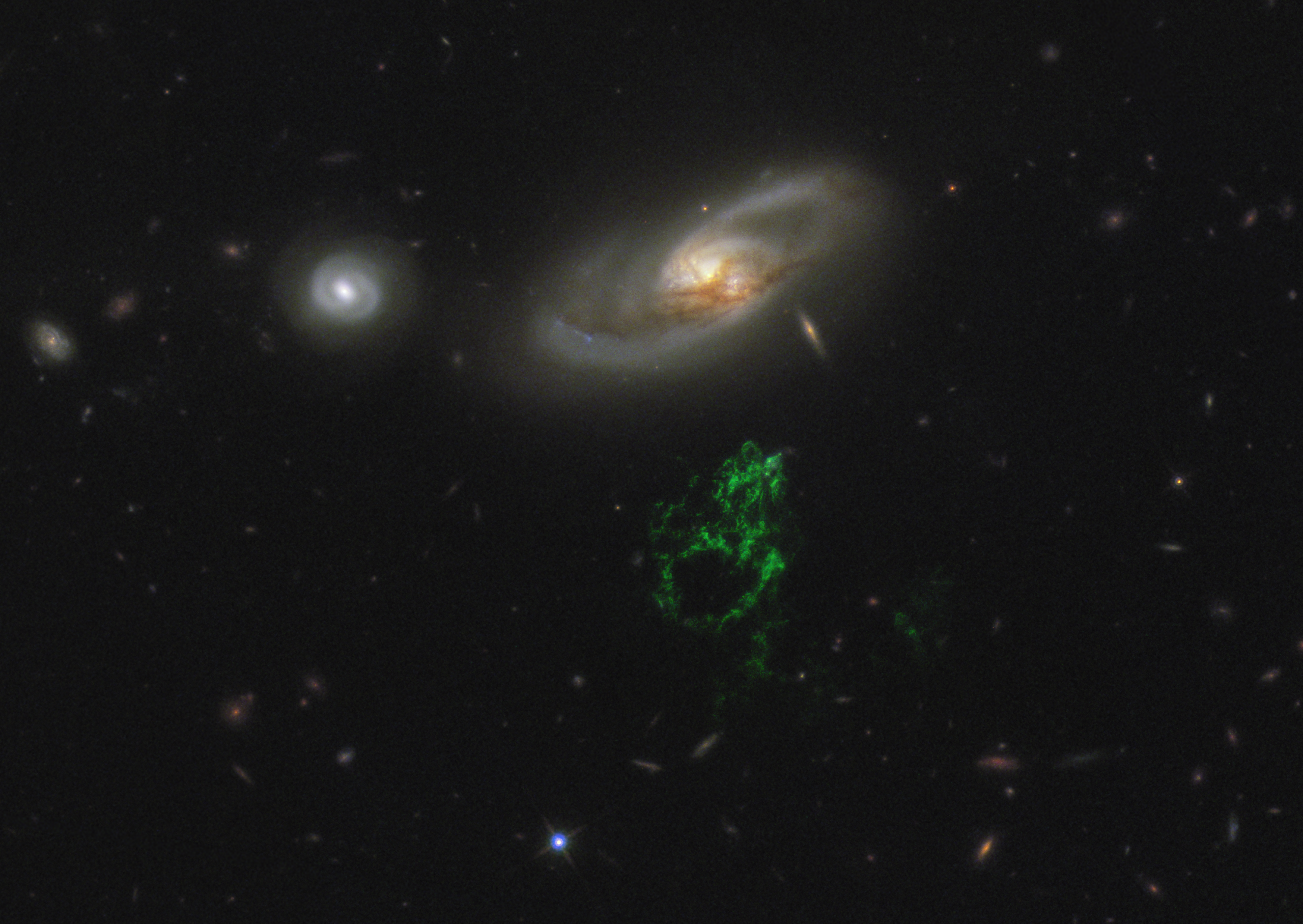
The nearby galaxy in the image was called IC 2497. It sits in the constellation Leo Minor, about 650 million light-years from us, and up to 2007 it had been catalogued as an unremarkable spiral. The smudge to one side of it, once astronomers started looking properly, turned out to be a cloud of highly ionised gas the size of a small galaxy, glowing green because of an extraordinarily strong emission line from doubly ionised oxygen. The peculiar thing was the ionisation itself, which was much too energetic to be produced by any ordinary source in the object’s own vicinity. Whatever was lighting the gas up had to be delivering a hard ultraviolet radiation field of essentially quasar intensity. But when the team pointed X-ray telescopes at IC 2497 to look for that quasar, there was nothing there. According to the paper Chris Lintott, Kevin Schawinski, William Keel and colleagues eventually published in Monthly Notices of the Royal Astronomical Society in 2009, the best explanation for that combination of a highly ionised gas cloud and an apparently quiet host galaxy was that IC 2497 had contained a bright quasar in the recent geological past which had since switched off, and that what the cloud was showing was the light echo. The gas is far enough from the black hole that the radiation from the quasar’s active phase is still travelling across it, illuminating it, even though the quasar itself has already gone quiet at the source. The Lintott paper framed the object as, potentially, the first direct evidence that a quasar could shut down on timescales of order a hundred thousand years, which is very short compared to what most models of quasar life cycles had assumed.

What followed the discovery

Follow-up observations turned Hanny’s smudge into a considerably bigger object than it had first appeared. Time was granted on the Hubble Space Telescope, which is heavily oversubscribed and hard to get on, and the Hubble imaging revealed that the visible green Voorwerp was only the illuminated tip of a much larger streamer of hydrogen gas stretching across roughly 300,000 light-years around IC 2497, most of it not currently lit by anything. According to NASA Goddard’s account of the follow-up work, Hubble also picked up clusters of newly forming stars in a small region at the tip of the Voorwerp facing the host galaxy, evidence that gas being blown out of IC 2497 had compressed part of the cloud enough to trigger a modest starburst. Bill Keel, the astronomer at the University of Alabama who led much of the follow-up work, then went back through Hubble archival imagery of 15,000 galaxies that had once hosted quasars, using a further 200 Galaxy Zoo volunteers to look for anything comparable to Hanny’s original object. They found eight more similar structures across the archive. The population of quasars that had switched off within the last hundred thousand years was, on the strength of that survey, no longer an implausible or isolated phenomenon. It was a category.

What the naming actually meant

The object was catalogued in the astronomical literature as Hanny’s Voorwerp, using the Dutch word for object, and it kept that name because that was how the discovering team referred to it and because there wasn’t a more formal designation available. Astronomical objects picked up by professional surveys ordinarily get catalogue numbers rather than personal names, and objects picked up by amateurs traditionally get named after the amateur only in a narrow set of cases, most famously comets. What made this case different was that van Arkel hadn’t spotted anything by pointing a telescope of her own at the sky. She had spotted it in an image on a screen that a professional survey had already collected, that professional astronomers had already looked at, and that the target galaxy of the image had already been catalogued as ordinary. The relevant instrument was her attention. Galaxy Zoo has since gone on to spawn a whole family of related citizen science projects across biology, climate science and history, some of them running under the Zooniverse umbrella that Lintott and his collaborators established. Hanny’s Voorwerp remains the discovery that most clearly shows what those projects are actually for, which is putting a very large number of unpredictable human observations against a very large volume of automatically collected data, and letting the anomalies fall out.

The post A Dutch schoolteacher clicking through galaxy images on a volunteer website in 2007 flagged a green smudge she couldn’t identify and asked what it was. It turned out to be a cloud of gas lit by a quasar that had already switched off, and astronomers named the object after her. appeared first on Space Daily.

  •  

Neighborhood environment linked to frailty and PTSD in 9/11 responders

Twenty-five years after the September 11 terrorist attacks, researchers at the Icahn School of Medicine at Mount Sinai have uncovered evidence that the environments in which World Trade Center responders live today may be quietly shaping their risk of frailty, post-traumatic stress disorder, and depression. The study, published in Nature Communications, is the first to examine how neighborhood-level environmental exposures later in life may interact with the chemical and psychological injuries sustained during the disaster response, adding a new dimension to one of the most intensively studied disaster health cohorts in the world.

The research team analyzed data from 18,734 responders who both live in New York City and receive care through one of the World Trade Center Health Program Clinical Centers of Excellence. These responders represent a population that experienced an extraordinary confluence of toxic exposures—dust, combustion products, airborne particulates, and a cocktail of known and suspected carcinogens—alongside severe psychological trauma. While decades of prior research have documented elevated rates of respiratory disease, cancer, and mental illness in this group, far less attention had been paid to whether the everyday conditions of their neighborhoods might compound or buffer those effects as responders age.

To answer that question, the researchers linked each responder’s residential address to annual estimates of three environmental factors: air pollution, high ambient temperatures, and neighborhood greenness, the last typically quantified through satellite-derived vegetation indices. This exposure-assessment approach, common in the field of environmental epidemiology, allowed the team to characterize the conditions each participant encountered where they lived year after year, rather than relying on broad regional averages. The researchers then examined whether those exposures were associated with the probability of being classified as frail, and with diagnosed PTSD and depression.

The results were striking in their consistency. Responders living in hotter neighborhoods—areas that experience more extreme heat days, a burden that falls disproportionately on densely built urban districts with impervious surfaces and little tree canopy—showed an elevated risk of frailty, a geriatric syndrome marked by diminished physiological reserve and heightened vulnerability to stressors. Elevated concentrations of air pollution were likewise associated with increased risks of both frailty and adverse mental health outcomes. Frailty itself is increasingly understood as a whole-body phenomenon, involving chronic inflammation, immune dysregulation, and cumulative cellular wear, all of which are plausible biological pathways through which heat and pollution could accelerate aging.

The mental health findings carried equal weight. Higher pollution and heat exposure were associated with increased odds of PTSD and depression, while responders living in greener surroundings—those with more parks, trees, and vegetated land near their homes—showed lower risks of all three conditions. This inverse association with greenness aligns with a substantial body of literature suggesting that access to green space can reduce psychological stress, encourage physical activity, dampen inflammation, and moderate urban heat, though the observational design of the study means that causation cannot be definitively established.

Perhaps the most provocative finding concerned interaction effects. The researchers found that responders who had experienced higher levels of World Trade Center–related chemical and psychological exposure appeared more vulnerable to the effects of environmental stressors in their current neighborhoods. In other words, the disaster and the decades that followed may not be independent chapters in these individuals’ health histories. Instead, responders already carrying the biological imprint of trauma and toxic dust—including altered inflammatory profiles, epigenetic changes, and persistent hypothalamic-pituitary-adrenal axis dysregulation—may enter later life with less reserve to absorb additional environmental insults. Everyday exposures that might be merely uncomfortable for a healthy middle-aged adult could, for these individuals, translate into measurable acceleration of physical decline and psychological deterioration.

“Twenty-five years after 9/11, we are still learning about the factors that influence the health of those who responded to the attacks,” said Helena Furman Krasnov, PhD, postdoctoral researcher at the Icahn School of Medicine and the study’s first author. “Our findings suggest that everyday exposures, including heat, air pollution, and access to green space, may contribute to responders’ long-term physical and psychological well-being. Understanding these factors could help identify new opportunities to support healthy aging in this population.”

The study’s senior and corresponding author, Maayan Yitshak-Sade, MPH, PhD, Associate Professor of Environmental Medicine at Mount Sinai and a member of the Institute for Exposomic Research, framed the work within the broader exposome paradigm—the effort to capture the totality of environmental exposures an individual accumulates over a lifetime. “Our findings suggest that the health consequences of 9/11 may not end with the disaster itself,” she said. “For responders already carrying the biological effects of trauma and toxic exposures, everyday environmental conditions may represent an additional source of stress on the body and mind. These findings highlight the importance of considering where people live, not just what they experienced during the disaster.”

That framing underscores a conceptual shift in disaster medicine. Traditional models tend to treat a catastrophic event as a discrete exposure with a defined aftermath. The Mount Sinai findings instead suggest that disaster-related health effects may unfold across an entire life course, modified by conditions that have no obvious connection to the original event. A responder’s risk of frailty in 2026 may reflect not only the hours spent at Ground Zero, but also the temperature of the summers they have endured since, the particulate matter drifting through their streets, and whether a leafy park sits within walking distance of their apartment.

The study arrives at a moment when urban environmental health has become a pressing policy concern. Extreme heat now kills more Americans annually than any other weather phenomenon, and cities including New York have launched ambitious initiatives to expand tree canopy, create cool corridors, and retrofit public housing with resilient cooling infrastructure. Air pollution, even at levels within regulatory limits, continues to be linked to cardiovascular, respiratory, and neurocognitive harm. If the associations identified in this cohort hold up under further scrutiny, they could strengthen the case for targeted environmental interventions—not as amenities, but as clinical supports for a vulnerable population.

The implications also extend well beyond the World Trade Center community. The researchers point out that survivors and responders from other disasters—wildfires that blanket entire regions in smoke and ash, industrial accidents that release toxic plumes, building collapses that bury rescue workers in dust—may face the same dual burden of physical and psychological exposures that continues to shape health long after the initial event. Climate change is intensifying heat waves and wildfire seasons simultaneously, meaning that disaster-affected populations may increasingly find themselves living in precisely the kinds of hostile urban microclimates the study identifies as risky. The framework developed here could inform how health surveillance programs for disaster cohorts are designed, prompting them to collect residential and environmental data alongside clinical outcomes.

The authors are careful to note the study’s observational nature. Associations between neighborhood environment and health can be confounded by socioeconomic status, housing quality, access to care, and the self-selection of healthier individuals into greener, quieter neighborhoods. The investigators controlled for available covariates, and the sheer size of the cohort lends statistical power, but randomized evidence on green space exposure is practically impossible to generate, and residual confounding remains an inherent limitation of the design. Longitudinal follow-up, and ideally natural-experiment analyses—such as the addition of new parks or major infrastructure changes—will be needed to firm up causal inference.

That work is already on the horizon. The team plans to investigate whether beneficial environmental factors, including green space and access to healthy food, can actively reduce the long-term health effects associated with World Trade Center–related exposures—a question that shifts the framing from risk identification to potential intervention. If confirmatory studies support the protective role of greenness, the findings could justify clinical guidance for responders, and potentially for other disaster-exposed populations, that goes beyond medication and monitoring to encompass the places where patients live.

For a population that has already given so much and borne so much, the idea that healing might partly depend on the landscape outside the front door is both sobering and hopeful. It suggests that some of the damage inflicted on September 11, 2001 may not be fixed, but modifiable—and that the next chapter of care for responders could be written not only in clinics, but in city planning offices, park commissions, and the slow, patient work of greening the neighborhoods where aging heroes live out their lives.

Subject of Research: People

Article Title: Urban Exposures, Frailty, and Mental Illness in World Trade Center Health Program Responders

Article References: Krasnov, H., Hung, W., Knobel, P., Kloog, I., Ko, F., Thompson, H., Colicino, E., Teitelbaum, S. L., Just, A. C., & Yitshak-Sade, M. (2026). Urban exposures, frailty, and mental illness in World Trade Center Health Program responders. Nature Communications, 17(1), Article 9449. https://doi.org/10.1038/s41467-026-77401-7

Image Credits: AI Generated

DOI: 10.1038/s41467-026-77401-7

Keywords: World Trade Center responders, 9/11 health, frailty, PTSD, depression, air pollution, extreme heat, green space, exposome, environmental health, Nature Communications, Mount Sinai

  •  

AI predicts prolonged air leak after lung surgery in elderly patients

When surgeons remove a portion of a cancerous lung, one of the most frustrating complications they can face is air. A persistent leak from the lung’s cut surface or staple lines — known as prolonged air leak — keeps chest tubes in place far longer than anyone would like, extends hospital stays, inflates costs, and elevates the risk of infection and other downstream problems. Now, a research team in China has developed a machine learning tool that predicts, with striking accuracy, which older lung cancer patients are most likely to develop this complication before it ever occurs. The study, published in BMC Cancer, combines cardiopulmonary exercise testing data with an interpretable artificial intelligence model and could reshape how thoracic surgical teams prepare for and manage one of the most common postoperative challenges in lung surgery.

The research was led by Zixiao Wang, Jiabao Ding, Huagang Liang and colleagues at the First Hospital of Qinhuangdao, in collaboration with Kai Wang of Tianjin Chest Hospital. It addressed a well-recognized gap in thoracic surgical practice. While prolonged air leak — typically defined as air leaking from the chest drainage system for more than five days after surgery — is among the most frequent complications following video-assisted thoracoscopic anatomical lung resection, the prediction models available to clinicians have historically lacked rigorous external validation and, critically, interpretability. Surgeons have been asked to trust risk scores without understanding where those risks come from, a barrier that has limited clinical uptake of computational tools in the operating room planning process.

To build their model, the investigators enrolled patients aged 60 and older with lung cancer who underwent thoracoscopic anatomical lung resection — either lobectomy, the removal of an entire lung lobe, or segmentectomy, the removal of a smaller anatomical segment. The study was designed as a dual-centre cohort investigation with both retrospective and prospective components. A total of 471 patients treated at Qinhuangdao First Hospital between January 2024 and June 2025 formed the model development cohort. A separate group of 140 patients from Tianjin Chest Hospital, enrolled prospectively between June and August 2025, provided the external validation set — a crucial test of whether the model generalized beyond the institution where it was built.

The methodology followed the emerging best-practice playbook for clinical machine learning. After preliminary data processing, the development cohort was randomly split into a training set containing 70 percent of patients and an internal validation set holding the remaining 30 percent. Because prolonged air leak affects only a minority of surgical patients, the training data were inherently imbalanced, with far more non-leak cases than leak cases — a condition that can fool machine learning algorithms into simply predicting that no one is at risk. The researchers countered this with SMOTE, the Synthetic Minority Over-sampling Technique, which generates synthetic examples of the underrepresented class to rebalance the dataset and force the algorithms to learn the genuine signature of risk.

Feature selection was performed using LASSO regression — least absolute shrinkage and selection operator — a statistical technique that penalizes model complexity and drives the coefficients of irrelevant variables to zero, effectively filtering a large panel of candidate variables down to the most predictive few. From this process, four predictors of prolonged air leak emerged: a history of emphysema, the smoking index, a previous history of thoracic surgery or chest trauma, and the ventilatory equivalent for carbon dioxide, abbreviated VE/VCO₂. This last variable is drawn directly from cardiopulmonary exercise testing, a stress test performed on a bicycle or treadmill that measures how the heart, lungs, and circulatory system respond together to increasing exertion. VE/VCO₂ reflects the efficiency of ventilation during exercise — how much air a patient must move to eliminate a given amount of carbon dioxide — and elevated values signal impaired pulmonary gas exchange and often underlying parenchymal lung disease.

With the four features in hand, the team constructed six competing machine learning models: logistic regression, support vector machine, decision tree, extreme gradient boosting, and artificial neural networks, among others. Each was evaluated using a battery of metrics including the area under the receiver operating characteristic curve, or AUC, the F1 score, and the Brier score, which measures the accuracy of probabilistic predictions. The winner was XGBoost, an ensemble method that builds a sequence of decision trees, with each new tree trained to correct the residual errors of its predecessors. In internal validation, XGBoost achieved an AUC of 0.903 (95 percent confidence interval, 0.834 to 0.960) — well within the range conventionally considered excellent discrimination — along with the highest F1 score of 0.717 and the lowest Brier score of 0.092 among all six candidates.

The external validation was arguably the study’s most important test. A model can memorize the quirks of its home institution’s patient population, equipment, and surgical practices, only to falter elsewhere. Yet when applied to the 140 previously unseen patients from Tianjin Chest Hospital, the XGBoost model maintained an AUC of 0.800 (95 percent confidence interval, 0.656 to 0.913), with a sensitivity of 0.700, a specificity of 0.833, and a Brier score of 0.133. In practical terms, the model correctly flagged seven out of ten patients who went on to develop prolonged air leak while correctly reassuring more than eight out of ten of those who did not — performance that, if replicated in routine practice, would give surgeons a meaningful window to intervene preemptively.

Interpretability was treated not as an afterthought but as a core design requirement. The researchers applied SHAP — Shapley Additive Explanations — a technique borrowed from cooperative game theory that assigns each feature a contribution value for every individual prediction. Rather than presenting clinicians with an opaque probability, SHAP reveals how much each of the four variables pushed a given patient’s risk up or down, and in which direction. Through this analysis, VE/VCO₂ emerged as the single most influential feature, followed by the other three predictors ranked by correlation. The finding is physiologically plausible: patients whose lungs ventilate inefficiently under the stress of exercise are precisely those whose lung tissue is most fragile and least likely to seal spontaneously after surgical manipulation. A history of emphysema, a heavy smoking history, and prior chest surgery or trauma each independently compound this tissue vulnerability.

The clinical utility of the work extends beyond prediction to prevention. Armed with a preoperative risk estimate, surgical teams can tailor their approach for high-risk patients. Options include more meticulous staple-line reinforcement, the use of sealants or pledgeted sutures on fragile lung tissue, choosing segmentectomy over lobectomy where oncologically appropriate, planning for ambulatory drainage systems on discharge, or scheduling earlier follow-up to catch and manage leaks before they become complicated. To lower the barrier to bedside use, the team built a web-based risk calculator that allows clinicians to enter a patient’s four variables and receive an individualized probability of prolonged air leak — no programming expertise required.

The significance of incorporating cardiopulmonary exercise testing into a surgical prediction model deserves particular emphasis. Traditional preoperative pulmonary assessment in lung cancer surgery has relied on static spirometric measures such as forced expiratory volume in one second, or FEV1, and the diffusing capacity for carbon monoxide, DLCO. These tests measure lung function at rest and provide only a partial picture of cardiopulmonary reserve. CPET, by contrast, captures the integrated response of multiple organ systems under physiological stress, and the VE/VCO₂ slope in particular has gained recognition as a sensitive marker of ventilatory inefficiency in chronic obstructive pulmonary disease and heart failure. The present study suggests that this dynamic measure carries prognostic information for surgical outcomes that static tests do not fully capture — a finding with implications well beyond air leak prediction.

Several caveats frame the work appropriately. The study population was limited to Chinese patients aged 60 and above undergoing video-assisted thoracoscopic resection, and generalization to younger patients, other surgical techniques such as robotic-assisted resection, or different health care systems remains to be demonstrated. The external validation cohort, while methodologically essential, comprised 140 patients, and wider multicenter prospective trials would strengthen confidence in the model’s performance. The published article is an accepted, peer-reviewed author manuscript shared early ahead of the final version of record. The study was funded by the Beijing Kechuang Medical Development Foundation, with the funder playing no role in study design, analysis, or manuscript preparation, and the authors declare no competing interests.

Even so, the study stands as a compelling example of where predictive medicine is heading. By pairing a rigorous dual-centre validation strategy with explainable artificial intelligence and a physiologically grounded predictor, the researchers have moved machine learning in thoracic surgery closer to genuine clinical utility rather than proof-of-concept novelty. For the growing population of older patients facing lung cancer surgery, a simple preoperative test and a few clicks in a web calculator may soon determine who needs extra surgical vigilance — and spare many of them the days of tethered chest drainage that have long been an accepted, if unwelcome, part of recovery.

Subject of Research: Machine learning-based prediction of prolonged air leak after video-assisted thoracoscopic anatomical lung resection in older lung cancer patients using cardiopulmonary exercise testing

Article Title: Machine learning-based prediction of prolonged air leak after video-assisted thoracoscopic anatomical lung resection in older patients using cardiopulmonary exercise testing: a dual-centre development and validation study

Article References: Wang, Z., Wang, K., Zhu, N., liu, H., Li, J., Liang, H., & Ding, J. (2026). Machine learning-based prediction of prolonged air leak after video-assisted thoracoscopic anatomical lung resection in older patients using cardiopulmonary exercise testing: a dual-centre development and validation study. BMC Cancer. https://doi.org/10.1186/s12885-026-16933-z

Image Credits: AI Generated

DOI: 10.1186/s12885-026-16933-z

Keywords: Machine learning, Prolonged air leak, Cardiopulmonary exercise testing, XGBoost, Lung cancer surgery, Video-assisted thoracoscopic surgery, Prediction models, VE/VCO₂, SHAP interpretability, Thoracic surgery, Predictive medicine, COPD

  •  

Hubble Tension | Still an Unsolved Big Bang Mystery

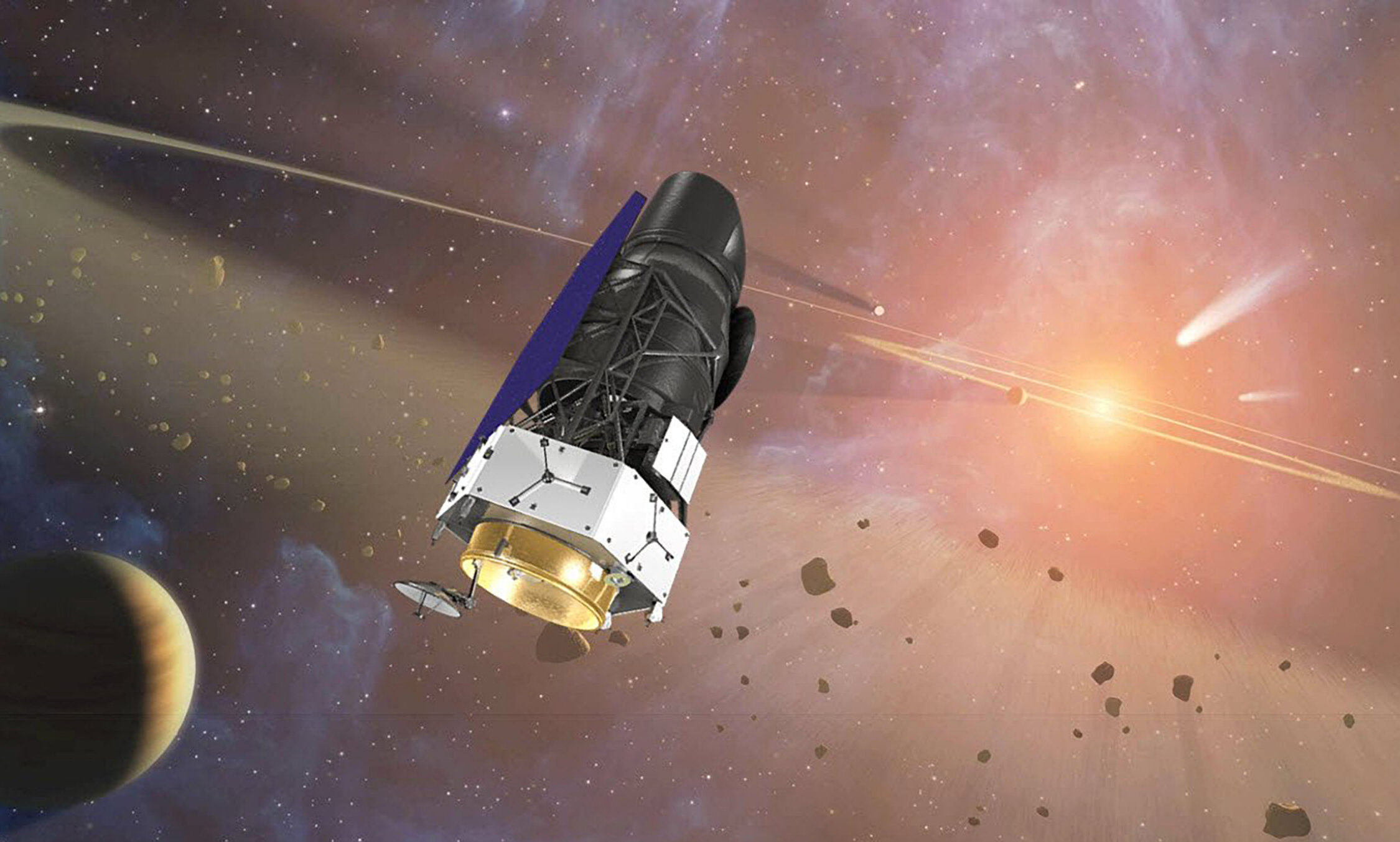
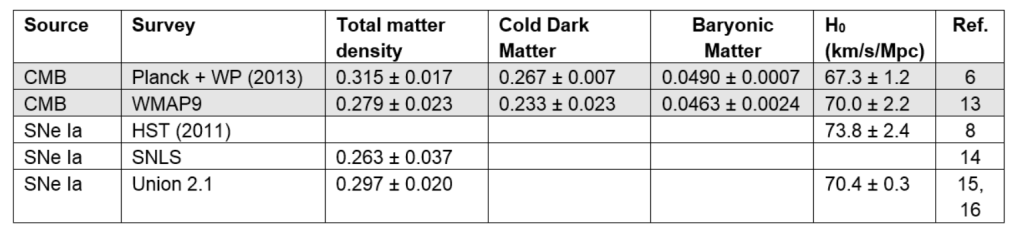
The Nancy Grace Roman Space Telescope, set to launch into orbit, aims to explore dark energy and dark matter, potentially addressing the unresolved Hubble Tension. This discrepancy highlights conflicting measurements of the universe's expansion rate. Some scientists believe Roman may confirm flaws in the standard cosmological model, leading to new physics.

  •  

Great Barrier Reef Acropora deaths tied to climate swings and human pressures

A new analysis revisits the Great Barrier Reef’s past losses of Acropora corals, showing that reef decline was not only a modern story of warming oceans. Using historical ecological records alongside climate-linked environmental data, the study links earlier episodes of Acropora mortality to shifting variability in ocean conditions—factors that can amplify heat stress even before today’s extremes fully arrive. The findings suggest that the reef’s vulnerability has deep roots, shaped by how the atmosphere and oceans interact over time.

The researchers focus on Acropora, a genus that forms structurally complex habitats and supports high biodiversity. When these branching corals die, the consequences cascade: shelter and food sources shrink, juvenile recruitment becomes harder, and reef recovery slows. Their approach connects mortality signals across time to measures of climate variability, aiming to distinguish natural swings from persistent human-driven pressures.

Clues come from patterns consistent with stress events driven by warmer-than-usual water, altered temperature dynamics, and changing conditions that influence coral physiology. Importantly, the work frames these stressors as interacting rather than acting alone. Climate variability can raise the frequency and severity of harmful conditions, while human impacts provide chronic background stress that reduces coral resilience.

The study emphasizes that anthropogenic impacts—such as local water-quality degradation and other human pressures—can intensify the damage caused during climate-driven heat or disturbance events. In this view, the reef does not simply “survive” or “collapse” based on temperature alone; it fails when multiple stressors converge, tipping corals past thresholds for survival and regrowth.

This “multi-stressor” model matters for forecasts. If past mortality aligns with periods of heightened climate variability, then future reef risk depends not only on long-term warming trends but also on how variability evolves. That means management strategies must be tuned to both the climate signal and the local pressures that determine how quickly corals can bounce back after shocks.

The authors also highlight that historical mortality patterns can function like a preview of likely future dynamics. Instead of treating recent bleaching as the first chapter, the analysis portrays a longer timeline of stress accumulation. The reef’s trajectory, they argue, reflects a system that has repeatedly been strained and partially recovered—until cumulative impacts made recovery less complete.

With the Great Barrier Reef facing intensifying marine heatwaves, this work adds urgency to climate mitigation and local conservation. It suggests that reducing human pressures can buy time by strengthening coral tolerance, even as global temperatures continue to rise. In viral science terms, the message is clear: the reef’s past predicts its future—and human actions can still change the ending.

Subject of Research: Great Barrier Reef coral (Acropora) mortality
Article Title: Past Acropora mortality on the Great Barrier Reef linked to climate variability and anthropogenic impacts.
Article References: Clark, T.R., Leonard, N.D., Jupiter, S.D. et al. (2026). Commun Earth Environ. https://doi.org/10.1038/s43247-026-03800-9
Image Credits: AI Generated
DOI: 10.1038/s43247-026-03800-9

  •  

From Paleogene to Anthropocene: Evolution of Northeast Asian Frogs

In a groundbreaking synthesis that traverses geological epochs and ecological paradigms, recent research offers a comprehensive temporal and evolutionary framework for understanding anuran diversity in northeast Asia. This study, uniquely integrating vast phylogeographic datasets spanning over two decades, illuminates the dynamic interactions between environmental upheavals and evolutionary processes shaping frog lineages from the Paleogene through to the Anthropocene era.

Northeast Asia, a region marked by complex paleogeological histories, fluctuating climatic conditions, and increasing anthropogenic pressures, serves as a natural laboratory to unravel the intricacies of amphibian evolution. Amidst a plethora of fragmented phylogeographic studies, this synthesis stands out by harmonizing divergence timing with macroevolutionary drivers to reveal patterns hitherto obscure, offering an unprecedented panoramic view of regional anuran evolution.

Central to this ambitious undertaking is the collation and analysis of published divergence-time estimates for anuran species recorded from 1998 to the present. By aligning basal, stem, and crown age data points with temporal environmental variables, the researchers mapped a chronological narrative that directly associates lineage diversifications with major ecological and geological transformations, thereby identifying recurrent evolutionary drivers that have recurrently sculpted these amphibian assemblies.

The study delineates four principal evolutionary catalysts responsible for significant phylogenetic turnovers and demographic shifts within anuran populations. These include: the shifting paleogeological frameworks and emerging landscape barriers, oscillating climates and latitudinal gradients, cyclical glaciations paired with historical sea-level variations, and the intensified anthropogenic interventions characterizing recent epochs. Through this lens, each driver is contextualized within the temporal and spatial scales relevant to corresponding lineage divergences.

A particularly notable aspect of the analysis involves the utilization of time-calibrated genomic species trees paired with diversification modeling, an approach that successfully captures the nuanced evolutionary tempos and modes operating across major Northeast Asian frog families. This genomic architecture, juxtaposed with ecological trait datasets—specifically body size, elevational range, and latitudinal distribution—offers robust insights into the adaptive radiations and ecological breadth characterizing these amphibian clades.

Employing advanced Bayesian Analysis of Macroevolutionary Mixtures (BAMM), the research reconstructs trait evolution trajectories, revealing that Ranidae species consistently exhibit higher trait values over evolutionary timeframes. Such elevations in trait magnitude connote broader ecological amplitude and enhanced macroevolutionary expansion when compared to concurrent families such as Bufonidae and Microhylidae, signaling divergent ecological strategies underpinning their evolutionary success.

Beyond macroevolutionary analyses, the synthesis addresses contemporary conservation challenges by detecting genetic signatures indicative of human-mediated disturbances. These findings underscore the profound impact of anthropogenic activities on amphibian genetic diversity and population structure, emphasizing the urgency of integrating conservation genomics with evolutionary studies to safeguard regional biodiversity.

An intriguing discovery pertains to unresolved species boundaries within several anuran complexes, where interplays of multiple evolutionary drivers manifest as cryptic speciation events or ongoing hybridization. This complexity not only challenges traditional taxonomic classifications but also propels forward discussions on species delineation frameworks that incorporate genomic, ecological, and morphological data.

The study’s integrative approach extends to the synthesis of phenotypic, ecological, and macroevolutionary patterns utilizing openly accessible datasets. This comprehensive data amalgamation fosters a holistic understanding of how longitudinal environmental fluctuations have orchestrated lineage diversification and trait evolution, thereby grounding phylogeographic patterns within a broader evolutionary and ecological context.

Climate fluctuations, particularly linked to the pronounced latitudinal gradients in northeast Asia, emerge as pivotal factors influencing adaptive trait distributions and diversification rates. Fluctuating temperature regimes and shifting precipitation patterns have likely exerted selective pressures fostering ecological differentiation and localized adaptations, processes critical to elucidating the biogeographic mosaics observed today.

Sea-level changes accompanying glacial cycles further complicate the evolutionary landscape, intermittently disconnecting and reconnecting populations and facilitating allopatric speciation. These dynamics highlight the historical contingency embedded within contemporary phylogenies and emphasize the evolutionary significance of past climatic oscillations and paleogeographic rearrangements.

The explicit recognition of anthropogenic influences within the evolutionary framework reflects an important paradigm shift, linking human activity not only to immediate biodiversity loss but also to long-term evolutionary trajectories. Genetic imprints of habitat fragmentation, pollution, and translocation events attest to the pervasive reach of anthropogenic factors in shaping amphibian populations, potentially accelerating evolutionary processes or inducing maladaptive consequences.

By establishing a generalized framework that marries divergence timing with trait evolution and environmental drivers, this synthesis propels forward predictive modeling of biodiversity responses. Such frameworks are invaluable in projecting how ongoing environmental change may redefine evolutionary pathways, offering strategic foresight for biodiversity conservation under rapidly transforming global conditions.

Importantly, the researchers advocate for continued synthesis efforts, recommending that future investigations closely integrate genomic data with ecological and paleogeographic information. This interdisciplinary approach promises to unveil deeper evolutionary insights and refine conservation priorities, ensuring that amphibian diversity in northeast Asia remains resilient amid mounting ecological pressures.

The implications of these findings extend beyond amphibian biology, offering a blueprint for understanding how long-term environmental variability influences evolutionary processes across taxa, particularly in regions with complex historical and contemporary ecological interactions.

This synthesis not only enriches our comprehension of northeast Asian anurans but also exemplifies the profound explanatory power of integrating phylogeography, trait evolution, and macroevolutionary analytics. As biodiversity faces unprecedented threats, such integrative research embodies the critical scientific endeavor to decipher the past and guide the future of life’s intricate evolutionary tapestry.


Subject of Research: Phylogeography, trait evolution, and evolutionary drivers of northeast Asian anurans.

Article Title: From Paleogene to Anthropocene: phylogeography, geographic patterns of traits, and chronology of evolutionary drivers in northeast Asian anurans.

Article References:
Othman, S.N., Borzée, A. From Paleogene to Anthropocene: phylogeography, geographic patterns of traits, and chronology of evolutionary drivers in northeast Asian anurans. Heredity (2026). https://doi.org/10.1038/s41437-026-00856-3

Image Credits: AI Generated

DOI: 10.1038/s41437-026-00856-3

Keywords: Anuran phylogeography, evolutionary drivers, paleogeology, climate variability, glaciations, anthropogenic impacts, Bayesian macroevolutionary analysis, trait evolution, northeast Asia biodiversity, amphibian diversification

  •  

NK Cell Dysregulation Fuels Heart Risk in HIV+ Teens

In an era marked by remarkable advances in antiretroviral therapy (ART), the survival and quality of life of individuals living with HIV have dramatically improved. Yet, new research is now illuminating the complex interplay between immune system dysregulation and the emergence of cardiovascular disease (CVD) in a particularly vulnerable population: adolescents infected with HIV perinatally. A groundbreaking study, published in Nature Communications, spearheaded by Alles, Gunasena, Kettelhut, and colleagues, sheds light on the critical role of natural killer (NK) cell dysfunction in potentiating cardiovascular complications among these young patients, even while on effective ART.

Perinatally acquired HIV represents a unique clinical challenge, as infection occurs during a critical window of immune system development. While ART suppresses viral replication effectively, it does not fully restore immune homeostasis. This dysregulation manifests not only in the persistence of immune activation but also in aberrant immune cell profiles, including those of natural killer cells—a subset of lymphocytes crucial in antiviral defense and immune surveillance. The new findings suggest that disturbances in NK cell function are more than mere epiphenomena; they could actively contribute to the pathogenesis of cardiovascular abnormalities in this patient group.

The study emphasizes that NK cells in adolescents with perinatal HIV exhibit marked phenotypic and functional changes compared to age-matched uninfected controls. These alterations include impaired cytotoxic activity and aberrant expression of activating and inhibitory receptors. Such changes compromise the ability of NK cells to regulate inflammation and eliminate infected or damaged cells, fostering an environment conducive to vascular injury and endothelial dysfunction. This mechanistic insight is critical, as endothelial health is a cornerstone of cardiovascular stability.

By integrating immunophenotyping, functional assays, and clinical cardiovascular assessments, the researchers drew a comprehensive picture linking NK cell abnormalities with early signs of CVD. The adolescents studied demonstrated increased arterial stiffness, altered lipid profiles, and biomarkers indicative of systemic inflammation—all hallmarks of an accelerated atherosclerotic process. Intriguingly, these cardiovascular perturbations persisted despite sustained viral suppression, highlighting that viral load alone cannot explain the heightened cardiovascular risk.

The pathophysiology proposed by the authors centers on a chronic, low-grade inflammatory milieu driven, in part, by dysfunctional NK cell signaling. Typically, NK cells modulate inflammation through cytokine secretion and direct cytolysis of aberrant cells, maintaining tissue homeostasis. However, dysregulated NK cells may either fail to contain inflammatory stimuli or contribute to pathological immune activation. This shift not only exacerbates endothelial dysfunction but may induce vascular remodeling and fibrosis, setting the stage for premature cardiovascular disease.

Molecular analyses revealed upregulation of several pro-inflammatory pathways within NK cells isolated from affected adolescents. Notably, transcriptional profiles highlighted increased expression of genes involved in inflammasome activation, oxidative stress responses, and cell senescence markers—factors strongly implicated in vascular pathology. These insights open avenues for targeted therapeutic interventions aimed at restoring NK cell function and interrupting the inflammatory cascade implicated in CVD progression.

Importantly, the study’s implications go beyond HIV care alone. The concept that immune cell dysfunction can independently drive cardiovascular disease adds a crucial dimension to our understanding of immune-mediated comorbidities. It underscores the necessity of holistic medical care approaches that address the immunological underpinnings of chronic disease states, especially in populations with lifelong exposure to immunological stressors like perinatal HIV.

The findings also raise compelling questions about the adequacy of current ART regimens in mitigating long-term non-AIDS complications. While ART excels at viral suppression, it may not sufficiently address immune reconstitution or the correction of immune cell dysregulation. Future therapeutic strategies might need to incorporate immunomodulatory agents that specifically target NK cell pathways or inflammatory mediators to reduce cardiovascular risk.

Moreover, this study highlights the pressing need for comprehensive cardiovascular screening in adolescents with perinatally acquired HIV. Traditional risk assessment paradigms may not capture the unique pathophysiological mechanisms at play in this population. Early detection of subclinical vascular changes could catalyze timely preventative interventions, potentially improving long-term outcomes.

From a broader perspective, the research invites a re-examination of how chronic infections shape the immune landscape over an individual’s lifespan and influence multisystem disease trajectories. It suggests a paradigm where the immune system’s ongoing attempts to control persistent infection or immunologic insults inadvertently promote collateral tissue damage, exemplified here by cardiovascular impairment.

Technological advances in multi-omics and single-cell profiling have been pivotal in unraveling the nuanced dysfunctions within NK cell subsets elucidated by this work. These tools enable high-resolution mapping of immune cell states and their interactions with the vascular microenvironment, fostering a deeper mechanistic understanding that might have remained elusive with conventional methods.

The involvement of NK cells in this context may also intersect with other immune-mediated pathways, including those involving T cells and monocytes/macrophages, which together orchestrate the inflammatory response underpinning atherosclerosis. Understanding these intricate cellular crosstalk networks will be crucial to designing effective immunotherapies.

In light of this evidence, interdisciplinary collaboration between immunologists, cardiologists, and infectious disease specialists becomes more imperative. Integrating expertise from these domains can accelerate the translation of these findings into clinical interventions that mitigate cardiovascular risk among HIV-infected youth, and perhaps beyond.

Finally, this research presents an urgent call to the global health community to prioritize long-term monitoring and holistic management strategies for adolescents living with perinatal HIV. As their life expectancy approaches normality, addressing comorbid conditions such as cardiovascular disease will be essential to ensuring not just survival but sustained health and quality of life.

In summary, the pioneering study by Alles and colleagues illuminates a previously underappreciated contributor to cardiovascular disease risk in adolescents with perinatally acquired HIV on antiretroviral therapy. The demonstration that NK cell dysregulation may be a key mechanistic driver of early vascular pathology underscores the necessity for innovative therapeutic approaches targeting immune dysfunction beyond viral suppression alone. This work marks a significant advance in understanding the complex interdependencies between chronic viral infection, immune regulation, and cardiovascular health, and sets the stage for transformative changes in clinical practice and research paradigms.


Subject of Research:
Natural Killer (NK) cell dysfunction and its role in cardiovascular disease development in adolescents with perinatally acquired HIV undergoing antiretroviral therapy.

Article Title:
NK cell dysregulation may potentiate cardiovascular disease in adolescents with perinatally acquired HIV on antiretroviral therapy.

Article References:
Alles, M., Gunasena, M., Kettelhut, A. et al. NK cell dysregulation may potentiate cardiovascular disease in adolescents with perinatally acquired HIV on antiretroviral therapy. Nat Commun (2026). https://doi.org/10.1038/s41467-026-74602-y

Image Credits: AI Generated

  •  

Metaplasticity Enhances Life-Course Brain Health Strategies

In a groundbreaking advance poised to reshape how we approach brain health across the human lifespan, recent research reveals that integrating the principles of metaplasticity into therapeutic interventions can dramatically enhance their effectiveness. Metaplasticity, often described as the “plasticity of plasticity,” refers to the brain’s dynamic ability to regulate its own synaptic plasticity based on prior activity and environmental inputs. This emerging understanding promises to revolutionize strategies for cognitive enhancement and neurological rehabilitation, offering personalized and adaptive therapies that evolve with the individual’s brain state.

The concept of metaplasticity extends the traditional notion of neuroplasticity, emphasizing that synaptic changes are not static but modulated by previous experiences. This regulatory mechanism ensures that synaptic modifications occur within optimal ranges, preventing the neural circuits from becoming either too rigid or overly malleable. Recognizing this, scientists are now exploring interventions that do more than promote plasticity—they strategically prime the brain’s plastic potential to achieve sustained and balanced neural adaptability.

Life-course brain health is a complex interplay of genetic, environmental, and experiential factors that cumulatively influence neural function. Traditional interventions often apply a one-size-fits-all model, ignoring the fluctuating states of neural readiness and adaptation across developmental stages. By contrast, therapies informed by metaplasticity tailor their application according to the individual’s neurobiological context, potentially enhancing outcomes in cognitive development, neurorehabilitation after injury, and age-related cognitive decline.

The research underscores the importance of timing and context in brain health interventions. Synaptic plasticity is not merely about stimulating neurons but about doing so when they are optimally susceptible to change. This temporal precision is critical during sensitive periods in childhood and adolescence when the brain’s structure and function undergo rapid transformation. Incorporating metaplasticity principles means recognizing these windows of opportunity and adapting interventions to harness the brain’s highest potential for growth and recovery.

Moreover, metaplasticity offers intriguing insights into why certain neurological and psychiatric conditions manifest, persist, or respond variably to treatment. In disorders such as autism spectrum disorder, schizophrenia, and depression, dysregulation of plasticity mechanisms is increasingly implicated. Understanding how metaplasticity governs synaptic strength and flexibility not only facilitates more refined diagnostic frameworks but also guides innovative therapeutic designs that can recalibrate neural networks more effectively.

Neurorehabilitation strategies following traumatic brain injury or stroke stand to benefit immensely from a metaplasticity-informed approach. Current protocols focus heavily on repetitive stimulation or training, but without considering the brain’s shifting landscape of plasticity thresholds. By integrating metaplastic principles, clinicians can optimize the intensity and nature of rehabilitation exercises to coincide with periods when neuronal circuits are most adaptable, potentially accelerating recovery and improving functional outcomes.

This paradigm shift also extends into the realm of aging and neurodegenerative diseases. As brain plasticity declines with age, interventions designed to restore or boost neuroplastic capacity need to be sensitive to the evolving metaplastic state of neural circuits. Targeting these mechanisms might slow cognitive decline, improve memory retention, and enhance quality of life for older adults. Such interventions could include tailored cognitive training paradigms, pharmacological agents, or even non-invasive brain stimulation techniques employed with metaplastic timing considerations.

Critically, the application of metaplasticity in clinical settings demands a robust biomarker framework to assess brain state and plastic potential dynamically. Advances in neuroimaging and electrophysiological monitoring are instrumental in this regard, enabling real-time tracking of circuit responsiveness and guiding intervention adjustments. This precision medicine approach promises not only better therapeutic efficacy but also minimizes adverse effects associated with inappropriate stimulation.

As the scientific community deepens its understanding of metaplasticity, ethical considerations around intervention timing and intensity come into sharper focus. The prospect of manipulating brain plasticity across the lifespan raises questions about long-term consequences, individual variability, and the balance between enhancement and harm. Ongoing research must address these concerns through rigorous longitudinal studies and multidisciplinary dialogues involving neuroscience, bioethics, and patient advocacy.

Education systems may also harness knowledge on metaplasticity to optimize learning processes. By structuring curricula and educational environments that align with periods of heightened neural receptivity, educators can facilitate more effective skill acquisition and cognitive development. This integration of neuroscience and pedagogy represents a transformative step towards personalized learning experiences tailored to the brain’s natural rhythms of plasticity.

The public health implications are profound, as metaplasticity-guided interventions could democratize brain health strategies, making them more accessible and tailored beyond clinical populations. Community programs aimed at mental wellness, resilience building, and cognitive maintenance might incorporate metaplastic principles to maximize their impact, fostering healthier neural aging trajectories and buffering against stress-related neural degradation.

Future research efforts are focused on unraveling the molecular substrates that orchestrate metaplastic adjustments, including intracellular signaling pathways, neurotransmitter systems, and gene expression dynamics. These investigations hold promise for the development of novel pharmacotherapies that target metaplastic regulators, offering precise modulation of neural plasticity in disease states and healthy brains alike.

In conclusion, applying the burgeoning knowledge of metaplasticity marks a profound evolution in brain health interventions. This approach compels a reexamination of how neuroscientists and clinicians conceptualize brain adaptability, emphasizing a lifelong, context-dependent modulation of neuroplastic potential. As this paradigm gains traction, it sets the stage for more refined, effective, and ethically conscious strategies to optimize brain function from infancy through advanced age.


Subject of Research: Life-course brain health interventions and the role of metaplasticity in optimizing therapeutic outcomes.

Article Title: Life-course brain health intervention choices are improved by applying knowledge of metaplasticity.

Article References:
Scher, M.S. Life-course brain health intervention choices are improved by applying knowledge of metaplasticity. Pediatr Res (2026). https://doi.org/10.1038/s41390-026-05183-1

Image Credits: AI Generated

DOI: 10.1038/s41390-026-05183-1

  •  

Hyponatremia Raises Post-Surgery Risks in Elderly

In a groundbreaking retrospective cohort study set to reshape preoperative evaluations, researchers have unveiled compelling evidence linking preoperative hyponatremia with significantly heightened risks of postoperative complications and mortality in elderly patients undergoing hip fracture surgery. Published in BMC Geriatrics, the study meticulously investigates how a seemingly subtle electrolyte imbalance can precipitate a cascade of adverse outcomes, transforming the landscape of geriatric orthopedic care.

Hip fractures in geriatric populations remain a daunting global health challenge, often precipitating a downward spiral in functional status and quality of life. While surgical intervention typically offers the best chance for recovery, the preoperative physiological status of these patients profoundly influences their prognoses. Sodium, a critical electrolyte governing cellular function and fluid balance, emerges as a pivotal biomarker in this investigation. Hyponatremia, defined by a clinically low serum sodium concentration, manifests frequently in elderly individuals due to multifactorial etiologies including chronic comorbidities and medication effects.

The research team rigorously analyzed retrospective data comprising extensive clinical records of geriatric patients admitted for hip fracture surgeries. Through advanced statistical modeling and adjustment for confounding variables such as age, comorbidity profiles, and fracture severity, the study delineated a clear association: preoperative hyponatremia markedly increases the incidence of postoperative complications including infections, delayed wound healing, and cardiovascular events. These complications carry a compounded risk, often prolonging hospitalization and necessitating intensive care interventions.

Highlighting the pathophysiological underpinnings, hyponatremia disrupts neuronal function and cerebral homeostasis, rendering patients more susceptible to delirium and impairments in sensorium postoperatively. These neurological complications contribute substantially to morbidity and complicate rehabilitation trajectories. Additionally, the electrolyte imbalance compromises cellular osmoregulation, potentially exacerbating inflammatory responses and impairing immune defense mechanisms during the critical postoperative period.

The longitudinal dimension of this study offers unprecedented insight into mortality trends extending from the immediate postoperative phase to the long term. Patients exhibiting preoperative hyponatremia experienced significantly higher mortality rates spanning months to years after surgery, underscoring the enduring impact of electrolyte disturbances beyond acute hospitalization. This trend accentuates the necessity for early identification and correction of hyponatremia to improve survival outcomes.

Intriguingly, the study also explores the potential for hyponatremia to act as a surrogate marker for frailty and systemic physiological decline rather than merely an isolated laboratory anomaly. Detailed subgroup analyses suggest that patients with hyponatremia often harbor multiple concurrent vulnerabilities, compounding their risk profiles. This observation prompts a paradigm shift, advocating for integrated geriatric assessments that encompass biochemical, functional, and nutritional parameters to optimize perioperative care.

From a therapeutic perspective, the findings implicate preoperative sodium normalization as a potentially modifiable factor in risk mitigation strategies. Interventions may include cautious fluid management, electrolyte supplementation, and tailored pharmacotherapy designed to stabilize serum sodium levels without precipitating osmotic demyelination syndrome, a rare but severe complication of rapid correction. The study calls for randomized controlled trials to establish evidence-based protocols for managing hyponatremia in this delicate patient cohort.

Moreover, this research injects urgency into the discourse surrounding perioperative risk stratification tools. Existing models often underrepresent electrolyte abnormalities, focusing predominantly on cardiovascular and respiratory function. Incorporating sodium levels into predictive algorithms could enhance clinical decision-making, enabling surgeons, anesthesiologists, and geriatricians to identify high-risk individuals necessitating intensified monitoring and resource allocation.

The implications extend beyond individual patient management to healthcare systems and policy frameworks. Given the aging global population and escalating incidence of geriatric hip fractures, optimizing preoperative metabolic status could translate into reduced healthcare expenditures by lowering complication rates, shortening hospital stays, and minimizing readmission frequencies. This cost-effectiveness dimension positions preoperative hyponatremia screening as a pragmatic intervention with wide-reaching benefits.

Critically, the study’s retrospective design, while powerful, inherently limits causal inferences. Confounding factors, although rigorously controlled, cannot be entirely excluded. Nonetheless, the consistent associations revealed across a large diverse sample lend robust credibility to the conclusions. Prospective, multicenter studies are warranted to validate these findings and explore mechanistic pathways at the molecular and cellular levels that link sodium dysregulation with adverse surgical outcomes.

The researchers also emphasize the importance of interdisciplinary collaboration, urging orthopedic surgeons to engage endocrinologists and nephrologists in the perioperative optimization process. Proactive management strategies encompass not only sodium correction but also comprehensive evaluation of renal function, hydration status, and medication regimens, particularly diuretics and psychotropics which commonly induce hyponatremia.

Importantly, patient education emerges as a valuable component in the preoperative workflow. Informing elderly patients and their caregivers about the significance of electrolyte balance empowers adherence to medical advice and facilitates early symptom reporting. Such engagement can enhance outpatient management of chronic conditions predisposing to hyponatremia, potentially preventing fractures and improving surgical readiness.

The study’s extensive data set further reveals disparities in the prevalence of hyponatremia across demographic and socio-economic strata, suggesting underlying inequities in healthcare access and chronic disease management. Addressing these social determinants is imperative to reduce the burden of postoperative complications and enhance equity in surgical outcomes among the elderly.

In conclusion, the association between preoperative hyponatremia and adverse postoperative trajectories in geriatric hip fracture patients demands urgent attention from the medical community. This study pioneers a vital link in perioperative medicine, emphasizing the profound impact of electrolyte homeostasis on surgical resilience and long-term survival. Integrating these insights into clinical practice promises to elevate the standard of care, transforming outcomes for one of the most vulnerable patient populations.

Subject of Research:
Article Title:
Article References:

Xi, C., Wan, M., Wu, H. et al. Preoperative hyponatremia is associated with increased postoperative complications and short- to long-term mortality in geriatric hip fracture patients: a retrospective cohort study. BMC Geriatr (2026). https://doi.org/10.1186/s12877-026-07833-9

Image Credits: AI Generated

  •  

Insights from 173,303 Pakistan Genome Analyses

A groundbreaking analysis of 173,303 exomes and genomes from the Pakistan Genome Resource (PGR) has unveiled compelling insights into the genetic architecture of human diseases and the therapeutic potential of loss-of-function (LoF) variants. This expansive dataset offers unprecedented resolution into homozygous loss-of-function (homLoF) mutations across diverse genes, providing critical human biological data that challenge and refine preclinical models. The ramifications for drug discovery are profound, underscoring the value of population-based genomic studies in elucidating gene function and safety profiles of potential therapeutics.

The PGR study corroborated previously established phenotypic associations for numerous homLoF variants. For instance, homozygous LoF mutations in LDLR were linked to hypercholesterolemia, while variants in LPL were associated with elevated triglyceride levels. Similarly, ANGPTL3 and APOB homLoF carriers exhibited notably reduced cholesterol and triglyceride profiles, whereas variants in ADCY3, POMC, MC4R, and MRAP2 were implicated in obesity phenotypes. These observations not only validate the penetrance of key metabolic genes but also affirm the rigorous phenotyping framework employed by the PGR.

Delving into therapeutically relevant homLoF variants, the study sheds light on the nuanced interplay between genotype and phenotype in neurodegeneration. LRRK2, a well-known protein kinase whose gain-of-function variants increase Parkinson’s disease risk, was examined in the context of loss-of-function. Notably, two PGR participants harboring homozygous LRRK2 pLoF variants exhibited early-stage kidney disease, a phenotype absent in heterozygous carriers. This human evidence mirrors renal dysfunction observed in LRRK2 knockout rodent models and preclinical trials with LRRK2 inhibitors in primates, suggesting a need for vigilant renal monitoring in therapeutic contexts targeting LRRK2.

In the realm of metabolic disease, a participant with a homLoF variant in SLC2A4—the gene encoding GLUT4—demonstrated type 2 diabetes, aligning with experimental models where GLUT4 deficiency impairs glucose homeostasis. Contrastingly, homLoF variants in DENND1B, previously linked to obesity and implicated in MC4R signaling pathways, did not confer obesity phenotypes in the cohort. This could indicate a lack of functional penetrance of DENND1B in human energy balance, differing substantially from prior murine models. Moreover, carriers of homLoF mutations in POMC, MC4R, and MRAP2 exhibited elevated BMI, reinforcing their contributory role to obesity.

Cardiovascular research insights emerged with RXFP1, a gene encoding a receptor extensively studied for its role in fertility, fibrosis, and cardiac function. Despite the gene’s pivotal role in murine reproductive and cardiovascular models—where its absence causes pronounced phenotypes—16 PGR individuals with RXFP1 homLoF variants spanned ages 30 to 73 years with no consistent deficits. Subtle associations with reduced waist-to-hip ratio and myocardial infarction risk were noted, and echocardiographic evaluations revealed mild variations in cardiac function among some homozygotes. Such findings suggest that the translational relevance of RXFP1 as a therapeutic target may be overestimated from rodent data, urging a recalibration of expectations for RXFP1 agonist therapies.

The hepatoprotective potential of CIDEB inhibition also gained support from PGR findings. Fourteen individuals homozygous for CIDEB loss-of-function variants displayed no liver disease, and burden analyses correlated CIDEB deficiency with decreased levels of liver enzymes ALT and AST and a reduced risk of non-alcoholic fatty liver disease. This human genetic evidence bolsters the rationale for targeting CIDEB therapeutically with siRNA or other modalities, highlighting an encouraging safety profile for chronic intervention.

Surprising evolutionary biology insights were uncovered in the reproductive gene PRDM9, a histone methyltransferase essential for meiotic recombination hotspot determination. While Prdm9 knockout mice exhibit infertility, PGR identified multiple human homLoF variant carriers of PRDM9 with proven fertility and successful reproduction. This stark species divergence reveals that PRDM9’s indispensability in meiosis is not conserved in humans, emphasizing the complexity of translating mouse genetic models to human biology.

Sensory gene analyses revealed functionally impactful homLoF mutations in TRPM8, an ion channel activated by cold stimuli. RBG cohort phenotyping demonstrated that carriers exhibited delayed cold-induced pain sensitivity and increased tolerance to cold-related discomfort, aligning with murine knockout models. Intriguingly, genome-wide association studies link TRPM8 variants to migraine susceptibility, positing TRPM8 inhibition as a promising therapeutic avenue. The PGR data indicate that complete loss of TRPM8 is generally well-tolerated, mitigating safety concerns for pharmacological antagonism targeting migraine prevention.

Collectively, these results highlight the critical importance of integrating large-scale human genomic data with functional assays to delineate gene-disease relationships and therapeutic potential. The PGR exemplifies how comprehensive population-based sequencing can validate, refine, or refute biological assumptions derived from animal models, fostering a more precise paradigm for drug target validation. By profiling rare homLoF variants and linking them with detailed phenotypic data, the study provides invaluable resources for developing safer, more effective genetic-driven therapies.

This study also accentuates the value of consanguineous populations, such as the Pakistani cohort, which enrich for homozygous rare variants and enable the detection of recessive phenotypes difficult to observe in outbred populations. Such datasets maximize the discovery power for identifying natural human knockouts, thereby informing on both the efficacy and potential deleterious effects of gene inactivation.

Beyond specific gene findings, the broader implication is a caution against uncritical extrapolation from model organisms to human physiology. While murine models remain indispensable, discrepancies evidenced in PRDM9 and RXFP1 underscore that human genetic data are indispensable for accurate target validation and safety assessment. This alignment between genotype, phenotype, and therapeutic action forms the cornerstone of precision medicine.

As the PGR and similar initiatives continue to expand, the integration of genomics with phenotypic and clinical data will catalyze a new era of therapeutic development truly grounded in human biology. The promise of harnessing human loss-of-function variants lies not only in uncovering disease mechanisms but also in guiding drug discovery toward targets with validated human safety and efficacy profiles, ultimately accelerating the path from bench to bedside.

This landmark study published in Nature offers a crucial template for leveraging population genomics in drug development, emphasizing the necessity of human genetic evidence to underpin the next generation of therapies. The insights gleaned provide a roadmap for more rational, genetics-informed clinical decision-making, heralding a future where personalized medicine and pharmacogenomics converge to transform healthcare.


Subject of Research: Genomic analysis of homozygous loss-of-function variants in the Pakistan Genome Resource and their implications for human disease and drug target validation.

Article Title: Analysis of 173,303 exomes and genomes in the Pakistan Genome Resource.

Article References:
Koch, C., Khalid, S., Khan, M.Z. et al. Analysis of 173,303 exomes and genomes in the Pakistan Genome Resource. Nature (2026). https://doi.org/10.1038/s41586-026-10667-5

Image Credits: AI Generated

DOI: https://doi.org/10.1038/s41586-026-10667-5

  •  

New Research Reveals Vocational Interests Predict Life Outcomes in Adults

In recent years, career interest assessments have predominantly been associated with adolescents seeking guidance regarding their vocational paths. However, a groundbreaking longitudinal study conducted by Michigan State University has upended this conventional wisdom, revealing that vocational interests retain their predictive power far beyond the early stages of professional life. This research, appearing in the prestigious Journal of Personality and Social Psychology, systematically tracked over 8,000 adults across an 11-year span to investigate how these interests correlate with significant life outcomes extending into midlife and later adulthood.

The traditional view holds that career interest inventories—measuring preferences and affinities for various job domains—are primarily formative tools, designed to inform high school or early college students about potential occupations. Nevertheless, this comprehensive study advances a more nuanced perspective: vocational interests remain a vital determinant shaping an individual’s trajectory throughout adulthood. These trajectories encompass not only occupational achievements but also relationship dynamics and civic engagement, illustrating the multidimensional influence of vocational proclivities on life course development.

Participants in the study initially underwent an assessment centered on six distinct vocational interest domains: Realistic, Investigative, Artistic, Social, Enterprising, and Conventional. This taxonomy, reflecting Holland’s widely recognized model of vocational interests, allowed researchers to create participant profiles that could be longitudinally analyzed. Over a decade later, researchers revisited the participants’ life situations to uncover connections between initial interest profiles and subsequent outcomes in employment status, marital and relationship quality, and levels of community involvement.

Intriguingly, the data stemmed from a large-scale, population-representative sample, augmenting the external validity and applicability of findings. Among the six interest dimensions, Enterprising interests—characterized by a drive toward leadership, entrepreneurship, and influence—most consistently predicted a broad spectrum of beneficial outcomes. Individuals with high enterprising proclivities were notably more successful in career advancement, as well as more active in communal contexts, confirming the interplay between vocational interests and societal participation.

Other vocational interests manifested more domain-specific predictive patterns. Social interests, encompassing a predisposition toward interpersonal engagement and helping professions, were strongly linked with relationship satisfaction and stability. Similarly, those scoring highly in Artistic interests demonstrated heightened cultural participation and creative pursuits later in adulthood. Such specificity underscores the differentiation among vocational interests regarding which life domains they most robustly forecast.

The timing of life outcomes’ predictability in relation to interests also exhibited sophisticated patterns. For example, vocational interests measured during early adulthood were more potent predictors of relationship outcomes, aligning with the formative years for many people’s romantic and social development. Conversely, interests predicted occupational attainment and work satisfaction most strongly during midlife, a period often characterized by career consolidation and peak professional productivity.

What sets this study apart is its comparison of vocational interests with the widely researched Big Five personality traits. Within personality psychology, the Big Five—openness, conscientiousness, extraversion, agreeableness, and neuroticism—have been considered fundamental predictors of life trajectories. Yet, the Michigan State University research reveals that vocational interests, though somewhat related, hold unique predictive validity and sometimes surpass the Big Five traits in accounting for important life outcomes. This finding elevates vocational interests as a critical but underappreciated psychological construct within adult personality and developmental studies.

The implications for researchers and practitioners are profound. Often, career counselors and psychologists utilize vocational interest assessments transiently during career exploration phases. This study suggests a broader application spectrum, advocating for the integration of interest assessments into longitudinal personal development planning. Such integration could guide individuals not solely through their initial career choices but throughout varied life challenges and transitions ranging from job changes to relationship management and community engagement.

Lead author Lena Roemer emphasized that the persistence of vocational interests underscores their role in continual life decision-making. By illuminating how interests translate differently depending on life stage, the study invites reconsideration of when and how vocational information is utilized. For instance, it can aid in predicting when someone might be poised for a career promotion or when social interests may amplify the quality and stability of relationships.

The research also prompts technical reconsideration regarding the measurement tools and data analysis frameworks used in vocational psychology. The longitudinal design, tracking thousands over more than a decade, allowed the research team to employ sophisticated statistical modeling techniques to isolate the effects of interests from confounding variables. This analytical rigor enhances confidence in the robustness of findings, providing a model for future investigations into dynamic personality constructs.

Moreover, the collaboration between Michigan State University’s Department of Psychology and the University of Iowa indicates a cross-institutional research effort pooling expertise in vocational psychology, personality assessment, and life-span human development. Such interdisciplinary approaches allow for deeper insight into complex interactions between motivational attributes like vocational interests and real-world life outcomes.

This study marks a significant milestone in understanding adult development and personality. It challenges simplistic notions that vocational interests are merely adolescent tools and instead demonstrates their centrality in orchestrating major life events well into later adulthood. The findings call for a reevaluation of career and life counseling practices, integrating vocational interest assessments as enduring, actionable tools that offer prognostic value across decades.

Ultimately, Michigan State University’s pioneering work beckons both scientific and applied psychology communities to turn greater attention to this domain. The predictive validity of vocational interests not only illuminates pathways of individual success and fulfillment but also presents potential avenues to enhance societal well-being by helping people navigate their professional, personal, and communal lives with greater precision and insight.

Subject of Research: Vocational interests and their predictive validity for life outcomes across adulthood.

Article Title: The predictive validity of vocational interests for life outcomes across adulthood.

Web References:
– DOI: http://dx.doi.org/10.1037/pspp0000605
– Related MSU article: https://msutoday.msu.edu/news/2026/06/vocational-interests-and-careers

Keywords: vocational interests, career development, lifespan psychology, personality traits, longitudinal study, life outcomes, enterprising interests, social interests, artistic interests, Big Five personality traits, adult development

  •  

Outdoor Air Pollution Linked to Ovarian, Endometrial Cancer

In an ambitious new study published in the Journal of Exposure Science and Environmental Epidemiology, researchers report compelling evidence linking long-term exposure to outdoor air pollution with an increased risk of ovarian and endometrial cancers. This groundbreaking investigation harnesses a large prospective cohort to unravel the intricate relationship between environmental pollutants and gynecologic malignancies, offering a critical perspective on public health implications that extend far beyond respiratory diseases.

Air pollution has long been recognized as a major contributor to cardiovascular and respiratory conditions, but its potential carcinogenic effects on reproductive organs have remained underexplored. The study conducted by Ammons, Fisher, Madrigal, and colleagues seeks to fill this gap by focusing on two of the most common gynecologic cancers – ovarian and endometrial cancer – and evaluating the impact of chronic exposure to ambient air pollutants. By analyzing data from thousands of participants over an extended period, the researchers embarked on an epidemiologic journey to quantify risks associated with particulate matter and other airborne toxins.

The cohort employed in this study includes a diverse population sampled across multiple geographic regions, allowing researchers to capture variations in pollution levels and their corresponding cancer incidences. Utilizing cutting-edge exposure assessment techniques, the team mapped pollutant concentrations at individual residences with unprecedented accuracy. These methods integrated satellite data, ground-level monitors, and atmospheric modeling to deliver robust, spatially resolved exposure metrics. Such advances surpass prior limitations inherent in ecological and self-reported exposure assessments, lending unprecedented credibility to the findings.

Delving into the biological plausibility of how air pollution could influence the pathogenesis of ovarian and endometrial cancers, the researchers propose several mechanistic pathways. Persistent exposure to fine particulate matter (PM2.5) and polycyclic aromatic hydrocarbons (PAHs) may induce systemic inflammation, oxidative stress, and hormonal dysregulation. These factors could disrupt the delicate microenvironment of reproductive tissues, promoting DNA damage, aberrant cell signaling, and ultimately malignant transformation. The findings echo mounting laboratory evidence that airborne pollutants can act as endocrine disruptors, complicating hormonal balance crucial for gynecologic health.

Statistical analyses revealed that the risk for endometrial and ovarian cancers escalates in tandem with pollutant concentration levels. Notably, women residing in urban areas with higher vehicular emissions and industrial activities exhibited significantly greater cancer risks compared to those in less polluted settings. After adjusting for known confounders such as age, BMI, smoking status, and reproductive history, the association remained robust, underscoring the independent contribution of chronic air pollution exposure to cancer pathogenesis.

Importantly, this research highlights a disproportionately higher vulnerability among subgroups, including postmenopausal women and those with pre-existing metabolic disorders. These populations may experience exacerbated inflammatory responses or impaired detoxification pathways, amplifying carcinogenic potential. Such differential susceptibility underscores the urgency for targeted interventions and personalized public health strategies to mitigate the undue burden of pollution-induced cancers.

Beyond its epidemiological insights, the study calls attention to the glaring disparities in environmental exposures driven by socioeconomic and racial factors. Marginalized communities situated near highways, factories, and waste sites confront a compounded risk landscape for gynecologic cancers due to cumulative environmental and social stressors. Addressing these inequities demands integrated policy responses encompassing urban planning, emission regulation, and healthcare accessibility.

From a preventive medicine standpoint, these findings compel a re-evaluation of current cancer risk models and screening guidelines to incorporate environmental exposure metrics. Recognizing air pollution as a modifiable risk factor opens avenues for novel primary prevention strategies including community-level emission reductions, green space expansion, and personal behavior modifications. Public awareness campaigns and healthcare provider education must integrate these environmental determinants to holistically address cancer prevention.

Moreover, the study’s prospective cohort design strengthens the causal inference between pollution and cancer development, circumventing biases typical of retrospective analyses. Continuous monitoring and follow-up of the cohort will enable future research to delineate critical exposure windows, dose-response relationships, and potential synergistic effects with other carcinogens. Such longitudinal data is vital for refining risk assessments and tailoring interventions.

The multidisciplinary collaboration driving this research showcases the essential convergence of epidemiology, environmental science, oncology, and biostatistics in addressing complex health challenges. It underscores the power of leveraging big data and sophisticated modeling to uncover subtle yet impactful health hazards lurking within everyday environments. The authors advocate for sustained funding and cross-sector partnerships to expand these investigations globally, given the universal prevalence of air pollution.

As air quality deteriorates worldwide amidst urbanization and industrial growth, this study serves as a timely warning of the hidden costs borne by women’s health. It challenges policymakers, scientists, and clinicians alike to rethink environmental determinants as integral components of cancer etiology and control. The evidence presented marks a significant stride toward recognizing air pollution not only as a respiratory threat but also as a stealthy contributor to oncologic morbidity.

Crucially, these findings could galvanize international efforts to adhere to stricter air quality standards and accelerate transitions to clean energy sources. Reducing exposure to harmful pollutants would yield multifaceted benefits including diminishing cancer risks, improving cardiovascular health, and enhancing overall quality of life. The research invites a paradigm shift wherein environmental stewardship aligns squarely with cancer prevention goals.

In conclusion, the pioneering work by Ammons and colleagues elucidates how invisible toxins permeating the air we breathe insidiously influence the development of ovarian and endometrial cancers. Their rigorous approach and comprehensive analyses illuminate a previously underrecognized dimension of cancer risk, compelling a broad re-examination of environmental health policies and clinical practices. As the global burden of cancer continues to rise, addressing modifiable environmental exposures emerges as an indispensable frontier in safeguarding women’s health for generations to come.


Subject of Research: Long-term outdoor air pollution exposure and its association with ovarian and endometrial cancer risk.

Article Title: Long-term outdoor air pollution and risk of ovarian and endometrial cancers in a large prospective cohort.

Article References:
Ammons, S., Fisher, J.A., Madrigal, J.M. et al. Long-term outdoor air pollution and risk of ovarian and endometrial cancers in a large prospective cohort. J Expo Sci Environ Epidemiol (2026). https://doi.org/10.1038/s41370-026-00901-7

Image Credits: AI Generated

DOI: 10.1038/s41370-026-00901-7 (15 June 2026)

  •  

The Laws of Physics Point to the Creator

The biblical creation narrative is foundational to understanding reality. It highlights the role of God as the creator and sustainer of both physical laws and spiritual renewal through Jesus Christ.

  •  

Dark Energy May Not Exist | New Insight on the Cosmic Web?

Big bang cosmology faces unresolved problems with the standard ΛCDM model needing unknown fudge factors. A new timescape cosmology, where time passes faster or slower in voids and filaments of the cosmic web, may resolve the Dark Energy problem, but it indicates a need to rethink the foundations of cosmology.

  •  
❌