Login

Antarctica’s Eerie Blood Falls Could Host a Thriving Colony of Million-Year-Old Microbes, Pointing to Evidence of a “Lost” Ocean
Antarctica’s Blood Falls, a striking and eerie-looking feature in the McMurdo Dry Valleys where crimson-red fluid oozes from the tongue of the Taylor Glacier, may point to a hidden connection between the sea and the coldest desert on Earth.
According to new research, these unusual features on the southernmost continent may contain microbial evidence of water flowing from ancient seas into the Antarctic desert. Researchers from the J. Craig Venter Institute (JCVI) and Scripps Institution of Oceanography at the University of California, San Diego, revealed their Antarctic discovery in a recent paper published in Nature Geoscience, identifying eukaryotic organisms swimming in the crimson water.
The distinctive color of the Blood Falls comes from the high iron content of the salty water, which leaves a crimson stain on the white snow as it flows out from under the glacier.
An Antarctic Discovery
Close to the Taylor Glacier terminus, the JCVI researchers found a eukaryote community that they suggest arrived in the valley with ancient seawater.
“This is an environment that looks almost completely cut off from the ocean today,” said lead author Angela Zoumplis, of Yale and JCVI. “But when we looked at the molecular signatures of the organisms living in the red mud and sediment around Blood Falls, we saw a surprisingly strong marine signal. That tells us this place may be preserving traces of an older connection between the Dry Valleys and the sea.”

Even though glaciers are made of water ice, Antarctica’s McMurdo Dry Valleys are not just some of the planet’s coldest deserts, but also the driest. In this location, extremophiles survive on the edges of some of our planet’s most challenging living conditions.
Extremophile Laboratory
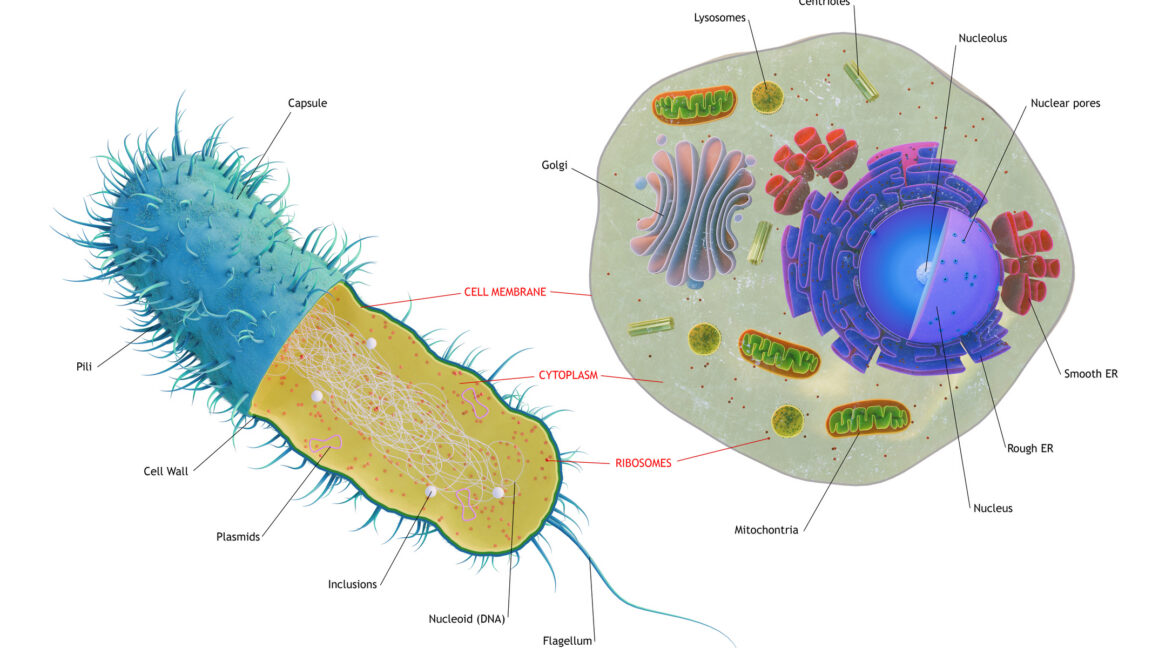
Previous work discovered bacteria persisting in the Blood Falls brine, but the new research is the first to discover a significantly larger life form: eukaryotes such as diatoms. The term eukaryote refers to single-celled organisms with a nucleus. Within this group, diatoms are noted for their silica shells and their highly specific preference for certain habitats.
As they analyzed 167 samples collected in the region, the team identified diatoms associated with marine environments only in the Blood Falls discharge, but not in the surrounding lakes and streams, or even in air samples.
“We were not just asking whether marine organisms were present,” Zoumplis said. “We wanted to know whether they were part of a distinct community, whether they looked different from nearby freshwater communities, and whether there was evidence that they were active. The answer to all three was yes.”
Antarctic Analysis
Laboratory techniques applied to the samples included examining their RNA with metatranscriptomics and molecular sequencing. In the Blood Falls samples, the team’s analysis revealed between 60% and 80% of the diatoms were marine-associated. The samples from other locations were primarily composed of land and freshwater diatoms.
Notably, these weren’t just dying remnants of diatom communities that had been swept into the Antarctic—they displayed gene activity related to survival under these extreme conditions.
“That activity is what makes the finding especially exciting,” Zoumplis said. “We are not simply seeing genetic leftovers. We are seeing evidence of organisms responding to a harsh, changing environment — freezing, thawing, salt stress, iron exposure, and long periods of inactivity.”
While the discovery does not entirely rule out that the diatoms arrived via wind, this is unlikely based on the prevalence of marine species specifically in the Blood Falls samples. The researchers note the area’s unusual chemistry, providing a brine rich in iron, salt, and silica, in addition to observed survival tactics in the diatom, such as the formation of resting cells.
This community likely isn’t a perfect preservation of an ancient marine ecosystem within a seemingly “lost” portion of the ocean, the researchers say, but the result of continued deposits and selection over time. Rather than providing a perfect record of ancient microbial communities, studying these eukaryotes can provide researchers with information on past climate change and how life survives under the most hostile of conditions.
The paper, “Molecular Evidence for a Relict Marine Community in an Antarctic Dry Valleys Subglacial Brine-Fed System,” appeared in Nature Geoscience on August 3, 2026.
Ryan Whalen covers science and technology for The Debrief. He holds an MA in History and a Master of Library and Information Science with a certificate in Data Science. He can be contacted at ryan@thedebrief.org.