 Login

Evolutionary Origin of Information: The Problem of Robustness
It is surprising to me that the authors of these studies did not consider it more of a priority to understand the mechanics of robustness.

There are some obvious big picture issues that stand between us and useful quantum computing. Issues like whether we can make enough high-quality hardware qubits to connect into the error-corrected logical qubits we need, and how we generate the states needed to perform universal computation on those logical qubits. But there are also many less prominent challenges that will need to be solved before we can perform calculations.
One of those challenges, which only affects some types of hardware, is calibration. For devices we manufacture, like superconducting qubits, there are always subtle variations among individual qubits. (This is not true when we use something like an atom to hold the qubit, but the lasers that control them can drift.) As a result, this hardware is put through a process called calibration, where we test different frequencies and amplitudes of the microwave pulses that control them to find the combination that produces the lowest error rates, and then save those settings for use in calculations.
However, you can't perform the typical calibration process while you're doing calculations, which means drift becomes an issue for long and complicated algorithms. Google, though, has figured out that it's possible to do calibration using the same data that's used for error correction.
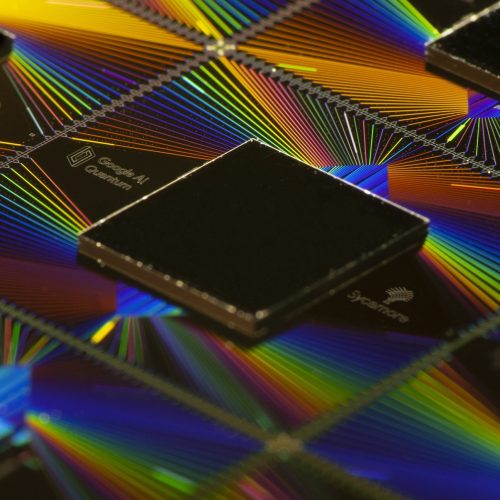
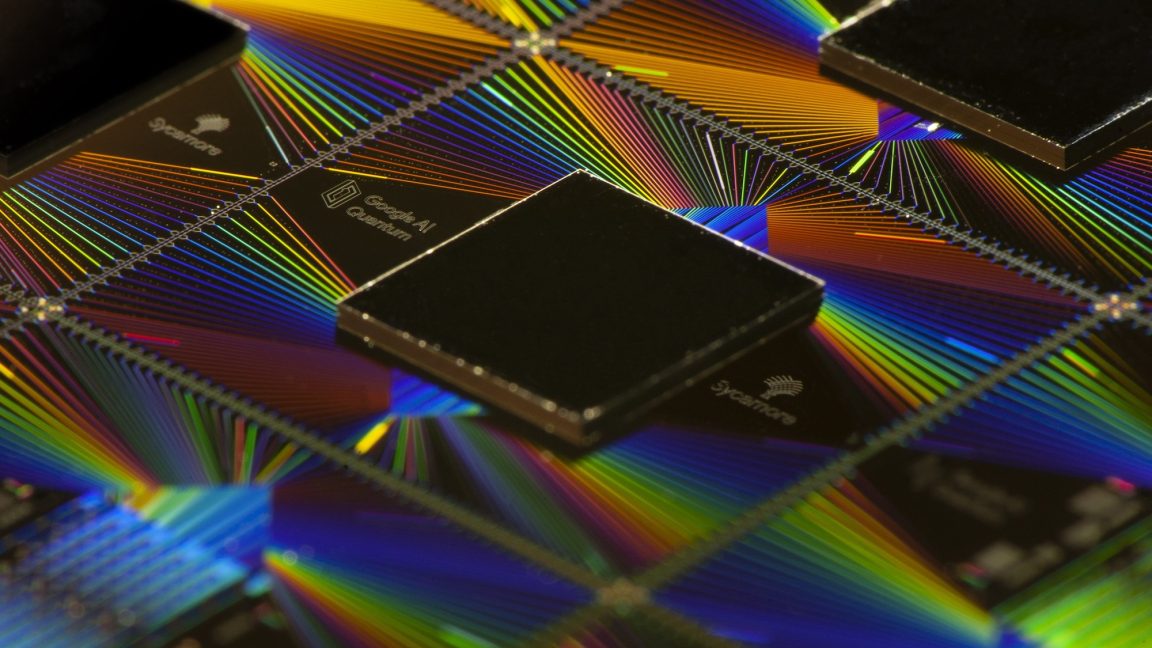
With dozens of companies, from small startups to tech giants, pursuing quantum computing, there's a steady flow of results as they try to find a path to utility. We typically focus on new technologies and major landmarks, which can obscure the fact that any big success will inevitably have been built on a lot of incremental progress.
The past few weeks have seen two companies release progress reports on how they're trying to get the technologies closer to general use. None of these represents a major breakthrough, but all are absolutely necessary for the technology to advance. The idea here is to convey the hard work required to move us closer to something useful.
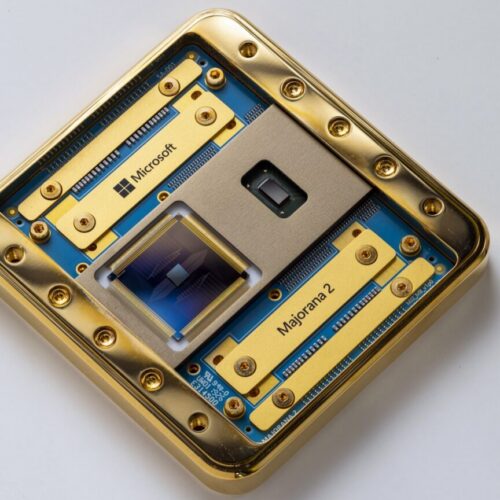
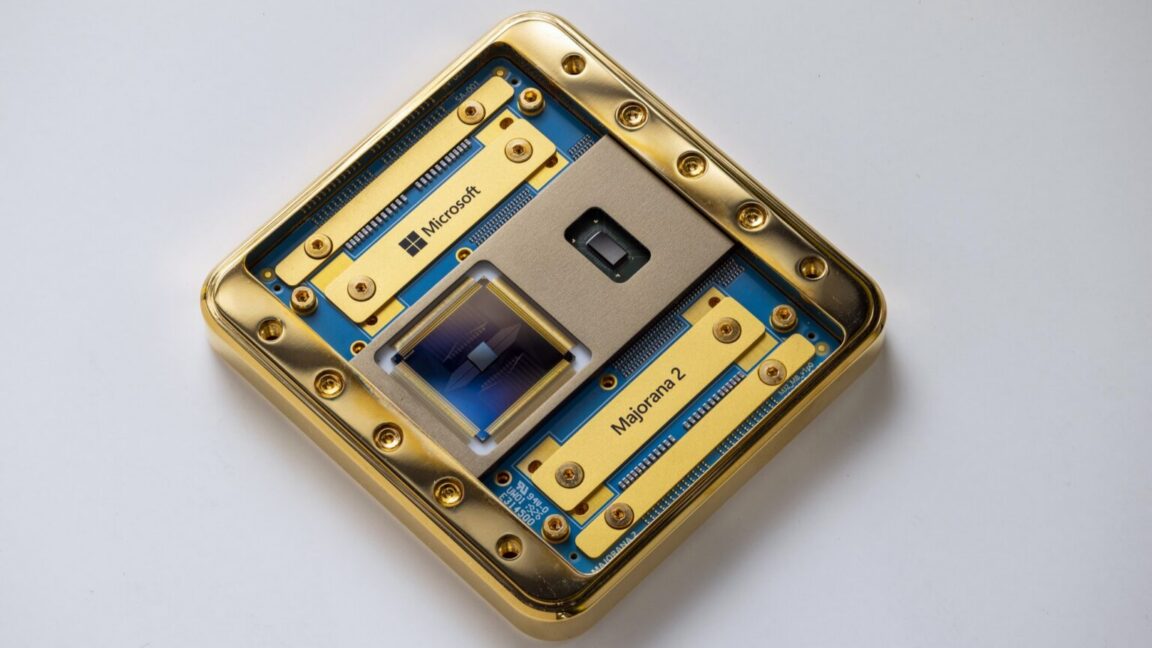
Microsoft is one of the few companies working on topological qubits, based on the distinct physics that occurs when particles are confined. Microsoft's system relies on a thin superconducting wire placed on top of a semiconductor. In superconductors, groups of two electrons form Cooper pairs. But if the wire contains an odd number of conducting electrons—meaning there's a single unpaired electron—it will end up delocalized to both ends of the wire. (Because quantum mechanics is weird.)
© John Brecher for Microsoft
