❌

Reading view

High-speed video reveals how honey bee stingers pump venom

Credit: Ramirez-Esquivel et al 202

Honey bees are known to leave their stingers embedded in tender flesh once they sting you and fly away. Scientists have now determined that the stinger is able to continue pumping venom into its unfortunate victim even after the bee flies away, thanks to a unique double-piston pump-like mechanism, according to a new paper published in the Proceedings of the National Academy of Sciences.

Different species have evolved different mechanisms for delivering venom, which involves piercing the skin and then pumping venom from a gland or reservoir. Spiders, for instance, have muscles surrounding their venom glands, which contract and eject venom through hollow fangs. Bees, wasps, and ants deliver venom via their stingers, either by contracting muscles around the venom reservoir or through stiff elements called lancets working together to pump venom.

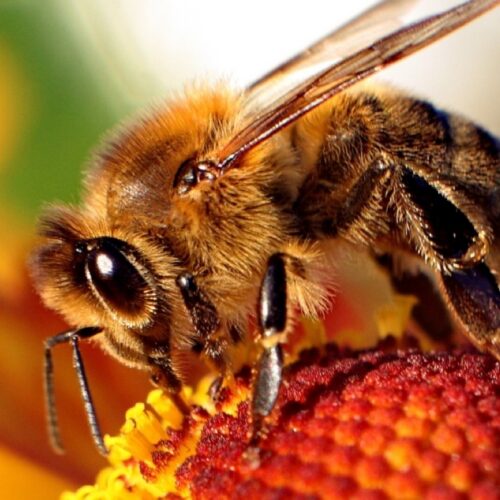
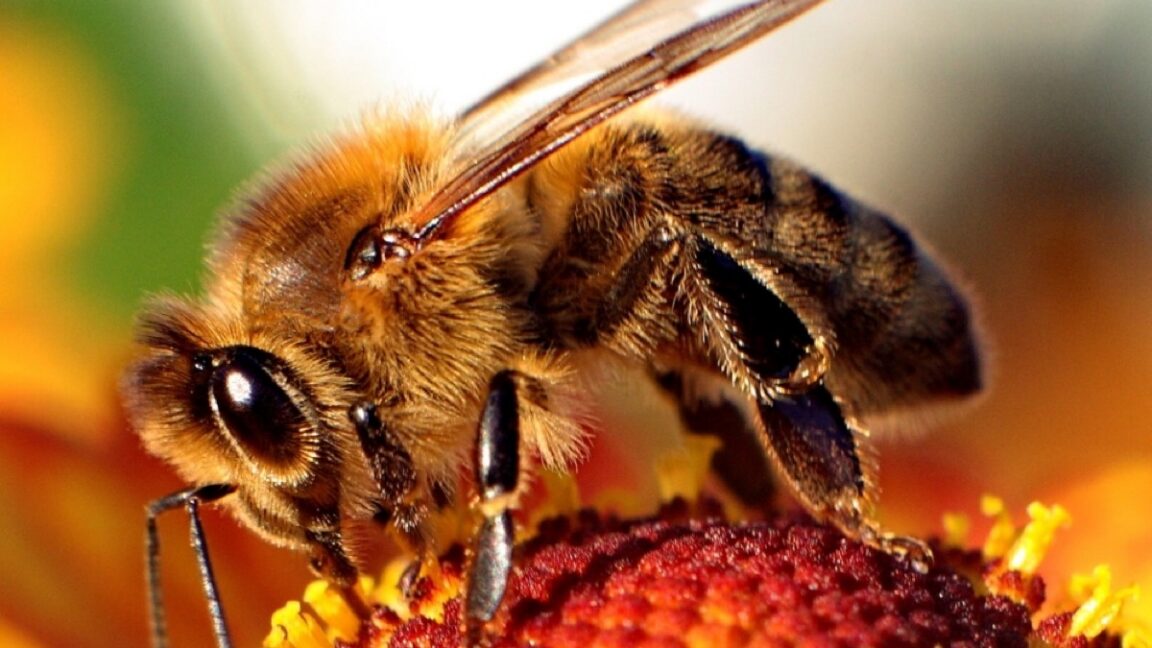
Honey bees (Apis mellifera) add a unique feature: Worker bees fly away after inserting their stingers in the target, leaving the stinger behind. The stinger continues to penetrate the tissue and pump venom on its own, a rare phenomenon known as autotomy. A honey bee's stinger has three main interlocking elements that form the venom canal: a stylet that widens to form the main pumping chamber and two sharp-tipped lancets that slide back and forth, piercing the tissue and pumping venom into the target. But the precise mechanism by which the pumping action is achieved has never been directly observed.
Read full article

Comments

Β© Maciej A. Czyzewski/CC BY-SA 4.0

  •  

Honeybee Queens May Pass Toxic Chemicals to the Next Generation

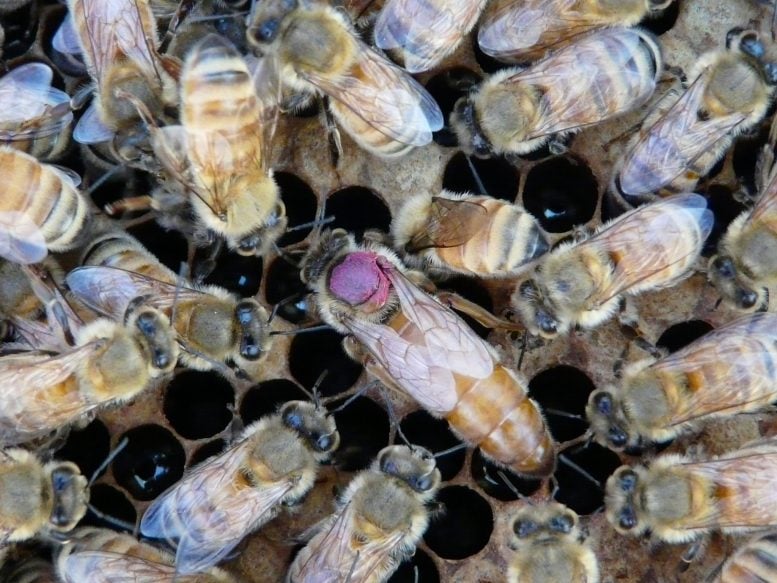
Honeybee Queen Surrounded by Her RetinueStudy reveals how contamination can increase within colonies. Inside a honeybee colony, worker bees act as living filters. They intercept much of the pesticide contamination entering the hive, helping shield the queen and the developing young she produces. But when exposure continues and that protective system begins to fail, the queen may redirect the chemical [...]
  •  

New Research Questions a Textbook Theory of How Insect Societies Evolve

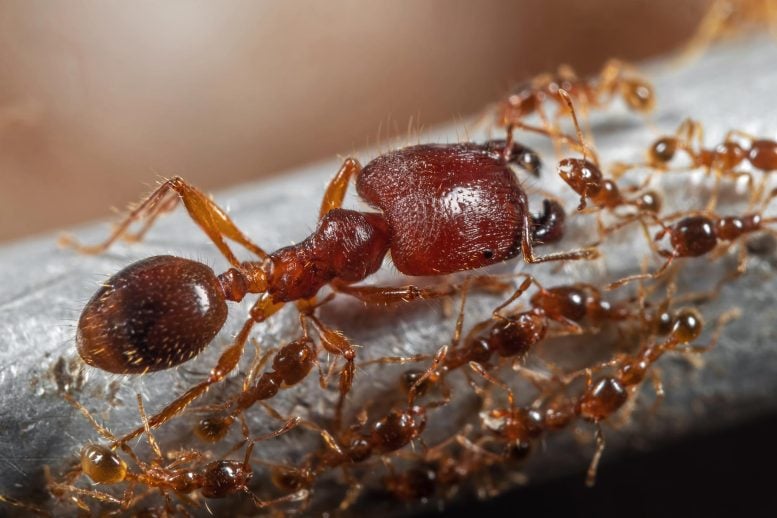
Soldier Big Headed Ant With WorkersASU researchers found that genetics alone cannot explain the origins of eusociality. Inside an ant colony, queens reproduce while workers care for young and maintain a society built around shared labor. For more than six decades, evolutionary biologists have debated whether this extraordinary arrangement, known as eusociality, arose partly because ants, bees, and wasps share [...]
  •  

Bumblebees can spontaneously solve problems, study finds

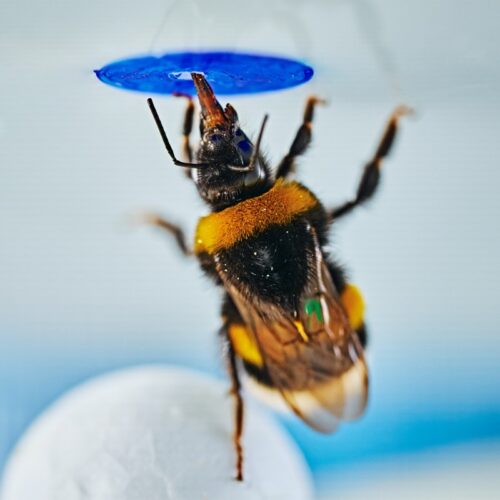
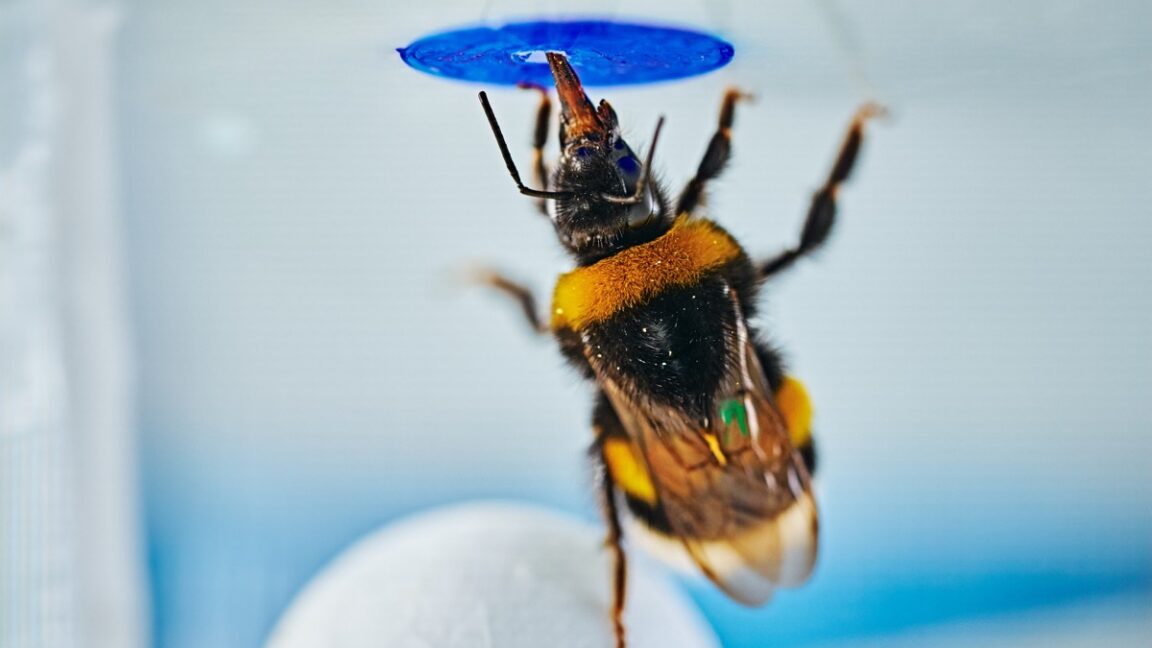
Despite having tiny brains, bumblebees have demonstrated a remarkable ability to socially learn how to use tools, solve simple puzzles, and cooperate to achieve a goal. It seems they can also solve object-manipulation tasks without any previous training, according to a new paper published in the journal Science. According to the authors, it's the first time this kind of spontaneous problem-solving has been demonstrated in an insect.

In 2024, Olli Loukola of the University of Finland co-authored a study demonstrating that bumblebees could cooperate to solve complex challenges. It's the kind of cognitive task scientists had previously only observed in large-brained mammals like humans and chimpanzees. Loukola et al. trained pairs of bees to push a Lego block to the middle of a mini-arena or push against a door at the end of a tunnel to get a reward.

The team noticed that the bees were more likely to engage in the tasks if their partners also participated, compared to untrained control groups. They concluded that bees can learn to solve novel cooperative tasks outside the hive and may even be intentionally working together, although the researchers cautioned that more detailed monitoring of the behavior was needed to fully understand the partners' roles.

Read full article

Comments

Β© Mikko TΓΆrmΓ€nen

  •  

Mystery Solved: The Decades-Old Secret Lurking Beneath North Carolina’s Blueberry Farms

Prionus imbricornisA newly identified pest is raising concerns for North Carolina’s blueberry industry. What began as a mystery beneath North Carolina’s blueberry fields has now been traced to a surprising culprit: a giant root-feeding beetle never before confirmed attacking blueberries anywhere else in the United States. Researchers at North Carolina State University have identified the insect [...]
  •  
❌