Who were the saints resurrected shortly after Jesus' death? A video of an AI presentation explores a few theories regarding their identities based on the biblical account in Matthew 27. Jesus was the firstfruit and the resurrected saints were the harvest of the faithful saints at that time.
Earthquakes • Deep Earth • Mantle Plumes • New Research New seismic images beneath Hainan Island, China reveal a hidden system linking deep mantle activity, volcanic rocks and the fault zone of the devastating 1605 Qiongbei M7.5 earthquake. Researchers think volatile-rich fluids rising from depth may have progressively weakened the crust until a major rupture […]
New Zealand • Earthquakes • Subduction Zones • New Research A new high-resolution 3D model of New Zealand’s Hikurangi megathrust reveals a striking contrast beneath the North Island: the southern part of the fault is relatively smooth and strongly locked, while the rougher northern section repeatedly releases stress through slow-slip events. Buried chains of ancient […]
Japan earthquake relief efforts will receive financial support from Apple following the powerful earthquake that struck Kumamoto Prefecture on the island of Kyushu.
CEO Tim Cook announced the donation through social media on July 30. He expressed concern for people facing the earthquake and continuing aftershocks while thanking the first responders helping affected communities.
“Japan has a very special place in my heart.”
Cook wrote before confirming that Apple was making a donation to support relief work.
Apple did not disclose the amount, recipient organizations or whether its contribution would support the immediate emergency response, longer-term reconstruction or both. The company frequently keeps disaster donation amounts private, even when Cook publicly confirms its participation.
The announcement came as rescue teams continued searching damaged homes, industrial facilities and the remains of a shopping center. Survivors were dealing with water shortages, disrupted transportation, damaged buildings and dangerous summer temperatures.
Image Credit: Wikimedia
Japan Earthquake Relief Follows Deadly Kumamoto Disaster
The earthquake struck southwestern Japan on Tuesday, July 28. Japanese reporting and international agencies have described it as a magnitude 7.1 event, while the U.S. Geological Survey measured it at magnitude 6.8. Differences can occur because agencies use different measurement methods and datasets.
The earthquake reached the highest level on Japan’s seismic intensity scale in parts of Kumamoto. Strong shaking damaged roads, houses and public infrastructure across communities near the epicenter.
The confirmed death toll had risen to 34 by Friday, according to Kumamoto prefectural authorities. Additional people were injured or remained missing as emergency workers entered the period when the likelihood of finding survivors beneath collapsed structures begins to decline sharply.
One of the most severe incidents involved an explosion and partial collapse at a shopping center. The earthquake also toppled a large chimney at a paper factory, damaged traditional homes and caused another section of the stone walls at Kumamoto Castle to collapse.
The historic castle was undergoing extensive restoration after the 2016 Kumamoto earthquakes. Damage to rebuilt or partially restored areas illustrates how recovery from one major disaster can remain unfinished when another arrives.
Aftershocks continued during the rescue operation, increasing the danger for emergency personnel entering unstable buildings. They also discouraged residents from returning to damaged homes, even when those structures remained standing.
Thousands of survivors moved into public shelters or slept inside vehicles. Some families chose cars because evacuation centers were crowded, while others feared that another strong tremor could collapse weakened buildings.
Extreme heat added another emergency. High summer temperatures can quickly create dehydration, heat exhaustion and medical complications, particularly for older people, children and residents sleeping in vehicles without reliable cooling.
Apple Donation Joins an Expanding Corporate Response
The Apple donation places the company among several technology and entertainment businesses providing money for Japan earthquake relief and reconstruction.
The Pokémon Company announced a contribution of 100 million yen to Kumamoto Prefecture, the Japanese Red Cross and other support organizations. The funding is intended to assist people affected by the earthquake and support restoration across damaged areas.
Sony committed 50 million yen and began collecting additional employee donations that the company will match. Its contribution is being directed toward the Japanese Red Cross and an emergency fund operated with Save the Children.
Sony has a direct industrial connection to Kumamoto through its semiconductor operations. The company described the prefecture as a community with which it has developed deep ties since establishing the Kumamoto Technology Center in 2001.
Apple also maintains substantial commercial and cultural connections with Japan through its retail stores, developer community, suppliers and customers. Cook has visited the country repeatedly and has met Japanese developers, musicians, educators and manufacturing partners during previous trips.
The amount behind Apple’s latest commitment may never be made public. The absence of a disclosed figure prevents direct comparison with other corporate donations, and it also leaves unanswered which organizations will distribute the money.
Relief contributions can support several different stages of a disaster response. Immediate funding may pay for water, food, temporary shelter, medical care and emergency equipment. Later funding can help repair homes, restore community services and assist families whose employment disappeared with damaged businesses.
The timing of Apple’s donation places it during the immediate emergency rather than after the complete scale of destruction has been calculated. Recovery costs will continue changing as inspectors determine which buildings can be repaired and which must be demolished.
Kumamoto Faces Another Long Recovery
Kumamoto experienced a destructive sequence of earthquakes in April 2016. Those events killed dozens of people, damaged or destroyed more than 100,000 buildings and displaced large numbers of residents.
Apple responded at the time by allowing customers to send donations to the Japanese Red Cross through iTunes. The system offered preset contribution amounts that were transferred without Apple retaining a percentage.
The company has used similar responses after earthquakes, hurricanes, floods and wildfires in several countries. Cook usually announces the commitment publicly while leaving the amount and distribution arrangements private.
Apple has previously contributed directly to relief organizations and has sometimes provided matching programs for employee donations. It has not announced whether employee matching or a customer donation channel will accompany the current Japan earthquake relief commitment.
The 2026 disaster presents different immediate pressures from the 2016 earthquakes because it arrived during intense summer heat. Shelter capacity alone does not solve the problem when buildings lack sufficient cooling, water or private areas for medically vulnerable residents.
Japanese authorities deployed Self-Defense Force personnel and emergency teams to support local rescuers. Prime Minister Sanae Takaichi instructed agencies to prioritize the protection of life, collect information quickly and coordinate assistance across national and local government.
Electricity had been restored by Friday evening, according to the local power company, but water remained a serious concern. Kumamoto authorities said nearly 80,000 homes were still without running water, creating demand for bottled supplies, mobile water stations and sanitation support.
A water interruption affects more than drinking. Hospitals, shelters, restaurants and homes need reliable supplies for hygiene, food preparation and medical care. Restoration can take longer than electricity because ruptured pipes must be located, isolated and repaired across damaged roads and neighborhoods.
Apple Donation Arrives Before the Full Damage Is Known
Apple’s announcement communicates support without defining how the money will be used. The effectiveness of the contribution will depend on the recipient, timing and ability to direct funding toward needs that remain after the first wave of public attention passes.
Immediate rescue work receives the greatest visibility, but rebuilding homes and local businesses can continue for years. Families may need temporary housing long after shelters close, while damaged schools, transportation routes and medical facilities require larger reconstruction programs.
Private donations cannot replace government disaster funding. They can provide additional flexibility for relief groups that need to purchase supplies quickly or reach people whose circumstances do not fit standard assistance programs.
The continuing aftershocks also make damage assessments provisional. A building considered stable after the first inspection may require another examination, while rain or additional shaking can affect weakened slopes and structures.
Apple has not indicated whether it will open a public donation channel through the App Store or another service. Its current response is limited to the corporate contribution confirmed by Cook.
The next stage of Japan earthquake relief will move from search operations toward shelter support, structural inspections and temporary housing. In Kumamoto, the most urgent calculation is already measured beyond financial totals: nearly 80,000 homes need running water restored while residents endure the hottest weeks of the Japanese summer.
A seismic shockwave traveling within the Earth moved the entire Japanese archipelago by 5 to 6 millimeters, posing a previously unknown Earthquake danger, according to a University of Chicago researcher.
Revealed in a recent paper published in the journal Science, Sunyoung Park and colleagues identified a shear wave bouncing off the Earth’s core after the Tohoku-Oki earthquake in 2011. According to the researchers, this specific type of rebound effect in the mainshock area after an earthquake has never been recognized before, offering new insights into the residual dangers of seismic events and how the layers of our planet interact.
Japan Shifts
As the best-recorded megathrust event in history, the 2011 Tohoku-Oki earthquake has already been well characterized in past studies. However, the team decided to take another look at the event, as monitoring stations throughout Japan detected the ScS shear wave’s return after hitting the core, as well as the archipelago’s eastward movement.
“When we examined the GPS time series in detail, we noticed a small, coherent eastward motion across much of Japan that followed seismic waves reflected from the core (the ScS phase) return to Japan,” Park told The Debrief. “This motion was puzzling because there was no known earthquake (aftershocks) associated with it at that timing, and so we wanted to understand what was really happening.”
According to the team, a previously unknown phenomenon produced the notable ground shift. In just those 13 minutes, a shear wave from the Tohoku-Oki earthquake raced through the planet, bounced off the core, and reactivated the tectonic plate beneath Japan.
Analyzing the Earthquake Data
In their analysis, they found the rebound shear wave aligned with the tectonic plate boundaries, which, combined with weakened frictional forces after the mainshock, produced the shear wave reflection.
“We only gradually became convinced that this returning wave could actually trigger slip on multiple plate boundaries,” Park said. “It was particularly surprising that such a long-traveling wave (traveling ~5800 km, comparable to the radius of the Earth) could both trigger an event and do so over such a broad region, comparable to the length of Japan, involving several different plate interfaces.”
The movement is described as “steplike,” due to the small but sudden nature of the shift. In the data, the movement resembles a staircase: a flat position, followed by a sudden shift, then another flattening at a different level. Resolving that tiny step proved a challenge.
“In this case, the steplike motion is only a few to several millimeters, so it is relatively small compared to the noise and various processing artifacts that can appear in GPS records,” Park explained. “We did not process the GPS data ourselves; instead, we relied on a carefully processed data product. Even so, we had to be very cautious, because subtle signals can sometimes be introduced by the way the data are processed.”
The research reexamined the main shock source for any evidence of large underwater landslides to rule out other potential causes and found no other correlations.
A New Type of Earthquake Events
According to the team, it is no surprise that such events have previously gone unrecognized. For this rebound effect to occur, an extremely powerful earthquake is required to produce a noticeable effect, and dense, high-precision monitoring networks are needed to detect tiny motions over a large area. Additionally, most seismic studies focus on localized effects rather than viewing the aftermath on such a broad scale.
The slip is six to seven times that of the main shock rupture, making it the broadest single event rupture area ever recorded, doubling that of the great Sumatra Earthquake in 2004. According to the researchers, the Sumatra earthquake may be another example of this behavior, although no work has yet been done to investigate this.
From their work, the team says they cannot predict the exact amount of slip from such an event in the future, similar to the inability to predict normal earthquakes; yet, they can predict when the rebound effect will occur after the main thrust.
“I want to understand more generally how processes deep inside the Earth interact with shallow parts of the Earth,” Park concluded. “I am interested in why deep earthquakes happen and how they may be linked to the whole subduction system and the dynamics, from shallow to deep depth ranges.”
Park added that he is also finding “that these deep events can produce measurable deformation at the Earth’s surface, just like the step-like motions we see in this study,” all of which is helping researchers like him “better understand both these earthquakes and the structure of the Earth.”
Ryan Whalen covers science and technology for The Debrief. He holds an MA in History and a Master of Library and Information Science with a certificate in Data Science. He can be contacted at ryan@thedebrief.org, and follow him on Twitter @mdntwvlf.
California could be due for a major earthquake in the near future, according to concerning new models based on data comprising 1,000 years of quake activity on the West Coast.
According to recent findings, tectonic stress has quietly been building in California to levels not seen since the last major earthquake in the region, which bore a magnitude of 7.9 and struck the West Coast nearly 170 years ago.
That event, known as the Fort Tejon earthquake, affected the greater Los Angeles area, and since the time of those historic rumblings, researchers have grown increasingly concerned about a period of seismic silence that could point to the likelihood of an event of similar magnitude at some point in the future.
The potentially concerning new forecast was detailed in a recent study by an international team of researchers led by Dr. Liliane Burkhard of the Division of Space Research and Planetary Sciences (WP) at the Physics Institute of the University of Bern, which focused on historic earthquake data as a means of gauging current stress loading at Cajon Pass.
The study, published in the Journal ofGeophysical Research: Solid Earth, indicates tectonic stress levels that are now believed to exceed the highest seen during the years the team surveyed.
The “Earthquake Gate” at Cajon Pass
The researchers aimed to investigate stress that has slowly built along the San Andreas and San Jacinto faults and incorporated what they likened to an “earthquake gate” at Cajon Pass, which, in their models, functioned like a point of control that governed the size of earthquakes and whether they could spread to both systems.
For their research, they used a four-dimensional earthquake cycle model that allowed them to replicate certain processes both in spatial dimensions and across time.
Using a millennium of reconstructed earthquake data from the region based on geological information such as radiocarbon dates, unusual events recorded in dendrochronological data (i.e., information obtained from tree rings), and historical information sources, the team gave this to the model they devised.
Dr. Burkhard said the team’s simulation offered them a unique opportunity to better understand the ways stresses in the fault system build up over long periods of several centuries.
“By running the earthquake history of Southern California as a simulation, we can estimate the extent to which the fault system is already under stress today,” Dr. Burkhard said. The results of those simulations weren’t particularly promising either: according to Burkhard, current stress levels in the region are the highest they have been in 1,000 years, based on the data.
Concerning New Earthquake Data
The team also identified significant new information regarding the function of the so-called “earthquake gate” at Cajon Pass.
“The earthquake gate concept captures something important about how fault junctions work,” Burkhard said in a recent statement. “Cajon Pass doesn’t simply block or channel earthquakes: It responds to stress conditions, and those conditions change over centuries.”
Not only this, but Burkhard and her team also determined that a key element to these quakes involves not only the level of stress that accumulates at a single fault, but perhaps more significantly, the way stress between two systems can align. This is because, as the stress across a pair of faults rises together over longer periods, this appears to be most conducive to a large joint rupture comparable to the 1857 Fort Tejon earthquake.
Conversely, if stress levels are not in concert as they evolve, the team determined that this causes quakes that probably will not propagate beyond the junction.
In short, a more severe earthquake event today would entail a joint rupture that crosses the Cajon Pass, as opposed to one constrained either to the San Andreas or the San Jacinto Fault alone. Should such an event occur, it would likely impact one of the largest population centers, as well as a crucial infrastructure system that supplies energy and transportation to surrounding areas.
For Burkhard, “The question of when and how the next major earthquake will occur in this region is one of the most pressing problems in applied geoscience.” Based on the team’s findings, they say that their new modeling hopes to provide a much more complete picture of the science behind the factors that could lead to a major quake—conditions that could apply equally to other parts of the world as they do to California.
Burkhard adds that her team’s study is not intended merely as a prediction for when the next major earthquake could potentially occur, but also as a means of preparing for future quakes and mitigating their effects.
“What we can say is that the system is critically stressed and that physics-based models like ours give a clearer picture of the range of scenarios we should be prepared for,” Burkhard says. “This information is important for hazard assessment, infrastructure planning, and emergency preparedness.”
Micah Hanks is the Editor-in-Chief and Co-Founder of The Debrief. A longtime reporter on science, defense, and technology with a focus on space and astronomy, he can be reached atmicah@thedebrief.org. Follow him on X @MicahHanks, and at micahhanks.com.
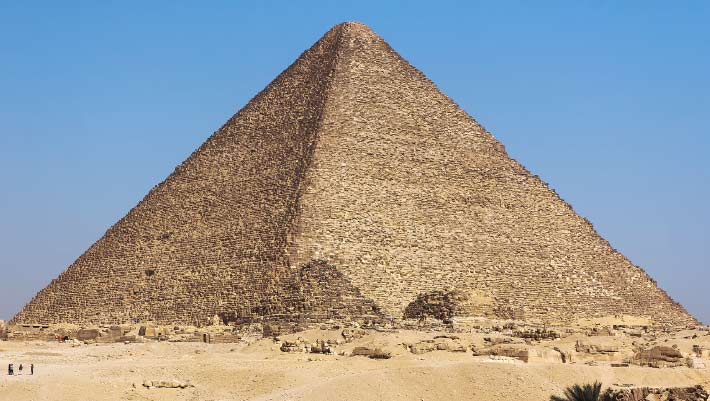
For more than four and a half millennia, the Khufu Pyramid has stood on the Giza plateau, enduring dozens of earthquakes without serious structural damage.

 Login