 Login

Top Science Journal Would Empower Scientists to Rule on Income and Wealth
Reframing subjective policy issues as questions of objective “science” makes it easier to justify relying on “experts” for policy answers.

The UN resolution to junk the Mercator projection of the globe – which makes Africa look small and Canada big – is nakedly political, says Professor James Alexander. No wonder the US opposed it.
The post Why Africa is Against Mercator, Why America is For Him appeared first on The Daily Sceptic.

© Olivier Morin/Agence France-Presse — Getty Images

© Yonhap News Agency, via Reuters
Nearly every country represented in the United Nations General Assembly recently voted in favor of promoting world maps that more accurately show the size of various continents. But the UN resolution is unlikely to change how millions of people regularly see versions of 16th-century Mercator maps depicting skewed continent sizes in navigation apps.
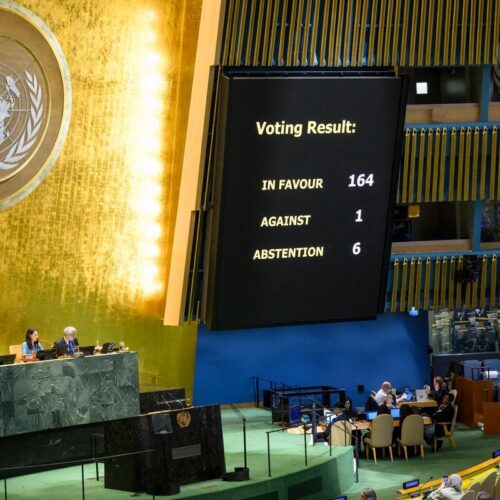
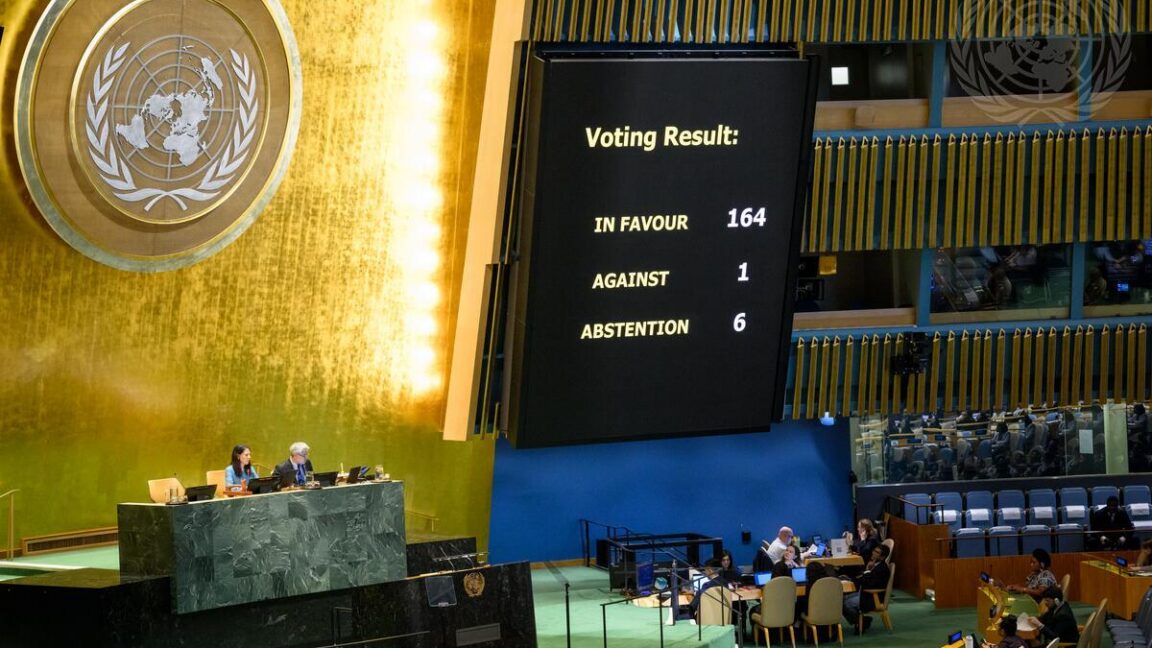
On September 4, the African-led resolution attracted 164 votes in favor, with six countries abstaining from voting. Only the United States voted to oppose the resolution after describing it as a “radical ideological project,” according to UN News.
The non-binding UN resolution does not impose map changes on anyone. Instead, it “encourages governments, schools, international organizations, and technology companies to use the Equal Earth projection and other so-called equal-area maps when relative size matters,” UN News reported. The resolution also encourages teaching about the trade-offs that arise from depicting a spherical planet on a flat map.
© UN Photo/Loey Felipe
Nearly every country represented in the United Nations General Assembly recently voted in favor of promoting world maps that more accurately show the size of various continents. But the UN resolution is unlikely to change how millions of people regularly see versions of 16th-century Mercator maps depicting skewed continent sizes in navigation apps.
On September 4, the African-led resolution attracted 164 votes in favor, with six countries abstaining from voting. Only the United States voted to oppose the resolution after describing it as a “radical ideological project,” according to UN News.
The non-binding UN resolution does not impose map changes on anyone. Instead, it “encourages governments, schools, international organizations, and technology companies to use the Equal Earth projection and other so-called equal-area maps when relative size matters,” UN News reported. The resolution also encourages teaching about the trade-offs that arise from depicting a spherical planet on a flat map.
© UN Photo/Loey Felipe

© Wahyudi/Agence France-Presse — Getty Images
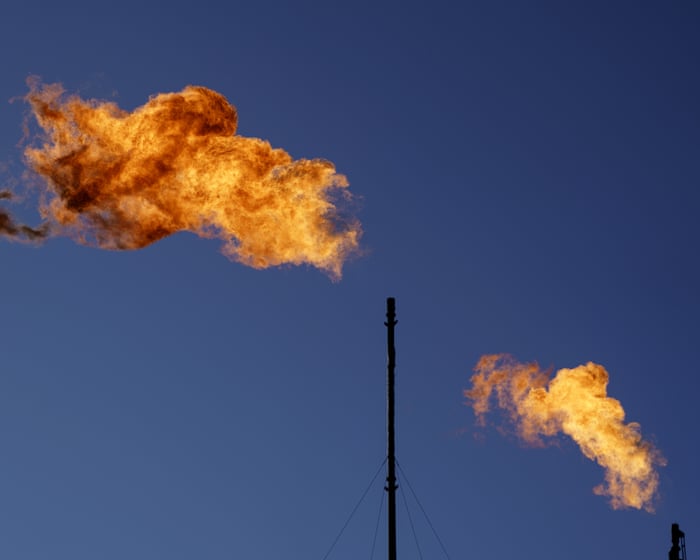
Secretive state begins repairs on ageing facilities after being revealed as worst country for leaks of potent greenhouse gas
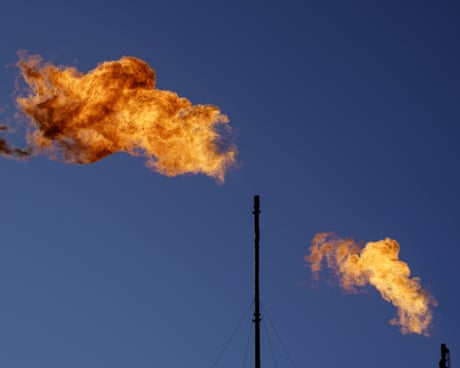
Turkmenistan has started plugging the mega-leaks of methane that spew from its ageing oil and gas facilities, the latest UN data shows, in a move hailed as a breakthrough.
Methane, also called natural or fossil gas, is a potent greenhouse gas. It traps 80 times more heat than carbon dioxide and causes 25% of global heating today. Stopping leaks can be quick and cheap and, because methane breaks down in the atmosphere far quicker than CO2, this has a rapid impact, with some experts calling it the climate “emergency brake”.
Continue reading...
© Photograph: David Goldman/AP
© Photograph: David Goldman/AP
© Photograph: David Goldman/AP
Third of world’s energy needs should come from electricity by 2035, says Murat Kurum, as priorities set out for this year’s UN climate summit
The world should aim to meet a third of its energy needs from electricity within a decade to cut greenhouse gas emissions, the host of the next UN climate summit has said.
While about a third of global electricity generation already comes from renewable sources, other energy-intensive sectors – chiefly transport, heating and industries – have lagged behind. Close to four-fifths of final energy still comes from fossil fuels, as a result.
Continue reading...
© Photograph: Images By Tang Ming Tung/Getty Images

© Photograph: Images By Tang Ming Tung/Getty Images

© Photograph: Images By Tang Ming Tung/Getty Images

© The New York Times
