How a Dirty Diaper Helped a KGB Colonel Escape the Soviet Union


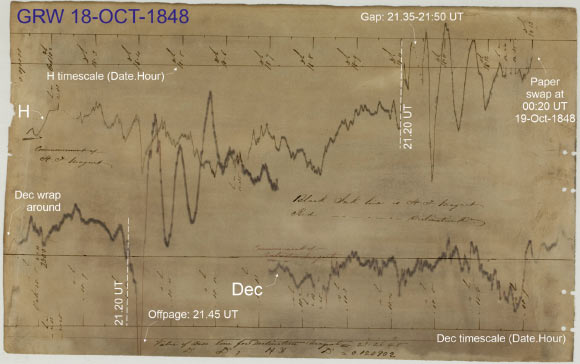
Although the famous Carrington Event of 1859 is often described as the first major space weather event to affect technology, earlier incidents did occur. Historical records show that telegraph systems were disrupted by geomagnetic storms as early as the late 1840s.
The post Study: Famous ‘Space Weather’ Train Delay Actually Happened Seven Years Later appeared first on Sci.News: Breaking Science News.


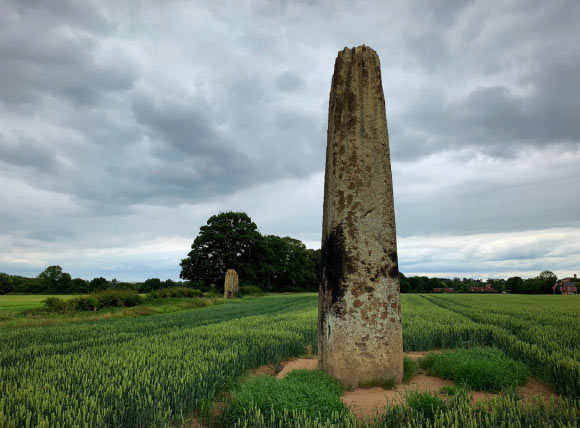
Scientists from Curtin University and the University of York have pinpointed the origin of the Devil’s Arrows, the three towering gritstone megaliths that have stood on the edge of Boroughbridge, Yorkshire, for roughly 4,000 years, ending a long-running archaeological debate.
The post Britain’s Tallest Standing Stones Traced to Their Geological Source appeared first on Sci.News: Breaking Science News.

The UK government will require technology companies such as Apple Inc. and Google to stop children from taking, sharing or viewing nude images on their phones and tablets, Culture Secretary Lisa Nandy told the House of Commons on Tuesday.
Nandy said ministers would introduce primary legislation “as soon as we can,” but declined to give a precise timetable. The government had given Apple and Alphabet Inc.-owned Google a three-month deadline in June to introduce such measures voluntarily. Although both firms offer content protections for young users, neither comprehensively blocks the taking or sending of nude images across devices.
Nandy praised some “meaningful changes” at the operating-system level, including progress toward blocking rather than merely blurring nude imagery on underage devices, and Apple’s earlier rollout of operating-system age assurance tied to safety features on iMessage and FaceTime. She said those steps were not enough.
“For too long, technology companies have failed to protect children from some of the worst harms,” Nandy said. “And to be frank, I am not prepared to give them the benefit of the doubt that progress will continue at the pace that we need it to, while harm is being done now.”
The planned law would require major platforms to build device-level protections into smartphones and tablets sold and used in the UK, covering both existing and newly sold devices. Officials also intend to require apps used by children to introduce similar blocks on nude imagery, so restrictions are not limited to cameras and first-party messaging.
Nandy said the government could reassess legislation if Apple and Google implement technical solutions before a bill is passed. “We know that this is a sector that can, when required, innovate at an extraordinary pace when the chips are down,” she said. Based on the past three months, she added, it was “almost certain” that legislation would be needed.
The June challenge, announced during London Tech Week, set a goal of making Britain the first country where children could not take, share or view naked pictures on their devices. Protections would be on by default for under-18s, with adults able to use unrestricted features after age verification. Officials have said the measures would not require monitoring or reporting of adult users’ content.
An Apple spokesperson said the company launched its Communication Safety feature in 2021 and has continued to expand it.
Nandy said some details still need to be resolved, including which devices would be covered. Draft legislation is expected to apply to operating-system providers and potentially others in the supply chain, such as retailers.
MacDailyNews Take: Forcing Apple to make it impossible for children to take, view, or share nudes at the whole-device level sounds simple. In practice it would trade one harm for others that hit ordinary users, not just predators.
It cannot stay “kids-only” without checking everyone.
The government itself says blocks would be on by default and lifted only after age assurance. That means adults — and older teens — must prove they are adults to use a normal camera, Photos, Messages, or many apps. Age checks are leaky: they can be wrong around the 16–18 boundary, biased by face/age models, spoofed, or borrowed (a child using a parent’s unlocked phone). Shared family devices become a mess.
A phone that inspects every photo is a different kind of device.
To stop taking nudes, the OS has to watch the camera, the gallery, screenshots, and third-party apps — not just iMessage. Apple’s current Communication Safety blurs and warns after content appears in specific apps, on-device, without sending images to Apple. A mandate to block creation and viewing everywhere is a live content filter on the device. Even if images never leave the phone, users lose the assumption that the camera and photo library are private tools they control. Privacy groups and encrypted-messaging firms called that a surveillance architecture, even when UK ministers claim “no reporting, no monitoring.”
Nudity detectors get it wrong.
Skin, babies in a bath, medical photos, art, sports, breastfeeding, theatre, and accidental crop can all look like “nudity” to a model. A high accuracy rate still produces a lot of false blocks when every UK iPhone is scanning constantly. Kids and parents then fight a black-box “your photo is banned” system with no good appeal.
Safety software can create new security holes.
The UK has already pointed to on-device blockers as the model. A phone sold as doing exactly this kind of blocking was later pulled after researchers found serious other flaws (including a reported way to pair as another child’s “guardian”). Extra privileged scanners in the OS are more attack surface: bugs, poorly designed parental pairing, and pressure to expand the same pipeline later (violence, “harmful” speech, whatever the next statute names).
Determined harm still happens; everyday use gets worse.
A child can still use an adult’s phone, an old un-updated handset, a cheap Android, a laptop, or a friend’s device. Groomers already move platforms. Meanwhile lawful users get friction: ID to turn features off, broken camera workflows, apps that refuse to work unless they hook the OS filter, and a UK-specific iOS that diverges from the rest of the world.
The precedent is the long-term cost.
Once Apple is legally required to classify and suppress a category of pixels on every UK device, the next demand is easier: more categories, more apps, more “just keep the scanner.” That is bad for users who want a general-purpose computer in their pocket—not a government-specified content appliance with an adult unlock.
Child sexual abuse is real; Apple already ships on-device warnings for that reason. The harm of a forced, default, device-wide ban plus age gates is that it weakens privacy and reliability for everyone, while remaining easy to route around for anyone with another device.
Apple already has Communication Safety (and the related Sensitive Content Warning) to detect possible nudity on-device, blur it, warn the child, and offer help—not a full device-wide ban on taking nudes with the Camera app.
What it does
• On-device machine learning checks photos/videos for nudity. Apple says it does not get the images or a signal that nudity was found.
• If a child receives or tries to send such content, it is blurred and they see a warning plus options: message a trusted adult, leave the chat, block the contact, or open safety resources.
• For children under 13 (age can vary by country), a Screen Time passcode can be required before they can view it.
• Apple documents that it is on by default for under-18s in Family Sharing on current software (age varies by region).
• It applies in Apple apps and some share flows: Messages, AirDrop, FaceTime (calls/video messages), Contact Posters, shared albums, the Photos picker, and when choosing media to send in some third-party apps—not the camera itself across every app.
Apple Support documentation
• About Communication Safety on your child’s Apple device
• Check for sensitive images and videos in Screen Time on iPhone
• About Sensitive Content Warning on Apple devices
• Receive warnings about sensitive content on iPhone
Please help support MacDailyNews — and enjoy subscriber-only articles, comments, chat, and more — by subscribing to our Substack: macdailynews.substack.com. Thank you!
Support MacDailyNews at no extra cost to you by using this link to shop at Amazon.
The post UK to force Apple, Google to block nude images on kids’ devices appeared first on MacDailyNews.

The United Kingdom has allocated £100 million ($135.1 million) for a new winter air defense package for Ukraine. According to a press release from the UK Ministry of Defence, the package includes Patriot missiles. As part of the joint PURL (Prioritized Ukraine Requirements List) initiative, the UK will provide air defense interceptor missiles, large-caliber artillery […]
The post UK prepares a $135.1 million winter air defense package for Ukraine, including Patriot missiles and drones appeared first on AERONAUT.media.
Apple is facing a £2 billion ($2.7 billion) London lawsuit brought on behalf of app developers over its app tracking rules, with the iPhone maker accused of abusing its power to unfairly impose greater restrictions on third parties.
[…]
Lawyers bringing the new lawsuit against Apple, though, say the feature imposed stricter requirements on third-party app developers than on Apple’s own services, giving its advertising ecosystem a competitive advantage.
Via Ben Lovejoy:
The latest lawsuit has an interesting twist: it’s being brought by Ann Pope, who was previously a senior official with the regulator behind today’s case.
The company told Reuters it was “bound by the exact same requirements as all developers.”
However, regulators across Europe including in France, Italy and Poland have investigated ATT. Germany’s competition regulator, the Federal Cartel Office, last month determined that Apple was favoring its own apps over those from external developers.
The EU is saying “you’re big enough that you have to treat your other business models like third parties” and Apple replies with “but we know we’re solid, so that makes no sense!”
Previously:

Apple has filed a legal complaint with the UK’s Investigatory Powers Tribunal seeking to overturn a secret government order requiring the company to enable access to encrypted customer data stored in its cloud services.The challenge, reported in early March 2025, targets a technical capability notice (TCN) issued by the Home Office in January under the Investigatory Powers Act 2016. The notice reportedly directed Apple to create the technical means for UK law enforcement and intelligence agencies to access data protected by the company’s Advanced Data Protection (ADP) feature: an optional end-to-end encryption layer for iCloud backups, photos, notes and other files that even Apple itself cannot normally decrypt, according to Financial Times.
Apple responded by withdrawing ADP for UK users rather than comply, stating that it would not build a “back door” or master key into its products or services. The company has long argued that creating such access points would undermine security for all users and could be exploited by malicious actors. Standard iCloud encryption remains available and is accessible to Apple when presented with a valid legal warrant, but ADP provides a higher level of protection that the firm says it cannot and will not weaken.
The case is understood to be the first major legal test of the Investigatory Powers Act’s provisions allowing authorities to compel technology companies to maintain capabilities to access encrypted material. The tribunal, an independent body that reviews complaints against the UK’s security and intelligence agencies, could quash the notice if it finds the order unlawful. Proceedings were expected to begin relatively quickly, though the government was anticipated to seek restrictions on public disclosure on national security grounds.
The dispute highlights the long-running tension between tech firms’ commitment to strong encryption and governments’ desire for lawful access in cases involving terrorism, serious crime or national security. Privacy advocates have warned that any mandated vulnerability in widely used systems could have global repercussions, while UK authorities maintain that such powers are essential for public safety and are subject to legal safeguards.Apple has consistently maintained that it has never built backdoors into its systems and will not do so. The outcome of the tribunal challenge could set an important precedent for how encryption and government surveillance powers interact under UK law.
MacDailyNews Take: We’ve been fairly clear on this subject for many years:
It’s not enough that every Brit alive has a government camera shoved up their ass 24/7/365? The UK has already slipped far down the slope that they ought to rename the place Airstrip One. – MacDailyNews, November 3, 2015
Those who would give up essential liberty to purchase a little temporary safety deserve neither liberty nor safety. – Benjamin Franklin
The current batshit insane “leadership” of Airstrip One is having yet another crisis of confidence. – MacDailyNews, February 7, 2025
Censorship reflects a society’s lack of confidence in itself. – Potter Stewart
MacDailyNews Note: Apple’s Advanced Data Protection for iCloud is an optional setting that offers Apple’s highest level of cloud data security. If you choose to enable Advanced Data Protection, the majority of your iCloud data — including iCloud Backup, Photos, Notes, and more — is protected using end-to-end encryption. No one else can access your end-to-end encrypted data, not even Apple, and this data remains secure even in the case of a data breach in the cloud.
How to turn on Advanced Data Protection for iCloud
On Mac
On iPhone and iPad
More info about Apple’s Advanced Data Protection for iCloud here.
Please help support MacDailyNews — and enjoy subscriber-only articles, comments, chat, and more — by subscribing to our Substack: macdailynews.substack.com. Thank you!
Support MacDailyNews at no extra cost to you by using this link to shop at Amazon.
The post Apple launches legal challenge to UK demand for access to encrypted user data appeared first on MacDailyNews.

Liopleurodon ferox is a short-necked marine reptile that patrolled the seas of what is now England and France some 163 million years ago.
The post Jurassic Pliosaur Liopleurodon Was Big, but Not as Big as Once Feared appeared first on Sci.News: Breaking Science News.
The EU required Apple to permit third-party app stores, while a US court ruled that developers have the right to direct iPhone users to third-party payment platforms for app purchases and subscriptions. Britain’s Competition and Markets Authority (CMA) is now proposing to apply this latter rule in the UK.
The U.K.’s competition regulator has proposed letting app developers direct users to payment options outside Apple’s App Store and Google’s Play Store, in a move aimed at increasing competition and reducing the fees charged by the two companies.
[…]
The regulator said any fees Apple and Google charge developers for enabling such “steering” must be fair and reasonable, remain below existing App Store and Play Store commissions, and allow developers to either pass savings on to consumers or reinvest them in innovation.
Requiring Apple to allow apps to steer users to the web to make payments is, I’ve long argued, sensible regulation. I’ve also long argued that Apple has been obstinate in disallowing it. If in-app payments — through Apple’s system — can’t compete with out-of-app payments on the web, something is wrong with IAP. But it’s wrong to assume that payments outside IAP will result in lower prices and better policies for users.
They may increase prices when costs grow but that does not mean they do the opposite. But who cares? Lower costs permit more flexibility on pricing and, even if that money ends up in the pockets of developers instead of Apple, is that supposed to be a bad thing? Is there a reason why someone should be upset that they might pay the same amount but an indie developer gets to keep more of it?
The proposed policies are pretty straightforward from what I can see. Among other obligations, Apple is not allowed to use or require scare tactics when users are routed to an external payment mechanism and, while it is allowed to charge a steering fee, it is not allowed to count services not used by developers offering third-payments nor double-count for services already accounted for by other developer fees. Also, the CMA calls bullshit on Apple’s claim that third-party payments are particularly risky[…]
Previously:
Update (2026-07-30): Juli Clover:
Apple said new UK App Store rules would give regulators a “highly intrusive” role dictating how it runs its business, reports Reuters. Apple submitted feedback to the UK’s Competition and Markets Authority as it considers forcing Apple to change its App Store rules around steering.
[…]
UK regulators said Apple can charge developers a fee, but it must be fair and reasonable, and below existing App Store commissions, so developers can pass savings to customers or reinvest them in innovation.
According to Apple, the CMA’s proposed rules would undermine innovation and investment, and would amount to price regulation because of the restriction on fees.
The British government will introduce a ban on social media access for all users under 16 years of age, set to take effect in 2027.
[…]
The plan goes further than a similar ban introduced in Australia. It will cover major platforms Snapchat, TikTok, YouTube, Instagram, Facebook, and X. An exhaustive list has not yet been released, but Starmer said the rules will apply to services “whose purpose is to enable social interaction and which allow users to post material.”
Messaging apps like WhatsApp and Signal are not covered by the ban, and most social media platforms already require children to be over 13 to create an account and use their services.
So-called AI ‘romantic companion’ chatbots – designed to simulate sexual relationships or roleplay with users – will have to enforce a minimum age of 18 and the government will also be looking in more detail at overnight curfews and breaks in infinite scrolling for under-18s, with more detail coming in July.
[…]
The government said it will “learn the lessons” from Australia’s experience by introducing more highly effective age assurance measures to support compliance, making it far harder for children to bypass safeguards.
In practice that means anyone opening a new account will likely have to prove they’re over 16 by uploading an ID or passing a facial age scan, the same checks that adult sites serving UK visitors have implemented since July 2025 under the Online Safety Act.
Long-standing accounts are largely exempt, but signing up fresh now triggers verification, effectively ending anonymous account creation in the UK.
New VPN rules are set to be issued by the Labour Party government as part of the under-16 social media ban. The government has not revealed any plans to regulate them, but ministers have said details about action alongside the social media ban, including regarding VPN use, will come in July.
Paige Collings and Jillian C. York (Hacker News):
There remains no reliable, privacy-preserving method of verifying the age of every internet user and methods vary from one platform to the next.
Young people will not simply be protected from being contacted by adults or endlessly scrolling—they’ll also lose access to educational videos on YouTube, local events on Facebook, and potentially cut off from distant friends and family.
[…]
The provision also requires internet service providers to limit the time kids spend online, and has rules about who can contact them online. These extreme rules will take decisions about using technology away from families and put them in the hands of government regulators.
The problem is, there’s no such thing as “age verification” for the internet. What we call “age verification” is actually mass surveillance, so invasive and pervasive that it makes the ad-tech industry’s commercial surveillance look like some kind of cypherpunk darknet pirate utopia[…]
[…]
Any attempt to save kids from online harms should start with saving kids from online surveillance, but that’s the opposite of what we’re doing today. After decades of failing to pass and enforce privacy controls for the internet, those same governments are breaking all land-speed records to pass “age verification” laws that make privacy illegal[…]
Lots of US states, European countries, and Australia have introduced “age verification” regulations. They present it as the classic “save the children” talking point, but it’s really just a precursor to attribution of speech, particularly attributing your words to your real identity.
Sean Hollister (via John Gruber):
Azdoufal is the security researcher who used Claude Code to help discover that every DJI Romo robot vacuum cleaner and a million baby monitors and security cameras were embarrassingly easy to hack. This time, he says he discovered over 985,000 photo IDs sitting on the public internet for any half-decent hacker to steal.
[…]
Traditionally, you’d need to provide a photo ID every time you wanted to get into a club. But with the verification system, the receptionist can pull up your stored identity documents and check if your face matches. There’s also an optional app called PuffPal that lets clubs scan a QR code for faster entry.
But when Azdoufal decompiled that PuffPal app, he explains in his report, he discovered that Nefos had no meaningful level of security.
Previously:
Update (2026-07-01): Craig Grannell:
I find it incredible that the UK government is about to create a cliff edge where teens will simultaneously be able to access social media and vote, having had no experience of the latter and with scant understanding of how algorithms work.
Update (2026-07-08): James Ball (via Nick Heer):
There are almost no truly public spaces on the internet. Everywhere we congregate is privately owned, even if it operates as a public space. But we seem somehow content to accept them as fiefdoms in their own right, beyond the reach of government. Instead of demanding that they function as safe and pleasant public spaces for all of us, we are asking our governments just to ban teenagers from them.
[…]
It is one thing to ban our children from one park when there are others nearby. It is quite another to ban them from every public space when there are no others on offer.
[…]
I am skeptical as to whether social media is as dangerous as some of its critics say. I am even more skeptical as to whether it is particularly dangerous to teens and young people. […] The central facet of my argument in this post is that wherever you land on the matters of the harms of social media, a ban for teenagers is the wrong response. If the harms are overstated, the policy is unnecessary. If they are not, it is an abdication.
Following Germany, Japan, and the Republic of Korea, the United Kingdom has also begun reorganizing its Army Aviation capabilities in light of the lessons learned from the Russia–Ukraine war. The British Ministry of Defence has announced plans to retire all 34 Wildcat AH.1 helicopters starting as early as 2027. So, what exactly are these aircraft […]
The post Taking Lessons from the Russia–Ukraine War into Account: The British Army to Retire the Wildcat AH.1 appeared first on AERONAUT.media.
On June 3, 2026, a notable event took place at Marine Corps Air Station Cherry Point, as the United States Marine Corps officially retired its last AV-8B Harrier II attack aircraft from active service. This provides an opportunity to revisit the history of the AV-8B Harrier II program. A British-American Project In 1972, the American […]
The post End of an Era: The Retirement of the American AV-8B Harrier II appeared first on AERONAUT.media.

Neolithic people, not glaciers, moved the Altar Stone -- the six-ton central sandstone megalith at Stonehenge -- from northeast Scotland to Salisbury Plain, according to a new study led by archaeologists from Curtin University and Sheffield Hallam University.
The post Neolithic People May Have Hauled Stonehenge’s Giant Altar Stone across Britain appeared first on Sci.News: Breaking Science News.

Paleontologists have confirmed that Praearcturus gigas, a creature that prowled shallow waters during the Devonian period, 415 million years ago, is the largest scorpion ever found.
The post Giant Scorpions Ruled Ancient Britain during Devonian Period appeared first on Sci.News: Breaking Science News.

In a small randomized trial in the United Kingdom, adults who added a serving of 100% fruit juice or a smoothie to a healthier diet reported lower depression scores after four weeks.
The post Daily Glass of Fruit Juice May Lift Your Mood: Study appeared first on Sci.News: Breaking Science News.