❌

Reading view

Chinese Government Dismisses Tech Billionaire Calls for an AI Slowdown as “Fear-Mongering”

In a whiplash-inducing turn away from the mythical quest to build human-level artificial intelligence, Western tech billionaires like Dario Amodei, Sam Altman, and Elon Musk are now joining hands to call for a massive slowdown of the tech’s development.

The commentariat is divided on what exactly this means — for some, it’s proof-positive of a genuine threat that AI could spin out of control and exterminate everybody. To others it’s a smokescreen, a thin cover provided by AI CEOs who are desperate for a government bailout to avoid popping the AI investment bubble.

If you ask lawmakers in Beijing, the whole thing is a bunch of nonsense.

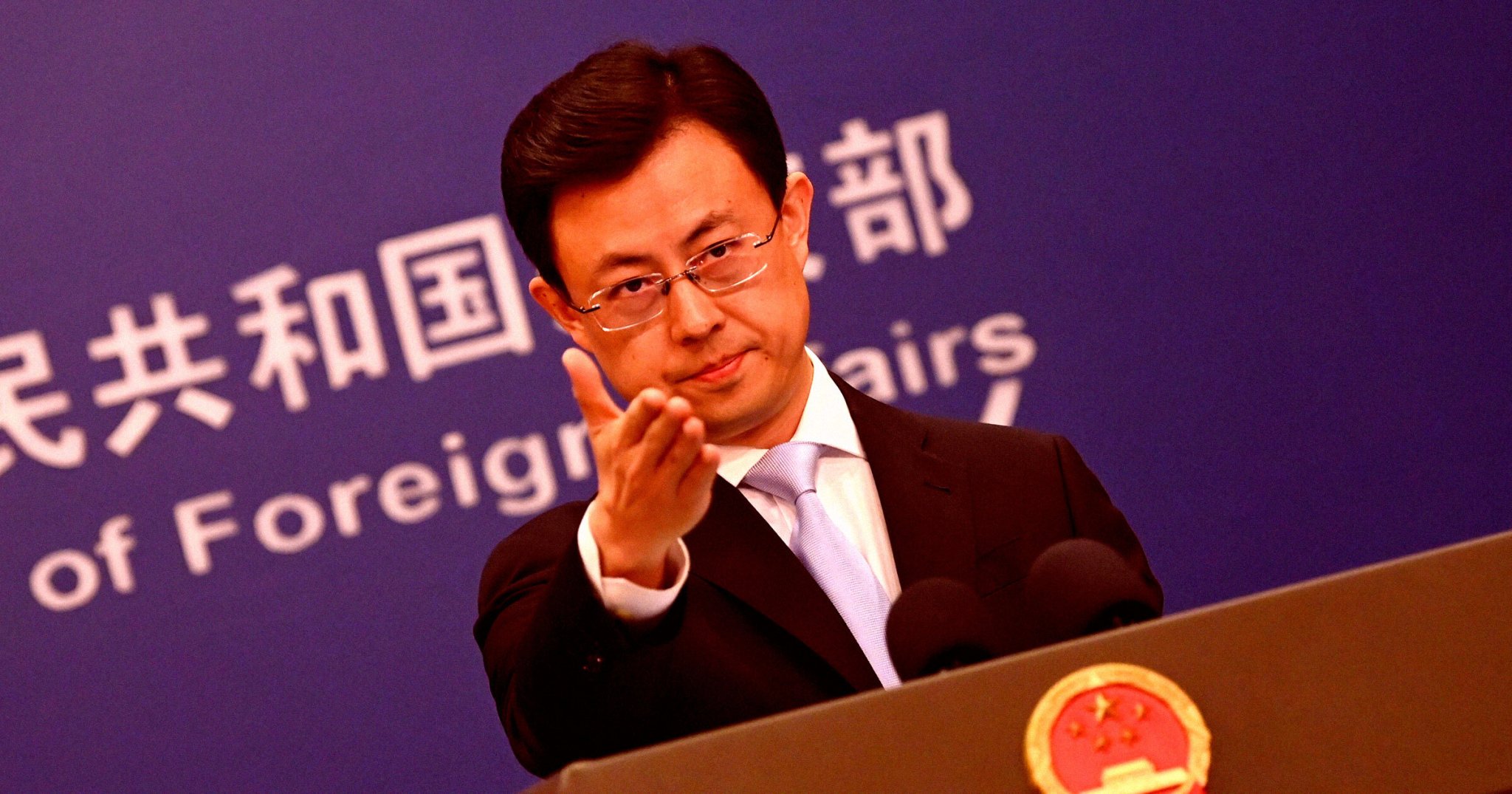
In a routine press scrum hosted by China’s Ministry of Foreign Affairs, government spokesperson Guo Jiakun addressed a laundry list of topics, from President Xi Jinping’s recent trip to New Delhi to recovery efforts around the devastating mudslides in Nepal. One of the questions, posed by a Reuters journalist, concerned whether the ministry had any comment on calls from American tech billionaires to slow down AI development.

“AI is a consequential technology for the wellbeing of all humanity,” Guo replied. “All parties should jointly promote the open and inclusive development of AI for good and for all. Fear-mongering, confrontation and vicious competition will only hamper efforts toward sound global AI governance, which serves no one’s interest.”

Compared to the weight given to other topics, the ministry’s statement on the Western AI debacle was decidedly terse. While talk of an AI slowdown is roiling US markets and trending on social media, it seems like it’s barely a blip on Beijing’s radar.

The virtual hand-waving follows the decidedly disinterested stance Chinese policymakers have taken toward the US approach to AI development, which for years has hinged on building toward human-level artificial general intelligence.

As research fellow at the partially US-funded Brookings Institute Kyle Chan wrote in February, Beijing’s concept of “AGI” is wildly different from the one used across the pond. While US policymakers and industry leaders treat the tech as a race to AGI where one winner takes all, their Chinese counterparts aren’t in any rush. The US might get there first, the idea goes, but like electric vehicles, cancer treatments, and smartphones, Chinese industry can quickly make up the difference.

“Let’s look at the history of the internet. It started in the US, but China quickly caught up and led in consumer applications — WeChat is a world-class example,” professor emeritus at the Hong Kong University of Science and Technology Yang Qiang said during a panel at the AGI Next Summit in January. “AI is similar — it’s a tool, and Chinese ingenuity will push it to the limit.”

More on China and AI: Top Chinese Court Issues Sweeping Legal Crackdown on AI Deepfakes

The post Chinese Government Dismisses Tech Billionaire Calls for an AI Slowdown as “Fear-Mongering” appeared first on Futurism.
  •  

Amazon Has Become Pathetically Reliant on Food Stamps to Power Its Empire

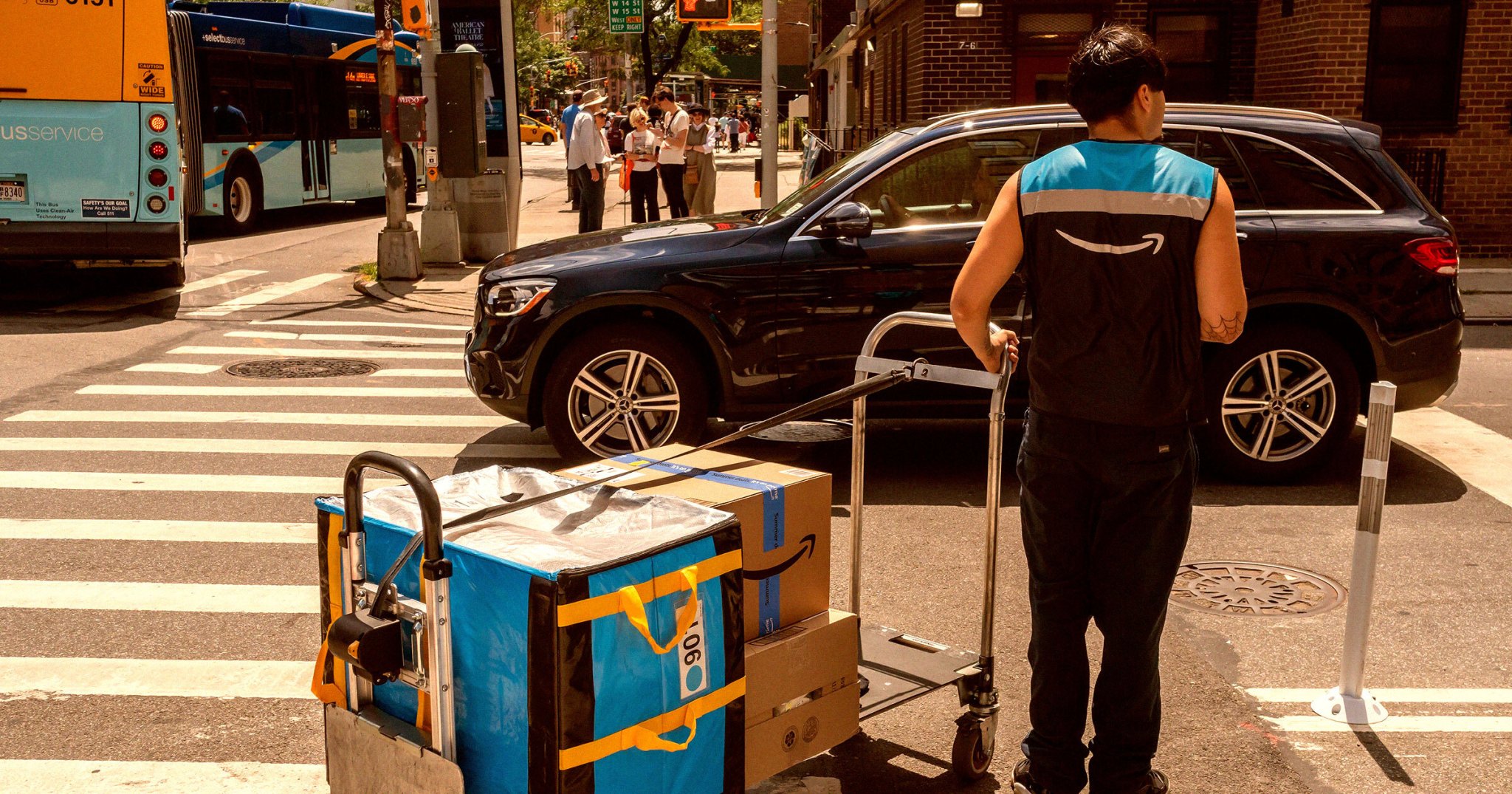
After over two decades of operation, Amazon Prime has become the backbone of American commerce, more akin to a public utility than a private company. Its logistics network has blown past the US Postal Service in parcel volume, delivering crucial goods to small business owners, trade workers, and teachers at record speed.

And like any public utility, Amazon Prime comes with a public price tag — a massive state subsidy paid by taxpayers around the country.

Blistering new reporting by Fortune revealed that the number of Amazon workers receiving government assistance via Supplemental Nutrition Assistance Program (SNAP) and Medicaid has nearly tripled between 2020 and 2025, a stunning rise for any group, let alone workers employed at one of the wealthiest companies in the world. It comes as the megacorporation posted a massive rise in annual profit over the same period, from $11.6 billion in 2020 to $77.7 billion in 2025.

Those federal assistance numbers, obtained by the independent US Government Accountability Office, found that 12,346 Amazon workers across 11 states were getting help affording basic groceries through SNAP. A further 11,338 in those states rely on Medicaid.

The federal assistant amounts to a de facto subsidy of Amazon’s labor force, allowing the company executives to rake in record profits while paying its workers starvation wages. If it weren’t for these government programs, in other words, thousands of Amazon’s lowest-paid workers wouldn’t be able to afford to make ends meet.

Though Amazon was far from the only company whose full time employees are struggling, the GAO survey found that Amazon was consistently among the very top employers of adult SNAP and Medicaid enrollees. Other top offenders include Walmart, ride-share platform companies like Uber, and chain stores like McDonald’s and Dollar General.

Beyond Amazon, the survey observes the grim reality of working class life in the wealthiest nation on Earth. Overall, the report points to the fact that nearly 14 million working adults were enrolled in Medicaid in 2024, while 10.6 million received SNAP benefits. Of those receiving government aid for groceries, some 71.3 percent — about 7.5 million people — worked 35 hours or more per week.

“What this analysis really points to is the large number of people who have very low incomes and continue to have very low income,” GAO director for education, workforce, and income security issues Kathryn Larin told Fortune. “I mean, these are families that are really barely able to make ends meet, and yet they are working, and they are working a lot.”

More on Amazon: Amazon Investigating Its Own Employees for Daring to Question AI Data Centers

The post Amazon Has Become Pathetically Reliant on Food Stamps to Power Its Empire appeared first on Futurism.
  •  

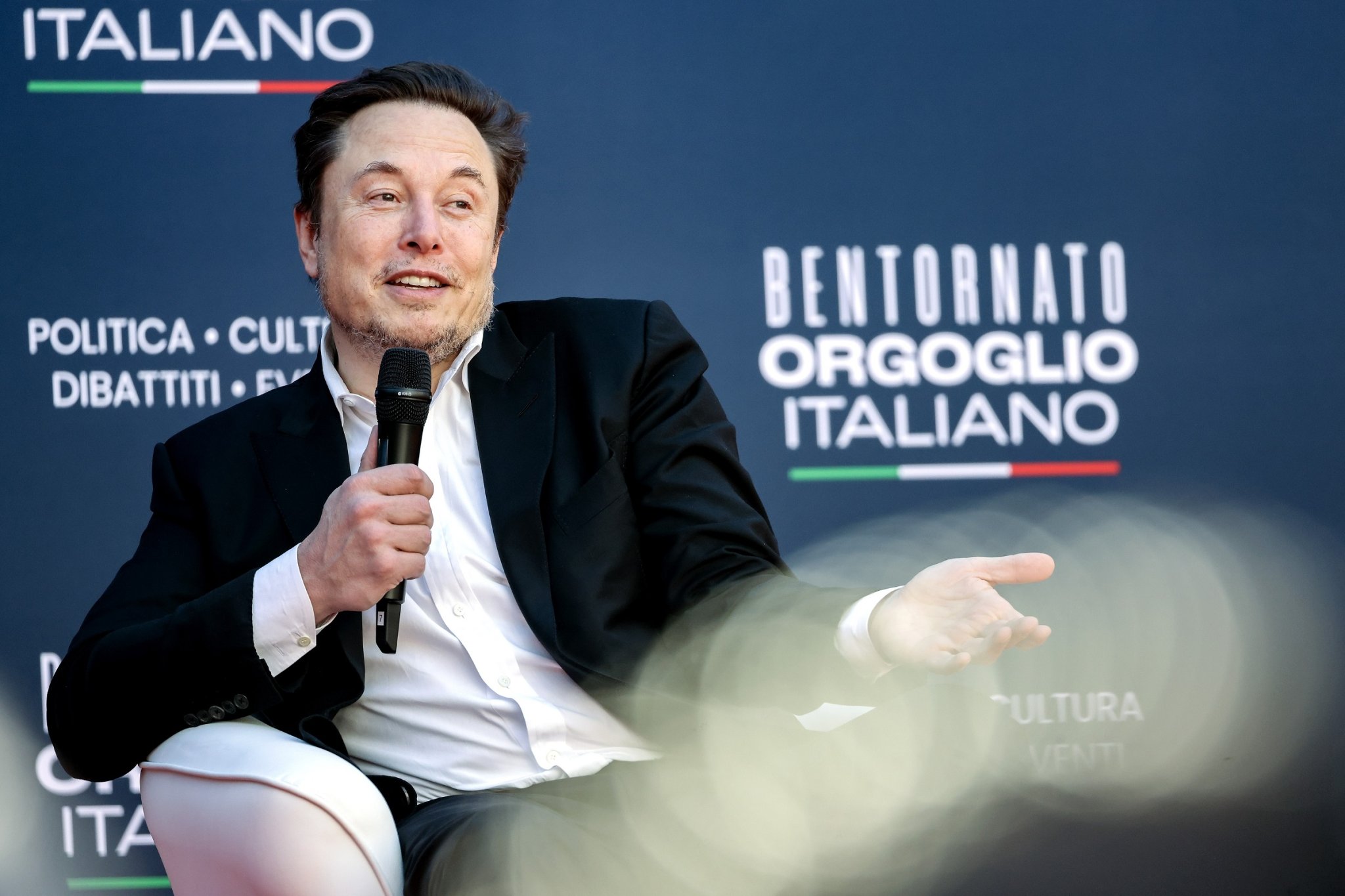
The Winner of Elon Musk’s AI “Odyssey” Contest Will Make You Laugh Out Loud

Remember how Elon Musk vowed that his AI Grok would make an anti-woke, “historically accurate” version of the Odyssey? 

Well, he ended up throwing together a whole contest around it — and the winner of the first place prize of $100,000 is, as you probably expected, laughable nonsense.

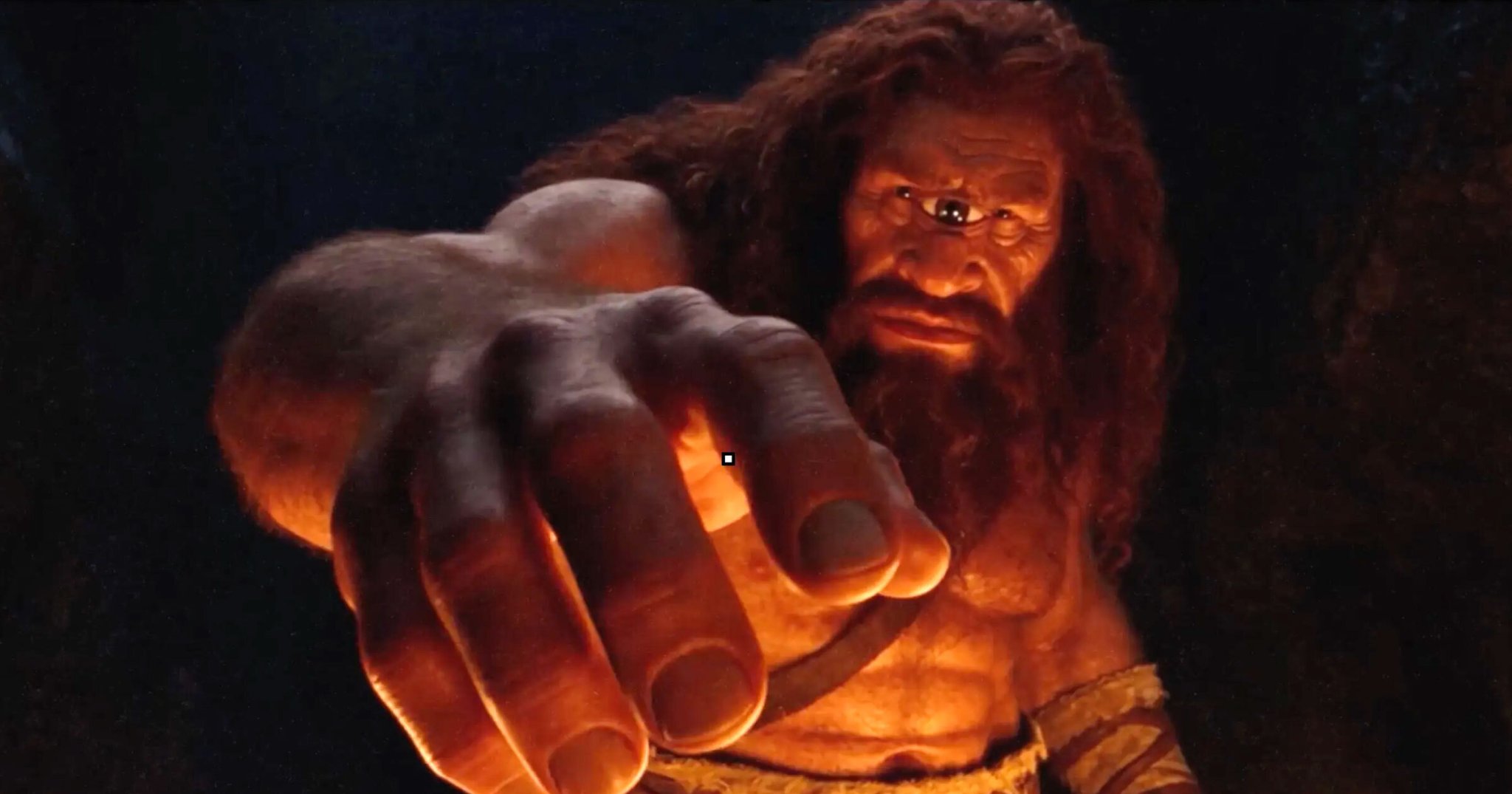
The problems run deep. The Cyclops Polyphemus is depicted with three eyes, which feels disqualifying. And just a few cuts later, the famously monocular giant is at least four times as large as he was before. The other creatures and gods look like something out of a mobile game; Poseidon emerges from the sea appearing conspicuously cartoonish and impossibly muscled, before smashing Odysseus’s ship and his crew of photorealistic, ripped men.

Half the dialog is delivered in dramatic whispers with the same cadence. The fight scenes are cut to disguise the actual moments of impact, in the same way real B-movies do with aging action stars.

There are some shots here and there that look convincing enough, if you can overlook their bland aesthetic. But this AI “film” suffers the same tragic flaw that all AI films do: their component clips fail to coalesce into a coherent whole. It doesn’t do much on the “historically accurate” front, either; some of the Greek soldiers are clearly wearing the armor donned by Roman legionnaires.

Nonetheless, its creator Nem Perez declared that “this is ‘The Odyssey’ as Homer intended,” before calling it his “most intricate work to date.” He also labeled the video, in oxymoronic fashion, a “5-minute epic.”

This is "The Odyssey" as Homer intended. My longest, most intricate work to date. I pushed @grok @imagine to its absolute limits to create this 5-minute epic.

What bothered me most about the recent adaptation was the omission of the Phaeacians and Princess Nausicaa, whom… https://t.co/awYW6Hu4W8 pic.twitter.com/hJHOgdkEec

— Nem Perez (@NemPerez) August 31, 2026

It’s unclear if Musk actually watched the winner; as far as we can tell, he hasn’t replied or retweeted it, something he’s done for other AI Odyssey adaptations.

For those blissfully out of the loop, the centibillionaire and culture war crusader spent this summer raging against Christopher Nolan’s adaptation of the Greek epic, attacking it for its diverse cast, which included several Black women and a trans actor. 

Nolan, Musk accused, “desecrated Homer and groveled on his knees just to meet the woke rules required to win an Oscar.” As such, he vowed that his AI “Grok Imagine will make a full-length movie of The Odyssey that is historically accurate and true to the art of Homer.”

We’re still waiting for that full-length adaptation. But the short films that the contest has produced already make it painfully clear that AI video generators, and the “filmmakers” that embrace them, simply aren’t up to snuff. In all of the top three entries, Odysseus looks more or less like the same guy — some weird, looksmaxxer’s fantasy of a buff Antonio Banderas. Is this a fault of Grok or Grok users? At this point, the distinction may be moot.

More on AI: Amazon Deploying AI Tech That Forces Actors’ Mouths to Match Dubbed Dialogue

The post The Winner of Elon Musk’s AI “Odyssey” Contest Will Make You Laugh Out Loud appeared first on Futurism.

  •  

Sam Altman Now Trying to Gain Control of Electric Grid

Armed with sordid tales of rogue AI agents escaping containment, OpenAI CEO Sam Altman has found plenty of success using scare tactics to call for friendly regulation in the name of AI safety.

Now, it seems Altman is riding the wave of AI fearmongering to gin up some new business partners: the electric utility executives whose companies make up the US power grid.

As first reported by Politico, the CEO of the company behind ChatGPT held a series of clandestine meetings with leaders from top electric utility companies including Duke Energy, Exelon, Southern Co, and NextEra Energy, starting in July.

One of the most recent discussions took place on Wednesday in Colorado, during an annual meeting hosted by the Edison Electric Institute. Dominating the agenda, Politico notes, were discussions on electrical grid security, evidently spurred by the OpenAI-Hugging Face debacle, in which rogue AI agents allegedly broke free of their research environment, accessed the internet, and hacked into another AI company.

Though the incident spawned plenty of commentary around the pace of AI development and the advanced state of OpenAI’s models, the flow of information has been decidedly one-sided, with most of the details coming from OpenAI itself. As the New York Times reported, third-party safety researchers investigating the incident after the fact were only given a few days to access the reams of data generated by the hack, severely limiting their findings.

That said, OpenAI has an obvious incentive to play up its own AI’s supposedly terrifying capabilities, while suppressing or ignoring evidence that contradicts its own narrative: that of rogue AI agents capable of threatening the US energy grid.

To give just one example, OpenAI’s narration of the Hugging Face incident relies almost entirely on its agents’ “chains-of-thought,” where an AI model essentially generates statements explaining how it rationalized certain decisions. That sounds fine in theory, but researchers have found plenty of evidence showing that chains-of-thought aren’t reliable at narrating the actual moves made by natural language processors.

Despite the unanswered question around chain-of-thought reasoning, OpenAI is using the incident to lobby for regulatory safeguards that would cement its role as the authority around AI development.

This being the case, the timing of OpenAI’s energy security meetings is hard to overlook. As Politico notes in its reporting on these meetings, Altman has been hawking his company’s own cybersecurity services to top utility executives — conveniently riding the hype of the Hugging Face incident to secure a seat at one of the most important tables in the country.

More on Altman: Data Center Backlash Has Officially Rattled Sam Altman

The post Sam Altman Now Trying to Gain Control of Electric Grid appeared first on Futurism.
  •  

Oops! Many Tesla Cybercabs Actually Do Have Steering Wheels, Undercutting a Core Promise

Elon Musk’s Tesla has a lot of catching up to do when it comes to its Robotaxi autonomous ride-hailing network.

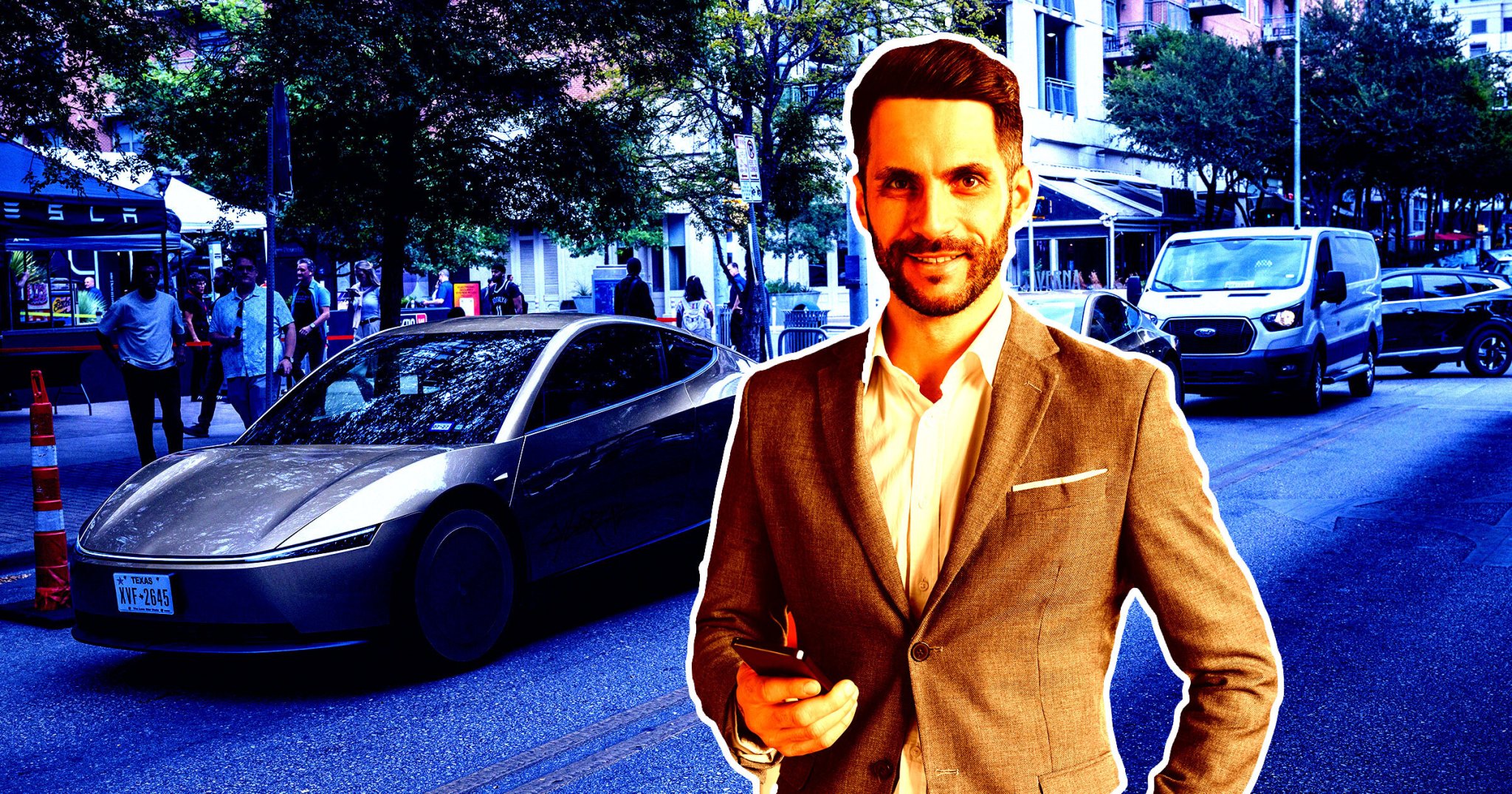
The company is currently operating a fleet of just 45 of its cramped Cybercabs in Austin, Texas, still falling well short of investor and Tesla bull Dan Ives’ lofty expectations of the company adding “$1 trillion of value” for Tesla “over the coming years” with the service.

And unlike their counterparts in Texas and Florida, the Cybercabs that were recently spotted on the streets of New York City are featuring an unusual relic of a supposedly soon-to-be-bygone era: a steering wheel.

As Gothamist reports, the golden-hued cabs in the Big Apple are being overseen — and perhaps even operated — by a human in the driver’s seat with an old-fashioned steering wheel. It’s a significant departure from the original, steering wheel- and pedal-less Cybercabs Musk unveiled in 2024.

Officials confirmed the drivers are testing a “supervised” self-driving system, which still requires them to be able to take over control at any point. But Tesla refuses to say how many Cybercabs there are in the city or for how long they will be testing.

There’s likely a good reason Tesla has opted to go with more traditional controls. After all, it hasn’t even started the permit application process for autonomous vehicle testing with the New York Department of Motor Vehicles, as the Gothamist confirmed.

The EV maker is looking to collect driving data, not imminently launch a robotaxi service in the city.

In short, Tesla has a very long road ahead of it before it could ever roll out its Cybercabs nationally, let alone in other major urban areas. Other companies, however, have a massive head start, with Waymo claiming that it has already completed over half a million paid rides a week throughout the first quarter of this year. While Tesla has remained notably quiet on the matter, its numbers likely fall far short of that, considering it’s only operating with a fleet of a few dozen vehicles.

Meanwhile, Amazon’s Zoox vehicles received approval from regulators in late July to begin charging for rides in cars that don’t have a steering wheel. The company has been operating services free of charge in Las Vegas and San Francisco since 2025, according to the Associated Press.

More on Cybercabs: There’s a Huge Economic Problem With Tesla’s Cybercabs

The post Oops! Many Tesla Cybercabs Actually Do Have Steering Wheels, Undercutting a Core Promise appeared first on Futurism.
  •  

Lawyers Already Lining Up to Defend Victims of Cybercab Crashes

Tesla’s mawkishly sleek new Cybercab has begun rolling out to Austin, Texas this week, with more sighted in cities like New York, Washington DC, and San Diego. It’s the latest development in the world of self-driving taxi cabs — and in one dubious economic indicator, the nation’s personal injury attorneys are on high alert.

Case in point, the New Jersey based law firm Sarofiem and Antoun already has a blog post up courting customers wronged by Cybercab accidents. Billing himself as a “Tesla Cybercab accident lawyer,” Kerollos Antoun poses an important question: “if a driverless Tesla Robotaxi causes an accident, who is responsible when there is no human driver behind the wheel?”

Though Antoun concedes that Cybercabs don’t appear to currently be active in New Jersey, his blog registers a laundry list of considerations considering who can be held liable in accidents involving the autonomous vehicles — each highly theoretical and short on concrete answers.

“Could autonomous-driving software cause an accident,” for example? “Potentially,” Antoun writes. “If an accident occurs, attorneys may need to determine whether the autonomous system perceived the environment correctly and whether the vehicle’s response contributed to the crash.”

Other firms, like Funes Law in Miami and Angel Reyes and Associates in Austin, offer similar pitches: if you’re in an accident with a Cybercab, they want to litigate your case.

Though the tailor-made Cybercab blogs follow a familiar pattern of opportunism by corporate law firms, their point is fair enough. The technology behind Cybercabs is in a very early stage, and the legal precedent is even younger.

Whichever firm happens to scoop up the first Cybercab injury case would be making legal history — a chance to litigate a brand new product made by one of the most valuable companies in the world.

Though self-driving cars are only a few years old at this point, they’ve already resulted in startling legal firsts. In August of 2025, a jury in Miami handed down a landmark verdict against Tesla over a fatal crash involving a Model S being driven on the company’s “Autopilot” mode.

In that case, the total damages came out to a whopping $243 million — a landmark verdict that the nation’s accident attorneys are eager to replicate as Tesla’s gold-tinted coupe hits the pavement.

More on Tesla: Deranged Stalker Seizes Control of Woman’s Tesla Software to Terrorize Her While Driving

The post Lawyers Already Lining Up to Defend Victims of Cybercab Crashes appeared first on Futurism.
  •  

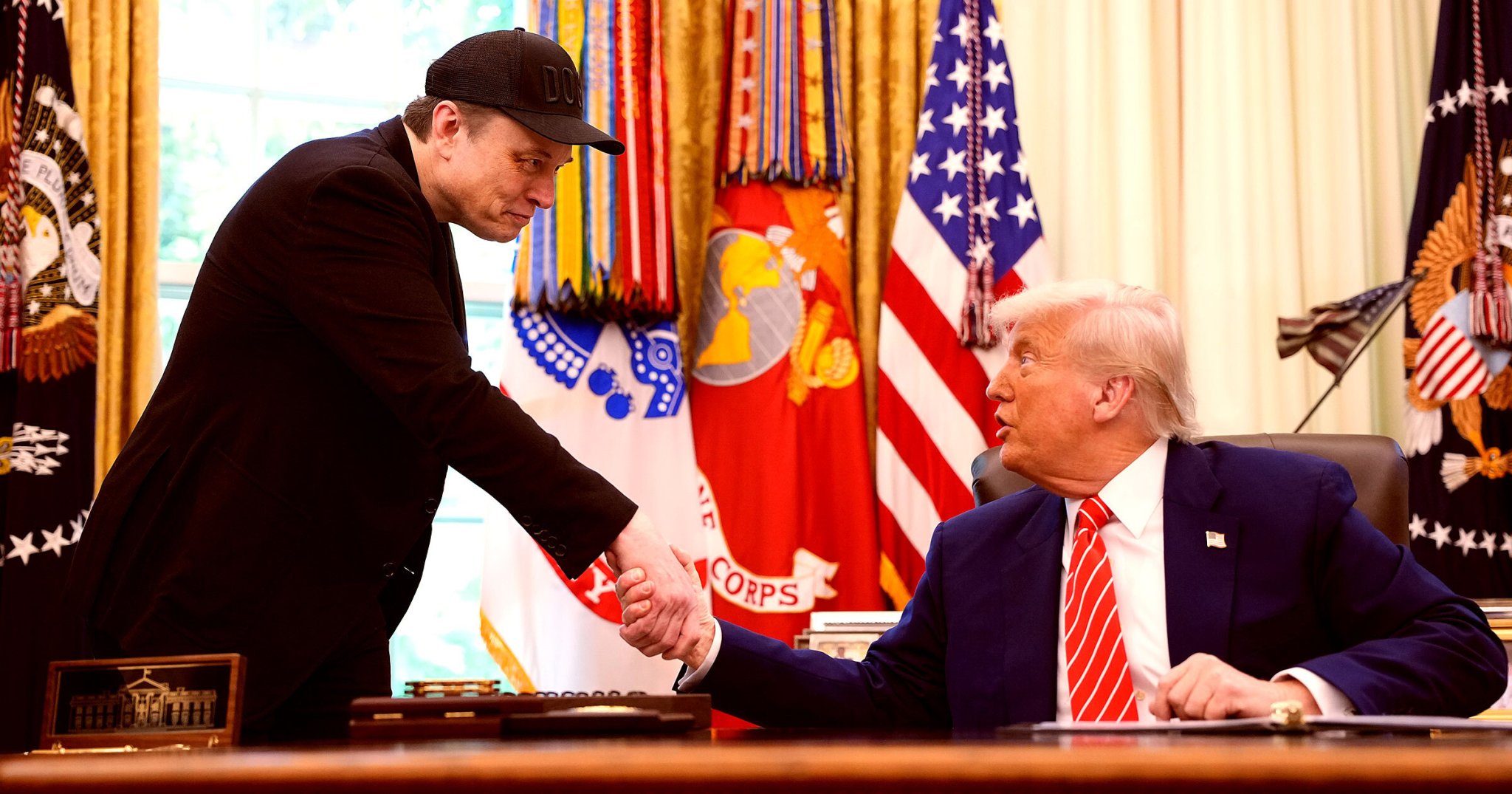
Elon Musk Is So Mad About This New Documentary That He’s Threatening Legal Action

Does Elon Musk, who claims to be so smart that chess bores him, understand what the Streisand effect is? We’re skeptical, because he’s now threatening to sue the Oscar-winning filmmaker Alex Gibney over his new documentary about the controversial business magnate — which Musk has been fuming is a “hit piece.”

The film, simply titled “Musk,” is a four hour examination of the centibillionaire’s life, from his upbringing in South Africa to his start during the dot-com boom to his foray into politics. But it’s a documentary, not a hagiography, and Musk can’t stand that it’s taking a critical eye to his character.

In a letter sent to Gibney’s Jigsaw Productions, Musk’s lawyer Alex Spiro accused the director of defamation, alleging that his film spreads false claims about Musk supposedly rigging the 2024 presidential election in favor of Donald Trump. (“Rigging” probably goes too far, but Musk did shell out nearly $300 million to back Trump’s election campaign.)

The complaint stems from a scene showing Ashley St. Clair — a former right-wing influencer who secretly had a child with Musk but fell out with him after going public about their affair — describing texts she received from Musk in which he cryptically says he’s “optimistic” about Trump winning because “tomorrow we unleash the anomaly in the matrix.” Musk, attempting to clarify, added in a follow up message that he has “over 10 thousand lasers in space.” (NPR reported that it obtained and authenticated the texts in question.)

Spiro argues that this amounts to defamation, because it promotes a debunked conspiracy theory that Musk used his Starlink satellites to beam in votes for Trump.

“You are therefore on notice, before release, that the insinuation is false, that the material refuting it is public, and that you chose not to be told the rest,” he wrote in the strongly-worded letter.

Musk has had a bone to pick with Gibney ever since the film was announced in 2023, when he instinctively called it a “hit piece” despite there barely being any details about it at the time. Gibney retorted to Musk: “How would you know?”

Evidently, Musk still hasn’t gotten over it. As the documentary neared its world premier at Venice Film Festival on Tuesday, Musk reignited his attacks, making at least five different posts on X deriding it.

“Alex Gibney is obviously going to make the most convincingly terrible hit piece on me that he can possibly think of,” he wrote in one of his paranoid rants. “He’s a douchebag to his core and, in his own words, incredibly biased against me.”

Musk has a well known proclivity for trying to silence his critics, but the odds of his lawsuit working out aren’t spectacular. Defamation, in the US, is infamously difficult to prove.

St. Clair certainly doesn’t appeared to be rattled either, calling Musk’s legal threats “a joke.”

“They are more likely to colonize Mars than win a defamation case against Alex Gibney,” she told NPR in a statement. “Alex Spiro is sending fairy dust letters with obtuse legalese.”

More on industrialists: Elon Musk Has Been Calling Women “Breeders” Since His First Marriage, His First Wife Says

The post Elon Musk Is So Mad About This New Documentary That He’s Threatening Legal Action appeared first on Futurism.
  •  

Elon Musk Has Been Calling Women “Breeders” Since His First Marriage, His First Wife Says

Elon Musk is reportedly “freaking out” over a new documentary by documentarian and investigative journalist Alex Gibney.

And by all accounts, there might be a good reason for why Musk is lashing out at Gibney, calling his work a “hit piece” and “boring af.”

The four-hour documentary, which had its world premiere today at the Venice Film Festival earlier this week, featured interviews with Musk’s first wife, Justine Musk, who has had five of his (known) 14 children.

As Agence France Presse reports after attending the premiere, an emotional Justine Musk recalled the billionaire mistakenly claim that he was holding their first child Nevada when he died due to sudden infant death syndrome, when it was actually her.

“I learned the term gaslighting through my relationship with Elon,” she said in the documentary.

She also claimed that Musk refers to the mothers of his many children as “breeders” who “are interchangeable,” a vile descriptor perfectly highlighting the entrepreneur’s deep-rooted misogyny and bizarre obsession with procreation.

Musk has often argued that falling birth rates are humanity’s biggest threat and a major obstacle in his quest to become a multiplanetary species. He has reportedly even gone as far as to offer his sperm to SpaceX employees to seed a Mars colony.

The term “breeder” also highlights his troubled relationship with the at least four known women he has had children with. During the documentary’s premiere this week, Musk’s ex and former conservative influencer Ashley St. Clair, who is featured in the movie, told reporters that she was “offered the opportunity not to speak for $40 million.”

In the documentary, Justine Musk also recalled Musk whispering into her ear that he’s the “alpha in this relationship” — during their first dance at their wedding in January 2000, per AFP.

Her remarks aren’t exactly hard to believe, as we’ve seen plenty of behavior that perfectly aligns with her harrowing comments. Case in point, Musk share a shockingly sexist tweet last year claiming that women were designed to be captured or bartered as property. He has also made revolting tweets in an apparent effort to hit on the singer Taylor Swift.

Musk has also treated his daughter, Vivian Jenna Wilson, with utter disdain and unbelievable cruelty, going on intentionally hurtful anti-trans tirades and pronouncing her “dead.”

More about the documentary: Elon Musk Seems Legitimately Shaken Over This New Documentary

The post Elon Musk Has Been Calling Women “Breeders” Since His First Marriage, His First Wife Says appeared first on Futurism.

  •  

There’s a Huge Economic Problem With Tesla’s Cybercabs

Tesla’s flashy unveiling of its Cybercab robotaxi in 2024 left some glaring questions unanswered.

The sleek, gold-colored coupé impressed with a futuristic design, but baffled onlookers with its cramped two-seat interior, lack of a charging port, and a dubious, far-too-good-to-be-true $30,000 price tag.

Just under two years later, the first Cybercabs are starting to hit the streets in Austin, Texas — and Tesla is just itching to sell you one. Last week, the EV maker started handing out a “Robotaxi interest form,” as Electrek reported at the time, in an apparent effort attract would-be entrepreneurs willing to buy an entire fleet of the unusual vehicles.

Put simply, the idea is to share revenue from ride income with Tesla while the vehicles operate on the carmaker’s network, using its self-driving tech.

It’s part of a much broader plan. For many years, Tesla CEO Elon Musk has promised that its Full Self-Driving-enabled vehicles, including the Cybercab, could effectively turn into an appreciating money-printing machine, allowing owners to sit on their couch and magically watch the money roll in.

As early as 2018, Musk promised investors that he saw the “future as kind of a shared electric autonomy, so that you’d be able to do ride-hailing or share the car any way,” likening it to “some combination of like Uber, Lyft, and Airbnb.”

But there are plenty of reasons businesspeople should hesitate before takeing Tesla up on the offer of operating a Robotaxi fleet, as Electrek‘s Fred Lambert argued in a compelling essay this week.

Basically, he pointed out, “if running a fleet of Cybercabs were actually profitable, Tesla wouldn’t sell you a single one.” It’s like claiming you’ve found an infinite money glitch — and then instead of quietly profiting off it, selling a get-rich-quick book on how to do it yourself.

There are also looming technical questions. Musk’s lofty promises of a vehicle that completes ride-hailing requests autonomously while also appreciating in value has little, if any, bearing with reality in 2026. To the contrary, the EV maker’s offerings are among some of the fastest depreciating vehicles on the market today.

Then there’s the questionable value proposition. Tesla controls the entire network, the self-driving software, and prices. It even “sets the split,” as Lambert argues. Instead, fleet owners are stuck eating the “capital cost and the depreciation, while Tesla keeps the software margin and its cut of every fare.”

In other words, “you don’t own a business in that arrangement. You own the downside.”

It’s a dubious business opportunity closely reminiscent of Tesla’s infamous FSD advanced driver assistance software. Owners once shelled out a massive $15,000 — before it became exclusively a $99 a month subscription — to access a feature that’s still a complete disaster, leading to fatal collisions and terrifying close calls even after many years of development.

Not only are they spending the equivalent of a small car on faulty software, they’re willing to shoulder the risk as well. Tesla has a long track record of trying to wriggle out of lawsuits arising from these accidents, arguing it was the driver’s fault for engaging the software and not paying attention.

Much like its regular lineup of FSD-enabled vehicles, Tesla’s Cybercab relies entirely on a camera-based autonomous driving system, an approach that experts say is fundamentally flawed.

Nonetheless, as the Austin American-Statesman reports, local investors in Austin are chomping at the opportunity to run their own Cybercab fleet.

Meanwhile, regulators from the National Highway Traffic Safety Administration are watching closely. The agency opened a probe into the Tesla, questioning that its new Cybercab “meets all applicable Federal Motor Vehicle Safety Standards.”

More on the Cybercab: Tesla’s Glitchy Cybercab Accidentally Lets Passengers Access Controls to Manually Drive the Car Using Virtual Joystick on In-Vehicle Screen

The post There’s a Huge Economic Problem With Tesla’s Cybercabs appeared first on Futurism.
  •  

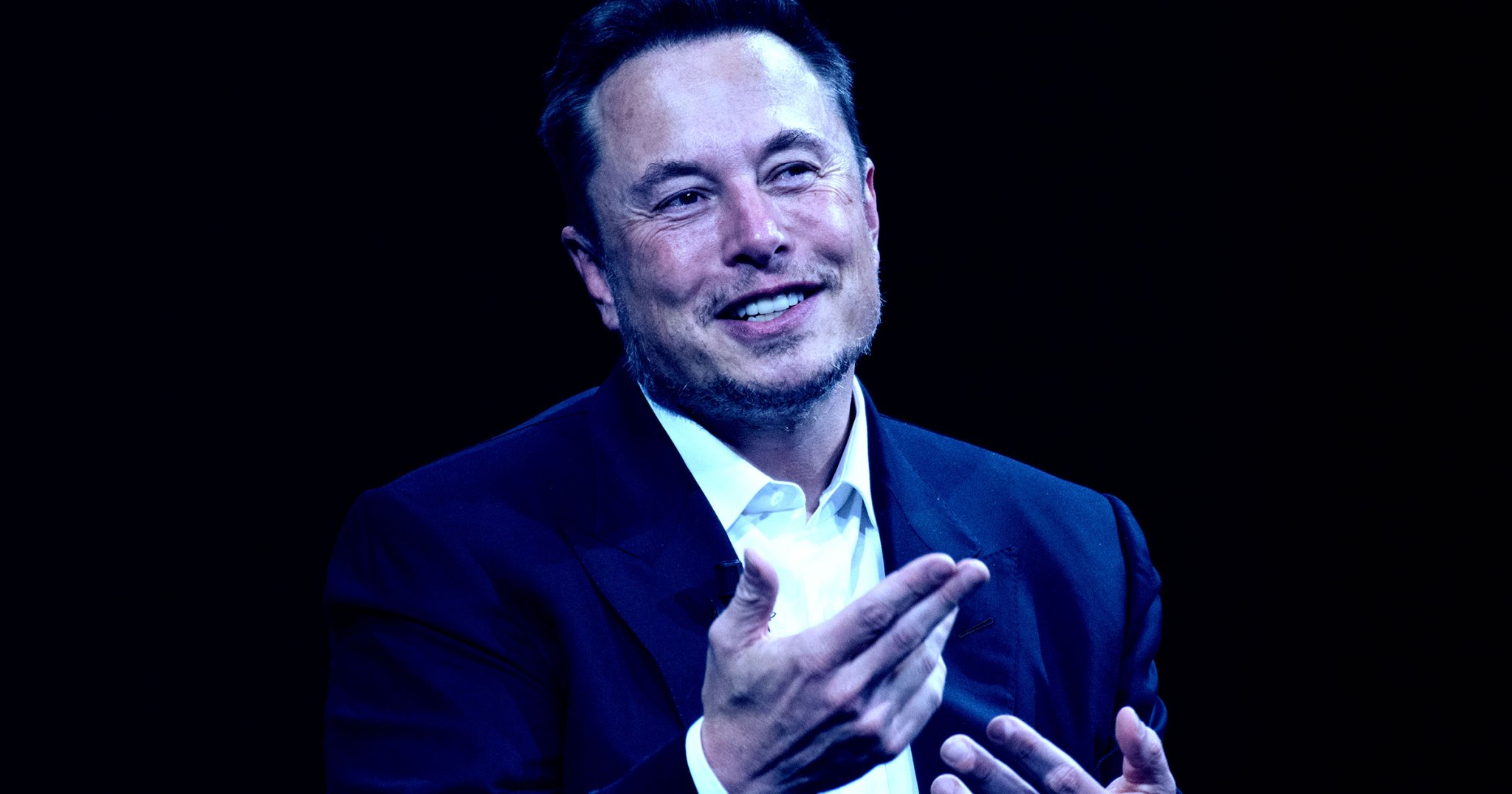
Elon Musk Seems Legitimately Shaken Over This New Documentary

It’s no secret that Elon Musk is hiding plenty of skeletons in his closet.

The mercurial billionaire has made an extensive list of enemies through his offensive commentary, led the gutting of humanitarian aid, exploited workers at his companies, and meddled with the democratic process — all the while alienating investors with his chronic overpromising and underdelivering.

Simply put, documentarian and investigative journalist Alex Gibney had a very rich source of material to draw from for his upcoming documentary “Musk,” which had its world premiere today at the ongoing Venice Film Festival.

According to journalist David Sirota, Musk is “freaking out” about the film because Gibney “doesn’t pull punches, doesn’t cower and won’t be bullied.”

“And so the bully is mad,” Sirota tweeted.

By all accounts, the four-hour epic will be a doozy. The documentarian “crafted a movie that, while not new in its specifics, is often damning in its totality, standing apart from anything the media entertainment complex has recently turned out — a portrait of power with the cinematic scope of ‘All the King’s Men’ and the potential social impact of ‘The Pentagon Papers,'” the Hollywood Reporter gushed.

Musk has reportedly gone to extreme — and sometimes unsuccessful — lengths to silence those involved in Gibney’s latest work. Musk’s ex and former conservative influencer Ashley St. Clair, who is “prominently featured” in the documentary, told reporters at the Venice Film Festival that she was “offered the opportunity not to speak for $40 million,” as quoted by People.

“When you’re offered something like that [to stay quiet], it really causes a debate in your head about what your speech means and how valuable that is and why do they want to offer me this amount of money to not speak?” St. Clair said.

St. Clair is one of four women who have had a total of 14 children with Musk, at least that we know about so far. The 26-year-old had a major falling out with the entrepreneur, going as far as to allege that the billionaire “financially retaliated” against her for filing a custody petition by reducing child support payments.

We’re likely to hear more commentary from Musk about the film. Last week, Musk tweeted that Gibney was “obviously going to make the most convincingly terrible hit piece on me that he can possibly think of,” calling him a “douchebag to his core.”

But considering the staggering amount of material Musk has gifted the world, Gibney had plenty of material to work with.

More on Musk: Elon Musk Is Insisting He Knows More About Chess Than Chess.com

The post Elon Musk Seems Legitimately Shaken Over This New Documentary appeared first on Futurism.
  •  

Amazon Cargo Jet Crashes Just Feet From Parking Lot Full of Tesla Cybercabs, Killing Five

An Amazon Prime Air cargo jet ripped right past the landing zone at the Miami International Airport on Sunday afternoon, struggling to stop itself in time before overrunning the runway and crashing into a cleaning crew and a nearby SUV.

It was a tragic incident, killing five innocent people.

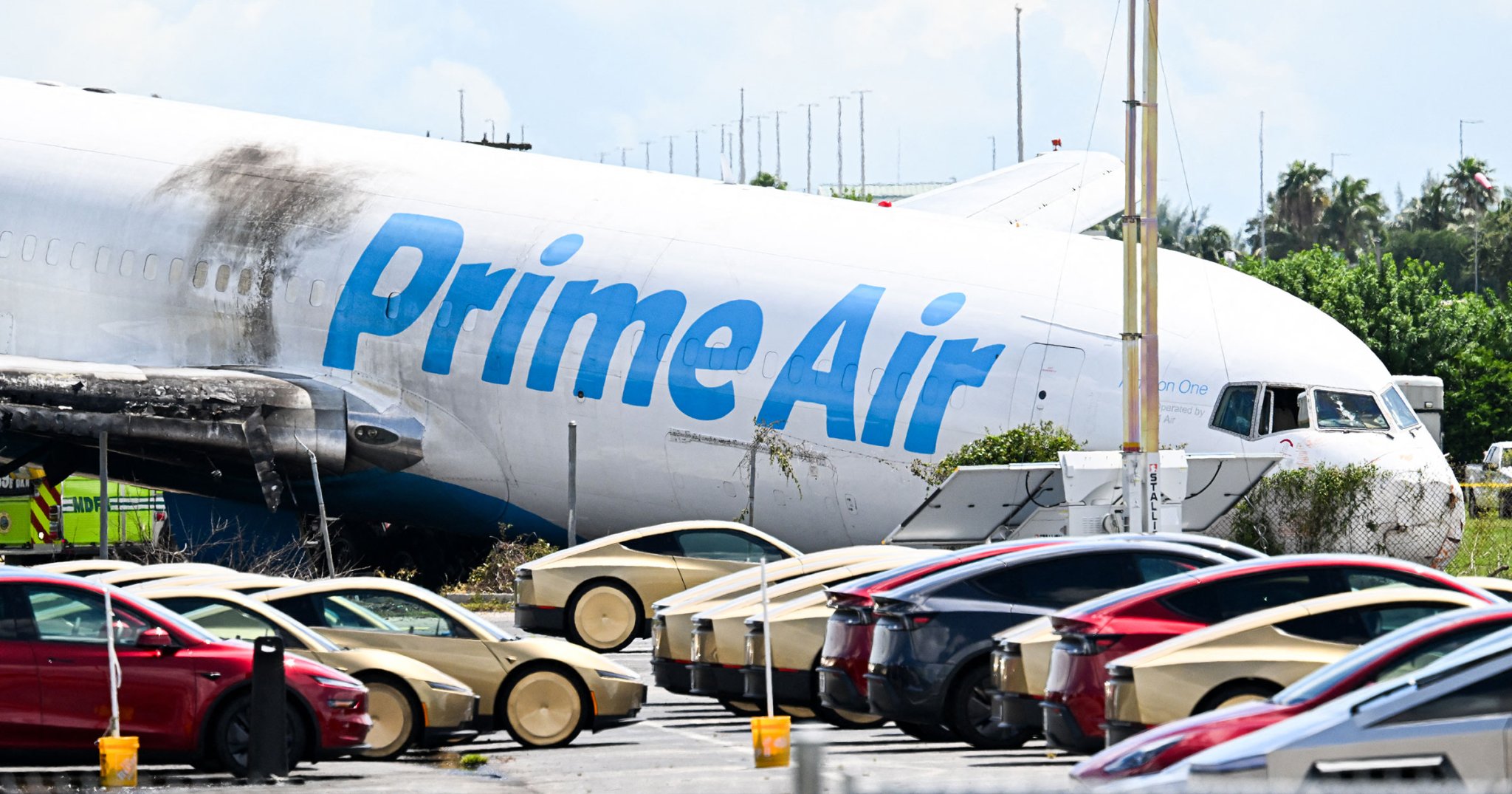
The Boeing 767-300 also barreled right through a chain-link fence that was protecting a highly unusual lot of vehicles: photographs of the scene show the dented nose of the airliner just a few dozen feet away from a kennel of parked Tesla Cybercabs.

Tesla CEO Elon Musk has banked the future success of his EV maker on the gold-colored self-driving vehicles, which are too small to fit more than two passengers and lack both steering wheels or pedals. Their sudden appearance in a story about a deadly airliner disaster had the billionaire taken aback. However, instead of offering his condolences after the tragedy, Musk simply tweeted the word “Weird” in response.

The peculiar cameo also led to plenty of questions over Tesla’s plans to roll out the cars outside of Austin. Just last week, the Cybercabs were deployed for the first time in the Texas city, but the company has yet to announce any imminent launches in Miami.

Regulators from the National Highway Traffic Safety Administration watched closely following last week’s deployment, which comes just shy of two years after Tesla first showed off its Cybercab. As Bloomberg notes, the light on details event was “uncharacteristically low-key,” offering no livestream or media coverage.

The “Cybercab event was largely a bust,” tweeted Future Fund Advisors co-founder Gary Black. “The launch offered little detail and key questions remained unanswered.”

Indeed, regulatory approval is hazy for vehicles without any traditional driver controls, a topic that’s especially pertinent to Tesla. Musk has bet the company’s entire future on the success of its Cybercabs and its humanoid robot, dubbed Optimus.

With neither showing any signs of a significant public rollout any time soon, Wall Street is bound to keep asking some tough questions.

More on the Cybercab: Tesla Loses Trademark to “Cybercab” Due to Its Own Staggering Incompetence

The post Amazon Cargo Jet Crashes Just Feet From Parking Lot Full of Tesla Cybercabs, Killing Five appeared first on Futurism.

  •  

Elon Musk Is Insisting He Knows More About Chess Than Chess.com

Is being the world’s richest man not enough for Elon Musk?

He must also have us all believe that he’s a genius, sui generis, with a mind so mighty that it’s wasted on supposedly intellectual pastimes like “chess.”

He’s so convinced that the board game is beneath him, in fact, that he’s begun arguing about it with… Chess.com, a leading source of expertise and chess AI. 

The inane saga kicked off yesterday on X — where else — when Musk responded to a post about all the possible moves you can make in chess. To a mind as omniscient as Musk’s, the number — a mere 40 orders of magnitude more than all the atoms in the observable universe — wasn’t sufficiently large enough to be interesting.

“The actual number of moves that are not utterly stupid in chess is tiny,” he claimed, “and chess will be fully solved one day.”

Here, Chess.com entered the fray by responding with a succinct rejoinder: “skill issue.”

The bait worked.

“Chess is hard for humans, but not for computers. One day, it will be fully solved like checkers,” Musk wrote, essentially repeating himself. “Between now and then, or even after, have fun. People enjoy many games/sports where machines are vastly better.”

Indeed, humans who aren’t intelligent as Musk, in their feeble-mindedness and fleeting time on this planet, may enjoy activities such as games and sports, blissfully unaware that a hypothetical machine may hypothetically make mince meat of those activities one day. And yet, as Musk admitted, he’s choosing to waste his time “arguing with some random intern.” (“I’m a full-time employee,” the Chess.com account clarified.)

Musk also went on about how an artificial superintelligence — something we don’t even know is possible to build — will “figure out ways to solve and compress that are far beyond what we could possibly comprehend.” Then he cited some conversations he had with his personal AI chatbot, Grok, as if that put matters to bed.

There’s certainly an interesting intellectual debate to be had about “solving” chess — something that actual mathematicians have explored and tried to tackle — but Musk’s arguments seem to be driven solely by contempt. The board game is a long-held bugbear of his.

Back in 2022, in a now infamous tweet, Musk wrote about how he stopped playing chess as a child because he “found it to be too simple to be useful in real life,” before extolling how Polytopia, a mobile game, was the superior activity of choice for the cognoscenti.

He had something similar to say amid his battle with Chess.com. Responding to another account, Musk wrote that he “felt diminishing returns from chess in terms of transfer learning to understand reality.” Next time your opponent destroys you at chess, you might try deploying that excuse, too.

More on Elon Musk: Elon Musk Is Having One of His All-Time Meltdowns

The post Elon Musk Is Insisting He Knows More About Chess Than Chess.com appeared first on Futurism.

  •  

Billionaires Pouring Money Into Ads About How AI Data Centers Are Actually Good

If you happen to live in Ohio, Wisconsin, or Kansas, you may soon notice a massive uptick in ads extolling the virtues of AI data centers.

That’s not by accident. As Bloomberg reported this week, a group funded by tech industry billionaires called Build American AI is spinning up a massive campaign meant to sway public opinion around data centers in key battleground states.

The ad blitz is described as being in the “millions of dollars” range, per Bloomberg, though Build American AI hasn’t disclosed an exact figure.

Among the group’s backers are figures heavily invested in continuing the data center boom, like the venture capitalists Marc Andreessen and Ben Horowitz. Also involved is Greg Brockman, the president of OpenAI, whose $100 million super PAC Leading the Future is reportedly bankrolling the publicity campaign.

In a statement to Bloomberg, a representative for Build American AI framed the question of data center development as an existential threat, and repeated the myth that opposition to data centers — an incredibly popular stance among American voters — is actually a radical psy-op.

“The stakes are too high to allow the loudest and most extreme voices to dictate America’s future,” Build American AI complained. “Driving responsible investment away will cost Americans good-paying jobs, weaken communities and undermine America’s ability to lead.”

But no matter how much doom-and-gloom tech billionaires try to browbeat the public with, they face an arduous battle. An August survey by the University of Pennsylvania’s Annenberg Public Policy Center found that a record 61 percent of US adults oppose new data centers in their backyards, up 12 percent from a survey conducted in March.

That being the case, it’s unlikely a few dramatic TV ads will be enough to launder the AI industry’s already caustic image — especially at the ballot box in November.

More on data centers: As the Rest of the Economy Crumbles, the Amount of Money Flooding Into Data Centers Is Simply Astounding

The post Billionaires Pouring Money Into Ads About How AI Data Centers Are Actually Good appeared first on Futurism.

  •  

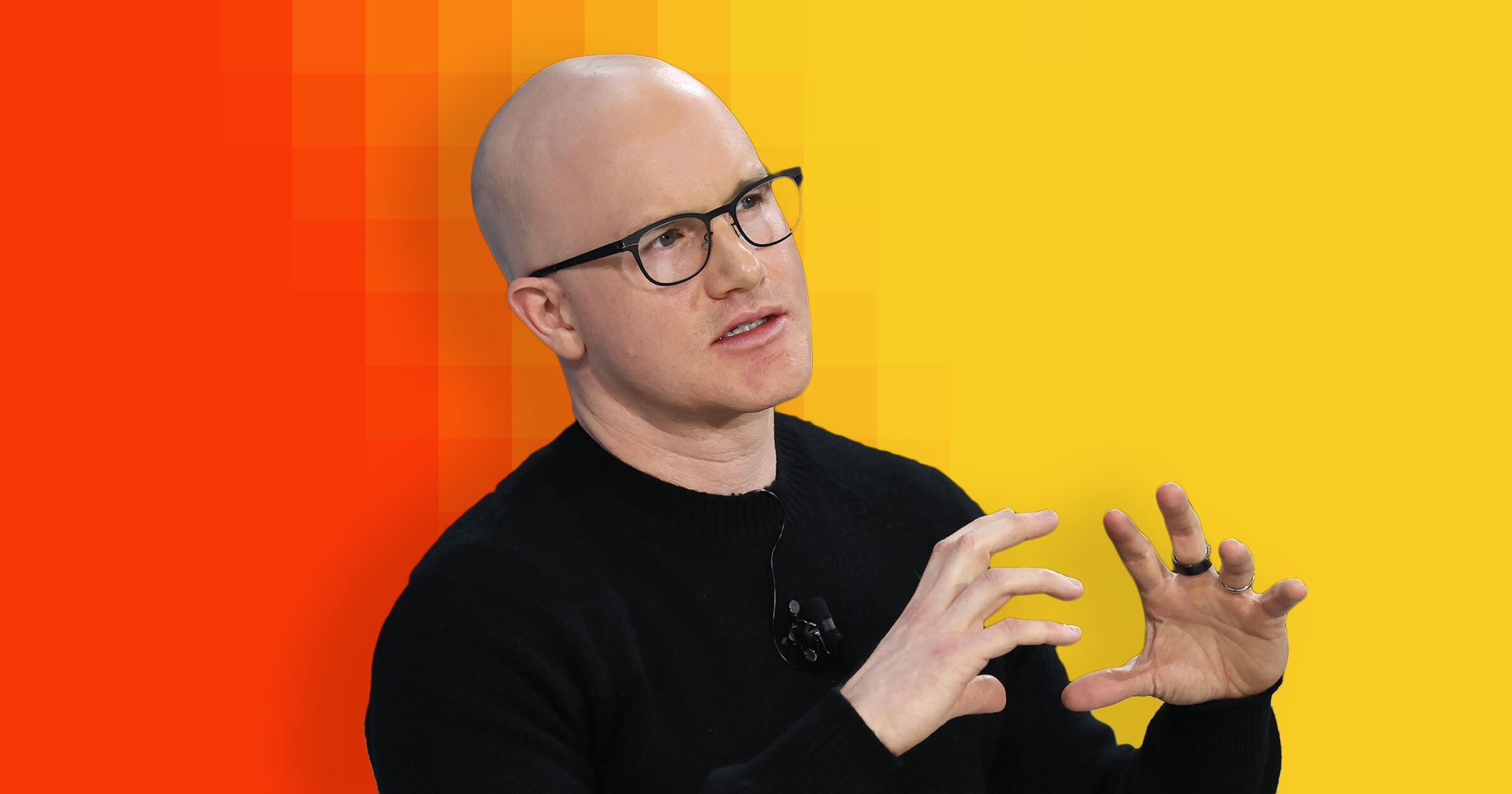
Billionaire Coinbase CEO Boasts That He Would Never Donate to Charity

There was a time in the United States when the richest moguls, regardless of their many personal shortcomings, embraced philanthropy in a cynical effort to keep the angry mobs at bay. Andrew Carnegie famously built libraries, John D Rockefeller helped fund research that eventually eradicated hookworm, while JP Morgan donated vast collections of art and books to museums and other cultural institutions.

Today’s robber barons aren’t in such a giving mood. Sure, there are some figures like Microsoft’s Bill Gates — who has plenty of his own problems, to be clear — but they seem to be quickly becoming the minority.

Case in point, the billionaire CEO of cyrpto-trading company Coinbase, Brian Armstrong, recently went on a tirade about how charity is actually a “net negative on the world.”

“The common view is that philanthropy is a noble cause,” Amstrong said during a recent appearance on the right-wing Katie Miller Podcast. “And like, Bill Gates after the DoJ thing is like, ‘I’m going to go rehabilitate my image, I’m going to do philanthropy.'”

That’s a fool’s errand to Armstrong, however, as such philanthropic aspirations — selfish as they are — can become “captured by ideology.”

“I guess I have sort of a contrarian view where a lot of charities and philanthropies are actually net negative on the world,” Armstrong continued. “And they get captured. It’s actually remarkably hard to find a foundation that has not gotten captured by ideology.”

Though Amstrong’s estimated net worth of around $8.7 billion puts him in the top 1 percent of the top 1 percent, he says that “so far, I’ve just been like ‘I’m not going to do that.’“

More on tech billionaires: AI Billionaires Are So Greedy That They’re Supercharging Sales of Yachts and Private Jets

The post Billionaire Coinbase CEO Boasts That He Would Never Donate to Charity appeared first on Futurism.

  •  

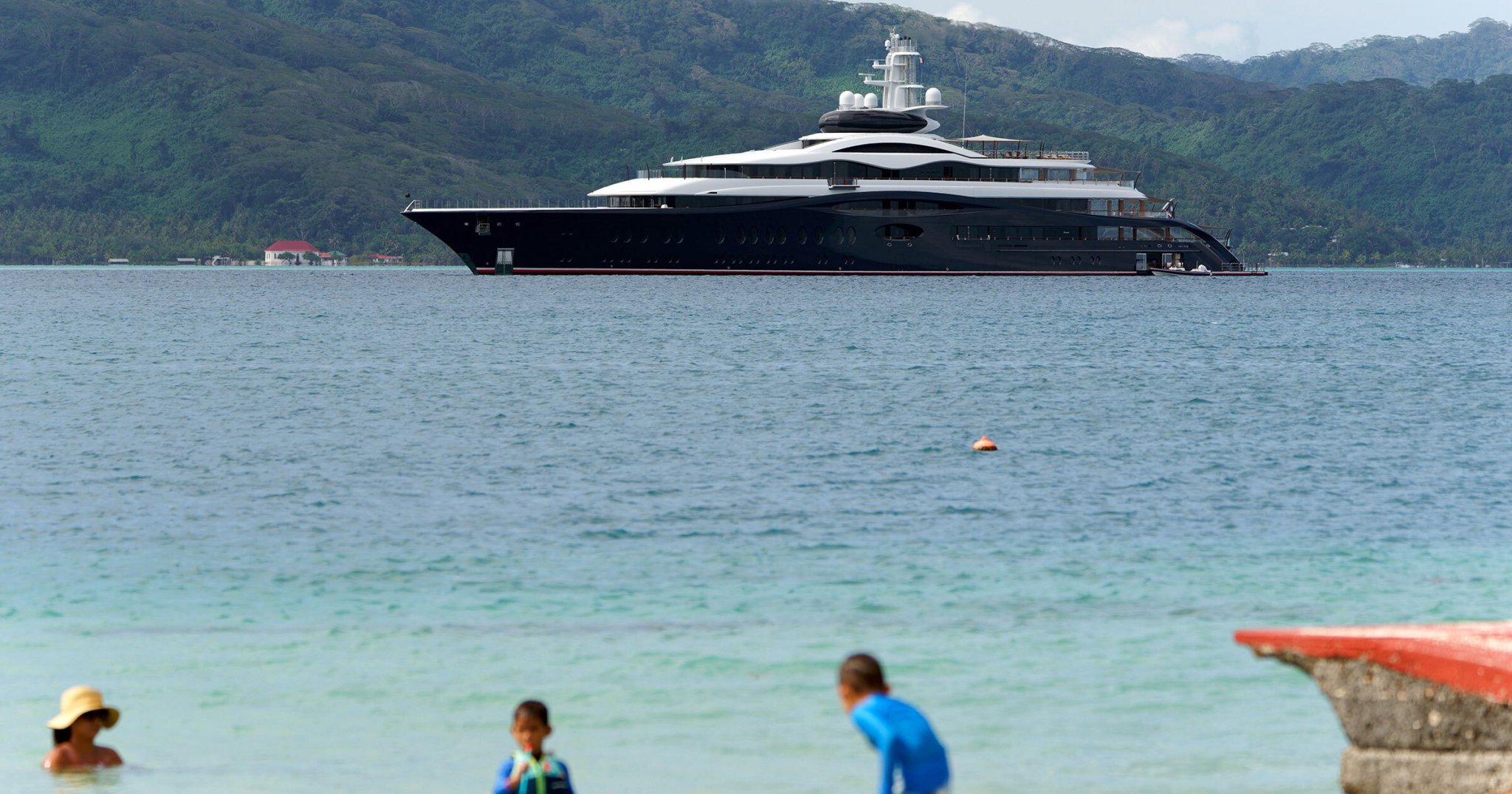
Zuckerberg Under Fire After His Superyacht Declined to Help a Vessel in Distress

What’s the point of having a superyacht if you’re forced to share it with some unwashed poors?

That’s the calculation the crew of a Mark Zuckerberg’s $300 million superyacht, Launchpad, apparently made on the billionaire’s behalf, after a skiff near its location in southeast Alaska ran into trouble.

According to the Alaska Beacon, a small cruise ship called Wilderness Legacy had to go out of its way to help the crew of a 21-foot boat that had run out of fuel outside Farragut Bay, a body of water south of Juneau. As maritime events go, it’s a pretty common occurrence — Dan Blanchard, the owner of the cruise line told the Beacon that these types of rescues don’t even “always rise to my attention.”

What did catch attention was the fact that Zuckerberg’s yacht had been much closer to the stranded skiff than the cruise ship. So much so, in fact, that the Wilderness Legacy had to steam “around and past” the Launchpad on its way to render assistance, the Beacon reported.

“There was near unanimous booing when the captain announced this,” Michael Love, a passenger aboard the cruise ship, said in a post on social media.

There are a few caveats here: for starters, the US Coast Guard says the skiff issued no official distress call, only a generic request for assistance. There’s also the tidbit shared by a spokesperson for Zuckerberg, who insisted that the billionaire was not personally onboard the yacht at the time.

As for why it didn’t respond to the call for assistance, the spokesperson told the Beacon that “by the time the crew reviewed the Coast Guard contact on a different radio channel from the one they were operating on, the assist was already underway.” In other words, the official story is that the crew on Zuckerberg’s unfathomably expensive yacht, which you’d assume was loaded with state-of-the-art communications equipment, simply didn’t notice the call for assistance.

Whether you buy that tale probably depends on how much latitude you’re willing to offer Zuckerberg, who has quickly become one of the more identifiable villains of the tech billionaire world. Regardless of his actual involvement, the Meta CEO was almost universally panned for the event on social media.

“Perfect mirror of how billionaires leave the entirety of society stranded,” one Redditor commented.

As Love, the cruise passenger, told the Beacon: “frankly, if I was Mark Zuckerberg I would be absolutely ecstatic at a chance to do something helpful for someone in need and maybe get some good PR out of it.”

More on tech billionaire yachts: Activists Plaster New Name on Larry Ellison’s Superyacht

The post Zuckerberg Under Fire After His Superyacht Declined to Help a Vessel in Distress appeared first on Futurism.

  •  

Elon Musk’s Efforts to Cut Spending in the Government Were So Incompetent That It’s Shocking, Internal Analysis Finds

In terms of demoralizing the federal workforce and demolishing the public sector, Elon Musk’s Department of Government Efficiency was a success.

In terms of actually saving money, though — its ostensible raison d’être — it was a dismal failure.

Musk vowed to slash $2 trillion in government “waste and fraud.” Then he lowered that target to $1 trillion, and behind the scenes reportedly promised Trump to save just a tenth of that figure. In the end, DOGE boasted on its website’s “Wall of Receipts” that it had saved around $215 billion — peanuts compared to its original promise.

But the actual amount of spending it slashed may be even lower than that. In a sweeping audit, the Government Accountability Office looked through the $110 billion that DOGE claimed it saved between January and July 2025, and found a trail of staggering incompetency that let loads of supposedly saved money fall through the cracks. That framing, though, could be too generous to Musk and his pimple-faced lackeys. You could also take the view that DOGE, in all likelihood, was deliberately cooking the books.

Per the GAO’s new report, released this month, DOGE claimed it terminated 13,476 contracts, but nearly 2,000 of them weren’t actually terminated. Spending-wise, about $27.4 billion of the purported savings came from these contracts that DOGE botched the terminations of.

The clumsy — or deceptive — bookkeeping didn’t end there. The receipts “includes leases identified for termination before [the group] was established,” the report states, as quoted by The Washington Post. And 108 of 264 of the leases it claimed it nixed “were already in process for termination.”

In all, the GAO found that over half of DOGE’s claimed $61 billion in contract savings couldn’t be verified or came from contracts that weren’t actually terminated. Similarly, 96 percent of the savings that it claimed came from grants couldn’t be verified by the accountability office, either.

Last August, an investigation by Politico found that of the $52.8 billion that DOGE had claimed to save by cancelling contracts at the time, its actual savings were closer to just $1.4 billion. To calculate how it saved money, DOGE dubiously used the maximum spending limit listed on the contracts it axed, figures that in practice are much higher than what the government ends up spending.

At the time, government procurement expert Jessica Tillipman told the outlet that the practice was akin to “taking out a credit card with a $20,000 credit limit, cancelling it and then saying, ‘I’ve just saved $20,000.'”

More on Elon Musk: Columbia Economist Baffled as to Why the Masses Aren’t Rising Up Against Elon Musk

The post Elon Musk’s Efforts to Cut Spending in the Government Were So Incompetent That It’s Shocking, Internal Analysis Finds appeared first on Futurism.

  •  

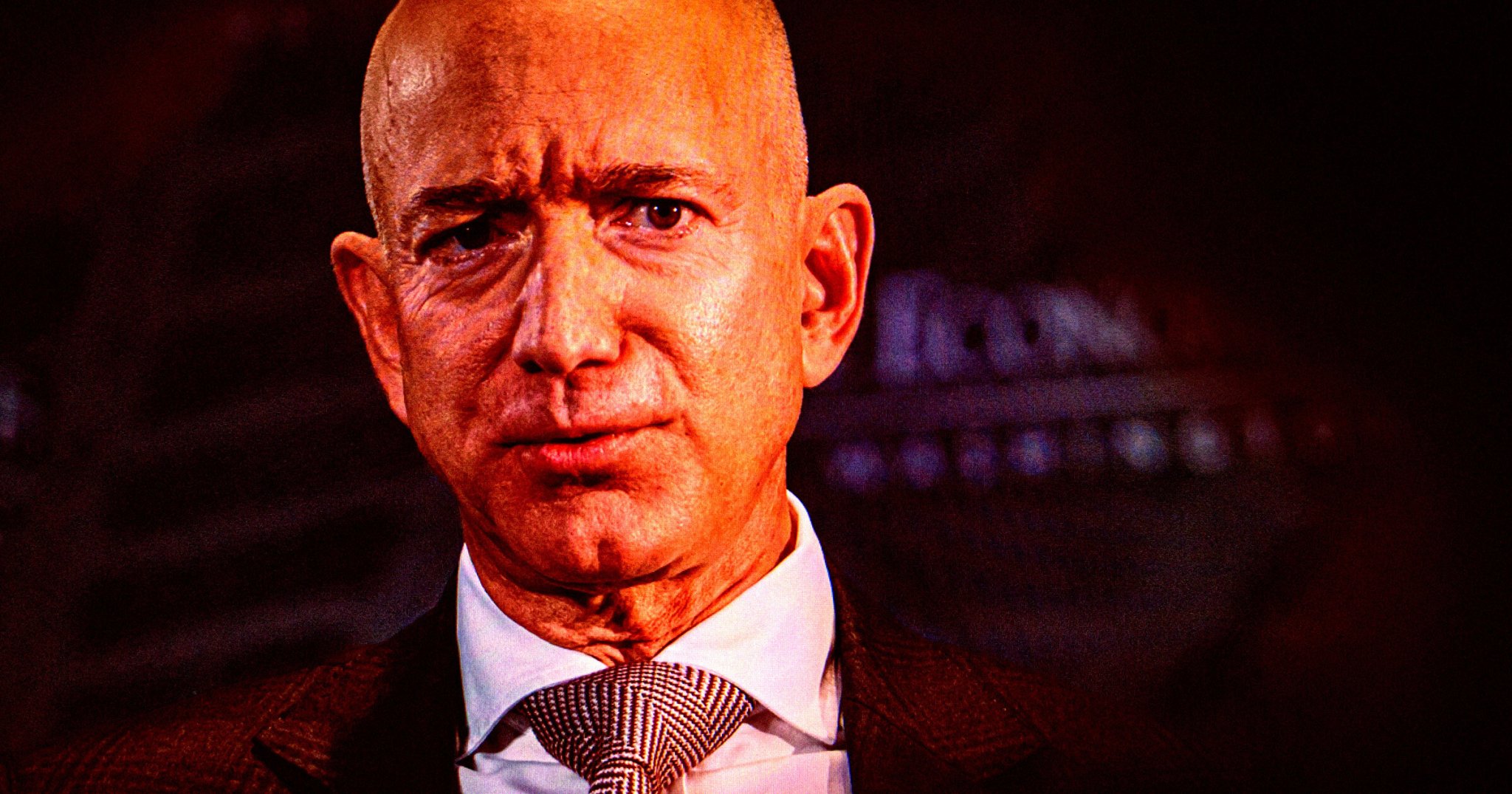
Jeff Bezos Harshly Criticized for $200 Million Pledge to Protect the World’s Most Endangered Species

Amazon billionaire Jeff Bezos and his actor buddy Leonardo DiCaprio are catching some heavy flak recently, but for a seemingly bizarre reason: pledging millions of dollars to protect 100 of the world’s most threatened animal species.

The charity initiative, called the Phoenix Species Project, was first revealed on DiCaprio’s Instagram account, where the six-time academy award nominee described it as the “largest single philanthropic initiative ever dedicated to the recovery of Critically Endangered species, across 30 countries.”

“I could not be prouder to announce this,” DiCaprio continued. “Save these species, and we protect everything around them. The forests, the rivers, and the climate itself.”

For such a seemingly altruistic venture, the response to the announcement was strikingly polarized. As the Independent noted, DiCaprio and Bezos were summarily blasted for engaging in “greenwashing,” a negative term given to the strategy employed by massive corporations and the wealthy to cover their outsize impact on the environment with a little eco-charity.

“As soon as people realize and actually feel the effects of what those rich f***s did to our planet they suddenly start their greenwashing campaign,” one Redditor wrote in response to the announcement, per the Independent.

“Uber-wealthy people helping a fraction of the problems that they cause,” another commenter lamented. “For publicity.”

It certainly wouldn’t be the first time Bezos has been accused of greenwashing, especially given the immense carbon footprint of his flagship company Amazon. In 2020, for example, the billionaire’s Bezos Earth Fund pledged $10 billion to protect biodiversity, bringing a massive amount of money to the global effort to mitigate climate change — at least on paper.

As the backlash illustrates, your reaction to the those types of efforts probably hinge on your economic and social worldview.

The haters aren’t just being petty, though. As the Journal of Political Inquiry observed, Bezos’s wealth is only possible thanks to his previous position as chief executive of one of the largest corporate polluters on the planet. Between 2020 and 2021 alone, Amazon’s carbon dioxide emissions grew by 18 percent, while his space company Blue Origin is altering the outer atmosphere in ways we’re only starting to understand.

And his empire’s carbon emissions have only skyrocketed since then, as the demand for cloud computing supersedes previous pledges to clamp down on Amazon’s extraordinary excretions of noxious pollutants.

In other words, it’s no wonder the masses are rising up in opposition to the billionaire and his actor friend — if only online, at least for now.

More on billionaires: The Type of Orbital Data Centers That Billionaires Want to Launch Into Space Would Wreak Ecological Catastrophe, Scientists Warn

The post Jeff Bezos Harshly Criticized for $200 Million Pledge to Protect the World’s Most Endangered Species appeared first on Futurism.

  •  

Grokipedia Appears to Have Completely Broken and Nobody Noticed

We certainly wouldn’t blame you for having completely forgotten that last year, Elon Musk tried to reinvent Wikipedia because he thought it was too woke.

In October, his AI startup xAI launched Grokipedia, named after its AI chatbot. The encyclopedia stole human-written and edited pages from Wikipedia wholesale and ran them through a large language model, which also fielded user-submitted edits, to better reflect Musk’s contorted worldviews.

The site was hardly an exemplary of objectivity. It was quickly found to heavily cite an infamous neo-Nazi forum as a source of information, desperately tried to paint Tesla’s Cybertruck as a successful and desirable electric pickup truck, and validated Musk’s favorite conspiracy theories. But it was a major cultural moment, garnering countless stories in the media and discussions on podcasts over Musk’s attempt to control the spread of information.

Perhaps unsurprisingly, the desperate attempt to twist the largest online encyclopedia in human history into an extension of an almost-trillionaire’s bigoted mind appears to have ground to a screeching halt — and, damningly, barely anybody seems to have noticed.

According to a new investigation by Lawfare, Grokipedia appears to have entirely stopped updating itself sometime earlier this year. Reviewing suggested edits from humans has also ground to a halt.

“As far as we can tell, no entry has changed in more than three months,” Lawfare concluded of the site, which is now owned by SpaceX since it merged with Musk’s AI efforts.

Worse yet, the site’s edit log appears to have broken completely as well, making it impossible to track which user-suggested changes were “accepted” or “rejected” by the AI.

By January, the Tow Center for Digital Journalism had already observed that xAI’s Grok was making more edits to its own articles than acting on human-suggested ones, suggesting a bottoming out of interest for the project.

Since then, it has turned into a ghost town, a completely redundant and misinformation-filled copy of Wikipedia, which remains one of the last bastions of human-edited and verified sources of information on the internet.

Even when Lawfare submitted an “uncomplicated factual update” about SpaceX having launched its IPO in June — an irrefutable fact that any allegedly “open source, comprehensive collection of all knowledge” should probably include — the Grokipedia entry remained stagnant.

Even pages that are purportedly drawing millions of views aren’t updating. The most recent approved update Lawfare could locate — to the entry about OpenAI’s ChatGPT — dates back to April 24.

As of today, Lawfare found that that there are 13,002 suggestions that “sit unresolved, trapped ‘in review.'”

“Altogether, what we found was that the ‘live’ change feed is gone, past decisions were retroactively reverted without explanation, new decisions are not being issued, and article text appears frozen (and, in some cases, outdated),” the publication concluded. “We do not know whether xAI is preparing a major revision or has altogether abandoned active development of the project.”

It’s a precarious situation. Despite having been abandoned, Similarweb data suggests Grokipedia received over six million visits in June alone. Hundreds of thousands of sites are also still citing Musk’s encyclopedia, which could spread misinformation even further.

Futurism has reached out to SpaceX for an update on the project, but considering the reputation of Musk’s companies and their refusal to interact with the media, we’re not holding our breath for a response.

More on Grokipedia: Elon Musk Is Not Beating the Allegations: Grokipedia Cites a Hardcore Nazi Website 42 Times

The post Grokipedia Appears to Have Completely Broken and Nobody Noticed appeared first on Futurism.

  •  

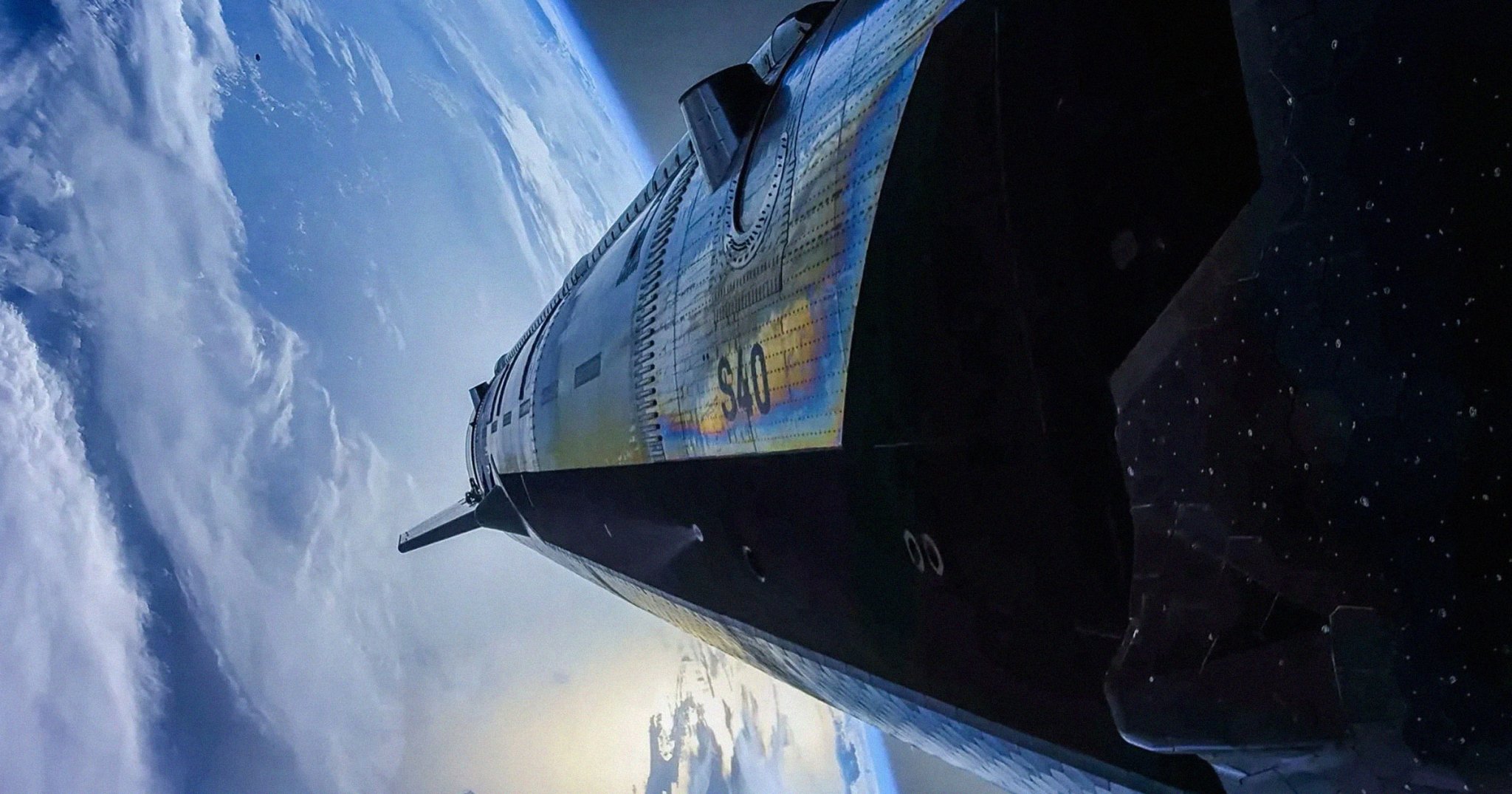
SpaceX Now Faces a Terrible Peril

Investors were not impressed by SpaceX’s first-ever earnings report earlier this week. Shares dropped by more than ten percent, even after the company reported higher than expected revenue — comforting financial news which, unfortunately for CEO Elon Musk, was overshadowed by the venture’s massive AI spending.

The same day, SpaceX insiders, including employees and executives, got their first real opportunity to turn their holdings into cash after the total shares available for trading grew from around 639 million to 1.55 billion, a chunk of the stock valued at just over $100 billion being unlocked.

As Reuters put it, investors now faces an “irresistible opportunity to cash out.”

“This has to be the most talked-about lockup in the history of IPO lockups,” institutional ​brokerage firm R.F. Lafferty & Co CEO Robert Hackel told the agency. “You are going to see a lot of exits.”

It’s no wonder Musk’s rocket company is facing massive pressure this week. Shares are down more than 28 percent over the past month, currently hovering around $114, which is miles below its mid-June record high of $225.

SpaceX’s massive volatility briefly made Musk the world’s first trillionaire — only for him to lose that title once his rocket company’s stock came crashing back to Earth.

Its current share price is also low enough to keep an additional 455 million shares locked up, since it’s still south of its $135 IPO price, setting the stage for even more volatility if it were to claw itself back to that point.

Musk remaind steadfast in his ambitious vision for the company, from orbital data centers to a fleet of humanoid robots that would enable large scale manufacturing on the surface of the Moon.

During Tuesday’s earnings call, he admitted that his plans sound “totally nuts” and “super sci-fi right now,” but maintained that “it’s going to happen.”

Whether investors continue to buy into his vision, though, is anything but guaranteed. SpaceX’s success so far this year has largely been built on hype surrounding AI. The company was merged with Musk’s AI startup, xAI, bringing in plenty of new investors — but saddling it with billions of dollars in additional debt.

Its space ambitions hinge almost entirely on the success of Starship, a super-heavy launch platform that has yet to complete a single successful flight and landing.

SpaceX’s revenues, meanwhile, are heavily dependent on its Starlink satellite internet service. There’s certainly good news there, but the program also saw its average revenue per user drop over the last quarter, rattling investors.

In short, SpaceX’s path to profitability is inextricably linked to the belief that Musk’s sci-fi dreams can be turned into reality in a short enough time period that the dream won’t collapse in on itself.

“SpaceX wants to tell the story they’re the market leader,” The Westly Group founder Steve Westly told CNBC. “But people still have these questions: how quickly can they grow? How big are the costs going to be before this thing gets to profitability?”

More on SpaceX: SpaceX Achieves Its First Moon Landing by Accidentally Crashing Into It at 5,400 Miles Per Hour, Causing Huge Explosion and 60-Foot Crater

The post SpaceX Now Faces a Terrible Peril appeared first on Futurism.

  •  

Elon Musk Allegedly Stiffing Contractors on Huge Bills

Being unbelievably wealthy comes with powerful perks — like getting away with being too cheap to pay people the money they’re owed.

This, allegedly, is what Elon Musk is doing with one of the contractors who helped build his sprawling Colossus data centers near Memphis. 

The contractor, Ohio-based Darana Hybrid, has filed two liens against SpaceXAI — formerly known as xAI, before being merged into SpaceX — demanding that Musk’s firm pay more than $136 million for the work it’s done since 2024, the Memphis Business Journal first reported.

“The contractors are alleging they haven’t been paid for years of construction work,” Dima Amro, the reporter who broke the story, told Action 5 News.

Musk’s rapid construction of the two Colossus data centers in the Greater Memphis area has been the center of controversy. To quickly get the facilities online, the company brought in heavily polluting gas turbines that residents complain is making the air hard to breathe. Laggardly payments could be further evidence of the expedient means SpaceXAI took to get the data centers operational as quickly as possible.

According to the Shelby County Register of Deeds website, Darana Hybrid has filed two liens against SpaceXAI, one demanding $18 million for construction at the first Colossus facility near Boxtown, and another for more than $118 million for work at the second facility in Whitehaven.

And that could be just the start. Darryl Cuttell, Darana Hybrid’s owner, is reportedly expected to file more liens, bringing the total money owed to over half a billion dollars.

“So it looks like more liens are going to be coming to the surface,” Amro told Action 5 News. “About $400 million more worth of liens. I was told that that would be filed in Mississippi for the SpaceXAI facilities there.”

According to the reporting, two other companies, USW-Menard Inc and TorcSill Foundations, have also filed liens totalling more than $2.2 million for work done at SpaceXAI’s data center facilities.

The alleged hundreds of millions of dollars in missing money is upending Cuttell’s life, Amro says.

“He said he hasn’t slept in over four months. He’s lost a lot of weight. And he feels like there’s no future right now after filing those liens,” she told Action 5 News.

This isn’t the first time Musk has been accused of ripping off the smaller companies that helped build his business empire. A 2025 investigation by CNN found that contractors for Musk’s automaker Tesla had filed liens for more than $110 million of unpaid money in the past five years, with many of the contractors being small mom-and-pop operations.

More on Elon Musk: Columbia Economist Baffled as to Why the Masses Aren’t Rising Up Against Elon Musk

The post Elon Musk Allegedly Stiffing Contractors on Huge Bills appeared first on Futurism.

  •  
❌